
Myths About Natural Roofing Slate
Quick Answer: Eight things people say about slate roofs that I've spent twenty years correcting — and the evidence that settles each one.
| What People Say | What's Actually True |
|---|---|
| "Slate attracts lightning" | Non-conductive rock. No higher strike risk than any other roof. |
| "Natural slate contains asbestos" | Zero asbestos. Slate is metamorphic rock, not cement sheeting. |
| "Too heavy for normal houses" | 7-9mm slate: 19-24 kg/m². Often lighter than concrete tiles. |
| "All slate is the same grey rock" | S1 lasts 75+ years, S3 lasts 20-40. Quality varies enormously. |
| "Needs constant expensive maintenance" | No painting, no sealing, no coating — ever. Inspect every 2-5 years. |
| "Colour fades over time" | Mineral colour. 100-year-old slate looks the same as day one. |
| "Can't repair, must replace" | A slate ripper removes one tile in 10 minutes. No need to strip. |
| "Chinese slate is inferior" | Test reports, not geography, decide quality. S1 is S1 anywhere. |
"Slate roofs attract lightning." "Natural slate has asbestos in it." "It's too heavy for a normal house." "Chinese slate isn't proper slate."
These are all sentences I've heard — from architects, builders, homeowners, and once from a building surveyor who should have known better — over twenty years of specifying roofing slate for projects across three continents. Every one of them is wrong. Not slightly wrong. Completely, expensively, preventably wrong.
I'm a roofing slate consultant. My job is to help clients choose the right slate, specify it correctly, and avoid the traps that cost money. Most of those traps aren't about the slate itself — they're about what people think they know about slate. So here are the eight myths that refuse to die, and the evidence that kills each one.
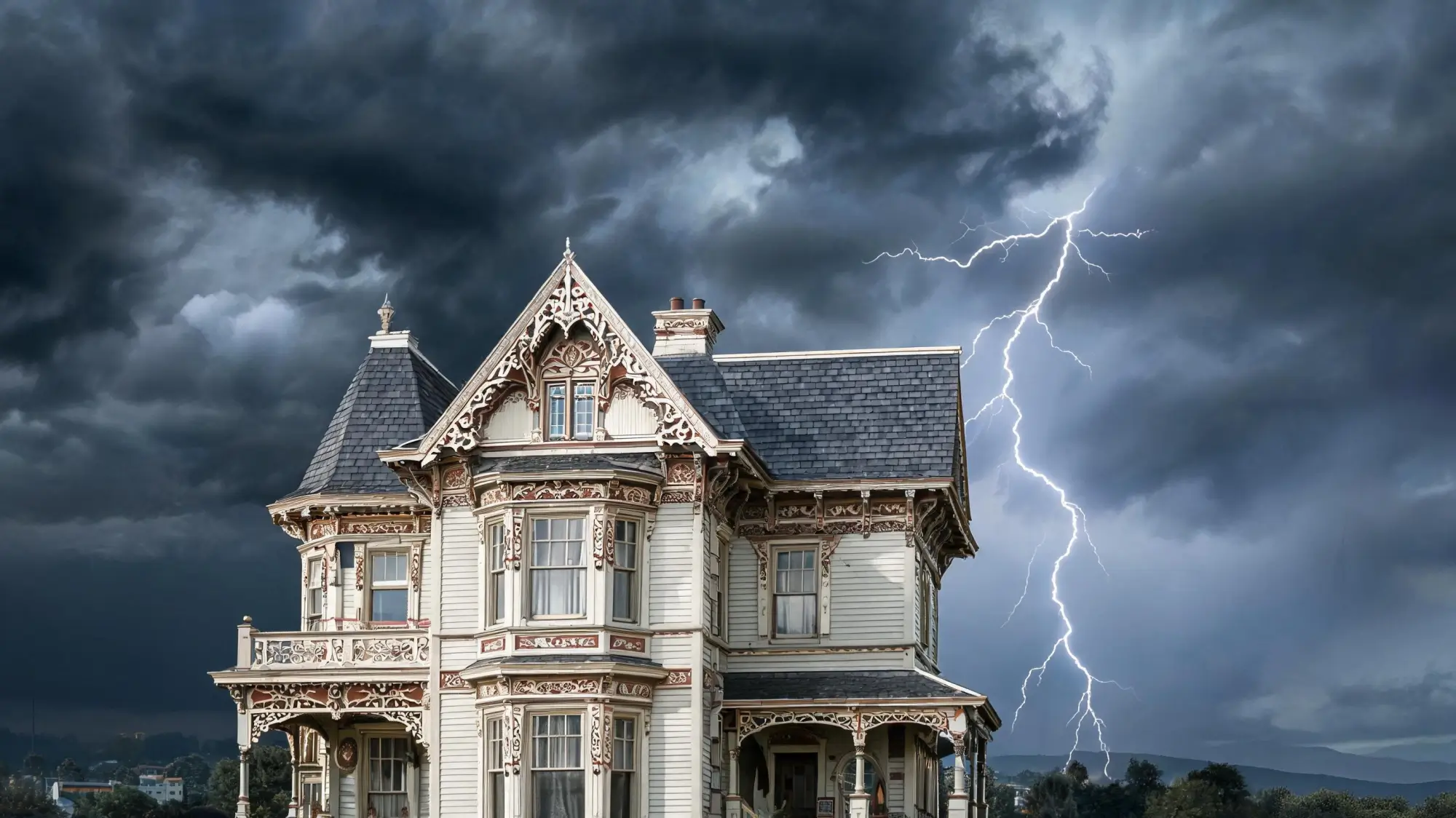
Myth 1: Slate Roofs Attract Lightning
A client in the Cotswolds once insisted on installing a full lightning protection system on her new slate roof. When I asked why, she said, "It's stone on top of a house — it must draw lightning."
It doesn't. Slate is a dielectric material — it's non-conductive. Lightning doesn't care what your roof is made of. It strikes based on height, isolation, and the conductivity of the path to ground. A slate roof is no more likely to be struck than a concrete tile roof, a thatched roof, or a timber-framed one.
The National Fire Protection Association has stated that even metal roofs — which are conductive — don't increase the probability of a lightning strike. If metal doesn't attract it, stone certainly won't. Insurance industry claims data shows no correlation between roofing material type and lightning incidents.
If your building is tall, isolated on a hilltop, or in a high-lightning area, a lightning protection system is worth considering — for any roof type. But choosing slate is not a reason to add one. The advantages and disadvantages of slate roofing are well documented, and lightning attraction isn't on either list.
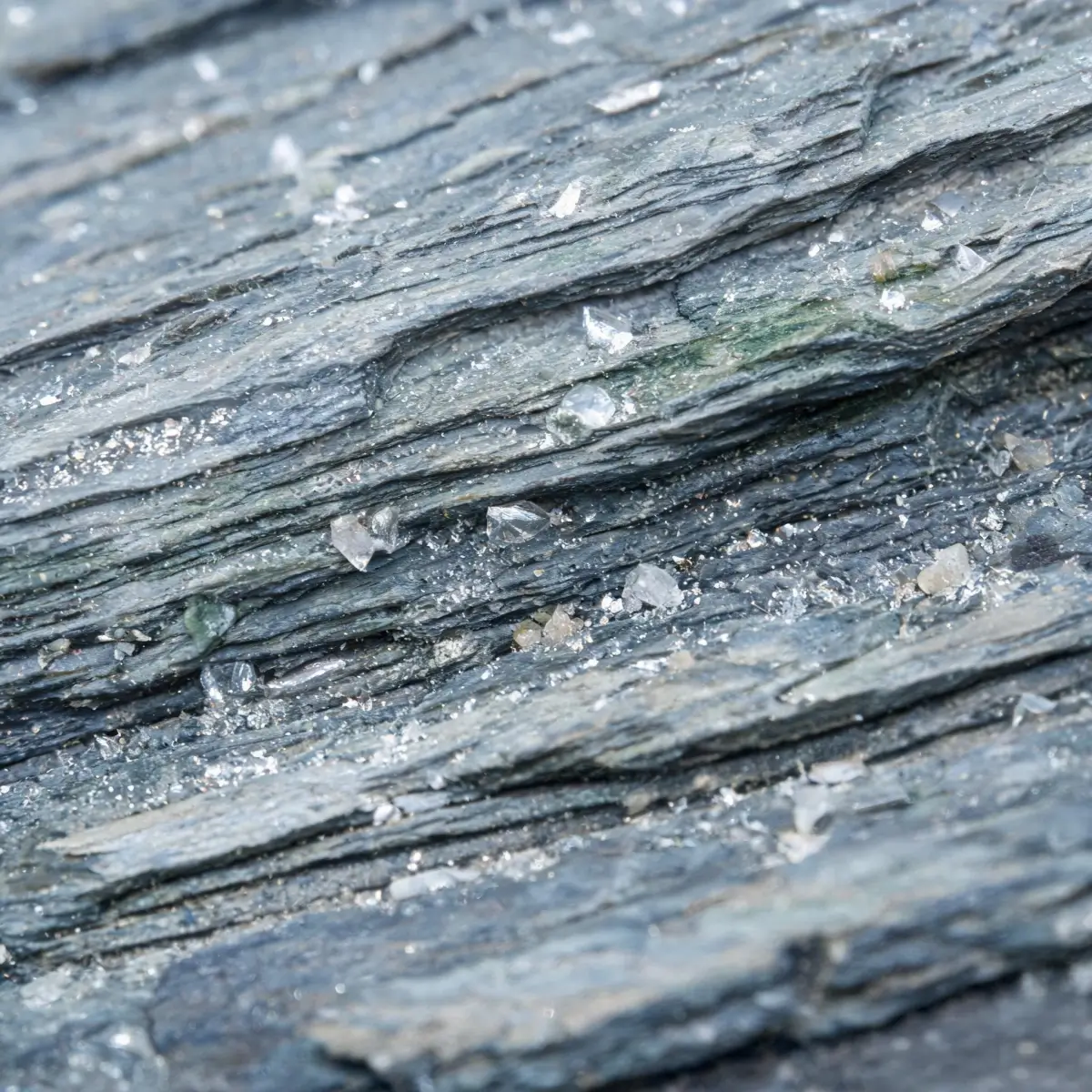
Myth 2: Natural Slate Contains Asbestos
A building inspector once flagged a 1920s slate roof on a survey as "potential asbestos-containing material." The homeowner called me in a panic. I drove out, looked at the roof for about five minutes, and told her it was natural slate. No asbestos. Not even close.
The confusion comes from asbestos cement roofing sheets — products like Eternit — that were manufactured in the mid-20th century and do contain asbestos fibres mixed into cement. Those are manufactured products. Natural roofing slate is a metamorphic rock, split from quarry blocks. It is composed of muscovite, quartz, chlorite, and sometimes hematite or pyrite. It never has, and never can, contain asbestos.
If you want to understand what natural roofing slate actually is, it helps to think of it as a piece of geology that happens to make an excellent roof tile. It's not manufactured. It's not pressed. It's not mixed with anything. It's split along its natural cleavage planes and cut to size — that's it.
Both EN 12326 and ASTM C406 testing include mineralogical analysis. If you request a test report from your supplier, the composition will be listed. You'll find muscovite, quartz, chlorite, and trace minerals. You will not find asbestos.
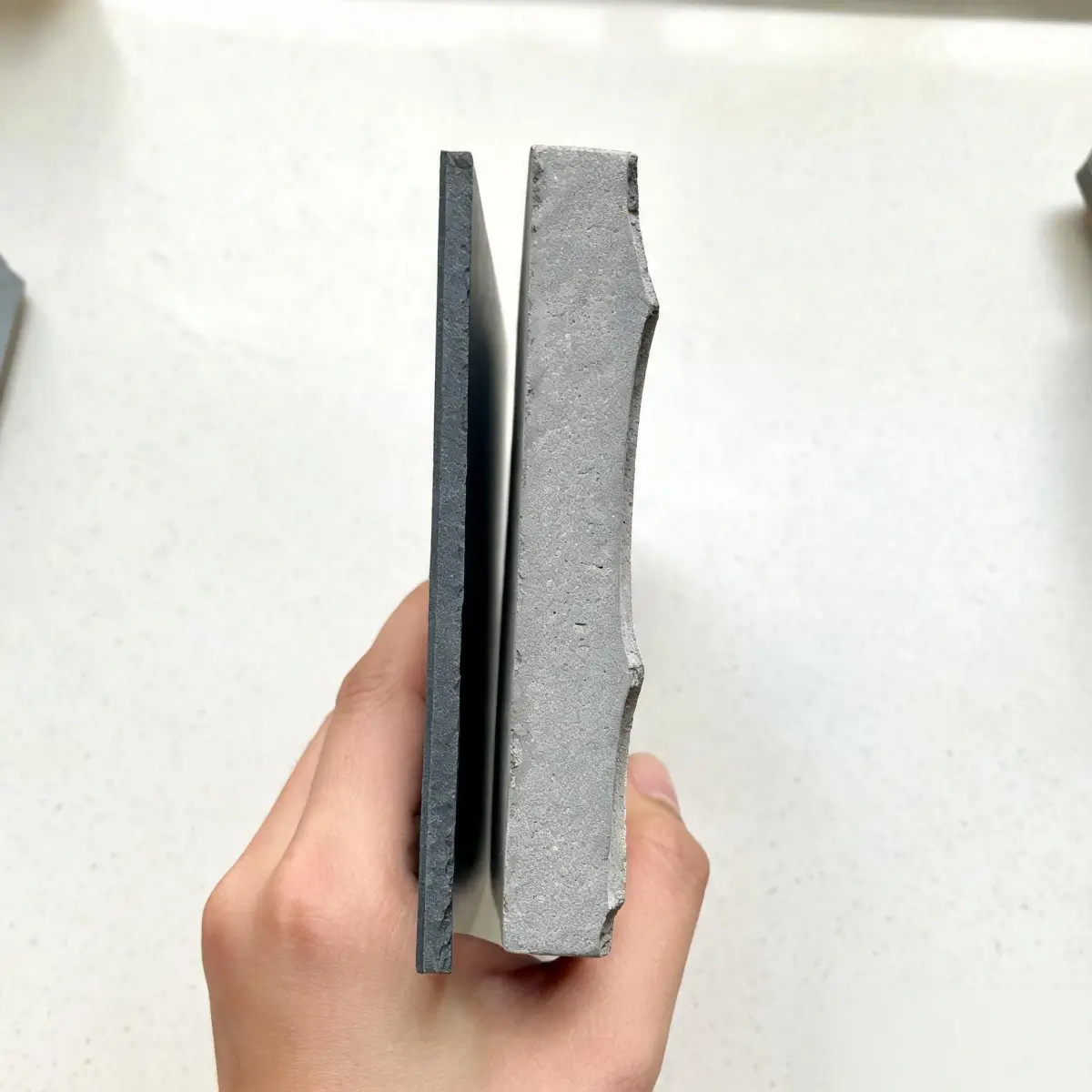
Myth 3: Slate Is Too Heavy for Normal Houses
"Stone on a roof — the rafters will never take it." I hear this from builders at least once a month. The logic sounds reasonable: stone is heavy, so a stone roof must be heavier than anything else.
Except it isn't. At 7-9mm thickness — the standard for modern roofing slate — slate weighs 19-24 kg/m². Concrete interlocking tiles weigh 35-70 kg/m². Clay tiles weigh 40-65 kg/m². Per square metre, slate is often the lightest option among the hard roofing materials.
The myth survives because people remember historic slate roofs, which used much thicker slates — 12mm, 15mm, sometimes 18mm. Those could weigh 40-60 kg/m². But nobody installs 18mm slate on a house anymore. The 7-9mm slate that ships from quarries today is a different product entirely.
If you're concerned about structural capacity — and you should be for any reroofing project — the process is the same regardless of material: check rafter dimensions and spacing, verify batten gauge, and confirm the roof structure can support the dead load. For most houses built to modern codes, 7-9mm slate is well within capacity. The detailed numbers are in our roofing slate weight guide.
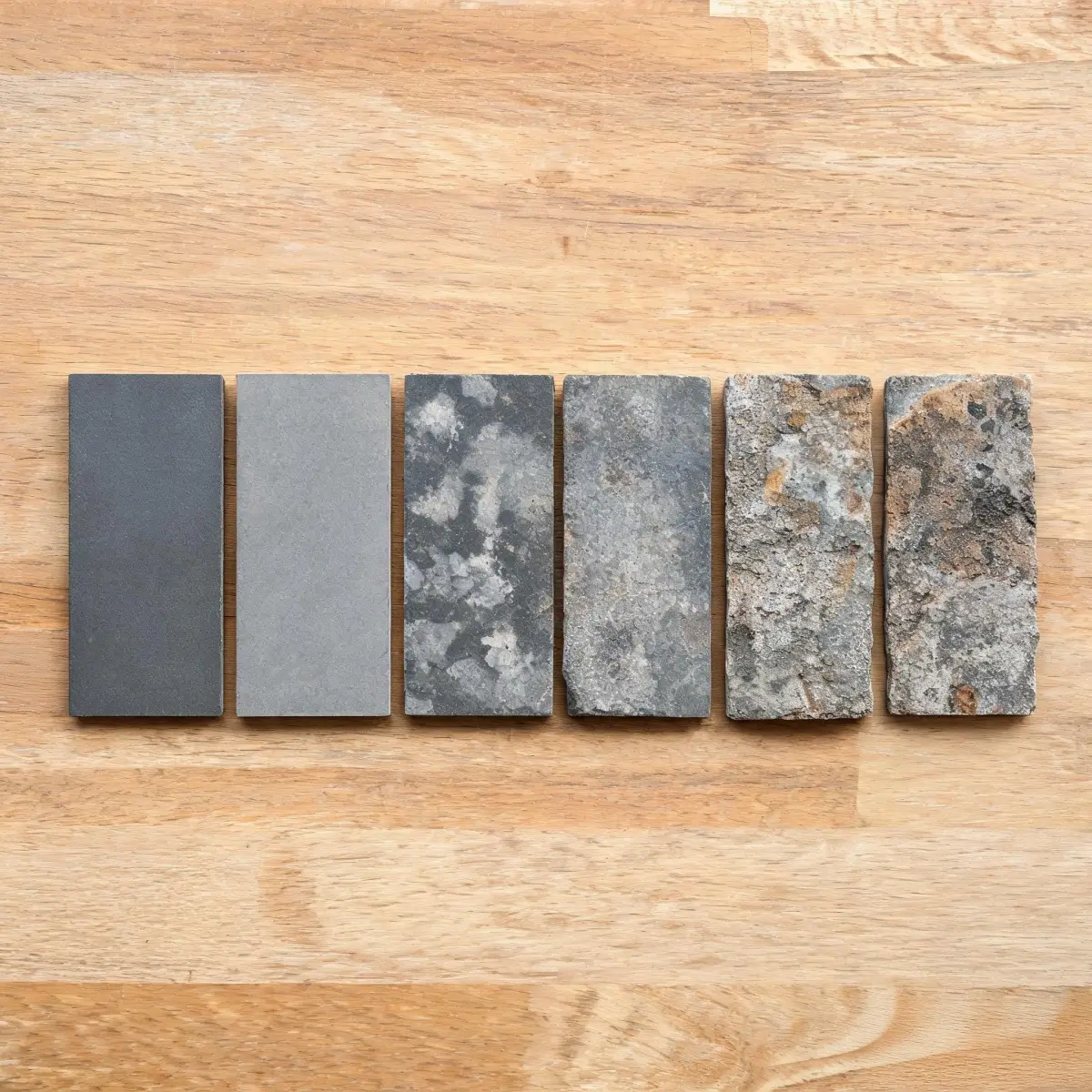
Myth 4: All Slate Is the Same — It's Just Grey Rock
An architect once told me he'd specified the cheapest slate he could find online because "slate is slate, it's all the same stuff." I put two samples on his desk. Both grey. Both looked identical. I told him one tested at 0.2% water absorption and the other at 0.7%.
"What's the difference?" he asked.
"In thirty years," I said, "the first one will look exactly like it does now. The second one will start delaminating."
The ASTM C406 grading system exists precisely because not all slate performs the same way. S1 grade slate has a service life of 75+ years. S3 grade slate lasts 20-40 years. That's a potential 2-3x difference in roof life from two pieces of grey rock that look indistinguishable to the naked eye.
Water absorption ranges from less than 0.2% (excellent, like our Jiujiang slate test results) to over 0.6% (poor). Flexural strength ranges from 40 MPa to 80+ MPa. These differences come from geology — how the slate formed, what minerals it contains, how much pressure and heat it experienced over hundreds of millions of years. Not all slate was created equal, and not all slate will perform equally on a roof.
If you're specifying slate, read the grade and the test report. If you're evaluating a supplier, use our quality evaluation framework. "It's all the same" is the most expensive myth in this list.
Myth 5: Slate Roofs Need Constant, Expensive Maintenance
"Natural material on a roof — it must need sealing, treating, painting, something." This is another one I hear regularly, and it reveals a fundamental misunderstanding of what slate is.
Slate is not wood. It's not metal. It's not concrete. It doesn't need any of the maintenance that those materials require. No painting. No sealing. No coating. No chemical treatment. Ever. Not in year one, not in year fifty, not in year one hundred.
What a slate roof does need is the same inspection that any roof should get — a look every two to five years, checking for slipped or broken tiles, examining flashings at valleys and chimneys. That's it. If you find a broken tile, you replace it. If the flashing is sound, you leave it alone.
Compare that to concrete tiles (ridge repointing every 15-20 years), metal roofs (coating inspection every 10-15 years), or asphalt shingles (full replacement every 15-25 years). Slate needs nothing for 75-150 years except an occasional look and the rare tile swap. Our maintenance guide and printable year-round checklist cover the details, but the short version is: slate is one of the lowest-maintenance roofing materials that exists.
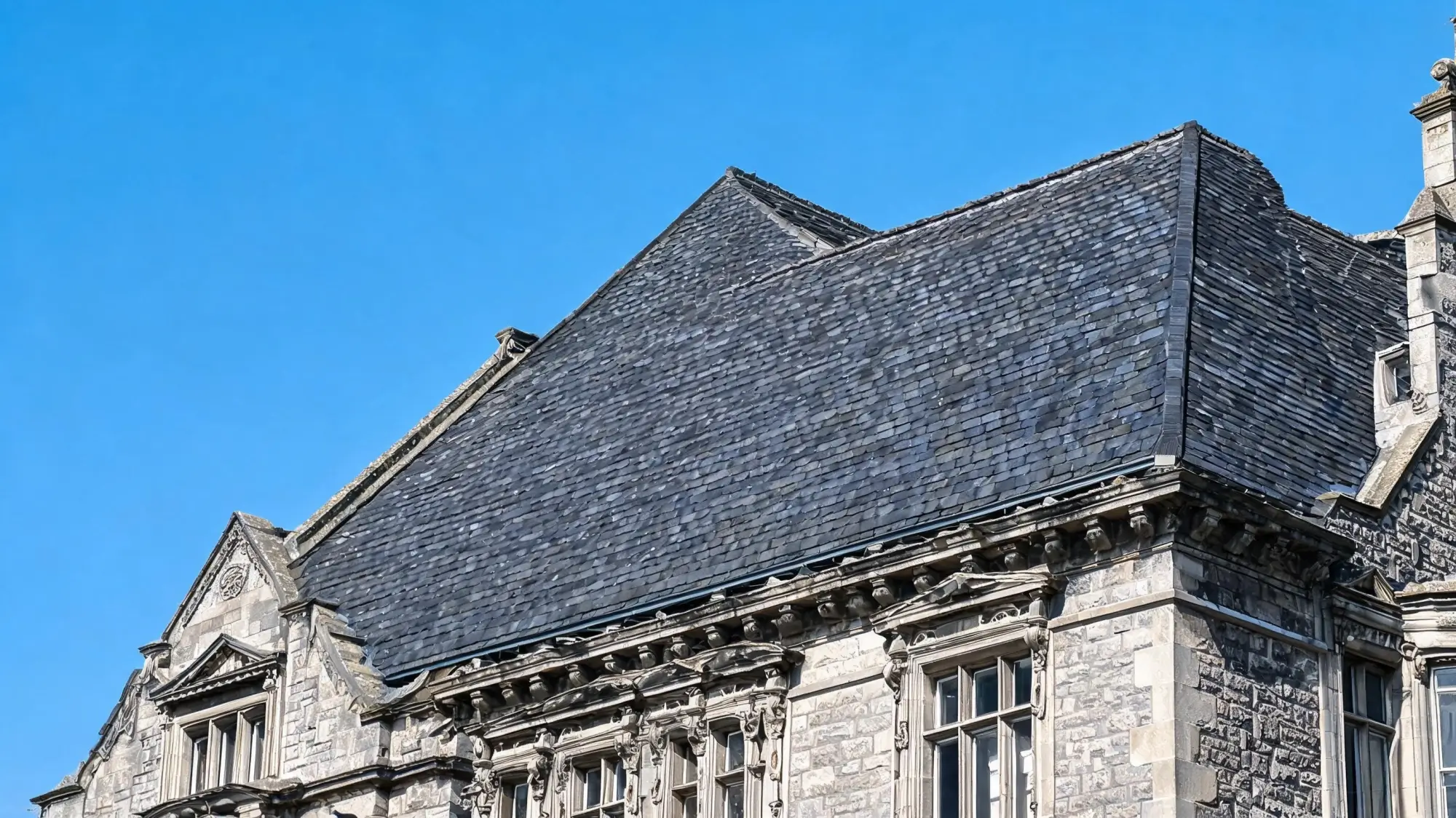
Myth 6: Slate Colour Fades Over Time
"Natural materials fade in sunlight. Slate must lose its colour eventually, like wood does." It's a reasonable assumption, and it's completely wrong.
Slate's colour comes from its mineral composition — hematite gives it red and purple tones, chlorite produces green, carbon creates black, and the mix of muscovite and quartz gives the characteristic grey. These minerals don't degrade under UV light. The colour isn't applied to the surface — it's part of the crystal structure. It can't wash off, fade, or peel.
Welsh slate roofs from the 1800s still show their original blue-grey. Spanish black slate from the early 1900s is still black. The slate on the roof of the Houses of Parliament in London, installed in the 1840s, is still the same colour it was when Queen Victoria was on the throne.
What people sometimes mistake for "fading" is surface weathering — a natural oxidation that can create a slightly different sheen or texture on the exposed face. But the underlying colour doesn't change. A weathered slate is still the same colour it started as, just with a different surface character that many architects actually prefer. For more on the colour range and how it performs, see our roofing slate colours guide.
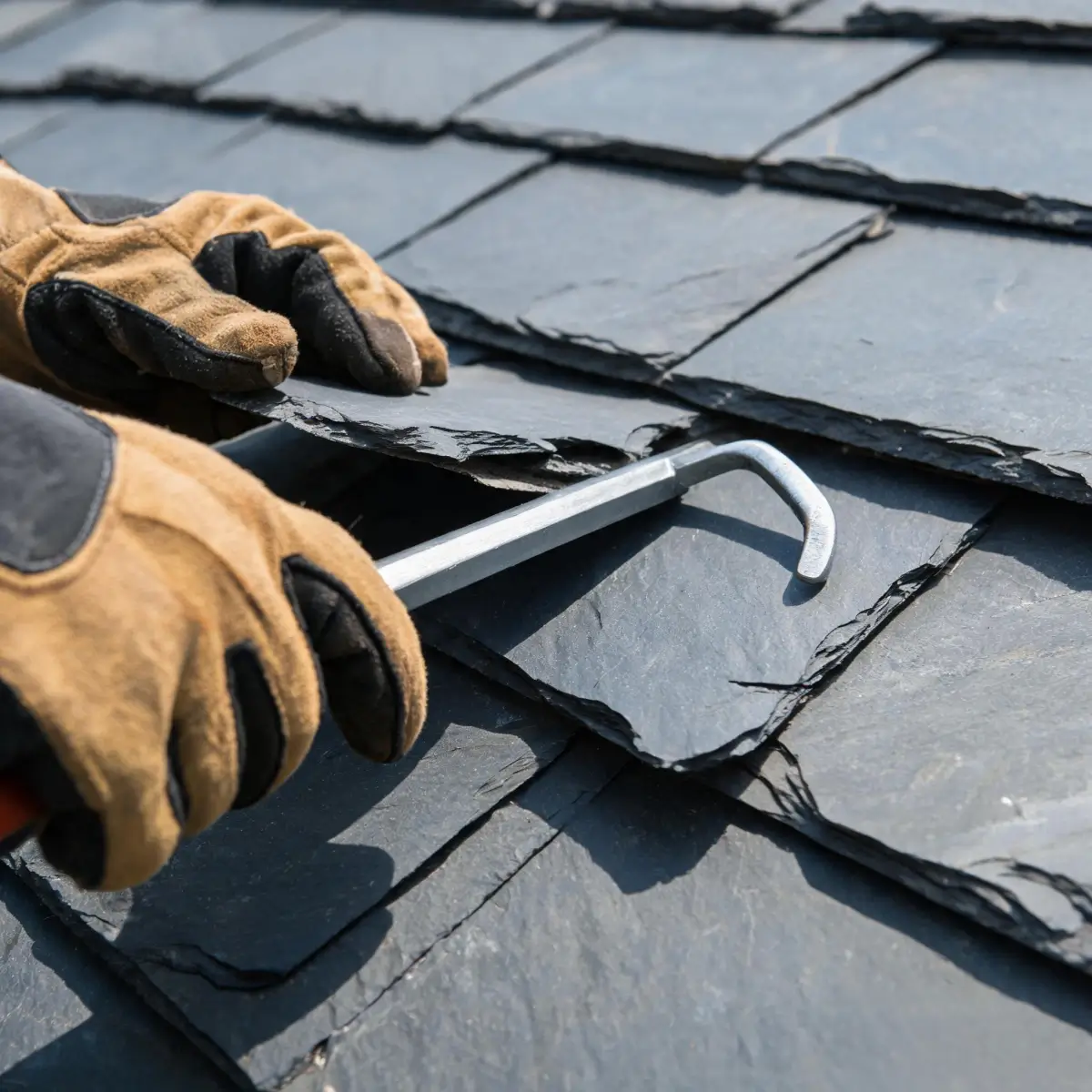
Myth 7: You Can't Repair a Slate Roof — You Have to Replace the Whole Thing
This is the single most expensive myth in slate roofing. A homeowner in Hampshire was once quoted £30,000 for a "full roof replacement" because, the contractor said, "you can't take one slate out without stripping everything above it."
I went to look. There were eight broken slates. I replaced them myself in 80 minutes, at a cost of about £200 in tiles. The roof had another century of life in it.
The tool that makes this possible is a slate ripper — a flat bar with a hooked end that slides under the broken tile, catches the nails, and shears them off. The broken tile drops out. You slide a new one in, fix it with two nails or a hook, and you're done. Ten minutes per tile, once you know what you're doing.
Slate roofs are actually easier to repair than interlocking concrete or clay tile systems, because each slate is an independent unit. You don't need to lift adjacent tiles. You don't need to disturb the courses above or below. You remove one, you replace one, and the roof is whole again.
If you're told a slate roof "can't be repaired," get a second opinion. The decision to repair or replace should be based on the condition of the roof as a whole — the percentage of damaged tiles, the state of the fixing nails, the integrity of the underlayment — not on the false idea that individual tile replacement is impossible. For the repair process itself, our slate roof repair guide walks through it step by step.
Myth 8: Chinese Slate Is Inferior to Welsh or Spanish Slate
"Welsh slate is the gold standard. Spanish slate is acceptable. Chinese slate is cheap and won't last." I've heard variations of this from surveyors, architects, and roofing forums. It's the myth I spend the most time dismantling, because it sounds plausible and costs buyers money for no reason.
Quality is determined by geology and testing — not by the country name on the crate. The EN 12326 and ASTM C406 standards were written to be blind to origin. They test water absorption, flexural strength, freeze-thaw resistance, and carbonate content. A slate that passes S1/T1 is S1/T1, whether it came from a quarry in Snowdonia, a quarry in Galicia, or a quarry in Jiujiang.
I've tested slate samples from over a dozen countries. The worst slate I've ever seen — delaminating within five years of installation — came from a "reputable" European quarry that had changed its vein. The buyer paid a premium for the name and got a product that should have been downgraded. The best value slate I've specified in the last decade came from Jiujiang, China: 0.2% water absorption, 120 freeze-thaw cycles with zero weight loss, ASTM C406 S1 grade. It's been on roofs for over fifteen years with no failures.
This isn't about defending one origin over another. It's about reading the evidence. If you're sourcing slate, ask for the test report, check the batch number, and verify the numbers against the standard. Geography tells you nothing. The test report tells you everything. For the sourcing process, our guide to sourcing roofing slate from China covers what to verify and how.
The Bottom Line on Slate Roofing Myths
After twenty years of specifying, testing, and defending roofing slate, I can tell you that most of what goes wrong with slate roofs isn't about the slate. It's about the myths people believed before the slate arrived. The client who added an unnecessary lightning system. The homeowner who panicked about asbestos. The architect who saved £2 per tile and lost 40 years of roof life. The family told to replace a £30,000 roof when £200 of tiles would have fixed it.
Slate isn't mysterious. It's a metamorphic rock with measurable, testable, verifiable properties. Read the test report. Check the grade. Understand the weight. Inspect the roof every few years. Replace a broken tile when you find one. That's it.
The myths survive because they sound reasonable — stone attracts lightning, stone is heavy, natural things fade, you can't fix what's underneath. But sounding reasonable and being true are different things. The evidence is in the geology, in the test data, and in the roofs that have been standing for a century and will be standing for the next one.
Frequently Asked Questions
Is slate roofing suitable for all types of buildings?
Slate works on most buildings with a roof pitch of at least 20° (some slates can go down to 17.5° with appropriate headlap). It suits traditional, contemporary, and heritage architecture. The main constraint is structural — the roof must support 19-24 kg/m² for standard 7-9mm slate. Most modern structures handle this without modification. For low-pitch or lightweight projects, consult a structural engineer and check our roof pitch guide.
How can I verify slate quality before buying?
Request a test report that carries a batch number matching your delivery. Check three numbers: water absorption (below 0.3% is excellent), flexural strength (above 50 MPa is good), and freeze-thaw cycles (50+ with minimal weight loss). Compare against ASTM C406 S1 or EN 12326 T1 requirements. Always approve physical samples before production. Our quality evaluation guide walks through this in detail.
Do slate roofs cost more to insure?
No. In fact, slate's fire resistance (Class A — non-combustible) and long lifespan can work in your favour with insurers. Some insurance companies offer lower premiums for slate because it doesn't burn, doesn't ignite from embers, and resists impact better than many alternatives. Check with your insurer — the material itself is rarely a surcharge factor.
What is the difference between natural slate and synthetic slate?
Natural slate is split from metamorphic rock — no manufacturing, no moulds, no binders. Synthetic slate (also called composite or man-made slate) is pressed from recycled materials, resin, and pigment. Natural slate lasts 75-150+ years; synthetic typically lasts 30-50 years. Natural slate colour is mineral and never fades; synthetic colour is pigmented and can weather. The full comparison is in our natural vs synthetic slate guide.
Can slate roofs withstand extreme weather?
Yes — properly installed slate handles high winds, heavy snow, and freeze-thaw cycles better than most roofing materials. Slate with 0.2% water absorption and 120 freeze-thaw cycles (like our Jiujiang slate) won't crack in cold climates. For high-wind areas, use double-nailed fixing and smaller slate sizes. For snow zones, ensure adequate pitch and ventilation to prevent ice dams. See our guides for high-wind installation and snow and freeze-thaw climates.
Is a slate roof a good investment?
Over a 50-75 year horizon, slate is often the cheapest roofing material per year of service life. The initial cost is higher than concrete tiles or asphalt shingles, but slate's 75-150 year lifespan means you install once and potentially never replace it. Slate also adds resale value — buyers and surveyors recognise it as a premium, durable material. The life-cycle cost analysis breaks down the numbers over a century.
Related Reading
Don't Let Myths Decide Your Roof
Get the test data, not the rumours. Our EN 12326 / ASTM C406 tested roofing slate ships with full lab reports, batch numbers, and a century of service life behind it.