
When Should a Slate Roof Be Repaired or Replaced?
Every slate roof reaches a fork. The slates are starting to fail — a few broken, a few slipped — and the question lands on your desk: patch the broken tiles, or strip the whole roof and start over?
The honest answer is that a roof with twenty broken slates might need nothing more than a day's work, while a roof with only five broken slates could be a candidate for full replacement. The difference isn't the number. It's what's happening underneath.
After eighteen years of writing roof condition reports for insurance companies, heritage trusts, and private homeowners, I've learned that the repair-or-replace decision comes down to three indicators and a bit of arithmetic. This guide walks through both.
| Repair Zone | Grey Zone | Replace Zone |
|---|---|---|
| Under 5% of slates broken or missing | 5–20% of slates damaged | Over 20% damaged or failing |
| Nails sound (roof under 50 years, or copper nails used) | Mixed nail condition across slopes | Nail sickness widespread |
| Damage clustered in one area | Damage scattered but limited | Damage across every slope |
| Slates still hard — ring test passes | Some tiles softening at edges | Delamination visible on many tiles |
| Battens and deck in good condition | Some batten decay in spots | Structure compromised |
If most of your indicators sit in the left column, you need a repair. If most fall on the right, start planning a replacement. The middle column is where most roofs actually live — and where a professional survey earns its fee.
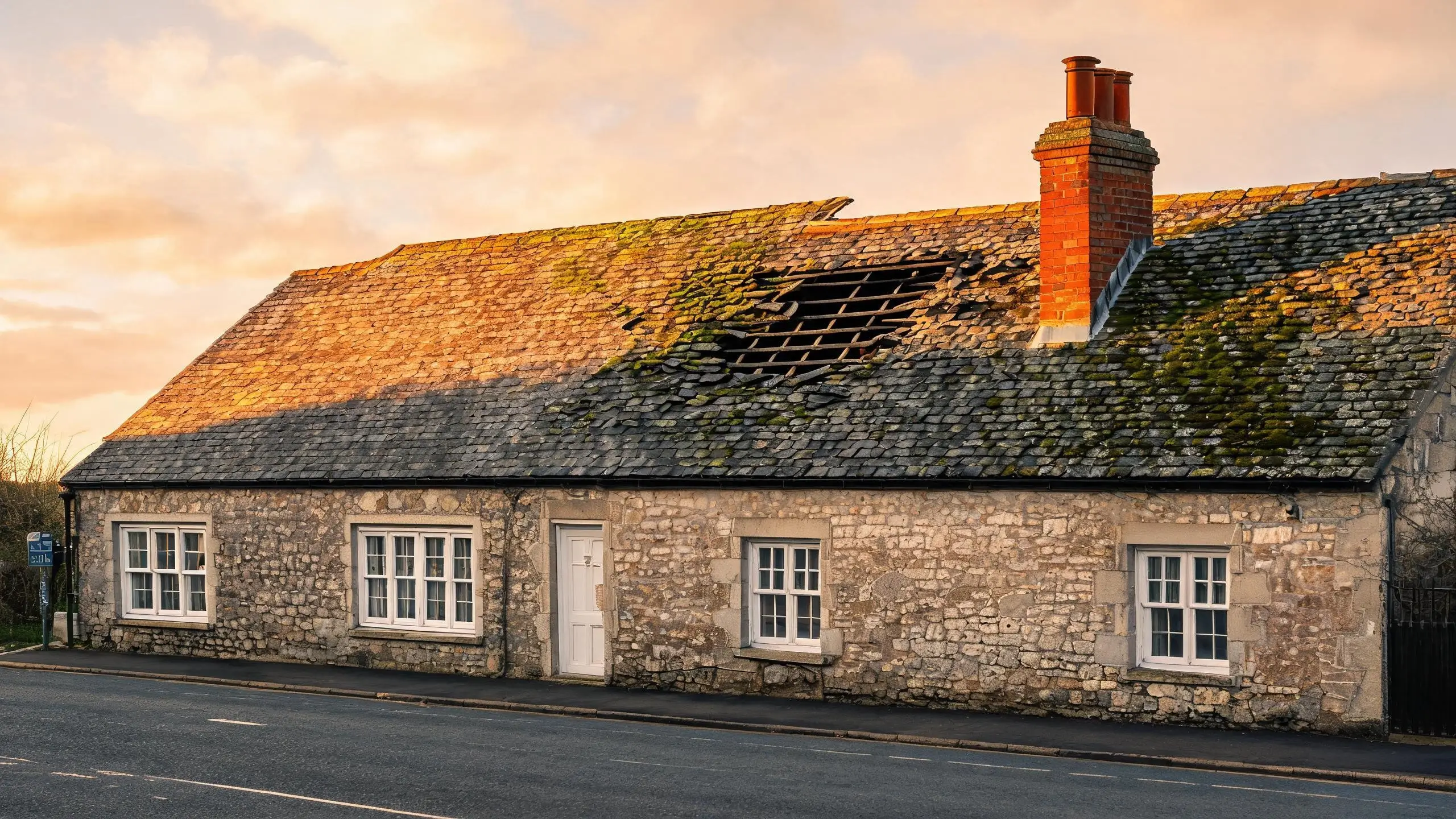
The Three Indicators That Decide Everything
A condition survey takes about forty minutes on a typical roof. In that time, a surveyor is really only checking three things. Everything else — the cost estimate, the remaining life calculation, the repair-or-replace recommendation — flows from these three.
1. Slate Condition: Hard or Soft?
Pick up a loose slate from the roof (or have a contractor hand one down). Turn it over and run your thumb across the back face. Sound slate feels smooth and dense, almost like glass that's been frosted. Failing slate feels gritty, with visible flaking or a powdery residue rubbing off under your thumb.
That powder is delamination — the slate's natural layers are separating. Once it starts, it doesn't reverse. The tile will continue to shed layers until it becomes porous and too weak to carry its own weight on the roof. You can replace individual delaminating slates, but when you see it on tile after tile across the whole roof, the entire batch has reached end of life.
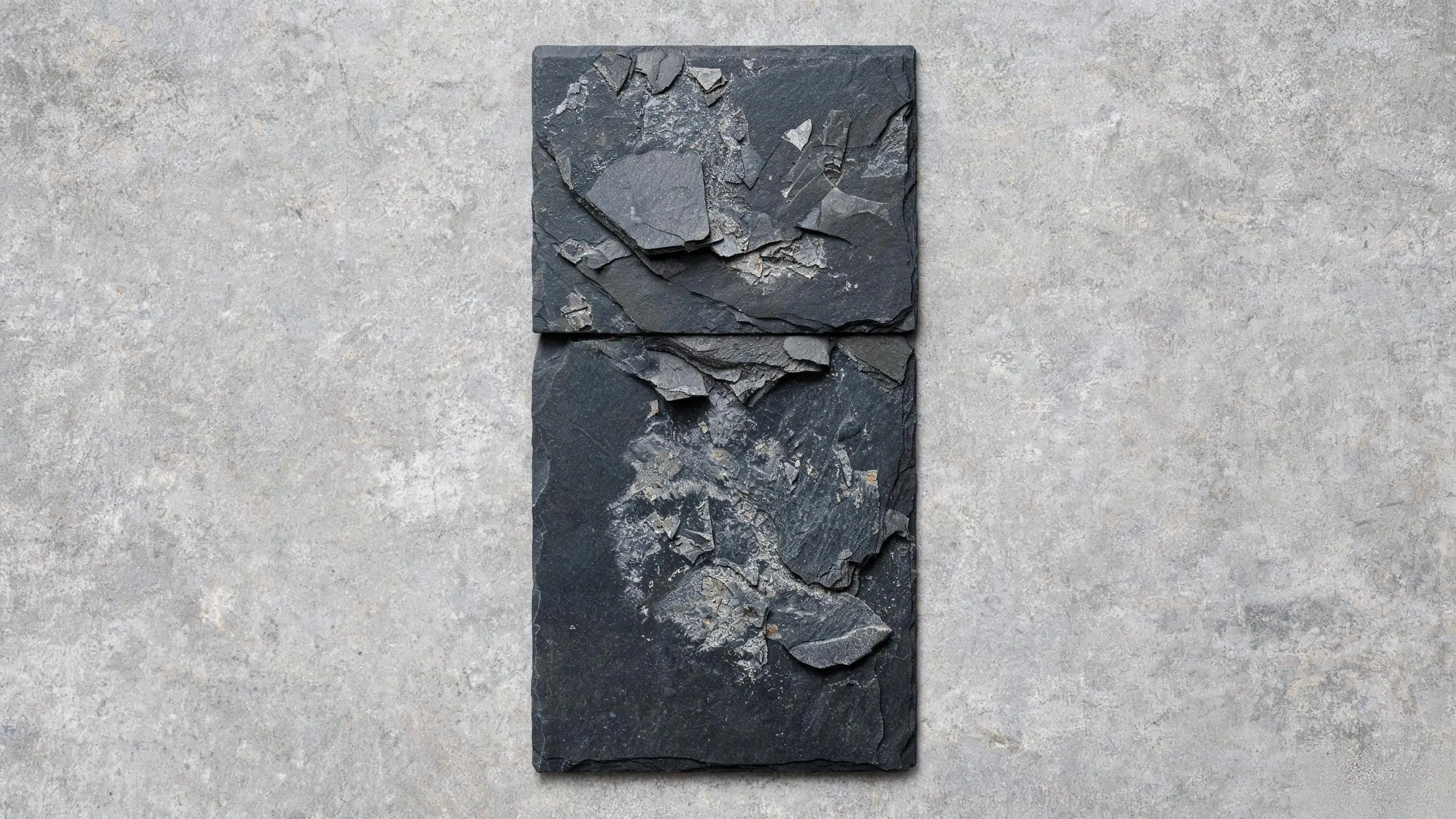
There's a faster test that doesn't require pulling slates. Tap a tile with a small hammer or the back of a chisel. Sound slate rings — a clear, high note that carries. Delaminating slate gives a dull, dead thud, like tapping a brick. Our test results page explains the laboratory version of this with flexural strength data, but on the roof your ears are the quickest diagnostic tool you have. A roof that rings top to bottom is years from replacement. A roof that thuds in patches needs those patches investigated. A roof that thuds everywhere needs replacing.
2. Nail Sickness: The Hidden Killer
Here's the part that catches people off guard: the slates can be perfectly fine while the nails holding them are quietly disintegrating.
Nail sickness is exactly what it sounds like — the fixings corrode to the point where they can no longer hold the slate in place. A slate doesn't have to be broken to fall off a roof. If the nail shears through, the tile slides down and out, completely intact. You'll find perfect-looking slates in the gutter or on the ground and wonder what happened.
The problem is that nail sickness is invisible from ground level. You only know it's happening when slates start slipping at an accelerating rate. One slipped slate per year is normal wear and tear. Five in a single season is a warning. Ten in a year means the nails are failing systemically, and you're looking at a re-roofing project whether you like it or not.
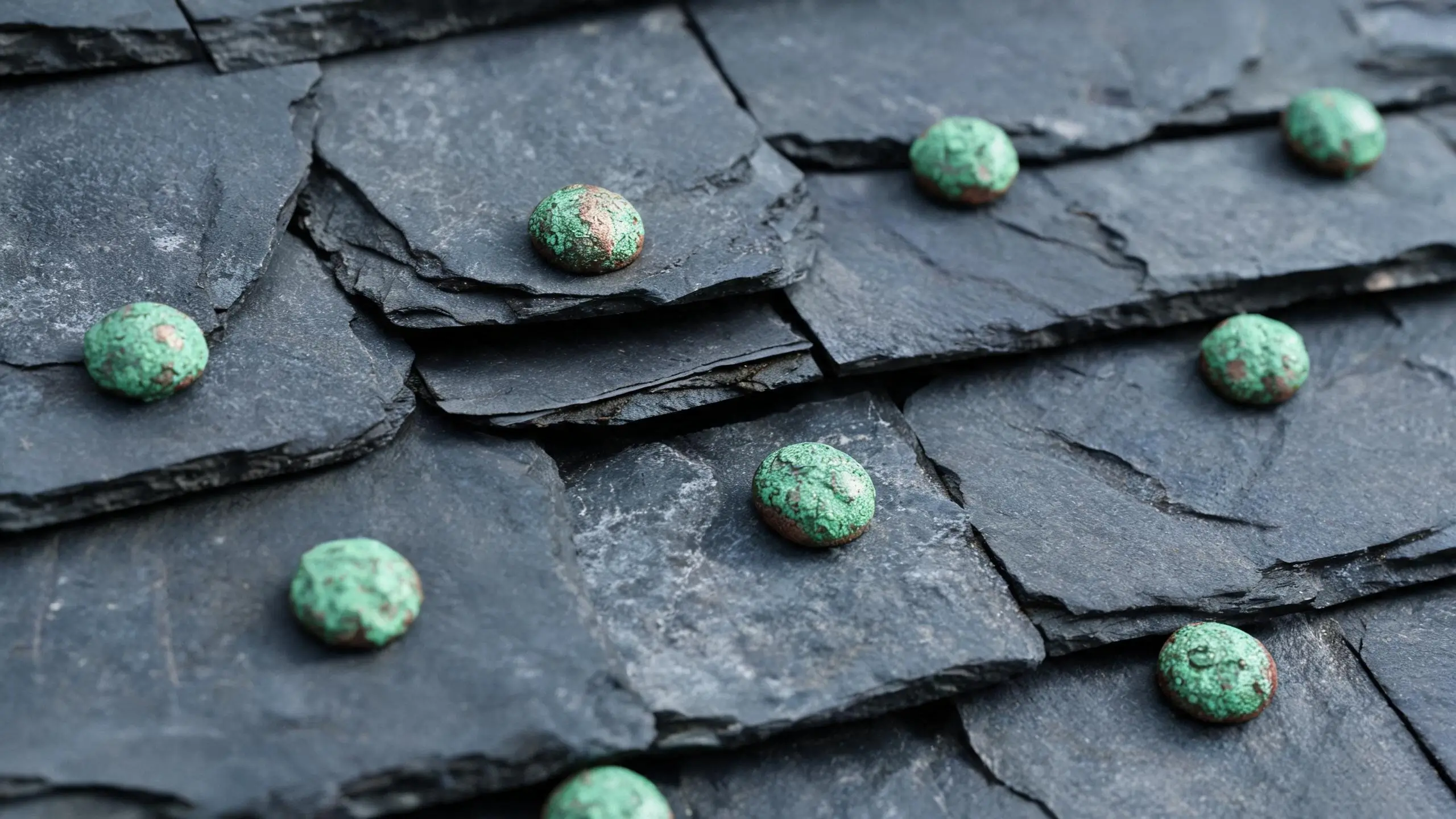
Which nails were used matters enormously. Copper nails can last 75–100 years — roughly matching the slate's own service life. Galvanised steel nails may only last 30–50 years, and less than that in coastal areas or polluted environments. If your roof was installed with cheaper fixings, the slates might outlive the nails by decades, and the nails will be what forces the re-roofing decision. Our guide to copper nails vs stainless steel nails covers the corrosion mechanisms in detail.
This is why a roof with only five broken slates can still be a replacement candidate. If those five slates slid out intact — not cracked, not impacted, just slid — the nails are the problem, and they're failing everywhere, not just where you can see the evidence.
3. Damage Pattern: Scattered or Clustered?
This is the indicator that most cleanly separates repair from replacement, and it's the one that requires looking at the whole roof, not just the bit you can see from the kitchen window.
If the damage is clustered — one valley, one pitch, one section near the chimney — you're looking at a localised problem. Maybe the flashing failed and water got behind the slates. Maybe foot traffic during a previous repair cracked a row. Maybe a tree branch hit one slope during a storm. Clustered damage points to a local cause, and a local repair fixes it.
If the damage is scattered — a broken slate here, a slipped one there, some delamination on the south slope, some nail failure on the north — that's systemic. The entire roof is aging together. Replacing individual slates one by one becomes a game of whack-a-mole: you fix the north slope this year, the south slope fails next year, and the east slope the year after. At that point, you're not maintaining a roof. You're postponing an inevitable replacement while paying for it one callout at a time.
One thing that accelerates scattered damage is moss and algae growth. A heavily mossy roof retains water across the surface, amplifying freeze-thaw stress and accelerating nail corrosion. If your roof is covered in moss and also losing slates, the two problems are feeding each other — see our guide to moss and algae on slate roofs for the mechanism and removal methods.
When Repair Is the Right Answer
Repair makes sense when all three indicators line up on the favourable side:
- Fewer than 5% of slates are broken, slipped, or missing
- The nails are sound — roof is under 50 years old, or copper nails were used and are still solid
- Damage is concentrated in specific areas, not spread across the roof
- The slates themselves still ring true and show no delamination
- The underlying structure — battens, underlayment, roof deck — is solid
A roof in this condition needs a targeted slate replacement — swapping out the broken tiles, checking the nails on surrounding slates, and replacing any fixings that look questionable. A competent slater can do this in a day or two, and the roof will give you another decade or more before the question comes up again.
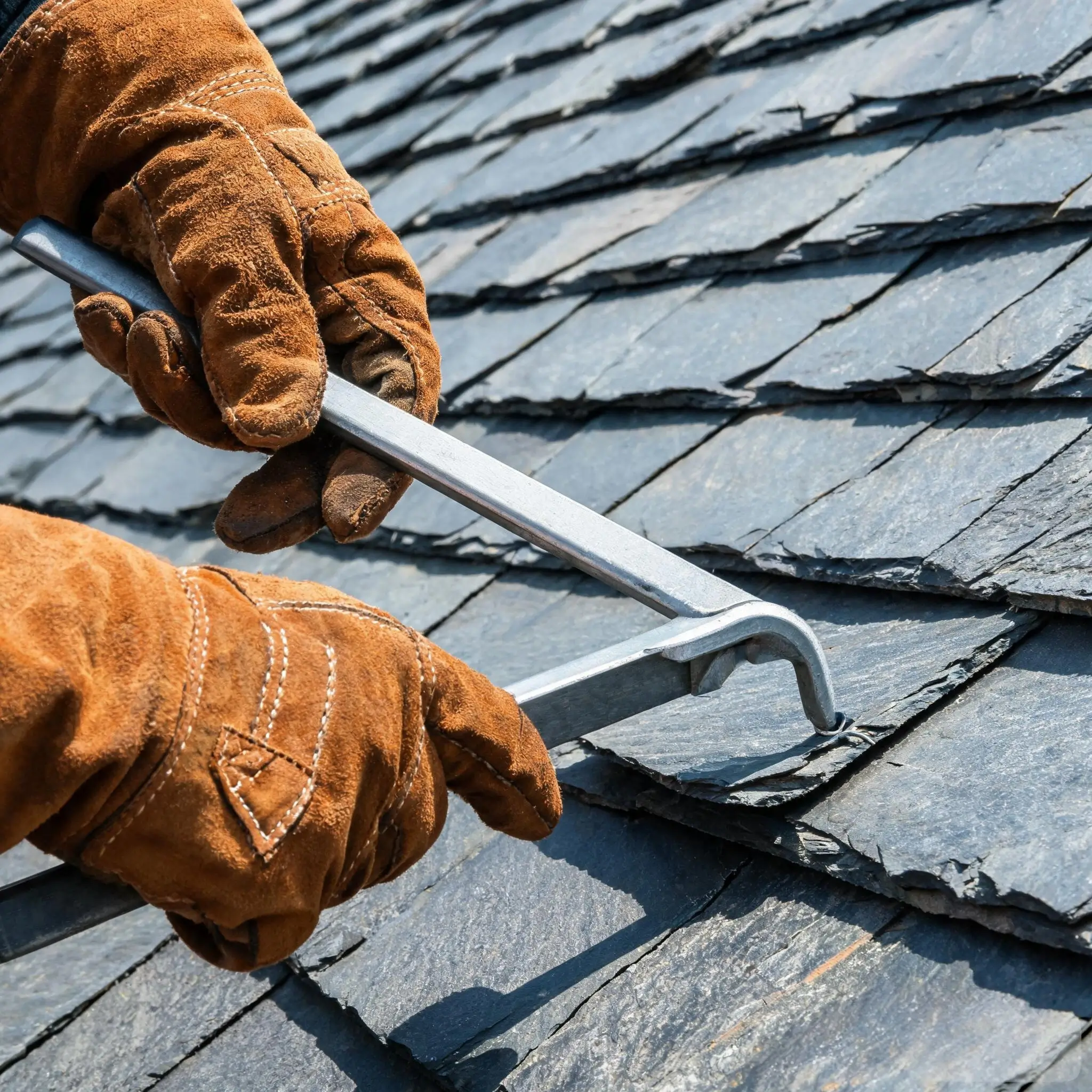
The key point: repair buys time. It doesn't reset the clock. If your roof is 60 years old and in good shape, a targeted repair might extend its life to 75 or 80 years — but the day will come when replacement is the only rational answer. The goal of a good repair is to reach that day on your own terms, not in the middle of a wet January with buckets in the hallway.
One thing to watch: if you've had the same slater out three years in a row, ask them to flag whether the damage pattern is changing. Repairs that solve the problem for five years are good value. Repairs that need redoing every year are a signal that the roof has crossed from the repair zone into the grey zone.
When Replacement Becomes Unavoidable
Replacement becomes the rational choice when the indicators line up on the other side:
- Over 20% of slates are damaged, slipped, or missing — or the number is climbing each year
- Nail sickness is confirmed across multiple slopes (slates sliding out intact)
- Delamination is visible on a large proportion of tiles, not just a handful
- Previous repairs have been made repeatedly and new failures keep appearing in new locations
- The roof is approaching or past the expected service life of the slate (75–150 years, depending on quality)
Here's the uncomfortable truth that no one tells you: a roof that needs a new slate every month is already failing. The cost of individual callouts — scaffolding, labour, travel, minimum charges — adds up fast. Five callouts a year at £300–500 each is £1,500–2,500 annually, and the trend is always upward, never down. At that rate, a full re-roof starts to look like the cheaper option within five to seven years.
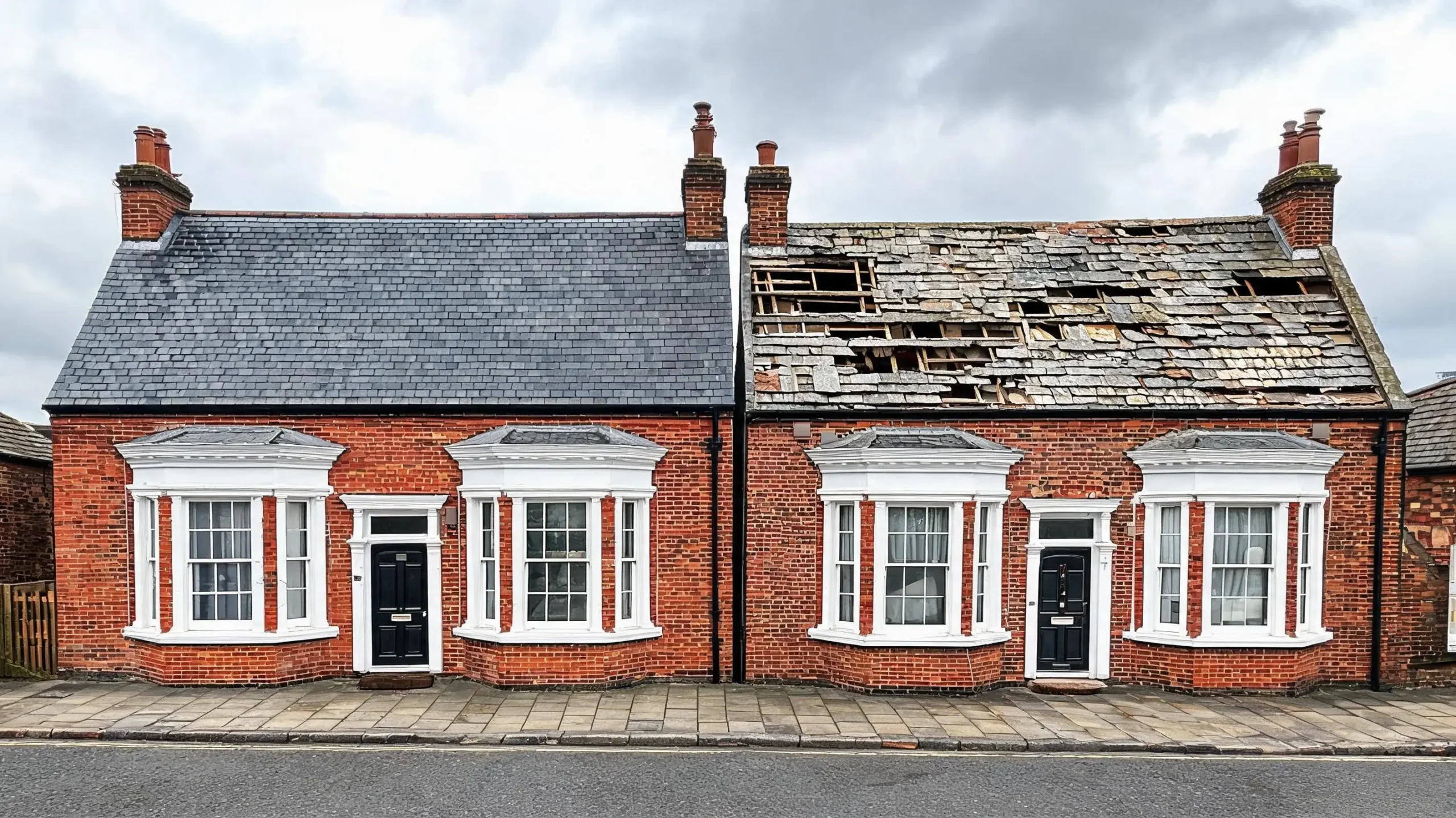
A full replacement also gives you the chance to address everything underneath: new battens, new underlayment, new fixing methods, modern flashing. If the old roof was installed with galvanised nails and bituminous felt underlayment, a replacement lets you upgrade to copper nails and breathable membrane — extending the new roof's potential service life well beyond what the original achieved.
There's also a property value consideration. A new slate roof is a selling point. A patchwork roof with visible repairs is a negotiation point — and buyers will discount their offer by more than the cost of the re-roof, because they're pricing in the hassle as well as the money.
The Grey Zone: Partial Re-Roof
Most roofs don't give you a clean signal. They sit in the grey zone — too far gone for simple repair, not bad enough to justify a full strip. This is where partial re-roofing comes in.
A partial re-roof means stripping and re-slating one slope or one elevation while leaving the other slopes in place. It's an option when:
- One pitch is clearly worse than the others (often the north-facing or shaded slope, which weathers faster)
- The nails on one slope have failed but the others are holding — confirmed by pulling test slates
- The budget doesn't stretch to a full replacement this year, but waiting another winter feels risky
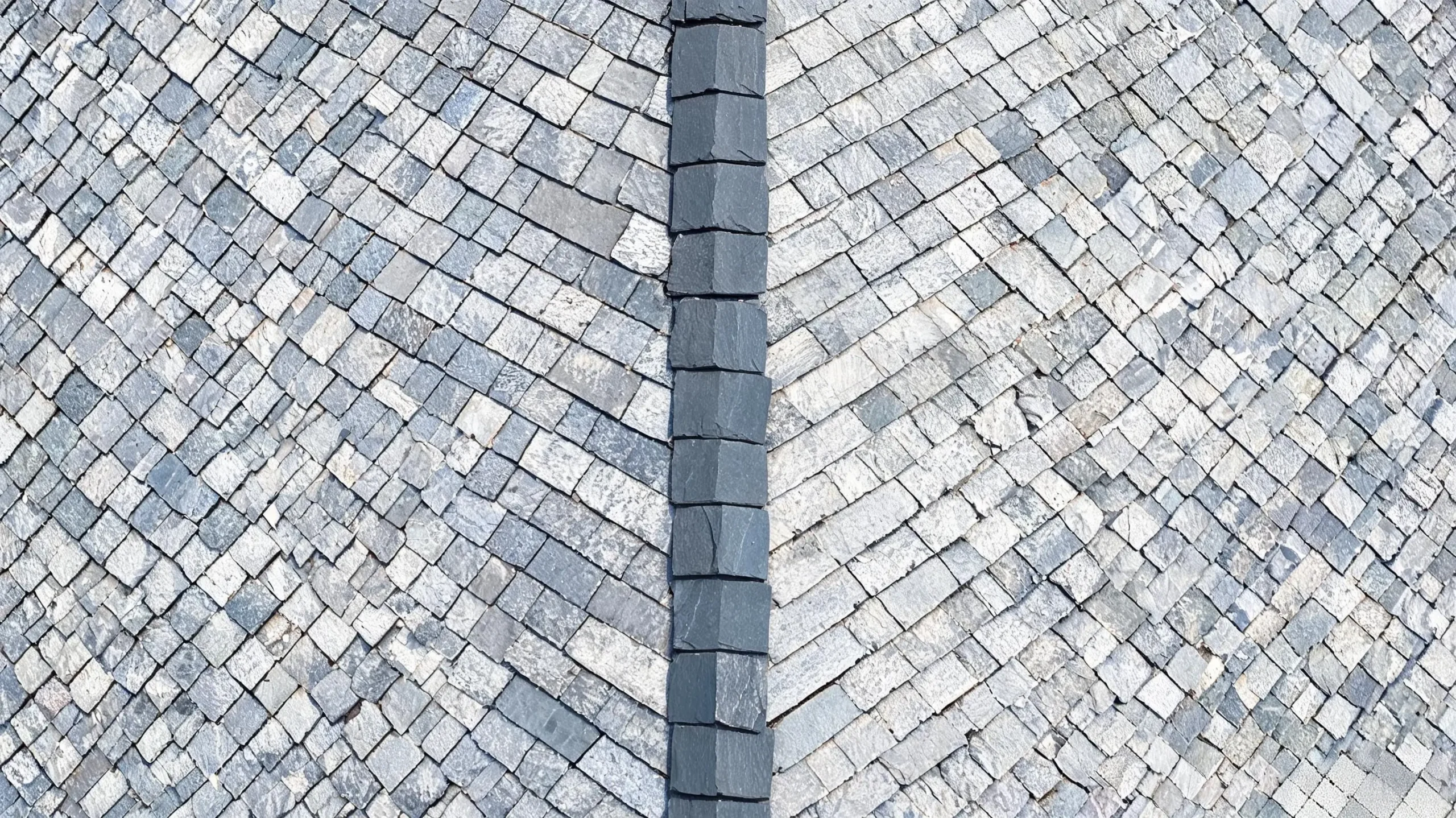
The advantage is straightforward: you're paying for roughly half the scaffolding, half the slates, and half the labour. The disadvantage is that you're betting the other slopes will hold long enough to make the partial approach worthwhile. If they fail within five years, you'll pay for scaffolding twice — and scaffolding is the single biggest line item in any re-roofing quote.
A practical approach I recommend: if you're replacing one slope, have the contractor pull two or three slates from each of the remaining slopes while the scaffolding is up. Check the nails. Photograph them. Note the condition. That gives you a timeline for the rest of the roof and lets you plan the next phase — or breathe a sigh of relief — with real information instead of guesswork.
What Does It Actually Cost?
These are rough ranges for a typical UK detached house (100–150 m² roof area), based on market rates I see in condition reports from 2024–2025:
| Item | Typical Cost Range |
|---|---|
| Individual slate replacement (per tile, including callout) | £150–300 |
| Targeted repair (5–10 slates, one visit) | £500–1,500 |
| Partial re-roof (one slope, ~50 m²) | £4,000–8,000 |
| Full re-roof (100–150 m², natural slate) | £12,000–25,000+ |
The wide ranges reflect real variables: roof access (scaffolding height, rear extension obstructions), slate quality, your location, and whether the existing structure needs remedial work. Slate material alone varies from £25/m² for basic imported slate to £60+/m² for premium Welsh slate. Our roofing slate cost guide breaks this down in detail.
The decision maths is simpler than most people think. Compare the annual cost of ongoing repairs against the amortised cost of replacement. If you're spending £2,000 a year on repairs and a new roof costs £18,000, the replacement pays for itself in nine years — and a new slate roof should last 75 years or more. The maths rarely favours indefinite repair once you're past the 5%-damage threshold and the trend is accelerating.
The Decision Checklist
Before you commit to repair or replacement, walk through this checklist — or have a surveyor do it while you watch:
- Count the damage. What percentage of slates are broken, slipped, or missing? Under 5% is repair territory. Over 20% is replacement. In between is a judgement call that depends on the next six checks.
- Pull test slates and check the nails. Remove two or three slates from different slopes. Are the nails corroded? Are they the original fixings? Copper nails last as long as the slate; galvanised steel may fail at 30–50 years. If the nails are shearing, the count from step 1 understates the real problem.
- Tap a sample of tiles. Do they ring or thud? Ringing means sound slate. Thudding means delamination is underway. A roof that thuds in more than a handful of spots is heading toward replacement.
- Map the damage. Is it clustered or scattered? Clustered damage points to a local cause — impact, frost, poor fixing. Scattered damage means systemic aging, and no amount of spot repair will reverse it.
- Look at the structure. Are the battens solid when pressed? Is the underlayment intact or crumbling? If the structure is failing, a simple re-slate won't solve the problem — you're looking at a full strip regardless of how good the slates are.
- Consider the age. A 40-year-old roof with a few broken slates has decades of life left. An 80-year-old roof with the same number of breaks is on borrowed time. Our slate roof lifespan guide explains what 75–150 years actually means in practice.
- Do the maths. Add up the last two years of repair bills. Project forward at the same rate (or higher, since the trend is always upward). Compare the five-year total against the cost of a replacement. If repairs will cost more than 40% of a re-roof within five years, replacement is the better investment.
If you're still unsure after this checklist, commission a professional roof inspection. A surveyor's condition report costs £200–400 and gives you a condition rating, a projected remaining service life, and a recommended course of action. That's the cheapest insurance you'll ever buy before committing to either a £1,500 repair or a £20,000 replacement.
Still on the Fence? Common Questions
How many broken slates warrant a full roof replacement?
It's not just about the number — it's about the pattern and the underlying cause. As a rule of thumb, under 5% of slates damaged points to repair. Over 20% points to replacement. But five slates sliding out intact (not cracked) across different slopes can be a bigger red flag than twenty cracked slates in one valley, because intact slippage means nail sickness — and nail sickness is systemic. Always check the nails before counting the tiles.
Can I repair a slate roof myself?
Replacing a single broken slate is technically possible for a confident DIYer with the right tools — a slate ripper, a slate hammer, and replacement nails. But working at height on a slate roof carries real risk, and improper technique can crack surrounding tiles. If more than two or three slates need replacing, or if the roof is steep or high, hire a professional slater. The cost of a botched repair — cracked tiles, broken nails, water ingress — far exceeds the callout fee.
What is nail sickness and how do I know if my roof has it?
Nail sickness is the corrosion of roofing nails to the point where they can no longer hold slates in place. The tell-tale sign is slates sliding out intact — perfect tiles found on the ground or in gutters, not cracked or impacted. It's invisible from ground level until the slates start dropping. To confirm it, a contractor needs to pull a few slates and examine the nails directly. If they're corroded, thinned, or sheared, the roof has nail sickness — and it's only a matter of time before it affects every slope.
Is it worth reusing old slate tiles?
Yes, if the slates are still sound. Natural slate often outlives the roof system — the nails, battens, and underlayment fail while the tiles themselves are still hard and serviceable. A skilled slater can typically salvage 70–80% of tiles from a roof that failed due to nail sickness. The salvaged slate needs new holes punched (the old nail holes are often enlarged or cracked) and should be sorted by thickness before re-laying. Salvage-and-relay costs about 60–70% of a full new-slate re-roof. It's a false economy if the slates are already delaminating — you'll be back up there within a decade.
How long can a repaired slate roof last?
It depends on the age and condition of the roof when the repair is done. A 40-year-old roof with five broken slates and sound nails might give you another 30–50 years after a targeted repair. An 80-year-old roof with the same repair might give you 5–10 years before the next major failure. The repair doesn't reset the clock — it extends it. Ask your slater to estimate the remaining service life after the repair, and get it in writing.
Should I repair one slope or replace the whole roof?
Partial re-roofing makes sense when one slope is clearly worse than the others and the remaining slopes have confirmed sound nails. The risk is paying for scaffolding twice if the other slopes fail within a few years. The solution: while the scaffolding is up for the first slope, have the contractor pull test slates from the other slopes and document the nail condition. If the nails are solid, a partial re-roof is good value. If they're marginal, bite the bullet and do the whole roof — you'll save the scaffolding cost on the second visit.
What About Salvaging Old Slate?
One of the genuine advantages of natural slate over synthetic alternatives is that the material itself often outlives the roof system around it. If the slates are sound but the nails and battens have failed, you can strip the roof, salvage the good tiles, and re-lay them on new battens with new nails and fresh underlayment.
Salvage makes particular sense when:
- The slates are still hard and show no delamination (the ring test confirms this)
- The roof failed because of nails, not the slate itself
- The slates are a size and colour that's difficult to source new — common with older Welsh or Cumbrian slate
- You want to preserve the character of a heritage or listed building, where matching new slate to old is critical
A skilled slater can typically salvage 70–80% of tiles from a roof that failed due to nail sickness. The remaining 20–30% are usually cracked during removal or found to be delaminating once lifted and examined closely. Salvaged slate needs new nail holes punched — the old holes are often enlarged or micro-cracked — and the tiles should be sorted by thickness and size before re-laying to maintain a consistent surface.
The cost of a salvage-and-relay project is typically 60–70% of a full new-slate re-roof, because you're saving on material but still paying for full scaffolding, full labour, and the careful removal process. It's a false economy if the slates are marginal — if more than 30% are delaminating, you're installing a roof that's already halfway through its life. New slate from a quality source, with documented test results, will outlast salvaged material every time.
Related Reading
Need Slate for a Repair or a Full Re-Roof?
EN 12326 / ASTM C406 tested roofing slate, individually inspected and CNC-processed to tight tolerances — direct from our Jiujiang factory. Whether you need a few replacement slates or a full container, request samples and see the test data first.