
Roofing Slate Maintenance Guide
Learn how to inspect, clean, repair, and maintain a natural slate roof to maximize its lifespan, prevent costly repairs, and preserve its beauty for over 100 years.
Natural roofing slate is one of the most durable roofing materials available, and a properly installed slate roof can last well over a century. Unlike many other roofing systems, slate requires very little routine maintenance thanks to its exceptional strength, low water absorption, and resistance to weather, fire, and UV exposure.
However, low maintenance doesn’t mean maintenance-free. Regular roof inspections and simple preventive care can help identify broken slates, damaged flashing, blocked gutters, or storm damage before they lead to costly repairs. Whether you’re a homeowner, roofing contractor, architect, or distributor, understanding the basics of slate roof maintenance will help protect your investment and keep your roof performing at its best for generations.
At a Glance
✔ Maintenance Level: Low
✔ Recommended Inspection: Once a year and after severe storms
✔ Typical Lifespan: 100–150+ years with proper maintenance
✔ DIY Friendly: Basic cleaning and visual inspections only
✔ Professional Help Needed: Broken slate replacement, flashing repairs, and major roof work
In This Guide, You’ll Learn
- Why slate roof maintenance is important
- How often a slate roof should be inspected
- A complete slate roof maintenance checklist
- Common slate roof problems and how to identify them
- The safest way to clean natural slate roofing
- How to remove moss without damaging slate
- When to repair or replace broken slate tiles
- What maintenance tasks should be left to professionals
- Practical tips to extend the life of your slate roof
Table of Contents
| Topic | Details |
|---|---|
| Maintenance Level | Low |
| Inspection | Every 2–5 Years |
| Cleaning | As Needed |
| Expected Lifespan | 100–200+ Years |
| Professional Repair | Recommended |
| Best For | Homes • Heritage • Commercial |
Why Slate Roof Maintenance Matters
Natural roofing slate is renowned for its exceptional durability and can last well over 100 years with proper installation. Unlike many roofing materials, slate does not rot, warp, rust, or deteriorate quickly. This leads many homeowners to believe that a slate roof requires no maintenance at all.
In reality, while natural slate roofing is a low-maintenance roofing system, regular inspections and basic maintenance are still essential. Most problems that affect slate roofs are not caused by the slate itself, but by damaged flashing, slipped or broken slates, clogged gutters, severe weather, or aging roof components. Identifying these issues early can prevent water intrusion, costly repairs, and unnecessary roof replacement.
Routine slate roof maintenance not only protects your home but also preserves the beauty, performance, and long-term value of your investment.
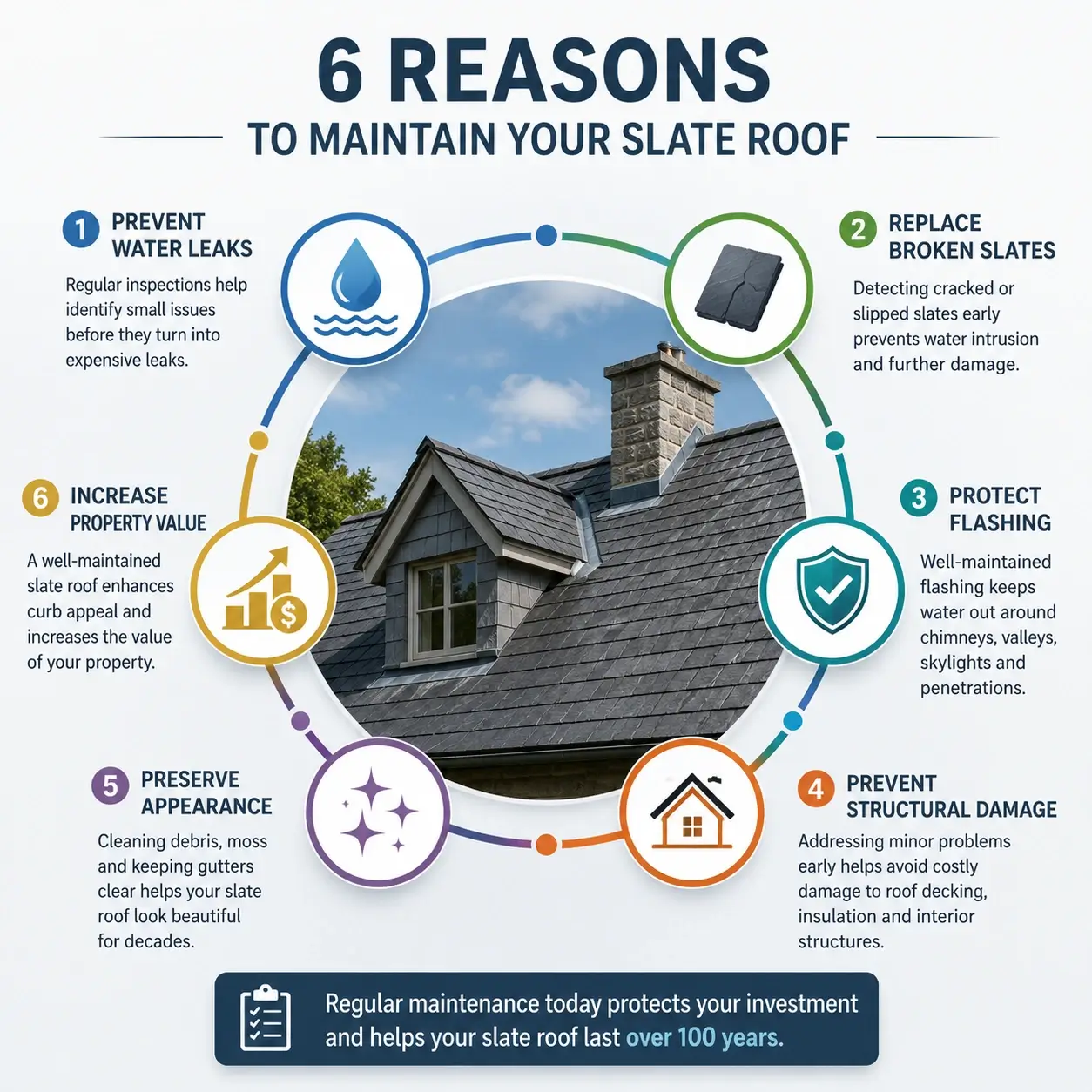
Benefits of Regular Slate Roof Maintenance
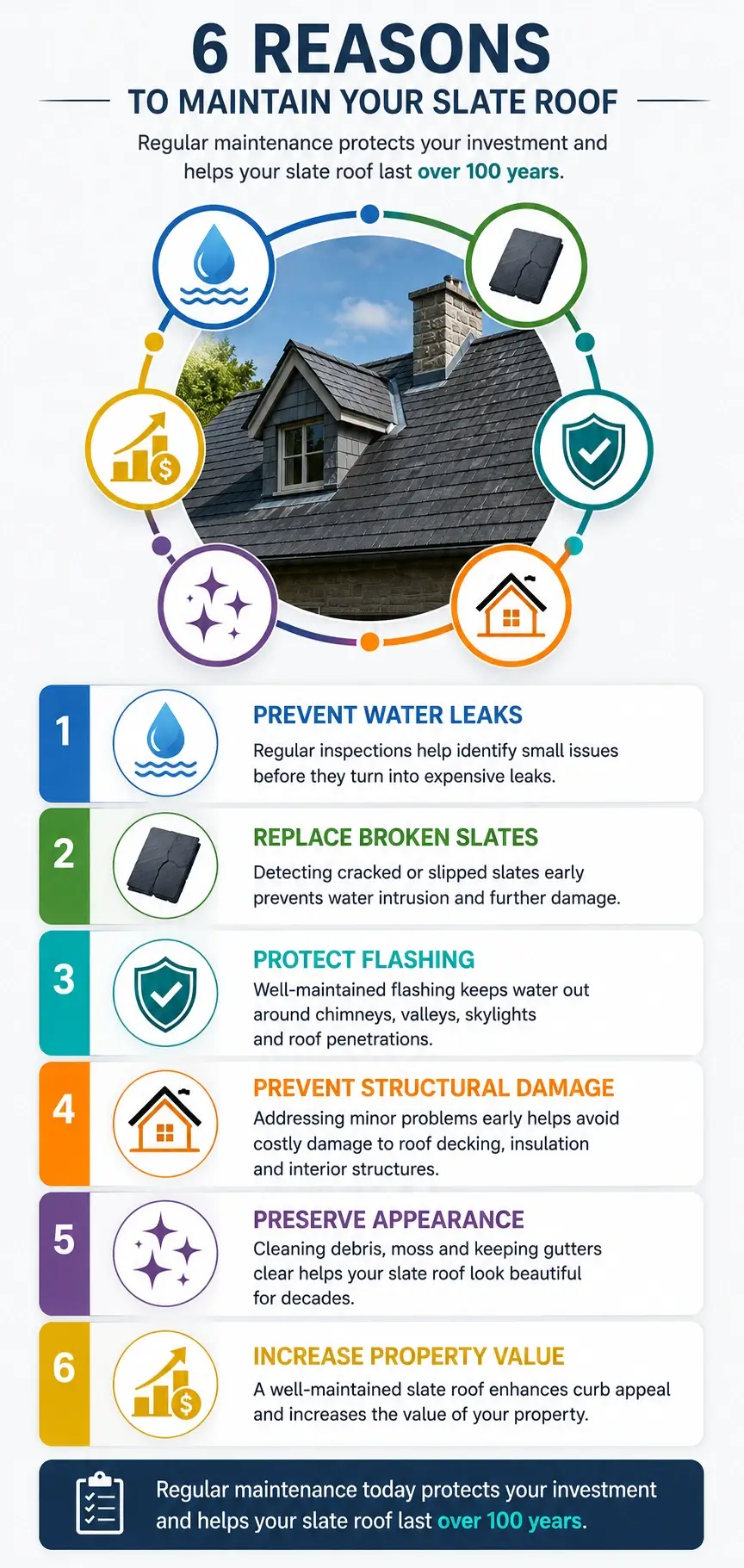
💧 Prevent Water Leaks
Small issues such as cracked slates, loose tiles, or deteriorated flashing can allow water to enter the roof structure. Regular inspections help detect these problems before they become serious leaks that damage ceilings, insulation, or interior finishes.
🪨 Detect Broken or Slipped Slates Early
Individual slate tiles can occasionally crack due to impact, severe weather, or aging fasteners. Finding and replacing damaged slates early prevents water penetration and helps maintain the integrity of the entire roofing system.
🛡 Protect Roof Flashing
Copper, lead, or zinc flashing around chimneys, valleys, skylights, and roof penetrations often reaches the end of its service life before the slate itself. Routine maintenance ensures flashing remains watertight and continues protecting vulnerable areas of the roof.
🏠 Avoid Costly Structural Damage
Minor roof problems can gradually affect roof decking, timber framing, insulation, and interior walls if left untreated. Preventive maintenance is far less expensive than repairing extensive structural damage caused by long-term water infiltration.
✨ Preserve the Natural Beauty of Slate Roofing
Removing leaves, moss, and debris while keeping gutters clean helps your slate roof maintain its elegant appearance. A clean, well-maintained roof also improves curb appeal and reflects the timeless character of natural slate.
💰 Increase Property Value
A properly maintained natural slate roof is considered a premium architectural feature. Documented inspections and timely repairs give buyers greater confidence, improve resale value, and demonstrate that the property has been well cared for.
Best Practices for Slate Roof Maintenance
Regular maintenance doesn’t require constant attention, but following a few simple practices can dramatically extend the life of your roof.
✔ Inspect your roof annually and after severe storms.
✔ Keep gutters, valleys, and drainage areas free from leaves and debris.
✔ Replace cracked or slipped slate tiles as soon as they are discovered.
✔ Check flashing around chimneys, skylights, and roof penetrations.
✔ Avoid walking directly on slate tiles unless absolutely necessary.
✔ Always use experienced slate roofing professionals for major repairs.
Key Takeaway
Natural roofing slate is one of the lowest-maintenance roofing materials available—but “low maintenance” doesn’t mean “no maintenance.” Regular inspections, prompt repairs, and simple preventive care can help your slate roof remain watertight, attractive, and structurally sound for more than a century.
How Often Should a Slate Roof Be Inspected?
Quick Answer
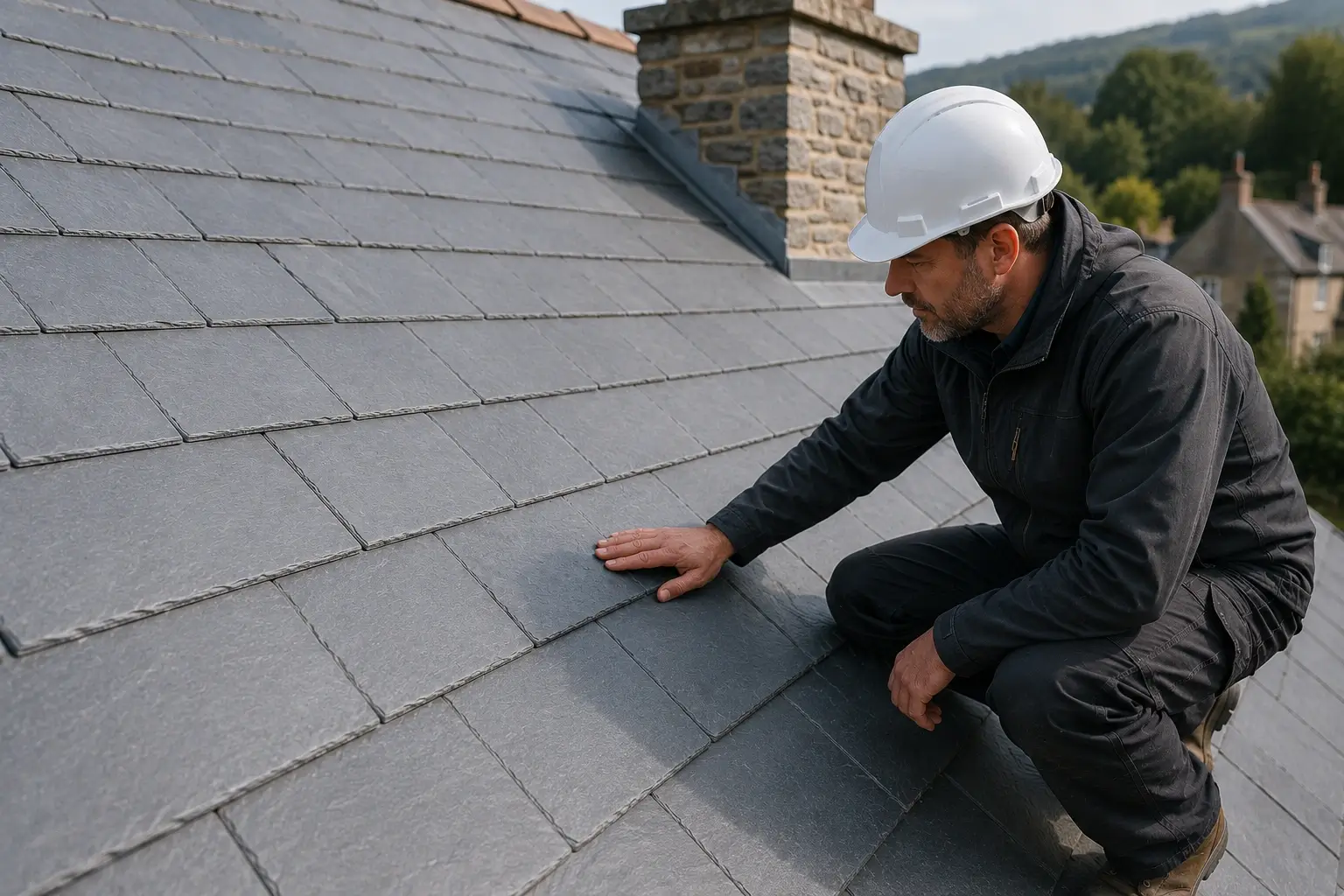
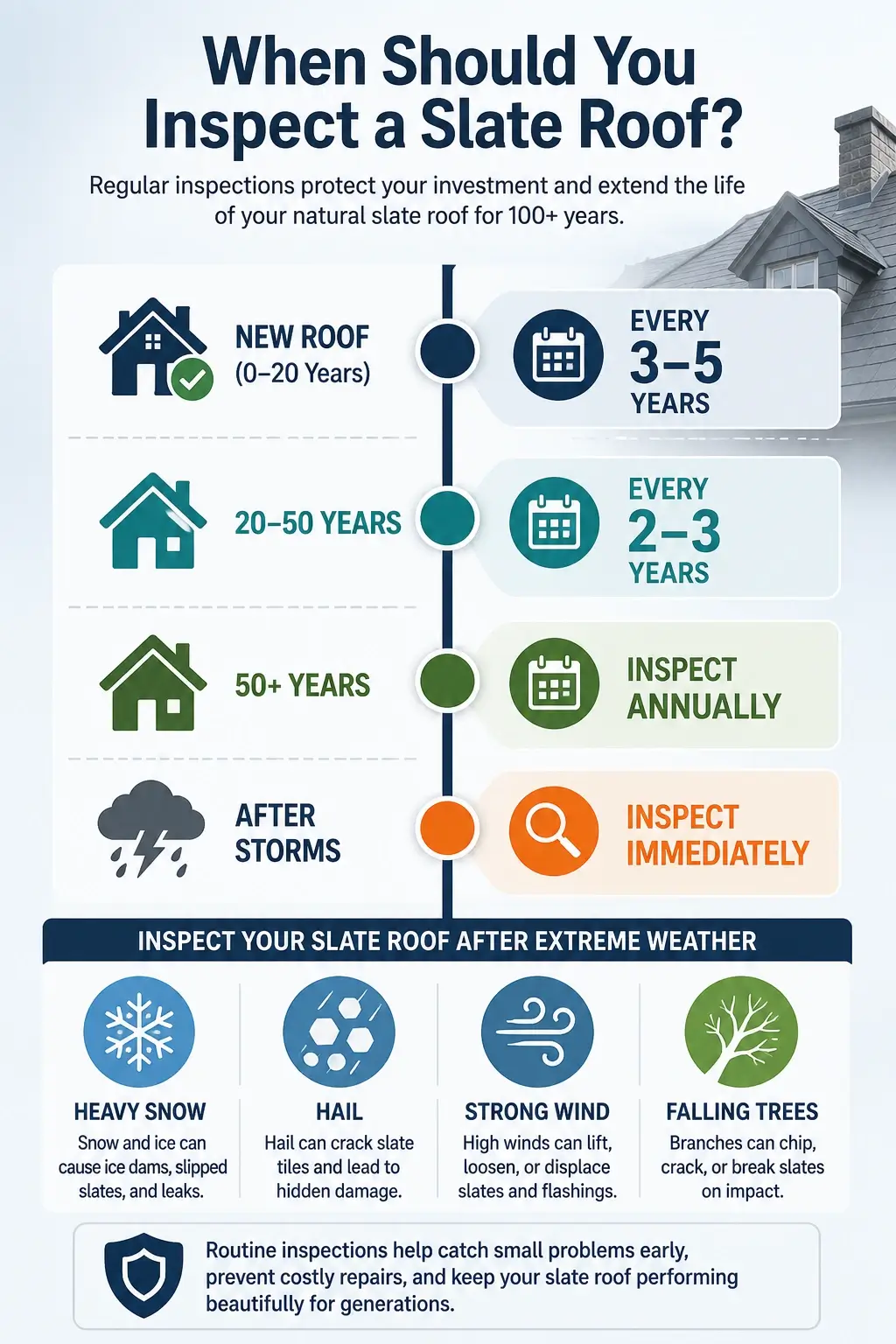
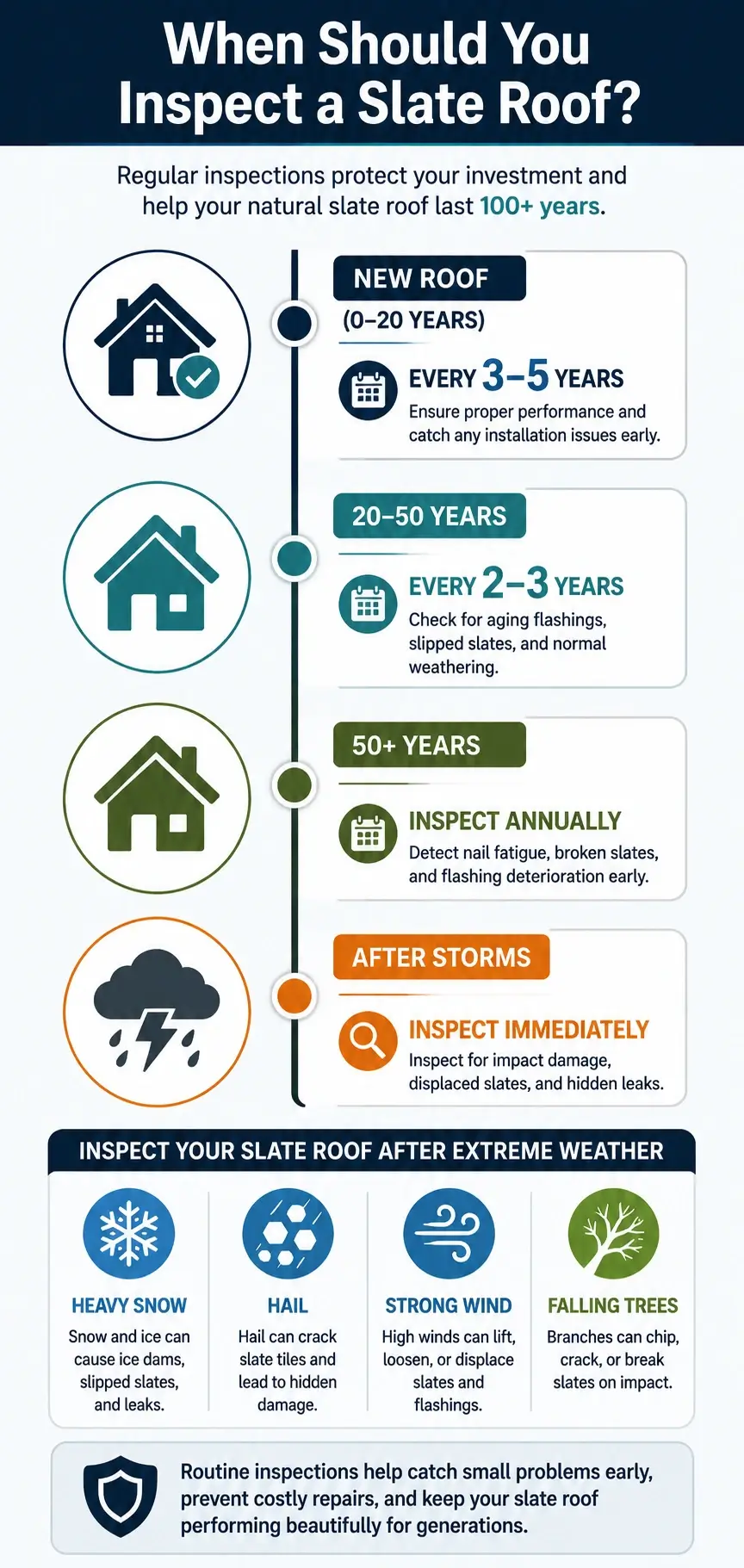
A natural slate roof does not require frequent maintenance, but it should be professionally inspected at least once every one to three years, depending on its age and condition. In addition, every slate roof should be inspected immediately after severe weather events such as hailstorms, heavy snow, strong winds, or falling tree branches.
Regular slate roof inspections help identify damaged slates, deteriorated flashing, blocked gutters, and other minor issues before they become expensive repairs.
Recommended Slate Roof Inspection Schedule
| Roof Age / Condition | Recommended Inspection Frequency | Why It Matters |
|---|---|---|
| New slate roof (0–20 years) | Every 3–5 years | Confirm proper performance and identify any installation-related issues. |
| Mature slate roof (20–50 years) | Every 2–3 years | Check for aging flashings, slipped slates, and normal weathering. |
| Older slate roof (50+ years) | Annually | Detect nail fatigue, broken slates, and flashing deterioration early. |
| After severe storms | Immediately | Inspect for impact damage, displaced slates, and hidden leaks. |
Pro Tip: Even if your slate roof looks perfect from the ground, hidden damage around valleys, chimneys, and flashing can only be detected during a close inspection.
Always Inspect Your Slate Roof After Extreme Weather
Routine inspections are important, but extra inspections are strongly recommended after severe weather because natural slate can be damaged by impact or excessive roof movement.
Inspect your roof after:
Heavy Snow
Heavy snow places additional weight on the roof and may cause ice dams, slipped slates, or hidden water infiltration after melting.
Hailstorms
Large hail can crack individual slate tiles without causing immediate leaks. Replacing damaged slates early prevents future water penetration.
Strong Winds
High winds may loosen ridge tiles, lift flashing, or displace individual slates, especially on older roofs.
Falling Tree Branches
Tree limbs can chip, crack, or break slate tiles even if the damage appears minor. Any visible impact should be inspected as soon as possible.
What Should Be Checked During an Inspection?
A professional slate roof inspection typically includes:
- ✔ Broken, cracked, or slipped slate tiles
- ✔ Copper, lead, or zinc flashing
- ✔ Roof ridges, hips, and valleys
- ✔ Gutters and downspouts
- ✔ Chimneys, skylights, and roof penetrations
- ✔ Signs of water intrusion or attic leaks
- ✔ Moss, algae, and accumulated debris
- ✔ Overall roof structure and drainage performance
Should You Inspect a Slate Roof Yourself?
A basic visual inspection from the ground using binoculars is safe for homeowners and can help identify obvious issues such as broken slates or clogged gutters.
However, avoid walking directly on a natural slate roof. Slate tiles are extremely durable against weather but can crack under concentrated foot pressure if stepped on incorrectly. Close inspections and repairs should always be carried out by experienced slate roofing professionals using the proper equipment and techniques.
Key Takeaway
Inspect your natural slate roof every 1–3 years, depending on its age, and always after severe weather. Regular inspections are one of the most effective ways to prevent leaks, reduce repair costs, and help a slate roof last well beyond 100 years.
Pro Tip: High-quality natural roofing slate, such as premium Jiujiang slate, is highly resistant to freeze-thaw cycles and harsh weather. Even so, routine inspections remain essential because flashing, fasteners, gutters, and surrounding roof components often age faster than the slate itself.
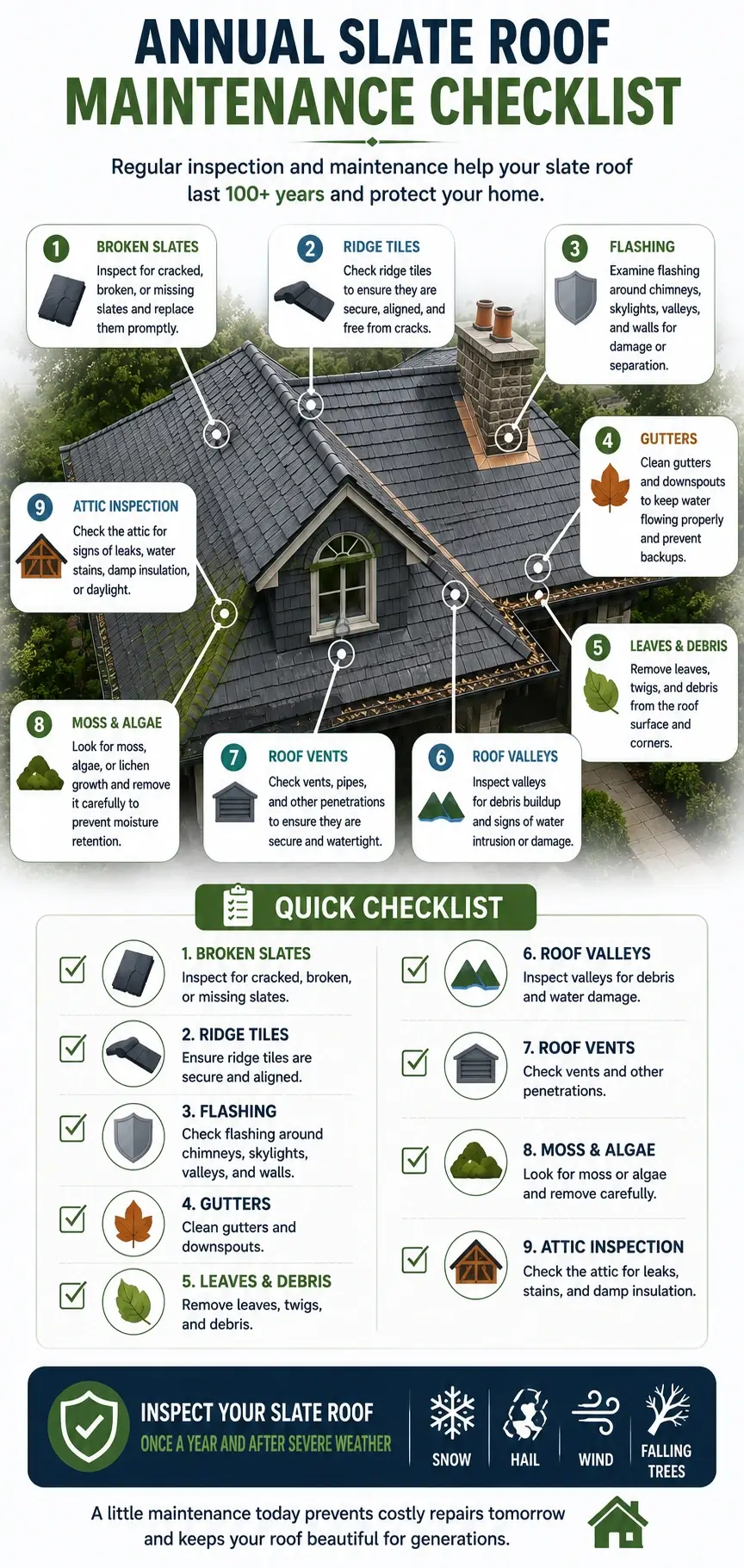
Slate Roof Maintenance Checklist
Regular maintenance is the simplest and most cost-effective way to keep a natural slate roof in excellent condition. While slate itself is exceptionally durable, other roofing components—such as flashing, gutters, and fasteners—can deteriorate over time. Performing a routine inspection helps identify minor issues before they become expensive repairs.
Use the checklist below at least once a year and after severe weather to help ensure your slate roof remains safe, watertight, and visually attractive.
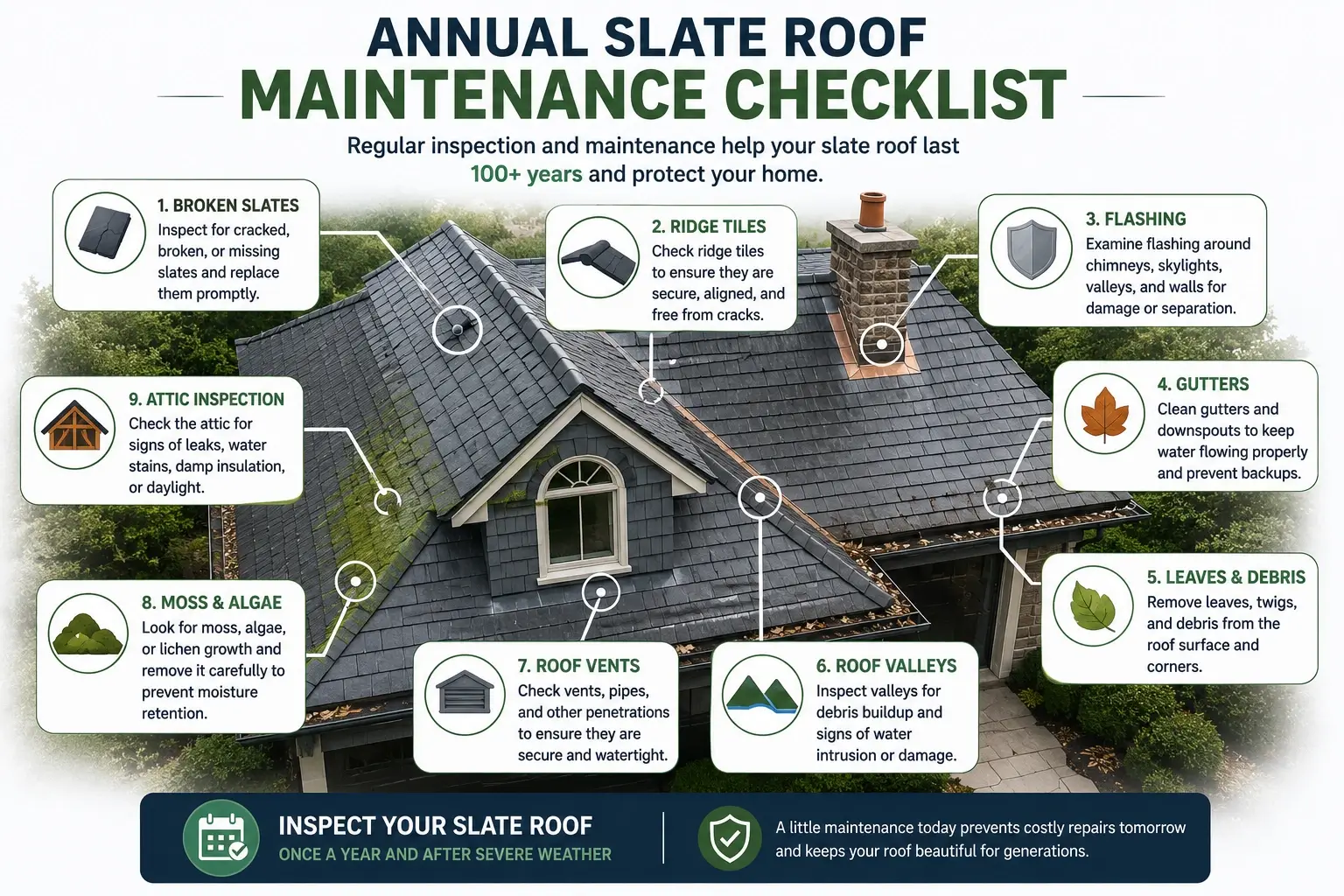
Annual Slate Roof Maintenance Checklist
| ✔ Maintenance Task | Why It Matters |
|---|---|
| Inspect Broken or Cracked Slates | Replace damaged slates promptly to prevent water leaks and further roof damage. |
| Check Ridge and Hip Tiles | Ensure ridge tiles remain secure and free from cracks or movement. |
| Examine Flashing | Inspect copper, lead, or zinc flashing around chimneys, valleys, skylights, and roof penetrations for signs of wear or separation. |
| Clean Gutters and Downspouts | Remove leaves, twigs, and debris to maintain proper drainage and prevent water backup. |
| Remove Leaves and Debris | Organic debris traps moisture and encourages moss growth, especially in valleys. |
| Inspect Roof Valleys | Valleys collect the most water and debris, making them one of the first areas to develop problems. |
| Check Roof Vents and Penetrations | Ensure vents, pipes, and surrounding seals remain watertight. |
| Look for Moss, Algae, or Lichen | Remove excessive growth carefully to avoid moisture retention and potential damage. |
| Inspect the Attic for Leaks | Check for damp insulation, water stains, or daylight entering through the roof. |
Maintenance Tips for Homeowners
Not every maintenance task requires climbing onto the roof. Many issues can be identified safely from the ground or inside the attic.
Safe DIY Tasks
✔ Visual roof inspection from the ground
✔ Clean gutters (using proper safety equipment)
✔ Remove leaves from accessible areas
✔ Check ceilings and attic for signs of leaks
Leave These Tasks to Professionals
- Replacing broken slate tiles
- Repairing flashing
- Walking on slate roofs
- Structural roof repairs
- Chimney and valley repairs
Natural slate is extremely durable but can crack if walked on incorrectly. Professional slate roofers use specialized techniques and equipment to inspect and repair slate roofs without causing unnecessary damage.
Warning Signs That Need Immediate Attention
If you notice any of the following, arrange a professional roof inspection as soon as possible:
⚠ Broken or missing slate tiles
⚠ Water stains on ceilings
⚠ Loose flashing around chimneys
⚠ Sagging gutters
⚠ Moss growing in roof valleys
⚠ Daylight visible from the attic
⚠ Slipped slate tiles
⚠ Interior leaks after heavy rain
Ignoring these warning signs may allow moisture to penetrate the roof structure, leading to more extensive and costly repairs.
Pro Tip
Keep a simple maintenance record with inspection dates, repairs, and photographs. A documented maintenance history helps monitor roof condition, supports insurance claims, and can increase your property’s resale value.
Key Takeaway
A well-maintained slate roof doesn’t require constant attention—just regular inspections, prompt repairs, and clean drainage. Following this checklist once a year can help your natural slate roof remain durable, attractive, and weatherproof for more than 100 years.
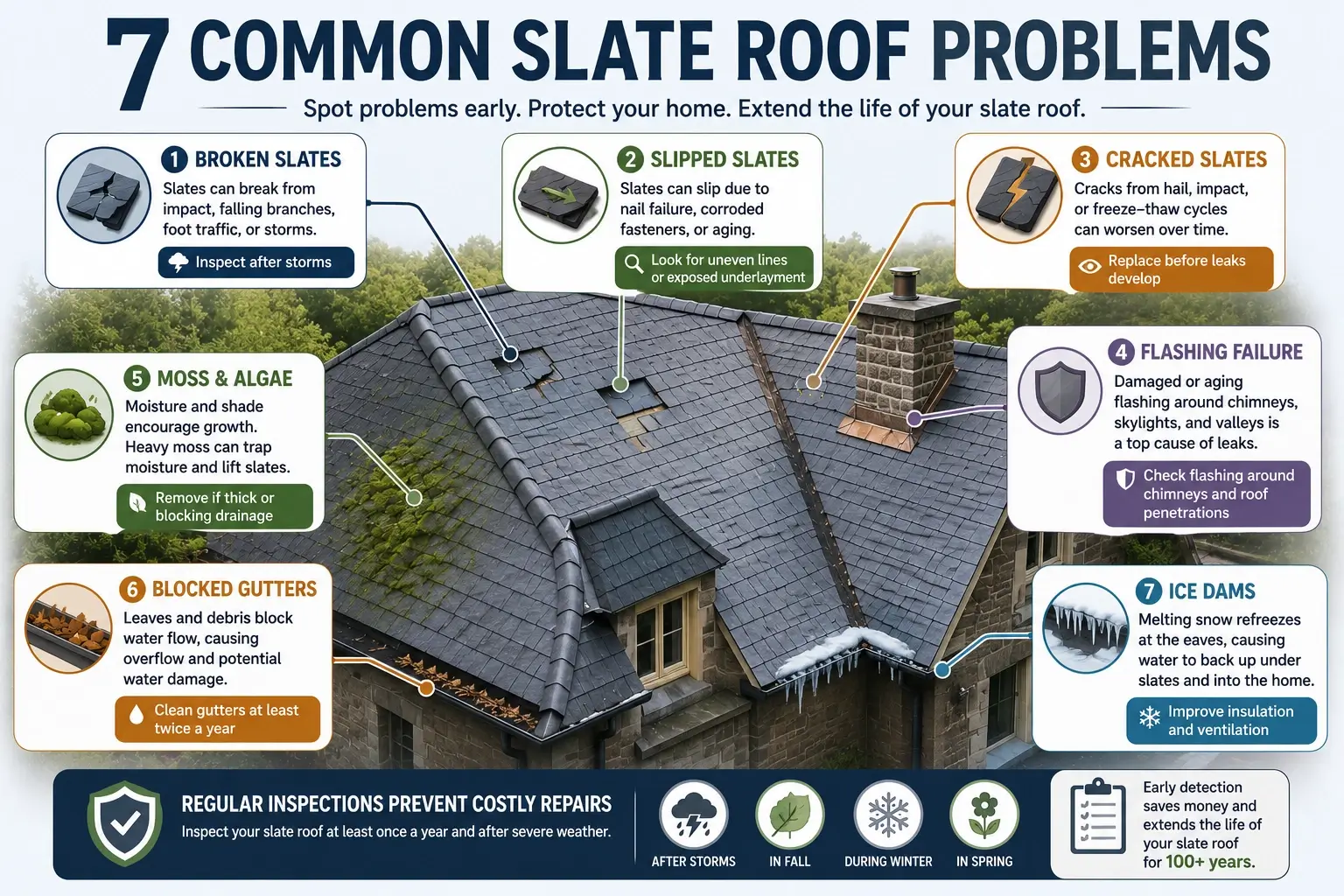
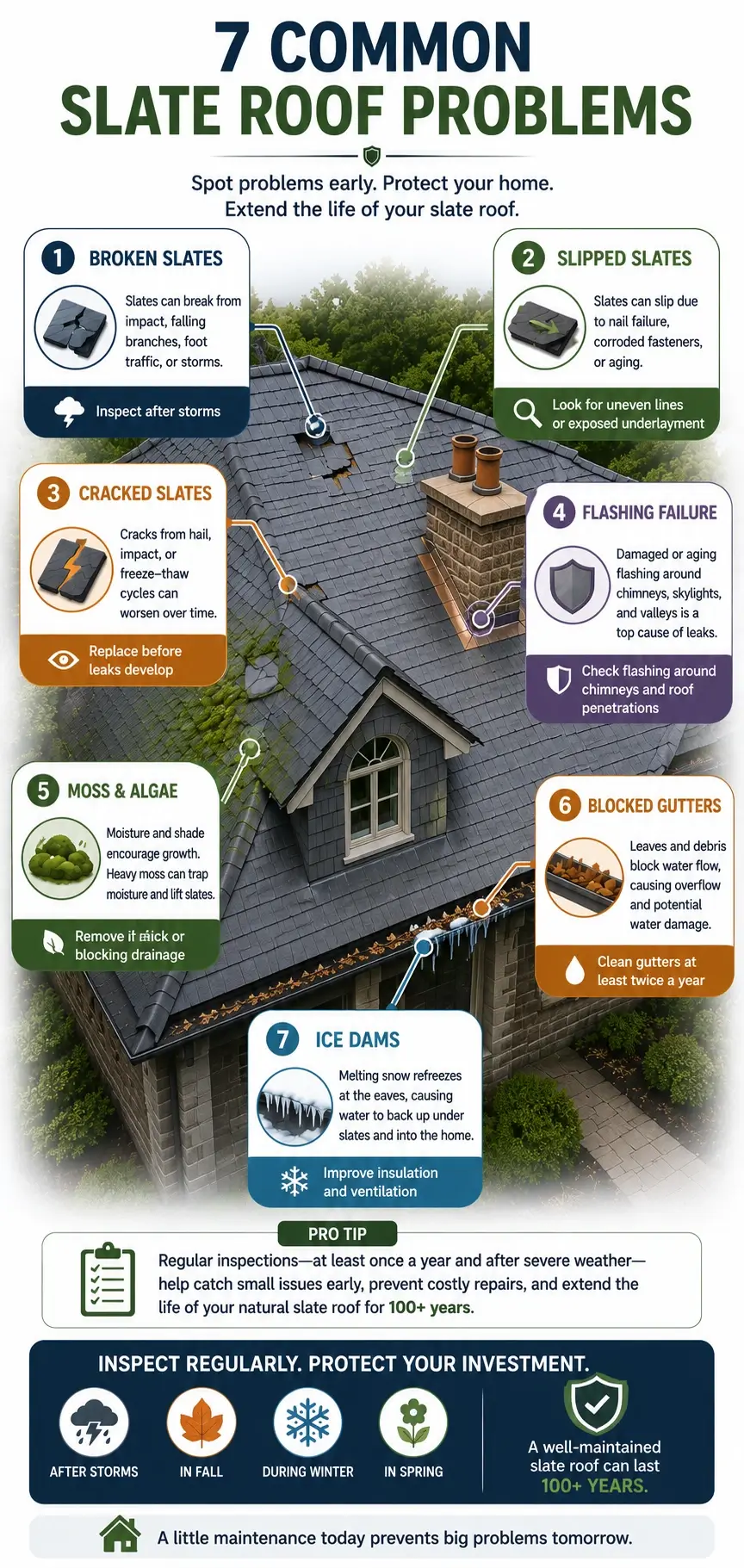
Common Slate Roof Problems
Natural roofing slate is one of the most durable roofing materials available, but no roofing system is completely immune to wear, weather, or accidental damage. Fortunately, most slate roof problems develop gradually and can be repaired before they become serious if identified early.
Below are the most common slate roof issues, their causes, warning signs, and recommended solutions.
Broken Slate Tiles
Broken slates are among the most common issues found on slate roofs. Although natural slate is extremely strong, individual tiles can crack or break when subjected to heavy impact.
Common Causes
- Falling tree branches
- Foot traffic during roof work
- Hail or storm damage
- Improper installation
- Impact from tools or equipment
Warning Signs
✔ Missing slate pieces
✔ Visible cracks
✔ Water stains inside the house
✔ Slate fragments in gutters
Recommended Solution
Replace damaged slate tiles as soon as possible using matching natural slate and proper slate roofing techniques.
Slipped Slate Tiles
A slipped slate occurs when a tile moves out of position, exposing the underlayment beneath.
Unlike broken slates, the tile itself is often still intact.
Common Causes
- Nail fatigue
- Corroded fasteners
- Aging roof structure
- Storm movement
Warning Signs
✔ Uneven roof lines
✔ Gaps between slates
✔ Visible nail holes
✔ Exposed roof felt
Recommended Solution
A professional roofer should reinstall or replace the slate using copper nails or slate hooks.
Cracked Slate Tiles
Hairline cracks may not leak immediately but usually become larger over time due to weather exposure.
Common Causes
- Hail impact
- Falling objects
- Freeze-thaw cycles
- Foot pressure
Warning Signs
✔ Thin visible cracks
✔ Loose corners
✔ Damp spots after rain
Recommended Solution
Replace cracked slates before moisture reaches the roof deck.
Flashing Failure
Many homeowners assume that roof leaks are caused by damaged slate tiles.
In reality, roof flashing is responsible for a large percentage of slate roof leaks.
Flashing protects vulnerable areas around chimneys, valleys, skylights, dormers, and roof penetrations.
Common Causes
- Aging copper or lead flashing
- Poor installation
- Storm damage
- Corrosion
- Thermal movement
Warning Signs
✔ Leaks near chimneys
✔ Water stains around skylights
✔ Rust or separated flashing
✔ Damp attic insulation
Recommended Solution
Replace damaged flashing before replacing perfectly good slate tiles.
Moss and Algae Growth
Moss is common on slate roofs located in shaded or damp environments.
Small amounts of moss are usually cosmetic, but excessive growth can trap moisture and block drainage.
When It Needs Attention
- Thick moss mats
- Moss growing beneath slate edges
- Blocked valleys
- Water drainage problems
When It Usually Doesn’t
A light layer of moss on an older roof is often harmless and does not require immediate removal.
Recommended Solution
Use soft brushing and approved roof cleaners.
Never use a pressure washer on natural slate.
Blocked Gutters
Leaves, twigs, and debris can prevent rainwater from draining properly.
Overflowing gutters often allow water to back up beneath slate tiles and around roof edges.
Common Causes
- Autumn leaves
- Pine needles
- Moss debris
- Bird nests
Warning Signs
✔ Overflowing gutters
✔ Standing water
✔ Plants growing in gutters
✔ Water stains on exterior walls
Recommended Solution
Clean gutters at least twice a year or more frequently if trees surround the property.
Ice Dams
Ice dams are a common winter roofing problem in northern climates.
They form when melting snow refreezes at the roof edge, preventing proper drainage.
Common Causes
- Poor attic insulation
- Heat escaping from the house
- Heavy snowfall
- Freeze-thaw weather
Warning Signs
✔ Icicles along eaves
✔ Water leaking indoors
✔ Ice buildup near gutters
Recommended Solution
Improve attic insulation and ventilation rather than attempting to chip away ice directly from the slate roof.
Summary Table
| Problem | Main Cause | Recommended Action |
|---|---|---|
| Broken Slates | Impact damage | Replace damaged slate |
| Slipped Slates | Nail failure | Re-fix with copper nails or slate hooks |
| Cracked Slates | Hail / Freeze-thaw | Replace before leaks develop |
| Flashing Failure | Aging flashing | Repair or replace flashing |
| Moss & Algae | Moisture and shade | Remove carefully if excessive |
| Blocked Gutters | Leaves and debris | Clean gutters regularly |
| Ice Dams | Snow and poor insulation | Improve insulation and ventilation |
Key Takeaway
Most slate roof problems are minor when detected early. Regular inspections, timely repairs, and proper maintenance can prevent leaks, preserve your roof’s appearance, and help a natural slate roof last for more than a century.
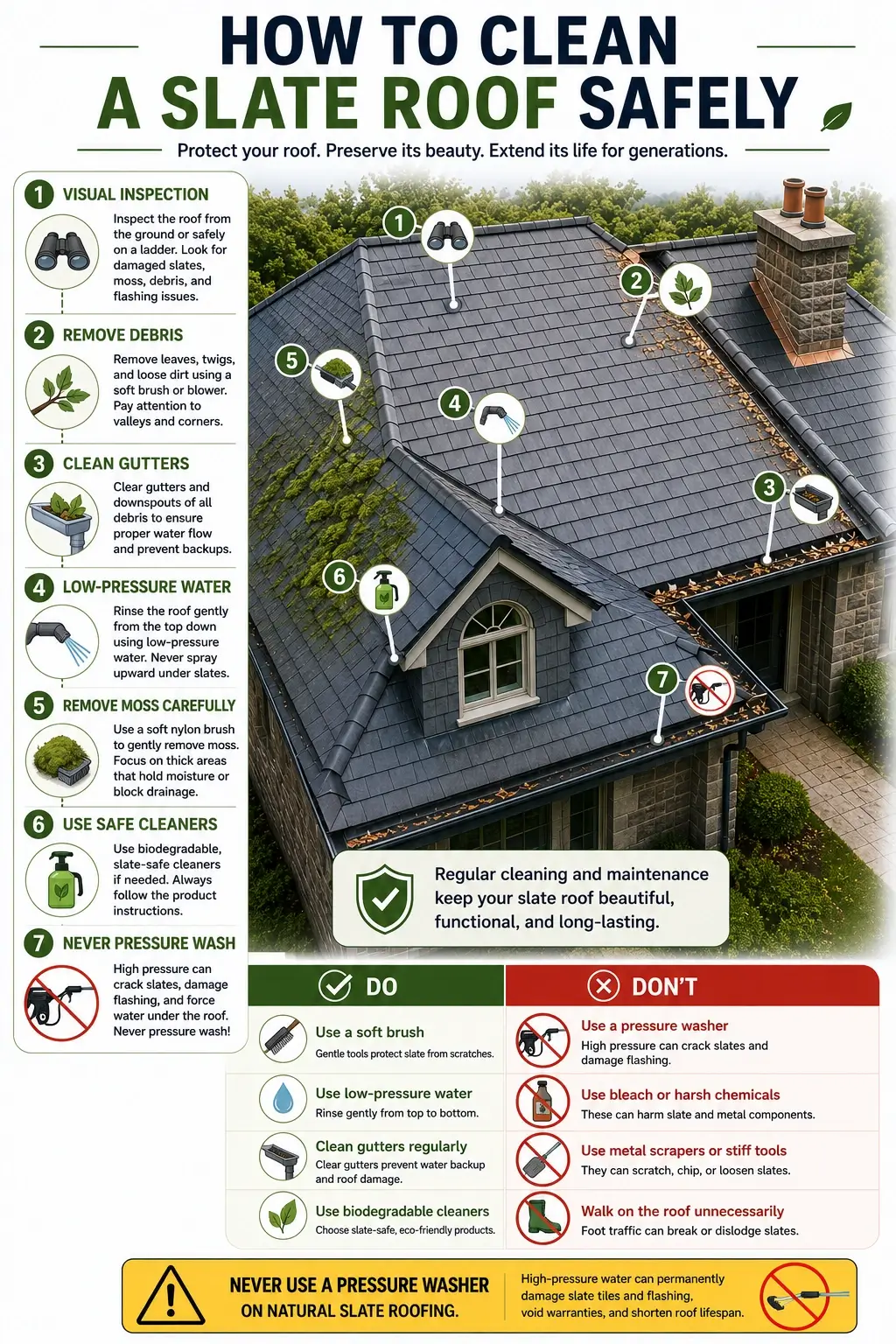
How to Clean a Slate Roof
Natural slate roofs require far less cleaning than many other roofing materials. However, over time, leaves, dirt, moss, algae, and other debris can accumulate on the roof surface, especially in shaded or damp environments. Cleaning your slate roof correctly helps maintain its appearance, improves drainage, and prevents minor maintenance issues from developing into costly repairs.
The key is to clean the roof gently without damaging the slate tiles. Improper cleaning methods—especially pressure washing—can crack slates, loosen fasteners, and significantly shorten the roof’s lifespan.
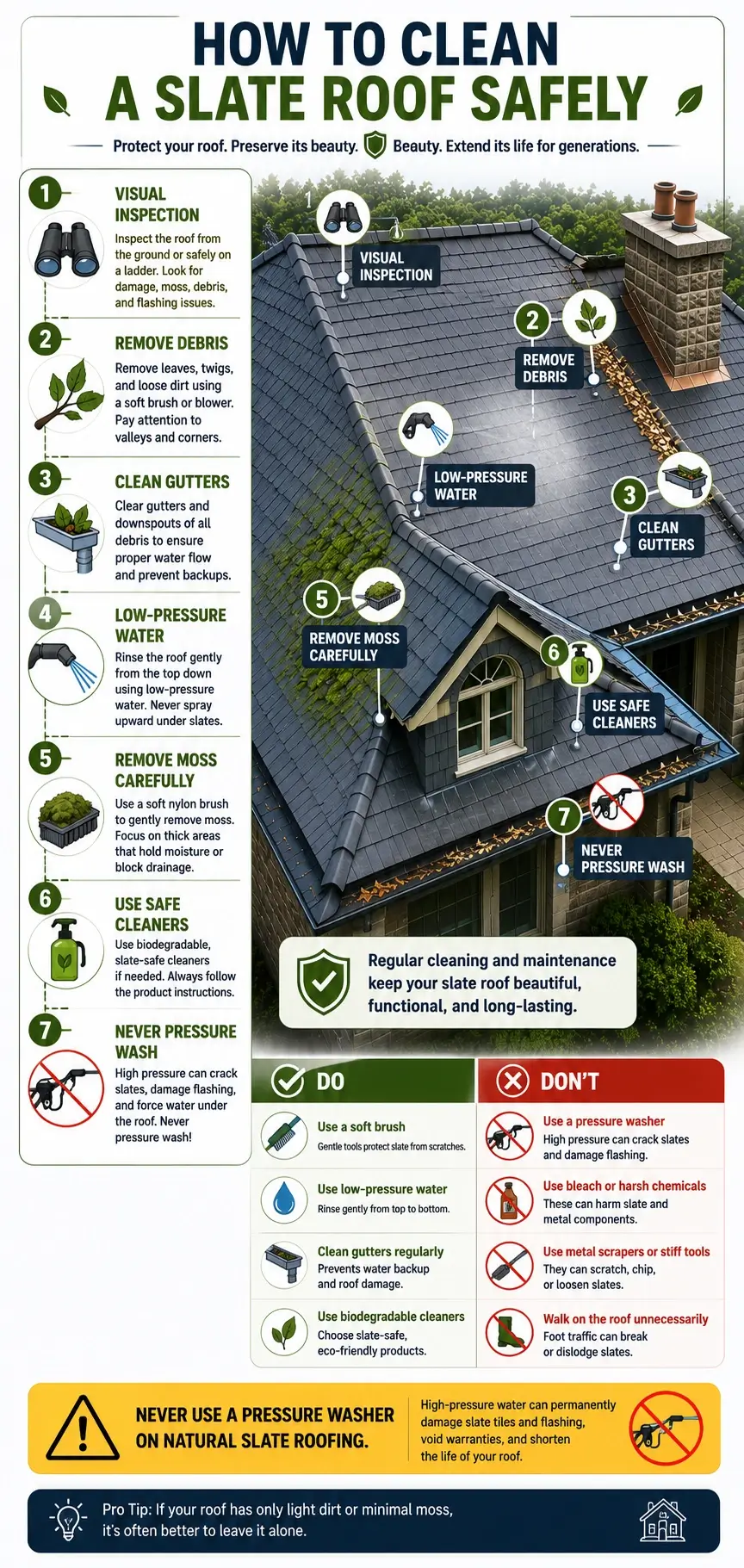
Step 1: Perform a Visual Inspection
Before cleaning, inspect the roof from the ground or with binoculars.
Look for:
- Broken slate tiles
- Slipped slates
- Loose flashing
- Heavy moss growth
- Blocked gutters
- Fallen branches
If significant damage is visible, repair the roof before beginning any cleaning work.
Step 2: Remove Loose Debris
Carefully remove:
- Leaves
- Small branches
- Pine needles
- Dirt accumulation
Pay special attention to roof valleys where debris tends to collect.
Whenever possible, use a soft brush or leaf blower rather than metal tools that could scratch the slate surface.
Step 3: Clean Gutters and Downspouts
Blocked gutters prevent rainwater from draining properly and may cause water to back up beneath the slate tiles.
Clean:
- Gutters
- Downspouts
- Valley outlets
Proper drainage is essential for protecting both the slate roof and the building structure.
Step 4: Rinse with Low-Pressure Water
If additional cleaning is necessary, rinse the roof gently using low-pressure water from the top of the roof downward.
Avoid directing water upward beneath the slate tiles, as this may force moisture into the roof structure.
Low-pressure rinsing is generally sufficient to remove dust and surface dirt without damaging the slate.
Step 5: Remove Moss Carefully
Small patches of moss are usually cosmetic and do not always require immediate removal.
However, thick moss should be removed if it:
- Blocks drainage
- Lifts slate edges
- Retains excessive moisture
Use:
✔ Soft nylon brush
✔ Approved biodegradable roof cleaner
✔ Gentle hand cleaning
Never scrape moss aggressively with metal tools.
Step 6: Avoid Harsh Chemicals
Some cleaning products can damage natural slate or surrounding metal components.
Avoid using:
- Bleach
- Acidic cleaners
- Abrasive chemicals
- Strong solvents
Instead, choose cleaning products specifically designed for natural stone or slate roofing.
Step 7: Never Pressure Wash a Slate Roof
Never use a pressure washer on natural slate roofing.
High-pressure water can:
- Crack slate tiles
- Loosen copper nails
- Damage flashing
- Remove the natural weathered surface
- Force water beneath the slates
- Shorten the life of the roof
Professional slate roof contractors almost never recommend pressure washing.
If your roof requires heavy cleaning, consult an experienced slate roofing specialist instead.
Cleaning Do’s and Don’ts
| ✔ Recommended | ✘ Avoid |
|---|---|
| Soft brush | Pressure washer |
| Low-pressure rinse | High-pressure water |
| Biodegradable cleaner | Bleach |
| Clean gutters regularly | Walking unnecessarily on the roof |
| Remove debris gently | Metal scrapers |
| Annual inspection | Ignoring moss buildup |
Pro Tip
If your slate roof only has light dust or a small amount of moss, it is often better to leave it alone than to risk damaging the slate through aggressive cleaning. Natural weathering does not reduce the durability of high-quality slate.
Key Takeaway
The safest way to clean a natural slate roof is with gentle methods—remove debris, keep gutters clear, rinse with low-pressure water when necessary, and avoid harsh chemicals. Above all, never pressure wash a slate roof, as it can cause permanent damage and significantly reduce the roof’s service life.
Moss Removal Guide for Slate Roofs
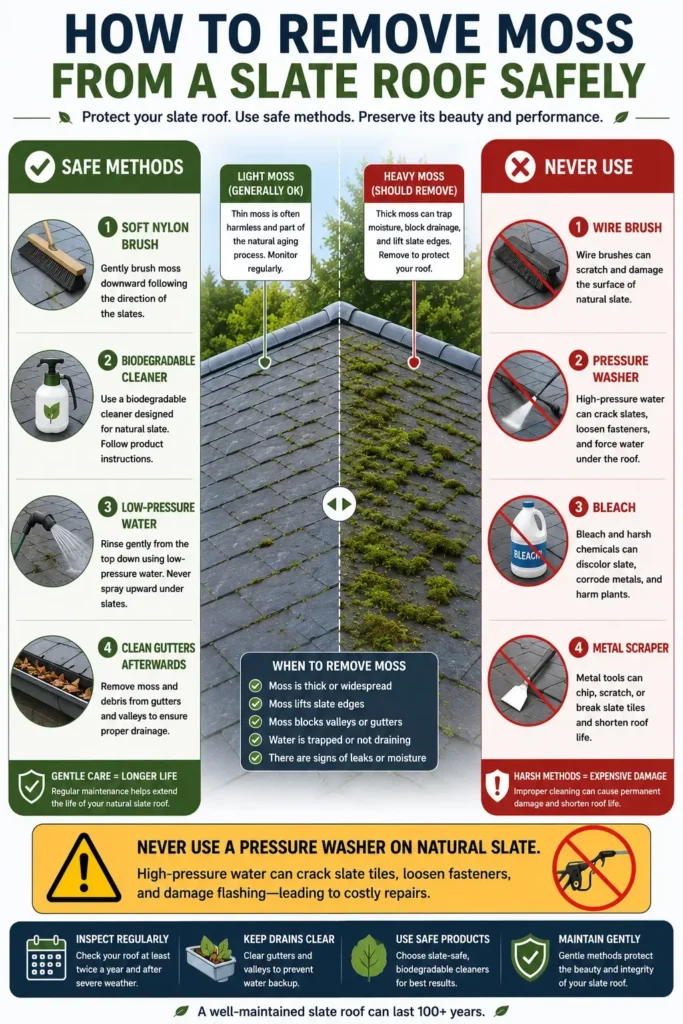
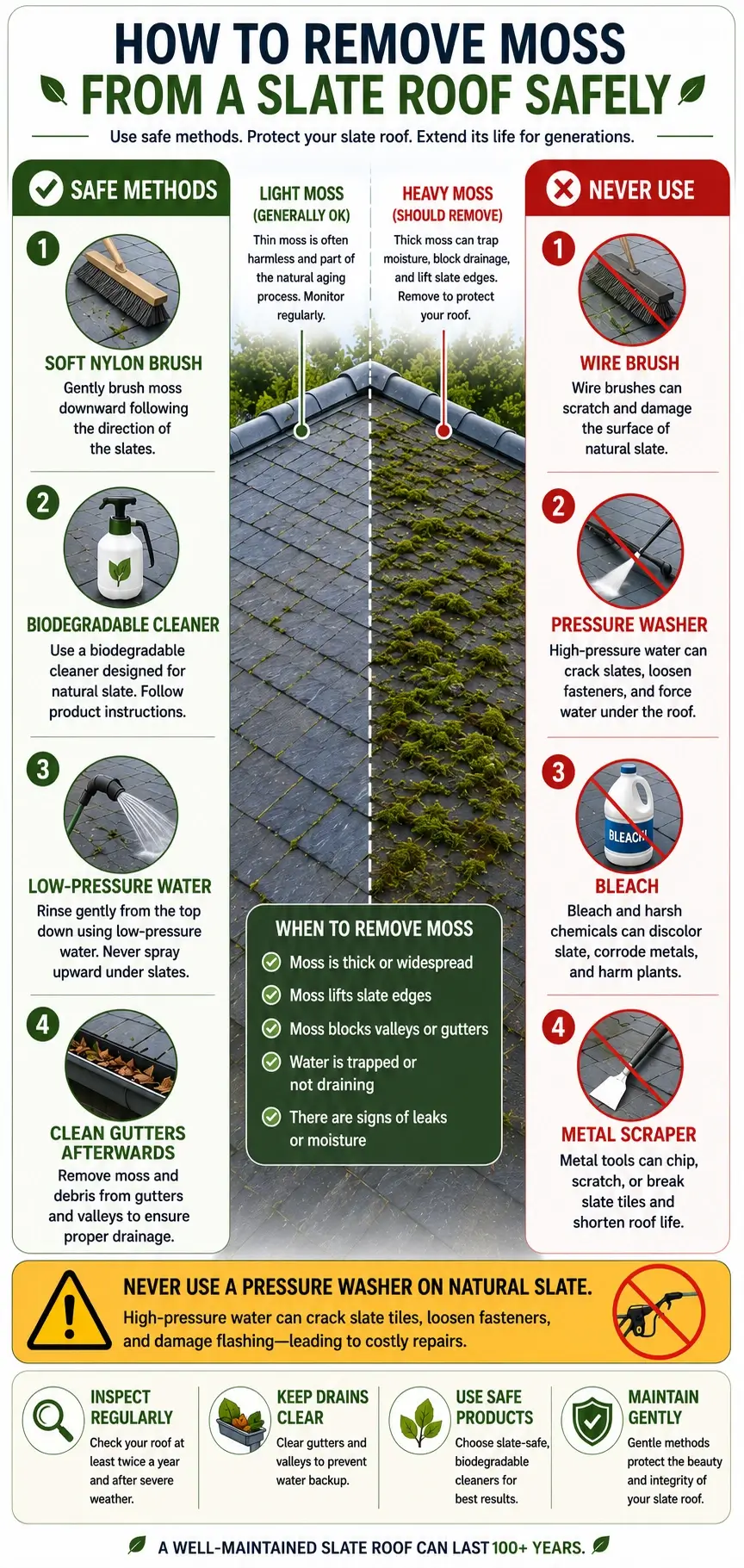
Moss is a common sight on natural slate roofs, especially in shaded, damp, or tree-covered areas. While a small amount of moss is often harmless, excessive growth can trap moisture, block drainage, and lift the edges of slate tiles over time.
The key is knowing when moss should be removed and when it can be safely left alone. Unnecessary or aggressive cleaning may cause more damage than the moss itself.
When Should Moss Be Removed?
Moss removal is recommended when it begins to affect the performance of the roof rather than simply its appearance.
Remove moss if you notice:
✔ Thick moss mats covering large areas
✔ Moss growing beneath the edges of slate tiles
✔ Moss blocking roof valleys or gutters
✔ Standing water caused by poor drainage
✔ Moss trapping leaves and debris
These conditions can retain moisture for extended periods and increase the risk of leaks or frost damage.
When Can Moss Be Left Alone?
Not every patch of moss requires immediate attention.
In many cases, light moss growth is simply part of the natural aging process of a slate roof and does not reduce the durability of the slate.
You can usually leave moss alone if:
- It forms only a thin surface layer.
- It is not lifting slate tiles.
- Water drains freely from the roof.
- Gutters and valleys remain clear.
- There are no signs of leaks or moisture problems.
For many historic slate roofs, a light layer of moss is considered normal and even contributes to the roof’s natural character.
Safe Methods for Removing Moss
The safest approach is always the gentlest one.
✔ Soft Brush
Use a soft nylon brush to gently loosen moss without scratching the slate surface.
Always brush downward, following the direction of the slate installation.
✔ Biodegradable Roof Cleaner
If moss is difficult to remove manually, apply a biodegradable cleaner designed specifically for natural stone or slate roofing.
Allow the cleaner to work naturally before rinsing.
Avoid products containing harsh acids or strong bleach.
✔ Low-Pressure Water Rinse
After brushing, rinse the roof gently with low-pressure water to remove loose moss and dirt.
Always spray from the top of the roof downward.
Never direct water upward beneath the slate tiles.
What to Avoid
Using the wrong cleaning methods can damage an otherwise healthy slate roof.
✘ Wire Brush
Wire brushes can scratch the natural surface of slate and weaken tile edges.
✘ Pressure Washer
High-pressure water can:
- Crack slate tiles
- Loosen fasteners
- Damage flashing
- Force water beneath the roof covering
Never use a pressure washer on natural slate roofing.
✘ Bleach or Harsh Chemicals
Strong chemical cleaners may discolor natural slate, corrode metal flashing, and harm nearby plants or landscaping.
Always choose cleaners specifically approved for natural slate or stone roofs.
Moss Removal Do’s and Don’ts
| ✔ Recommended | ✘ Avoid |
|---|---|
| Soft nylon brush | Wire brush |
| Biodegradable cleaner | Bleach |
| Low-pressure rinse | Pressure washer |
| Remove thick moss | Aggressive scraping |
| Clean gutters afterwards | Walking unnecessarily on the roof |
Pro Tip
Moss itself is rarely the main problem. The real concern is the moisture and debris it can trap. If light moss is not affecting drainage or lifting slate tiles, it is often better to monitor it rather than remove it aggressively.
Key Takeaway
Light moss on a slate roof is not always harmful. Remove moss only when it begins to trap moisture, block drainage, or lift slate tiles. Use gentle cleaning methods such as a soft brush, biodegradable cleaner, and low-pressure water, and never use wire brushes or pressure washers on natural slate roofing.
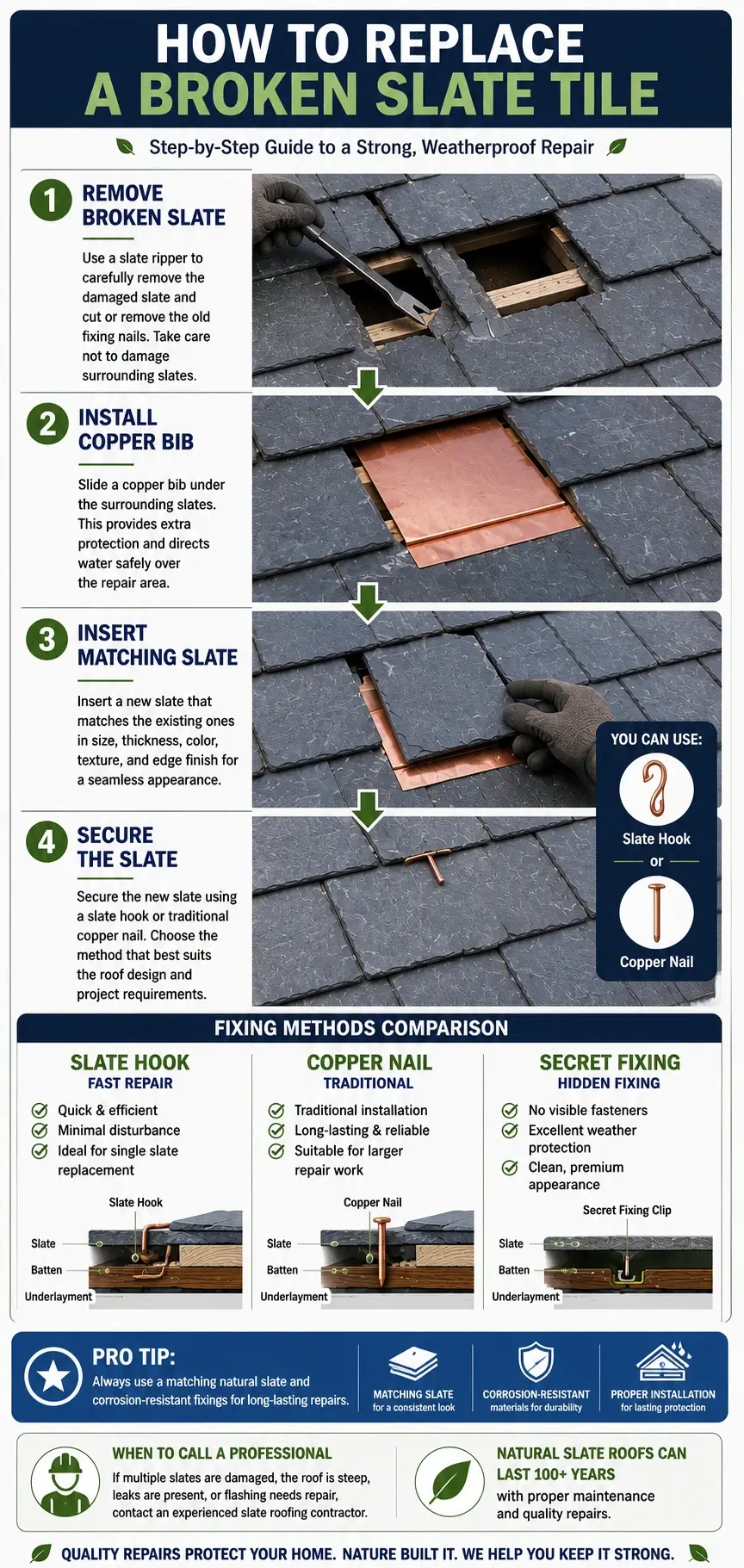
Replacing a Broken Slate Tile
Individual slate tiles can occasionally become cracked or broken due to storm damage, falling branches, foot traffic, or aging fasteners. Fortunately, one of the greatest advantages of a natural slate roof is that individual slates can usually be replaced without removing the entire roof.
When carried out correctly, replacing a single damaged slate restores the roof’s weather resistance while preserving its original appearance. The repair should always use a matching natural slate and corrosion-resistant fixings to ensure long-term performance.
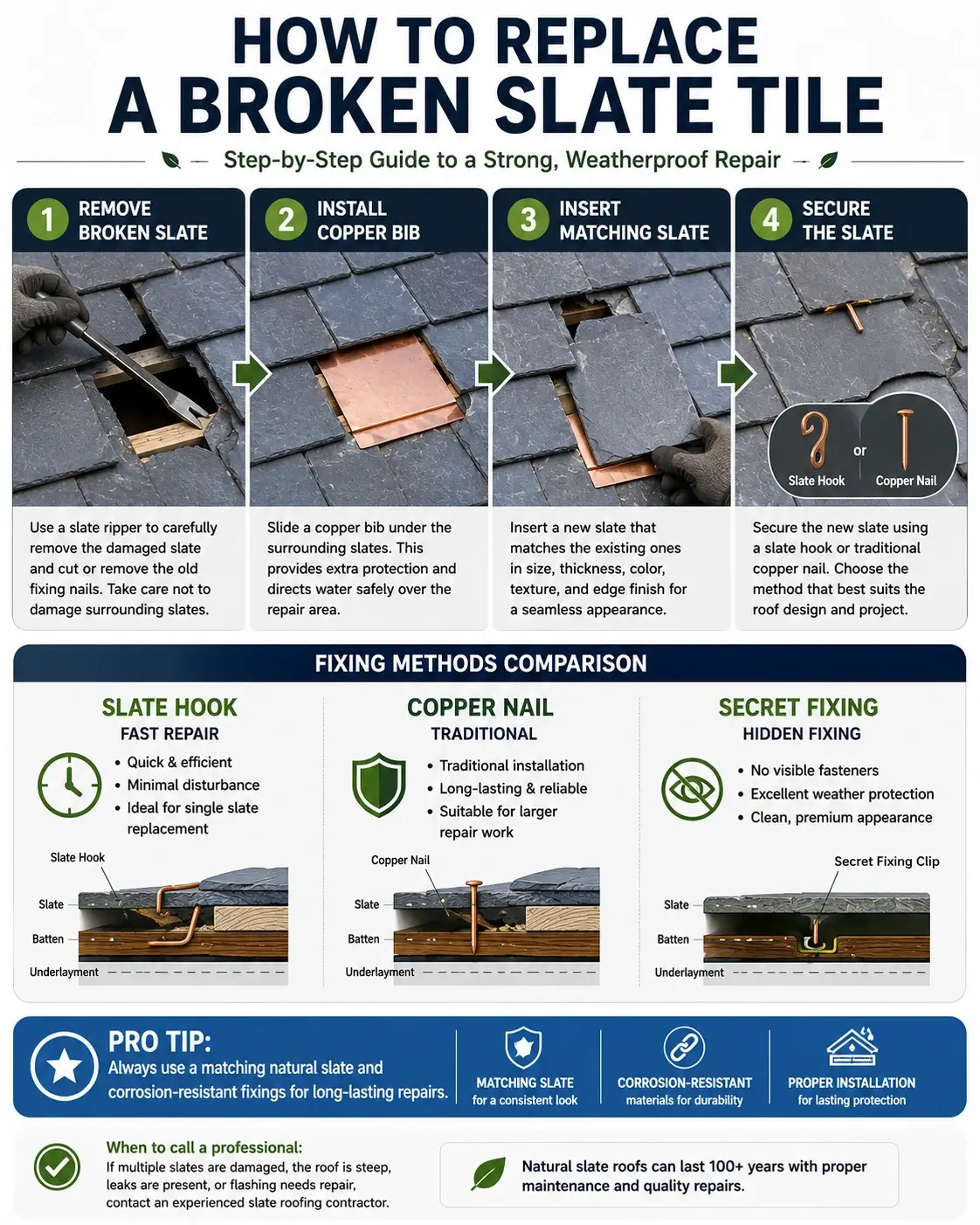
Step 1: Remove the Damaged Slate
The damaged slate is carefully extracted using a slate ripper, which cuts or removes the old fixing nails without disturbing the surrounding slates.
Take care not to damage adjacent tiles during removal.
Step 2: Install a Copper Bib (When Required)
If the original fixing cannot be reused, a copper bib may be installed beneath the surrounding slates to provide additional weather protection and direct rainwater safely over the repair area.
Copper is widely used because it is durable, corrosion-resistant, and compatible with natural slate roofing.
Step 3: Insert the Replacement Slate
Choose a replacement slate that matches the existing roof in:
- Size
- Thickness
- Color
- Surface texture
- Edge finish
A well-matched replacement blends naturally with the surrounding roof and maintains a consistent appearance.
Step 4: Secure the New Slate
Depending on the roof design and local roofing practice, the new slate may be fixed using one of the following methods.
Slate Hook
A stainless steel or copper slate hook supports the replacement slate without removing surrounding tiles.
Advantages
✔ Fast installation
✔ Minimal disturbance to the roof
✔ Commonly used for repair work
Traditional Copper Nail
The replacement slate is fixed using copper nails, following traditional installation methods.
Advantages
✔ Traditional appearance
✔ Suitable during larger repair projects
✔ Long service life
Secret Fixing
Some premium roofing systems use concealed fixing methods so that no visible fasteners appear on the finished roof.
Advantages
✔ Clean appearance
✔ Excellent weather protection
✔ Preferred for high-end architectural projects
Choosing the Right Repair Method
| Repair Method | Best For | Advantages |
|---|---|---|
| Slate Hook | Single slate replacement | Fast, reliable, minimal disturbance |
| Copper Nail | Traditional repairs | Authentic installation, long-lasting |
| Secret Fixing | Premium roofs | Hidden fixings and elegant appearance |
When Should You Call a Professional?
Replacing a single slate may appear straightforward, but working on a slate roof requires specialized tools and experience.
Professional repair is recommended if:
- More than one slate is damaged
- The roof is steep or difficult to access
- Flashing also requires repair
- There are signs of water leaks
- The roof is historic or architecturally significant
Walking on slate incorrectly can crack otherwise sound tiles and increase repair costs.
Pro Tip
Always replace a damaged slate with a matching natural slate of the same size, thickness, and quality. Even a perfectly installed repair may stand out if the replacement slate differs in color or texture from the existing roof.
Key Takeaway
One of the greatest benefits of natural slate roofing is that individual damaged slates can usually be replaced without replacing the entire roof. Using matching slate, corrosion-resistant fixings, and the appropriate repair method helps restore weather protection while preserving the roof’s appearance and longevity.
At SlateofChina, we supply matching natural roofing slate in a wide range of sizes, thicknesses, colors, and edge finishes, making it easier for roofing contractors and distributors to carry out high-quality slate roof repairs while maintaining a consistent appearance.
Seasonal Slate Roof Maintenance
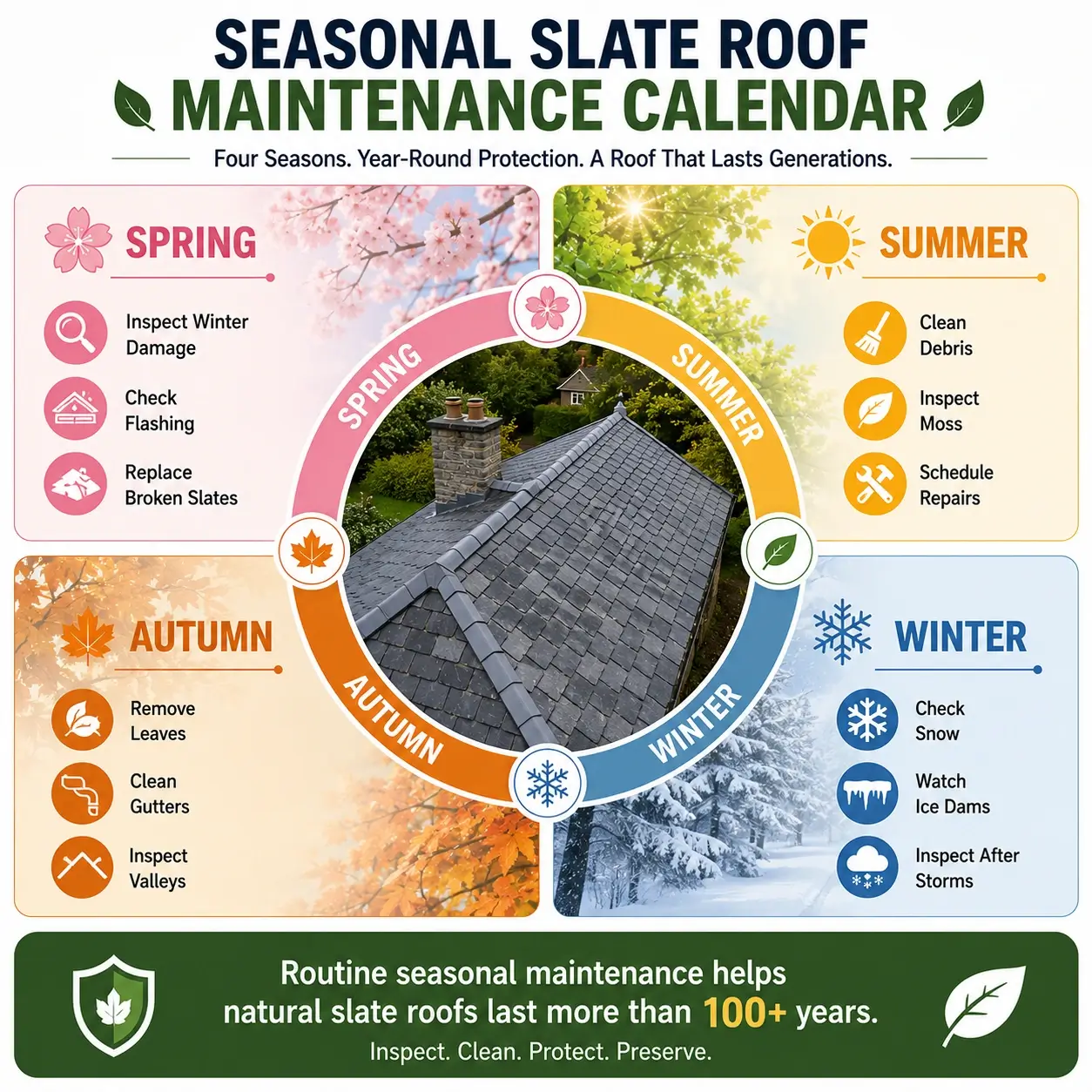
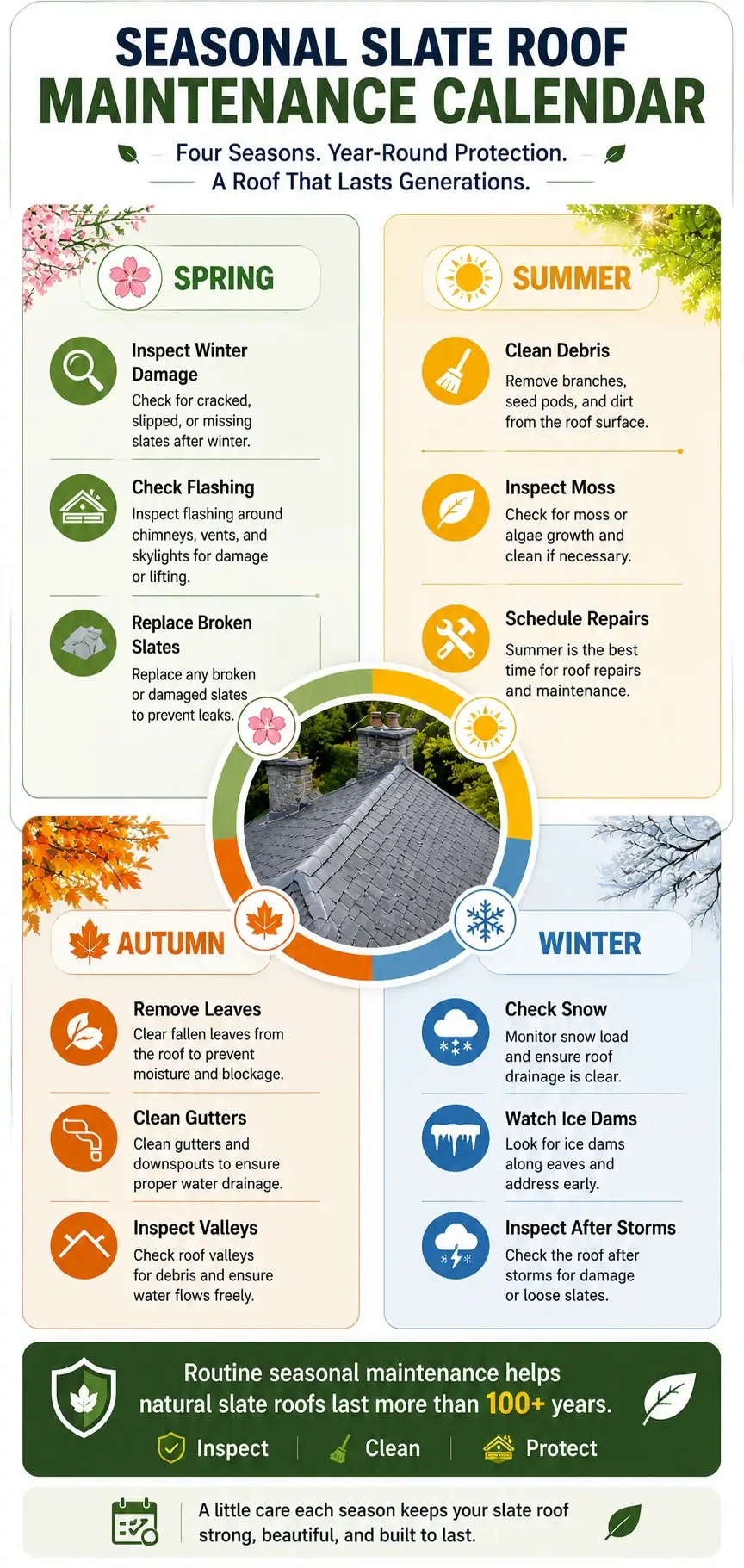
Natural slate roofing performs exceptionally well throughout the year, but each season presents different weather conditions and maintenance priorities. A simple seasonal maintenance routine helps protect your roof from storm damage, blocked drainage, freeze-thaw cycles, and moisture-related problems.
By carrying out a few routine checks each season, you can identify small issues early, reduce repair costs, and help your slate roof remain durable and attractive for more than 100 years.
Seasonal Slate Roof Maintenance Schedule
| Season | Recommended Maintenance | Why It Matters |
|---|---|---|
| 🌸 Spring | Inspect for winter damage, check flashing, replace broken slates | Snow, ice, and freezing temperatures may have caused hidden damage. |
| ☀ Summer | Remove debris, inspect moss growth, clean roof surface if necessary | Warm, dry weather provides ideal conditions for routine maintenance and repairs. |
| 🍂 Autumn | Remove leaves, clean gutters, inspect valleys and drainage | Falling leaves can block gutters and trap moisture before winter. |
| ❄ Winter | Monitor snow accumulation, watch for ice dams, inspect after storms | Heavy snow and ice can affect drainage and place extra stress on the roof. |
Spring Maintenance
Spring is the best time to inspect your slate roof after winter.
Check for:
- Broken or slipped slate tiles
- Damaged flashing
- Loose ridge tiles
- Water stains in the attic
- Debris left by winter storms
Repairing minor issues early helps prepare the roof for spring and summer rainfall.
Summer Maintenance
Dry weather makes summer the ideal season for roof maintenance.
Recommended tasks include:
- Remove leaves and branches
- Inspect for moss or algae
- Clean gutters if necessary
- Check roof ventilation
- Schedule professional repairs
Summer also provides the safest conditions for replacing damaged slate tiles.
Autumn Maintenance
Autumn maintenance focuses on preparing the roof for winter.
Priority tasks:
- Remove fallen leaves
- Clean gutters and downspouts
- Inspect valleys
- Check flashing around chimneys
- Ensure rainwater drains freely
Blocked gutters are one of the most common causes of winter moisture problems.
Winter Maintenance
Natural slate performs extremely well in freezing temperatures, but winter weather requires additional attention.
Monitor for:
- Heavy snow accumulation
- Ice dams along eaves
- Falling tree branches
- Storm damage
- Interior signs of roof leaks
Avoid walking on icy slate roofs.
If snow removal becomes necessary, use methods that will not damage the slate or flashing.
Seasonal Maintenance Tips
🌸 Spring
✔ Inspect
✔ Repair
✔ Prepare
☀ Summer
✔ Clean
✔ Maintain
✔ Replace
🍂 Autumn
✔ Remove Leaves
✔ Clean Gutters
✔ Improve Drainage
❄ Winter
✔ Monitor Snow
✔ Prevent Ice Dams
✔ Inspect After Storms
Pro Tip
Seasonal maintenance is easier and less expensive than emergency repairs. Spending a small amount of time inspecting your slate roof each season can prevent leaks, protect flashing, and significantly extend the roof’s service life.
Key Takeaway
Each season brings different maintenance priorities for a natural slate roof. Regular seasonal inspections, clean gutters, prompt repairs, and proper drainage help ensure your slate roof continues to perform reliably for generations.
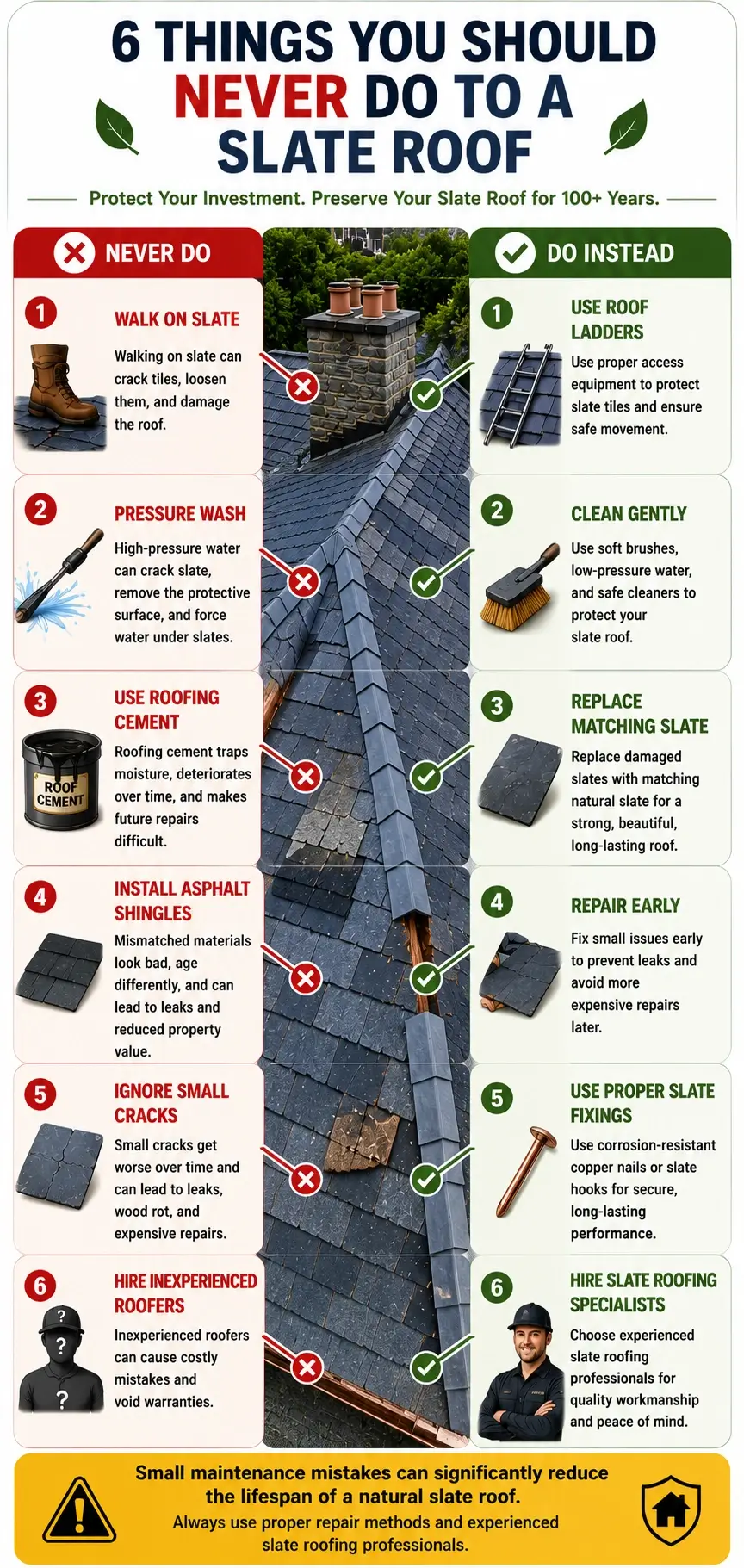
What NOT to Do When Maintaining a Slate Roof
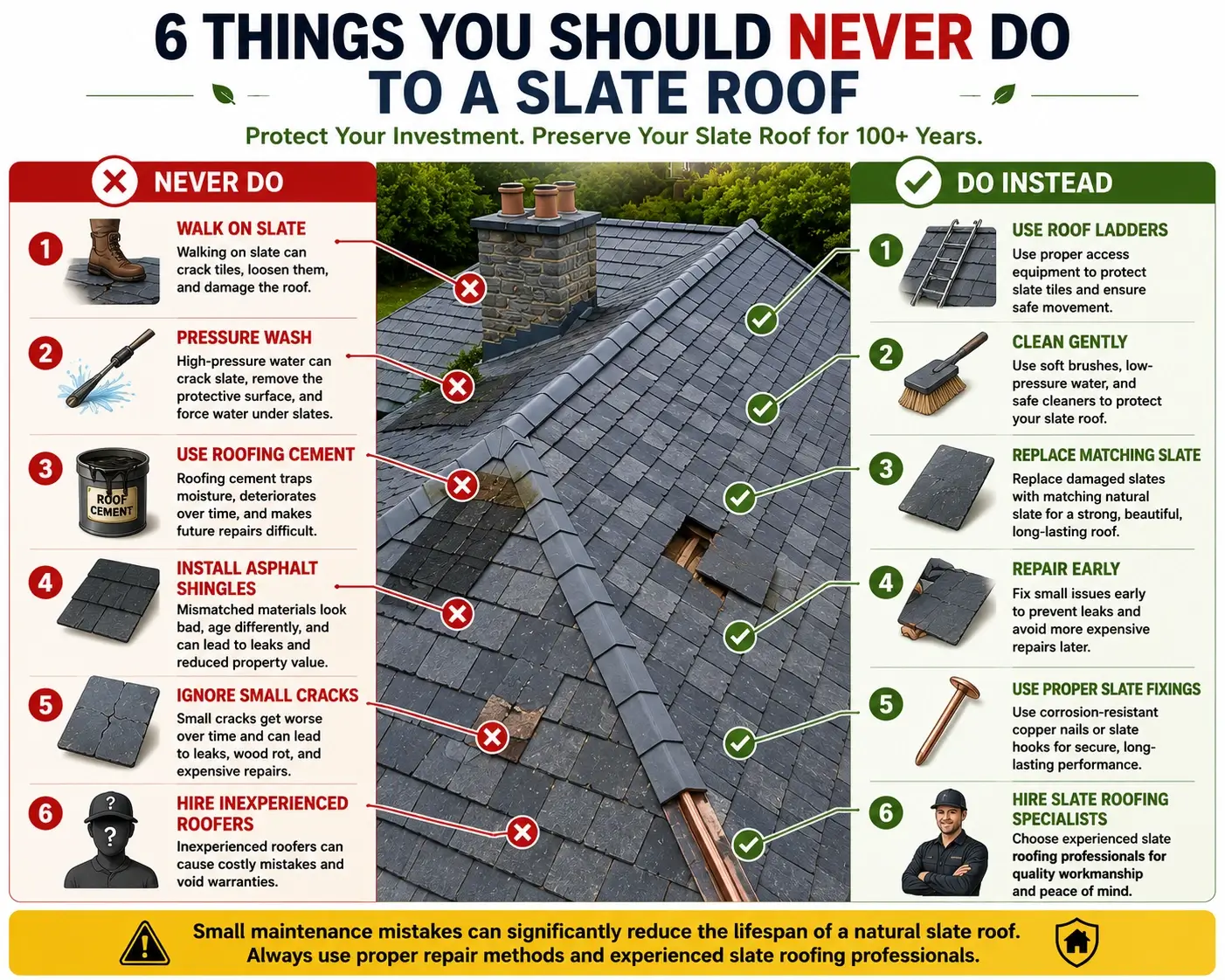
Natural slate roofs are renowned for their exceptional durability, but improper maintenance can cause more damage than years of normal weather exposure. Many roofing problems are not caused by the slate itself—they result from incorrect cleaning methods, unsuitable repair materials, or inexperienced workmanship.
Avoiding the following common mistakes will help preserve your slate roof’s appearance, weather resistance, and lifespan.
❌ Don’t Walk Directly on Slate Tiles
Slate is strong under compression but can crack under concentrated foot pressure.
Walking on the roof without proper techniques may:
- Crack sound slates
- Loosen adjacent tiles
- Damage flashing
- Increase repair costs
✔ Instead
Use roof ladders, crawl boards, or hire an experienced slate roofing contractor.
❌ Don’t Pressure Wash a Slate Roof
Pressure washing is one of the most common causes of unnecessary slate roof damage.
High-pressure water can:
- Crack slate tiles
- Wash away the natural weathered surface
- Loosen copper nails
- Force water beneath the slates
- Damage flashing
✔ Instead
Use a soft brush, biodegradable cleaner, and low-pressure water only when necessary.
❌ Don’t Use Roofing Cement as a Permanent Repair
Roofing cement may appear to stop a leak quickly, but it is rarely suitable for natural slate roofing.
Problems include:
- Traps moisture
- Deteriorates over time
- Makes future repairs more difficult
- Creates an unattractive appearance
✔ Instead
Replace damaged slates using matching natural slate and proper slate roof fixing methods.
❌ Don’t Replace Slate with Asphalt Shingles
Replacing individual slate tiles with asphalt shingles creates both aesthetic and performance problems.
Different materials expand, age, and weather differently, resulting in:
- Poor appearance
- Uneven durability
- Reduced property value
- Potential water ingress
✔ Instead
Always use replacement slates that match the original roof in size, thickness, color, and texture.
❌ Don’t Ignore Small Cracks
Hairline cracks may seem insignificant, but they often grow larger after repeated freeze-thaw cycles and severe weather.
Ignoring cracked slates can eventually lead to:
- Water leaks
- Rotten roof decking
- Damaged insulation
- Higher repair costs
✔ Instead
Inspect your roof regularly and replace damaged slates before leaks develop.
❌ Don’t Hire Inexperienced Roofers
Natural slate roofing requires specialized knowledge and tools.
Contractors unfamiliar with slate roofing may:
- Walk incorrectly on the roof
- Use unsuitable fasteners
- Install mismatched slates
- Damage flashing
- Void roofing warranties
✔ Instead
Choose a contractor experienced in natural slate roof installation and repair.
Quick Reference Table
| ❌ Avoid | ✔ Best Practice |
|---|---|
| Walking directly on slate | Use roof ladders or professional access equipment |
| Pressure washing | Use soft brushes and low-pressure cleaning |
| Roofing cement repairs | Replace damaged slates correctly |
| Asphalt shingle patches | Use matching natural slate |
| Ignoring small cracks | Repair early before leaks develop |
| Inexperienced roofers | Hire slate roofing specialists |
Pro Tip
Most costly slate roof repairs begin with small maintenance mistakes. Using the correct cleaning methods, repair materials, and experienced installers will help preserve the roof’s appearance and ensure it performs reliably for more than a century.
Key Takeaway
Natural slate roofs require surprisingly little maintenance—but they do require the right maintenance. Avoid walking directly on the roof, pressure washing, temporary patch repairs, mismatched materials, and inexperienced workmanship to protect your investment for generations.
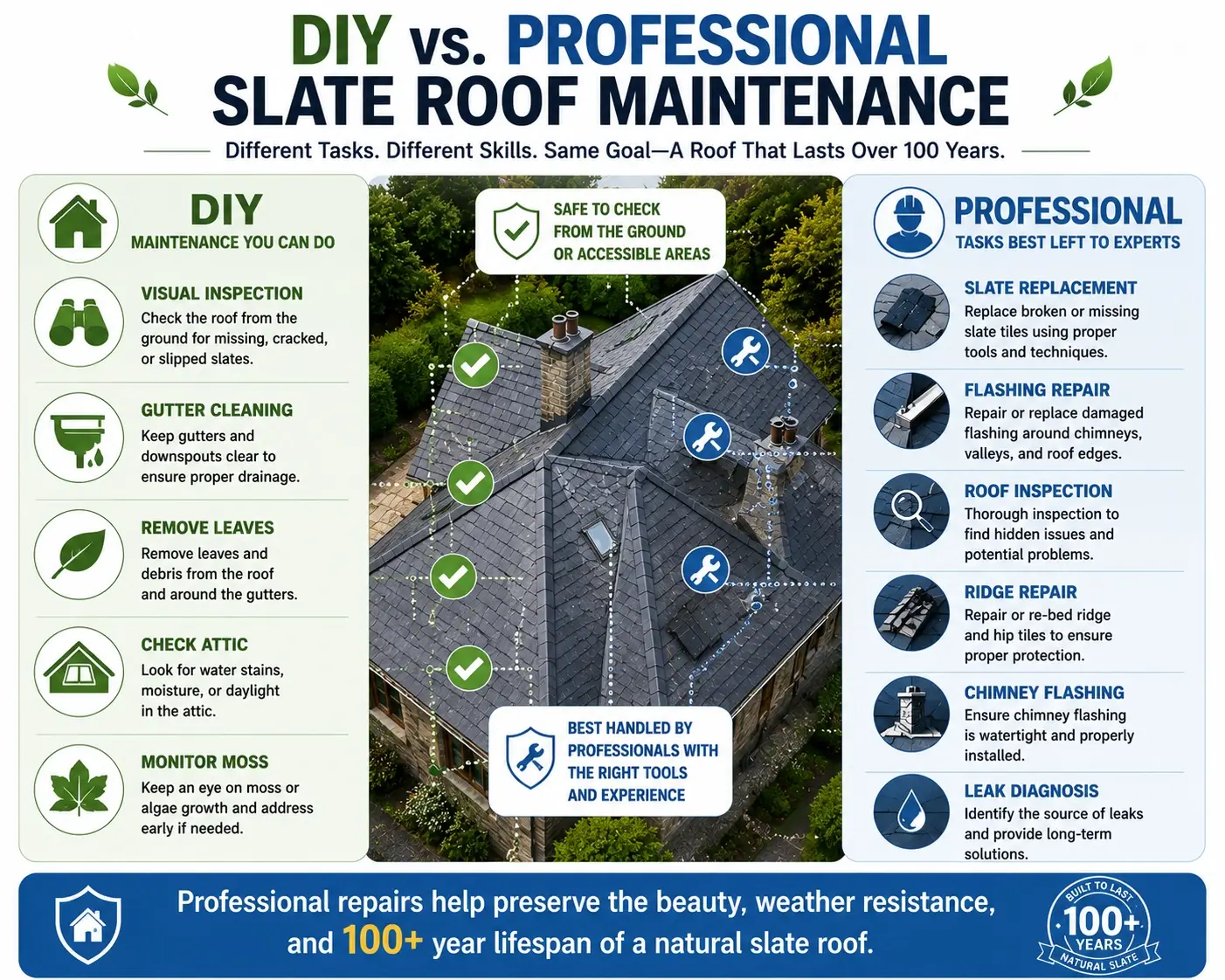
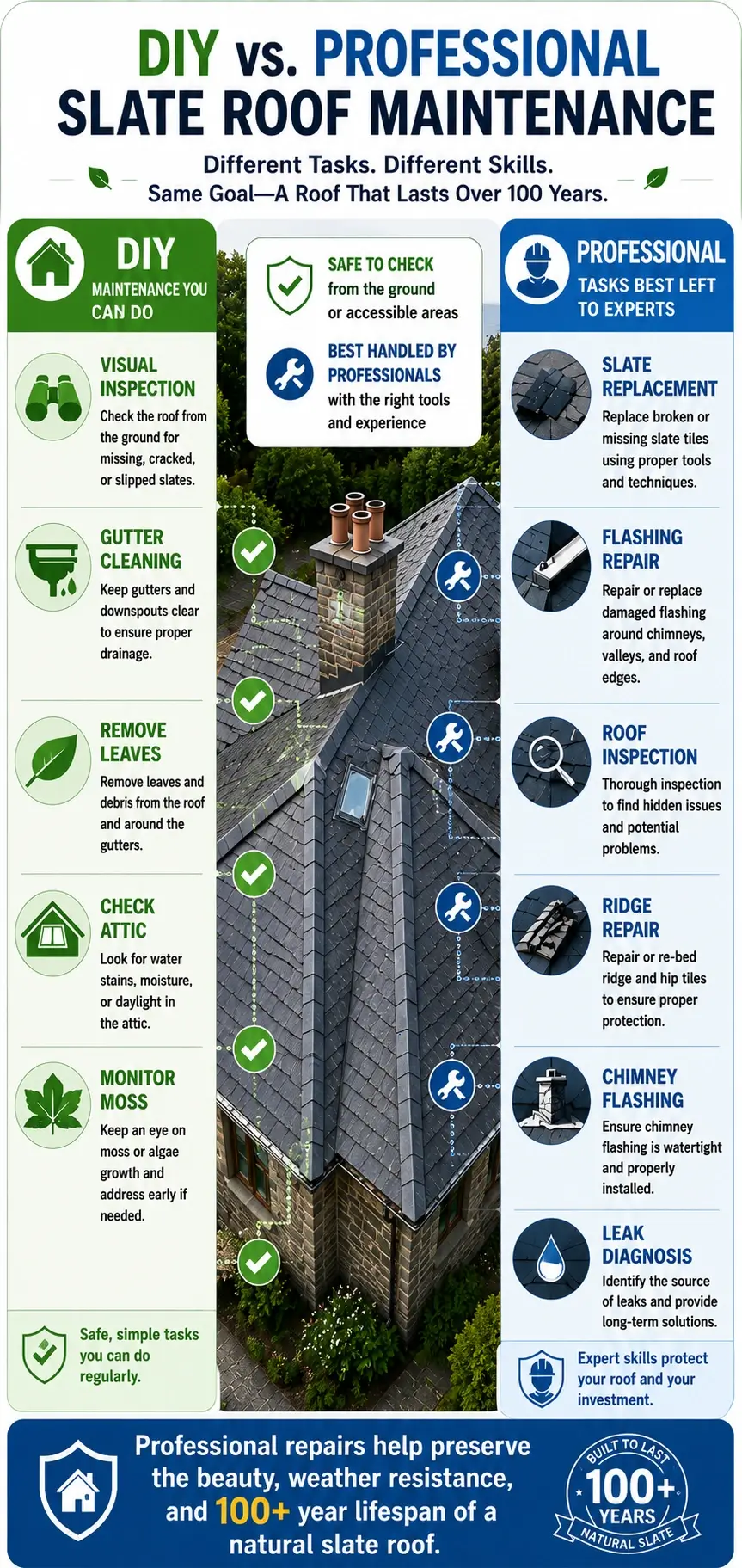
Professional Slate Roof Maintenance vs. DIY
Many routine slate roof maintenance tasks can be performed safely by homeowners. However, natural slate roofing is a specialized system that requires the right tools, techniques, and experience. Attempting complex repairs without proper knowledge may damage otherwise sound slate tiles and lead to more expensive repairs.
The guide below helps you decide which tasks are suitable for DIY maintenance and when it is best to call an experienced slate roofing professional.
DIY vs. Professional Maintenance
| DIY Maintenance | Professional Maintenance |
|---|---|
| ✔ Visual roof inspection from the ground | ✔ Replace broken or missing slate tiles |
| ✔ Remove leaves and loose debris | ✔ Repair or replace flashing |
| ✔ Clean gutters and downspouts | ✔ Comprehensive roof inspection |
| ✔ Check ceilings and attic for leaks | ✔ Ridge and hip tile repairs |
| ✔ Monitor moss and algae growth | ✔ Chimney flashing repairs |
| ✔ Inspect after storms from a safe location | ✔ Structural roof repairs and leak diagnosis |
DIY Tasks Homeowners Can Perform
Routine maintenance does not always require climbing onto the roof. Many problems can be identified early through simple visual checks.
Recommended DIY Tasks
✔ Inspect the roof from the ground using binoculars if necessary.
✔ Remove leaves and branches from accessible areas.
✔ Clean gutters and downspouts regularly.
✔ Check the attic for damp insulation, water stains, or daylight.
✔ Look for signs of slipped or broken slate tiles after storms.
These simple maintenance tasks help identify problems before they become costly repairs.
Jobs Best Left to Professionals
Natural slate roofs require specialized repair methods and should not be treated like asphalt shingle roofs.
Professional roofers should handle:
- Replacing damaged slate tiles
- Flashing repairs around chimneys and valleys
- Ridge and hip repairs
- Leak diagnosis
- Structural roof repairs
- Repairs on steep or historic slate roofs
Experienced slate roof contractors use specialized tools such as slate rippers, slate hooks, roof ladders, and copper fixings to complete repairs without damaging surrounding slates.
Why Experience Matters
Unlike many roofing materials, slate cannot simply be lifted, nailed, or patched without the correct technique.
Inexperienced repairs may result in:
- Broken adjacent slates
- Water penetration
- Incorrect nail placement
- Damaged flashing
- Reduced roof lifespan
Choosing a contractor with proven experience in natural slate roofing helps protect both your roof and your investment.
Signs It’s Time to Call a Professional
You should arrange a professional inspection if you notice:
- Multiple broken or missing slates
- Persistent roof leaks
- Loose flashing around chimneys
- Sagging roof sections
- Repeated water stains inside the home
- Ice dam damage
- Storm damage after high winds or hail
Early professional repairs are usually less expensive than repairing widespread water damage later.
DIY vs. Professional Comparison
| Task | DIY | Professional |
|---|---|---|
| Visual Inspection | ✅ | ✅ |
| Gutter Cleaning | ✅ | — |
| Remove Leaves | ✅ | — |
| Moss Monitoring | ✅ | ✅ |
| Replace Slate Tiles | — | ✅ |
| Flashing Repair | — | ✅ |
| Ridge Repair | — | ✅ |
| Chimney Flashing | — | ✅ |
| Roof Leak Diagnosis | — | ✅ |
Pro Tip
If a maintenance task requires walking directly on the slate roof or removing slate tiles, it is usually best handled by an experienced slate roofing professional. Proper access equipment and repair techniques help prevent unnecessary damage and ensure long-lasting performance.
Key Takeaway
Routine inspections, gutter cleaning, and debris removal are suitable DIY maintenance tasks for most homeowners. However, slate replacement, flashing repairs, leak diagnosis, and structural work should always be carried out by experienced slate roofing professionals to protect the roof’s integrity and maximize its lifespan.
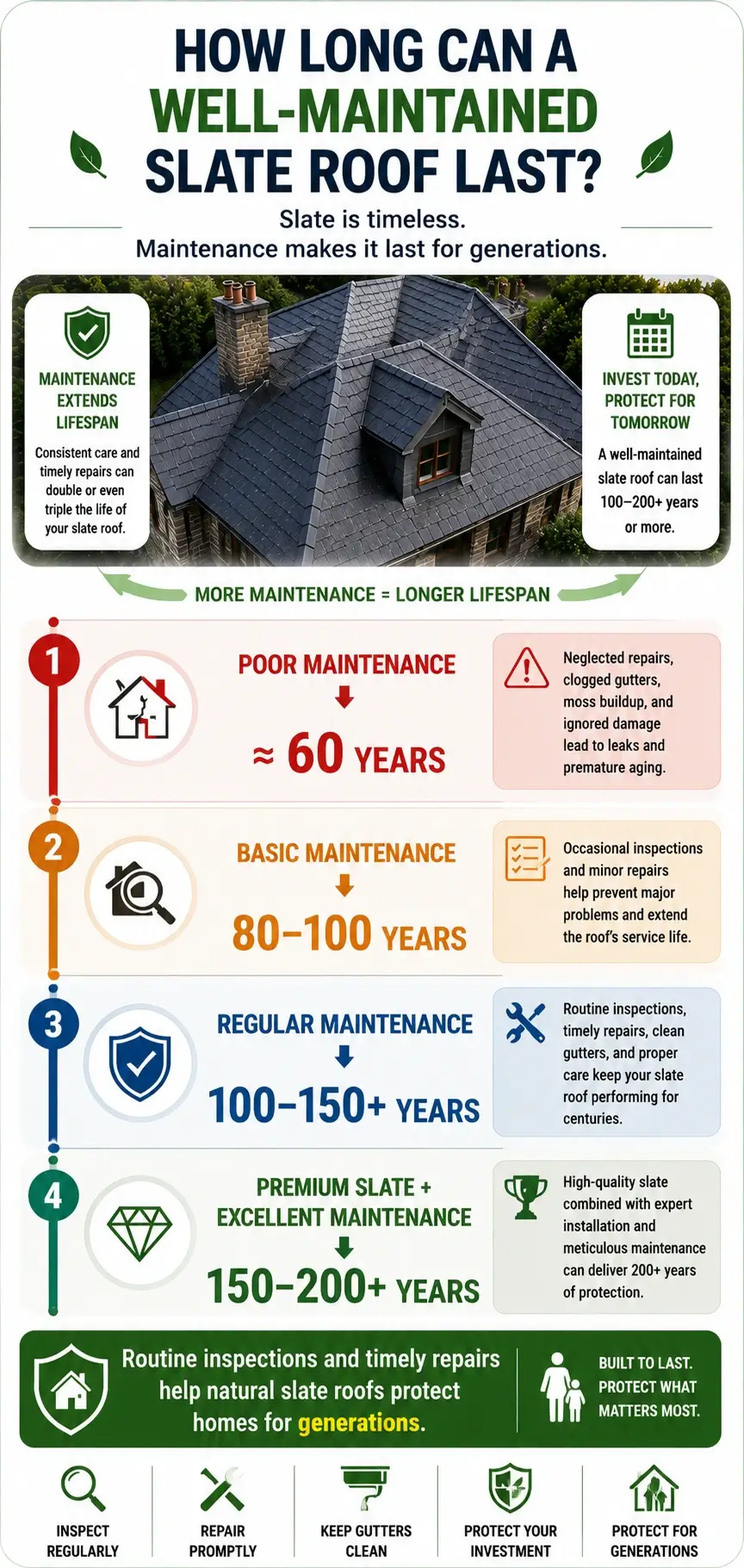
How Long Can a Well-Maintained Slate Roof Last?
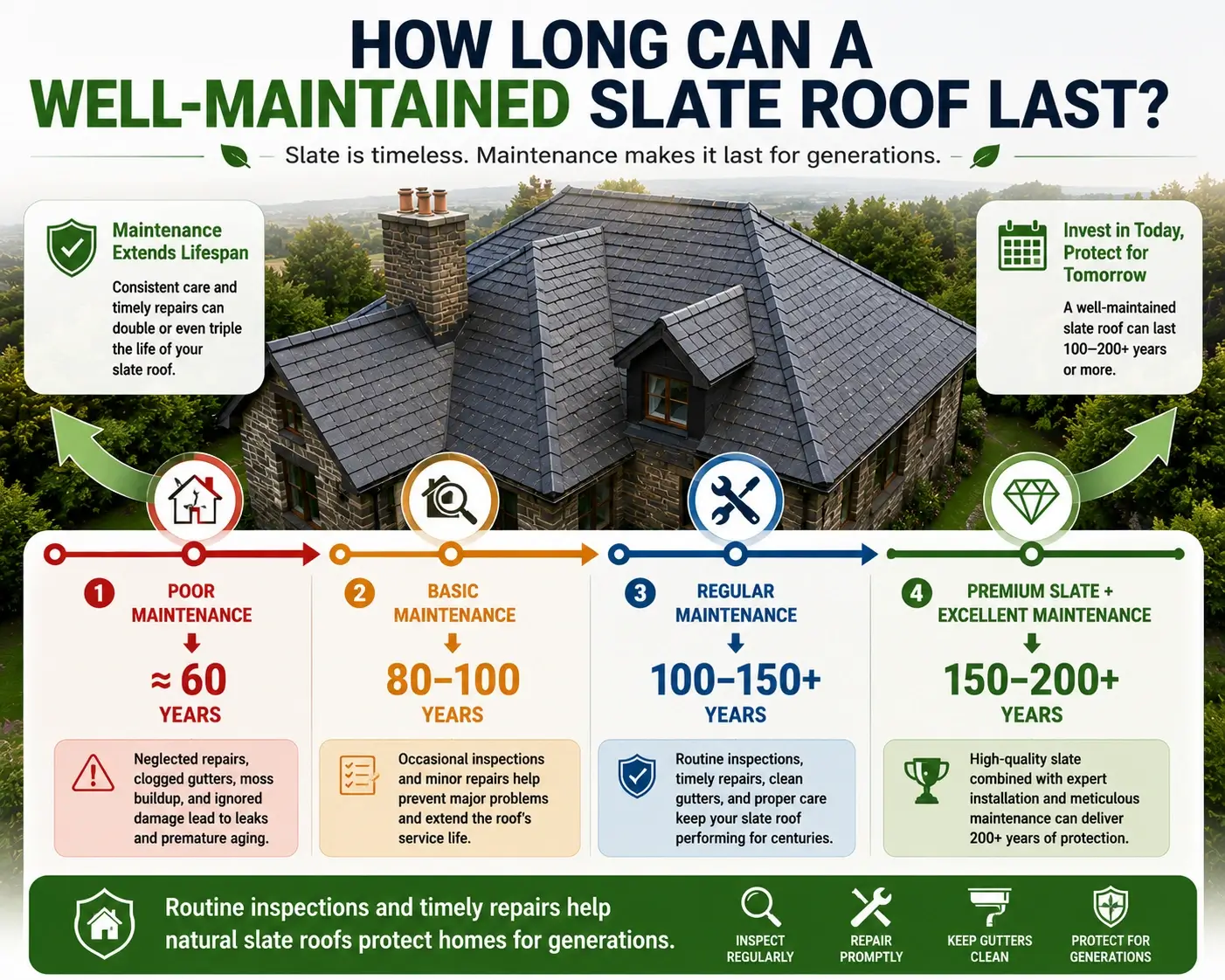
One of the greatest advantages of natural slate roofing is its exceptional longevity. Unlike many roofing materials that require replacement after a few decades, a high-quality natural slate roof can protect a building for well over a century when properly installed and maintained.
While the quality of the slate itself plays a major role, regular maintenance is equally important. Routine inspections, timely repairs, clean gutters, and well-maintained flashing can significantly extend the service life of a slate roof and help prevent small issues from becoming major structural problems.
If you would like to learn more about slate durability, installation quality, and expected service life, see our Roofing Slate Lifespan Guide.
The Impact of Maintenance on Roof Lifespan
| Maintenance Level | Expected Lifespan |
|---|---|
| Poor or neglected maintenance | Around 60 years |
| Basic routine maintenance | 80–100 years |
| Regular professional maintenance | 100–150+ years |
| Premium slate with excellent maintenance | 150–200+ years |
Note: Actual service life depends on slate quality, installation, local climate, roof design, and ongoing maintenance.
Why Maintenance Makes Such a Difference
Natural slate itself is remarkably durable, but the entire roofing system depends on more than just the slate tiles.
Regular maintenance helps protect:
- Copper or stainless steel fixings
- Flashing around chimneys and valleys
- Ridge and hip details
- Roof ventilation
- Drainage systems
- Roof structure beneath the slate
Replacing a single broken slate or repairing damaged flashing early can prevent expensive water damage and extend the roof’s lifespan by decades.
Factors That Affect Slate Roof Lifespan
Several factors determine how long a slate roof will last:
✔ Slate Quality
High-quality natural slate is denser, less absorbent, and more resistant to weathering.
✔ Proper Installation
Correct overlap, fixing methods, and flashing installation are essential for long-term performance.
✔ Regular Maintenance
Routine inspections and prompt repairs prevent minor issues from becoming major failures.
✔ Climate
Heavy snowfall, freeze-thaw cycles, coastal salt exposure, and severe storms can influence maintenance requirements.
✔ Roof Ventilation and Drainage
Good airflow and efficient drainage help reduce moisture-related problems.
Why Some Slate Roofs Last More Than 200 Years
Many historic buildings in Europe and North America still retain their original natural slate roofs after more than two centuries.
These roofs have survived because they received:
- High-quality natural slate
- Professional installation
- Periodic inspections
- Timely replacement of damaged slates
- Proper flashing maintenance
In most cases, the slate itself remains serviceable long after other roofing components have been repaired or replaced.
Slate Roof Lifespan at a Glance
| ✔ Good Maintenance | ✘ Poor Maintenance |
|---|---|
| Regular inspections | Ignored damage |
| Clean gutters | Blocked drainage |
| Prompt slate replacement | Broken slates left unrepaired |
| Flashing maintained | Flashing deterioration |
| 100–150+ Years | Around 60 Years |
Pro Tip
Natural slate rarely reaches the end of its lifespan because the stone wears out. More often, roofs fail prematurely due to neglected maintenance, damaged flashing, poor drainage, or improper repairs. Investing in routine maintenance is one of the most cost-effective ways to maximize the life of a slate roof.
Key Takeaway
A well-maintained natural slate roof can last 100–150 years or more, while premium slate on properly maintained buildings may continue to perform for over 200 years. Regular inspections, prompt repairs, and proper maintenance are the key to achieving the longest possible service life.
Want to learn more about the durability and expected service life of natural slate roofing? Read our Roofing Slate Lifespan Guide for a detailed comparison of slate types, installation quality, climate factors, and real-world lifespan examples.
Routine Slate Roof Maintenance Costs
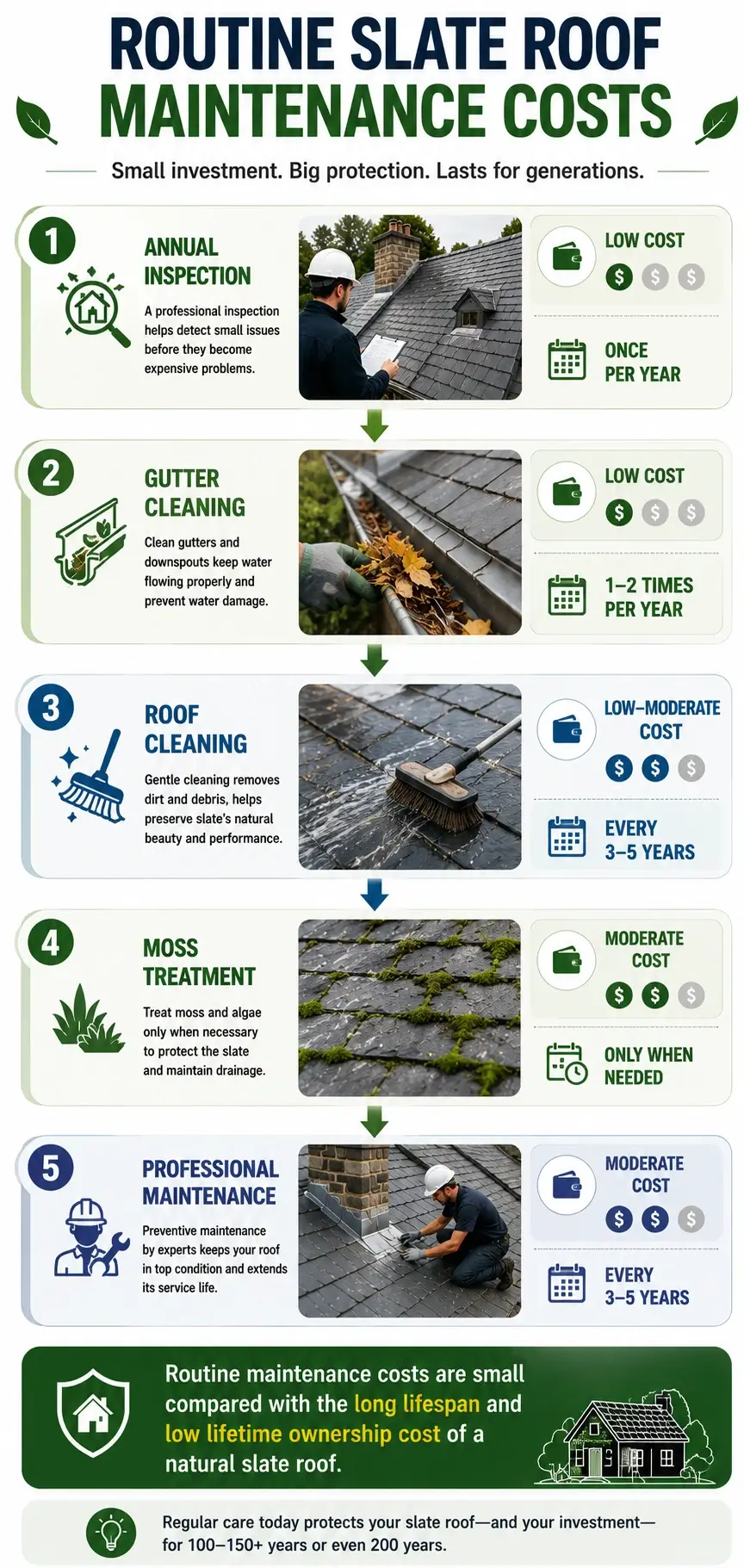
One of the biggest advantages of a natural slate roof is its low long-term maintenance cost. Unlike many roofing materials that require frequent repairs or replacement, slate roofs typically need only routine inspections, basic cleaning, and occasional preventive maintenance.
Most homeowners spend far less on annual maintenance than they would on repairing damage caused by neglected roofs. Regular care helps protect the slate, flashing, gutters, and roof structure while extending the roof’s service life for generations.
For a complete breakdown of material, installation, and lifetime ownership costs, see our Roofing Slate Cost Guide.
Typical Routine Maintenance Costs
Note: Costs vary by roof size, accessibility, local labor rates, and regional market conditions.
| Maintenance Task | Typical Frequency | Typical Cost Level |
|---|---|---|
| Annual Roof Inspection | Once per year | Low |
| Gutter Cleaning | 1–2 times per year | Low |
| Roof Surface Cleaning | Every 3–5 years (if needed) | Low–Moderate |
| Moss Treatment | Only when necessary | Moderate |
| Professional Preventive Maintenance | Every 3–5 years | Moderate |
Instead of exact prices, using Low / Moderate keeps the guide applicable to readers worldwide and avoids frequent updates.
Annual Roof Inspection
A professional inspection is one of the most cost-effective ways to protect a slate roof.
During an inspection, a contractor typically checks:
- Broken or slipped slates
- Flashing around chimneys and valleys
- Ridge and hip tiles
- Gutters and drainage
- Signs of water infiltration
Identifying small issues early can help avoid significantly more expensive repairs later.
Gutter Cleaning
Keeping gutters and downspouts clear is one of the simplest maintenance tasks.
Blocked gutters can:
- Cause water backup
- Increase moisture around the roof edge
- Lead to leaks
- Encourage moss growth
Most slate roofs benefit from gutter cleaning once or twice a year, depending on nearby trees.
Roof Surface Cleaning
Natural slate generally requires very little cleaning.
Cleaning is recommended only when:
- Debris accumulates
- Drainage is affected
- Excessive moss develops
Gentle cleaning with a soft brush and low-pressure water helps preserve the natural surface of the slate.
Professional Preventive Maintenance
Every few years, it is worthwhile to have a slate roofing specialist carry out preventive maintenance.
This may include:
- Checking flashing
- Inspecting fixings
- Replacing isolated damaged slates
- Improving drainage
- Assessing overall roof condition
Preventive maintenance is usually far less expensive than repairing water damage caused by neglected problems.
Why Routine Maintenance Saves Money
| Routine Maintenance | Neglected Maintenance |
|---|---|
| Low annual cost | High repair costs |
| Early problem detection | Hidden water damage |
| Longer roof lifespan | Premature deterioration |
| Better property value | More expensive restoration |
| Lower lifetime ownership cost | Higher long-term costs |
Pro Tip
Routine maintenance is an investment, not an expense. A small amount spent on inspections and preventive care can help avoid major repairs and allow a natural slate roof to perform for more than 100 years.
Key Takeaway
Natural slate roofs have one of the lowest lifetime maintenance costs of any premium roofing material. Regular inspections, clean gutters, gentle cleaning, and occasional professional maintenance help protect your investment while minimizing long-term ownership costs.
Looking for material prices, installation costs, and lifetime ownership comparisons? Read our Roofing Slate Cost Guide for a complete cost breakdown.
Frequently Asked Questions About Slate Roof Maintenance
Natural slate roofs are known for their exceptional durability and low maintenance requirements. However, homeowners, architects, and roofing contractors often have questions about inspections, cleaning, repairs, moss removal, and long-term care.
Below are answers to some of the most frequently asked questions about slate roof maintenance to help you protect your investment and maximize the lifespan of your roof.
Need Expert Advice on Natural Slate Roofing?
Whether you’re selecting natural roofing slate, planning a new roof, or maintaining an existing one, our team can help you choose the right slate and provide practical guidance for long-lasting performance.
Explore More Roofing Slate Guides:
Or contact us today to discuss your roofing slate project.
Related Roofing Slate Resources
Need Help Choosing Natural Roofing Slate?
Whether you’re planning a new slate roof, replacing damaged slates, or sourcing premium natural roofing slate for your project, we’re here to help.
We offer:
✔ Natural roofing slate in multiple colors and sizes
✔ Custom sizes and edge finishes
✔ Export to Europe, North America and worldwide
✔ Professional product recommendations
✔ Fast quotation and technical support
Request a Free Quote →
Last Updated
July 2026
Written by
SlateofChina Technical Team
Natural Roofing Slate Manufacturer
30+ Years of Slate Production & Export Experience
Specialists in:
Natural Roofing Slate
ASTM C406
EN12326
European Roofing Slate
Commercial Roofing Slate
Updated:
July 2026