
The Jiujiang Slate Industry
Natural slate deposit
Block extraction & sorting
Splitting, sawing, cutting
Roofing or billiard
Crating, loading, shipping
Roof, table, pavement
Six stages, one rock. Each stage is a different business. Understanding which stage a supplier controls tells you more than any price quote.
Jiujiang slate is not a factory. It is not a single quarry. It is not a brand name owned by one company.
It is a regional supply chain — a network of quarries, splitting workshops, processing factories, machining facilities, exporters and supporting businesses that has grown around the same natural slate deposit in the Lushan area of Jiujiang, Jiangxi Province.
This distinction matters more than it sounds. A buyer who treats "Jiujiang slate" as a product from one manufacturer will be confused when three companies quote apparently similar material at different prices. A buyer who understands it as a regional industry — with multiple layers, different levels of vertical integration, and different points in the chain where value is added — can ask much better questions.
The industry grew from the mountain outward: first the geological resource, then quarrying, then primary processing, then specialized manufacturing for different end uses, and finally an export infrastructure. Each stage exists because the one before it made it possible.
The Jiujiang slate industry is larger than any single quarry or manufacturer. Slate Of China is one participant in this regional supply chain, not a definition of the industry itself. Our own production focuses primarily on roofing slate and billiard slate, but the regional industry is broader than any one company's product range.
Where the Industry Sits
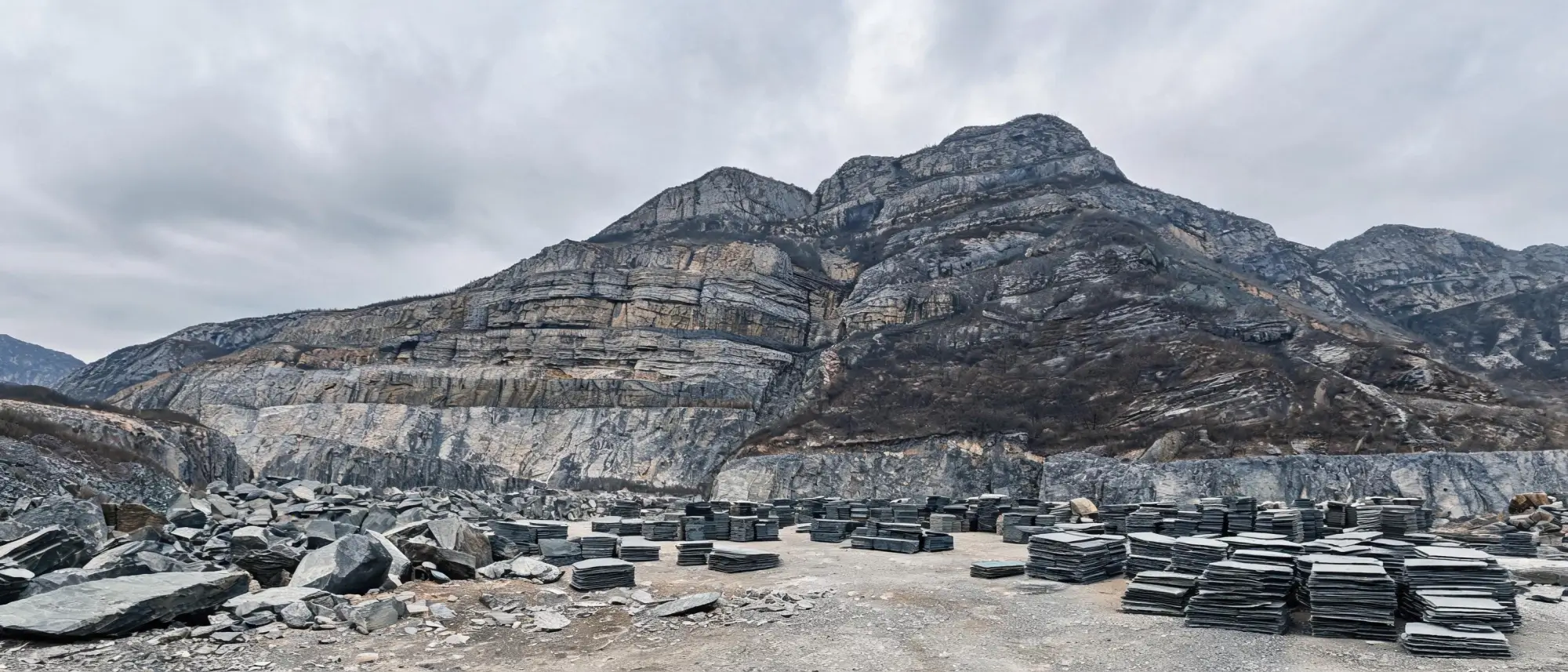
The Jiujiang slate-producing area is in Jiangxi Province, southeastern China, centred on Lushan and the towns to its south — Xingzi (now Lushan City) and Hengtang.
Several place names appear in trade descriptions: Jiujiang, Lushan, Xingzi, Hengtang, Jiangxi. They describe overlapping parts of the same regional industry, but they are not interchangeable in every commercial context. Administrative boundaries have shifted over time — Xingzi County became Lushan City in 2016 — and companies may continue using older place names in their export paperwork.
For a detailed geographic breakdown, see Where Is Jiujiang Slate From? and Lushan, Xingzi and the Slate Belt of Jiangxi. The key point here is that "Jiujiang slate" describes a region, not a single site.
Why a Slate Industry Grew Here
A slate industry cannot be created by a factory that wants to manufacture slate. The raw material must have the physical characteristics needed for splitting, cutting, machining and finishing — and those characteristics come from geology.
The Lushan area sits on a substantial deposit of metamorphic slate. The stone's density (2.7–2.8 g/cm³), low water absorption (tested as low as 0.2%), and well-developed cleavage are what make it workable. Without these properties, the industry would not exist.
The Geology of Jiujiang Slate covers the rock's formation in depth. For the industry overview, the relevant point is simpler: the geology decided what could be made here, and the range of things that could be made decided how broad the industry became.
How the Industry Works: A Supply Chain Map
The Jiujiang slate industry can be read as a chain of connected stages. Material flows through each one, gaining commercial value at every step. The diagram below shows the full chain from resource to global buyer.
JIUJIANG SLATE RESOURCE
▼
QUARRYING & RAW BLOCK SELECTION
▼
THREE PRODUCTION ROUTES
Splitting
Dressing
Sizing
Sorting
Sawing
Grinding
CNC
Inspection
Cutting
Finishing
Sizing
Packing
▼
INSPECTION & PACKING
▼
EXPORT & LOGISTICS
▼
GLOBAL BUYERS
One resource, three production routes, one export chain. Other articles in this Guide each zoom in on one box; this page is the map.
The rest of this article explains what happens inside each stage and who participates in it.
The Six Links in Detail
Link 1 — The Resource. The chain begins with the geological deposit. Not all slate in the ground is usable. The commercial value depends on how consistently workable material can be extracted — the consistency of colour, cleavage, density and block size. A quarry that produces irregular, fractured stone will struggle to supply any downstream industry, no matter how much rock it has.
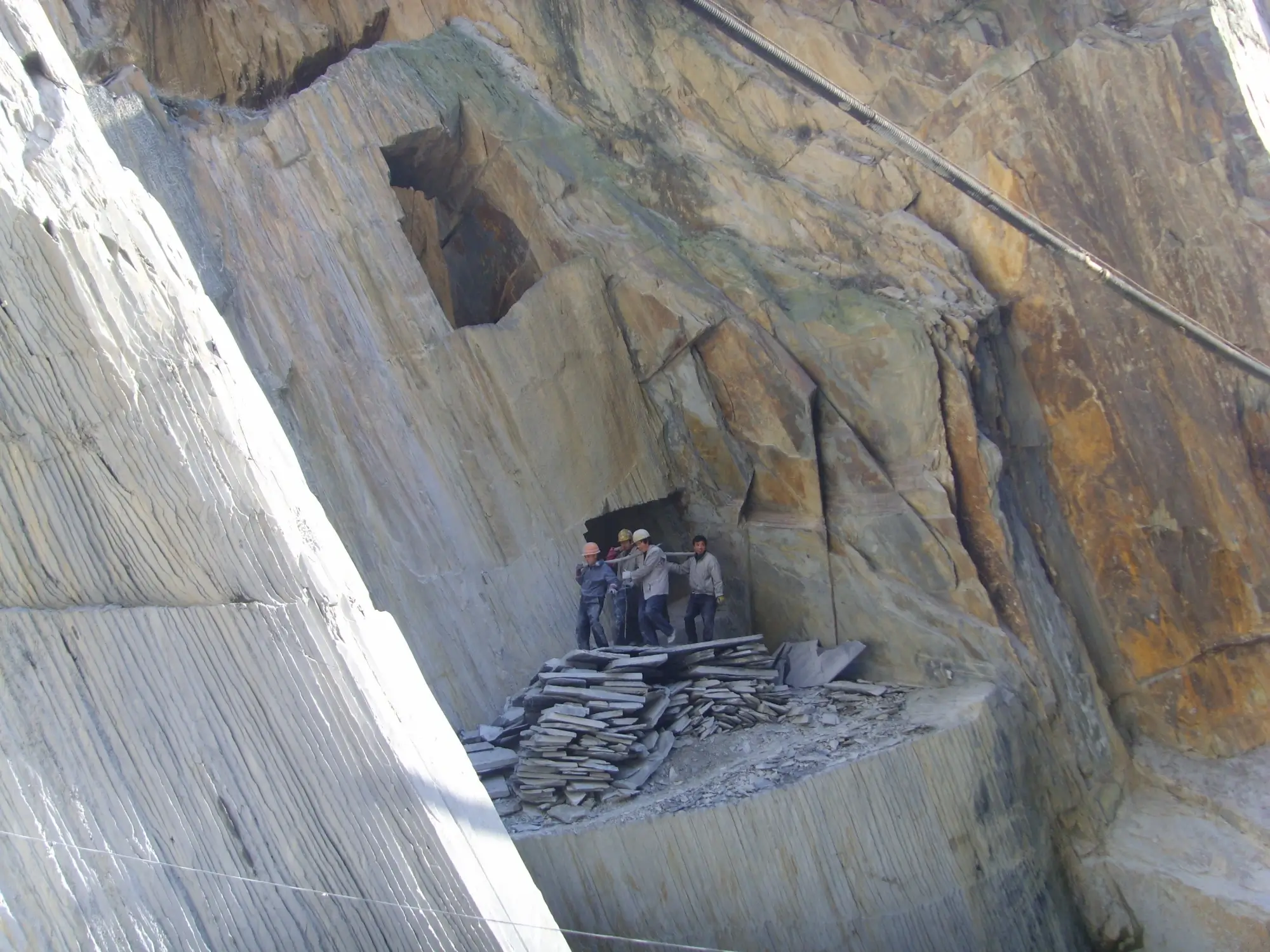
Link 2 — Quarrying. Slate blocks are extracted from the quarry and sorted by structure, thickness and intended use. Quarrying is not about producing the largest possible block. Roofing slate needs material that splits cleanly into thin pieces. Billiard slate needs larger, sound pieces suitable for sawing, grinding and precision machining. The quarry decides what the factory can produce.
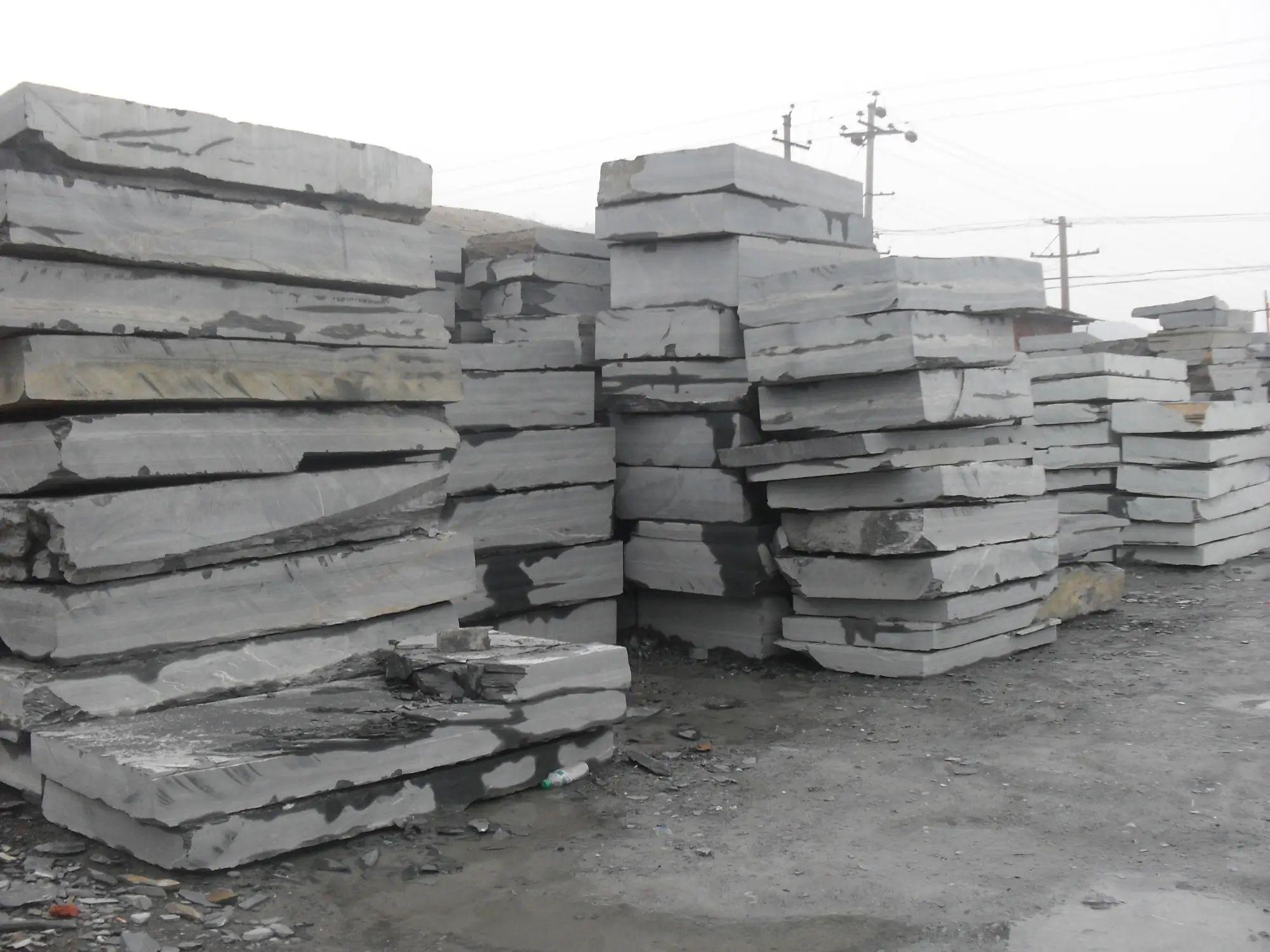
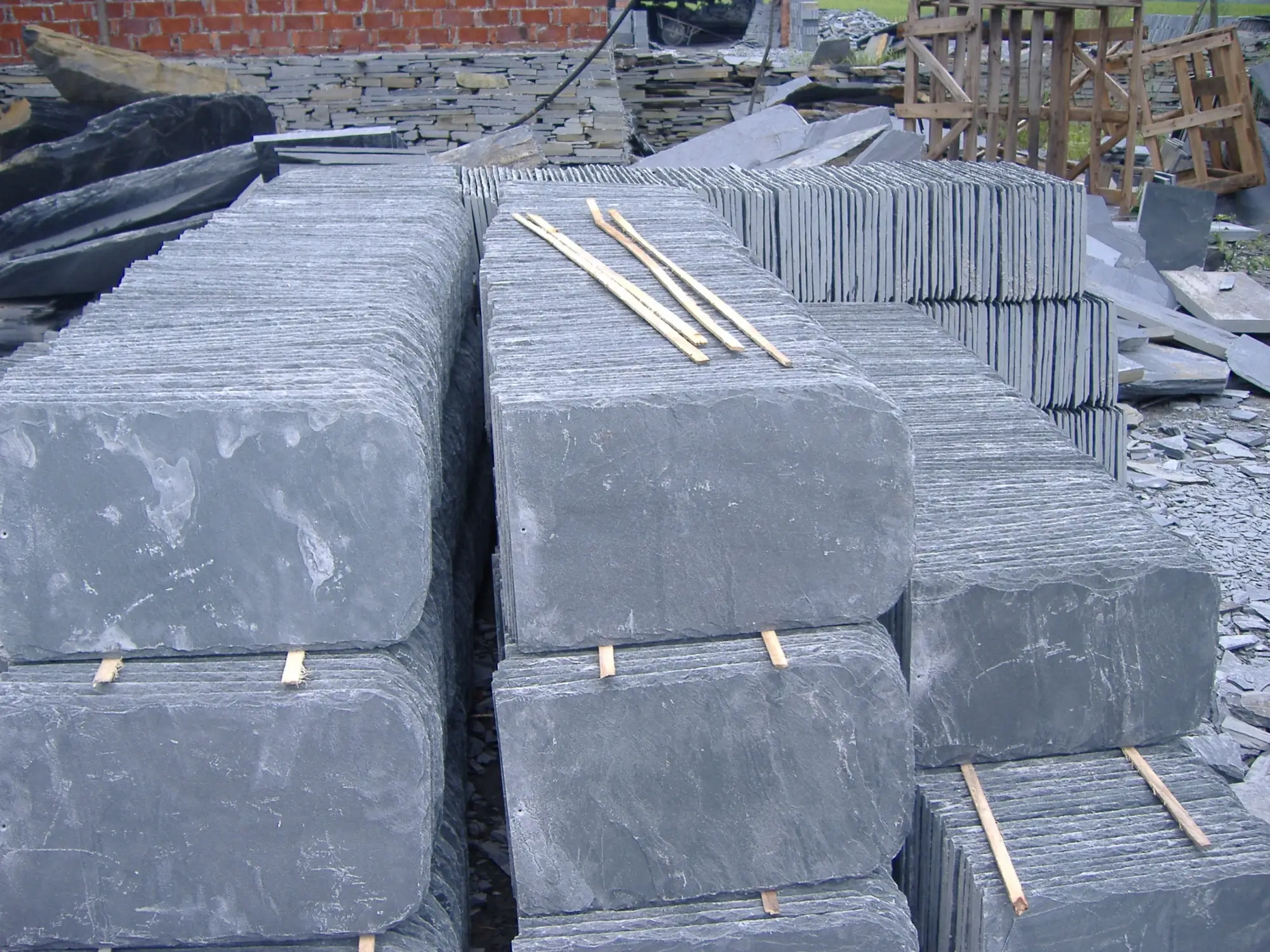
Link 3 — Primary Processing. After extraction, rough blocks are divided into workable pieces. For roofing slate, workers split the stone along its natural cleavage planes — a skill no machine has fully replaced — then dress, size and inspect each piece. For thicker products, the material moves toward sawing and grinding instead. This stage separates the two major product lines: thin split tiles and thick cut panels.
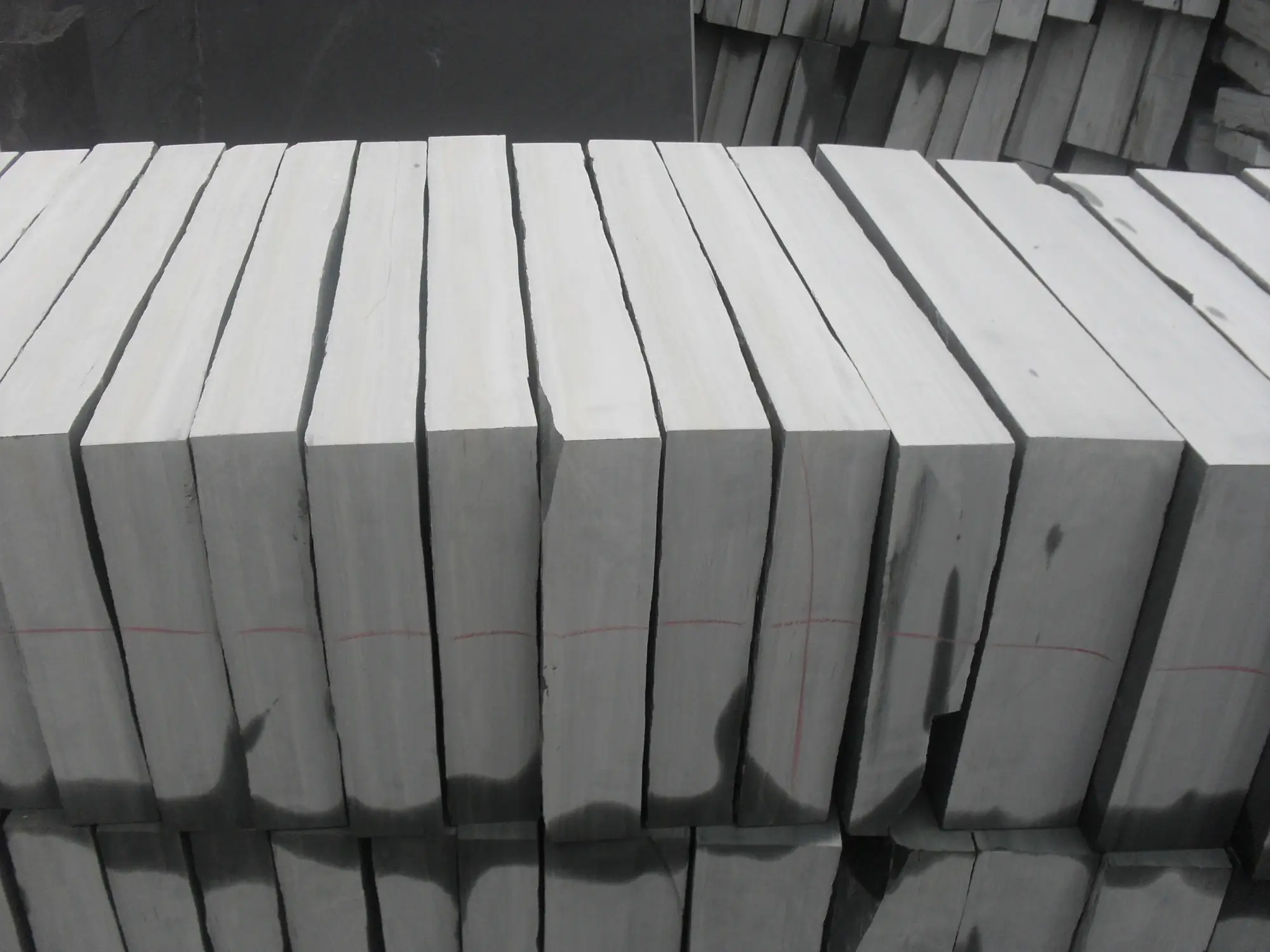
Link 4 — Specialized Manufacturing. This is where the production routes diverge sharply. Roofing slate enters a production line focused on consistent thickness, dimensional accuracy and surface quality, with piece-by-piece inspection. Billiard slate enters a precision-machining environment: surface grinding, CNC machining with tolerances as tight as ±0.1 mm, drilling, joint preparation and final flatness verification. The equipment, the skills and the quality criteria are completely different — even though the raw stone may come from the same quarry face.
How Jiujiang Slate Is Made walks through the shared production journey; CNC Machining in Our Jiujiang Factory and 100% Inspection cover the specialised stages.
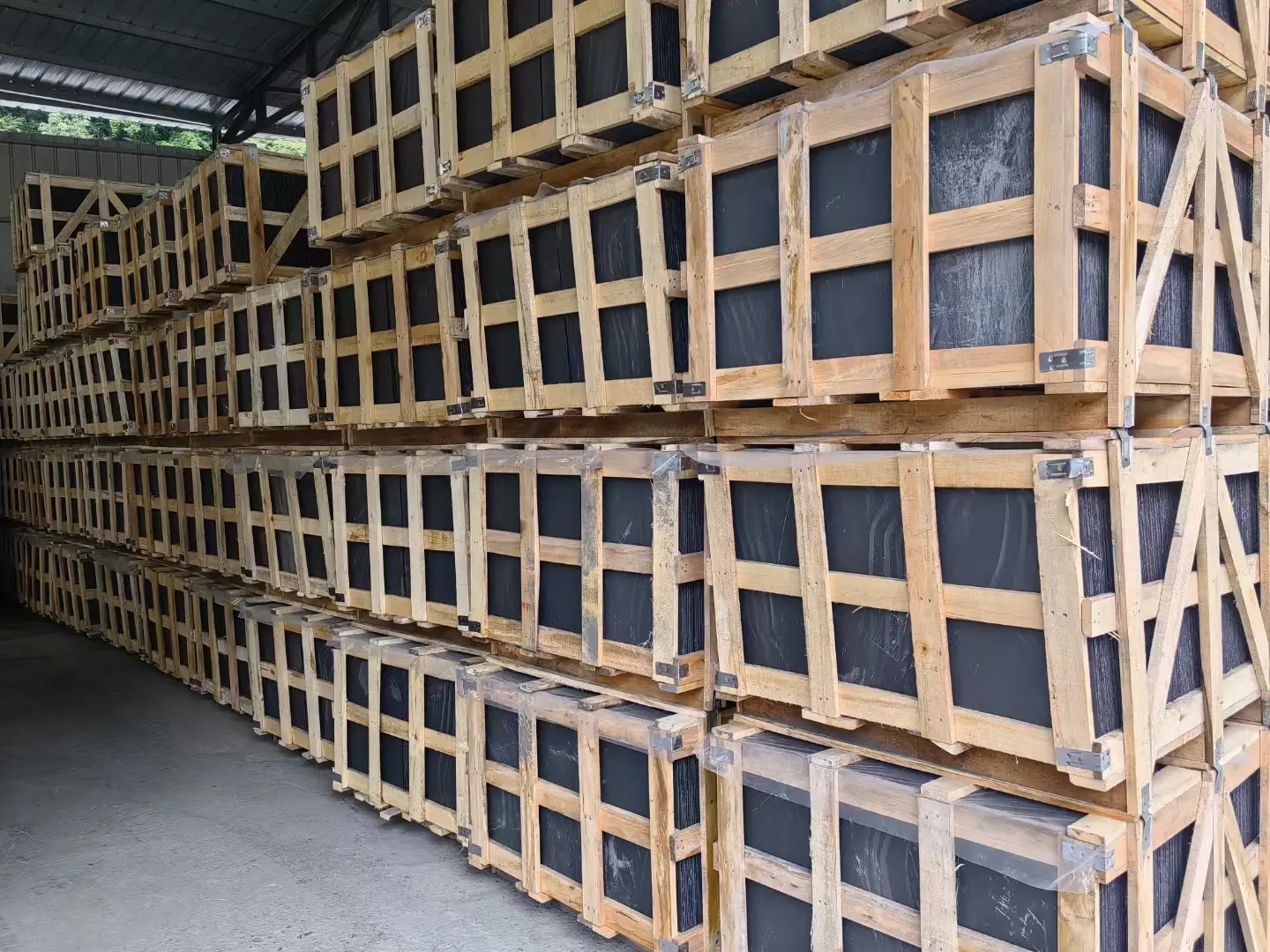
Link 5 — Export Infrastructure. Natural stone is heavy. An export industry needs roads, trucking, container loading capability, port access, documentation expertise and packaging systems. The Jiujiang industry has developed all of these. Our factory, for example, is in Lushan City (formerly Xingzi County), about 40 minutes by road from Jiujiang port on the Yangtze River. Containers are trucked empty to the factory, loaded on-site, and returned to the port — no third-party warehouse involved. Roofing slate ships in wooden crates, not on pallets, for better protection during ocean transit.
Link 6 — Application. The chain ends when the slate reaches its final use: a roof in England, a billiard table in the United States, paving in the Middle East, wall cladding in Europe. Each application has its own specifications, standards and expectations — which flow back upstream as requirements.
One Quarry, Different Production Routes
A slate block does not necessarily become one standard product. Depending on its structure, size, cleavage, thickness and intended application, material from the same quarry may enter three different production routes.
The roofing route follows the stone's natural cleavage: quarry → splitting → dressing → sizing → sorting → packing. The skill is in reading the grain and splitting to a consistent thickness — 5–9 mm typically — while maintaining useful dimensions.
The billiard route ignores cleavage and works the block as a precision substrate: quarry → block selection → sawing → grinding → CNC machining → inspection → packing. Thicknesses of 19–38 mm, flatness tolerances that roofing slate never requires.
The architectural route sits between the two: quarry → sawing or splitting → sizing → surface finishing → packing. Paving, flooring, wall cladding and landscaping products each need different thicknesses, finishes and dimensional tolerances.
This is why the Jiujiang slate industry can support both roofing slate and billiard slate simultaneously. It is not two industries sharing a region by coincidence — it is one resource feeding three production routes, each with its own equipment, skills and quality criteria. A useful rule of thumb: roughly 80% of good quarry material goes to roofing and architectural applications; about 20% — the soundest, most structurally consistent pieces — goes to billiard slate. Not every block can become a billiard table bed, but nearly every block can become something.
For the full production journeys, see From Quarry to Roofing Slate and From Quarry to Billiard Slate. For a broader introduction, What Is Jiujiang Slate? explains the two-product structure in plain language.
Who's Who: The Layers of the Industry
A regional stone industry is never just a collection of quarries. Several types of businesses operate within the Jiujiang slate supply chain, and they are not all the same thing. The table below summarises who controls what, and what a buyer should ask.
| Supplier type | Usually controls | Buyer should ask |
|---|---|---|
| Quarry operator | Raw material | Where is the stone processed? |
| Processing factory | Processing | Where does the raw slate come from? |
| Integrated producer | Quarry + processing | Which facilities are actually owned? |
| Specialized manufacturer | Application-specific processing | What part of production is outsourced? |
| Trading / export company | Sales & export coordination | Which factory will produce my order? |
Supporting businesses — packaging, machinery suppliers, transportation, stone tools, inspection services — keep the production chain running but do not sell slate directly to buyers.
This layering explains why two companies advertising "Jiujiang slate" may have completely different business models. None of these descriptions automatically proves or disproves quality — but each requires a different set of buyer questions. For a practical framework to tell these businesses apart, see How to Source Jiujiang Slate Directly; for the deeper question of factory vs trading company, Factory vs Trading Company decodes the supply chain in detail.
Why Slate Industries Cluster Geographically
The Jiujiang slate industry is not a single factory built next to a quarry. It is a cluster — and clusters form for economic reasons that are worth understanding.
Once a quarrying area develops, several supporting businesses tend to follow: stone machinery suppliers, diamond tool makers, trucking companies, crate and pallet makers, packaging suppliers, maintenance workshops, skilled workers, inspection services, export documentation agents and freight forwarders. Each of these becomes cheaper and more accessible when they serve multiple factories in the same area rather than one isolated site.
This creates a feedback loop: more production attracts more supporting suppliers, which lowers transaction costs for every participant, which attracts more specialized factories, which attracts more buyers, which drives more production. The loop explains why a slate industry concentrates in one region rather than distributing itself evenly across a country. It also explains why a buyer sourcing from an established cluster benefits from infrastructure that a lone quarry cannot provide.
The cluster effect is visible in Jiujiang. The regional government's industrial planning explicitly recognises this concentration and has moved to manage it rather than let it grow unchecked.
What Can Be Said with Confidence
An industry article that invents numbers undermines its own credibility. The following observations are based on publicly available regional planning documents, not on marketing claims.
Local government planning documents identify slate — specifically facing-grade slate (饰面用板岩) — as a regional mineral resource. The regional industrial plan includes designated slate-mining areas and slate-processing development zones. Two slate-mining planning blocks for facing slate are specifically listed in the local mineral resources plan.
A concrete example of the upgrading effort is the Hengtang Slate Processing Optimization and Upgrading Demonstration Base (横塘板岩加工优化升级示范基地), launched in 2020. The stated aim is to reorganise and upgrade the local slate-processing industry, with emphasis on integrated quarrying and processing, environmental management, and higher-value production.
The direction is clear: not simply "quarry more stone, build more small workshops, sell more product." Instead, the region is moving toward resource management, organised quarrying, centralised or improved processing, environmental controls, and higher-value stone products. For international buyers, this matters because a region investing in organised processing and environmental standards is a more reliable long-term supply base than one relying on scattered, unregulated workshops.
Why the Same Stone Has Different Names
International buyers encounter several names for stone from the same region: Jiujiang slate, Lushan slate, Xingzi slate, Jiangxi slate, Chinese slate. These names appear at different levels of geography, administration and commercial description. They should not automatically be treated as proof that two products come from the same quarry.
The safest approach is not to judge a slate by its label — ask for quarry location, factory location, test documentation and physical samples. A dedicated article, Jiujiang, Lushan or Xingzi Slate: What's in a Name?, covers the details.
Reading a Jiujiang Slate Supplier
The existence of a regional industry does not mean every supplier is the same. A useful supplier check covers eight points:
1. Source. Where does the raw slate come from? "Jiangxi" is not specific enough. Ask for the quarry or source area.
2. Processing location. Where is the material processed? The quarry and factory may be at different locations.
3. Business type. Is the company a manufacturer or a trading company? A trading company can still be useful, but the buyer should understand the supply structure.
4. Physical sample. Photographs cannot show every important characteristic of natural stone. Request a physical sample.
5. Written specification. Dimensions, thickness, tolerance, colour, surface and packing should be written into the order before production begins.
6. Test documentation. For roofing slate, this means standards and test results applicable to the destination market. For billiard slate, dimensional accuracy, flatness and machining records matter more. How to Read a Slate Test Report explains what the numbers mean.
7. Production photographs. Real quarry and factory photographs help establish whether a supplier's description matches its actual operation.
8. Pre-shipment inspection. For a significant order, third-party or buyer inspection adds another layer of control.
The principle is straightforward: do not buy the word "Jiujiang." Buy a defined specification from a traceable supply chain.
Jiujiang Slate Industry at a Glance
| Stage | What happens | What buyers should check |
|---|---|---|
| Geological resource | Natural slate occurs in the region | Material type, consistency and source |
| Quarrying | Slate blocks are extracted and sorted | Block quality and continuity of supply |
| Primary processing | Splitting, sawing and cutting | Thickness, dimensions and yield |
| Specialized manufacturing | Roofing, billiard or architectural processing | Application-specific quality standards |
| Inspection | Dimensions, surface and properties checked | Inspection standard and coverage |
| Packing | Slate is packed for domestic or export transport | Protection method and container loading |
| Export | Documents, freight and customs arranged | Incoterm, documents and destination |
Frequently Asked Questions
Is Jiujiang a major slate-producing area in China?
Jiujiang and the surrounding Lushan area have developed a specialised slate-processing cluster around the natural slate resources of Lushan. Local government planning documents identify facing-grade slate as a regional mineral resource and include designated slate-mining and processing development zones in the regional industrial plan.
Where does Jiujiang slate come from?
The broader Jiujiang slate supply chain is associated with slate-producing areas around Lushan and nearby parts of Jiujiang. Buyers should ask individual suppliers for the actual quarry or source rather than relying only on the commercial name "Jiujiang slate."
Is Jiujiang slate the same as Lushan slate?
The names can overlap because they describe locations within the same regional supply chain, but a commercial name alone does not prove that two products come from exactly the same quarry or geological source. Ask for quarry location and test documentation rather than relying on the name.
Does Jiujiang produce both roofing slate and billiard slate?
Yes. The regional industry supplies different applications, including roofing and billiard-table slate. The processing requirements are very different — roofing slate is split thin and judged by weathering performance, while billiard slate is precision-machined and judged by flatness — so buyers should evaluate suppliers according to the intended application.
Can I buy Jiujiang slate directly from a factory?
Yes, but "factory direct" should be verified. Ask where the quarry material comes from, where it is processed, what the company actually manufactures, and who is responsible for the order. Some companies that call themselves factories are processing plants that buy raw material from multiple quarries; others are trading companies.
Why are there so many Jiujiang slate suppliers?
A regional stone industry naturally develops multiple layers: quarry operators, processing factories, specialized manufacturers, trading companies and exporters. They all participate in the same supply chain while offering different levels of direct control over production. This is normal for an established stone cluster — it is not a sign of duplication or fraud.
Continue Reading
If you are evaluating a Jiujiang slate supplier for a specific project, you can send us your required specification and destination — we will tell you whether the stone, the processing and the logistics fit. Contact us.