
How to Source Jiujiang Slate Directly: Factory or Trading Company?
Here is the question that decides more about your slate purchase than any price list: who, between you and the mountain, is actually responsible for the stone in your container?
For example: a European buyer receives two quotations for identical roofing slate — same 500 × 250 mm, same 7–9 mm, one container. Both suppliers describe themselves as factories. One quotation is significantly higher — and neither price is necessarily wrong. The two offers simply reflect different numbers of businesses standing between the quarry face and the buyer's warehouse.
This guide is about that difference: how the routes from a Jiujiang quarry to your warehouse actually differ, which route fits which order, and the checks that work whichever route you choose.
| The route | Who fits it | What you pay for |
|---|---|---|
| Buyer → Factory | Technical products, repeat orders, full containers | Production cost, no resale margin |
| Buyer → Trading company → Factory | Small or mixed orders, buyers new to China sourcing | Consolidation, export paperwork, a service margin |
| Buyer → Agent → Trading company → Factory | Multi-product supply programmes | All of the above, plus another layer's margin and another name on the paperwork |
The rule underneath all three routes: each additional commercial layer can add margin, handling costs and further distance between your question and the person who can answer it. The amount varies considerably with order size, product complexity and the services provided. Direct sourcing is not about eliminating every intermediary; it is about knowing which layers you are paying for, and who takes responsibility when something goes wrong.
Three Supply Chains Behind One "Jiujiang Slate" Price
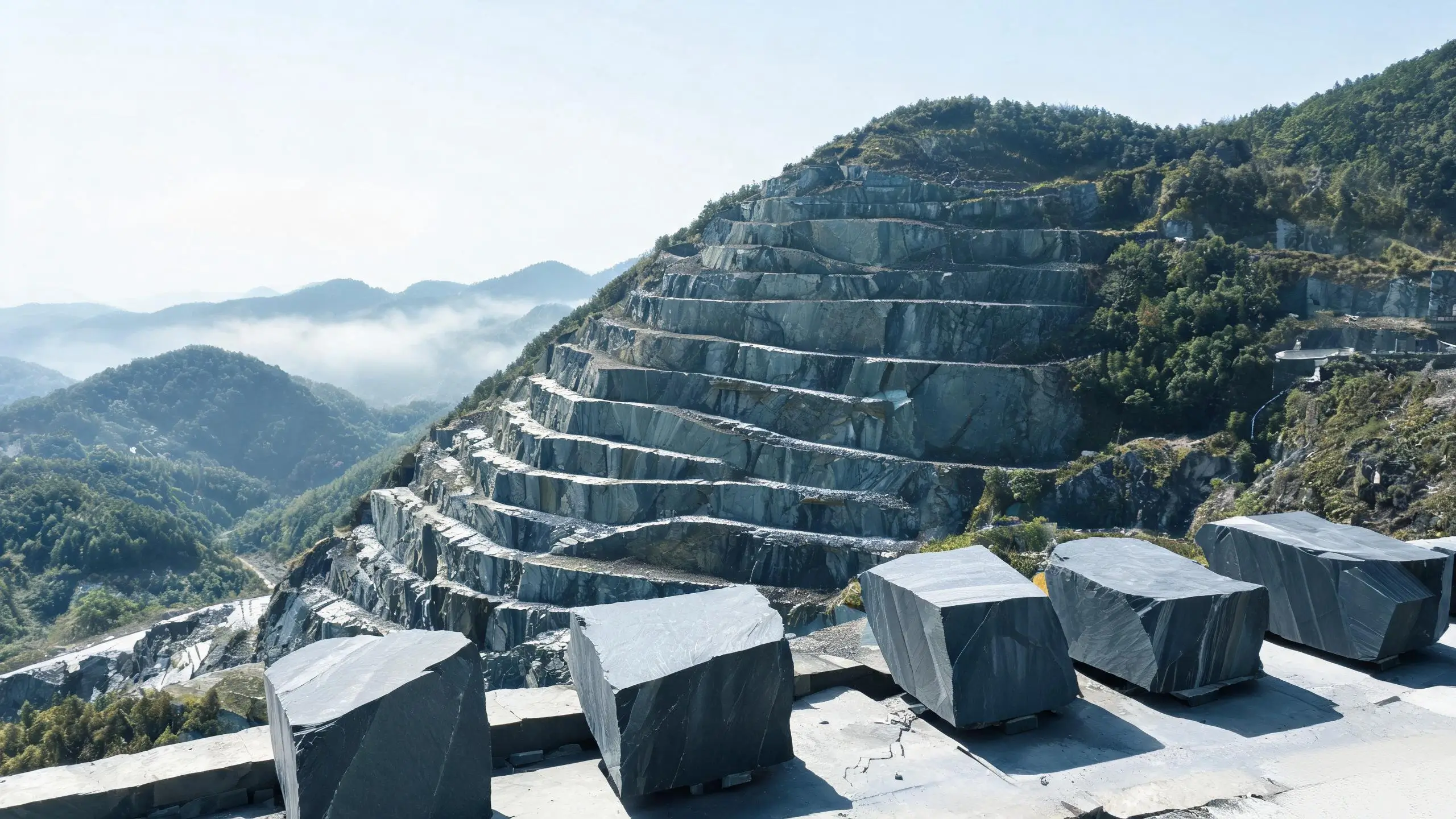
When a Jiujiang slate quotation lands in your inbox, one of three supply chains is usually behind it.
Route 1 — Buyer → Factory. You communicate directly with the company that runs the production. This is the shortest chain and the natural fit for repeat orders and technically specified products: billiard slate, dimensional roofing projects, anything where a 0.1 mm question deserves a same-day answer from the bench rather than a three-day round trip through a sales desk.
Route 2 — Buyer → Trading company → Factory. The trading company wins your order, manages the quotation, export documents and sometimes quality control, and places production with a partner factory. For buyers consolidating several products, or those without the time to manage a Chinese supplier relationship, this route can be entirely rational — provided the desk is transparent about which factory actually makes the stone.
Route 3 — Buyer → Agent → Trading company → Factory. More layers still: an agent in your market, a desk in China, a workshop somewhere in between. Route 3 is not automatically bad, but by this point the price contains two resale margins and the technical communication has two relays in it. If you run Route 3 without knowing it, the price contains margins you cannot see and a communication chain you cannot control.
None of these hands is inherently a problem. A collector who knows which mountain faces produce clean, dense blocks is doing real work. An export agent who clears customs for a small workshop without its own licence is doing real work. The problem is paying for layers you did not ask for, and losing contact with the layer that actually touches your stone.
What Each Route Actually Gives You
| Factory direct | Trading company | |
|---|---|---|
| Production communication | Direct with the production team | Through sales or sourcing staff |
| Commercial layers | Fewer | One or more resale margins |
| Technical customization | Strong for its own capability | Depends on the partner factory |
| Product range | What the workshop actually makes | Products from several factories |
| Export experience | Varies — ask before assuming | Usually a core service |
| Quality control | Linked directly to production | Only as good as its factory management |
| Small / mixed orders | Harder to schedule | Consolidates them well |
| Best suited to | Technical, repeat, full-container orders | Buyers needing sourcing or export support |
There is no universal rule that one route is always better. A transparent factory with weak export experience can be less convenient than an experienced trading company with a stable production partner — and a trading company that cannot tell you where the stone comes from creates more uncertainty than a factory that answers slowly but answers from the bench. The key issue is transparency, not the label on the website.
The word "manufacturer", in particular, is the most over-claimed word in the stone trade. In China a trading company can register a name containing "Stone Industry" or even "Manufacturing" without owning a single saw. Some "factories" turn out to be one office, a printer and a laminated catalogue. The badge tells you nothing; the chain tells you everything.
When a Trading Company Is the Right Answer
It is worth being blunt about the other side, because a guide that simply says "always buy direct" is selling a slogan.
A good trading desk earns its margin when it does work you cannot cheaply do yourself: consolidating five factories' products into one mixed container; taking a 300 m² order no single factory wants to schedule; handling two languages, three time zones and the full document set; standing behind the goods with a person who actually visits the workshops. If you are a small importer, a distributor testing a new line, or a contractor buying one container of slate, zinc and accessories from a single invoice, the desk's cut is a service bill. Read it, and pay it knowingly.
The margin is wasted when the desk does nothing but forward emails. And the difference between the two is a test you can run in one conversation: a trading company worth paying can name its factory, show current production there, and say who inspects and who handles a claim. A desk worth avoiding can only name a price.
So before choosing a route, classify your order honestly. One product, full container, specification you wrote yourself, repeat relationship forming — Route 1 will almost always win. Several products, small volumes, first order, no one on your side who reads Chinese customs paperwork — Route 2 is not a compromise; it is the correct engineering choice. The objective is not to remove a trading company. The objective is to remove unnecessary uncertainty.
Four Questions That Show Who You Are Really Dealing With
Whichever route you are on, these four questions separate the supplier you are paying for from the supplier you imagined. Ask them before the price discussion, not after — after the price discussion, everyone's answers improve.
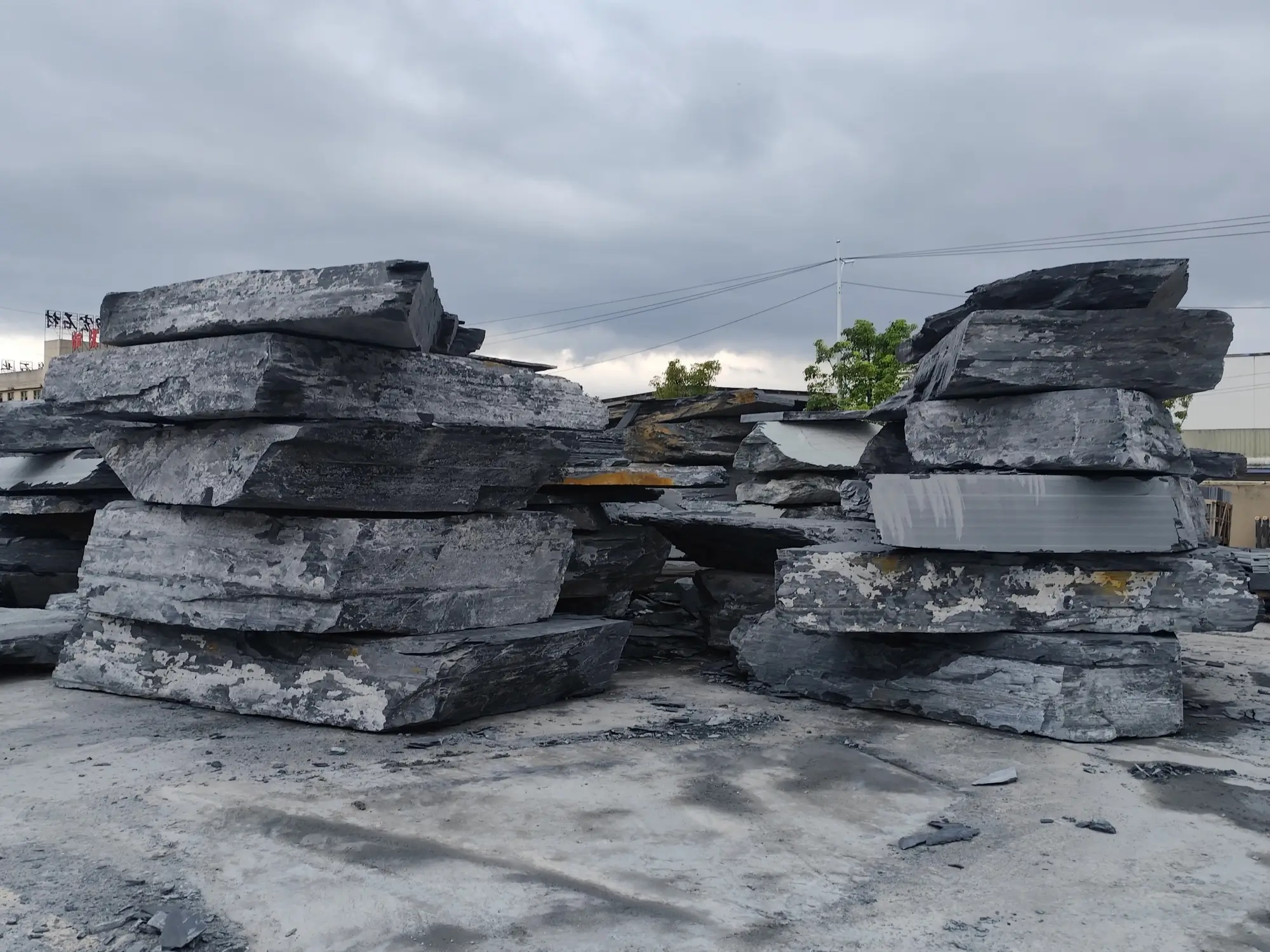
Question 1 — Where is the slate quarried, and where is it processed? A production-side supplier names the mountain area and shows block photographs from this season; the answers should form a logical chain: quarry face, splitting, cutting, machining, inspection, packing. A desk that changes the subject to price is telling you something, honestly enough, about where it stands.
Question 2 — Can you show me current production, not a brochure? "100% inspection" should produce a video of pieces passing the bench today, batch by batch, with a caliper or gauge visible — not a sentence in a catalogue. The same goes for test documentation: real EN 12326 or ASTM C406 reports carry a laboratory name, a batch number and dates, and the batch number should match the crates that go into your container. Our own inspection process and published test results are online for exactly this reason — a buyer should never have to take quality on faith.
Question 3 — Can your people discuss the product technically? A roofing-slate supplier should answer questions about thickness tolerance, colour sorting and batch consistency without checking with anyone. A billiard-slate supplier should be able to talk about flatness, joint configuration and machining without sending the question into a black box for three days. A salesperson does not need to operate the machinery — but the company must have people one email away who can answer from the bench, not from a forwarded message.
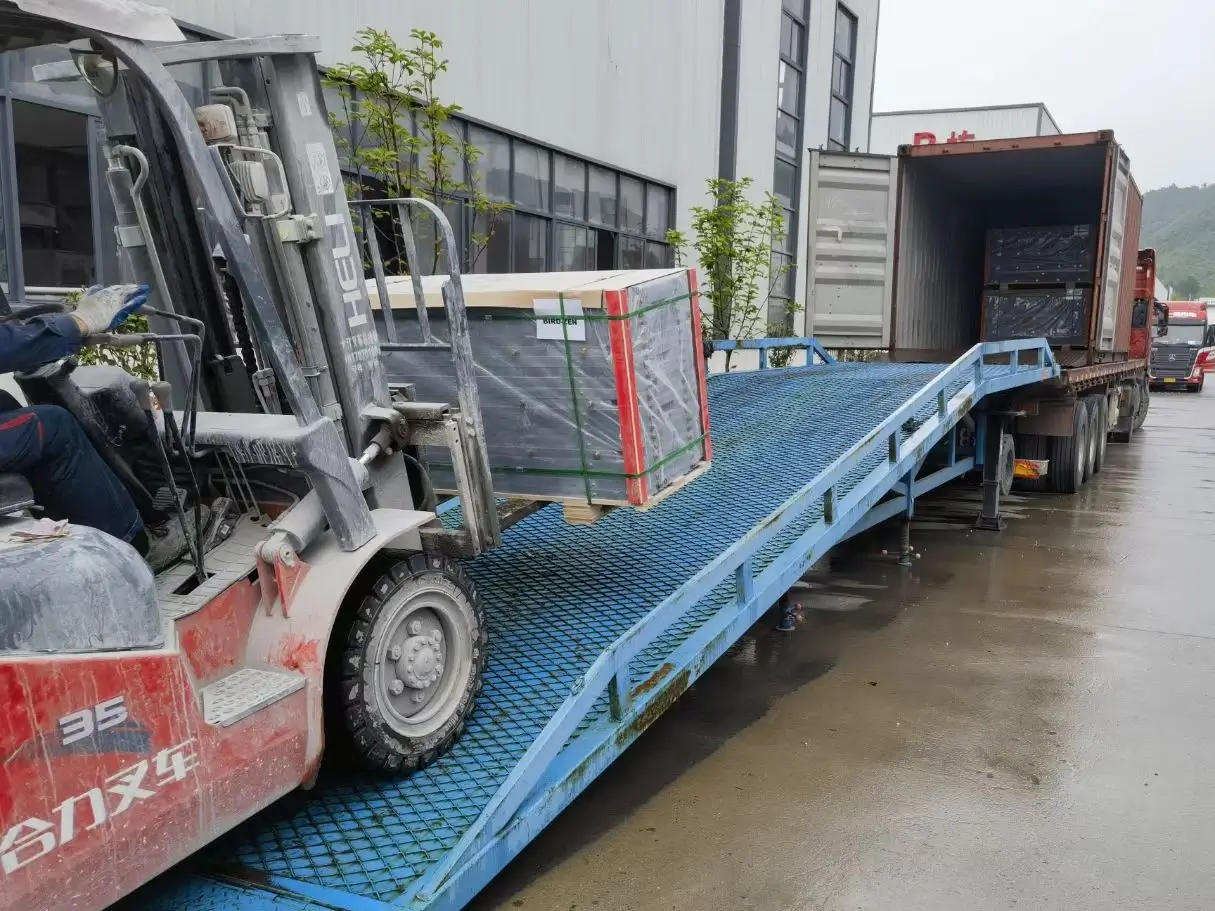
Question 4 — Where exactly will my container be loaded? This is one of the most revealing checks. A genuine factory operation runs the container through its own yard: the empty box trucked in from Jiujiang port — roughly forty minutes down the road — loaded beside the inspection benches by the same crew that built the crates, sealed, photographed, and driven back to the port for the Yangtze run. A container loaded inside a real factory is one of the hardest things in this trade to fake, because it means trucks, lifting gear, a loading crew and a production schedule all exist on the same premises. If the answer is "a consolidation warehouse near the port", your chain is longer than advertised, and any damage that happens in that warehouse belongs to nobody.
None of these questions is an accusation. A supplier who answers all four with specifics is worth your time at any layer of the chain; a supplier who cannot answer them is not automatically dishonest, but you should at least know what you are actually buying — and from whom.
Roofing Slate Buyers: Write an RFQ That Gets a Real Price
Most sourcing frustration in natural stone starts with an enquiry that cannot be quoted. Ask for "black Chinese roofing slate" and you will receive prices — all of them meaningless, because no two suppliers will have quoted the same product.
A quotation you can actually compare needs, at minimum:
- origin — Jiujiang, and which colour range within it
- size — e.g. 500 × 250 mm
- thickness — e.g. 7–9 mm, with the tolerance band
- sorting — colour and thickness grading standard, and how natural variation is handled across batches
- quantity — in m², tied to a container plan
- packing — wooden crates, pieces per crate, strapping
- destination port — so Incoterms and freight are comparable
- test documentation — which reports, from which standard, tied to which batch
Write that enquiry and something changes immediately: suppliers who cannot meet a defined specification quietly disappear, and the ones who remain are quoting the same product. Two materials both described as "Chinese roofing slate" can come from different geological sources with different absorption, strength and weathering behaviour — which is why our guide to Jiujiang slate versus other Chinese regions spends its whole length on why the label alone proves nothing.
When you are ready to look at standard formats and current stock, the roofing slate category page lists sizes and thicknesses with packing details — a working shortcut for building the RFQ above.
Billiard Slate Buyers: Where Direct Communication Pays Most
Billiard slate is the most technically specified product in the Jiujiang slate range, and the one where the choice of route matters most.
Take a common order: a 12 ft, five-piece snooker slate. A buyer who requests "12 ft slate" and compares the resulting prices has compared nothing — the quotations may differ in thickness, piece count, playing-area dimensions, flatness, joint configuration, bolt-hole positions, pocket cutouts, surface finishing and crate construction, and each of those variables moves both the production cost and the performance of the table.
Specify all of them, and then test the route:
- table size and overall slate dimensions
- number of pieces and the joint configuration
- thickness and the flatness requirement
- playing-area dimensions
- CNC machining, bolt-hole positions and pocket openings
- surface finishing standard
- wooden-crate packing and internal protection
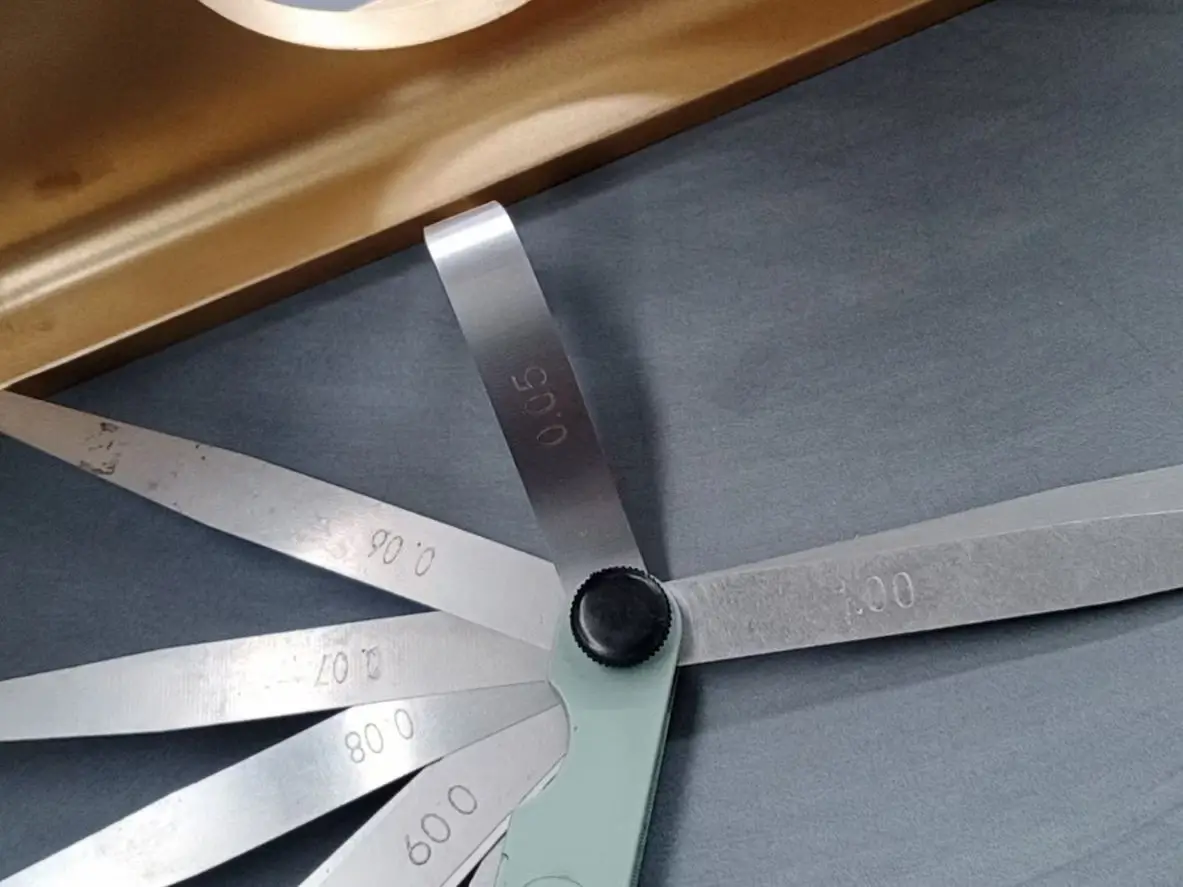
Here is what the answer can look like on a direct line. A billiard-table manufacturer sourcing through a trading company may find that a flatness question takes a week of relayed emails — buyer to desk, desk to factory, factory to desk, desk back to buyer, losing precision at every hop. On a direct line the same question can come back in one reply: machined to ±0.1 mm, seams lapped to 0.05 mm and checked with a straightedge and feeler gauge, with a video of that day's panel attached. Same stone, same workshop — different route, different answer, different table at the far end.
Change orders tell the same story from another angle. Move a hole 2 mm, tighten a thickness, re-cut an edge profile: on a direct line, the person who will physically make the change hears it the same day and can answer yes, no, or "that will cost you this much" with a number attached. Through two layers, every change is re-negotiated by people who have never touched the stone. If you want to see what the machines can actually hold, our CNC machining walkthrough covers the capabilities — and the limits — in machine-by-machine detail.
Compare the Whole Quotation, Not the Number at the Bottom
A low quotation is not necessarily a low-cost purchase. When two offers arrive, this is what belongs in the comparison:
| What to compare | Why it matters |
|---|---|
| Stone origin | Prevents mislabelled or mixed material — the same words cover different geology |
| Dimensions and thickness | Determines whether the two quotations are for the same product at all |
| Tolerance | Decides installation and machining outcomes — the biggest hidden price multiplier |
| Processing level | Different surface, edge and machining standards are different costs |
| Quality control | 100% piece-by-piece inspection is not the same product as sampled goods |
| Packing | Crates versus pallets decides your breakage rate on a five-week ocean leg |
| Export experience | Prevents documentation and shipping delays that cost more than stone |
| Responsibility | Establishes who answers when the specification is not met |
The practical method — same Incoterm, same thickness, same packing, same currency — is worked through with real numbers in our guide to comparing roofing slate quotations. The short version: two quotations for "25 mm billiard slate" or "Chinese roofing slate" that do not state tolerance, inspection level and packing are not yet comparable prices.
Pay the Name on the Contract, Not the Story
Direct sourcing removes layers; it does not remove commercial risk. Most of that risk lives in one place: whose name receives your money.
Ideally, the contracting company, the invoicing company and the receiving bank account should be clearly aligned. A factory with its own import-export rights — as opposed to one borrowing an agent's licence — can keep every name on those documents aligned from the signature page to the last remittance, and that alignment is what lets a quality claim, an insurance claim or a customs query land on one desk instead of being bounced between parties while the container sits. If an export agent or another company is involved, the relationship should be explained in the contract before payment. The buyer's job is to know who is responsible for what — not to assume a single name everywhere and hope.
Two checks before money moves. First, the red flag: a request, shortly before payment, to send the deposit to a different company's account — "for tax reasons", "our account is being audited", any urgent story at all. Legitimate suppliers do not change receiving accounts mid-deal. If bank details ever change, verify the change through a channel you already control — a known phone number, a video call — before the transfer. Second, the paperwork: the full document set that should travel with a slate shipment, from contract to packing list to certificate of origin, is covered in our guide to documents required for importing roofing slate — check the names match, not just the numbers.
And a sample note while we are on evidence: for anything beyond a first trial, seal a reference sample against the production batch, so "acceptable" has a physical definition both sides have signed. The sample approval process takes twenty minutes to do properly and settles questions of colour and tolerance before they become claims.
A Direct Sourcing Process That Works in Eight Steps
Here is the sequence, in order, refusing to skip steps:
- Define the product. Write the full specification — size, thickness, tolerance, finish, quantity, destination — before contacting anyone. Vague enquiries attract exactly the suppliers you are trying to avoid.
- Identify the production source. Ask where the slate is quarried, split, machined, inspected and packed. Expect a logical chain, not a brochure.
- Request current production evidence. Same-week block photographs, a same-day production video with dimensions being measured, batch-linked test reports, the loading plan for your container.
- Request a detailed quotation against your written specification, with tolerance, inspection level and packing stated on the document itself.
- Compare equivalent quotations only. Same Incoterm, same thickness, same packing, same currency. Without those aligned, the numbers mean nothing.
- Approve the product standard. Samples, drawings or a written specification, sealed and dated against the batch.
- Confirm responsibility in the contract. Who inspects, who approves packing, who handles a claim, which account receives payment — in writing before the deposit. The supplier question list is a good skeleton for that conversation.
- Monitor production and loading. In person if the order justifies the flight, or by a scheduled live video otherwise. Watch your own crates enter your own container; ask for the seal number.
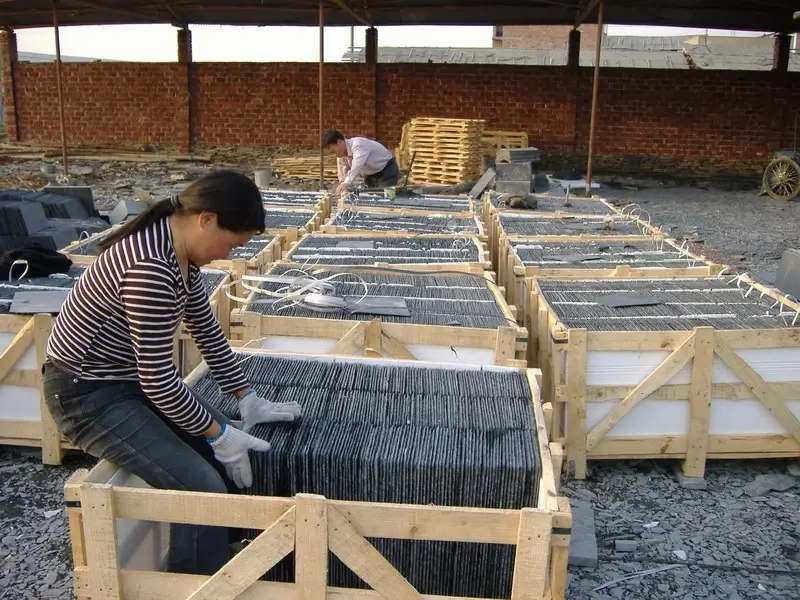
For what happens inside the container once it reaches the dock — crate arrangement, dunnage, weight distribution — the container loading guide covers the practicalities container by container.
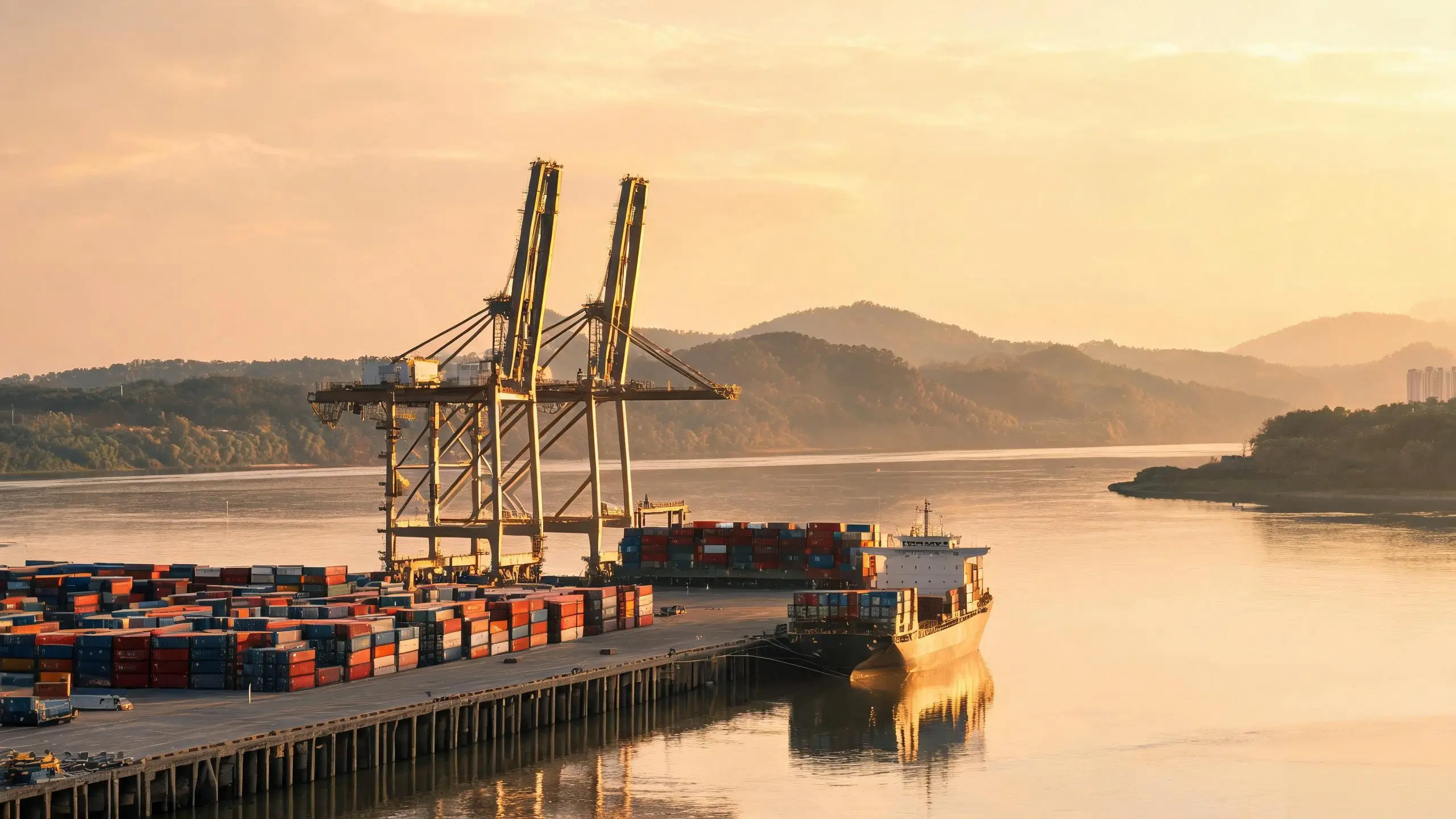
Run the sequence once and the second order gets easier, because the chain is already proven. After several orders, the value of the relationship stops being the quotation at all — it becomes the consistency: approved specifications, reference samples, standard packing, inspection procedures and loading routines that both sides know by heart. That is where direct sourcing in a producing region like Jiujiang compounds, order after order.
The Checklist Before You Place the Order
Print this, or paste it into your supplier email thread. If a supplier can answer all of it in specifics, the route question takes care of itself.
About the source
- Where does the slate come from — which mountain area, which quarry faces this season?
- Where is it split, cut, machined and packed — in-house or through a partner factory?
- Can the production location be identified and visited, in person or by live video?
About the product
- What are the exact dimensions, thickness, and tolerance bands?
- What sorting standard applies, and how much natural variation should you expect between batches?
- Is the quoted material from the same production source as the sample you approved?
About production and inspection
- Can current production be shown on request — same-week photographs, same-day video?
- Who checks the dimensions, and is it 100% of pieces or a sample?
- Do test reports carry a batch number that will match the shipped crates?
About the commercial relationship
- Which company signs the contract, and which company receives payment?
- Are the contract, invoice, customs declaration and bank account aligned under one name — or is any agent's role clearly explained in the contract?
- Who is responsible if the goods do not meet the agreed specification, and by what procedure?
About shipment
- How is the material packed — crates or pallets, pieces per crate, internal protection?
- Where will the container be loaded, and can loading photographs be provided?
- What documents are supplied with the shipment, and under whose name?
Underneath all fifteen questions sit the five that actually decide the purchase: Where does the stone come from? Where is it processed? Who checks it? Who is responsible for it? Can the supplier prove what they are selling? A supplier — factory or trading company — who answers those five in specifics is worth buying from. A supplier who answers with only a label deserves further verification before you place an order.
Frequently Asked Questions
Is buying factory-direct always cheaper than going through a trading company?
No. The saving comes from removing layers, not from the word "direct". A genuine factory price on a full container is usually the cheapest structure, but on a small, mixed or first-time order a good desk's consolidation, service and paperwork may cost less than the time and risk of doing it all yourself. Classify the order first, then choose the route.
How much do the middle layers typically add to a slate quotation?
There is no reliable universal figure, and any supplier who quotes one is guessing. What the layers add depends on order size, product complexity and the services provided — consolidation, coordination and paperwork can be worth paying for on a small mixed order, while a layer that only forwards emails adds pure margin on a full container. The practical approach is to ask who does what in the chain, and what each party is responsible for, rather than what percentage anyone adds.
How can I check that a "Jiujiang" supplier actually produces in Jiujiang?
Ask for same-season block photographs from a named mountain area, a current production video rather than a promotional one, and documents — contract, invoice, customs declaration — under a single company name. Our comparison of Jiujiang slate and other Chinese regions explains why the label alone proves nothing.
Can I visit the factory before placing a container order?
Yes — and serious suppliers are used to it. The practical route is a flight to Nanchang, then roughly forty minutes by road to the factory area in Lushan. Over the years we have regularly hosted overseas buyers who combine the workshop visit with a trip to the quarry. If travel is not practical, a scheduled live walk-through — machines, benches, your order in production — answers most of the same questions.
Do I lose quality protection if I cut out the trading company?
No — you trade a middleman's promise for a factory's responsibility, provided the contract is written properly. Specify the inspection standard, the tolerance table, the reference sample and the procedure for non-conforming pieces before the deposit. Direct sourcing fails buyers who go informal, not buyers who go direct.
Is direct sourcing realistic for a first, small order?
Below a full container it gets harder — factories schedule around container production, and small lots travel more sensibly through consolidation. A practical path is a paid sample set first, then a trial order large enough to justify its own handling, then the first full container once the chain is proven.
Related Reading
Shorten the Chain on Your Next Container
Send us a specification — size, thickness, tolerance, quantity, destination — and we will answer with the chain, not a slogan: which mountain area the blocks come from, who machines and inspects every piece, how your crates are built and loaded, and one company name on every document from contract to bank account.
Browse the roofing slate range or start a conversation directly.