
Jiujiang Slate Export Markets: Where the Stone Goes
Ask an export slate desk where its stone goes, and you will get a list of countries. Ask the same desk to show you, and you get a stack of paper instead: bills of lading, packing lists, booking confirmations, one set filed for every shipment gone out, the destination typed across the top of each page. Read over time, those documents show where Jiujiang slate has actually been shipped and which destinations keep generating repeat orders — a working picture of the Jiujiang slate export markets, port by port, built on records rather than market-share claims. This page is about that picture: where the containers go, and why so many of the same names turn up again the following year.
The article's own strapline promises two things — where Jiujiang slate goes, and why buyers across 30+ countries keep coming back. Both questions deserve better than a sales map. The route on paper sits elsewhere in this guide: how the chain from quarry to exporter divides its margins is the supply chain story, and the places the stone is actually made — faces, yards, sheds, halls — have their own walking tour. This page stays on the far side of the factory gate, where the markets live.
One honesty note before the tour, because market pages invite exaggeration. No exporter in this trade publishes honest per-country sales figures, and this one will not either; an individual factory's deliveries are recordable, while a whole region's "market shares" are invention dressed as data. Where the 30+ figure appears below, the page shows how it is counted — a number with its method attached, or nothing.
Quick Answer — four desks on one map:
UK & WESTERN EUROPE
Roofing slate. Specification-first desks. They come back when the tenth container still matches the sample the first one was approved on.
THE AMERICAS
Billiard slate. Drawing-first OEMs. They come back when the holes sit where the drawing put them — on every set in the shipment.
SOUTHEAST ASIA & THE GULF
Both product lines, short sea legs. They come back on freight rhythm and material that shrugs at humidity.
FIRST CONTAINERS, EVERYWHERE
Trial orders and LCL pallets. They come back small first — then annually.
Thirty-plus countries is a delivery record, not a sales empire. The next section shows how the number is counted; the one after it draws the two maps the traffic actually runs on; four portraits and a chapter on repeat buyers finish the job.
The Ledger: How "30+ Countries" Is Actually Counted
One distinction has to come first, because a region and a company are not the same witness. The count this page stands behind is our own: distinct destination countries on this company's filed export records — invoices, bills of lading, packing lists — accumulated across the full span of our shipping history, not in any single year, and not as a claim about anyone's current order book. Full containers of roofing slate count. So does the twenty-footer of billiard sets, the pallet of sample tiles that travelled as less-than-container-load cargo, and the lone crate of replacement panels that flew out to one club that could not wait for the sea. Thirty-plus countries is therefore a tally of destinations this desk has delivered to at least once — nothing more. The region's exporters as a group show a similar count, and their reputation is real; but a region's number is the sum of ledgers no buyer ever sees, and each exporter's ledger has to prove its own.
Nor is the traffic flat across those destinations. On this desk's records, a handful of markets re-order every year; several more order every season, the way established wholesalers work — a few containers each, at intervals the buyer's own warehouse decides. Behind them sits a long tail of project cargo and first orders: one container to an island distributor, a mixed pallet to a contractor testing the stone against his own roof, a trial set of table slate to a workshop that assembles forty tables a year. Tail entries either come back or they do not. Enough of them have, over the years, that the count keeps growing.
A buyer can lean on the ledger in two ways, and the second way is the better investment. Ask first where this factory has actually shipped in the last twelve months — honest desks answer with destinations, not adjectives, and the paperwork behind those answers (bill of lading, packing list, certificate of origin) is exactly the set described on the documents page. Then ask how many times the same specification has come back from the same desk. Repeat destinations — not country counts — are what a ledger is for. Where does Jiujiang slate go? In the end it goes wherever the last good container went, and that address is on file.

Two Lines, Two Maps
Slate leaves this region on two product lines, and they do not share one map — the first thing the wider Chinese slate export markets teach anyone who ships in them. Roofing slate follows roof traditions: it gravitates to the countries where natural stone was the roofing material of record and still is, which in practice anchors the trade to Britain, Ireland and northwestern Europe. Billiard slate follows table manufacturing: it goes wherever snooker and pool tables are built, from OEM workshops in the Americas to assembly operations across Asia and the Gulf. Both lines leave this desk every year — and beyond that, the product mix varies from one exporter to the next with capabilities, customers and order history; what a given desk actually ships is a question for that desk, and its shipping records answer it. The industry page puts the regionwide shape of the trade in container terms. Either way, no exporter worth its freight documents serves one map with the other's habits.
Each map has its own language, and the language decides everything downstream. Roofing markets speak in standards and formats: EN 12326 is the working language where the destination leans European, ASTM C406 where it leans American, the two are close cousins that cannot substitute for each other, and neither standard's name is a rubber stamp — what a given project actually requires is set by the destination market's regulations and that project's own specification. The standards page compares what each actually tests. Billiard markets speak almost entirely in drawings: a table model defines the bed, the bed defines the panels, and an approved drawing defines the quotation — the confirmation habit is written up separately. How a slate-buying market behaves follows from which of these two conversations it is having.
| Line | Gravity | Who sits at the desk | First thing they ask | Their real test |
|---|---|---|---|---|
| Roofing slate | Anchored on Europe — Britain, Ireland, the Low Countries, the Nordics | Importers, roofing merchants, project buyers | Tile formats, thickness band, test reports | The tenth container still matches the approved sample |
| Billiard slate | Follows table making — the Americas, Asia, the Gulf | OEM builders, assemblers, parts distributors | The drawing: panels, holes, flatness, tolerances | Every set machines out to the drawing it was approved on |
| Both at small scale | Everywhere a full container is too much | Trial buyers, contractors, island distributors | Minimums, pallet arrangement, landed cost | A small order that arrives like a big one |
Three shapes of traffic, and the four portraits below take them in the order a desk meets them. The buyer's own seat decides which portrait is theirs.
Portrait: A Distributor's Desk in Britain
If your desk is in Britain, you are almost certainly buying to sell on: pallets in, credits out, a warehouse the trades phone when a job needs covering. The British end of the trade splits cleanly in two. On one side sits heritage and renovation work, where the question is matching — a slate that sits beside ninety-year-old neighbours without arguing, cut to sizes that were standard when the roof was young — replacement matching is its own craft. On the other side sits specification work for new builds and extensions, where the questions are blunter: exactly what tile formats, in what thickness band, against what colour tolerance agreed in advance.
What those desks ask of a Chinese roofing slate supplier is that a specification behave like a product code. A 500 × 250 mm tile order should mean the same thing in March as it meant in October; a colour reference approved by sample should still be recognisable two containers later; a distributor who has never visited the quarry should nonetheless be able to answer a roofer's question from the paperwork alone. Where the project leans European, the EN 12326 wording arrives early — the test language is asked for at project level, and our own figures sit in the open on the published test-results page. Across the Channel the same conversation runs in its own accents, distributor chains of their own, and Spanish slate as the price pole everyone measures against.
The landed cost is where the exporter end of that conversation is won or lost: pallet configuration, container fill, and the arrival condition that decides how much of a "cheaper" consignment actually reaches the roof untaxed by breakage. But the thing that actually brings a British desk back is simpler and harder: the sample-to-container match. It is why sample approval is treated as a small ceremony rather than a formality — sealed reference tiles, signed and dated, kept where the next order can be checked against them. When the tenth container still matches the first sample, nobody phones; they reorder.
Portrait: An OEM in the Americas
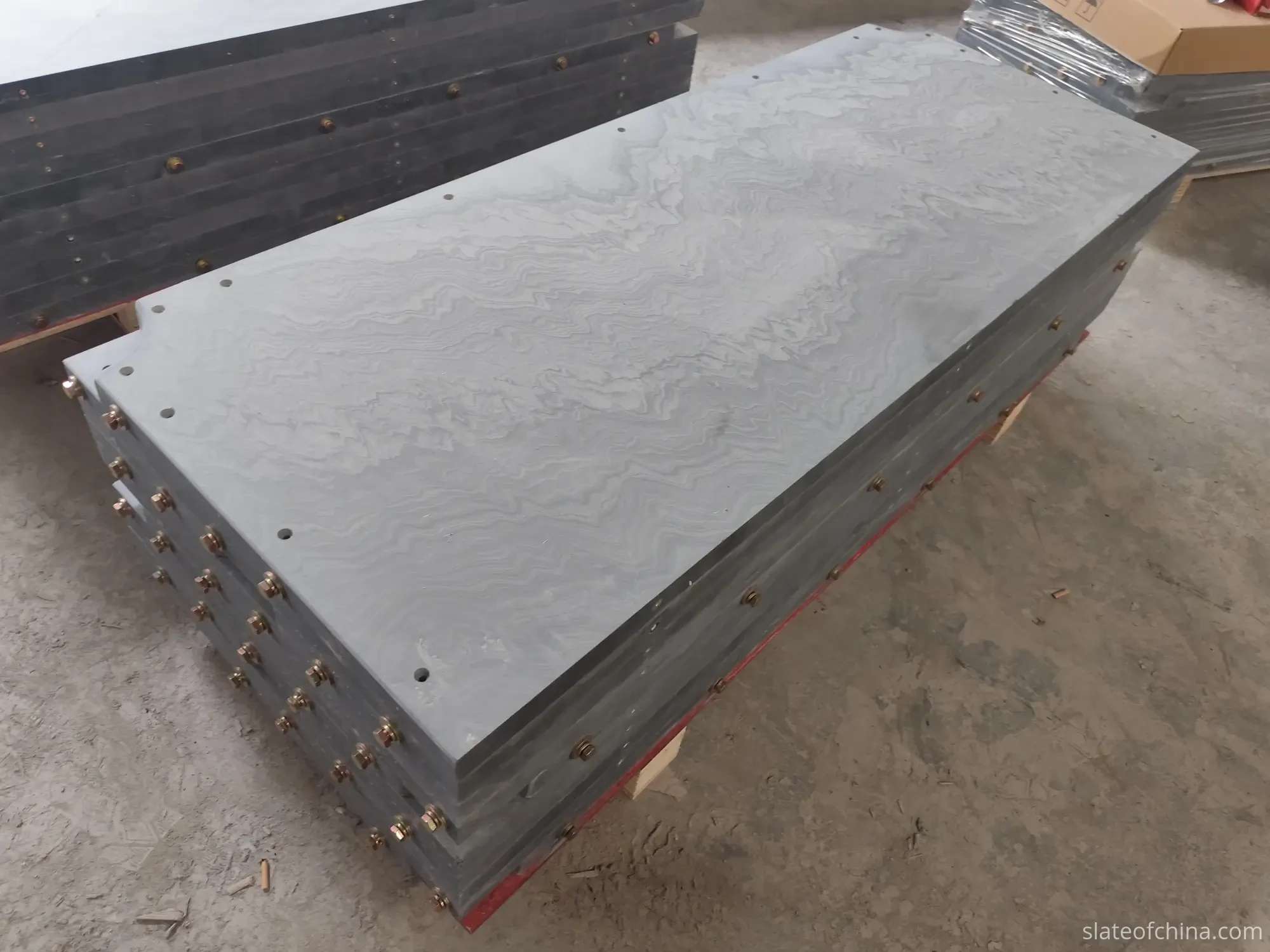
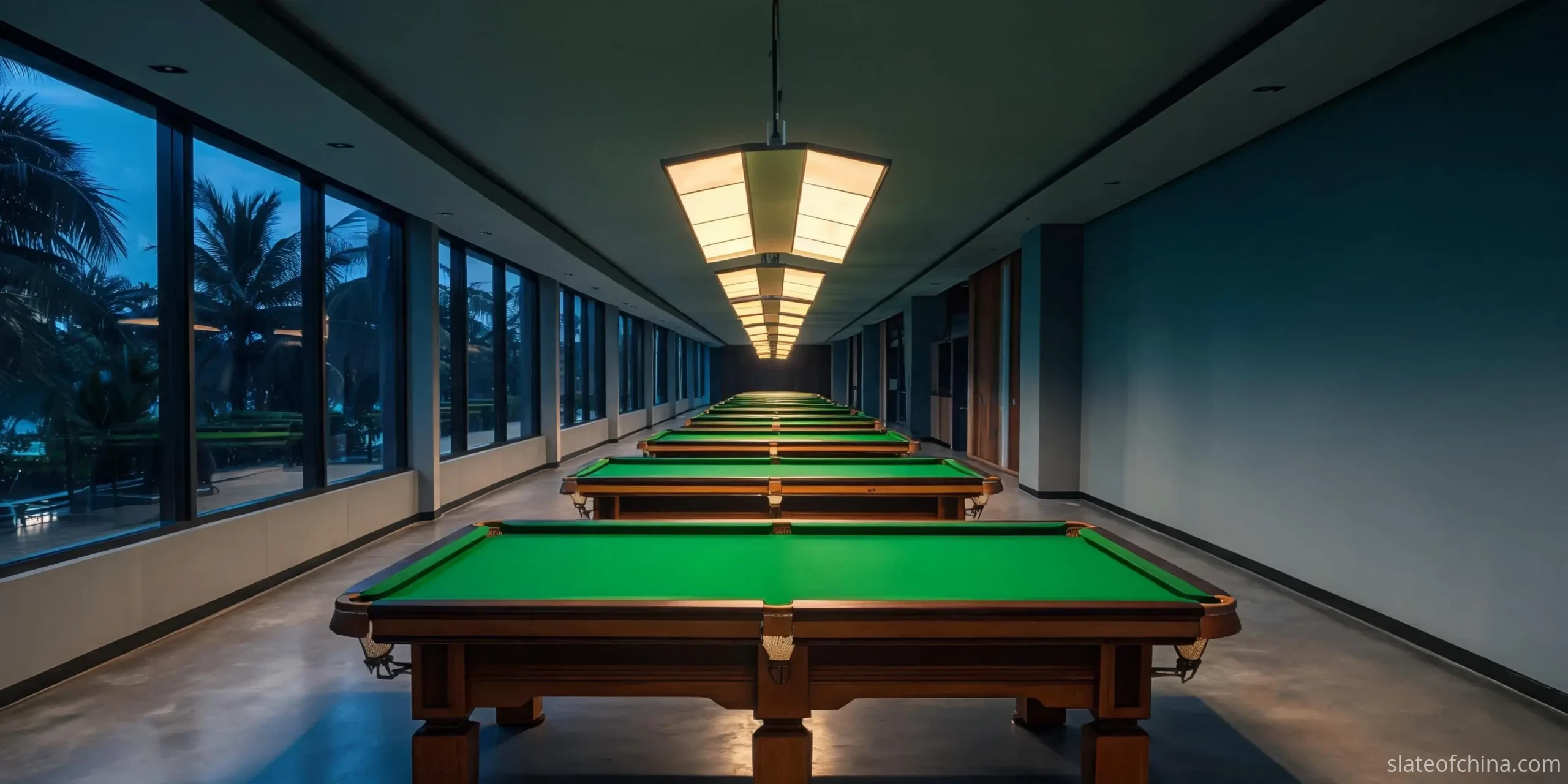
If your desk builds tables rather than stocks them, the conversation runs differently. You arrive with a drawing, or with a table you want copied; either way the drawing becomes the whole relationship. In our experience, pool table slate buying in the Americas is drawing-first from the first email: the model defines the bed, the bed defines the panels — how many, in what thickness, with holes where the frame's bolts expect them. A supplier who treats "12-foot table" as a fixed universal spec is guessing; the honest habit is to quote from the drawing of your table, in writing, before a blade touches stone. Thickness follows the table: somewhere between nineteen and thirty-eight millimetres, from the lightest pool frames to full-size snooker. Flatness is the spec the whole sport stands on — the tolerance, its measurement basis and its limits, are set out on the flatness page of this guide.
What those desks ask of a snooker or pool slate manufacturer is repeatability with numbers attached. Not "high precision," but a written flatness figure with a stated basis; not "strong packaging," but a crate plan that says which panels stand, which lie flat, and how many sets ride in the container. Their own quality systems answer to their own customers, so they document ours: inspection records per set, hole positions per drawing, set-matching across three-piece beds. Photographs help begin a conversation; only drawings, measurements and approved samples finish it. Many of these buyers work under OEM discipline — their retail names go on the tables, ours on nobody's paperwork — and for that whole world, the OEM supply pages describe how the arrangement runs.
And there is a quieter desk behind the loud one: the replacement-slate trade. A bed cracks in a club in year ten; the table is fine; the owner needs one panel, to a drawing often older than the club's membership list. Desks that can still produce that panel — and do — are the reason a slate supplier's export map keeps towns on it that no atlas would mark. That is what the Americas desks come back for, in the end. Not the brochure, not the price on its own: the holes line up. On every set, in every shipment, to the drawing that was approved. When a table line assembles without rework, purchasing managers renew contracts without meetings.
Portrait: Tables and Roofs in Southeast Asia and the Gulf
In this part of the map — Singapore, Ho Chi Minh City, Manila, the Gulf transshipment hubs, the subcontinent ports — a billiard slate supplier in Asia ships into a market where new clubs open faster than local table supply alone can finish them, and much of the buying runs on replenishment rather than projects: a well-run distributor can be ordering replacements while a European buyer is still waiting for the same container to clear. One thing should not be assumed from the map, though: transit times and landed costs depend on the destination port, shipping route and handling arrangements. Carrier schedules and transshipment legs differ port to port, so each leg is confirmed per route, not presumed from the region's address. The demand side looks different too: humidity is the permanent climate, not a seasonal visitor.
That cuts both lines the same way, for opposite reasons. For table slate, what a wet-season club tests is the environment around the stone — cloth, frame, ventilation — while the bed's job stays what the approved drawing defined: machined flat, dimensionally stable, sound at every edge. For roofing, the regional work is project-shaped: coastal villas, resorts, any roof where salt air and sun argue about which ages the material faster. Both trades in this part of the world also price material behaviour — with one caution that belongs here: freeze–thaw resistance, water absorption and behaviour in salt-laden air are related but separate questions, and no one of them answers for the others. Suitability for a specific tropical or coastal installation is assessed against the relevant test figures and the project's own exposure conditions; the water-absorption page is where those figures live.
Mixed orders come up regularly in this trade: roofing pallets and table sets riding the same container in some orders — decided case by case against the specific packaging, weight distribution, container space and handling requirements of that shipment, never assumed, since what clears one port's handling may not suit another's. It can suit a distributor serving both trades, or a market where one container has to carry a season's worth of everything. Freight-days and destination charges also differ port to port; the freight guide runs those numbers, and conversations here settle early on landed cost at a named port, not on FOB riddles. What brings these desks back is a supplier close enough to keep pace with the reorder cycle, disciplined enough that pace never costs a specification.
Portrait: The First Container, Anywhere
Every desk on this page started where a first-time buyer stands now. Importing slate from China usually begins smaller than a container: one specification, one unanswered question, and a healthy suspicion of price lists. First orders have a shape, and it is not usually a full container. It runs samples first; then a pallet or a few crates moving as LCL cargo; then a half load; then, if the material behaves, a booked container and a relationship with a freight rhythm. Island markets, single-project contractors, one-country distributors, provincial clubs — the "small end" of the map is where the ledger's long tail comes from, and on some small-shipment routes into Africa and island territories it is the only shape that makes commercial sense. The samples that start it are rarely free — honest desks quote them plainly, and a sample that cost something arrived tracked, wrapped and answerable.
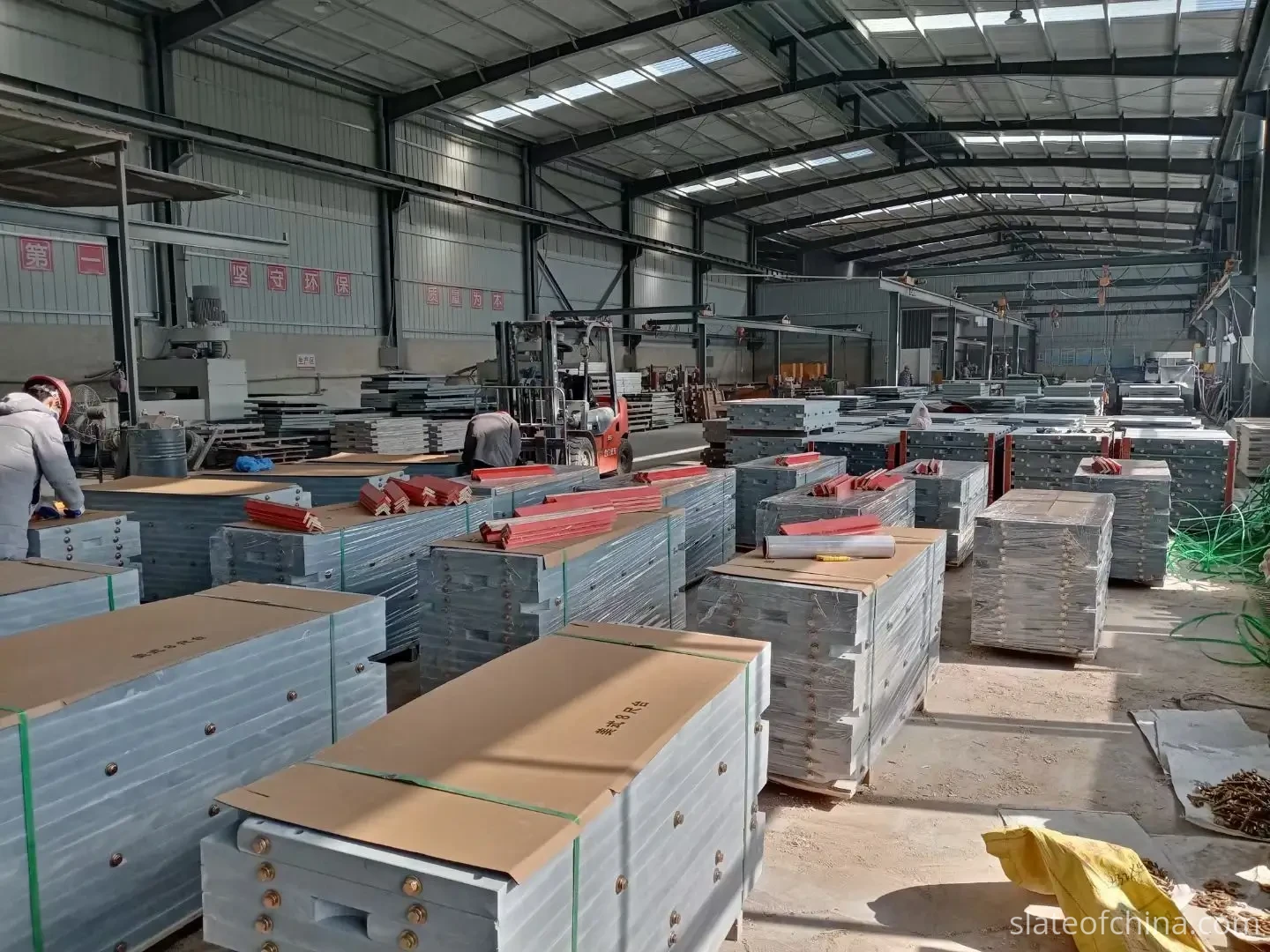
Small shipments deserve honesty about their costs. LCL cargo pays a premium per pallet, gets handled more often than a sealed container ever is, and meets more edges on its way to a warehouse — breakage allowances for that world have their own page, and the packing answers that hold it down live with the shipping guide. None of that argues against the first order; it argues for doing it with a supplier who packs a pallet with the same care as a forty-footer.
Which is what the first container is actually for. Its real product is not the slate — it is the match between arrival and approval: does the cargo look like the sample, measure like the spec, and arrive like the plan. A first pallet that lands clean converts into an annual container more often than any brochure ever has. When it does, the checklist the buyer returns with is a longer document than the one they started with — it runs to its own page in this guide.
Why the Same Desks Come Back
Something about the slate trade keeps its purchasing desks loyal to a fault, and it is not sentiment. Switching suppliers means re-sampling, re-testing, re-quoting and re-explaining — costs that sit on the buyer's side of the ledger and never appear in anyone's price list. Repeat business is therefore earned on the supplier's side of the desk, in behaviour the buyer can check. The region's reputation rightly credits infrastructure built over decades; what actually brings a desk back is smaller and more personal:
- Paper habits before production. Specifications agreed in writing, drawings confirmed, samples sealed, packaging and delivery terms fixed on paper. Most export disputes are born in a vague sentence two weeks before loading, and die in a precise one before it.
- Inspection shaped to the product. Roofing consignments are checked the way roofing is used — graded, counted, and looked at. Billiard sets are checked the way tables are built — on benches, against drawings, panel by panel.
- A crate that knows the ocean. Pallet arrangements and crate plans designed for the voyage rather than the photograph.
- A desk that says no. Not every slate suits every roof; not every drawing is buildable at the quoted tolerance; no test certificate is a master key to every market — an EN-worded report does not open an ASTM-worded door, and vice versa. Honest refusals are cheap; silent ones are not. The desks that stay are the ones that found this out before it cost them a container.
Where Your Market Fits
Mapping your own case onto this page takes four facts, and it is worth writing them down before the first enquiry: the product line (roofing or billiard), the destination market and nearest port, the specification or drawing (or the sample it should copy), and the realistic annual quantity. Sent together, those four let a Jiujiang slate exporter answer the only questions that matter — which map you are on, what the first shipment should look like, and what the conversation will demand of you.
If you are still mapping rather than ordering, the guide continues below, and nothing in it is priced. The chain-level story of who does what between quarry and quay, the currency-and-provenance of the region as a name — those pages carry the context this one skipped.
Frequently Asked Questions
Which countries buy the most Jiujiang slate?
No exporter honestly publishes per-country sales, so any ranking you read is invented. What can be said is structural: roofing slate traffic anchors on Britain, Ireland and northwestern Europe, where natural stone roofing is a standing tradition; billiard slate follows table manufacturing, with OEM workshops across the Americas and assembly demand through Asia and the Gulf; small-shipment and trial buyers appear on every continent. To see the Jiujiang slate export countries behind a supplier's claim, ask which destinations were actually shipped in the last twelve months, backed by documents, and how often the same desks have re-ordered.
How is the "30+ countries" figure actually counted?
It is a destination count taken from our own filed export records: distinct destination countries this company has shipped to, counted across the full span of our export history rather than any single year. Full containers count, and so do LCL pallets and sample shipments — the figure says thirty-some nationalities have taken delivery from this desk at least once, nothing more. It is not an annual reach, not a market share, and not evidence about any one country's volume. The region's exporters as a group show a similar count; every exporter's ledger has to prove its own. A number that cannot be traced to its records is marketing; this one can.
Do new buyers usually start with a full container?
Usually not. The common path runs samples, then a pallet or a few crates as LCL cargo, then a half load, then the first booked container. Small shipments genuinely cost more per square metre and get handled more along the way, which is why packing and breakage terms matter most at this stage. The first order is not really about volume anyway — it is about whether the arrival matches the approval. Clean first pallets convert into annual containers more reliably than any negotiation.
Do European buyers need EN 12326 reports for Chinese slate?
Where a destination leans European, EN 12326 wording is usually the working language, and on regulated or specified projects the test report is asked for explicitly — the exact requirements vary by country and by project, so the destination market's rules should be confirmed, not assumed. Two cautions that hold everywhere: a report speaks for the material and source it tested, not for every slate with a similar name, and an EN-worded report does not substitute for ASTM C406 where the American wording rules. Our own published figures sit on the test-results page of this site.
Can roofing slate and billiard slate ship in the same container?
Sometimes — but it is decided per shipment, never by a blanket rule. What decides it is the cargo itself: the specific packaging each line needs, the weight distribution inside the container, the space the order actually fills, and the handling requirements of the ports on the route. When those line up, a mixed load can suit a distributor serving both trades, or a market where one container has to carry a season's worth of everything; when they do not, the honest answer is two shipments. The practical constraints and the minimum-order maths are set out on the MOQ page of the roofing guide.
Related Reading
Source Jiujiang slate for your market.
Whether the line is natural roofing slate or machined billiard slate, four facts map your enquiry onto this page: the product, the destination market, the specification or drawing, and the realistic annual quantity. Send them, and the desk answers with a route rather than a price list — suitable products, packaging and export arrangements reviewed against your requirements:
- Roofing — tile formats and thickness band, colour reference, coverage in m², destination market.
- Billiard — table type, drawing or hole layout, slate thickness, number of sets, destination port.
Still mapping rather than ordering? That route is open too, and it needs no specification: read this guide at your own pace, or ask for the standard specifications and test documents first — the quotation can wait until the drawing is ready.
Browse the roofing slate range and the roofing guide, or the billiard slate range and the billiard guide — or skip the browsing and send the four facts straight to the desk. However the enquiry starts, it deserves the reading this page has given the markets: destination first, specification underneath, evidence all the way down.