
Containers, Freight and Delivery from Jiujiang
Seven or eight generations back, this family's stone already left home by water. Wooden sailing boats worked their way down from the Jiujiang reach of the Yangtze and along the coast, selling cut stone in the ports on the way. The boats are gone; the instinct is not. When we quote a container of roofing slate to a buyer in Europe today, the first forty minutes of its journey are by truck, and the next eight hundred kilometres are still by water.
That geography is not a history footnote — it is the shortest explanation of how freight works from here. Jiujiang sits on the Yangtze, a working freight river rather than a postcard one, and that single fact quietly decides part of your container route, a few days of your calendar, and a slice of your landed cost in ways that a map of "China" will never show you. An inland factory near no water pays for that distance in trucks; a coastal factory pays in higher factory overheads and dockside rents. A river port forty minutes from the workshop is the middle path, and it deserves to be understood rather than assumed.
If you are shipping slate from China, the practical questions come down to four: how many square metres — or table sets — fit in a container; which route the container actually takes from Jiujiang; how long the whole shipment really takes; and what the slate costs by the time it reaches your warehouse. This page answers all four from the Jiujiang side of the shipment. It is the freight half of the story — the previous page in this guide walked a loading day inside our yard and ended at the seal; this one follows the container after it, and it ends with the number your project will actually remember, the landed cost per square metre, per table set, or per tonne.
Factory → port
River feeder
Transhipment
Ocean
Your port
Final mile
Part of the Jiujiang Slate Guide's Buying & Exporting section. It follows How Jiujiang Slate Is Packed and Shipped — the loading day that ends with the seal — and hands the paperwork and handover mechanics to the Roofing Slate Guide's Shipping Roofing Slate Internationally. This page stays with the buyer's three questions: which box, which route, which numbers.
How Is Slate Shipped from China?
Slate leaves Jiujiang in full containers, sealed at the factory and trucked about forty minutes to Jiujiang Port on the Yangtze. From there, most containers travel by river feeder down to an export gateway — typically Shanghai, roughly 800 km downriver, sometimes another coastal port by rail or road — where they are lifted onto the ocean vessel. Roofing slate usually moves in 20ft containers, because cargo weight, not cargo volume, is the binding limit: a 20ft container of standard 7–9 mm slate is typically planned at around 1,130–1,450 m², depending on packing configuration and allowable gross weight. And the door-to-door calendar is always the production schedule plus the transport chain — production, not the ocean, is usually the longer half. The rest of this page takes each of those sentences apart.
The Water Was Always the Route
Buyers are often surprised that an inland city exports stone at all, so it is worth being precise about what Jiujiang is and is not. It is not an ocean port — deep-sea vessels do not come up the Yangtze to collect slate. It is a Yangtze trunk-line river port with container operations and an established feeder connection downriver to the major export gateways, Shanghai chief among them. The honest phrasing for your shipping documents and your expectations is the same: the container is stuffed in Jiujiang, and it reaches the ocean through a gateway.
That matters for two very different reasons. The first is that the river works — containers barge down from Jiujiang in the ordinary course of trade, on published feeder schedules, and the through bill of lading still reads from Jiujiang to your destination port. The second is what the geography saves. The factory sits about forty minutes from the port. In much of China's stone country, the distance from workshop to water is measured in hundreds of kilometres of road; here it is measured in minutes. Distance to water is a real cost of any inland origin, and you should count it for every supplier you compare — for this one, it is a short drive and a feeder ticket.
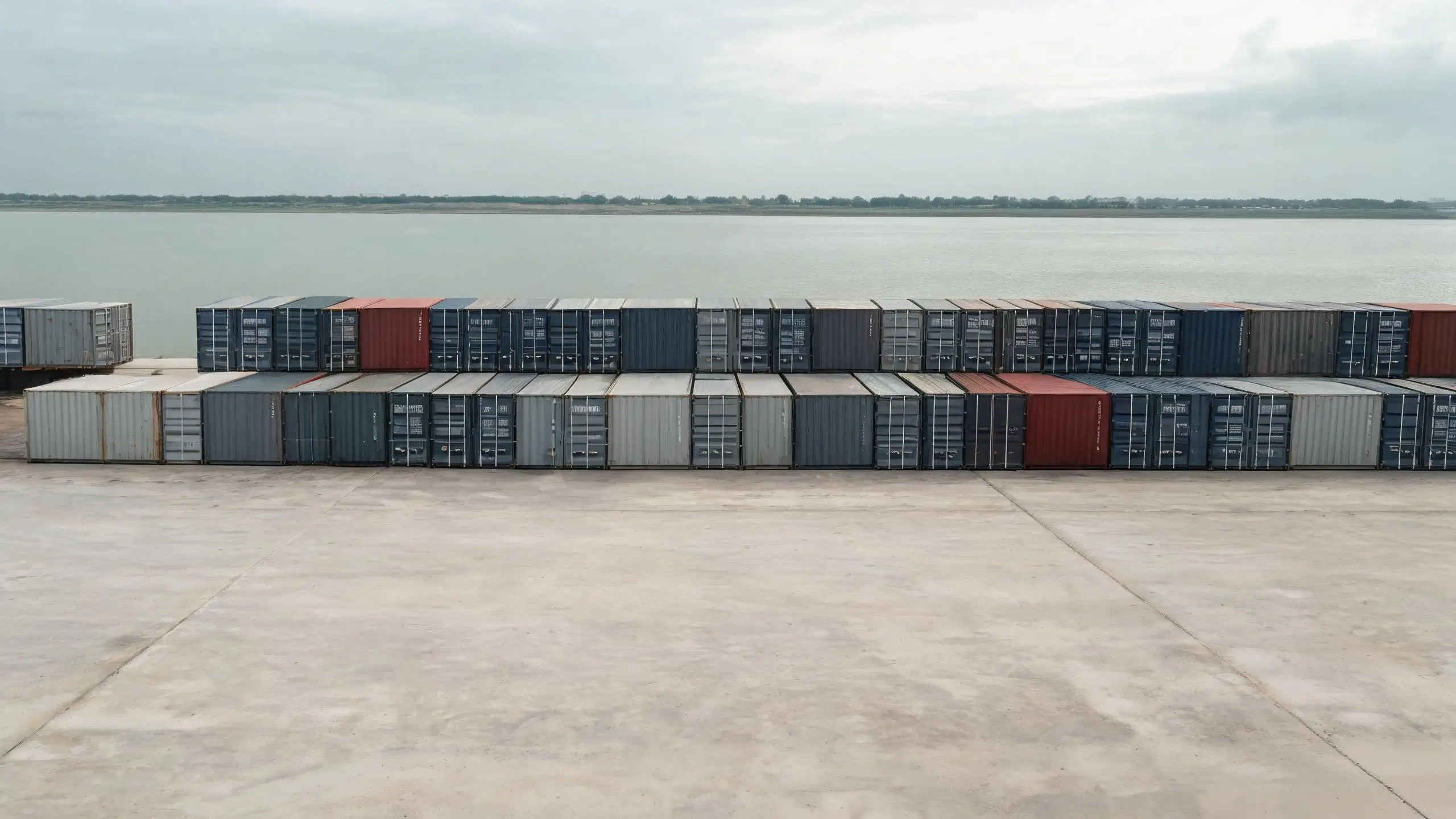
Which gateway the container uses is not a matter of taste — it is a matter of schedules, equipment availability and the freight level of the month. Downriver to Shanghai is the classic route; rail or road to another coastal port is the alternative when a sailing date or a tight connection argues for it. The buyer's job is not to choose the route but to be told it. "Which port will appear on the bill of lading, and how does the box get there?" is a question that separates a quotation that has been engineered from one that has been photocopied.
20ft or 40ft: Weight Decides Before Price Does
For most goods, the container question is about volume — will it all fit? For slate, it is about mass. The rock runs about 2.7 tonnes per cubic metre, so for our typical roofing-slate shipments the practical limit is allowable gross weight long before it is cubic space: a 20ft container can often be planned at around 1,130–1,450 m² of standard 7–9 mm slate, depending on the packing configuration, the road-weight rules on the origin run and the carrier's own limits. That single physical fact explains almost everything about how stone ships.
It also explains the 40ft trap. A 40ft container offers nearly twice the floor length and volume of a 20ft, but its payload is only marginally higher. For cargo that is paid by the square metre and made of rock, the extra space is mostly air, and air is the most expensive thing you can put in an ocean container. There are genuine exceptions — mixed loads of slate with lighter goods, shipments built around accessories and fixings, cargo light enough to cube out — but a container of dense roofing slate in a 40ft box is generally a larger bill for the same stone.
The right question is therefore not "which container is cheaper?" but "which container gives me the lower delivered cost per square metre?" For dense roofing slate, the 20ft is usually the more practical answer — and the next section sets out when it is not. Freight is paid once and divided forever — by the square metres riding inside the box. Two shipments with identical freight bills arrive at very different costs per m² if one carries 1,450 square metres and the other 1,250, and on a 10,000 m² project that arithmetic is worth more than any negotiation on the invoice.
The full loading arithmetic — the density figures, the five thickness bands from 5–6 mm up to 13–15 mm, and the two-step calculation you can run yourself — is written out in the Roofing Slate Guide's How Many Square Metres Fit in a Container?. Use it before you order, not after.
When Does a 40ft Container Make Sense?
A 40ft is not a mistake waiting to happen; it is a tool for the right cargo, and some shipments genuinely earn its rent. When the mix is light — fixings, accessories, adhesives or non-stone goods riding with a partial slate load — the extra floor length turns into real cargo instead of paid air. When the trade lane prices the equipment attractively, one well-filled 40ft can beat two 20ft boxes on terminal and handling costs even at similar payloads. And when the buyer's own logistics are built for it — a warehouse that receives in 40ft slots, or a destination where 20ft equipment is scarce and priced accordingly — the bigger box is simply the cheaper slot to book.
The decision rule does not change with the size of the box: take the actual loading plan, run the payload arithmetic, and compare delivered cost per unit. Never from container volume alone, and never from the reflex that bigger is better.
How Much Slate Fits: Square Metres, Sets and Tonnes
For roofing slate, the honest answer comes as a range, not a single number, because thickness, tile size and packing configuration all move it: standard 7–9 mm material typically plans out at roughly 1,130–1,450 m² to a 20ft container. A supplier who quotes you one exact figure before the packing configuration exists is quoting a guess dressed as a promise. What you should ask for instead is the loading plan behind the number — crates per container, square metres per crate, and the gross weight — because those three figures are what your freight, your unloading and your customs declaration will actually be built on.
Billiard slate works the other way around, by the set rather than the square metre, and weight is the whole story. Take a 9 ft three-piece bed at 45 mm: a little over three square metres of solid rock, which by the density arithmetic comes to roughly 400–450 kg of stone before the timber goes on. A 12 ft snooker bed is heavier again. So the questions that matter are "how many sets per container as actually crated?" and "what is the gross weight per set?" — not "how many cubic metres?" Nobody ever loaded a container of table beds to its cubic limit; they load it to its weight limit, its floor strength and its crate footprint.
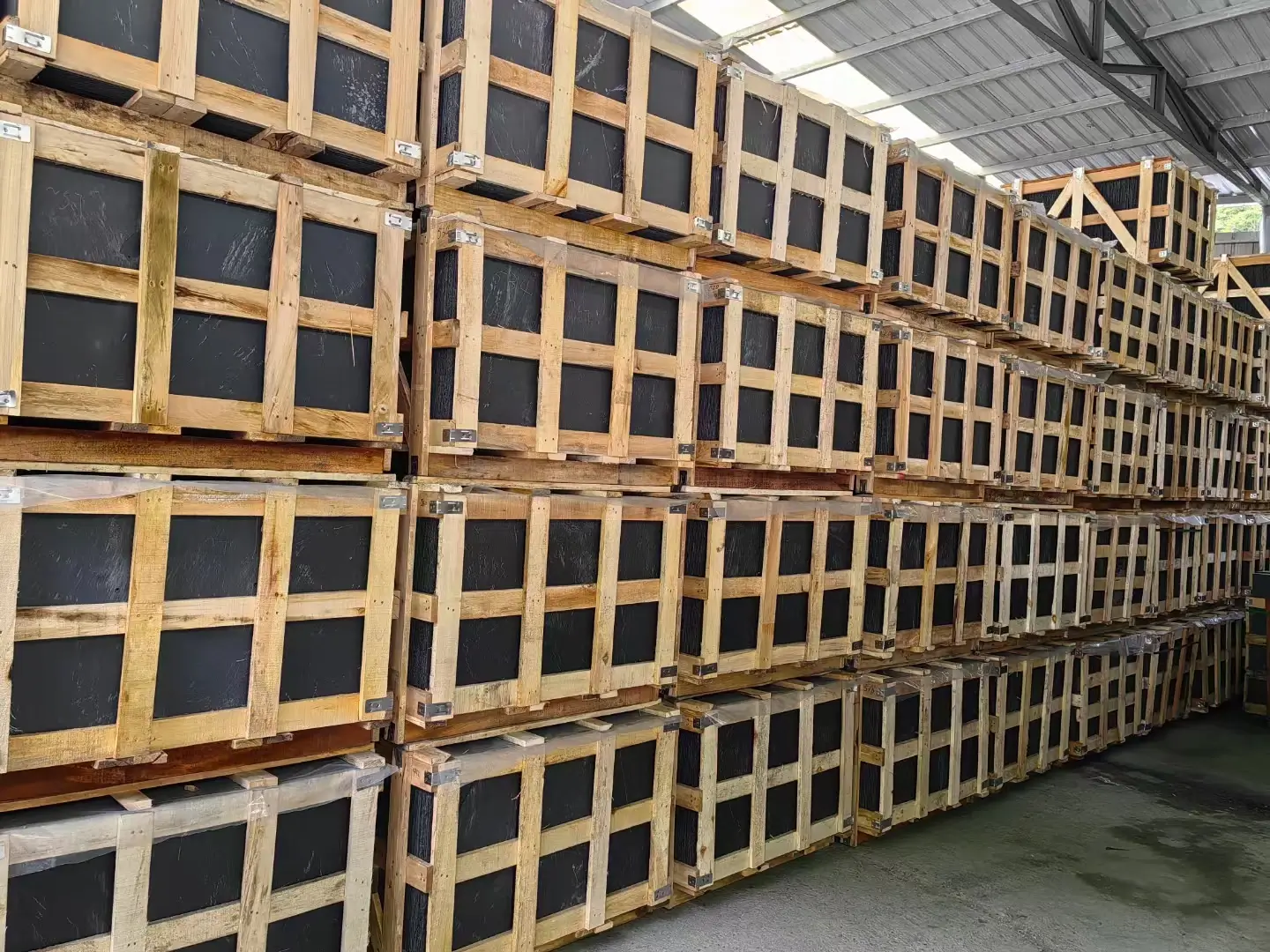
And the crates themselves belong in the arithmetic. Timber, interleaving, strapping and steel banding all weigh something — meaningful weight, spread over a container of crates — and all of it counts toward the gross weight on the documents. A packing method is never free: it is either a modest cost that protects a cargo worth many times more, or a false economy that shows up on the other side of the ocean. How we load, brace and photograph the crates before the doors close is the previous page of this guide, How Jiujiang Slate Is Packed and Shipped; the point here is only that the crate is a line in your freight account, not an afterthought to it.
Six Legs, One Consignment: Where the Days and the Dollars Go
It helps to stop thinking of "shipping" as one cost and one number, and read a consignment from Jiujiang as what it physically is: six legs, each with its own time, its own payer and its own question. Here is the whole chain, leg by leg, with the buyer's question attached to each.
Leg 1 — Factory to Jiujiang Port. The empty container comes to our yard on a loading day and the sealed box goes back the same day — about forty minutes each way, no intermediate warehouse, no borrowed hands. Time: hours, not days. Cost: local trucking, normally folded into the seller's export costs. The question it answers was covered on the loading-day page: the last hands on your slate before the doors close are ours, and the photographs to prove it are taken in the same afternoon.
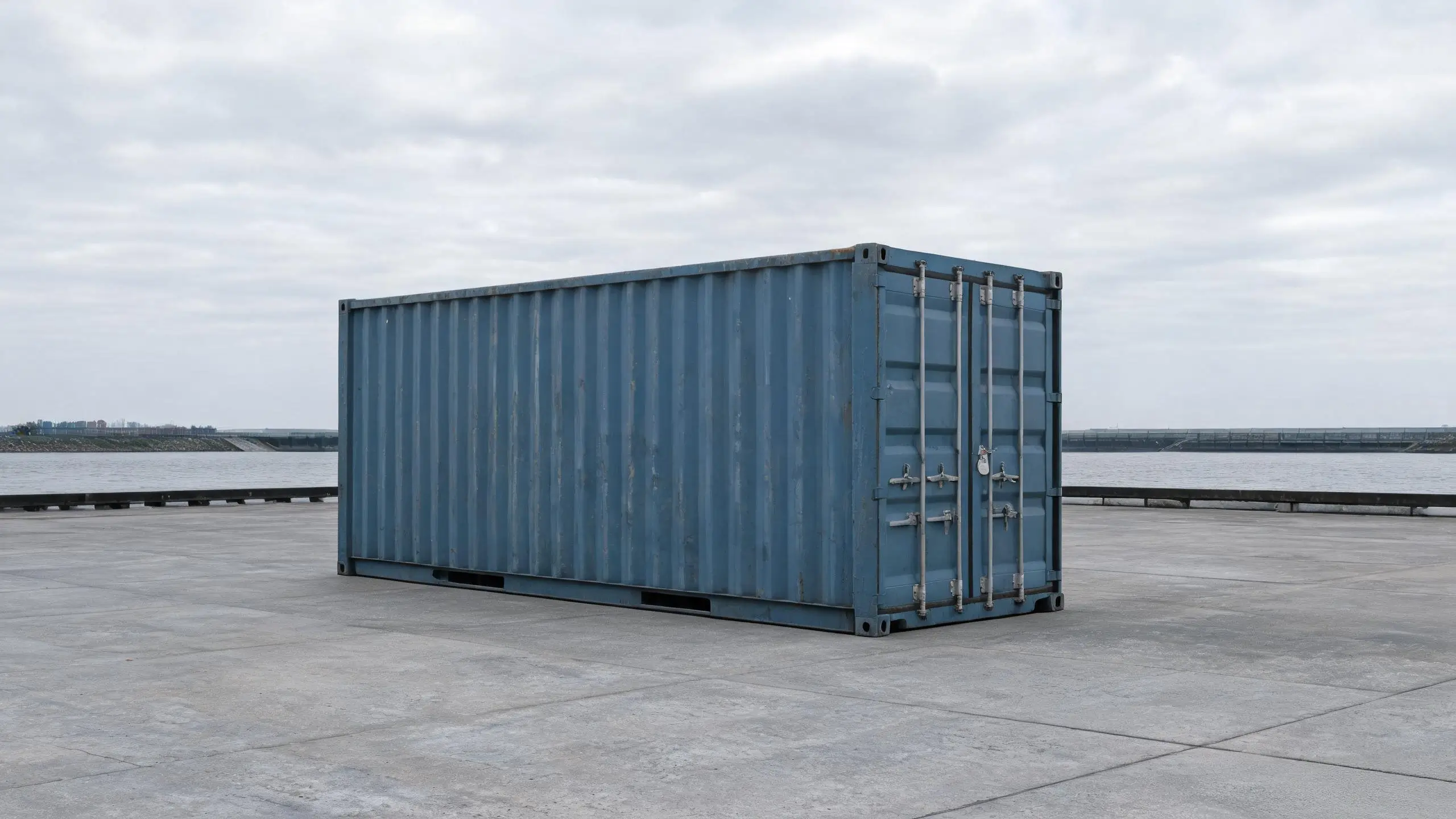
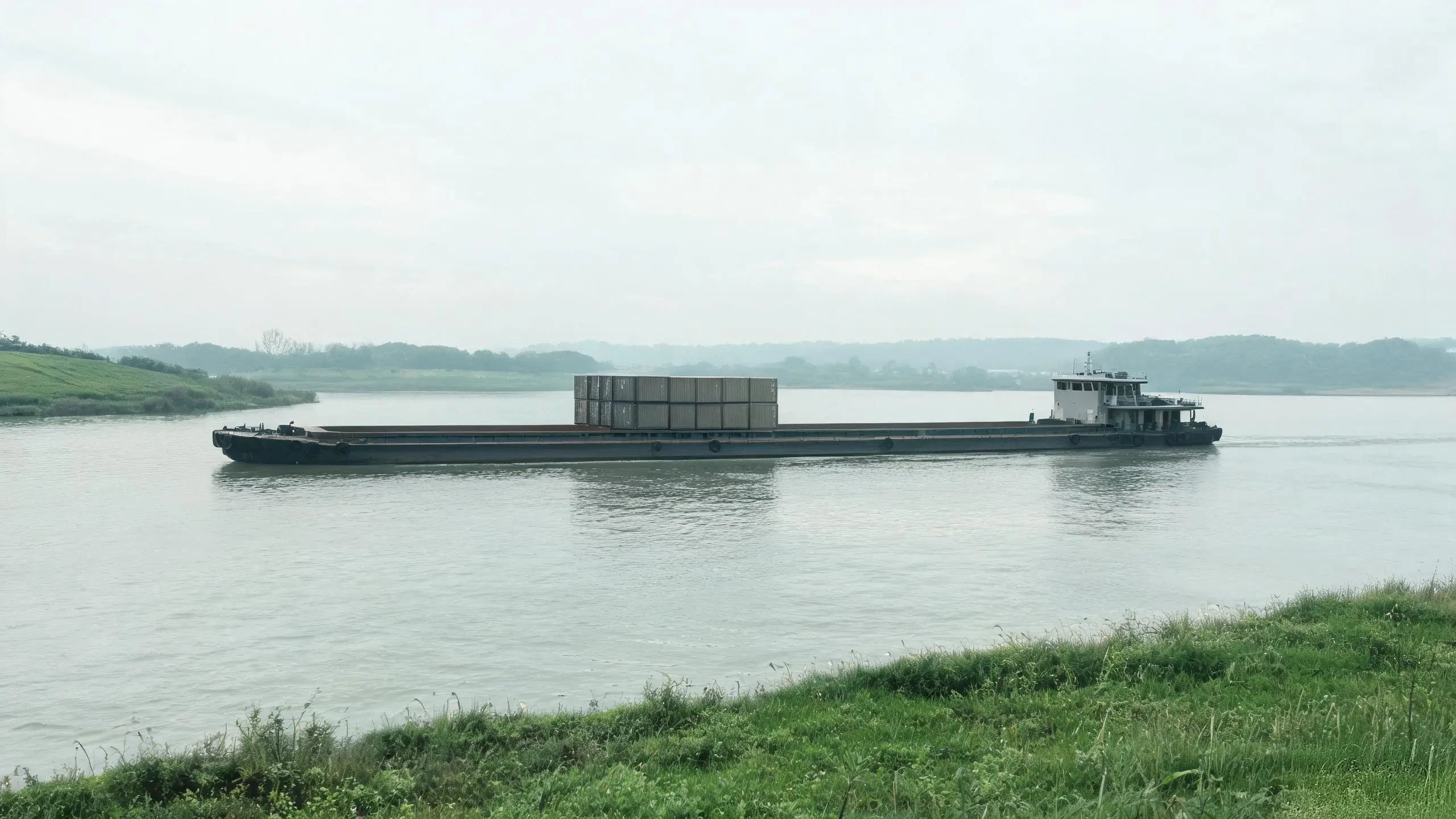
Leg 2 — Jiujiang to the export gateway. This is the leg that makes Jiujiang unusual, so it deserves the most words. The container rides the Yangtze feeder system downriver — roughly 800 km to Shanghai — or heads to another coastal gateway by rail or road when the schedule argues for it. Time: a few days, and they are real days; an honest inland origin carries them, and an honest supplier tells you so. Cost: feeder or rail leg, usually inside the seller's FOB arrangement but always worth confirming line by line. The question: "Is the inland leg to the gateway included in this FOB price, and which gateway will you actually use?"
Leg 3 — Transhipment at the gateway. At Shanghai or the alternative coastal port, the container is lifted from the feeder onto the ocean vessel. The mechanics — cut-off times, connections, what happens when a feeder misses a vessel — are forwarder territory, but one point matters to a buyer: the paperwork structure. Some bookings run as a through service, one document from Jiujiang to your port even though the physical ship changes mid-journey; others are documented in two stages, with the inland leg on separate paper. Neither structure changes whose stone is in the box, but both change what you check on arrival. What to ask: which vessel, which estimated departure, how much connection buffer the feeder allows — and which documents cover which leg.
Leg 4 — The ocean. Typically around 25–40 days to a European port from the China coast, depending on the trade and the routing of the month. Under FOB terms, the buyer's forwarder controls this leg; under CFR and CIF the seller pays for it, though the risk still transfers to the buyer once the goods are on board at the origin port — the distinction between paying for freight and being responsible for the goods is the single most misread line in incoterms, and it is unpacked properly in Shipping Roofing Slate Internationally.
Leg 5 — Your port. Terminal handling, document fees, customs clearance, duty and import taxes. Duty, VAT/GST and customs charges vary by destination country and product classification — treat them as part of the landed-cost calculation and confirm them with your customs broker or local authority. These charges are almost never inside a Chinese FOB quotation — nor should they be — but they are absolutely inside your landed cost. The question that saves surprises: "What are the destination charges at my end, roughly, and who arranges clearance?"
Leg 6 — The final mile. From the terminal to your yard, by your haulier or by the forwarder's. Costs scale with distance and with how long the container sits at the terminal accruing demurrage. The question is logistical rather than financial, but the answer appears on the same invoice: where will the box be unpacked, and does the receiver have the equipment to lift half-tonne crates off it?
"FOB Shanghai" When the Slate Starts in Jiujiang
Because most Jiujiang containers leave through Shanghai, many quotations read "FOB Shanghai" — and buyers reasonably wonder how a Jiujiang factory quotes FOB a port hundreds of kilometres away. The standard part is fixed: under FOB, the seller's responsibility runs to delivering the goods, cleared for export, onto the vessel at the named port. What is not standard is where the price line falls on an inland shipment — a Jiujiang container quoted FOB Shanghai may have the trucking, the feeder leg and the origin handling inside the price, or some of them outside it, depending on how the quotation was built. That is not a trick, but it is exactly why three confirmations matter: is the Yangtze feeder leg included in this FOB price? Who pays the origin terminal charges at the gateway? And does the number quoted match the Incoterm written on the pro forma invoice?
The four abbreviations you will meet most are worth one plain sentence each, because slate quotations are compared across all of them. EXW: you collect at the factory gate and run everything yourself — the cheapest-looking number and the most work. FOB: the seller delivers onto the vessel at the named port; you run the ocean and everything after. CFR: the seller also pays the ocean freight to your port, though risk still transfers at origin. CIF: the same, plus marine insurance at the seller's chosen, usually minimal, cover. None of these four prices can be compared with another directly — the missing legs have to be added back until both quotations stand on the same ground. How to do that properly, line by line, is the whole subject of How to Compare Roofing Slate Quotations.
The Landed Cost: One Container, Eight Lines
Here is the exercise that turns a shopping trip into a purchase decision. Take everything the consignment will ever cost you, from the packed price of the stone to the truck that drops it at your yard, lay it out in lines, total it, and divide by what is actually in the box. The illustration below uses a 20ft container of standard 7–9 mm roofing slate, planned at 1,400 m², shipped to a typical northern European port. The shape of the ledger is the same for every buyer.
Illustrative example only — not a current freight quotation.
| Cost line | Example figure | Who normally controls it |
|---|---|---|
| Slate, packed in export crates ($7.40/m²) | $10,360 | Seller — the "factory price" |
| Factory → Jiujiang Port, port charges, export clearance | $420 | Seller, inside FOB |
| Yangtze feeder leg to the gateway | $380 | Seller, inside FOB |
| Ocean freight to destination port | $1,850 | Buyer under FOB; seller under CFR/CIF |
| Marine insurance | $60 | Buyer under FOB/CFR; seller under CIF |
| Destination terminal handling and documentation | $520 | Buyer, almost always |
| Customs clearance, duty and import tax | $780 | Buyer — varies most by country |
| Final delivery to your yard | $740 | Buyer |
| Total landed cost | $15,110 | — |
$15,110 divided by 1,400 m² is about $10.80 per square metre — a $7.40 factory price grew by nearly half before it touched your roof budget. That gap is not a scandal; it is the ordinary physics of heavy stone crossing the world. What is a scandal is comparing suppliers on the first line of the ledger while never looking at the other seven, and that mistake decides real money in the other direction too.

Suppose two suppliers quote the same specification. Supplier A offers $7.00 per m²; Supplier B offers $7.30. On the first line of the ledger, A wins by thirty cents. But A's packing plan fits about 1,250 m² to the container, while B's loads 1,450 m² over a near-identical freight-and-arrival bill. Run the same seven lines through both, divided by different square metres, and B lands at roughly $10.60 per m² against A's $10.80. On a 10,000 m² project, the "expensive" supplier is about $2,000 cheaper, because the freight was paid once and divided by 200 more metres. Buy the divisor, not just the price.
The Mistakes That Show Up Later
Most freight disappointments are not bad luck; they are predictable arithmetic that nobody ran. Six errors do most of the damage. Comparing FOB prices as if they were landed prices — the ledger above exists to prevent exactly this. Choosing a 40ft because "big" feels efficient — for dense slate it is usually the same weight limit in a bigger rent. Forgetting the crates weigh — timber and strapping ride in the gross weight, and a loading plan that ignores them is a container that runs out of payload with floor space left. Comparing EXW against CIF as though they were the same number — the legs missing from each make the comparison meaningless until they are added back. Planning the project on ocean transit time alone — the sea is one leg of six, and rarely the longest. And never asking what the destination charges are — the quietest 10% of the landed cost, and the easiest to discover three weeks too late.
Lead Time: The Sum Nobody Quotes
"How long does shipping take?" is the most common question in this trade and the most commonly misanswered, because the honest answer is a sum of things no single quotation contains. Production — quarrying, splitting, cutting, sorting, inspecting, packing — takes weeks, and it belongs at the front of the sum. Then come the loading day, the port legs, the feeder downriver, the ocean weeks, the clearance and the final delivery. A quotation that says "ocean transit: 30 days" is answering one term of the sum, not the total; a buyer who hears it as a delivery promise will spend the difference in anxious emails.
So write the sum out for your own order. Production for a standard container typically runs several weeks, longer for custom sizing; the feeder leg adds a few days to the schedule — a real, countable cost of an inland origin that an honest supplier states up front; the ocean typically adds around 25–40 days to Europe; clearance and delivery add the rest. The Roofing Slate Guide's Roofing Slate Lead Times walks the six stages in detail, with the seasonal effects — Chinese New Year, the booking peaks, why "booking is a request" — and the working calendar. For a roofing project or a table production line, plan against the total, and ask for the production schedule and the sailing window as two separate commitments, because they are made by different people.
The Questions That Get You Real Numbers
Most freight conversations fail at the level of the question. "What is the freight rate?" invites a number that cannot be compared with anything, because it omits five legs and answers none of them. The version worth asking is: "What is the total cost of getting one container from the Jiujiang factory to my warehouse — and what exactly does that include?" Then ask for the breakdown in lines, so it can be added to the slate price and divided by the loading plan. A forwarder or supplier who answers that question comfortably is telling you something no rate sheet will.
From the supplier, the freight-relevant questions are the loading-side ones, and five cover it:
- Square metres (or table sets) per container, against the actual packing configuration — not a catalogue figure
- Net weight and gross weight, per crate and per container
- Crate dimensions and the container loading plan behind the numbers
- The port of loading on the documents, the inland route, and the gateway the container will use
- Loading photographs, taken before the doors close
And before an order is confirmed, six checks turn the answers into a decision:
| Before you confirm | What "confirmed" should mean |
|---|---|
| Product and packing | Specification, size, thickness, grade and packing method written into the order — not assumed from the sample |
| Container | 20ft or 40ft chosen on payload arithmetic; loading plan seen, not promised |
| Route | Port of loading, gateway and inland leg named — and the feeder leg's cost located in the quotation |
| Terms | The same Incoterm on quotation and pro forma invoice; every comparison made on the same ground |
| Destination | Terminal charges, clearance and delivery responsibility known at order time, not at arrival |
| Calendar | Production schedule and sailing window obtained as two separate commitments |
Where these questions sit inside a full inquiry — with the specification, test data and payment questions that belong beside them — is laid out in Questions to Ask Before You Buy, earlier in this guide. One idea, and the freight half of the trade is finished: the cheapest container is not the one with the lowest freight bill. It is the one that arrives full enough. Freight is paid once and divided forever — by the square metres, the table sets, the tonnes riding inside — and the buyers who win this part of the calculation are not the ones who find the cheapest box, but the ones who know what is in it.
Frequently Asked Questions
Does Jiujiang have a container port, or does everything ship via Shanghai?
Jiujiang is a Yangtze trunk-line river port with its own container operations — containers are stuffed and sealed in the city, then ride the river feeder system roughly 800 km down to Shanghai, or head to another coastal gateway by rail or road when schedules argue for it. Depending on the carrier and booking, the shipment may run as a through service from Jiujiang or with separate documents for the inland and ocean legs; ask your forwarder which documents cover which leg. So the honest answer is both: loading happens in Jiujiang, and the ocean is boarded downriver.
Which container should I choose for slate: 20ft or 40ft?
For dense slate, usually the 20ft. The rock weighs about 2.7 tonnes per cubic metre, so weight, not volume, is normally the binding limit: a 20ft container of standard 7–9 mm slate is typically planned at around 1,130–1,450 m², depending on the packing configuration and allowable gross weight, while a 40ft offers nearly double the space but barely more payload. The 40ft earns its rent when the mix includes genuinely light cargo, when the route prices 40ft equipment attractively, or when the buyer's own receiving setup is built for it. Compare quotations by delivered cost per square metre, not by container size or freight total.
Can roofing slate and billiard slate share one container?
Yes, and mixed containers are common — the two products share a quarry district and a container route. What the mix changes is the loading plan: heavy table-bed crates ride low and braced, roofing crates stack above and around them, and the total gross weight — every crate's timber included — decides how many of each fit. Ask for the mixed loading plan with table sets and square metres itemised, plus the gross weights, before you confirm the split.
What does "FOB Shanghai" include when the slate starts in Jiujiang?
Under FOB Shanghai, the seller's responsibility runs to delivering the goods, cleared for export, onto the vessel at Shanghai — and for a Jiujiang shipment that usually involves local trucking, a feeder leg and export handling, which may or may not be itemised inside the quoted price. Three things are worth confirming in writing — that the feeder leg is inside the price, who pays the origin terminal charges, and that the Incoterm on the pro forma invoice matches the number quoted. FOB prices are comparable only with other FOB prices; add the missing legs before comparing across terms.
How much will freight add to my cost per square metre?
As a worked illustration: a 20ft container planned at 1,400 m² of 7–9 mm roofing slate, with about $4,750 of freight, feeder, origin, insurance and destination lines on top of a $10,360 packed price, lands at roughly $10.80 per square metre against a $7.40 factory price. The exact percentage moves with the freight market, the destination and the loading plan — which is why the loading plan, not the freight quotation, is the first thing to ask for.
Should I use my own freight forwarder or let the factory arrange shipping?
Both work; they divide the same six legs differently. Your own forwarder gives you control of the ocean leg and a single counterpart for FOB buying — usually the better choice if you import regularly. The factory's arrangement is simpler for a first order and lets CFR or CIF prices be quoted on a route the seller actually knows. Whichever you choose, ask the same question: the total cost from the Jiujiang factory to your warehouse, and exactly what it includes.
Related Reading
Get the freight numbers with your quotation
Tell us the product, the quantity and the destination port, and the first thing you will get back is a loading plan — square metres or table sets per container, net and gross weights — so the freight you compare is built on real numbers rather than round ones. We ship from a river port forty minutes from the workshop, and we are happy to show you exactly what that adds, and what it saves. Request a shipping-based quotation · see our roofing slate range