
How to Choose Billiard Slate: A Practical Buying Guide for Table Manufacturers
I get an email that says: "We need billiard slate, 9 ft, how much?"
That is one sentence. The answer is not.
Choosing billiard slate is not about picking a thickness or a size. It is a chain of six decisions, and each one narrows the next. Get the first one wrong — the table type — and everything downstream falls apart: the wrong size, the wrong thickness, the wrong piece count, the wrong machining, the wrong budget. I have been helping table manufacturers and importers select slate for fifteen years, and the most common problem I see is not a bad supplier or a bad stone. It is a specification that skipped a step.
This guide walks through the full decision path, one gate at a time. You do not need to read all six gates if you already know your table type — but if you are starting from scratch, go in order. Each gate links to a deeper guide where that specific variable gets its own page, so this article stays a decision path rather than a 5,000-word encyclopaedia.
Quick Answer: Choosing billiard slate starts with five decisions: table type (pool, snooker, carom or Chinese 8-ball), slate size from your table drawing, thickness matched to the frame design, piece count (one, three or five), and machining requirements (pockets, holes, joints). For most OEM buyers, the correct slate is not the thickest or cheapest option — it is the specification that matches the table design.
The decision path: Table type → Slate dimensions → Thickness → Piece layout → Machining → Budget → Drawing approval. Each step narrows the next — skip one and every later number has to be reworked.
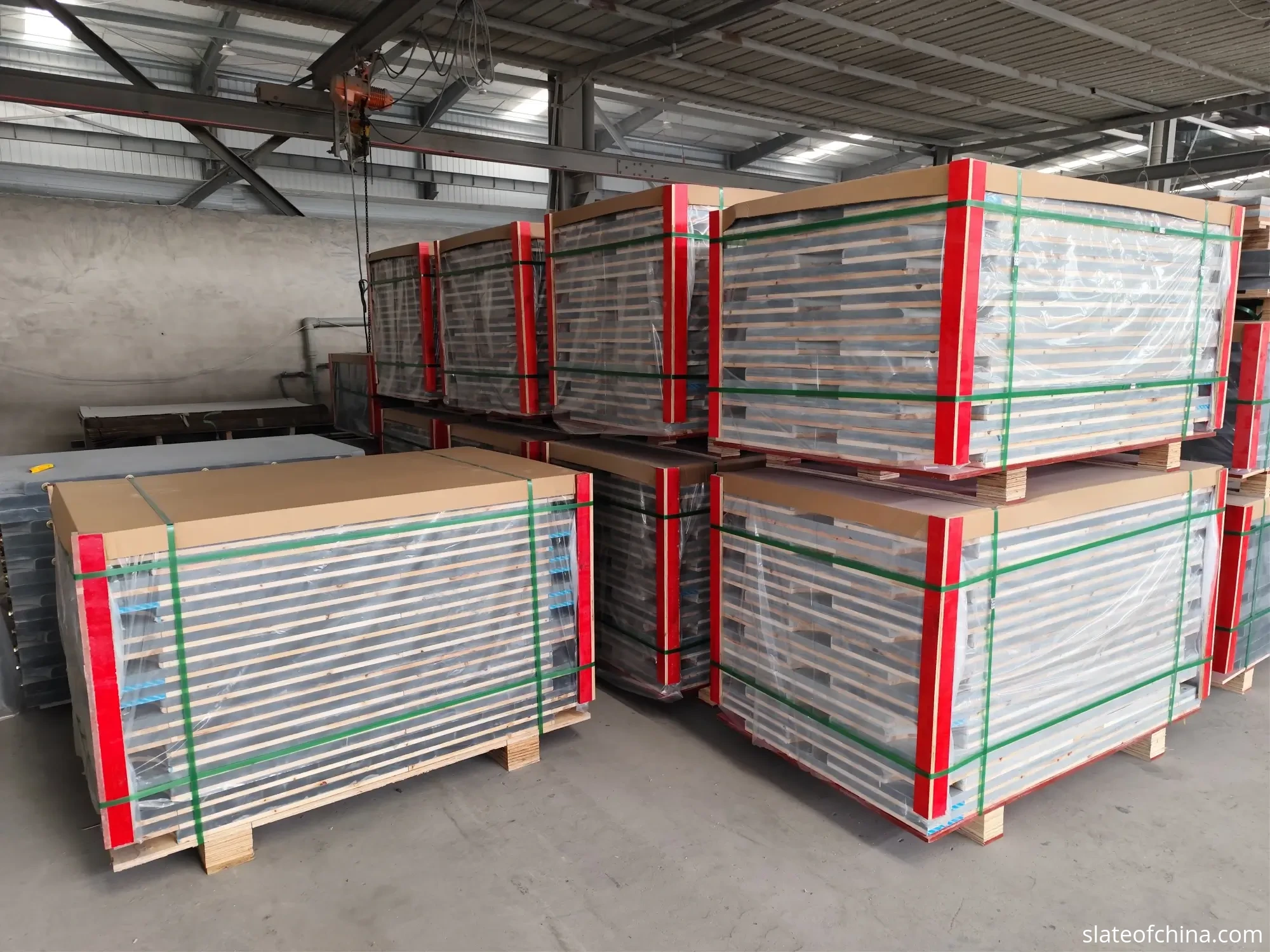
The six gates — read in order, or jump to the one you need:
- Gate 1: Start with the Table — pool, snooker, carom, Chinese 8-ball, Russian pyramid — the game decides everything downstream.
- Gate 2: Match the Slate to the Playing Area — nominal table size is not the slate outline; three different numbers, one decision.
- Gate 3: Choose Thickness — not "thicker is better" but "what does the frame need?"
- Gate 4: Decide the Piece Count — one-piece, three-piece, five-piece — a logistics decision as much as a playability one.
- Gate 5: Check Machining — pockets, holes, edges, joints — the difference between a set that drops in and one that doesn't.
- Gate 6: Set the Budget — standard vs custom vs OEM — where the money goes and where to stop spending.
If you already know your table type and just need the numbers, see our Billiard Slate Technical Specifications page. If you want to understand what slate is before choosing, start with What Is Billiard Slate?
Billiard Slate Selection Flow
Before the detailed gates, here is the fast path — match your table type to the typical specification, then confirm with a drawing:
What table are you building?
Pool table
19–25 mm · 3-piece
Snooker table
38–45 mm · 5-piece
Chinese 8-ball
38–45 mm · 3-piece
OEM replacement
Match original
Each path needs a confirmed drawing before production. For custom specs, see Custom Billiard Slate Manufacturing. For standard sizes, see Pool Table Slate.
Gate 1: Start with the Table
Before you look at slate, look at the game. The table type determines the playing area, the playing area determines the slate outline, the outline determines the thickness, and the thickness determines the piece count. Everything starts here.
Pool tables (American 7 ft, 8 ft, 9 ft) are the highest-volume billiard slate we produce. The balls are heavy and fast, the table is relatively compact, and the slate is typically 19–25 mm thick in three pieces. A 9 ft pool table — the tournament standard — uses a three-piece set at 25 mm, and the full set weighs about 250–270 kg. If you are building American-style pool tables, our American Pool Table Slate Buying Guide for Manufacturers goes deeper into the U.S. market's specific requirements.
Snooker tables (10 ft and 12 ft) are a different animal. The playing surface is enormous — a 12 ft table needs a slate outline around 3658 × 1867 mm — and the slate is thick: 38 mm for 10 ft, 45 mm for 12 ft in most professional builds. A 12 ft snooker slate set in 45 mm weighs roughly 800 kg and ships in five pieces, not three. The weight alone changes your frame, your floor, and your shipping budget. If you are comparing snooker to pool, Pool vs Snooker vs Chinese 8-Ball Slate puts them side by side.
Chinese 8-ball tables are a hybrid: larger than American pool, more demanding than snooker in pocket precision. The playing area is commonly around 2540 × 1260 mm, and the slate is typically 38–45 mm thick — 45 mm is the most common single thickness in our production for this table type. If this is your market, the Chinese 8-Ball Table Slate page covers the full specification.
Carom tables (Korean four-ball, three-cushion) have no pockets — the slate is a solid rectangle with a heated bed underneath. Korean carom slate is commonly 2840 × 1420 mm at 45 mm+, a specification that should not be assumed to match generic Western carom tables. See Korean Carom Table Slate for that market's spec file.
Russian pyramid tables are oversized and heavy — large slate dimensions, thick panels, six pockets. The Russian Pyramid Table Slate page covers the specifics.
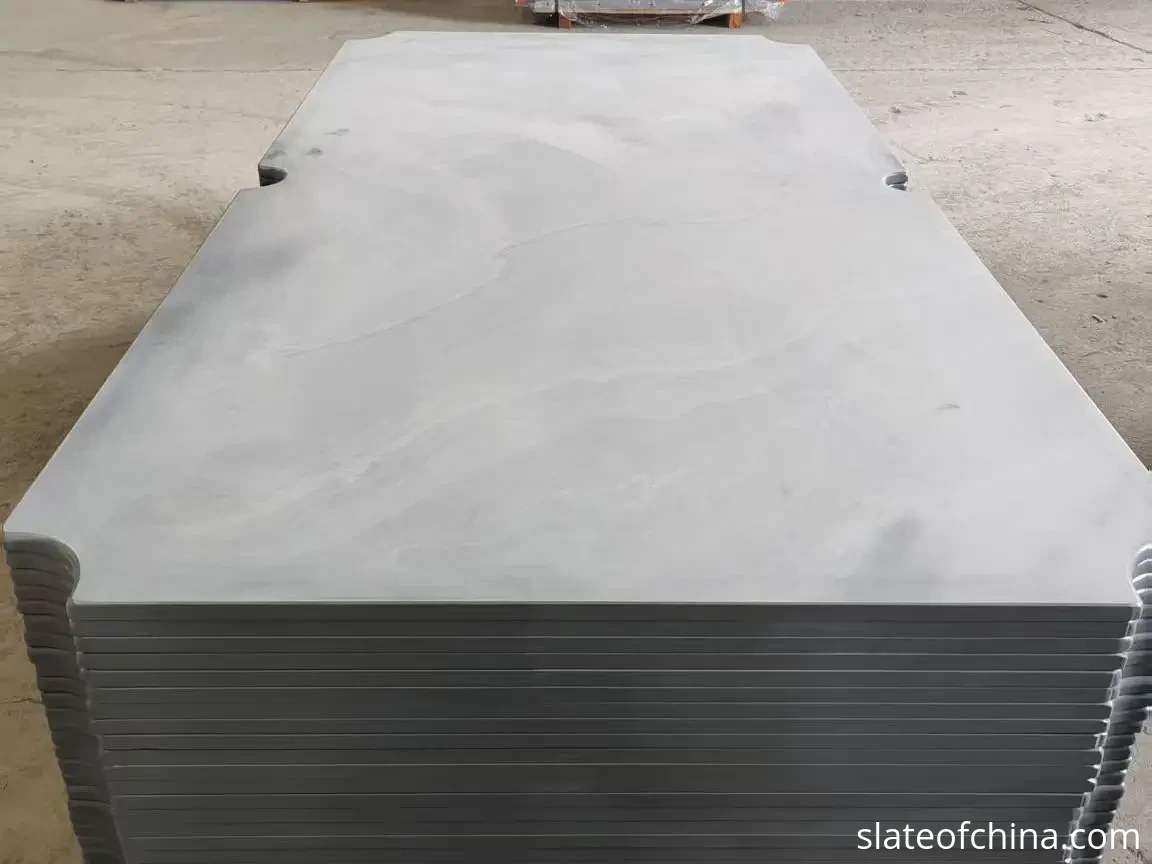
By the end of Gate 1, you should have one answer: which table type are you building or sourcing for? That single answer locks in the range of sizes, thicknesses and piece counts you will work with for the rest of the chain. If you build multiple table types, walk the chain separately for each one — a 9 ft pool set and a 12 ft snooker set share almost no specifications.
Gate 2: Match the Slate to the Playing Area
This is the gate where most specification errors happen, and it happens because "table size" means three different things.
The nominal table size — "9 ft" or "12 ft" — is a label. It tells you the approximate playing area, nothing more. The playing area is the actual surface the balls run on, measured cushion nose to cushion nose. The slate outline is the external dimension of the stone panel — always larger than the playing area, because the slate extends under the cushion rails. For a 9 ft pool table, the nominal size is 9 ft, the playing area is about 50 × 100 inches (1270 × 2540 mm), and the slate outline is larger still — roughly 1448 × 2718 mm for a three-piece set.
If you order "9 ft slate" without specifying the outline, the factory will ask: which 9 ft? Two manufacturers can use completely different slate outlines for the same nominal table size, and both would be correct for their own frame design. This is why a drawing matters more than a table name. For the full breakdown of how to identify the correct specification from the four numbers that matter, see Types of Billiard Slate.
| Table Type | Nominal Size | Playing Area (approx.) | Typical Slate Thickness | Pieces |
|---|---|---|---|---|
| American Pool | 7 ft | 39 × 78 in | 19–25 mm | 3 |
| American Pool | 8 ft | 44 × 88 in | 19–25 mm | 3 |
| American Pool | 9 ft | 50 × 100 in | 25 mm | 3 |
| Snooker | 10 ft | ~3050 × 1530 mm | 38 mm | 5 |
| Snooker | 12 ft | ~3658 × 1867 mm | 45 mm | 5 |
| Chinese 8-Ball | — | ~2540 × 1260 mm | 38–45 mm | 3 |
| Korean Carom | — | ~2840 × 1420 mm | 45 mm+ | 3–5 |
The numbers in this table are representative production references, not universal standards — there is no international standard that governs billiard slate dimensions. Different table brands use different outlines, and the only reliable specification is your engineering drawing. For the complete reference across all table types, see Billiard Slate Technical Specifications.
Don't Choose Slate by Table Size Alone
A "9 ft pool table slate" is not a complete specification. Different table manufacturers may use different slate outlines, playing areas, joint positions, pocket layouts and bolt-hole patterns. For OEM production, always confirm the finished slate dimensions from the approved drawing rather than ordering by table size alone.
By the end of Gate 2, you should have two numbers locked: the playing area and the slate outline. These come from your table drawing, not from a catalogue.
Gate 3: Choose Thickness
"How thick should billiard slate be?" is one of the most common questions buyers ask, and the honest answer is: it depends on the table, not on a rule of thumb.
Thickness is a table-design specification, not a quality grade. A 25 mm slate is not a "lower grade" than a 45 mm slate — they are made for different tables with different frames, different playing areas, and different structural requirements. No ball rolls straighter just because the bed is thicker than the frame was designed for. For a full breakdown of the thickness question across pool, snooker and Chinese 8-ball, see Pool vs Snooker vs Chinese 8-Ball Slate Thickness: 25mm, 45mm and 50mm.
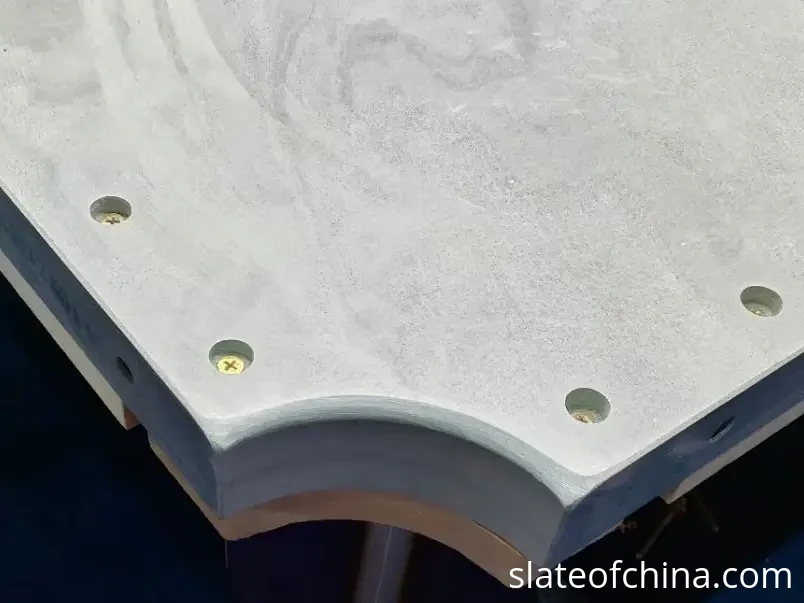
Here is how I guide the decision:
19–25 mm is the standard range for pool tables (7 ft, 8 ft, 9 ft). The 9 ft tournament standard is 25 mm. Thinner slate (19–22 mm) is used for home and entry-level tables where weight and cost matter more than maximum rigidity. The frame and support structure must be designed for the thickness you choose — a 19 mm slate on a frame built for 25 mm will flex.
30–38 mm appears in higher-end pool tables, some Chinese 8-ball designs, and 10 ft snooker tables. The step up in thickness gives better rigidity on larger surfaces, but it also adds weight quickly. Slate density is about 2.7 tonnes per cubic metre, so every additional millimetre of thickness adds about 2.7 kg per square metre of surface area.
45 mm is the standard for 12 ft snooker and the most common single thickness we produce for Chinese 8-ball tables. At this thickness, a 12 ft snooker set weighs roughly 800 kg — the frame, the floor, and the installation team all need to be ready for that.
50 mm exists for heavy-duty tournament tables and specific market requirements, but it is not an "upgrade" from 45 mm. It is a different specification for a different table design. If your frame was built for 45 mm, do not order 50 mm expecting better play — you will get a heavier table that may not fit the frame correctly.
What Is the Best Thickness for Pool Table Slate?
There is no single best thickness — the right number depends on table size, frame design and manufacturer requirements. For most pool tables: 19–22 mm for lighter home tables, 25 mm for commercial pool tables (the 9 ft tournament standard), and 38–45 mm only for large professional or snooker-style tables. The best thickness is the one the frame was built for.
By the end of Gate 3, you should have one number: the target thickness, chosen to match the frame design — not the thickest slate you can afford.
Gate 4: Decide the Piece Count
One-piece, three-piece, five-piece — this gate is a logistics decision as much as a playability one.
1-Piece vs 3-Piece Pool Table Slate: Which Should You Choose?
Piece count is a design decision, not a quality grade. A five-piece set is not "better" than a three-piece set — it is the configuration the table size and logistics require. Many buyers assume more pieces means higher quality; in practice, more pieces usually means a larger table.
One-piece slate has no joints and a continuous playing surface. It is the simplest to install and the hardest to ship. A one-piece 9 ft slate weighs over 200 kg and will not fit through a standard doorway. For international export, one-piece slate is rarely practical — the shipping risk and handling difficulty are high. One-piece is usually a local-market choice.
Three-piece slate is the standard for pool tables and Chinese 8-ball tables. The two joints run across the bed, and when the pieces are machined correctly and aligned on the frame, the surface is dead flat. Three-piece sets are easier to load in a container, easier to carry through doorways, and easier to level on the frame. For a manufacturer's view of the one-piece vs three-piece cost chain — yield, machining, warehousing, crating, container loading, assembly, after-sales — see 1-Piece vs 3-Piece for Manufacturers.
Five-piece slate is standard for 12 ft snooker tables. The sheer size of a 12 ft snooker bed makes three pieces impractical — the individual pieces would be too large to handle. Five pieces keep each panel manageable while maintaining the surface flatness that snooker demands.
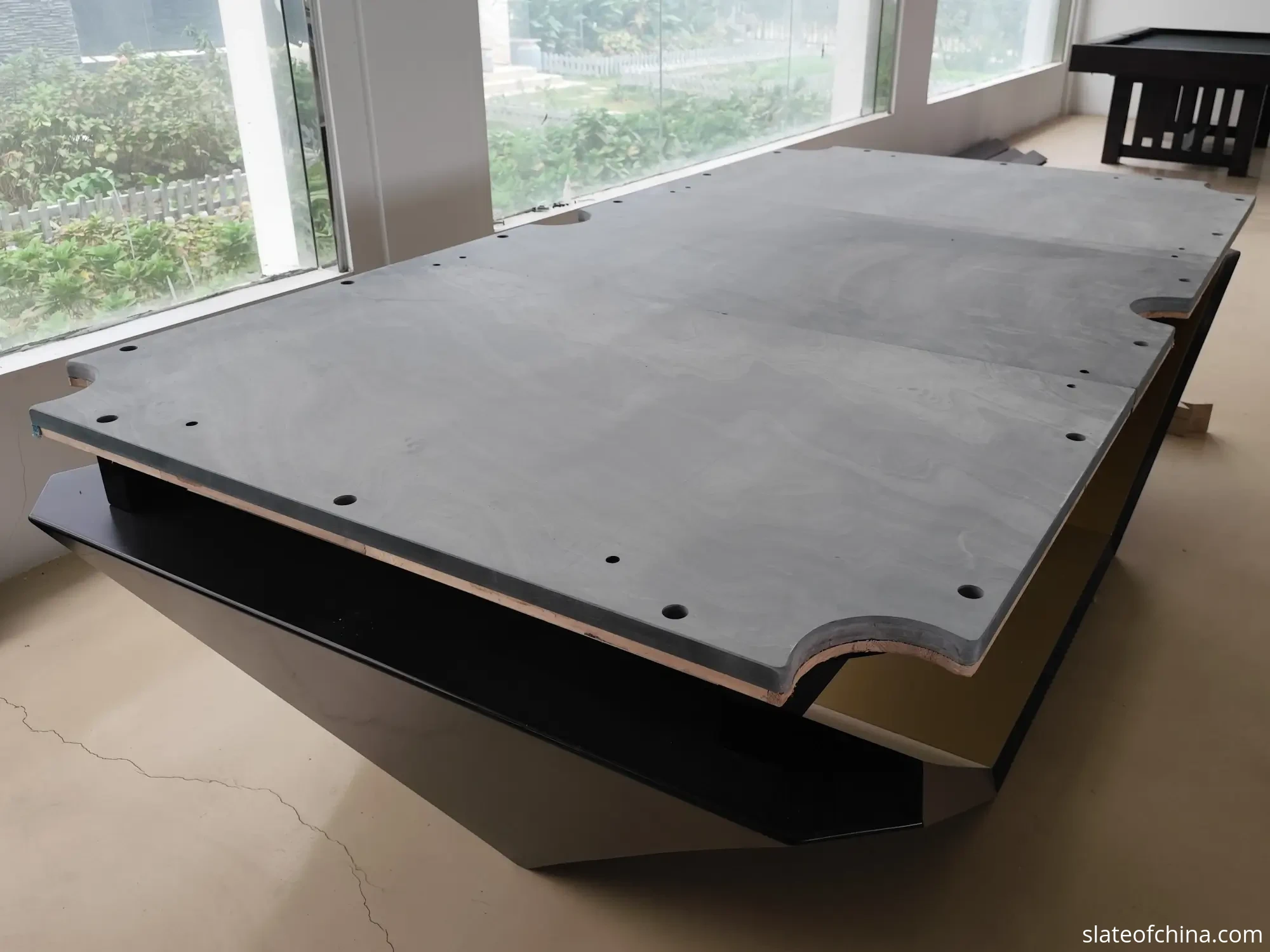
The piece count is not just about the number of panels. It is about the joint quality — how the edges are machined, how the pieces match, and how flat the surface stays after assembly. A well-made three-piece set plays as true as a one-piece. A poorly made three-piece set is worse than either, because the joints become the weak point. For the full guide on how joints are machined and verified, see Billiard Slate Quality & Test Data.
By the end of Gate 4, you should have: the piece count (dictated by the table type and size), and the confidence that the joint machining meets your table's flatness requirement.
Gate 5: Check Machining
A slate panel with the right size and thickness can still fail to install if the machining is wrong. This gate covers the four machining areas that decide whether the set drops into the frame or goes back to the factory.
Pocket cuts. The pocket opening, the pocket depth, and the pocket entry angle must match your cushion system. The entry angle is the one most commonly missing from drawings — and it is the one that determines whether the cushion nose seats flush against the slate at the pocket mouth. If you are ordering custom pocket geometry, send a CAD drawing, not a table name. For the full process, see Custom Billiard Slate Manufacturing.
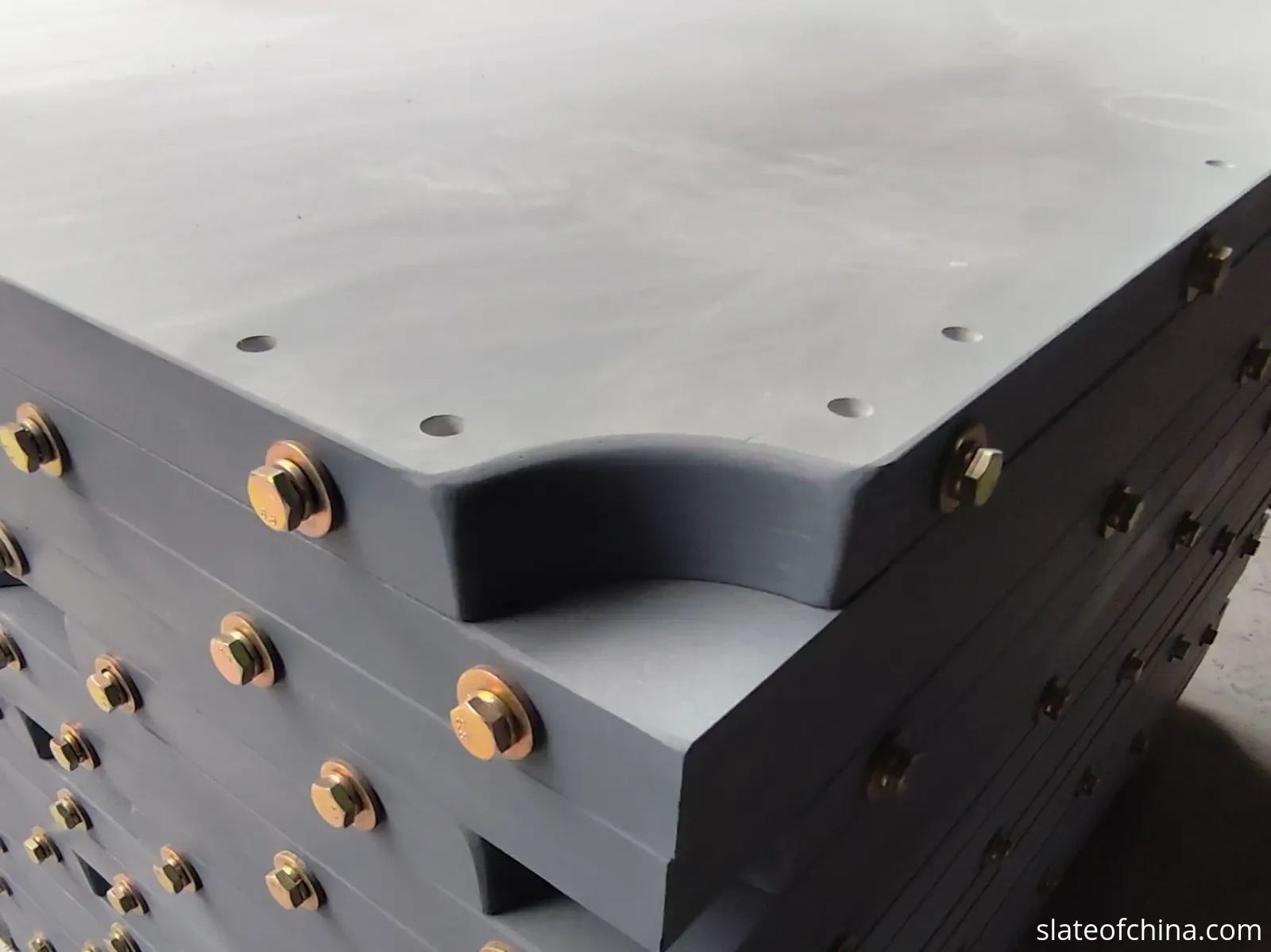
Mounting holes. Hole position, diameter, depth and countersink must match the rail-bolt pattern. A hole that is 3–5 mm off can make the bolt impossible to insert without redrilling — and redrilling a slate panel in the field is not something you want to do. For OEM projects where hole positions are proprietary, the drawing must define every hole from a reference edge.
Edges and joints. The edges must be square (or chamfered, if your rail system requires it), and the joint faces between pieces in a multi-piece set must be flat and straight. The joint gap should be tight enough that a ball rolling across it does not deviate. For how we verify flatness and joint quality on the production line, see Quality & Test Data.
Surface flatness. The playing surface must be ground flat to a tolerance that your table demands. Flatness is not a single number you can compare between suppliers — it depends on the measurement method, the reference surface, and the inspection plan agreed in the order. What matters is that the factory has a defined inspection process and can show you the results. For real factory QC figures on flatness, thickness and machining accuracy, see Billiard Slate Quality & Test Data.
By the end of Gate 5, you should have: a machining specification that covers pockets, holes, edges, joints and surface flatness — all defined on the drawing, all verifiable on delivery.
Gate 6: Set the Budget
The cheapest slate is not the most economical. The most expensive slate is not always the right choice. The budget decision is about matching the specification to your market positioning — and knowing where to stop spending.
Entry-level home tables typically use 19–22 mm slate in three pieces. The cost is lower, the weight is manageable, and the playing experience is acceptable for a home table. The slate is still natural stone — it does not warp — but the frame and cushion system at this price point are the limiting factors, not the slate.
Commercial pool tables (pool halls, clubs, bars) typically use 25 mm slate in three pieces. The extra thickness and weight give the table stability under heavy use, and the 25 mm / three-piece configuration is the most widely produced and competitively priced specification in the industry. If you are building for this market, the specification is straightforward.
Professional snooker tables use 45 mm slate in five pieces. This is a high-cost specification — the stone volume is large, the machining is complex, and the shipping weight is significant. But the table demands it: a 12 ft snooker bed needs the structural stability that 45 mm provides.
OEM and custom projects are where the budget decision gets interesting. If your table design uses a standard size with standard machining, the cost is predictable. If you need a proprietary pocket layout, non-standard hole positions, or a new CNC programme, the setup cost is front-loaded — and the per-set cost drops as the quantity increases. For the full guide to managing OEM supply, see OEM Billiard Slate for Table Manufacturers. For custom non-standard manufacturing, see Custom Billiard Slate Manufacturing.
The mistake I see most often at this gate is over-specifying — ordering 45 mm slate for a table that was designed for 25 mm, or ordering a five-piece set when a three-piece set would do. The extra stone does not improve the table; it adds weight, shipping cost, and installation difficulty. Match the specification to the table design. If you are not sure, ask the factory to review your drawing before quoting — a factory that understands table manufacturing will tell you if the specification does not match the frame.
How Budget Changes Your Slate Choice
The lowest price per square metre is rarely the lowest total cost. Slate thickness drives material and machining; CNC pocket and hole work adds setup; and total shipping weight decides freight. Compare 25 mm and 45 mm across the whole chain — material, machining, packing, weight, container loading, freight, installation — before you choose on unit price alone.
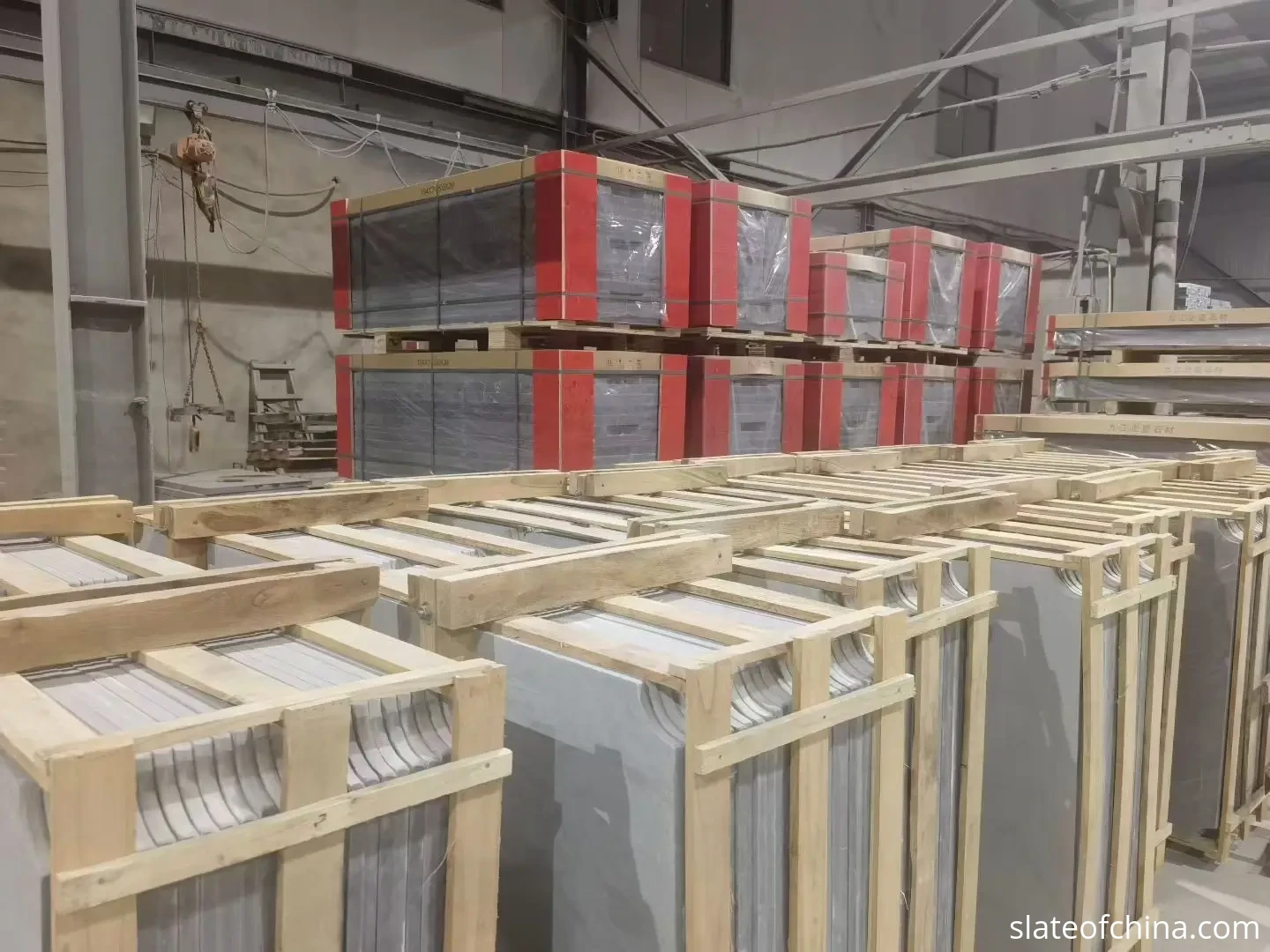
By the end of Gate 6, you should have: a specification that matches your market positioning, a budget that covers the stone, the machining, the packing and the shipping — and the confidence that you have not over-specified or under-specified.
How to Choose a Reliable Billiard Slate Supplier
The best specification is only as good as the factory that produces it. When you are evaluating a billiard slate supplier, three questions matter more than price:
Can they machine according to drawings? A supplier that works from your CAD drawing — not just from a catalogue — can produce the pocket geometry, hole positions and edge profiles your table requires. This is the difference between a slate set that drops in and one that needs field modification.
Can they provide production photos and inspection records? A factory that documents its production can show you the slate before it ships. Production photos confirm the machining, and inspection records confirm the flatness and thickness. A supplier that cannot show you either is asking you to trust them blindly.
Can they control thickness and flatness consistently? Consistency is what separates a one-off sample from a production run. A factory that has a defined inspection process — and can show you the results — will produce the same specification across batches.
For a full ten-question supplier evaluation guide, see How to Choose a Billiard Slate Manufacturer. For factory capabilities, CNC machining and export services, see our Professional Billiard Slate Manufacturer page.
The Full Decision Path in One Page
If you have walked through all six gates, you should now have six answers:
- Table type: pool, snooker, carom, Chinese 8-ball, Russian pyramid — the game.
- Slate outline: the external dimensions from your drawing — not the nominal table size.
- Thickness: matched to the frame design — not the thickest you can afford.
- Piece count: one, three or five — dictated by the table size and the logistics.
- Machining: pockets, holes, edges, joints, surface — all defined on the drawing.
- Budget: matched to the market positioning — not over-specified, not under-specified.
Put those six answers in an email to a slate factory, and you will get a useful quotation back. Send "9 ft, how much?" and you will get a question: which 9 ft?
For the complete sourcing process — samples, inspection, documents, shipping — see the Billiard Slate Buying Guide. For the full specification reference across all table types, see Billiard Slate Technical Specifications. And if you want to understand why slate is the standard under the cloth before you choose, Why Are Pool Tables Made with Slate? explains the material.
Frequently Asked Questions
How do I know which billiard slate to choose for my table?
Start with the table type — pool, snooker, carom, Chinese 8-ball or Russian pyramid. The table type determines the playing area, the playing area determines the slate outline, and from there the thickness, piece count and machining follow. Walk the six gates in this guide in order: table type, slate outline, thickness, piece count, machining and budget. Each gate narrows the next, and by the end you have a complete specification.
How thick should billiard slate be?
Thickness depends on the table design, not on a rule of thumb. Pool tables typically use 19–25 mm (9 ft tournament standard is 25 mm). Snooker tables use 38–45 mm (12 ft standard is 45 mm). Chinese 8-ball tables commonly use 45 mm. The right thickness is the one the frame was designed for — a thicker slate on a frame built for a thinner one adds weight without improving play. For the full thickness comparison, see our Pool vs Snooker vs Chinese 8-Ball Slate Thickness page.
Should I choose one-piece or three-piece slate?
For most pool and Chinese 8-ball tables, three-piece is the standard — it is easier to ship, easier to install, and plays as flat as one-piece when the joints are machined correctly. One-piece slate is usually a local-market choice because it is difficult to ship internationally. Five-piece is standard for 12 ft snooker tables. The decision is driven by the table size and the logistics, not by playability alone.
Is thicker billiard slate always better?
No. Thickness is a table-design specification, not a quality grade. A 25 mm slate for a 9 ft pool table and a 45 mm slate for a 12 ft snooker table are both correct for their respective tables. Ordering 45 mm slate for a frame designed for 25 mm does not improve the table — it adds weight, shipping cost and installation difficulty. Match the thickness to the frame design.
Do I need standard or custom billiard slate?
If your table dimensions match a standard size and your pocket layout and hole positions are conventional, standard slate is faster and more economical. If you have a proprietary pocket layout, non-standard hole positions, a new table model, or a discontinued table that needs replacement slate, you need custom manufacturing. The decision usually comes down to whether your drawing matches a catalogue product — if it does, go standard; if it does not, go custom.
How do I confirm my slate specification before ordering?
Send a drawing — not a table name. The drawing should specify the slate outline, playing area, thickness, piece count, joint locations, pocket centre positions, pocket openings, pocket entry angle, bolt-hole positions, edge profile and tolerances. A factory that understands table manufacturing will review the drawing and confirm production feasibility before quoting. For custom projects, a prototype and trial assembly are recommended before mass production. For the full process, see our Custom Billiard Slate Manufacturing guide.
Related Reading
Request Billiard Slate Specifications
Send your table drawing, slate size, thickness and quantity. Our team can confirm the suitable billiard slate specification before production — whether you need standard sizes, custom CNC machining, or OEM batch supply.
Browse our billiard slate products or pool table slate by category.