
Korean Carom Table Slate: the 2840 × 1420 mm Spec That Shouldn’t Be Ordered by Name
A specification file for Korean-market carom tables — three-cushion, four-ball, new-build and replacement slate.
The most instructive inquiry we received about the Korean market arrived without a drawing. It read, in a translator’s English: “Korean carom slate, 2840 × 1420 mm, 45 mm, three pieces. Please quote.” Six data points. No brand, no model name, no photo — and it was enough to start talking seriously, because those are the numbers that actually matter in Korea.
Korean-market carom tables have their own commonly used specification, and it should not be assumed to match generic Western carom-slate specifications. A Korean regional billiards association reference sets the competition playing area at roughly 2840 × 1420 mm, and expects slate of 45 mm or thicker. The sections below are what a slate factory wants to see on a Korean carom order — and what we wish more buyers would send us the first time.
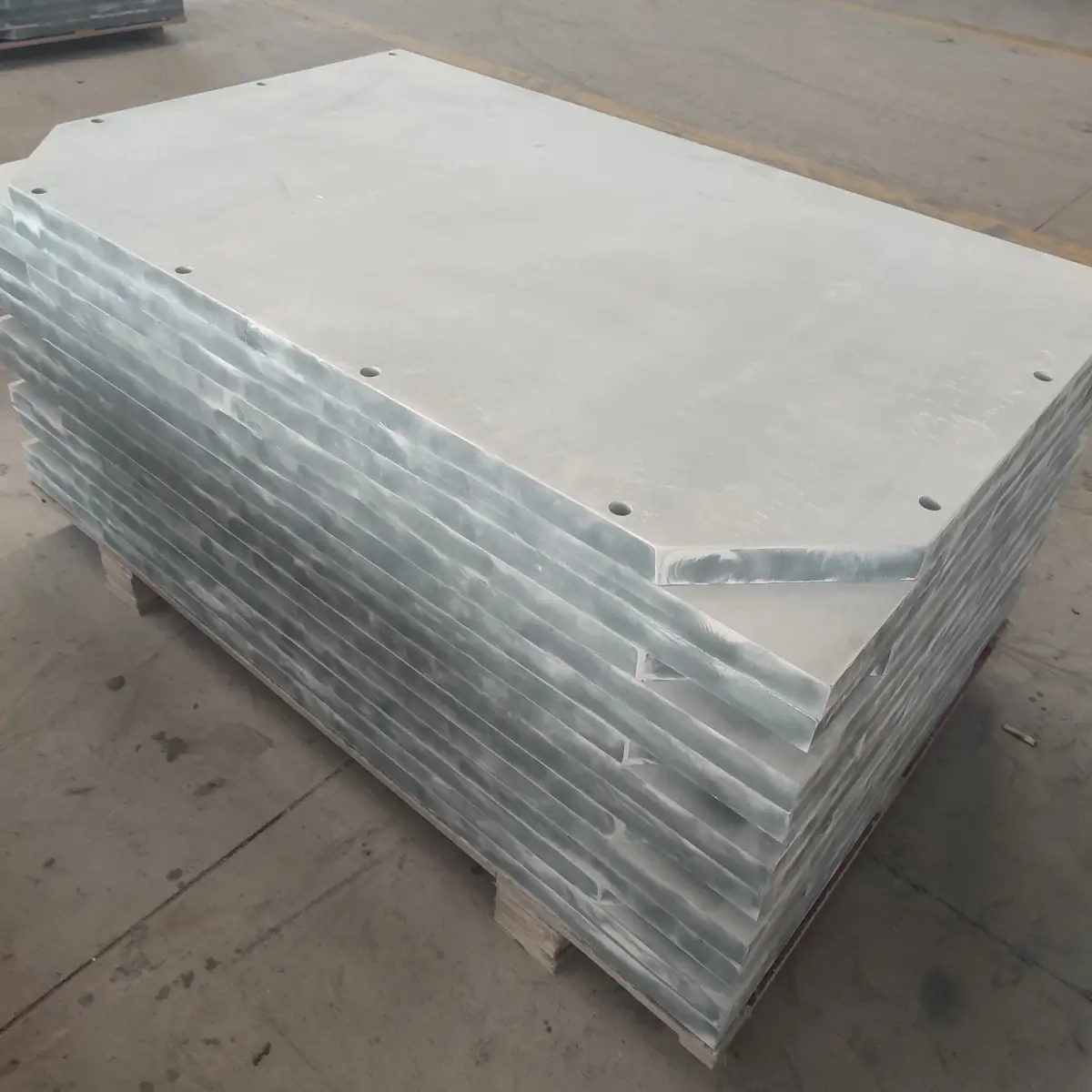
The Korean Specification at a Glance
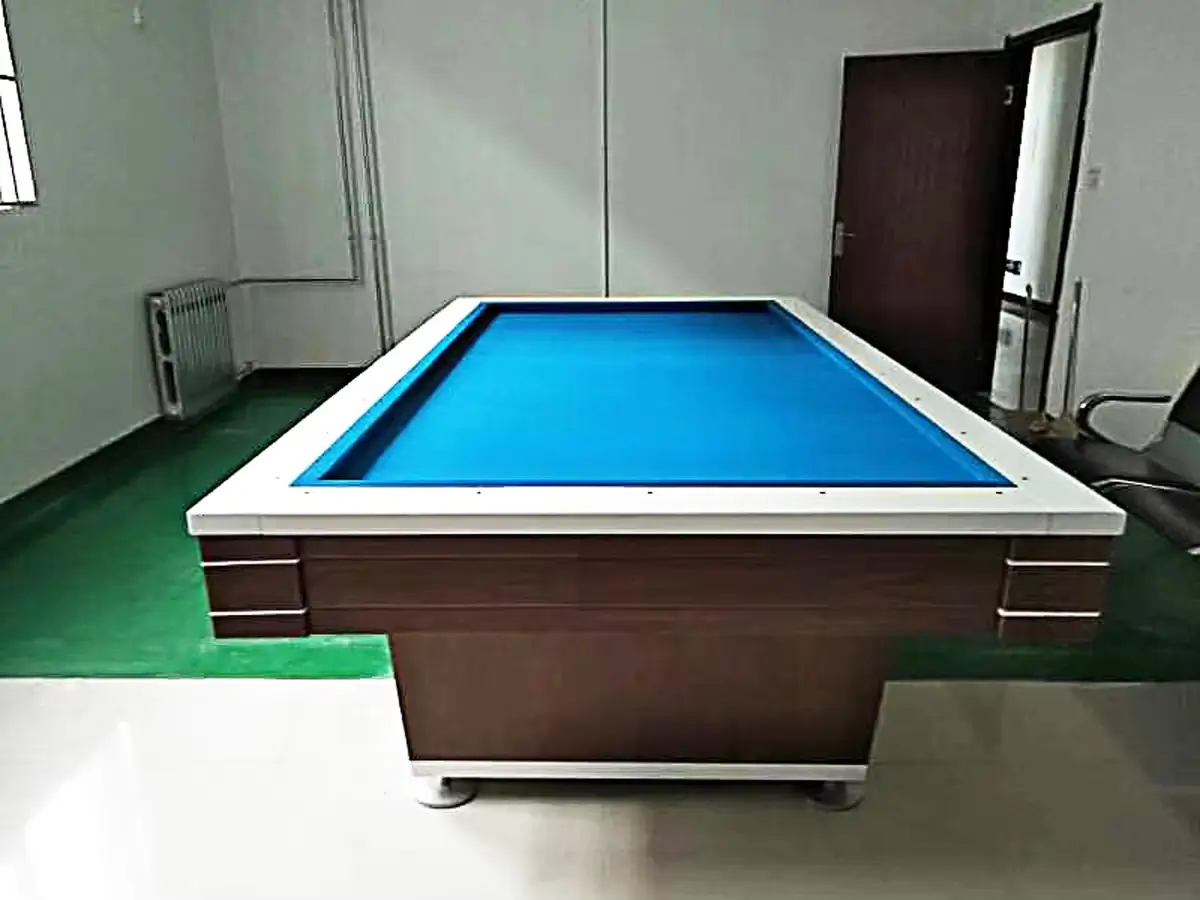
Korea is one of the strongest carom markets in the world. Three-cushion billiards is played in neighbourhood halls, broadcast on television and followed by professionals who train like athletes. Four-ball, an older game with more object balls, still has a loyal base. Both are played on pocketless tables — no pockets at the corners, none at the sides — so the whole game lives or dies on how flat and level the playing bed is.
Because the market is big enough to standardise around itself, Korean tables have their own commonly used dimensions. A competition reference published by the Gyeonggi-do Billiards Association (경기도당구협회) specifies the internal playing area at approximately 2840 × 1420 mm with a ±5 mm tolerance, an overall table size of approximately 3100 × 1700 mm (also ±5 mm), and requires slate of 45 mm or thicker for the playing table. The specification also calls for an electric heater with automatic temperature control to remove moisture from the slate and cloth. Those are not numbers we invented and not numbers we copy from a Western 9-ft pool table — they are the Korean market’s own reference, and the right starting point for any Korean carom inquiry.
| Korean Carom Table Specification | Reference |
|---|---|
| Playing area | 2840 × 1420 mm |
| Playing-area tolerance | ±5 mm |
| Overall table size | 3100 × 1700 mm |
| Overall-size tolerance | ±5 mm |
| Slate thickness | 45 mm minimum |
| Table type | Pocketless carom |
| Heating | Required for competition table |
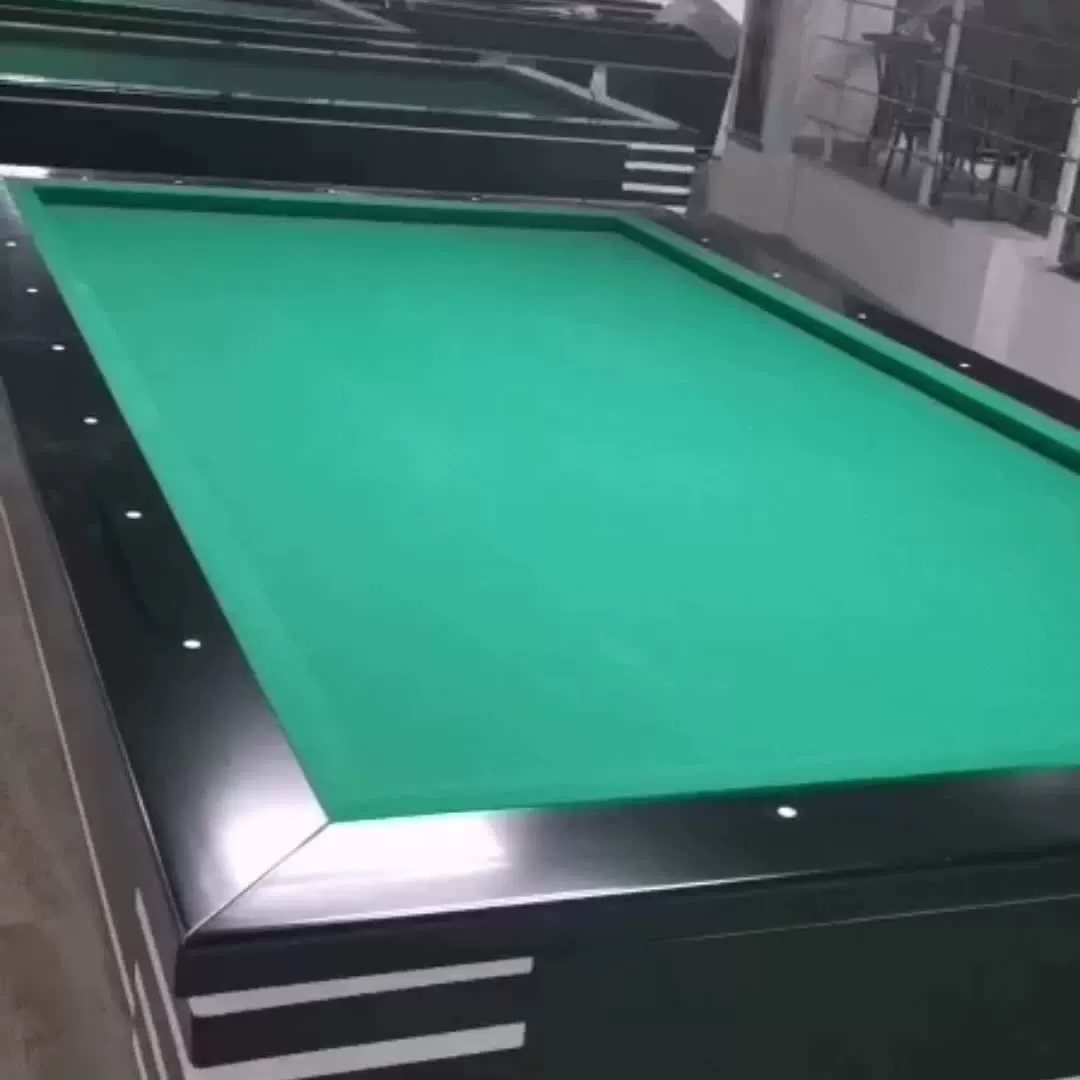
If you already work with carom slate for Western tables, the Korean numbers should still be confirmed independently: the playing area, the tolerance, the thickness and the construction all come from the Korean table design, not from a generic carom-slate file. Ordering by habit is how slate ends up 30 mm off on the mounting pattern.
2840 × 1420 mm Is the Playing Area — Not the Slate Size
The 2840 × 1420 mm figure is the playing area — the surface the balls roll on. The slate itself is larger: it has to carry the cushion system, the rail mounting, the frame attachment and sometimes heating channels underneath. These four terms get mixed up in every second inquiry, so they deserve a table of their own:
| Dimension | Meaning |
|---|---|
| Playing area | The surface the balls roll on — the Korean competition reference is approx. 2840 × 1420 mm (±5 mm) |
| Cushion-to-cushion | The same playing surface measured between cushion noses; the usual way tables are sized |
| Slate outline | The finished physical stone — larger than the playing area |
| Overall table size | Frame, rails and cabinet — the Korean reference gives approx. 3100 × 1700 mm (±5 mm) |
These dimensions come from a Korean billiards association specification. They describe the table, not the finished slate outline. The actual slate dimensions and machining pattern should be confirmed from the table drawing.
If you order a replacement from the playing-area number alone, the stone will be undersized. Before production, the buyer should confirm the finished playing-area dimensions, the overall slate dimensions, thickness, the number of pieces, joint positions, mounting-hole positions, frame support points, cushion and rail interfaces, heating requirements and the required flatness tolerance. A table drawing resolves all of them at once.
The rule that keeps this simple: the playing area is a reference; the slate outline is what we cut, and it comes from the drawing.
Korean Carom Slate Thickness: 45 mm Minimum
The Korean association reference says 45 mm or thicker, and that is a good market floor to verify against. Thicker slate means more rigidity, more dimensional stability and more weight — which is exactly why the frame, rail height and mounting arrangement have to be designed around it. A 45 mm bed on a frame built for 40 mm changes the playing height and the rail geometry; 50 mm on a 45 mm design needs the same kind of check in the opposite direction.
| Comparison | 45 mm slate | 50 mm slate |
|---|---|---|
| Structural rigidity | High | Higher |
| Weight | Lower | Higher |
| Handling & lifting | Easier | More demanding |
| Frame and rail fit | Design-specific | Design-specific |
| Replacement fit | Match original | Match original |
| OEM use | According to specification | Custom table design |
For OEM production the answer is never a preference — it is the approved table drawing. For a replacement order, matching the original slate thickness is normally more important than choosing the thicker option, because the whole table was built around a specific bed thickness.
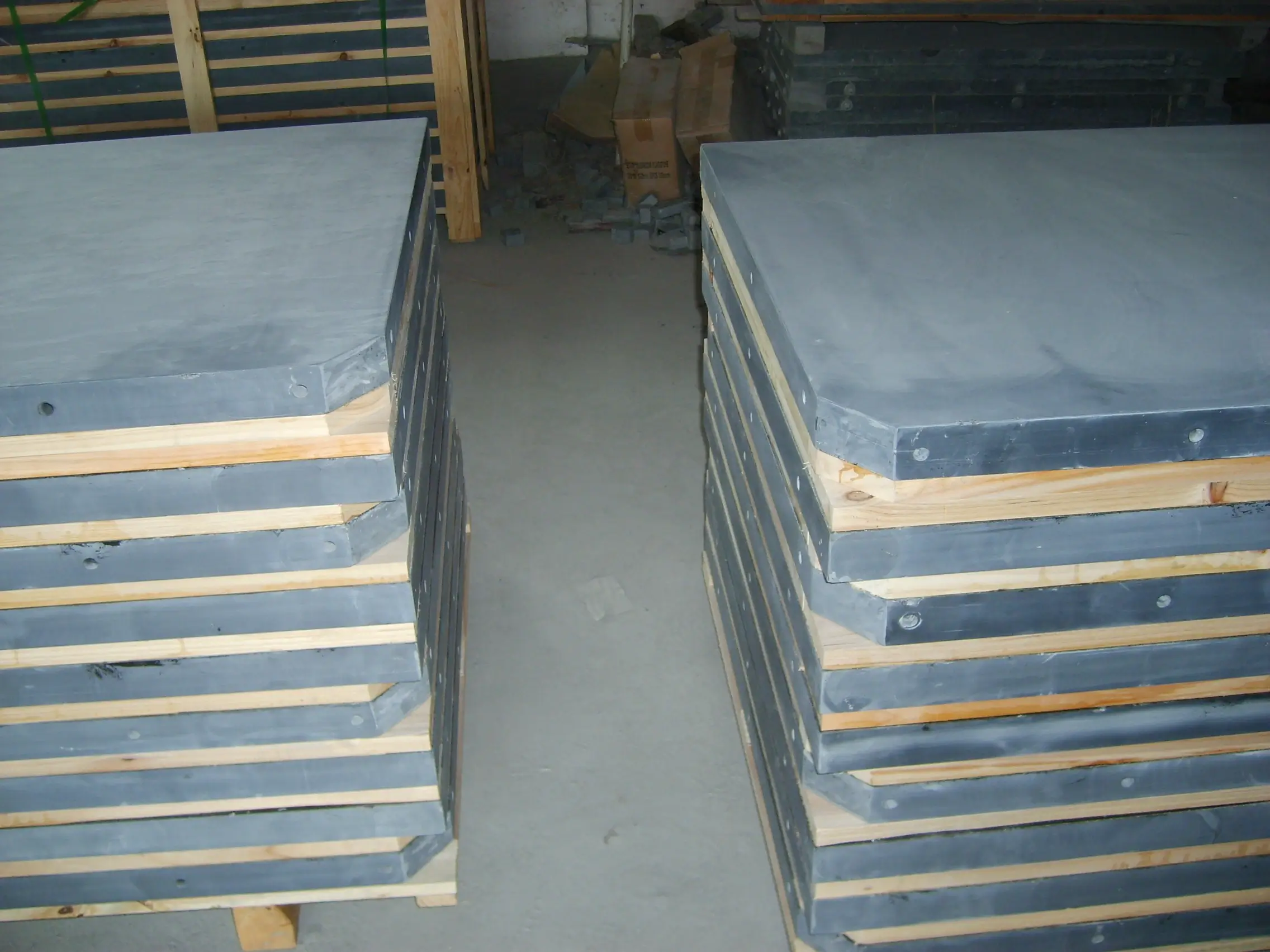
Thickness is also the QC point most easily faked by a sloppy supplier, because it is easy to measure the edge and ignore the middle. In our Jiujiang workshop a 45 mm spec is verified with measurements at several points across each panel — corners, centre, along the long edges — and the readings go into the record for the set, not just the visual check.
One Piece or Three: the Joints Decide How It Plays
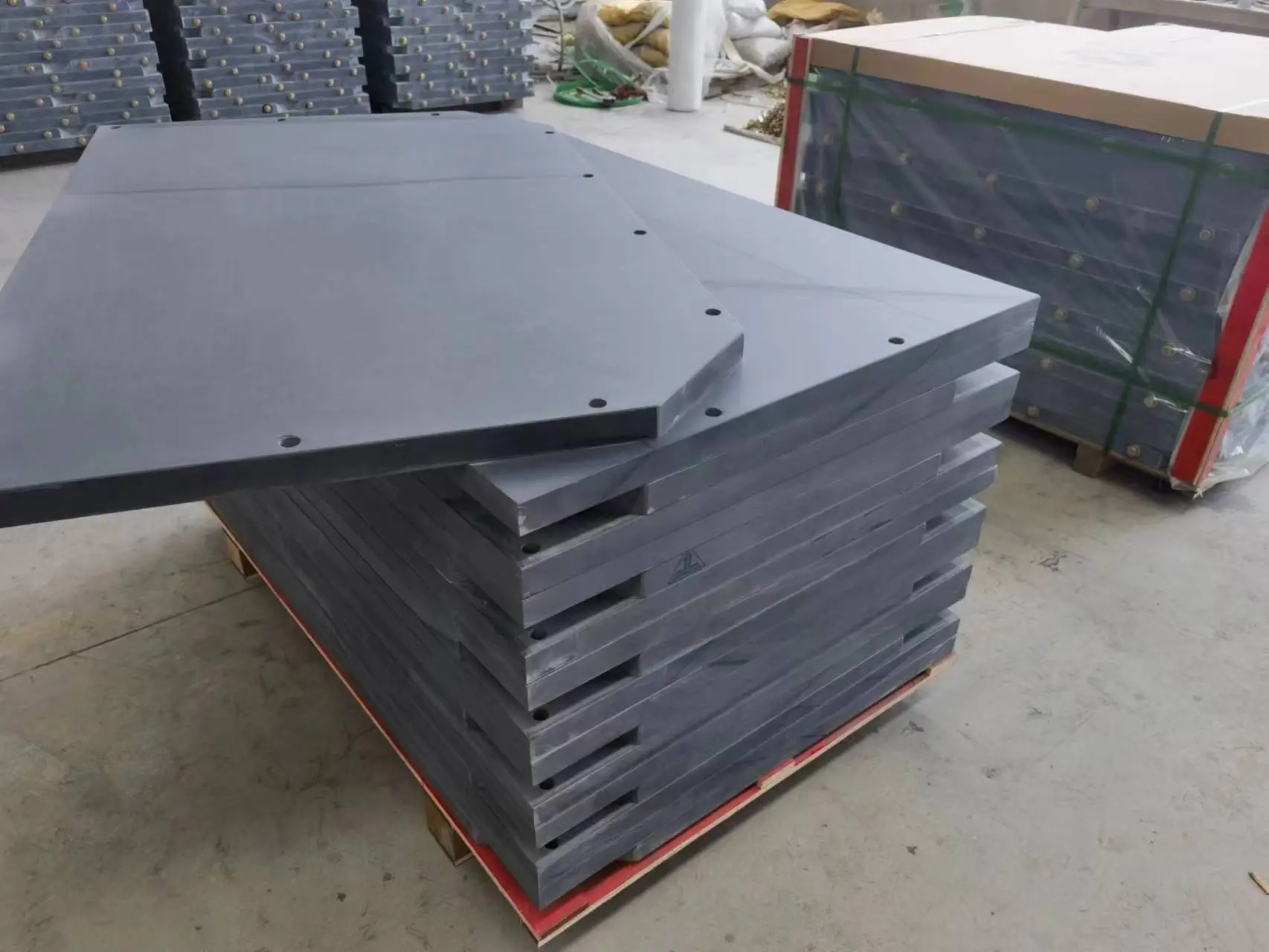
A 2840-class bed is too large to ship or carry as a single slab for most installations, so Korean carom tables use multiple slate sections. The Korean association reference describes table beds as using three to five slate panels, while the exact piece configuration depends on the table design. Multi-piece construction is not a compromise; it is how big beds are manufactured, transported and installed. What makes or breaks it is the joint.
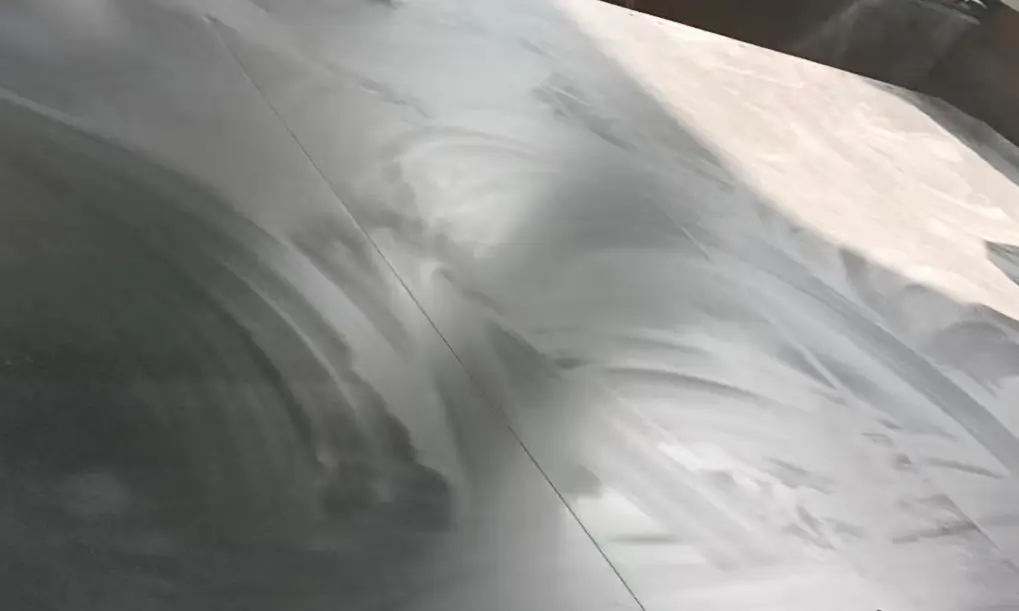
Three checks matter at the joint. The machined edges must be straight and square; the pieces must match in thickness so the seams do not step; and the set must be installed as a matched set, because a stone from a different batch will not be identical. A table can have excellent raw slate and still play badly if the joints are machined carelessly or the pieces are swapped between sets. That is why we mark and number every piece of a matched set before packing, and why buyers should ask for matched-set verification before shipment.
One-piece construction exists for smaller carom formats, but for a 2840 × 1420 class bed the practical question is usually not “one piece or three” but “three pieces, matched and machined correctly.”
Heated Slate: the Korea-Specific Detail Most Quotes Miss
For competition tables covered by the Korean specification, heating is not simply an optional comfort feature. The referenced specification requires an electric heater with automatic temperature control to remove moisture from the slate and cloth, maintaining a controlled temperature range of 30–36°C according to venue temperature and humidity. For a slate factory this matters at one precise moment: before the CNC machine touches the stone.
Heating is usually installed under the slate: heating mats, or a cable laid in channels routed into the underside of the stone. Either way, the underside machining must be planned before the panel is finished, and the wiring needs to terminate somewhere sensible for the table frame. When an order says “heated carom slate,” we confirm the underside configuration first — mat, channel, cable entry point, temperature control — because retrofitting heating into an already-finished slate means rework for everyone.
CNC Machining: Send the Drawing, Not the Name
Natural slate is the starting material; the finished product is the machined panel. For a Korean-market carom table the machining list usually includes the outer dimensions, the playing-surface calibration, joint edges, mounting holes, frame supports, any underside heating channels, cushion and rail interfaces, and sometimes special pocket-free corner details. Every one of those comes from a drawing or an approved template.
A buyer once asked for “9 ft carom slate” and we pushed for the drawing before cutting. The table turned out to be a Korean-market design with a different mounting pattern — the drawing saved a full set from being machined wrong. A table name is a category; a drawing is a specification. If the table is already in production, the manufacturer’s CAD file is ideal. A photo and a set of measurements are a strong second best. “Just Korean carom slate” is not enough to start cutting.
For OEM orders the same logic applies to every batch: one approved drawing, one machining programme, one matched-set numbering system, so that batch ten fits the same table as batch one. That is how our factory handles repeat production, and it is the only way a brand can sell replacement slate for tables it shipped years ago.
Replacement Slate: Measure the Old Set, Not the Catalogue
If you are replacing the bed of an existing Korean table, you are not buying a specification — you are reproducing a physical object. The fastest way to fail is to order by the table name; the safest way is to measure the original slate (or get its drawing) and send the data. The ten items that usually decide the order:
- Finished slate length and width (the outline, not the playing area)
- Playing-area dimensions
- Actual thickness at several points
- Number of pieces
- Joint positions and edge details
- Mounting-hole positions and diameters
- Corner and edge profiles
- Underside details (supports, heating, channels)
- Required flatness and finish
- Photos of the old slate, ideally against a straight ruler, from both sides
If the original manufacturer is still available, an original drawing or part number beats any measurement we can take. If the table is discontinued, a careful measurement set plus photos is normally enough to reproduce the set. The more complete the file, the closer the replacement — and the fewer surprises on the day the installer opens the crate. Whether it is a 2840 × 1420 mm replacement carom slate set, a 45 mm Korean carom replacement panel, or a full Korean billiard table replacement slate order, the process is the same: measure, match, machine.
For Table Builders: Turn One Order Into a Repeatable Spec
Korean table manufacturers benefit most when the first order establishes a repeatable production file instead of a one-off job. Once the approved drawing exists, every batch can be cut to the same programme, and every replacement order for that model becomes a re-run rather than a new project. The practical package to send a factory includes:
- Approved slate drawing with dimensions and tolerances
- Thickness and flatness requirements
- CNC machining programme or drawing (holes, joints, underside)
- Piece numbering and matched-set rule
- Inspection criteria and acceptance points
- Packing and container-loading requirements
With that file in place, a Korean market line can run the same way a pool-slate line runs — with the same drawing every time, the same inspection, and the same crate. That is the difference between buying slate and building a supply.
Nine Questions to Ask Any Korean Carom Slate Supplier
- Can you machine 45 mm or thicker carom slate, and will you measure the finished thickness at several points?
- Do you treat 2840 × 1420 mm as the playing area — and do you wait for the slate outline from our drawing?
- Can you follow our OEM drawing and machining file, or do you expect us to order by a table name?
- Can you reproduce an existing slate set from measurements, photos or a sample?
- How is flatness measured and recorded — with a straightedge and written readings, not a visual check?
- Can you machine holes, channels and special details exactly as dimensioned?
- Do you support heated tables, and do you confirm the underside design before production?
- Are the pieces of a three-piece set numbered and matched as one set?
- What packing do you use for export — and is the packed weight calculated, not just the stone weight?
A supplier who answers “show me the drawing” to most of these is doing you a favour. The ones who answer with an instant price and no questions are the ones to be careful of.
QC, Weight and Shipping: What Leaves the Factory
Quality on Korean carom slate is the same discipline as on any serious billiard slate: material first, then thickness, flatness, dimensions, joints, holes and matched sets. A simple inspection checklist looks like this:
| Check | What we look at |
|---|---|
| Material | Natural slate suited to table use |
| Thickness | Measured at several points, recorded per piece |
| Flatness | Straightedge and gauge readings, recorded |
| Dimensions | Length and width against the drawing |
| Joint edges | Straight, square and matched across the set |
| Holes | Position and diameter from the drawing |
| Surface | Ground finish over the whole bed |
| Set matching | Pieces numbered and matched as one set |
| Underside | Supports, heating and wiring details |
| Packing | Crate protected against edge damage |
Weight deserves its own paragraph, because Korean carom slate is genuinely heavy. For a rough idea: a playing area of 2.84 × 1.42 × 0.045 m is about 0.18 m³. At a slate density of roughly 2.7 t/m³, that is about 490 kg for the playing area alone — before the wider outline, holes, crate and steel banding. A three-piece set carries the same total stone weight spread across three crates, and each crate still has to be lifted by someone with the right equipment. Ask for the finished packed weight before you plan the forklift, the local delivery and the installation crew.
From our factory in Jiujiang, the port is about a 40-minute truck ride away, and slate for carom sets goes out in reinforced wooden crates — not pallets — with the pieces packed standing to protect the machined edges. The same crate discipline applies whether the order is one set or a container. The billiard slate buying guide covers the sourcing side of that process; the quality and test data page shows the kind of measured figures behind a QC claim.
Frequently Asked Questions
What size is a Korean carom table?
A Korean regional billiards association reference (Gyeonggi-do Billiards Association) gives the competition playing area as approximately 2840 × 1420 mm with a ±5 mm tolerance. The finished slate is larger than the playing area.
How thick is Korean carom slate?
The same association reference specifies slate of 45 mm or thicker for the playing table. For a specific table model, the thickness should still be confirmed against the design — 45 mm is a reference to verify, not a universal constant.
Is Korean carom slate the same as European or French carom slate?
Both are pocketless carom slate, but table dimensions, construction and machining can differ. Korean-market carom should not be assumed to match generic Western carom-slate specifications — the drawing decides.
Can a standard “9 ft carom slate” fit a Korean carom table?
Not without confirmation. “9 ft” is a size category, not the Korean playing area, and the slate outline, piece count, holes and heating details all come from the table drawing. Fit must be verified against the actual specification.
Does Korean carom slate need to be heated?
The referenced Korean specification requires an electric heater with automatic temperature control for competition tables, maintaining 30–36°C to remove moisture from the slate and cloth. Whether the table is heated determines the underside configuration, so it must be confirmed before production.
Can you make replacement slate for an old Korean billiard table?
Yes. Replacement slate can be produced from an original drawing, from measurements, or — where practical — from an existing slate sample. The more complete the dimensions and machining details, the closer the reproduction.
What should I send for a Korean carom slate quotation?
Table type, playing area, slate dimensions, thickness, piece count, a hole drawing or photos, heating requirements, quantity and destination port — and ideally the manufacturer’s technical drawing. A drawing beats a table name every time.
What is the overall size of a Korean carom table?
A Korean carom table specification published by the Gyeonggi-do Billiards Association gives an overall table size of approximately 3100 × 1700 mm, with a ±5 mm tolerance, and a table height of 750–850 mm. These are overall table dimensions, not the slate size or the playing area.
How many slate pieces does a Korean carom table use?
The Korean association reference describes carom table beds as using multiple slate sections, while the exact number depends on the table design. For a 2840 × 1420 mm OEM or replacement project, the piece configuration should be confirmed from the manufacturer’s drawing.
Send the Drawing, Not the Table Name
If you are building, importing or replacing a Korean carom table, send us your drawing, measurements or existing slate photos. We machine natural slate for the Korean 2840 × 1420 mm playing-area specification, with 45 mm+ thickness and the finished slate dimensions defined by your approved drawing — export-packed in reinforced wooden crates.
Send us your Korean carom slate spec → View billiard slate products