
How Jiujiang Slate Is Packed and Shipped
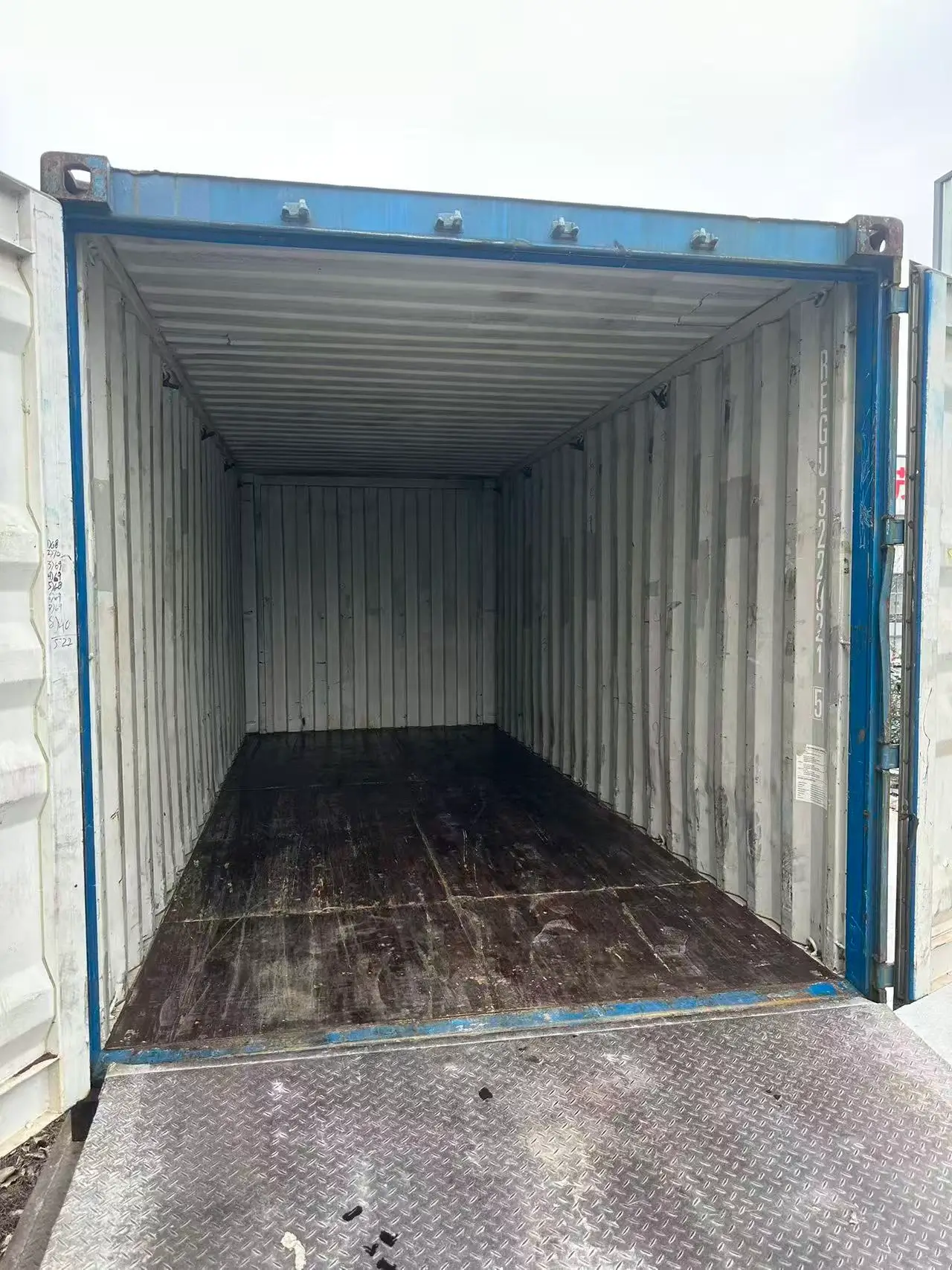
If you came to our factory on a loading day, the first thing you would meet is not slate. It is an empty shipping container on the back of a truck, backing through the gate shortly after eight in the morning. It left Jiujiang Port about forty minutes ago. By the end of the day, the same truck will carry it back — sealed, photographed, and holding several tonnes of stone that were on our inspection benches yesterday.
That one arrangement — the empty container comes to us, rather than our slate going to a warehouse — is the decision this whole guide is built around. It sounds like a logistics footnote. In practice it decides how many times your stone is lifted between the inspection bench and the sealed doors, whose standards govern how it is stacked, and what evidence you hold of any of it.
This page walks you through that day the way we would if you were standing in the yard: seven stops, from the gate to the seal. Along the way it answers the questions overseas buyers actually ask about slate packing for export — crates versus pallets, how roofing slate and billiard slate travel differently, what happens inside the container, and which packing details belong in a purchase order rather than in an email thread. Buying slate from China is not finished when the stone leaves the production line; the condition it arrives in is decided largely on one afternoon in our yard.
- 08:00 — the empty container arrives from Jiujiang Port, forty minutes down the road, and backs into our loading bay.
- 08:20 — the empty box is checked: floor, walls, doors, dryness, cleanliness — before any stone goes in.
- Morning — roofing slate goes into wooden export crates: flat stacks, separators, edge protection, strapping.
- Midday — billiard slate is braced into heavy-duty crates as matched sets, machined faces protected.
- Afternoon — the crates are placed by plan: heavy low, rows tight, gaps braced so nothing can move.
- Before closing — the camera works: crate faces, loaded rows, container number, then the doors.
- By dark — seal on, truck gone: the container is back at the river port, and the ocean's turn begins.
Part of the Jiujiang Slate Guide's Buying & Exporting section. It follows Samples and Sample Approval — once the stone is approved and produced, this is the day it leaves. The Roofing Slate Guide covers the crate itself, plank by plank, in Roofing Slate Packaging and Crate Standards, and the ocean journey after the seal in Shipping Roofing Slate Internationally; this page covers what happens in between, in our yard, with your stone.
How Is Slate Packed for Shipping?
Natural slate is packed according to its thickness, size and intended use. Thin roofing slate is commonly separated into layers with protective sheeting and stacked inside wooden export crates, while heavy billiard table slate requires stronger supports, bracing and a forklift-accessible base. For ocean shipping, the crates must also be secured inside the container with timber blocking and strapping to minimise movement during road, port and sea transportation. The exact packing method should be agreed before production, because crate dimensions, gross weight and container loading all affect the shipment — and once the stone is finished, packing is far harder to change.
Stop One — The Empty Container Arrives at Our Gate
Most export cargo in China works the other way around: finished goods are trucked to a warehouse or a container yard near the port, unloaded, stored, and then loaded into the container by a third-party crew who have never seen the factory, the specification, or the buyer. Each extra lift of a tonne-and-a-half crate is a small, quiet risk. Each extra pair of hands is another party between the inspection bench and the sealed door.
So we reverse the journey. The empty container is trucked the forty minutes from Jiujiang Port to our yard in Lushan. Our own crew loads it beside the benches where the stone was inspected. The sealed box goes back to the port the same day. No intermediate warehouse, no borrowed labour, no gap where responsibility blurs: the last hands that touch your slate before the doors close are ours.
We cannot promise you the weather on the Atlantic. We can promise that everything up to the seal happens in one yard, under one standard, on a day you can follow photograph by photograph. If you read How to Source Jiujiang Slate Directly, you will recognise this as the fourth question in that guide — where exactly will my container be loaded? Here is the full answer, as an operating day rather than an argument.
Stop Two — The Empty Box Is Checked Before Your Slate Goes In
The first crate does not move until someone has been inside the container. An empty box has history: it carried someone else's cargo last month, it sat in a yard in the rain, it crossed the tropics twice. A five-minute check catches what that history left behind.
- The floor — sound, dry, no soft patches, no protruding nails or fittings that could grind into a crate for six weeks.
- Walls and roof — no holes, no daylight through the seams, no deformation that could press on the load.
- Doors and seals — closing freely, sealing evenly, locking as they should.
- Cleanliness — no residue of a previous cargo; powder, oil or chemical traces have no business travelling with roofing slate that will be handled on site.
- Smell — a container that reeks of a previous cargo tells you what it carried; stone for interiors and table beds deserves a clean box.
- Moisture — a visibly damp container is turned away, because a sealed box that leaves wet stays wet.
That last point is worth a paragraph, because buyers focus on breakage and forget water. A container leaving Jiujiang in a humid summer crosses several climates before it is opened in, say, a cold European December — and condensation forms on the inside of a sealed steel box long before anyone thinks to look. The stone itself is famously indifferent to damp; the timber, the separators and the strapping are not. Packing materials go into the container dry, and what condensation does to a crate that travels well is covered properly in the Roofing Slate Guide's moisture and venting standards.
Stop Three — Roofing Slate: Crates Rather Than Pallets
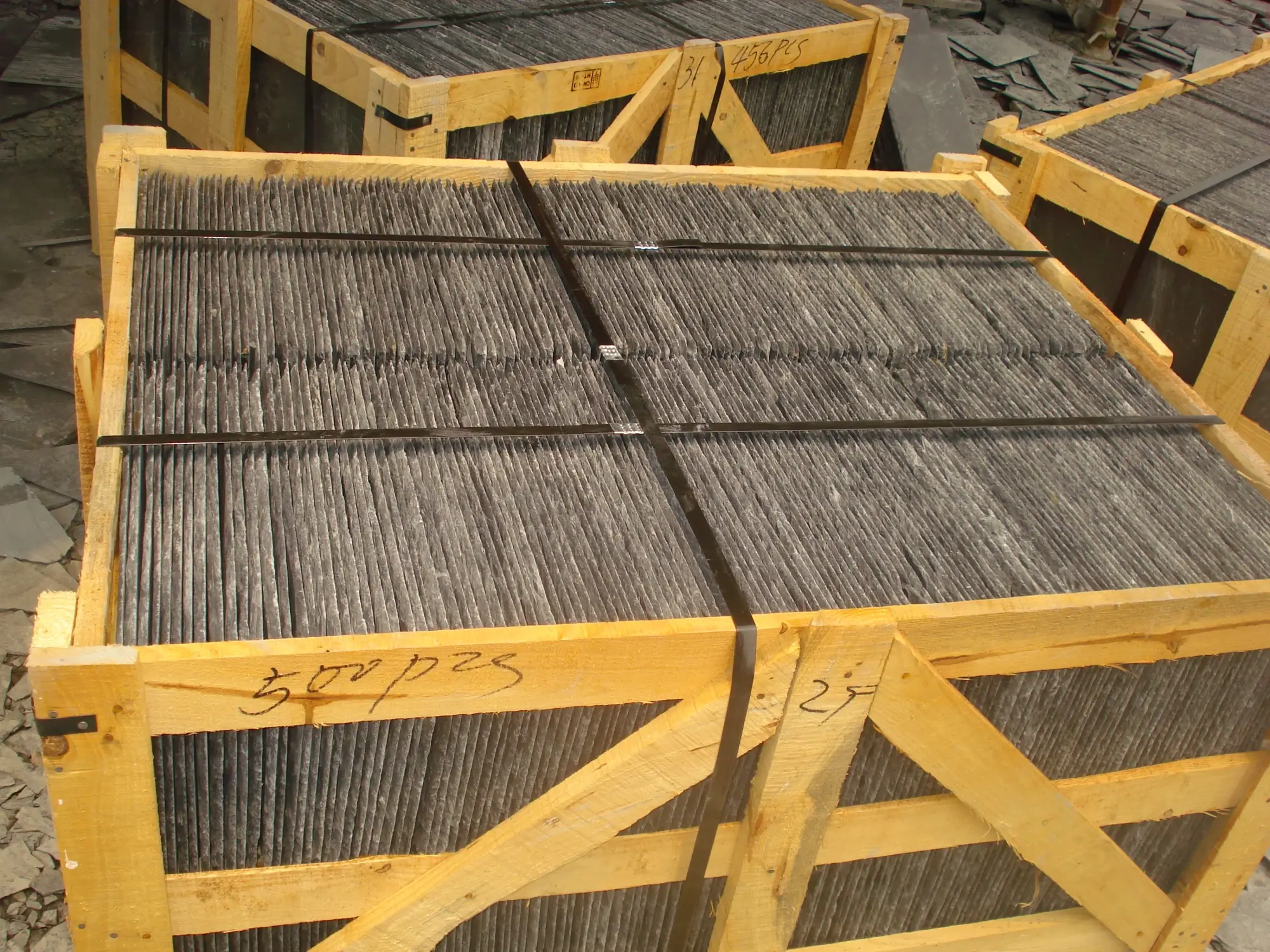
Walk past the inspection benches and the next station is the packing line, and here is the decision buyers ask about most: for our standard export shipments, roofing slate is normally packed in wooden crates rather than open pallets.
The reasons are unglamorous. A palletised stack of slate is exposed on all four sides — to forklift tines, to the lurch of every truck, to a fortnight of drizzle in a destination yard. The long edges of a thin slate, exactly where the stone is weakest, are precisely what a pallet leaves hanging in the air. A crate does the opposite: it encloses the stack, protects the edges, takes the impacts on timber instead of stone, and gives your warehouse a clean, countable unit to receive, stack and fork-lift.
Pallets are not wrong — they are a domestic-distribution answer. If your warehouse is built entirely around pallet handling, say so at the order stage and we will talk; packing is negotiable before production and stubborn after it. But understand the trade: for a six-week ocean crossing, the crate earns its timber.
Inside the crate, the packing follows five quiet rules that matter more than the outside of the box:
- Flat, face to face and back to back — so surfaces that can abrade each other never touch, and the stack stays square.
- Separators between layers — a sheet of protective material between each course, so vibration grinds on cardboard or foam, not on slate.
- Support across the full stack — a stack must never rest on two or three isolated points; a bridge standing on its abutments will crack with nothing under the middle.
- Strapping that holds without crushing — tension keeps the bundle one solid block; too much tension concentrated at the corners does the damage it was meant to prevent.
- Stack height kept within the crate's design — the lower courses must never carry more than the timber and the stone were built for.
All of this is sized to the actual product, not to a standard crate: the same packing philosophy handles a 300 × 200 mm tile and a 600 × 300 mm large-format piece, but the bigger the tile, the more leverage any movement has, and the more the internal supports have to be planned around its real dimensions. The full construction standard — timber sections, interleaving material, corner protection, the 24-hour strap re-tension, the ISPM 15 stamp — is written out line by line in Roofing Slate Packaging and Crate Standards, and we hold our crates to it.
One number to carry away: depending on the slate size and packing configuration, a full export crate can approach one tonne. Forklift territory, not muscle — which is exactly why every crate leaves here on a base built for forks.
Stop Four — Billiard Slate: The Heavy End of the Loading Bay
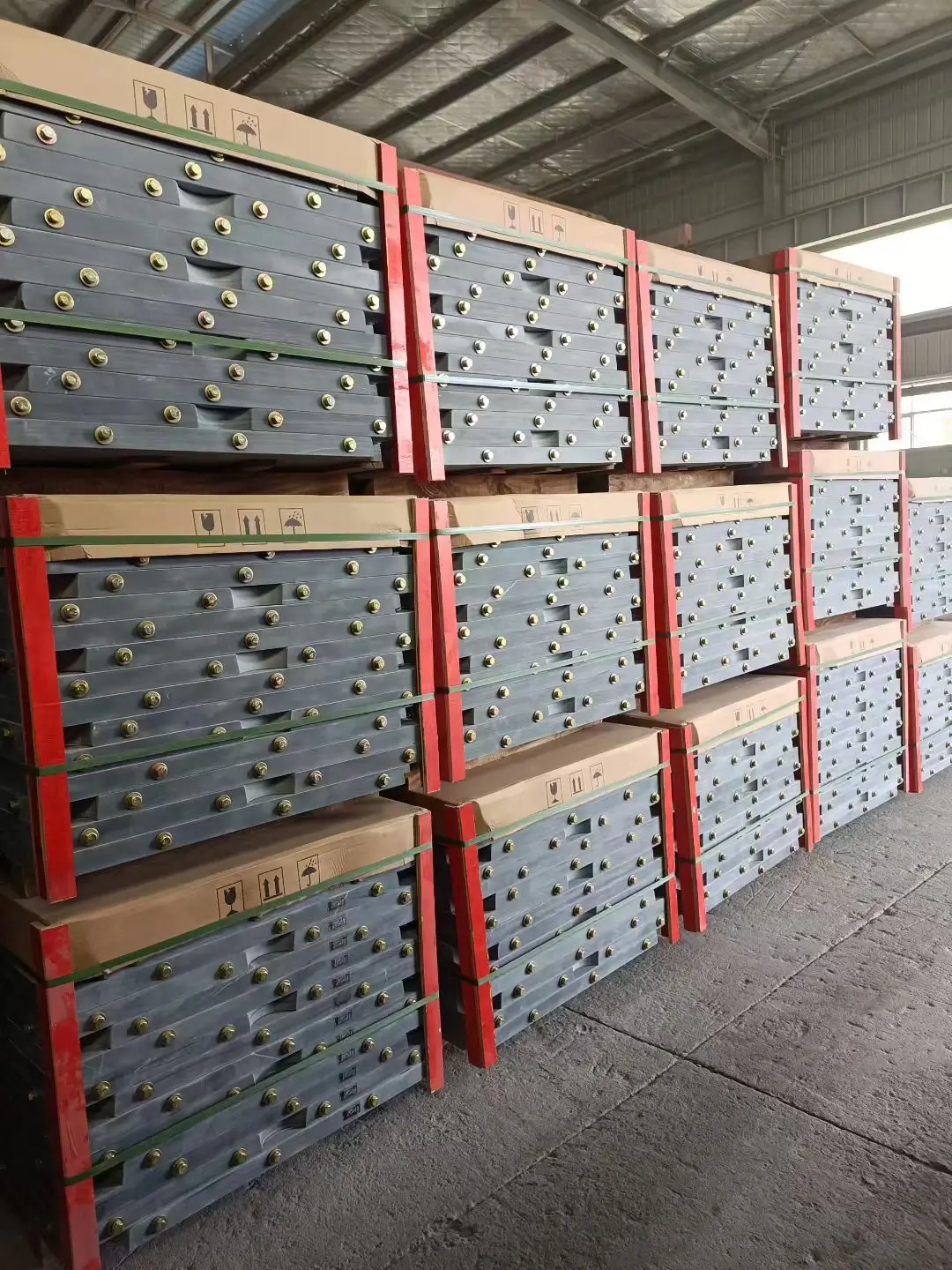
Roofing slate and billiard slate share a quarry district and almost nothing else about packing. A roofing crate is built to protect thin, identical tiles from abrasion and edges. A billiard crate is built to carry a machined assembly that must arrive ready to bolt into a table — and the two designs cannot be swapped.
The first rule is the one buyers rarely think to ask about: a matched set travels together, in one crate. The three pieces of a table bed are machined as a set — matched for thickness and flatness, seam-cut to meet along their joint faces. The three pieces should be identified and handled as one matched set, and keeping them together in one crate also makes receiving, inspection and table assembly much easier. They left the CNC bed as one bed; they travel as one bed.
Inside the heavy-duty crate, the packing answers a different set of threats:
- Machined faces never touch — interleaved so the playing surfaces, the joint edges and the reference edges ride against protective material, not against each other.
- Drilled areas and pocket openings braced — the holes that take the table hardware are exactly where impact damage costs the most conversation later.
- Weight carried by the frame, not by the stone's edges — wooden supports under and between the pieces, distributing several hundred kilograms the way the bed was designed to sit, not the way it is cheapest to stack.
- A base with forklift access — a three-piece pool set passes two hundred kilograms before the crate goes on; a 12-foot snooker set is heavier again. Nobody should be manhandling that by hand, and nobody here does.
The short version: billiard slate is not "tiles that happen to be thick". It is a precision assembly that travels in pieces, and the crate is engineered for the assembly. Why the machining itself can be trusted — the CNC work behind the flatness figures — is a separate story, told in CNC Machining in Our Jiujiang Factory; here the point is only that nothing that happens in transit is allowed to undo it.
Stop Five — Inside the Container: How the Crates Are Placed
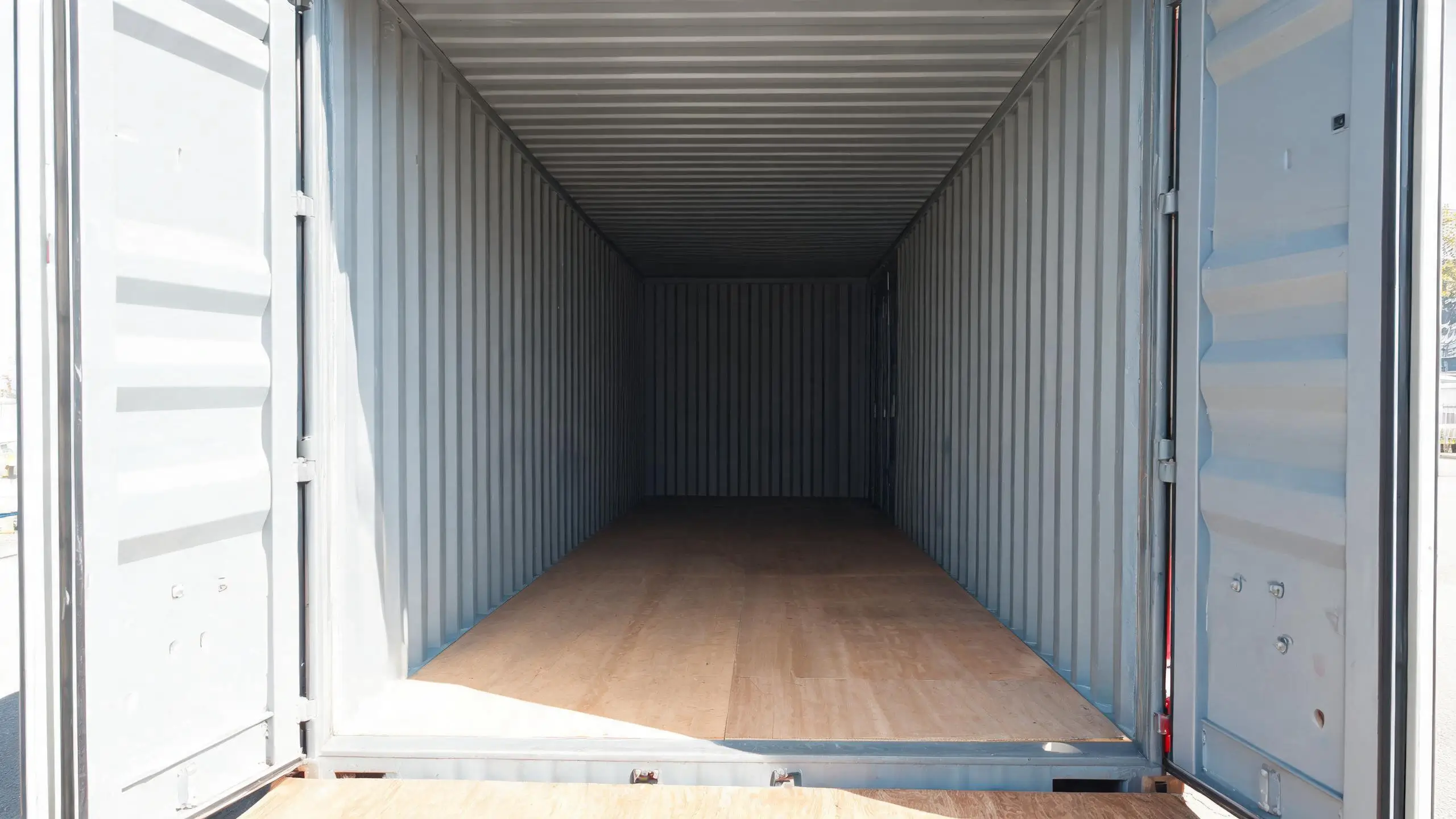
By the afternoon the crates are staged in the yard in loading order, and the container is loaded to a plan written before the first crate moves — never by eye. The principles fit in three sentences, because the principles are simple and the planning is in the details: heavy units go low; every row is placed tight against the one behind it and the walls beside it; the gaps that remain are braced with timber blocking and wedges, not left for the sea to fill.
A container at sea is not a stationary warehouse. It vibrates for weeks, it accelerates and decelerates, it is lifted and dropped at each port, and it is railed and trucked at both ends. Any gap that lets a crate shift will widen over weeks of vibration and handling. So the load plan exists to make the interior a single, immobile block — and the crew that built the crates is the crew that places them, which means the person tensioning the bracing understands what a dropped crate costs.
One arithmetic point that surprises first-time stone importers: with natural stone, a container is usually full by weight long before it is full by space. The question is never "how many crates can we squeeze in" but "how much weight can this box carry and still be handled safely at every stage" — the square-metre maths behind that balance is worked through in How Many Square Metres Fit in a Container?, and the full loading discipline — row order, the door-row air gap, centre-of-gravity limits — is the Roofing Slate Guide's container loading guide, which we follow for Jiujiang shipments exactly as for any other.
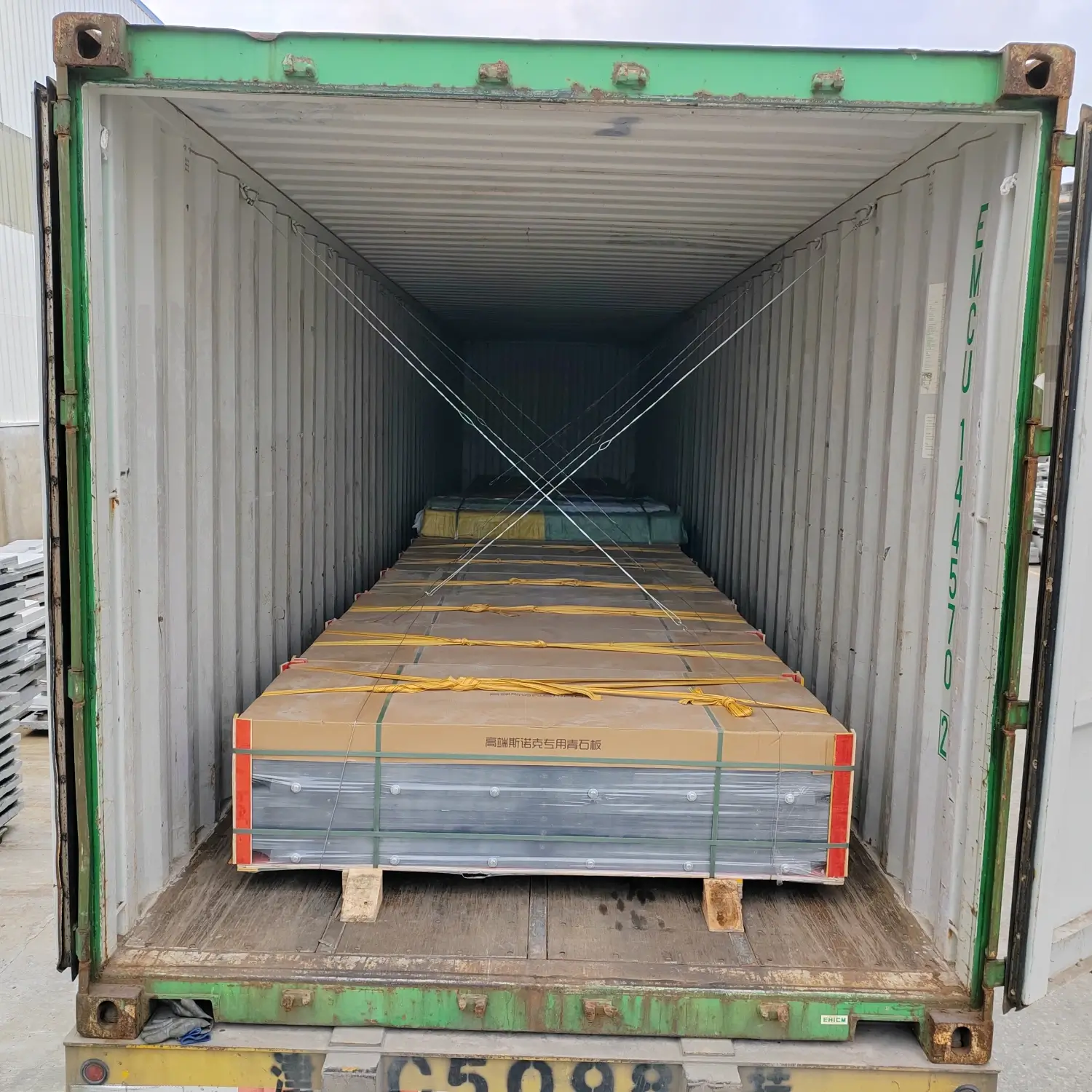
Stop Six — The Camera Works Before the Doors Close
The last half hour of a loading day belongs to the camera. Not for marketing — for the record. You are on the other side of the world on this afternoon, and photographs are the only way you can stand in the yard with us. So the camera walks the same walk you would:
- Each crate face with its shipping marks readable — crate number, purchase-order reference, so a photograph and a packing list tell the same story.
- The loaded rows from the open doors — how your stone actually sat, row by row, after the last bracing.
- The container number itself — the box, not just the load.
- The doors half-closed with the seal ready, then the sealed lock — the seal number goes into the photographs and into your documents, and it is the number that should still be intact when the box reaches you.
The marks deserve a word, because they look like decoration until the day they earn their keep. Crate numbers — CRATE 01 / 20, 02 / 20, and so on — let your warehouse count the delivery in seconds and know instantly whether twenty crates or nineteen arrived. On a mixed shipment, with a roofing order and a billiard order travelling together, the marks are the difference between a smooth morning at your dock and an afternoon of deduction.
These photographs are a working record, not a courtesy: they are the state of the shipment at the moment it left our hands, timestamped, in the same email thread as the packing list. If a buyer can be present in person — or sends an inspector — then better still; what that visit should verify, hour by hour, is written out in the Roofing Slate Guide's pre-shipment inspection checklist, and we would rather be checked than trusted.
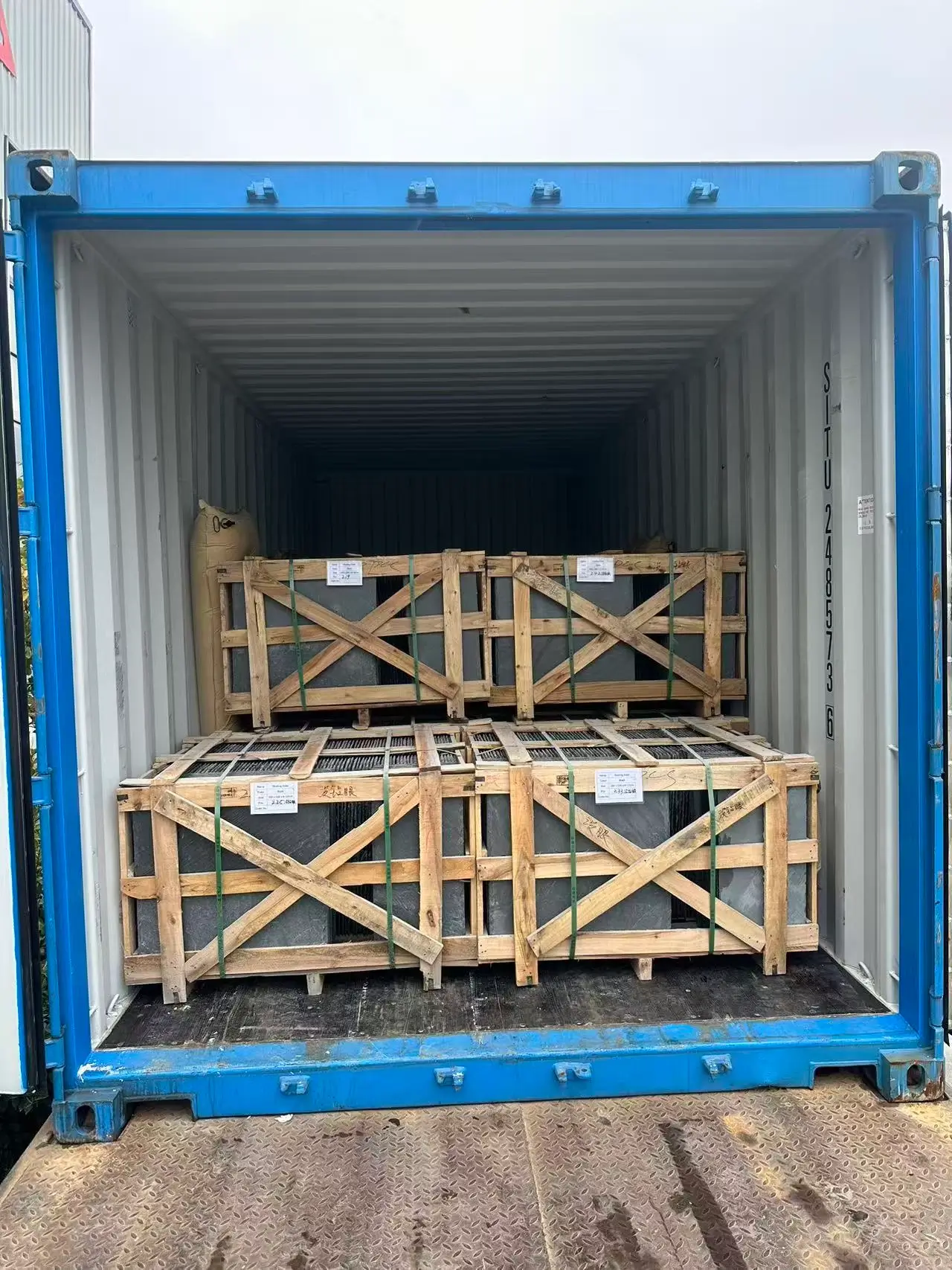
Stop Seven — Seal, Truck, and Forty Minutes Back to the River
Doors closed, seal locked, number recorded. The truck that brought an empty box at eight o'clock carries a full one back to Jiujiang Port before dark — the container that arrived at eight is usually on the road again before the yard lights come on. From there the sealed container continues through the booked inland and ocean freight route, and from the moment the seal is set, the stone is in other hands: the carrier's, the sea's, your side's.
That is where this page deliberately stops, because everything after the seal is a different discipline. The six handovers between our yard and your warehouse, the bill of lading that is effectively the title to your container, the claims road if something arrives wrong — all of that is covered in Shipping Roofing Slate Internationally, and it applies to a container of Jiujiang slate exactly as it applies to any other. The route itself — how a container from a river port reaches the ocean, and the realistic delivery times for different destinations — is the next page in this guide.
What this page can tell you is what the seal means: that from the inspection bench to that click of the lock, every movement of your stone was made by people you can name, under a plan you can see, on a day you followed in photographs. The ocean does not read specifications — and the box it receives needs to be right before it leaves, because no one out there is checking.
What the Day Means for Your Purchase Order
Everything above describes our normal day. The purpose of showing it to you is not admiration — it is imitation. Packing is part of the product specification, not a cosmetic step before shipment, and the buyers who get the best arrivals are the ones who treat it that way: packing agreed before production starts, written into the order, not improvised after the stone is finished. Packing decides real downstream numbers — how many crates your container holds, what your warehouse needs to unload it, what the customs declaration says, what the bill of lading weighs.
Seven lines are enough. If your purchase order covers these, the loading day has nothing left to improvise:
| Line to agree | A working example | Why it matters downstream |
|---|---|---|
| Packing method | Export wooden crates, forklift-accessible base | How your warehouse receives, lifts and stacks the delivery |
| Quantity per crate | e.g. 30 m² of tile per crate, crate count for the order | Container planning and your receiving count |
| Crate dimensions and gross weight | e.g. crate ≈ 1 t gross | Forklift class at your end, safe unloading, customs figures |
| Internal protection | Flat stacking, separators, edge protection, braced heavy units | The condition of the stone when the doors open |
| Shipping marks | CRATE 01 / 20, your PO number, origin marking | Count and trace the delivery in seconds at the dock |
| Wood treatment stamp | ISPM 15 / IPPC mark on every crate | Customs clearance — unmarked timber can stop a whole container |
| Loading photographs | Crate faces, loaded rows, container and seal number | Your record of how the shipment left, on a day you cannot attend |
Put together, the same seven lines read like this on an actual order:
Packing lines — a worked example
Product: natural Jiujiang roofing slate, 500 × 300 mm, 7–9 mm
Packing: wooden export crates, tiles flat, layered with separators, edge protection, strapping
Handling: forklift-accessible base, both ends
Marks: crate number in sequence, PO reference, gross weight per crate
Timber: ISPM 15 treated, IPPC stamp visible on every crate
Records: loading photographs — crates, rows, container number, sealed doors — sent before the truck departs
And the way to test any supplier, including us, is to ask these as plain questions before you place the order. How many pieces go in each crate? What are the crate dimensions and gross weights? Where are the forklift openings? Can you send the loading photographs before the doors close? If the answers come back concrete — numbers, dimensions, a yes with a timestamp — you are talking to someone who actually loads containers. If the answer is "standard export packing", you have learned something too: that is a number the supplier never wrote down. The place to build these lines into a full inquiry is the ten questions in this guide's earlier page; the place they belong at the end of it is the purchase order itself.
What a Buyer Should Ask Before Loading
The seven lines above are the specification. The eight questions below are how you check that the specification is real — asked before loading, not after arrival. They take two minutes on a phone call and tell you more than any brochure:
- What is the exact packing method — crates, pallets, or something else?
- How many square metres or pieces are packed per crate?
- What is the gross weight of each crate?
- What are the crate dimensions?
- How are the slate edges protected inside the crate?
- How is the load secured inside the container — bracing, blocking, strapping?
- Will loading photographs be provided, and what do they cover?
- What timber treatment and marking are used (ISPM 15 / IPPC)?
If a supplier answers all eight with specifics, the loading day is likely to go as discussed. If several come back vague, that is useful information too — and it sits alongside the evidence checks in How to Verify a Jiujiang Slate Supplier and the inquiry-building ten questions elsewhere in this guide.
What Packing Can Never Do
One honest limit, and it is the same on every loading day: good packing protects a quality product. It has never once turned unsuitable stone into suitable stone. A crate can carry a well-split, well-calibrated slate across an ocean in one piece; it cannot make a poorly split stone worth putting on a roof, or a badly machined bed flat once it is bolted into a table. Stone quality is decided at the quarry face and on the inspection bench — the roofing properties in the test data and the billiard tolerances at the machines — and packing is only ever the insurance policy on that decision.
Which is why, if you walked this day with us, the walk would actually start one stop before Stop One — at the inspection benches, where every piece is checked before it is allowed anywhere near a crate. The hands that grade the stone and the hands that pack it are the same hands, in the same yard, an hour apart. The last hands that touch your slate before the doors close are the hands that checked it. That is the whole argument for the way we ship, compressed into one sentence: the fewer hands between the bench and the seal, the fewer stories your stone has to survive on the way to your warehouse.
Frequently Asked Questions
Why does the empty container come to your factory instead of the slate going to a port warehouse?
Because it removes every extra handling step between the inspection bench and the sealed doors. The container is trucked in from Jiujiang Port, forty minutes away, loaded by our own crew beside the benches where the stone was inspected, and driven back the same day. The alternative — stone trucked out, unloaded at a warehouse, stored, then reloaded by a third-party crew — adds lifts and adds parties, and each one is both a chance for damage and a place where responsibility blurs. Loading in our own yard is also what makes same-day loading photographs possible.
Does Jiujiang roofing slate ship on pallets or in wooden crates?
For export, in wooden crates. A palletised stack leaves the long edges of the slate — its weakest points — exposed on all four sides to forklifts, weather and destination storage, while a crate encloses the stack, protects the edges and gives your warehouse one clean, countable unit to receive. Pallets are a reasonable answer for domestic distribution or warehouses built entirely around pallet handling; if that describes your operation, agree a pallet-based packing before production starts. Packing is negotiable before the order and stubborn after it.
How is billiard table slate packed for export?
As a matched set, in one heavy-duty crate. The three pieces of a bed are machined and matched together, so they travel together: machined faces interleaved so they never touch each other, joint edges and drilled areas braced, weight carried on wooden supports rather than the stone's edges, all on a base with forklift access. A three-piece pool-table set passes two hundred kilograms before the crate goes on, and a 12-foot snooker set is heavier again. It is packed as a precision assembly, never as thick tiles.
Can I get photographs of my container being loaded?
Yes — as a normal part of the loading day, not a favour. The set normally covers each crate face with its shipping marks readable, the loaded rows from the open doors, the container number, and the sealed doors with the seal number, sent before the truck leaves the yard. They go out the same day and give you a timestamped record of how the shipment left our hands. If you can attend in person, or send an inspector, better still — the pre-shipment inspection checklist in the Roofing Slate Guide lists what that visit should verify.
What packing details should be agreed before production starts?
Seven lines: packing method; quantity or square metres per crate; crate dimensions and gross weight; internal protection (flat stacking, separators, edge protection, bracing for heavy units); shipping marks (crate numbers and PO reference); the ISPM 15 timber stamp; and loading photographs. Each one changes a real number downstream — container count, unloading equipment, customs declarations, receiving checks — so they belong in the purchase order, not in a message thread. Any of them left to "standard export packing" is a number nobody wrote down.
How does the container reach the ocean from Jiujiang?
The factory sits about forty minutes from Jiujiang Port on the Yangtze River. The sealed container goes back to the port the same day it is loaded and then continues through the booked inland and ocean freight route. Nothing about that leg changes your paperwork — the bill of lading still covers one container from Jiujiang to your port — but the full freight picture, including delivery times for different destinations, is the subject of the next page in this guide.
Related Reading
Come and watch your container being loaded — or ask for the photographs
Tell us the product, the quantity and the destination, and we will send you the packing specification before production starts: crate type, quantity per crate, weights, marks, and the loading photographs that follow your container to the sealed doors. If you time a factory visit to a loading day, you can stand in the yard and watch your own crates go into your own container — and if you cannot make the trip, the camera will stand there for you. Request a packing plan · see our roofing slate range