
Questions to Ask Before You Buy: 10 Questions for Jiujiang Slate Buyers
The first mistake many slate buyers make is asking for a price too early.
A supplier can quote you within minutes. But a useful quotation requires more than a number. Before comparing prices, you need to know exactly what stone is being offered, where it comes from, how it is processed, what tolerances are achievable, and what evidence supports the supplier's claims.
Don't compare prices before you compare specifications.
If you have already found a supplier (how to source Jiujiang slate directly), checked their background (how to verify a Jiujiang slate supplier), and understood whether you are dealing with a factory or a trading company (factory vs trading company), the next step is the conversation itself. What do you actually ask? And how do you ask it so the answers are comparable — not just polite?
These ten questions are organised into three stages: what you are buying, whether the supplier can prove it, and what you are really paying for. Whether you are buying Jiujiang roofing slate, billiard slate, paving slate, or custom-cut products, the same framework applies — the depth of the answers will vary, but the structure should not.
The 10-Question Blueprint
A. What Am I Buying?
- Where does the slate come from? Origin — quarry location, not just "China."
- Who actually produces it? Who controls production — and who is responsible.
- What is the exact specification? Dimensions, finish, grade — not a product name.
- What tolerances can you guarantee? The numbers behind "high quality."
B. Can You Prove It?
- What test data do you have? Original report, not a marketing summary.
- Can you show current production? Today's factory, not yesterday's catalogue.
- What quantity can you supply consistently? Whether a sample scales to a container.
C. What Am I Really Paying For?
- What exactly is included in the price? Same stone, same basis — or different products?
- What happens if the material does not meet spec? The agreement before a problem, not after.
- Can I approve a physical sample? The gap between promise and shipment.
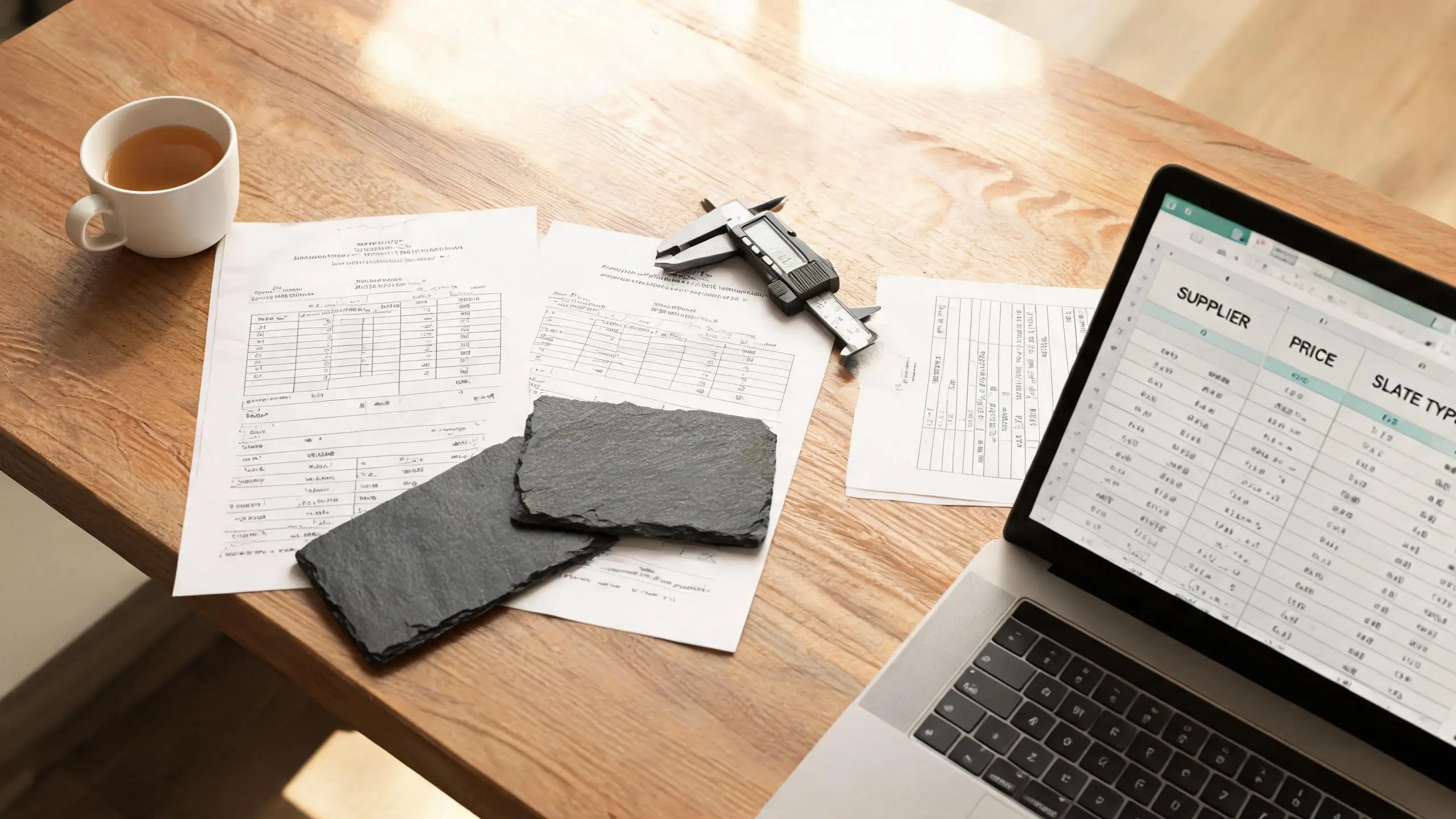
A. What Am I Buying?
The first four questions define the product. If any of them is vague, the price is meaningless — you are comparing different products under the same name.
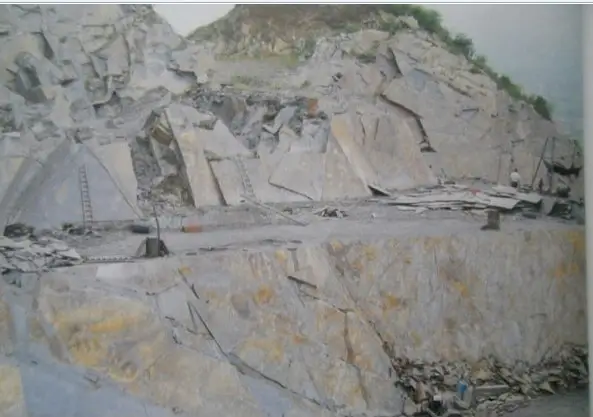
1. Where does the slate come from?
Origin is the first thing a buyer should ask about, and the first thing a vague supplier will gloss over. Not "China" — that tells you nothing. Not even "Jiujiang" — that names a region, not a quarry. What you want is a specific answer: which town, which quarry area, and whether the supplier works that deposit directly or sources from third-party block suppliers.
Jiujiang slate comes from a belt that stretches across several towns in the Lushan–Xingzi area. Different deposits within that belt can produce differences in colour, texture, density, absorption, and weathering behaviour. The product name is the same. The stone is not.
If a supplier tells you the slate is "high quality," ask which quarry it comes from. The answer tells you whether they know their own supply chain — or whether they are selling a label.
What you want to hear: "The material comes from [specific quarry area in the Jiujiang belt], and this order will be processed at our facility in [town]. Future orders can come from the same source."
A weak answer: "It is Chinese slate. Very good quality."
2. Who actually produces it?
Ask this directly. There is nothing wrong with buying through a trading company — a good one may offer multi-factory access, export experience, and production coordination. But you need to know who controls the stone before it reaches the container.
For standard roofing slate, the distinction may not change much. For billiard slate, large roofing projects, or custom dimensions, it matters a lot. Who holds the raw blocks? Who cuts or splits? Who does thickness calibration? Who inspects? Where will the order be produced?
The detailed version of this question — how to decode the answer and what each signal means — is covered in Factory vs Trading Company: How to Decode a Jiujiang Slate Supply Chain. For the inquiry stage, what you need is a clear statement of who does what.
What you want to hear: "We are the processing factory. We hold the raw blocks, split and calibrate in-house, and inspect every piece before packing. I can describe each step."
A weak answer: "We are a factory. We can supply any quantity you need."
3. What is the exact specification?
Never buy based on a product name. "Black roofing slate" is a description, not a specification. "Jiujiang billiard slate" is a category, not a purchase order.
For roofing slate, a complete specification should include length, width, nominal thickness, thickness tolerance, hole position, surface finish, colour range, edge treatment, quantity per square metre, packing method, and any applicable standard (such as EN 12326 or ASTM C406).
For billiard slate, it goes further. "12 ft billiard slate" tells you nothing useful — a table manufacturer's requirement might be something like 3658 × 1867 × 45 mm, 5-piece construction, defined playing area, controlled thickness and flatness, with specified machining requirements. That is a specification. The deeper details of billiard slate procurement are covered in our 20 Critical Questions for Slate Manufacturers; here, the point is simply: the more precise the specification, the less room there is for interpretation.
If two suppliers both quote "6–7 mm roofing slate," ask whether "6–7 mm" describes the finished thickness range or simply the nominal thickness. The same phrase can mean two different products — and the price should reflect the difference.
What you want to hear: "I can send you a written specification with dimensions, thickness, tolerance, finish, and packing method. Here it is."
A weak answer: "Black roofing slate, good quality. We can make any size."
4. What tolerances can you guarantee?
A supplier quotes 300 × 600 × 6 mm. Fine — but what does that mean in reality? Is the actual thickness 5–7 mm? Is it 5.5–6.5 mm? Is it 6 ± 0.5 mm? Each of these describes a different product.
The question that matters: "What tolerance can you guarantee in mass production — not on the best piece, but across the batch?" The same principle applies to length, width, flatness, squareness, hole position, and machined edges.
A supplier who says "high precision" without a number is not answering the question. A supplier who writes "thickness 6 ± 0.5 mm" on the proforma invoice is giving you something enforceable. That distinction is the difference between a specification and a slogan.
What you want to hear: "Thickness 6 ± 0.5 mm in production. I can write that on the proforma invoice."
A weak answer: "High precision. Very accurate."
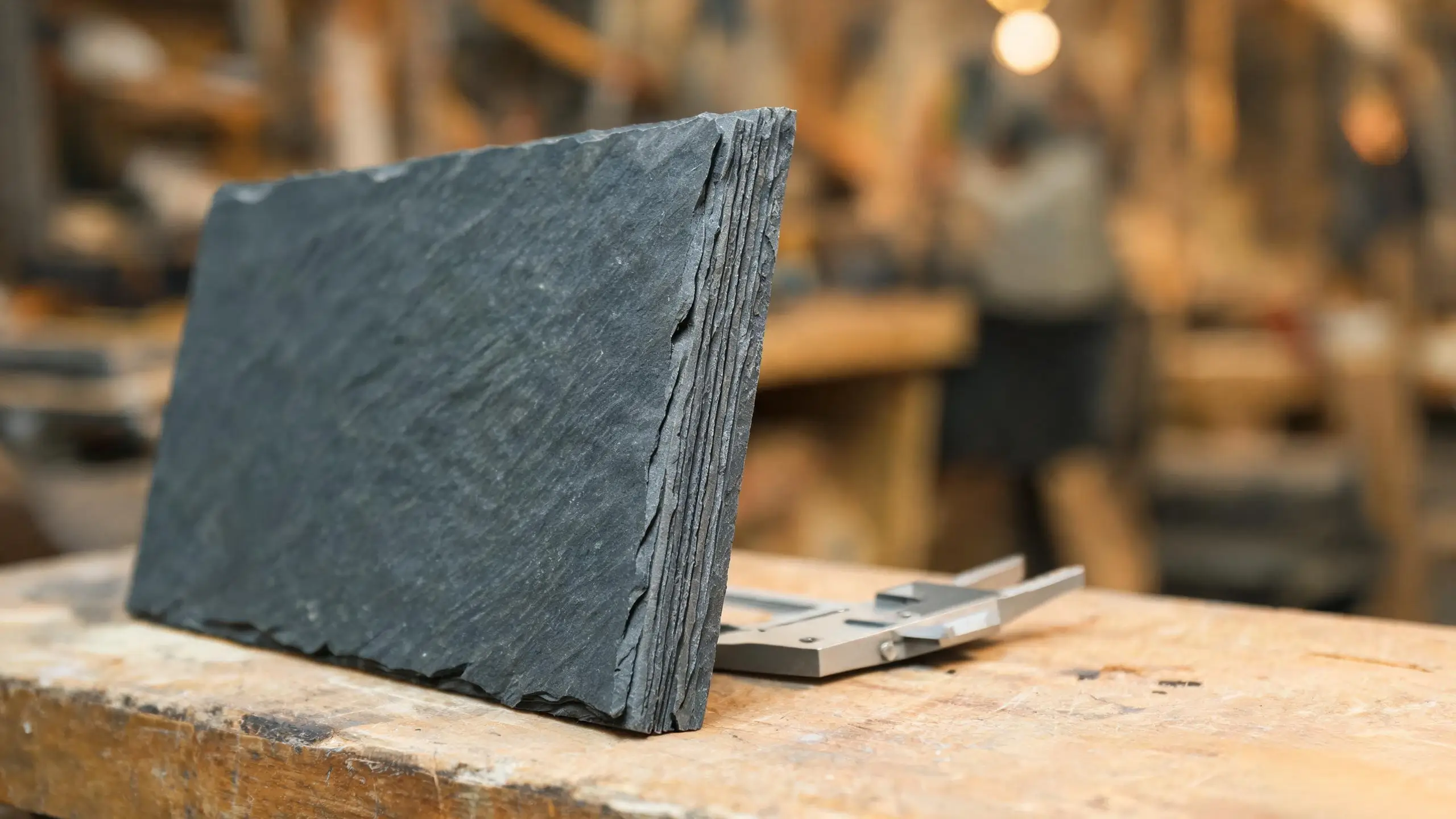
B. Can You Prove It?
The next three questions tell you whether the supplier can back up their claims with something you can verify before paying.
5. What test data do you have?
Do not ask "is your slate tested?" — the answer will always be yes. Ask instead: "What tests have been performed on this material, and can you provide the original test documentation?"
Depending on the application, relevant data may include water absorption, bulk density, freeze-thaw performance, flexural strength, and petrographic information. For roofing slate bound for European markets, EN 12326 testing is the standard reference. But different applications, different standards, and different products require different tests — there is no single number that defines "good slate." What matters is whether the supplier can provide the test method, the test date, the tested material, and the original document from an independent laboratory.
One distinction most buyers miss: a test report for one batch of material is not proof that every batch from the same supplier is identical. Ask what material was tested, where the sample came from, and whether the tested material is from the same quarry source as your proposed order. The skill of reading a slate test report is covered in How to Read a Roofing Slate Test Report, and our own results are published at Roofing Slate Quality Test Results.
If a supplier says "European quality," ask for the document with the lab name and the date. Marketing words are not test data.
What you want to hear: "The report is from [laboratory], tested in [year], for material from the same quarry source. I can send the original PDF."
A weak answer: "Yes, our slate is tested. European quality."
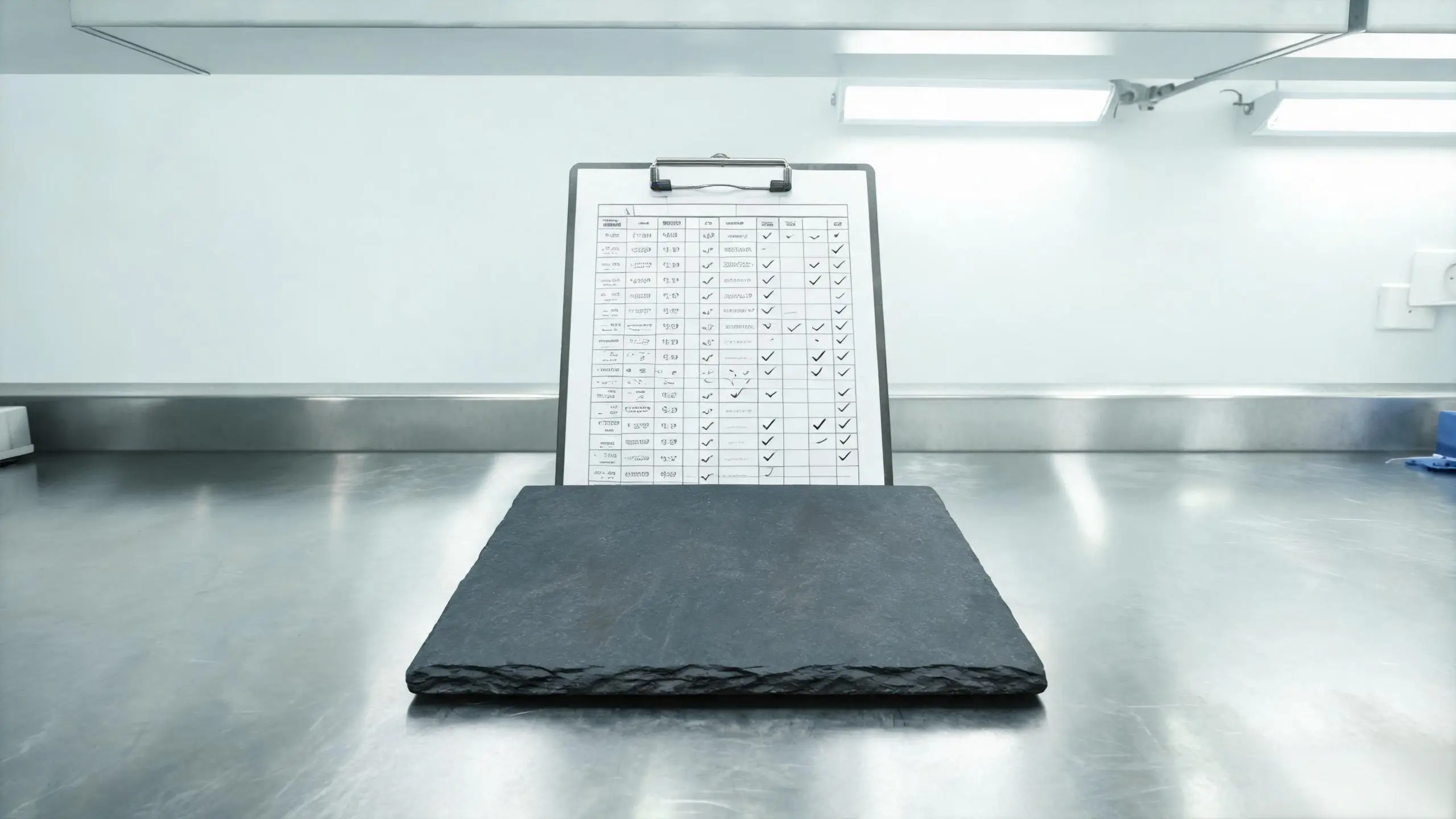
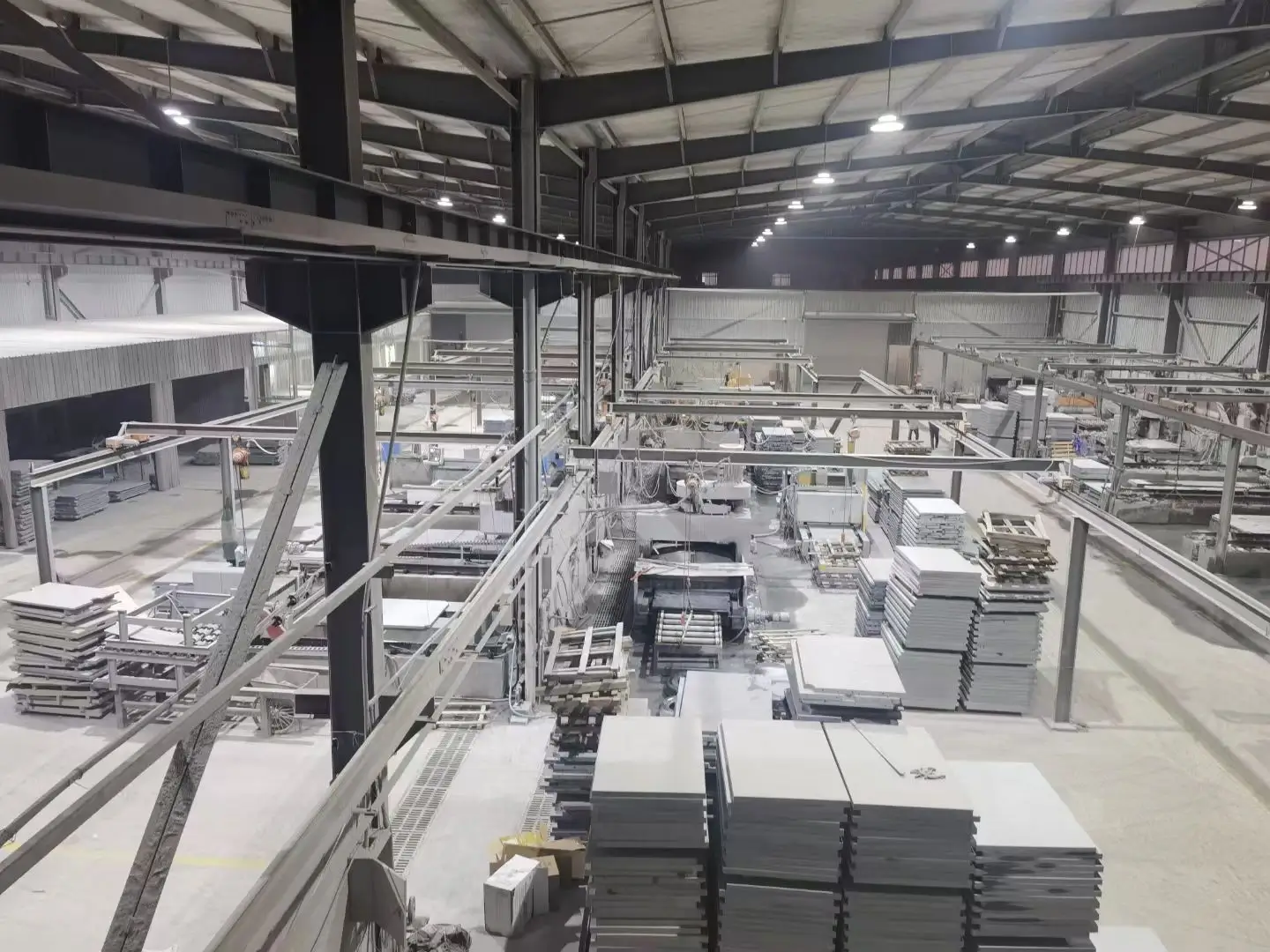
6. Can you show current production?
A catalogue photo shows what a supplier sells. A current production photo shows what a supplier is actually making. The difference matters.
For a custom order, the request is specific: "Please send photos of the material currently being produced for this specification." Not stock photos — today's production. This tells you whether the factory is active, shows the actual colour and surface texture, reveals thickness consistency (or the lack of it), and tests whether the supplier actually has access to the production floor. A trading company with no factory access will struggle to produce current, specific footage on demand.
For overseas buyers who cannot visit the factory — which is most buyers — recent production evidence is the closest thing to being there. If a supplier can only send the same catalogue images you have already seen on their website, that is not production evidence.
What you want to hear: "I will send photos of material being produced for your specification today. I can also take a short video if that helps."
A weak answer: "We have many photos. I will send you our catalogue."
7. What quantity can you supply consistently?
A sample is not a container. The fact that a supplier can produce one good piece does not mean they can reproduce it across several shipments.
Ask for a realistic monthly capacity for the specific product and specification, then ask how much can be supplied continuously for the project. For larger roofing projects, commercial developments, or billiard-table manufacturers, consistency across batches may matter more than the quality of the first sample. Will future batches come from the same quarry source? Can the supplier reserve material? What is the lead time?
A supplier who says "no problem, any quantity" is not answering the question. A supplier who says "three 20-foot containers per month from the same quarry, with a four-week lead time" is giving you a production plan you can build around.
What you want to hear: "We can supply [X] containers per month from the same quarry source, with a [Y]-week lead time. I can reserve material for your project."
A weak answer: "No problem, any quantity. We are a big factory."
C. What Am I Really Paying For?
The last three questions protect you after the order is placed — and they are the ones most buyers forget to ask.
8. What exactly is included in the price?
Never compare a Jiujiang slate quotation by price alone. First make sure the two suppliers are quoting the same stone, size, thickness, tolerance, finish, packing, and Incoterm. A low quotation is not necessarily a low-cost quotation.
Here is why. Two suppliers quote "6–7 mm roofing slate" at different prices. But the numbers behind those numbers tell a different story:
| Item | Supplier A | Supplier B |
|---|---|---|
| Thickness | 6–7 mm | 6–7 mm |
| Tolerance | Not stated | ±0.5 mm |
| Packing | Standard | Export crate |
| Incoterm | FOB | CIF |
| Test data | Not provided | Available |
| Price | Lower | Higher |
The lower number is not necessarily the lower landed cost. Supplier A's price does not include a stated tolerance, export-grade packing, or test data — and FOB means the buyer handles freight and insurance from the port of loading. The final landed cost can differ significantly depending on freight, insurance, origin charges, destination charges, and the Incoterm used. Compare quotations on the same delivery basis before deciding which price is lower.
A practical approach: create a comparison sheet before you receive the quotations, not after. Fill in each supplier's answers side by side.
| Item to compare | Supplier A | Supplier B | Supplier C |
|---|---|---|---|
| Origin (quarry town) | |||
| Factory or trading company | |||
| Size (mm) | |||
| Nominal thickness (mm) | |||
| Thickness tolerance (±mm) | |||
| Surface finish | |||
| Test data available? | |||
| Packing (crate / pallet) | |||
| Quantity per 20ft container | |||
| Incoterm | |||
| Lead time | |||
| Price ($/m² or $/tonne) |
What you want to hear: "The price includes [specific specification, tolerance, export packing, Incoterm, port]. I have listed every item on the quotation."
A weak answer: "Best price. Very competitive. Trust me."
9. What happens if the material does not meet the specification?
This question is usually forgotten until there is a problem. Ask it before you pay the deposit.
"Good quality" is difficult to enforce. "Thickness 6 ± 0.5 mm, size 300 × 600 mm, according to approved sample" is enforceable. The purchase contract or proforma invoice should clearly identify the agreed requirements: dimensions, thickness, tolerances, colour range, surface quality, quantity, packaging, inspection requirements, and approved sample reference.
Ask the supplier to define how transit damage will be handled before the shipment leaves the factory. The acceptable level of breakage, the inspection method, and the remedy — replacement, credit, or deduction — should be agreed in writing. A supplier who puts these terms in the contract and one who leaves them to "don't worry" are offering you two different commercial relationships for the same price.
What you want to hear: "Transit damage terms are written into the proforma invoice: the acceptable level, the inspection method, and the remedy. Here is the clause."
A weak answer: "Don't worry, our quality is very good. No problems."
10. Can I approve a physical sample?
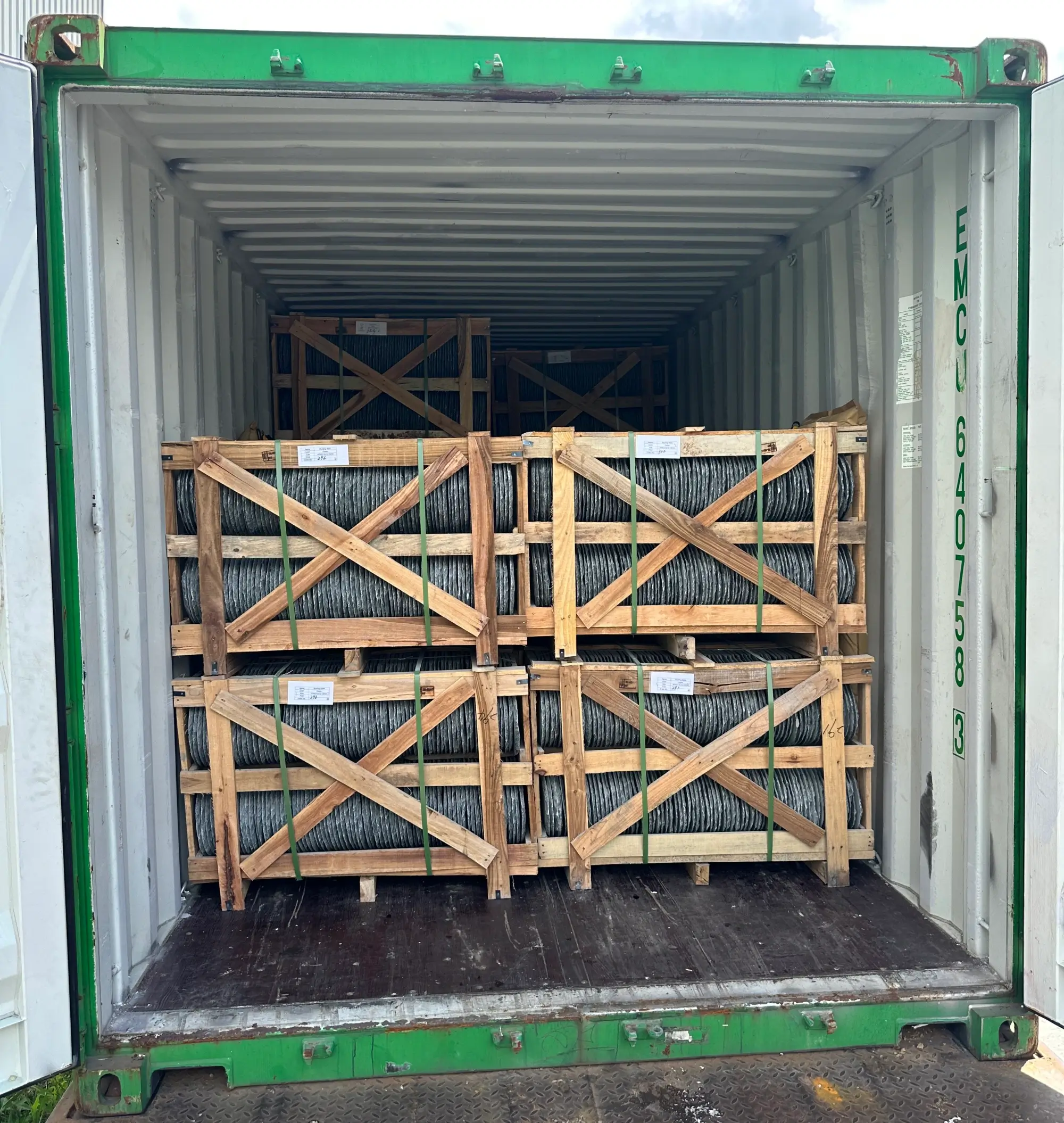
Before a large production run, ask for a physical sample from the current production batch — not a catalogue sample, not a leftover from a previous order. A physical sample is the closest thing to seeing the actual material before it ships.
When the sample arrives, check four things: whether the colour represents the production material (natural variation should be discussed and an acceptable range defined), whether the dimensions match the specification, whether the thickness falls within the stated tolerance, and whether the surface finish matches what was agreed. For billiard slate, flatness and machining quality should also be verified against the drawing.
Once approved, the sample becomes part of the purchase reference — alongside the written specification, it is the baseline against which the production shipment is checked. "Consistent with the approved reference sample" is a phrase that belongs in the contract. The full sample approval process is covered in detail in our upcoming Samples and Sample Approval guide; for the inquiry stage, the point is simple: if a supplier is unwilling to provide a physical sample for approval before a production run, ask why and consider how that affects your purchasing risk.
What you want to hear: "I will send a sample from the current production batch. Once you approve it, that sample becomes the reference for the order."
A weak answer: "We can send a sample, but our production is the same every time, so it is not necessary."
A Better Way to Ask for a Quote
Most buyers send something like: "Please quote your best price for Jiujiang slate." That message invites a price without context — and you will get one. It just will not be comparable to anything else. Instead, send a structured inquiry:
Structured Inquiry Template (copy and adapt)
Product: Natural roofing slate
Application: Residential roofing
Size: 500 × 300 mm
Thickness: 6–7 mm
Colour: Dark grey / black
Estimated quantity: 2 × 20ft containers
Destination: [Port / Country]
Required information:
— Quarry / material source
— Factory location
— Thickness tolerance in production
— Packing method (crate or pallet)
— Container loading quantity
— Available test data (with report copy)
— Production lead time
— FOB / CIF price (specify port)
— Current production photos
— Sample availability and cost
— Breakage policy above normal range
— Payment terms
— Visit arrangement (if applicable)
A supplier who can answer all fifteen fields in the first reply is telling you something about their organisation. One who answers three and asks you to "trust us" on the rest is telling you something too.
Before You Pay a Deposit
- Origin confirmed — quarry area, not just "Jiujiang"
- Factory or production source confirmed — who does what
- Exact specification agreed — dimensions, finish, grade in writing
- Tolerances defined — numbers on the proforma invoice
- Relevant test data reviewed — original document from an independent lab
- Current production verified — recent photos or video, not catalogue
- Capacity and lead time confirmed — a production plan, not "no problem"
- Quotation basis compared — same stone, same basis, or not comparable
- Quality acceptance terms written into the order — enforceable, not "good quality"
- Sample approved — physical sample from current batch, kept as reference
If you cannot tick every box, slow down before paying a deposit. The real purchasing cost of natural slate is not simply the price per square metre — it includes rejected material, installation problems, excessive breakage, inconsistent thickness, colour mismatch, delayed production, and replacement shipments. That is why experienced buyers ask "what exactly am I getting for that price?" before they ask "what is your best price?"
Ask first. Compare specifications second. Pay third.
FAQ: Questions to Ask Before You Buy Jiujiang Slate
Should I send all ten questions in my first email?
No. Questions 1 to 4 (origin, producer, specification, tolerances) belong in the first inquiry, because they define what you are buying. Questions 5 to 7 (test data, production photos, capacity) are natural follow-ups once you have a response. Questions 8 to 10 (price breakdown, dispute terms, sample) come into play when you are comparing two or three shortlisted suppliers. Sending all ten at once can overwhelm a first contact; sending them in stages keeps the conversation moving and lets you judge how responsive the supplier is at each step.
What if a supplier answers most questions but not all of them?
That is normal. Not every supplier will have test data ready on day one, and some may need time to pull production photos. What matters is whether the missing answers are specific or evasive. "Let me check with the lab and send the report by Friday" is a reasonable response. "Trust us, the quality is very good" is not. If a supplier can answer seven questions clearly and tells you specifically how and when the remaining information will be provided, you have something concrete to evaluate. If they dodge the same question twice, that question is doing its job.
Do I need all ten questions for a small trial order?
The questions do not change, but the depth does. For a trial order of one pallet, you may not need a full production capacity analysis (Q7) or a detailed breakage policy (Q9). But origin (Q1), specification (Q3), tolerances (Q4), and a physical sample (Q10) are still essential — a trial order is your first look at the real product, and you want it to arrive with no surprises. If the trial goes well, the remaining questions become the basis for the full-order conversation.
How do I ask these questions without sounding like I don't trust the supplier?
Frame them as part of your standard purchasing process, not as a challenge. Most professional suppliers expect these questions — they ask the same ones when they buy raw blocks. A simple opener like "We have a standard checklist we send to all new suppliers" turns an interrogation into a process. Suppliers who welcome structured questions tend to be the ones who can answer them. Suppliers who resist tend to be the ones who cannot.
If I only have time for one question, which one should I ask?
Question 6: "Can you send current production photos or video?" It is the hardest to fake, the quickest to request, and the most revealing. A supplier who can send current photos or video of your specification being produced can demonstrate direct access to the production process. A supplier who can only resend catalogue images has given you much less evidence to work with. Every other question can be followed up later, but this one tells you in five minutes whether you are talking to someone with production access.
How is this different from the 20 Questions for Slate Manufacturers article?
The 20 Critical Questions for Slate Manufacturers is written specifically for billiard and snooker slate buyers — it goes deep into CNC machining, flatness, bolt holes, seam edges, sealing, HS codes, and warranty terms. This article is for Jiujiang slate sourcing in general: quarry origin, factory vs trading company, specification, tolerances, test evidence, production capacity, quotation comparison, contract terms, and sample approval. The two articles cover different products from different angles and link to each other where they overlap.
Ready to send a structured inquiry to a Jiujiang slate supplier? We answer all ten questions — with current production photos, original test reports, a physical sample for approval, and a FOB or CIF quotation that includes every line item.
Send Us Your Inquiry