
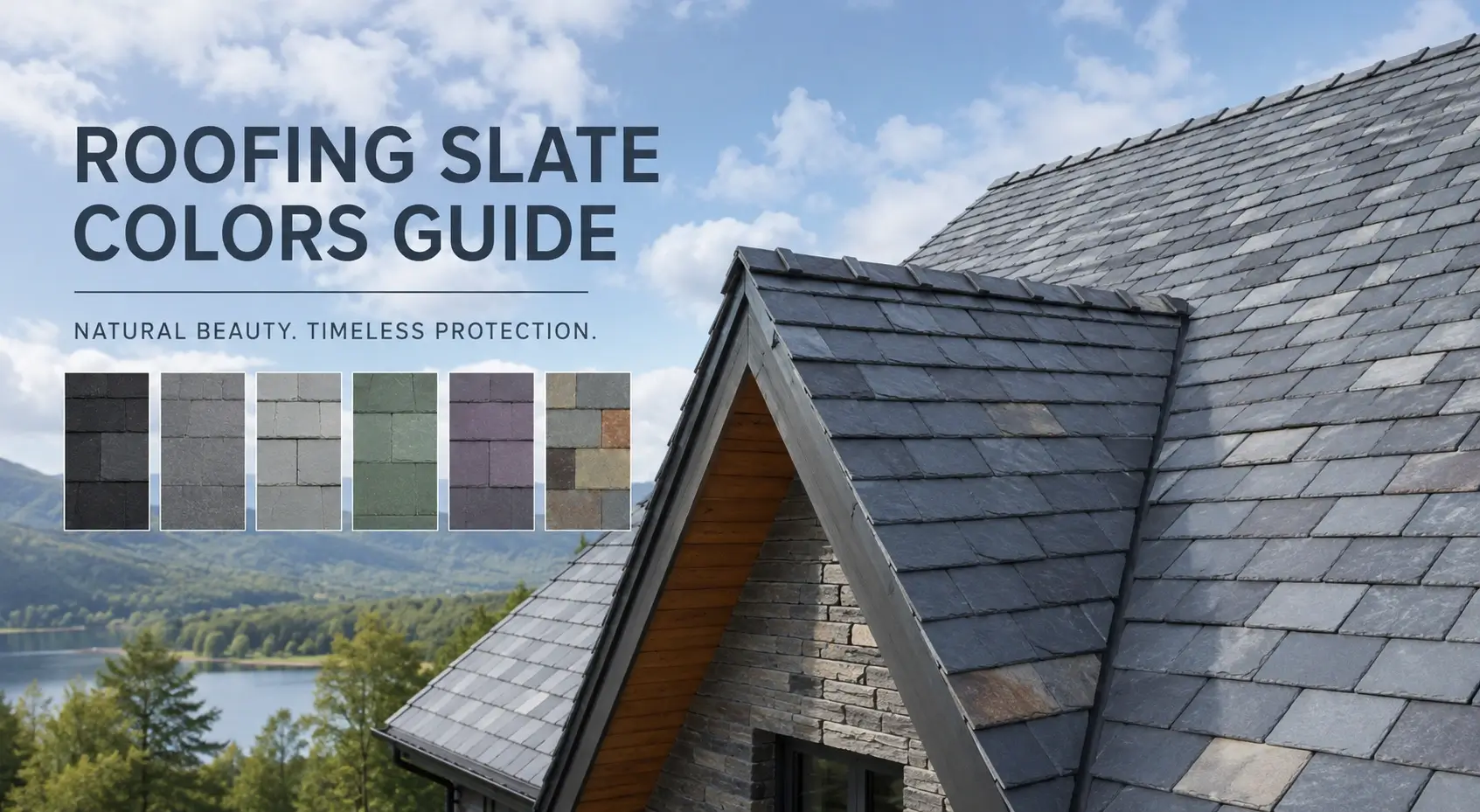
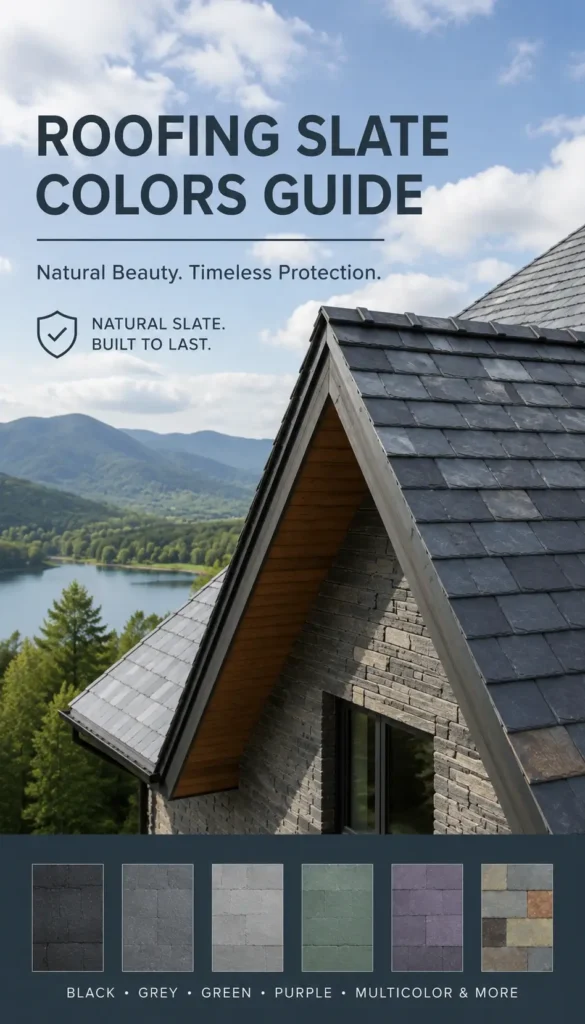
Roofing Slate Colors Guide
Natural roofing slate offers a timeless palette of colors shaped by nature over millions of years. From classic Black Slate and sophisticated Dark Grey Slate to elegant Light Grey, distinctive Green, Purple, and naturally blended Multicolor Slate, each color brings its own character and architectural appeal. This guide explains the differences between natural slate colors, what creates their unique appearance, how they weather over time, and how to choose the right roofing slate color for traditional homes, modern architecture, and commercial projects.
Table of Contents
What Colors Does Natural Roofing Slate Come In?
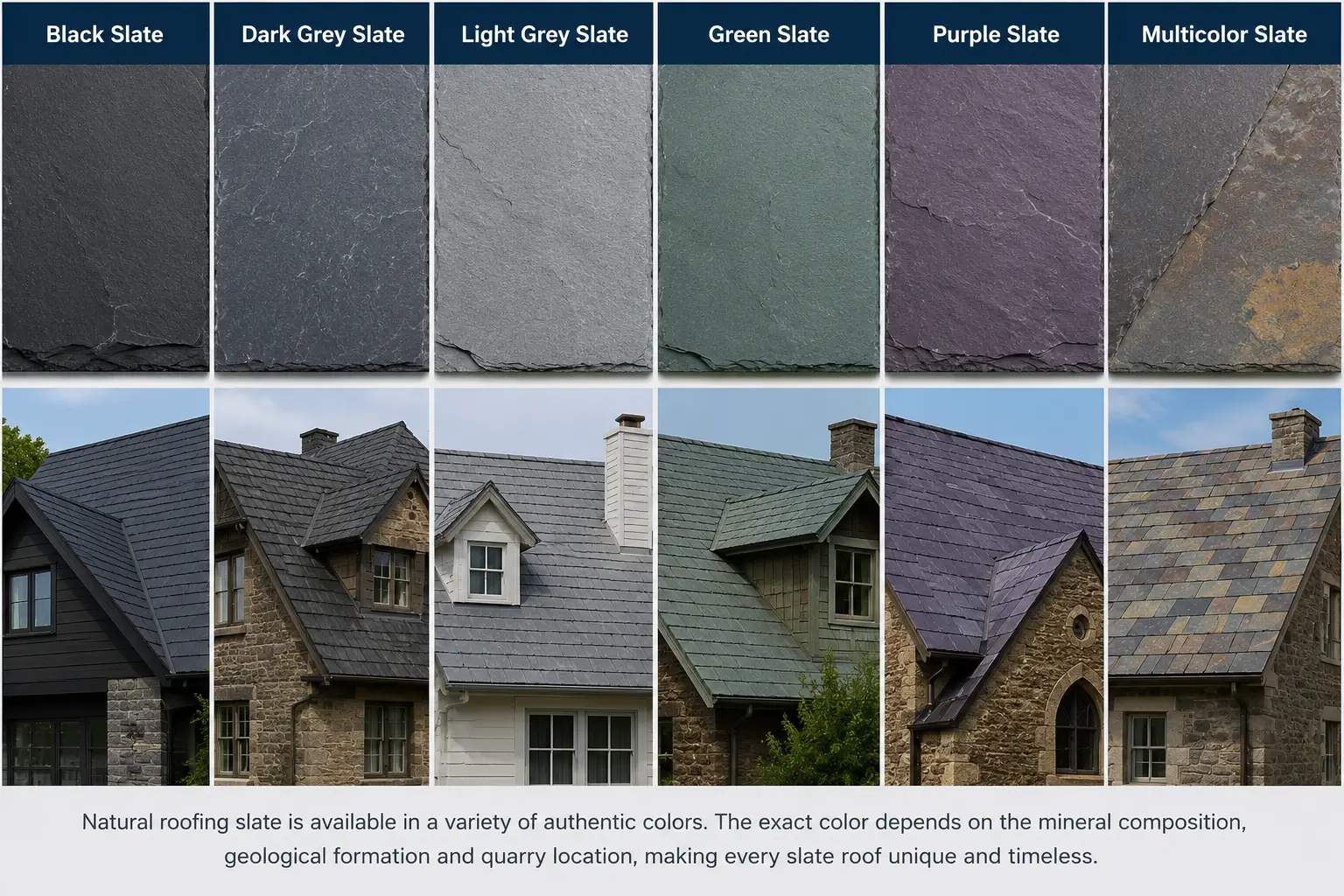
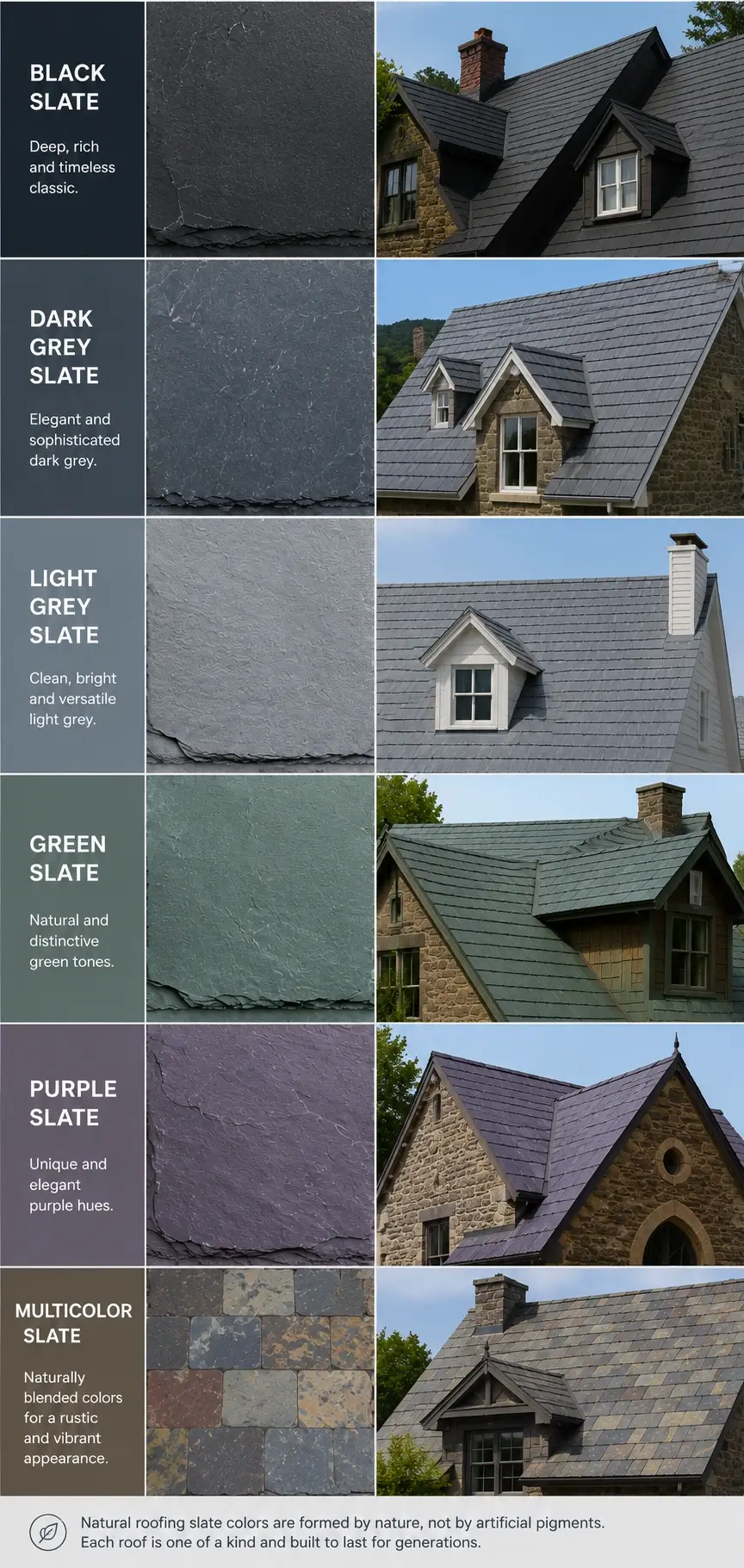
Natural roofing slate is available in a wide range of authentic colors created by nature, not by artificial pigments or surface coatings. Depending on the quarry and geological conditions, natural slate can appear in classic Black, Dark Grey, Light Grey, Blue Grey, Green, Purple, and naturally blended Multicolor tones.
Unlike concrete roof tiles or asphalt shingles, the color of natural slate is not painted onto the surface. Instead, it runs throughout the entire stone, meaning it will not peel, chip, or fade over time. Even after decades of exposure to sunlight, rain, snow, and changing temperatures, a quality natural slate roof retains its original character.
The exact color of roofing slate is determined by several natural factors, including:
- Mineral composition – Minerals such as carbon, chlorite, hematite, and iron compounds give slate its distinctive natural colors.
- Geological formation – Heat, pressure, and metamorphic processes over millions of years influence the final appearance of the stone.
- Quarry location – Slate extracted from different regions or even different sections of the same quarry can display noticeable color variations.
Because these colors are created by nature, no two pieces of slate are exactly alike. Subtle variations in shade, texture, and mineral markings are normal and are considered one of the defining characteristics of premium natural roofing slate. Rather than being a defect, these differences add depth, authenticity, and timeless beauty to every roof.
Whether you prefer the elegant simplicity of Black Slate, the traditional appearance of Grey Slate, the distinctive character of Green Slate, or the unique charm of Multicolor Slate, every natural slate roof tells its own geological story—making each installation truly one of a kind.
The Most Popular Roofing Slate Colors
Natural roofing slate is valued not only for its exceptional durability but also for its timeless natural beauty. Although slate is often associated with grey roofs, it is actually available in a variety of authentic colors formed by different minerals and geological conditions.
Below are the six most popular roofing slate colors used in residential, commercial, and heritage roofing projects around the world.
Black Roofing Slate
Elegant, Timeless and Always in Style
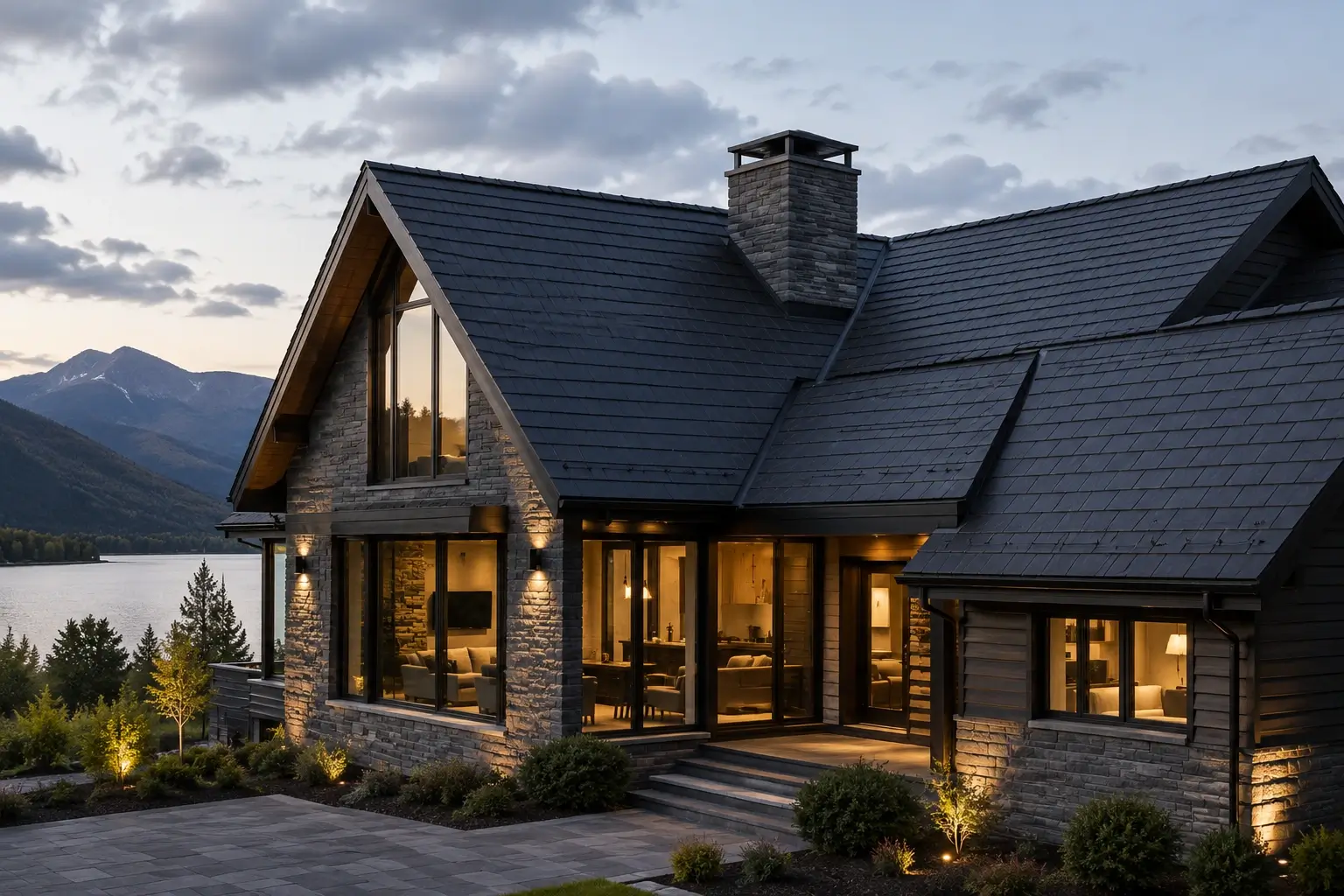
Black Roofing Slate is one of the most sought-after natural slate colors worldwide. Its deep charcoal appearance creates a clean, sophisticated roof that complements both traditional architecture and contemporary homes.
Unlike painted roofing materials, the rich black color comes naturally from carbon-rich minerals within the stone and extends throughout the entire slate.
Best For
- Modern homes
- Luxury villas
- Traditional cottages
- Commercial buildings
- High-end residential developments
Advantages
- Timeless appearance
- Hides dirt and weathering well
- Matches almost any exterior wall color
- Excellent resale value
- Never goes out of style
Popular Markets
Black roofing slate is especially popular in:
- United Kingdom
- Ireland
- United States
- Canada
- Australia
Jiujiang Availability
Jiujiang produces premium Black Roofing Slate with excellent splitting properties, consistent thickness, and a natural cleft surface suitable for European and North American roofing standards.
Quick Facts
Appearance: Deep Black / Charcoal
Style: Classic & Modern
Popularity: ★★★★★
Dark Grey Roofing Slate
Europe’s Most Popular Roofing Slate Color
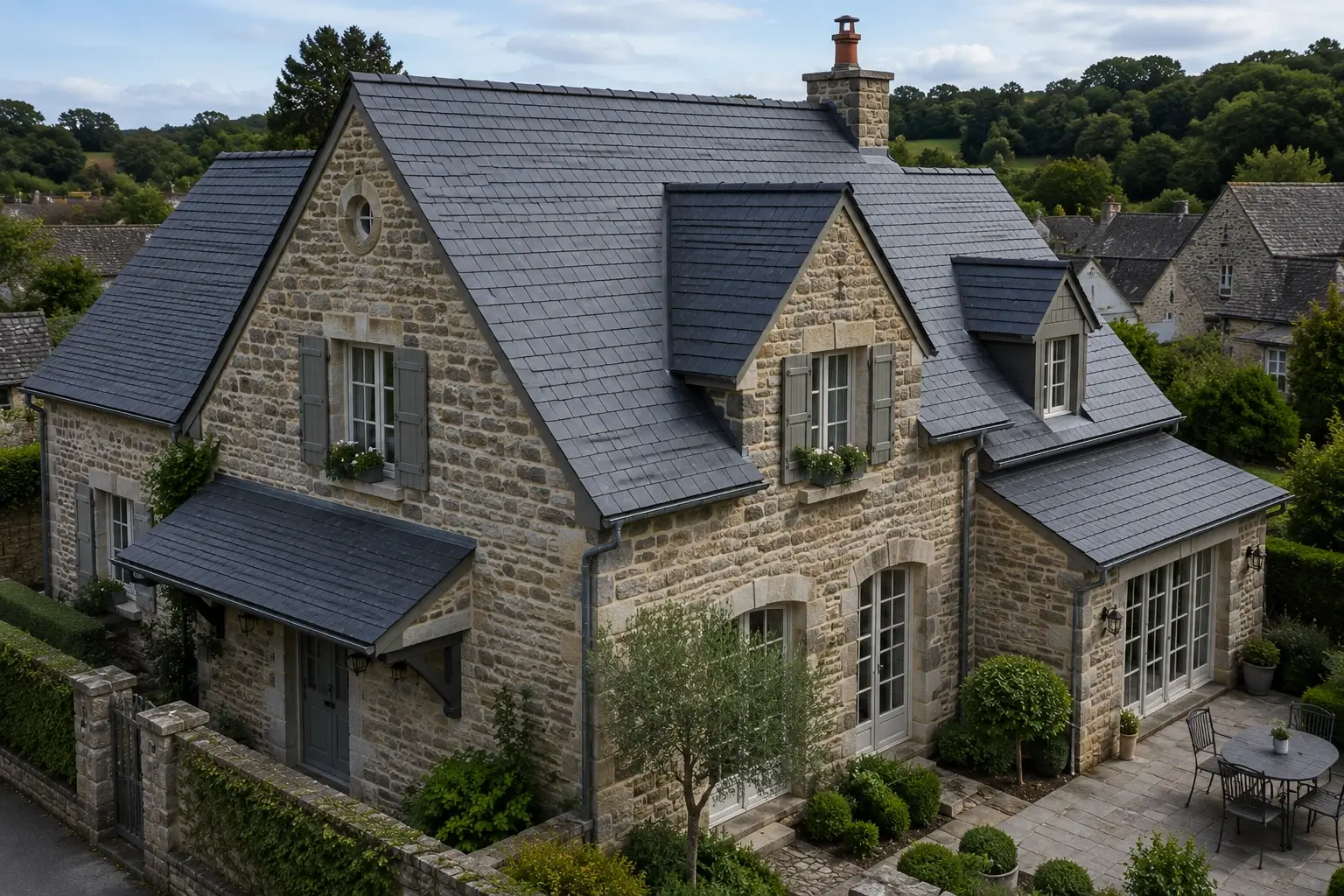
Dark Grey Slate is the most widely used roofing slate color across Europe. It offers a softer appearance than black while maintaining a refined and elegant look.
Its neutral tone blends beautifully with brick, stone, timber, and rendered façades, making it one of the safest choices for almost any architectural style.
Best For
- European houses
- Residential roofing
- Commercial buildings
- Schools
- Public buildings
Advantages
- Extremely versatile
- Suitable for both modern and traditional architecture
- Consistent natural appearance
- Easy to match with exterior materials
Popular Markets
- France
- Germany
- Belgium
- Netherlands
- Spain
- Poland
Jiujiang Availability
Dark Grey Slate is one of the main roofing slate products exported from Jiujiang and is available in a wide range of sizes and thicknesses.
Quick Facts
Appearance: Medium to Dark Grey
Style: Universal
Popularity: ★★★★★
Light Grey Roofing Slate
Bright, Contemporary and Minimalist
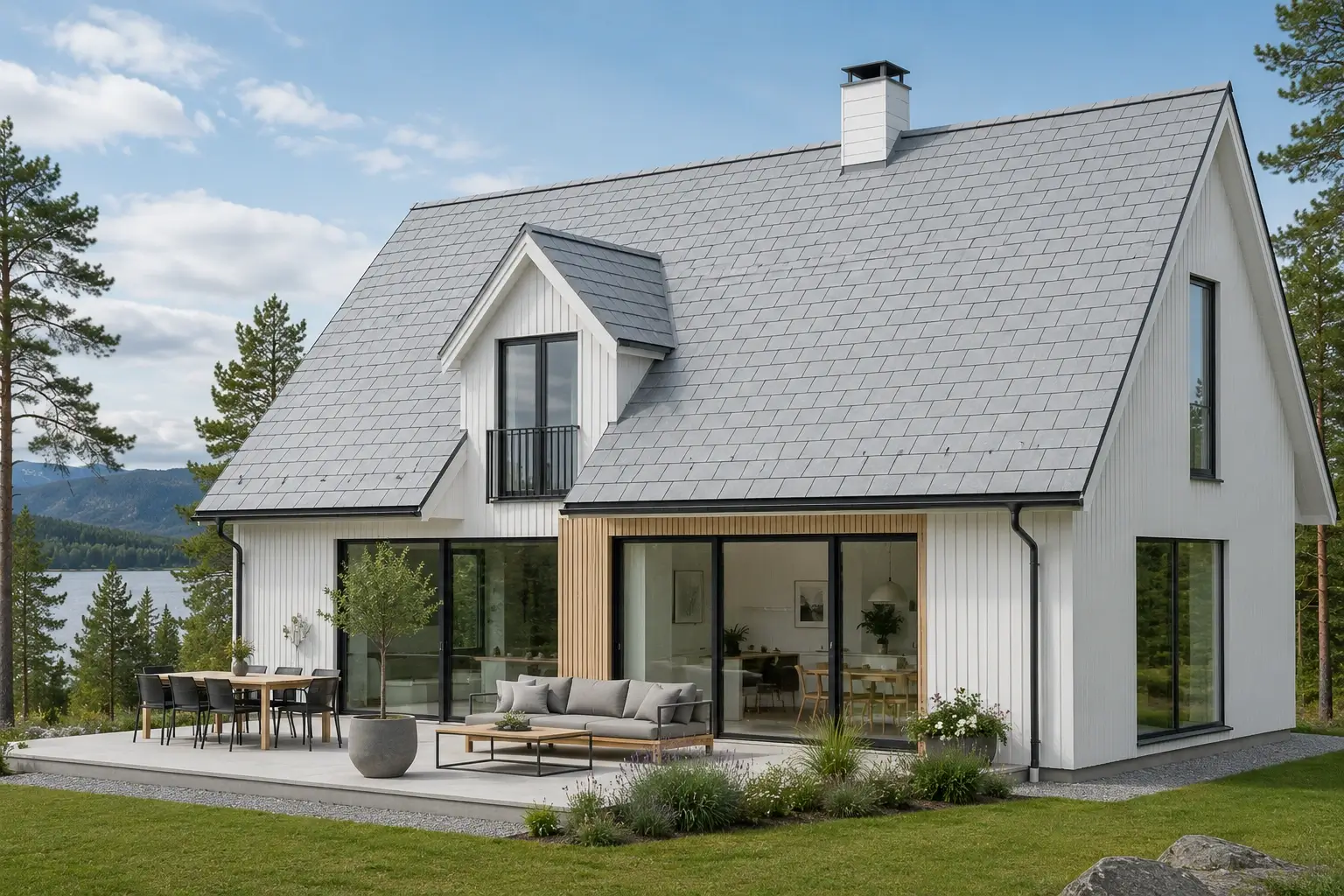
Light Grey Roofing Slate creates a fresh and modern appearance that works especially well in contemporary architecture. The lighter tone reflects more sunlight visually and pairs beautifully with white walls, timber cladding, and minimalist designs.
Best For
- Scandinavian homes
- Contemporary villas
- Eco-friendly buildings
- Modern architecture
Advantages
- Bright, clean appearance
- Modern aesthetic
- Excellent contrast with dark window frames
- Ideal for minimalist designs
Popular Markets
- Sweden
- Norway
- Denmark
- Finland
Jiujiang Availability
Selected Jiujiang quarries produce Light Grey Roofing Slate with subtle natural variations and excellent weather resistance.
Quick Facts
Appearance: Soft Light Grey
Style: Contemporary
Popularity: ★★★★☆
Green Roofing Slate
Distinctive Natural Beauty
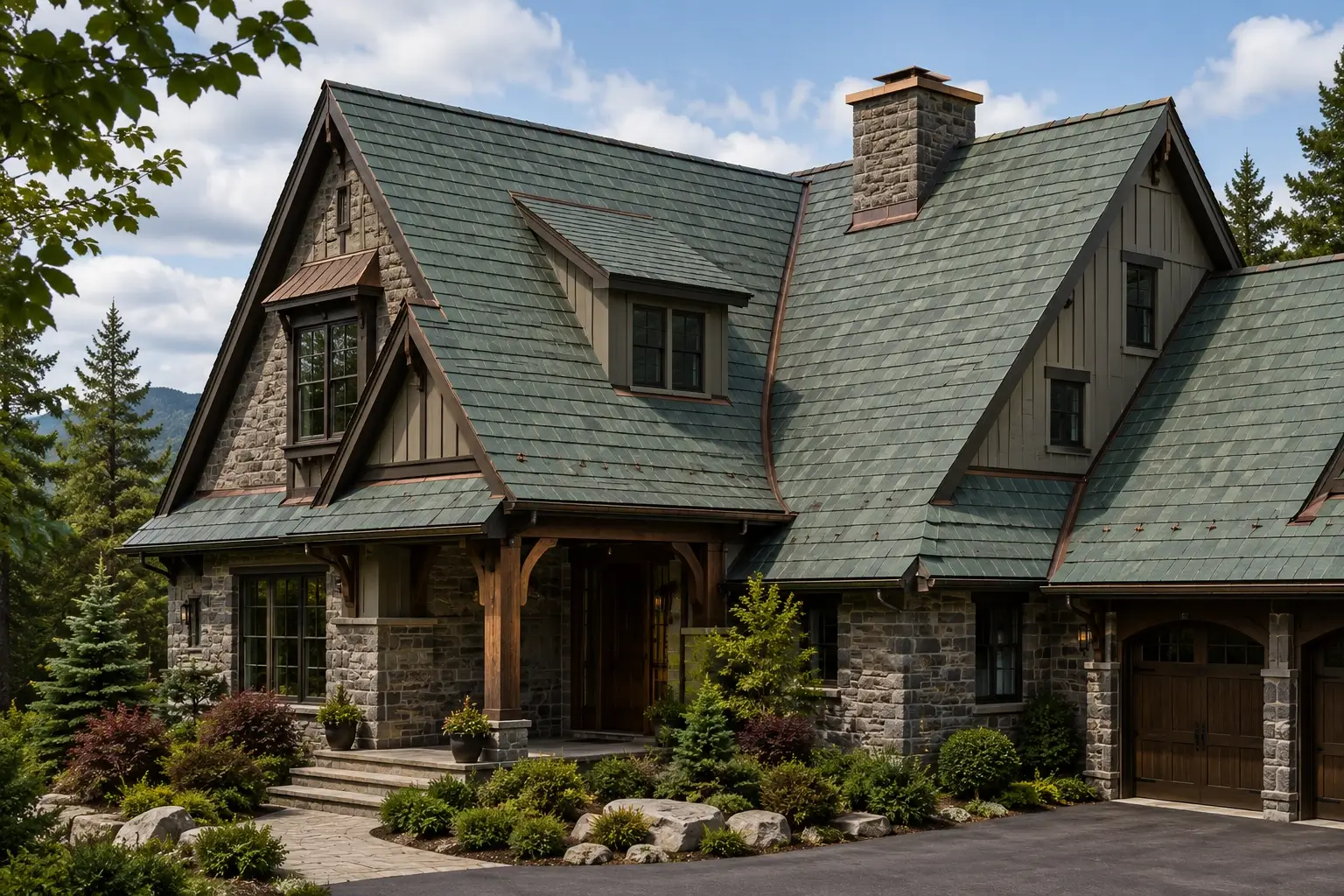
Green Roofing Slate is prized for its unique color and premium appearance. Its subtle green tones originate from chlorite-rich minerals formed during metamorphism, creating a roof that stands out without appearing artificial.
Best For
- Luxury homes
- Historic restorations
- Mountain lodges
- High-end custom houses
Advantages
- Unique natural color
- Prestigious appearance
- Adds architectural character
- Long-lasting natural beauty
Popular Markets
Green slate is especially popular in:
- United States
- Canada
- Historic buildings in the UK
One of the best-known examples is Vermont Green Slate, which has been used on prestigious buildings for more than a century.
Jiujiang Availability
Natural Green Roofing Slate is available from selected quarries, although supply is generally more limited than black or grey slate.
Quick Facts
Appearance: Natural Green
Style: Premium
Popularity: ★★★★☆
Purple Roofing Slate
A Traditional Choice for Heritage Architecture
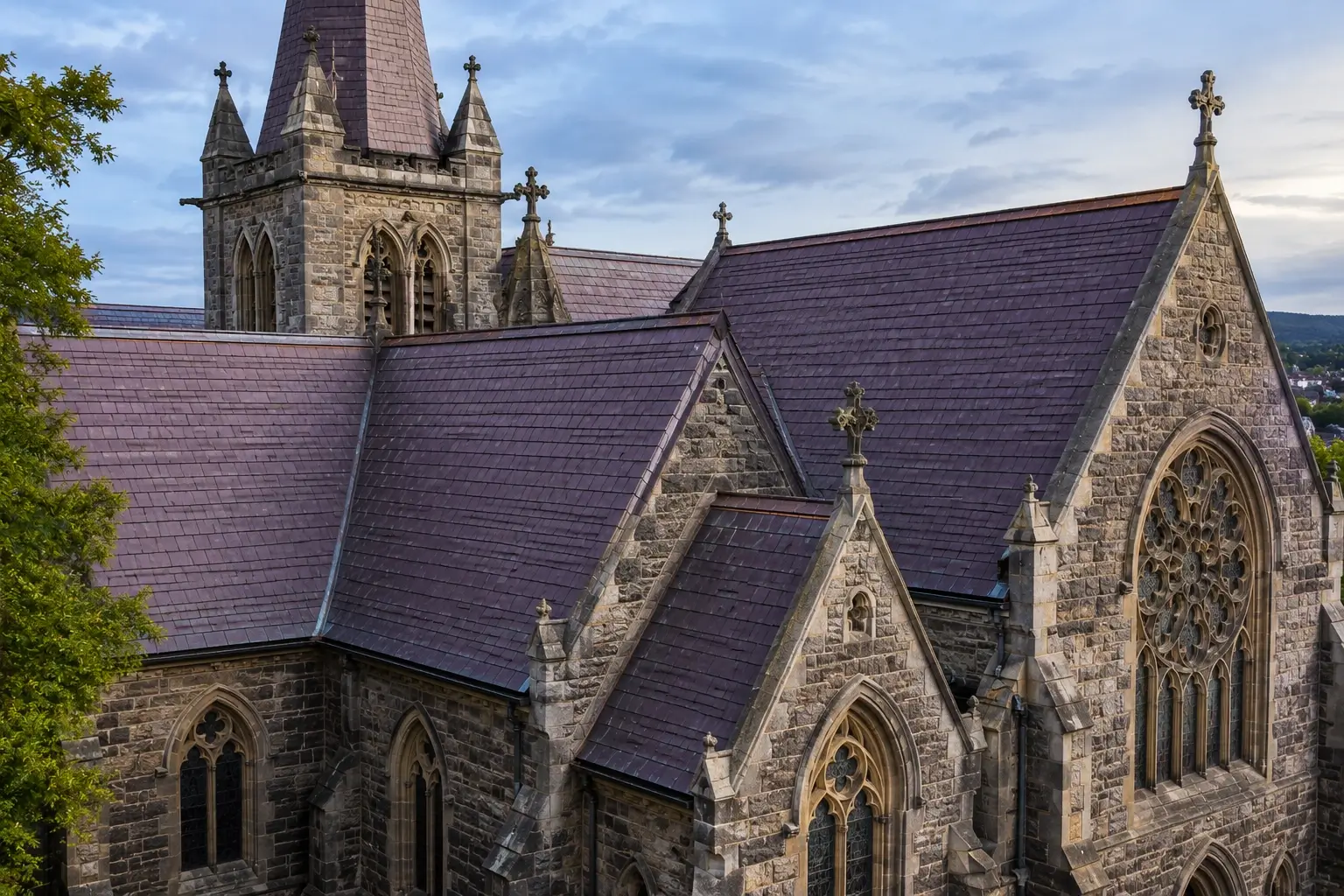
Purple Roofing Slate is less common but highly valued for restoration projects and prestigious architecture. The subtle purple hue develops naturally from mineral composition and gives buildings a distinctive historical character.
Best For
- Churches
- Historic buildings
- Museums
- Heritage restoration
- Luxury estates
Advantages
- Rare natural color
- Elegant heritage appearance
- Adds architectural individuality
Popular Markets
- United Kingdom
- Historic Europe
- North America
Jiujiang Availability
Purple slate is generally available only from selected deposits and is produced in smaller quantities than grey or black slate.
Quick Facts
Appearance: Purple Grey
Style: Heritage
Popularity: ★★★☆☆
Multicolor Roofing Slate
Nature’s Most Unique Roofing Slate
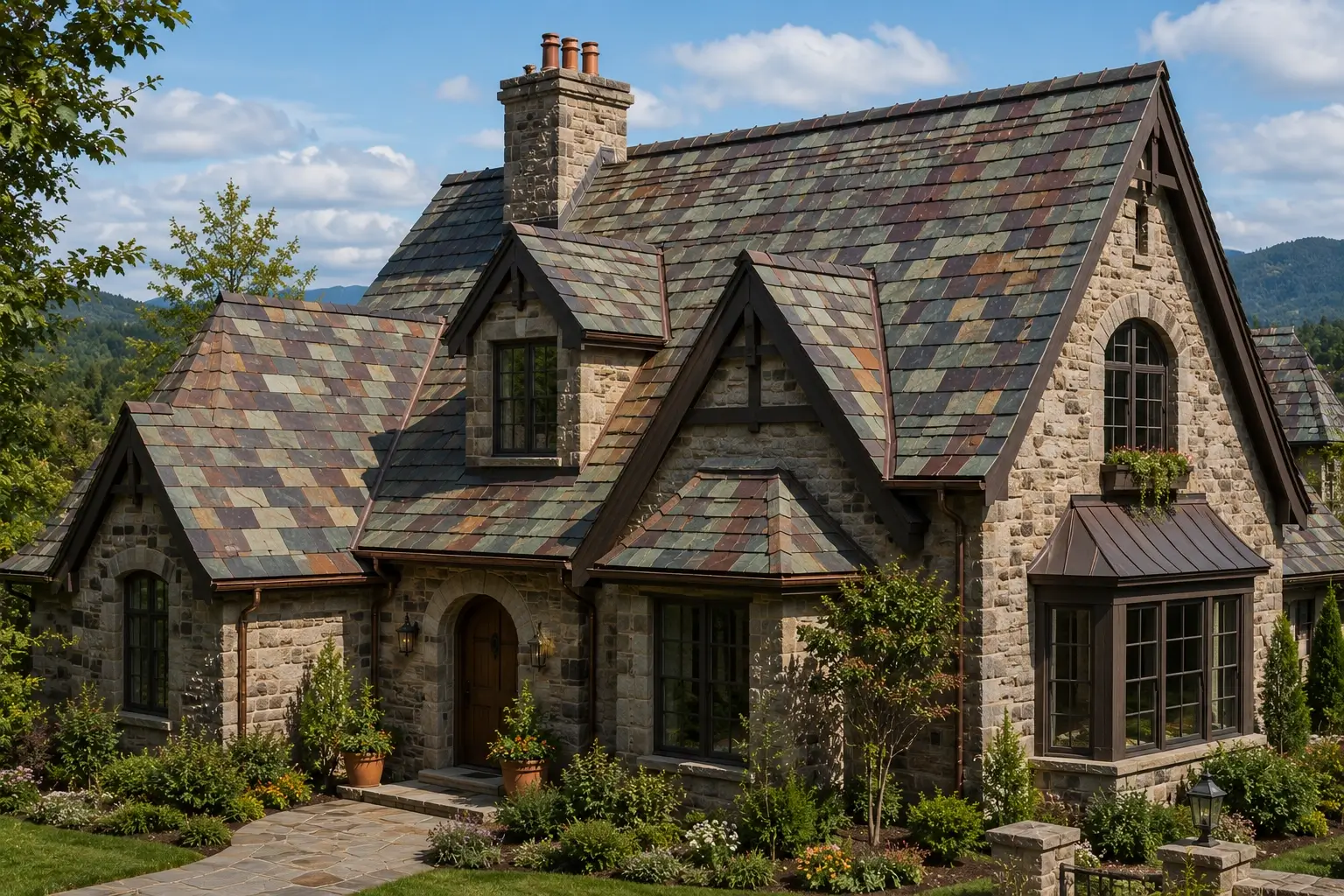
Multicolor Roofing Slate combines several natural shades—including grey, brown, rust, green, and blue-grey—within the same roof. Rather than creating a uniform appearance, it celebrates the natural variation of stone and produces a roof full of character.
Some multicolor roofs are created using naturally weathering slate, while others use carefully blended slates from different color groups.
Best For
- Rustic homes
- Country houses
- Mountain cabins
- Luxury custom homes
- Architectural feature projects
Advantages
- Every roof is unique
- Rich natural texture
- Outstanding visual character
- Perfect for rustic architecture
Popular Markets
- United States
- Canada
- Alpine Europe
Jiujiang Availability
Selected Jiujiang quarries can provide naturally blended roofing slate or custom color mixes for projects requiring a distinctive appearance.
Quick Facts
Appearance: Mixed Natural Tones
Style: Rustic & Premium
Popularity: ★★★★☆
Before choosing a roofing slate color, remember that natural slate is never completely uniform. Slight variations in shade, mineral markings, and texture are normal and are considered a hallmark of genuine natural stone. The best choice depends on your architectural style, local climate, surrounding environment, and personal preference—not simply on the color itself.
Why Roofing Slate Colors Vary Naturally
One of the most common questions from homeowners, architects, and roofing contractors is:
“Why don’t all roofing slate tiles have exactly the same color?”
The simple answer is that natural roofing slate is a geological product, not a manufactured material.
Unlike concrete roof tiles or asphalt shingles that are produced using pigments or factory-controlled coloring, every piece of natural slate was formed deep within the earth over hundreds of millions of years. Because no two sections of a quarry experience exactly the same geological conditions, slight differences in color, texture, and mineral markings are completely natural.
Rather than being a defect, these variations are one of the defining characteristics of genuine natural roofing slate and are highly valued by architects and designers worldwide.
What Causes Natural Slate Color Variation?
Several natural geological factors influence the final appearance of roofing slate.
Mineral Composition
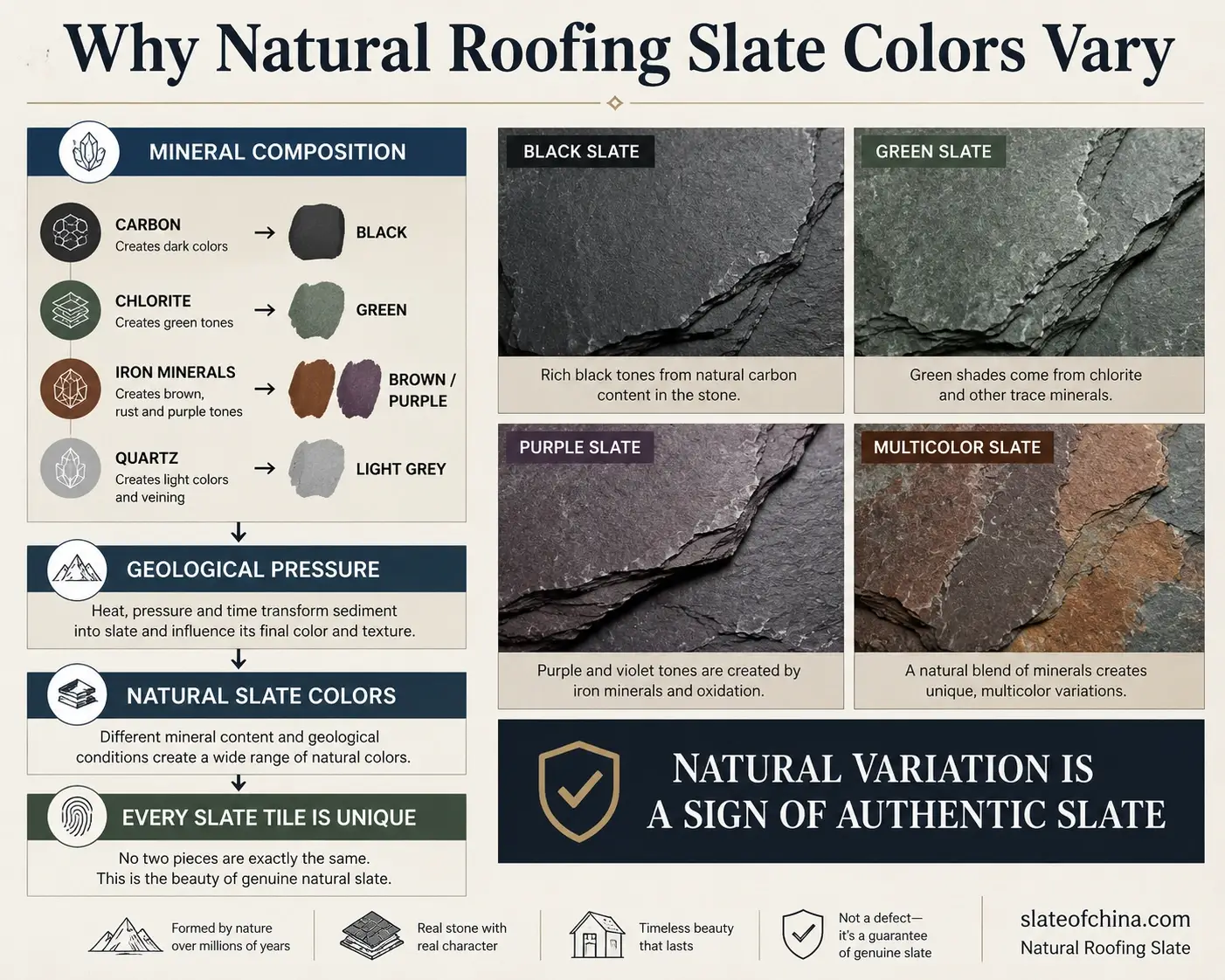
The most important factor is the mineral content of the stone.
Different minerals create different natural colors:
| Mineral | Typical Color Influence |
|---|---|
| Carbon | Black to Dark Grey |
| Chlorite | Green |
| Iron Minerals | Brown, Rust, Purple |
| Quartz | Light Grey, White Veins |
| Mica | Slight Metallic Sparkle |
Even within the same quarry, mineral concentrations can vary slightly, resulting in subtle shade differences from one slate to another.
Geological Formation
Roofing slate forms when sedimentary rocks are subjected to intense heat and pressure over millions of years.
Changes in:
- Temperature
- Pressure
- Burial depth
- Metamorphic activity
can all influence the final color and texture of the slate.
This is why every quarry has its own distinctive appearance.
Quarry Location
Natural slate from different regions often displays different color characteristics.
For example:
- Jiujiang Slate is typically available in Black, Dark Grey, Light Grey and selected Green varieties.
- Vermont Slate is well known for its Green and Purple colors.
- Welsh Slate is famous for its Blue Grey appearance.
- Spanish Slate is commonly Dark Grey or Black.
Even different extraction areas within the same quarry may produce slightly different shades.
Natural Oxidation
Some roofing slates contain small amounts of naturally occurring iron-bearing minerals.
Over many years, limited oxidation may create subtle brown or rust-colored highlights on certain slates.
This natural weathering process is completely different from staining or surface deterioration and often enhances the roof’s character rather than reducing its quality.
Sedimentary Pressure
Before becoming slate, the original sediments were deposited in layers.
Variations in sediment composition and the pressure applied during metamorphism influence:
- Color intensity
- Surface texture
- Natural veining
- Mineral markings
These subtle differences give every slate roof its unique visual depth.
Is Color Variation a Quality Problem?
Absolutely not.
One of the biggest misconceptions about natural slate is that every tile should have an identical color.
In reality, slight variations are expected and are considered evidence of authentic natural stone.
Professional architects often prefer natural variation because it creates a roof with:
- Greater visual depth
- Richer texture
- A more authentic appearance
- Long-lasting natural beauty
If every slate tile looked perfectly identical, it would resemble a manufactured roofing product rather than genuine natural slate.
Can Color Variation Be Controlled?
Yes—to a certain extent.
Professional roofing slate manufacturers carefully grade and sort slate before shipment to achieve a consistent overall appearance while preserving its natural character.
For large projects, suppliers can often provide:
- Color sorting
- Shade selection
- Blended color ranges
- Sample approval before production
These processes help ensure that the finished roof looks balanced and harmonious without eliminating the natural beauty of genuine slate.
Quick Comparison
| Natural Slate | Manufactured Roofing Materials |
|---|---|
| Naturally formed colors | Artificial pigments |
| Every slate is unique | Uniform appearance |
| Natural mineral variations | Factory-controlled color |
| Rich visual texture | Flat, consistent finish |
| Authentic geological beauty | Manufactured look |
Expert Tip
The best natural slate roofs are not perfectly uniform—they are naturally balanced. Subtle variations in color and texture create depth, authenticity, and character that cannot be replicated by artificial roofing materials. For this reason, architects and heritage restoration specialists often regard natural color variation as one of slate’s greatest strengths rather than a defect.
Which Roofing Slate Color Lasts the Longest?
One of the most frequently asked questions from homeowners and architects is:
“Which roofing slate color lasts the longest?”
The answer may surprise you.
The longevity of a slate roof depends primarily on the quality of the slate—not its color.
Unlike painted roofing materials, natural roofing slate is colored throughout the entire stone. The color is created by naturally occurring minerals during geological formation, so it does not peel, flake, or wear away like surface coatings on concrete tiles or metal roofing.
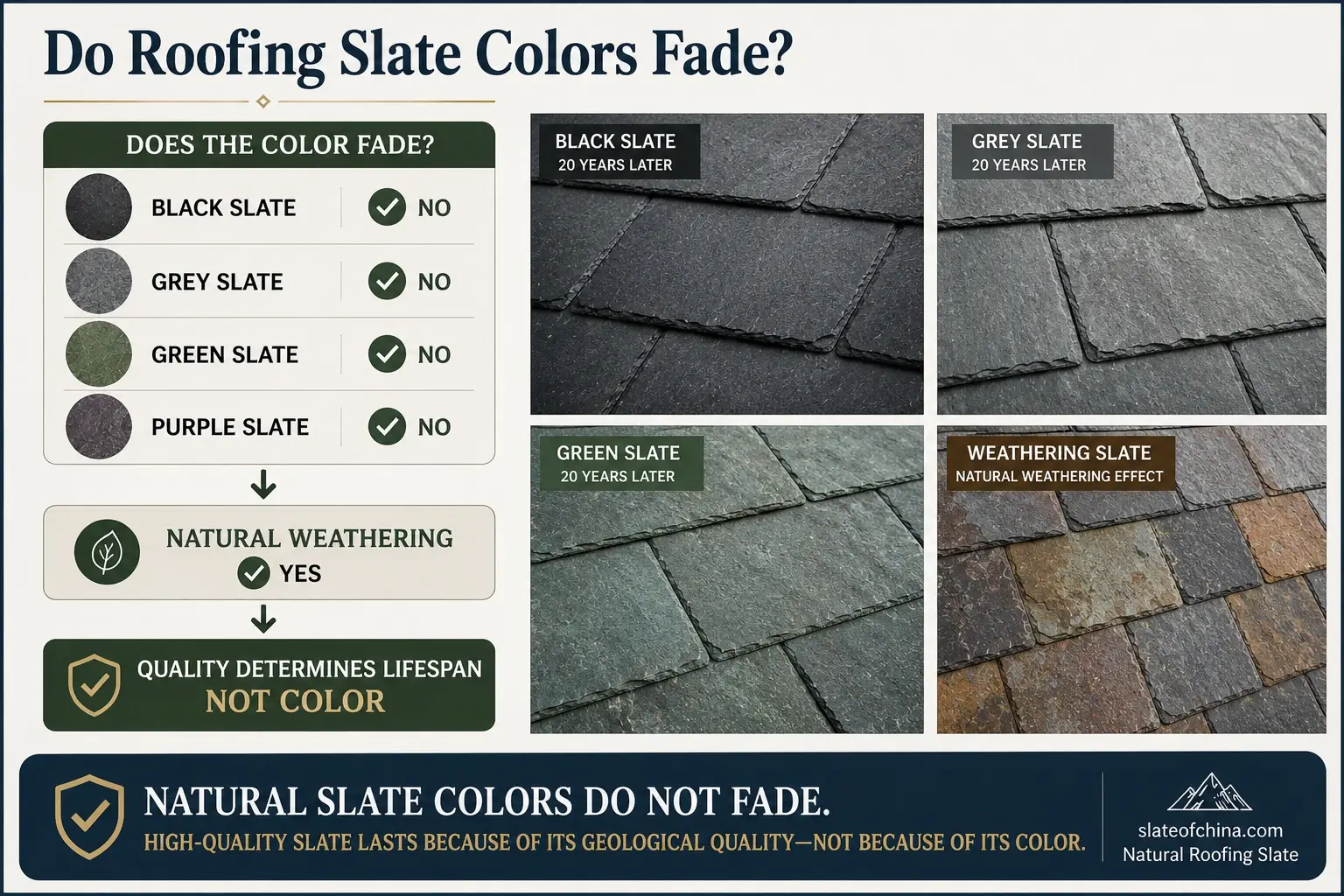
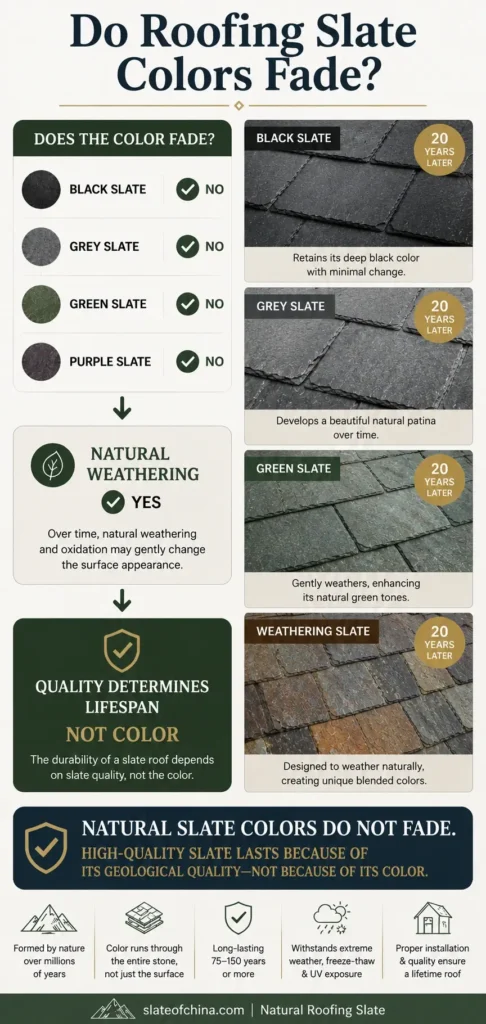
Whether you choose Black Slate, Grey Slate, Green Slate, or Purple Slate, a high-quality natural slate can maintain its beautiful appearance for more than a century when properly selected and installed.
Why Doesn’t Slate Roof Color Fade?
Natural roofing slate is a metamorphic rock formed over hundreds of millions of years.
Its color is not painted onto the surface—it is part of the stone itself.
As a result:
- The color extends through the entire thickness of every slate tile.
- Normal weather exposure will not remove the color.
- There is no coating to peel or chip.
- Routine maintenance does not affect the original color.
This is one of the reasons natural slate is considered one of the most durable roofing materials available.
Why Do Some Slate Roofs Look Different Over Time?
Although the color itself does not fade, the appearance of some slate roofs may change gradually due to natural geological characteristics.
Several factors can influence how a roof looks after many years.
Weathering
Exposure to sunlight, rain, snow, and changing temperatures can soften the appearance of the surface over decades.
This is a slow, natural aging process that often enhances the roof’s character rather than reducing its beauty.
Natural Oxidation
Some slates contain small amounts of naturally occurring iron-bearing minerals.
Over time, these minerals may oxidize slightly, producing subtle warm brown or rust-colored highlights.
This natural weathering is expected in certain slate varieties and should not be confused with staining or deterioration.
Pyrite
Pyrite (“fool’s gold”) is a naturally occurring mineral found in some roofing slates.
High-quality slate usually contains only stable or very small amounts of pyrite.
When excessive reactive pyrite is present in lower-quality slate, it can create localized rust spots or surface discoloration over time.
For this reason, selecting slate from a reliable quarry with proven durability is far more important than choosing a particular color.
Does One Slate Color Last Longer Than Another?
Generally speaking:
- Black Slate is known for its stable, consistent appearance and remains one of the most popular long-term choices.
- Grey Slate offers excellent durability and develops an attractive natural patina over time.
- Green Slate may show gentle weathering depending on its mineral composition, adding depth and character rather than fading.
- Weathering Slate is specifically valued because its appearance evolves naturally over the years, creating a distinctive architectural effect.
None of these colors is inherently “better” than the others. The differences lie in their natural mineral composition and how they weather—not in their lifespan.
What Really Determines Slate Roof Longevity?
The most important factors affecting the service life of a slate roof include:
- Slate quality and geological stability
- Water absorption
- Resistance to freeze-thaw cycles
- Correct installation
- Appropriate roof ventilation
- Regular inspections and maintenance
A premium roofing slate that meets international quality standards can often provide a service life of 75–150 years or more, regardless of whether it is black, grey, green, or purple.
Comparison of Popular Roofing Slate Colors
| Slate Color | Does the Color Fade? | Natural Weathering | Typical Appearance After Years |
|---|---|---|---|
| Black Slate | No | Very Low | Stable, rich black or charcoal |
| Grey Slate | No | Low | Soft, elegant grey patina |
| Green Slate | No | Moderate | Slightly richer natural green tones |
| Purple Slate | No | Low | Retains distinctive heritage character |
| Weathering Slate | No | Designed to Weather Naturally | Develops unique blended colors |
Expert Tip
Choose your roofing slate based on quality first and color second. A premium natural slate from a proven quarry will outlast lower-quality slate regardless of its color. While natural weathering may subtly change the appearance of some slates over time, the color itself is part of the stone and will not peel, flake, or fade like painted roofing materials.
Does black roofing slate last longer than grey slate?
No. High-quality black and grey roofing slate offer similar durability. The lifespan of a slate roof depends on the geological quality of the stone, proper installation, and maintenance—not the color itself.
How to Choose the Right Slate Roof Color
Choosing the right roofing slate color is about more than personal preference. The ideal color should complement your home’s architectural style, blend with the surrounding environment, and create a timeless appearance that will still look beautiful decades from now.
Natural slate is a long-term investment, often lasting over a century. Taking the time to select the right color today can significantly enhance your property’s character, curb appeal, and long-term value.
Below are our recommendations for some of the most common building styles.
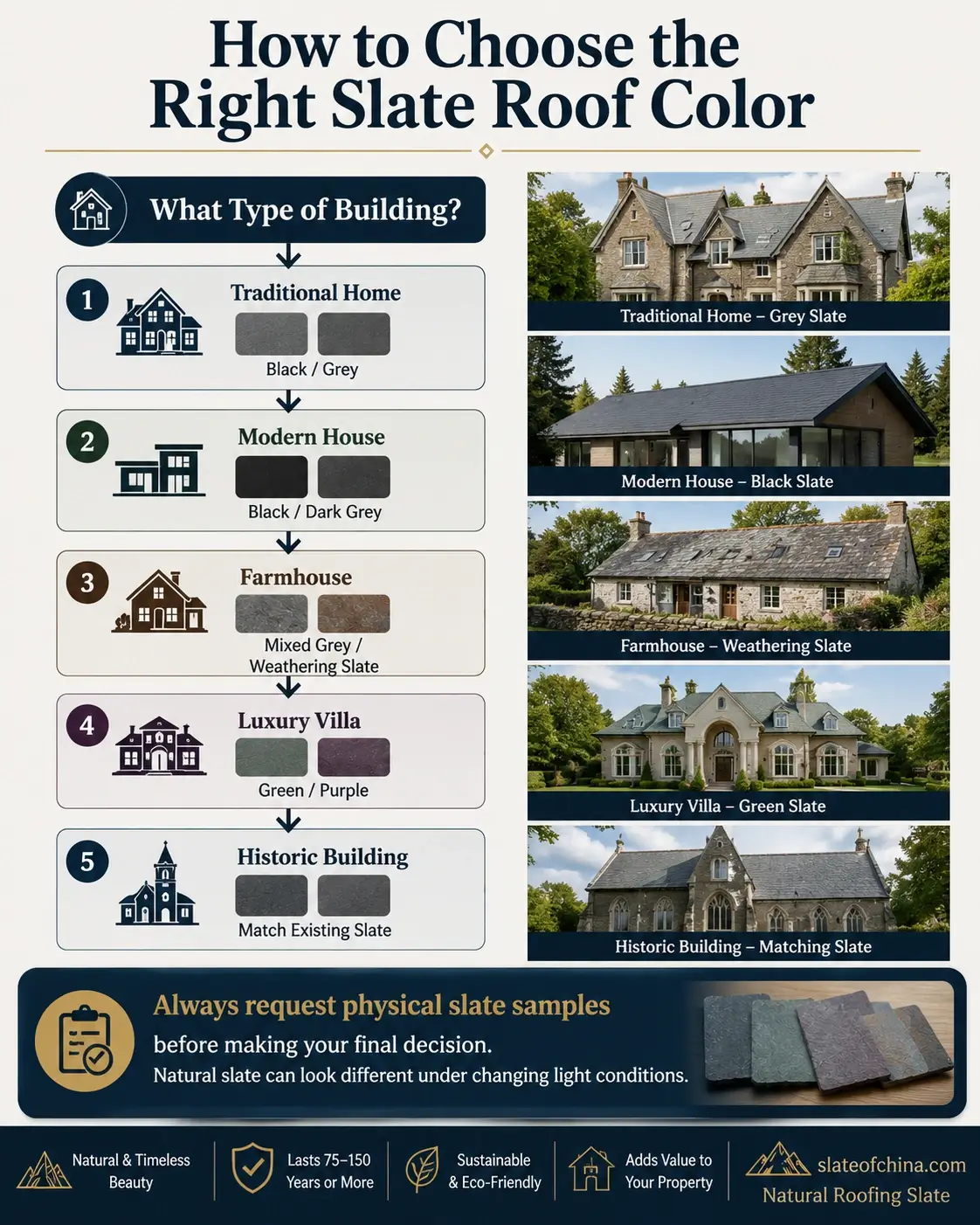
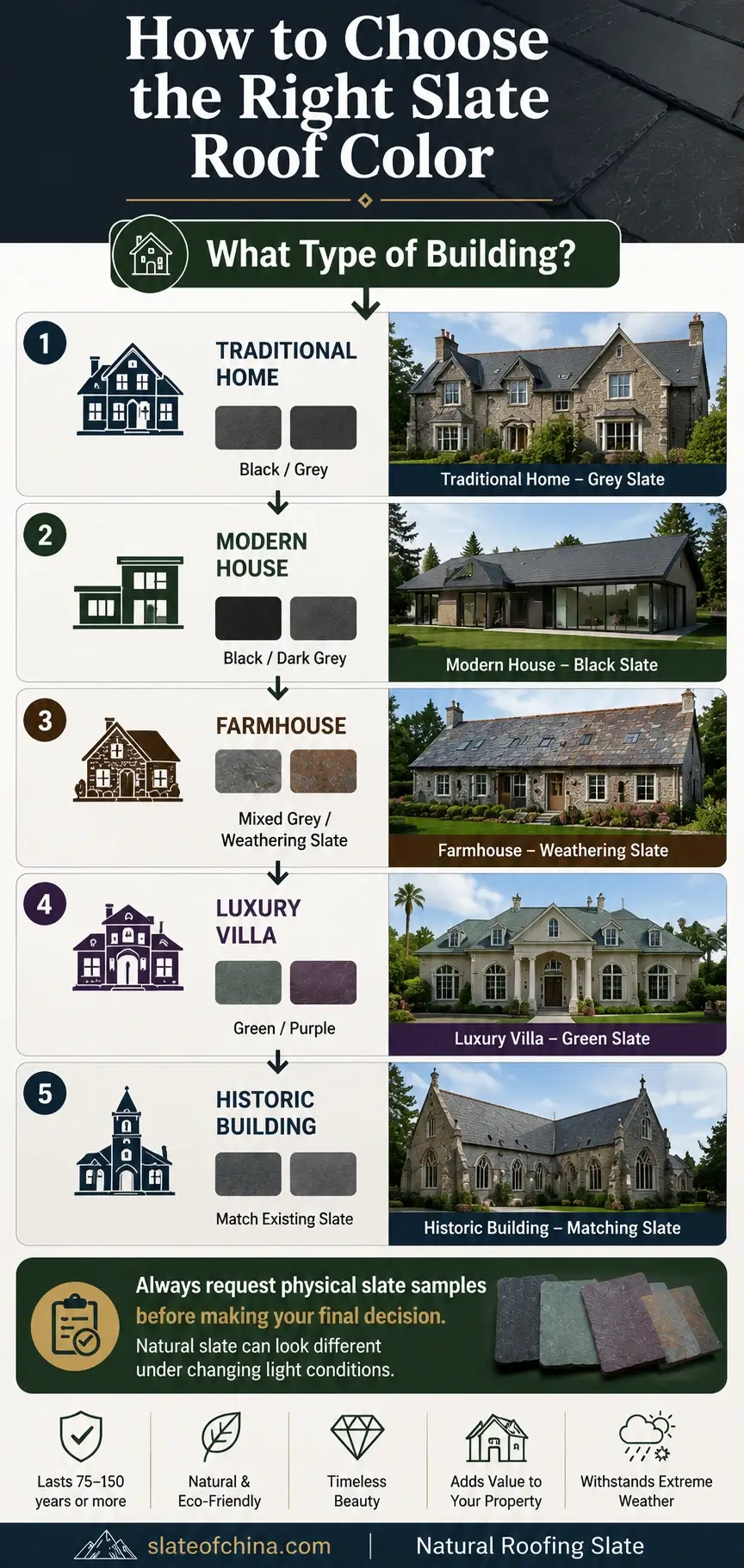
Traditional Homes
Traditional homes often feature brick, natural stone, or rendered façades with classic architectural details.
For these properties, neutral slate colors create the most authentic appearance.
Recommended Colors
- Black Roofing Slate
- Dark Grey Roofing Slate
- Medium Grey Roofing Slate
These colors have been used on traditional homes throughout the UK and Europe for generations and complement almost every exterior material.
Best suited for:
- Victorian houses
- Georgian homes
- Stone cottages
- Country residences
Modern Houses
Contemporary architecture is characterized by clean lines, minimalist design, and large areas of glass.
Dark roofing colors provide striking contrast with white render, timber cladding, concrete, and metal finishes.
Recommended Colors
- Black Roofing Slate
- Dark Grey Roofing Slate
These colors enhance modern architectural forms while maintaining a refined and understated appearance.
Best suited for:
- Contemporary homes
- Minimalist villas
- Modern residential developments
Farmhouses & Rustic Homes
Country houses and rural properties often benefit from slate roofs with more visible natural variation.
Rather than appearing perfectly uniform, these roofs develop warmth and character that blends beautifully with traditional landscapes.
Recommended Colors
- Mixed Grey Slate
- Weathering Slate
- Natural Multicolor Slate
These options create an authentic handcrafted appearance that works particularly well with stone walls, timber framing, and traditional rural architecture.
Best suited for:
- Farmhouses
- Mountain cabins
- Barn conversions
- Country estates
Luxury Villas
Luxury homes often seek a distinctive appearance that sets them apart from standard residential roofing.
Rare natural slate colors add elegance, exclusivity, and architectural identity.
Recommended Colors
- Green Roofing Slate
- Purple Roofing Slate
- Premium Black Slate
These premium colors are frequently specified by architects for bespoke residences and high-end developments.
Best suited for:
- Luxury villas
- Executive homes
- Boutique hotels
- Landmark residences
Historic & Heritage Buildings
For restoration projects, preserving historical authenticity is usually the highest priority.
Whenever possible, replacement slate should closely match the existing roof in:
- Color
- Texture
- Thickness
- Surface finish
- Size
Matching the original roofing slate helps maintain the building’s historic character while ensuring a visually consistent result.
This is particularly important for:
- Churches
- Heritage buildings
- Listed properties
- Historic estates
Other Factors to Consider
While color is important, it should never be the only factor when selecting roofing slate.
Also consider:
- Local architectural style
- Climate and surrounding landscape
- Roof pitch
- Wall materials
- Window and door colors
- Gutter and flashing materials
- Local planning or heritage requirements
The best roofing slate color is one that complements the entire building rather than standing out for the wrong reasons.
Expert Recommendation
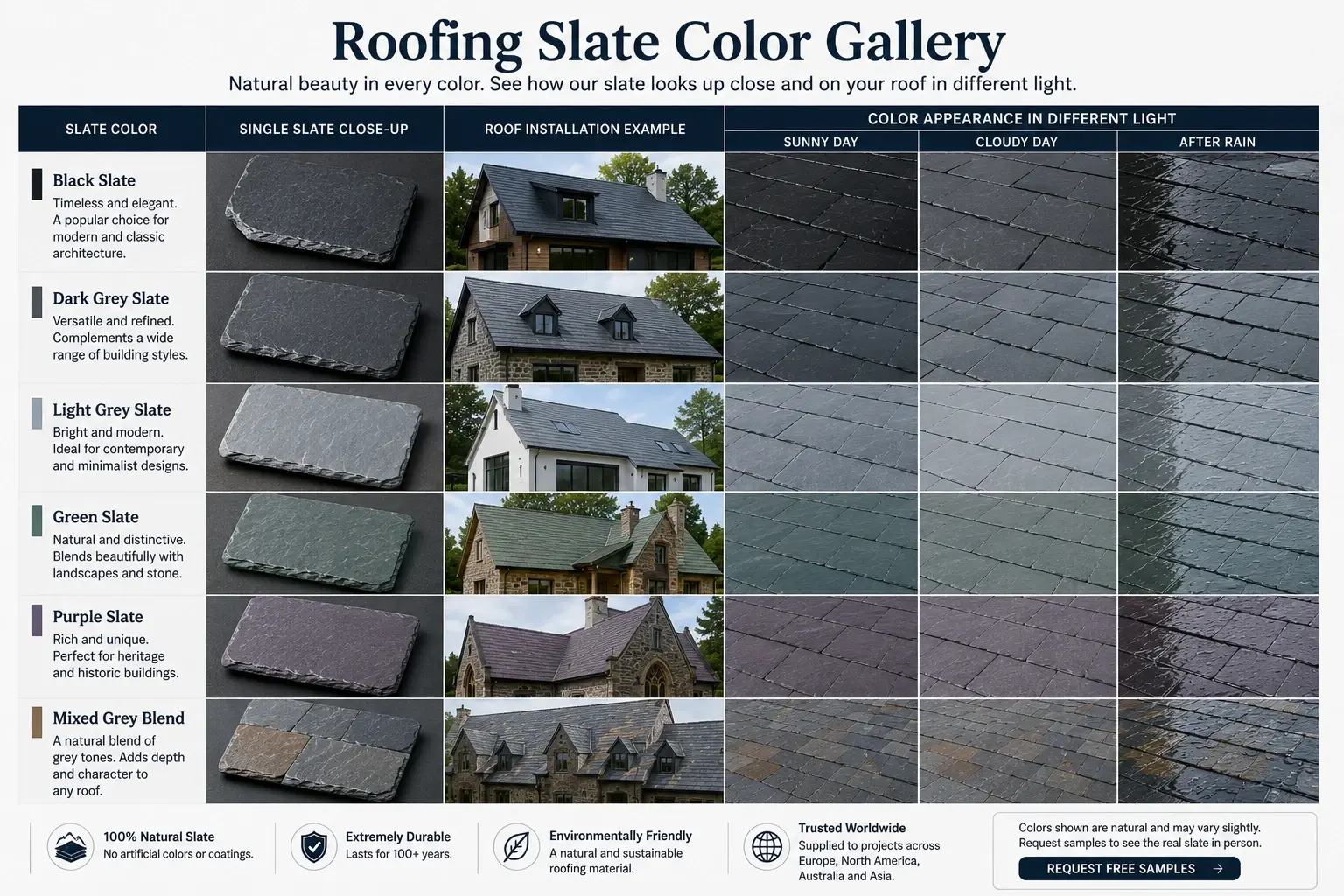
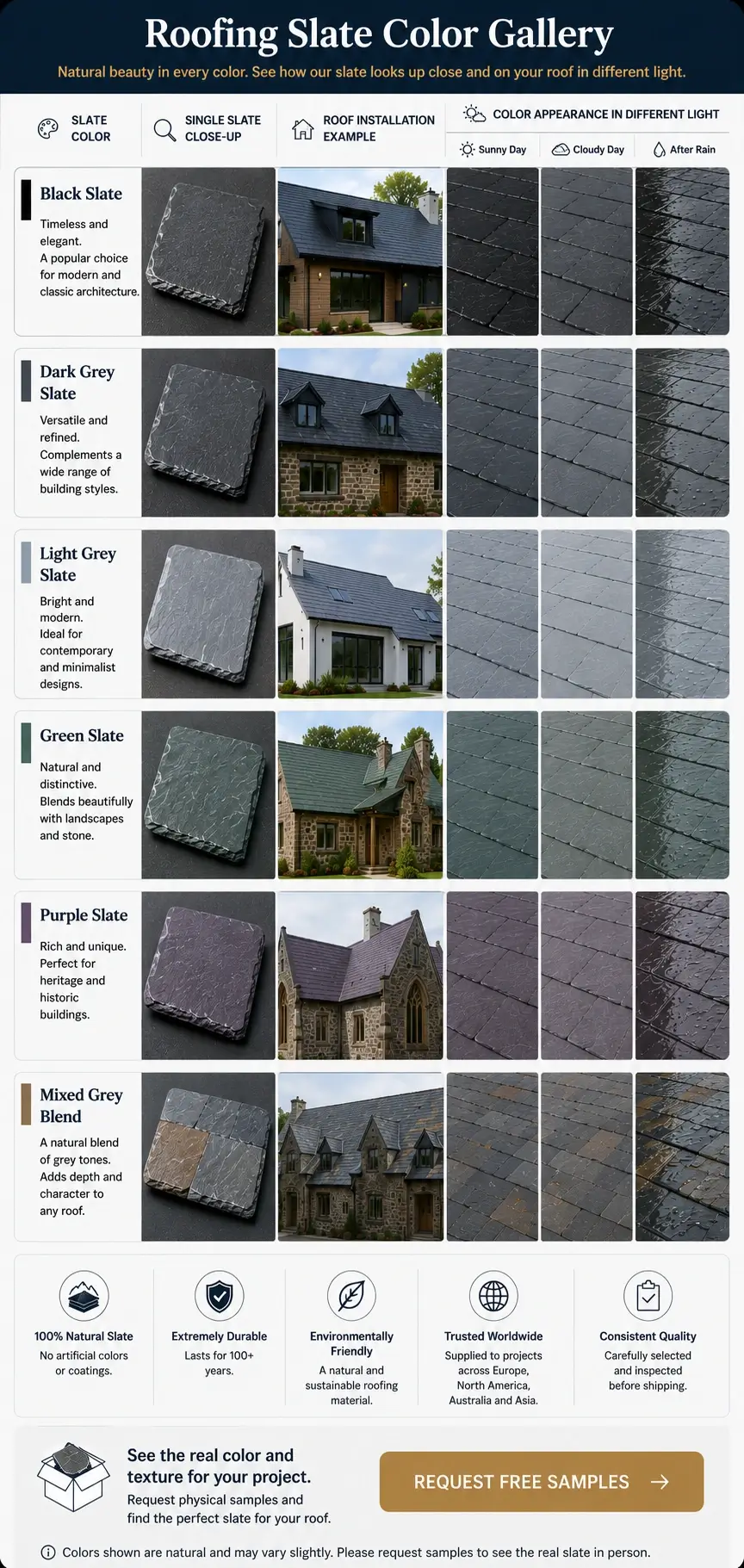
Whenever possible, request physical slate samples before placing a large order.
Although photographs are useful, natural slate is a genuine stone product whose appearance changes with:
- Natural daylight
- Cloudy weather
- Rain
- Viewing angle
- Surface texture
Comparing real samples on-site allows homeowners, architects, and contractors to make a confident decision before production begins.
For large commercial or residential projects, many suppliers can also prepare sample boards showing different slate colors, finishes, and blends to help visualize the final roof.
Quick Buying Guide
| Building Style | Recommended Slate Colors |
|---|---|
| Traditional Homes | Black, Dark Grey, Medium Grey |
| Modern Houses | Black, Dark Grey |
| Farmhouses & Rustic Homes | Mixed Grey, Weathering Slate, Multicolor |
| Luxury Villas | Green, Purple, Premium Black |
| Historic Buildings | Match Existing Slate |
Expert Tip
Choose a slate roof color that will still look beautiful 50 or 100 years from now—not simply the latest design trend. Natural roofing slate is a lifetime investment, and timeless colors such as Black, Grey, and Green continue to perform beautifully across both traditional and contemporary architecture.
Roofing Slate Colors and House Exterior Matching
Selecting the right roofing slate color is only part of the design process. To create a balanced and attractive home, your roof should also complement the exterior walls, windows, doors, stonework, and surrounding landscape.
Because a slate roof can last for more than a century, choosing a timeless color combination is just as important as selecting a high-quality roofing material.
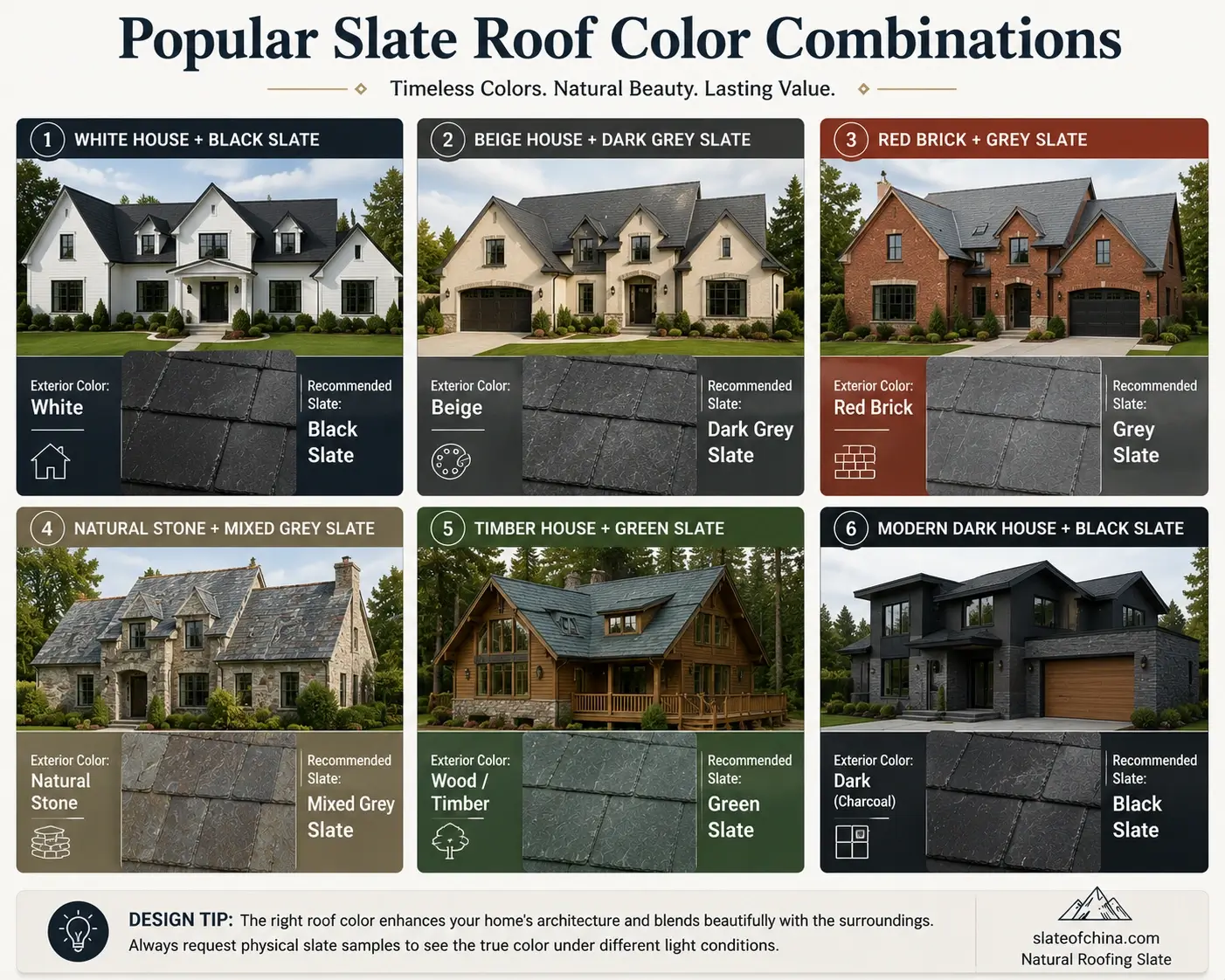
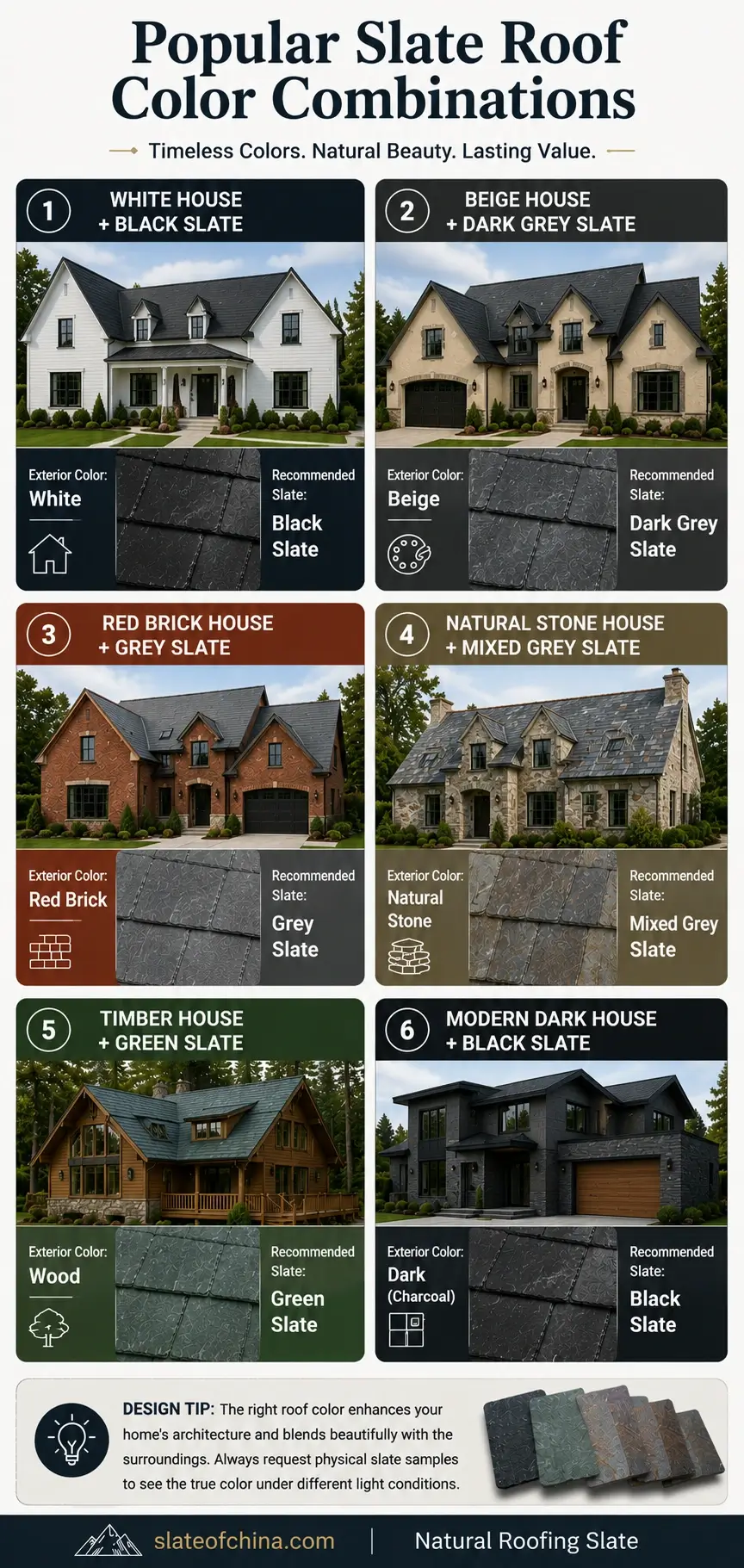
Below are some of the most popular exterior color combinations used by architects and homeowners around the world.
White Exterior Walls
A white exterior provides a clean, timeless backdrop that pairs beautifully with darker roofing colors.
Recommended Slate Colors
- Black Roofing Slate
- Dark Grey Roofing Slate
The strong contrast creates a crisp, elegant appearance that works equally well for both traditional homes and modern minimalist architecture.
Best for:
- Contemporary villas
- Coastal homes
- Scandinavian houses
Beige or Cream Houses
Warm neutral walls benefit from slightly softer roofing colors that create harmony without overwhelming the façade.
Recommended Slate Colors
- Dark Grey Roofing Slate
- Medium Grey Roofing Slate
These combinations produce a refined appearance while maintaining a classic architectural style.
Red Brick Homes
Red brick has remained one of the most popular exterior materials for decades.
Rather than competing with the warm brick tones, neutral grey slate provides balance and allows the brickwork to remain the visual focus.
Recommended Slate Colors
- Grey Roofing Slate
- Dark Grey Roofing Slate
This combination is widely used throughout the United Kingdom, Europe, and North America.
Natural Stone Houses
Stone walls already contain a rich mix of natural colors and textures.
Slate with gentle natural variation complements these materials beautifully.
Recommended Slate Colors
- Mixed Grey Slate
- Multicolor Roofing Slate
- Weathering Slate
These roofs create depth and authenticity while preserving the natural character of the building.
Timber & Wood Cladding
Natural timber pairs exceptionally well with green-toned roofing slate.
The subtle green shades blend naturally with gardens, forests, and rural landscapes.
Recommended Slate Colors
- Green Roofing Slate
- Weathering Slate
This combination is especially popular for mountain homes, cabins, eco-houses, and luxury countryside residences.
Modern Dark Exteriors
Homes finished in charcoal render, dark brick, or black cladding benefit from roofs with similar tones to create a clean, contemporary appearance.
Recommended Slate Colors
- Black Roofing Slate
- Dark Grey Roofing Slate
Using similar shades creates a seamless architectural design while allowing textures and materials to provide visual interest.
Recommended Slate Roof Color Combinations
| House Exterior | Recommended Slate Color | Design Style |
|---|---|---|
| White Exterior | Black, Dark Grey | Modern, Scandinavian |
| Beige / Cream | Dark Grey, Medium Grey | Traditional, Elegant |
| Red Brick | Grey, Dark Grey | Classic British, European |
| Natural Stone | Mixed Grey, Multicolor, Weathering Slate | Rustic, Heritage |
| Timber / Wood | Green, Weathering Slate | Eco, Mountain, Country |
| Dark Contemporary | Black, Dark Grey | Minimalist, Luxury |
Design Tips for Better Roof Color Combinations
Before making a final decision, consider the building as a whole rather than the roof alone.
A successful color scheme should balance:
- Exterior wall color
- Roofing slate color
- Window frames
- Doors
- Gutters and flashing
- Natural surroundings
- Local architectural style
Remember that natural slate is not perfectly uniform. Slight variations in shade and texture add depth and authenticity, making the finished roof look more natural and visually appealing.
Expert Recommendation
Whenever possible, view full-size slate samples outdoors before making your final selection.
Natural slate can appear different depending on:
- Morning or afternoon sunlight
- Overcast skies
- Wet or dry conditions
- Surrounding building materials
Seeing the slate in its intended environment provides the most accurate impression of the finished roof.
Quick Design Tip
The best slate roof color is one that complements your home’s exterior rather than competing with it. Timeless combinations such as a black slate roof with white walls, a grey slate roof with red brick, or a green slate roof with natural timber continue to be among the most successful architectural choices worldwide.
Does Slate Roof Color Fade Over Time?
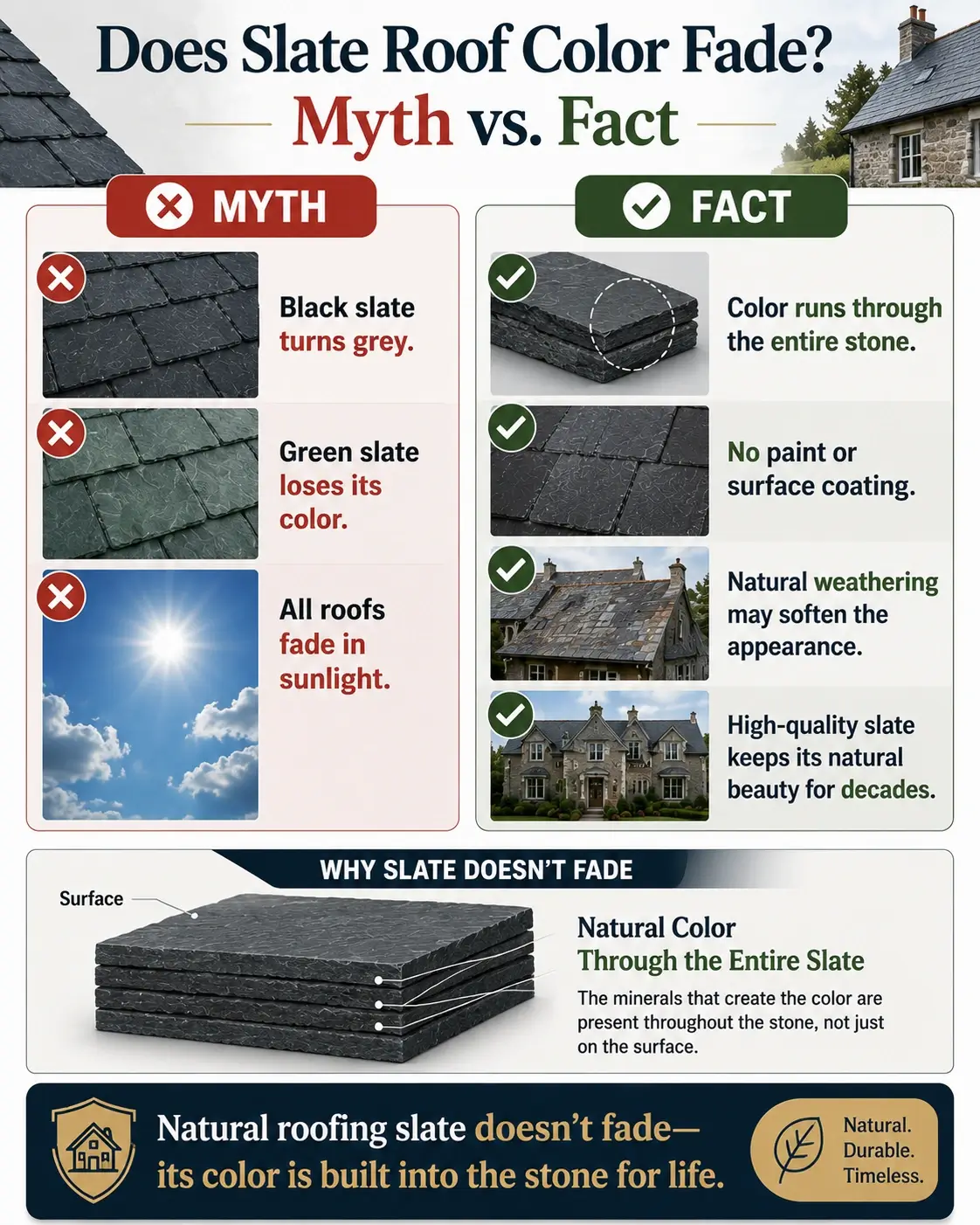
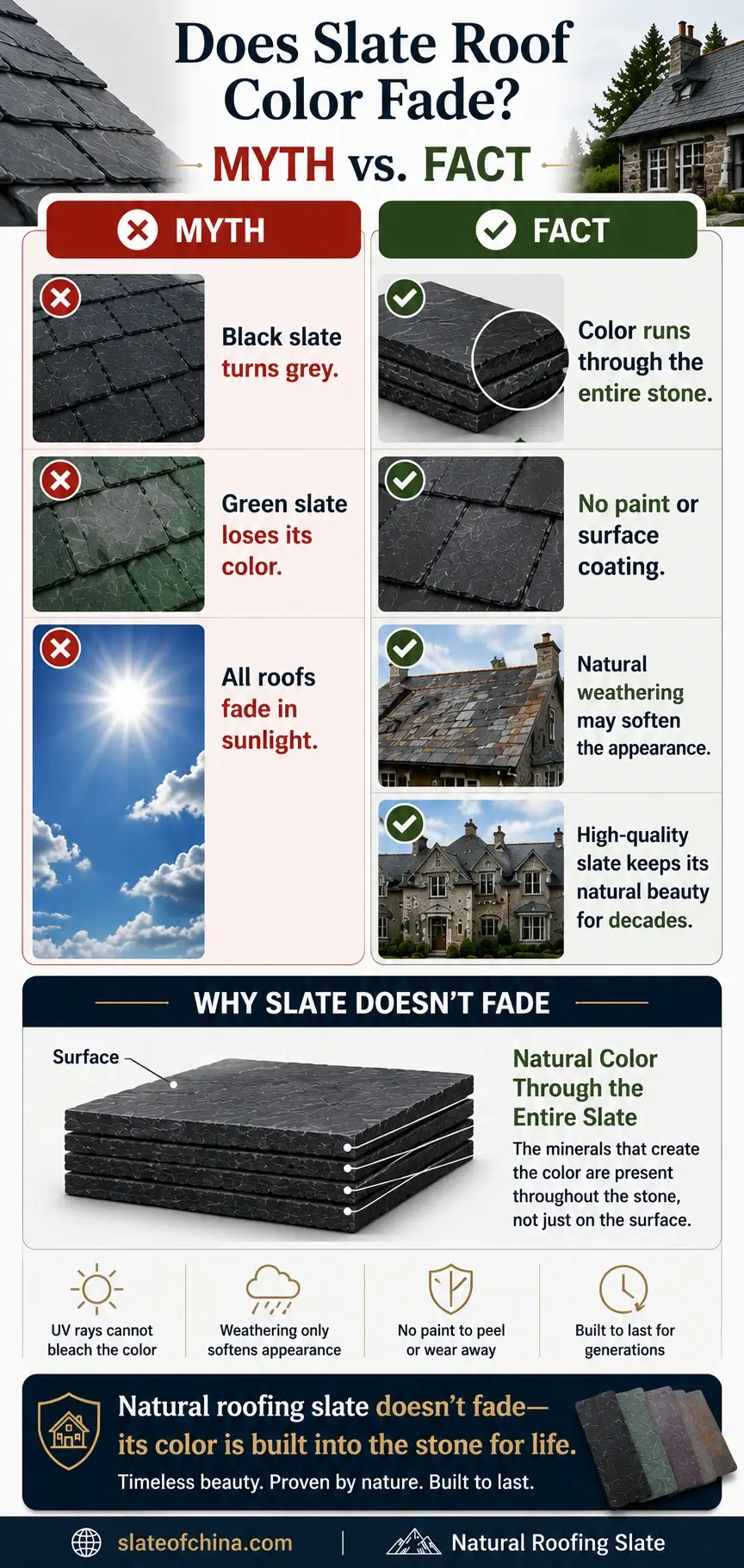
The short answer is: No.
One of the biggest misconceptions about natural roofing slate is that its color will gradually fade after years of exposure to sunlight and rain.
In reality, high-quality natural roofing slate does not fade in the same way as painted roofing materials.
Unlike concrete roof tiles, metal roofing, or asphalt shingles, natural slate contains no artificial pigments or surface coatings. Its color is created by naturally occurring minerals during geological formation and extends throughout the entire thickness of the stone.
As a result, the original color remains part of the slate for its entire service life.
Why Doesn’t Natural Roofing Slate Fade?
Natural roofing slate is a metamorphic rock formed under intense heat and pressure over hundreds of millions of years.
Its distinctive colors—whether black, grey, green, or purple—are produced by minerals such as carbon, chlorite, iron-bearing minerals, and quartz.
Because these minerals are present throughout the stone, the color is not limited to the surface.
This means:
- There is no paint to peel.
- There is no coating to wear away.
- UV sunlight cannot bleach the stone like painted roofing materials.
- Normal weather exposure does not remove the natural color.
This is one of the reasons why slate has been used on castles, churches, and historic buildings for centuries.
Natural Slate vs. Other Roofing Materials
One reason homeowners worry about fading is that many roofing products rely on surface-applied color.
Here’s how natural slate compares:
| Roofing Material | How Color Is Created | Can the Color Fade? |
|---|---|---|
| Natural Roofing Slate | Natural minerals throughout the stone | No |
| Concrete Roof Tiles | Surface pigments or colored cement | Yes, gradually |
| Asphalt Shingles | Mineral granules and coatings | Yes, over time |
| Metal Roofing | Factory-applied paint systems | Yes, depending on coating quality |
Natural slate is unique because its color is part of the stone itself—not a finish applied afterwards.
Why Do Some Slate Roofs Look Different After Many Years?
Although the color itself does not fade, the appearance of a slate roof can change slightly over decades.
This is a natural process and should not be confused with fading.
Several factors contribute to this subtle change.
Natural Weathering
Rain, wind, frost, sunlight, and seasonal temperature changes gradually soften the surface texture of the slate.
This creates a more mature, natural appearance without changing the stone’s original color.
Mineral Oxidation
Some slate varieties contain small amounts of naturally occurring iron-bearing minerals.
Over many years, these minerals may oxidize slightly, producing gentle brown or rust-colored highlights.
This natural weathering is expected in certain slate types and often adds character to the roof.
Surface Patina
As natural slate ages, it may develop a fine patina caused by long-term exposure to the environment.
Rather than reducing its beauty, this subtle change often enhances the roof’s authentic appearance and is especially appreciated on heritage buildings.
Does Black Slate Fade?
No.
High-quality black roofing slate remains black because the color comes from carbon-rich minerals distributed throughout the stone.
Over decades, the surface may appear slightly softer due to natural weathering, but it does not turn grey because of color loss.
Does Green Slate Lose Its Color?
No.
Green roofing slate derives its color from chlorite-rich minerals, not from paint or artificial dyes.
Depending on the specific quarry and mineral composition, some green slates may develop a richer, slightly weathered appearance over time, but the natural green color remains part of the stone.
Should I Be Concerned About Color Changes?
In most cases, no.
Slight variations caused by weathering are normal for natural stone and are considered a sign of authenticity rather than a defect.
However, significant discoloration, excessive rust staining, or surface deterioration may indicate poor-quality slate with unstable mineral composition.
Choosing roofing slate from an experienced manufacturer with proven geological testing is the best way to ensure long-term performance.
Expert Tip
Natural roofing slate does not fade because its color is part of the stone—not a surface coating. Over many decades, weathering may gently soften the roof’s appearance and create a natural patina, but this is a hallmark of genuine slate rather than a sign of deterioration. A well-selected, high-quality slate roof will continue to look beautiful for generations.
Quick Summary
| Question | Answer |
|---|---|
| Does natural slate fade? | No |
| Is the color painted on? | No |
| Does UV light remove the color? | No |
| Can weathering change the appearance? | Yes, slightly |
| Does weathering reduce durability? | No |
| What determines long-term appearance? | Slate quality and natural mineral composition |
Roofing Slate Color Trends
Natural roofing slate has been used for centuries, yet it continues to evolve with modern architectural design. While classic colors such as Black and Grey remain timeless, today’s architects and homeowners are increasingly choosing slate colors that complement contemporary materials, clean lines, and sustainable building concepts.
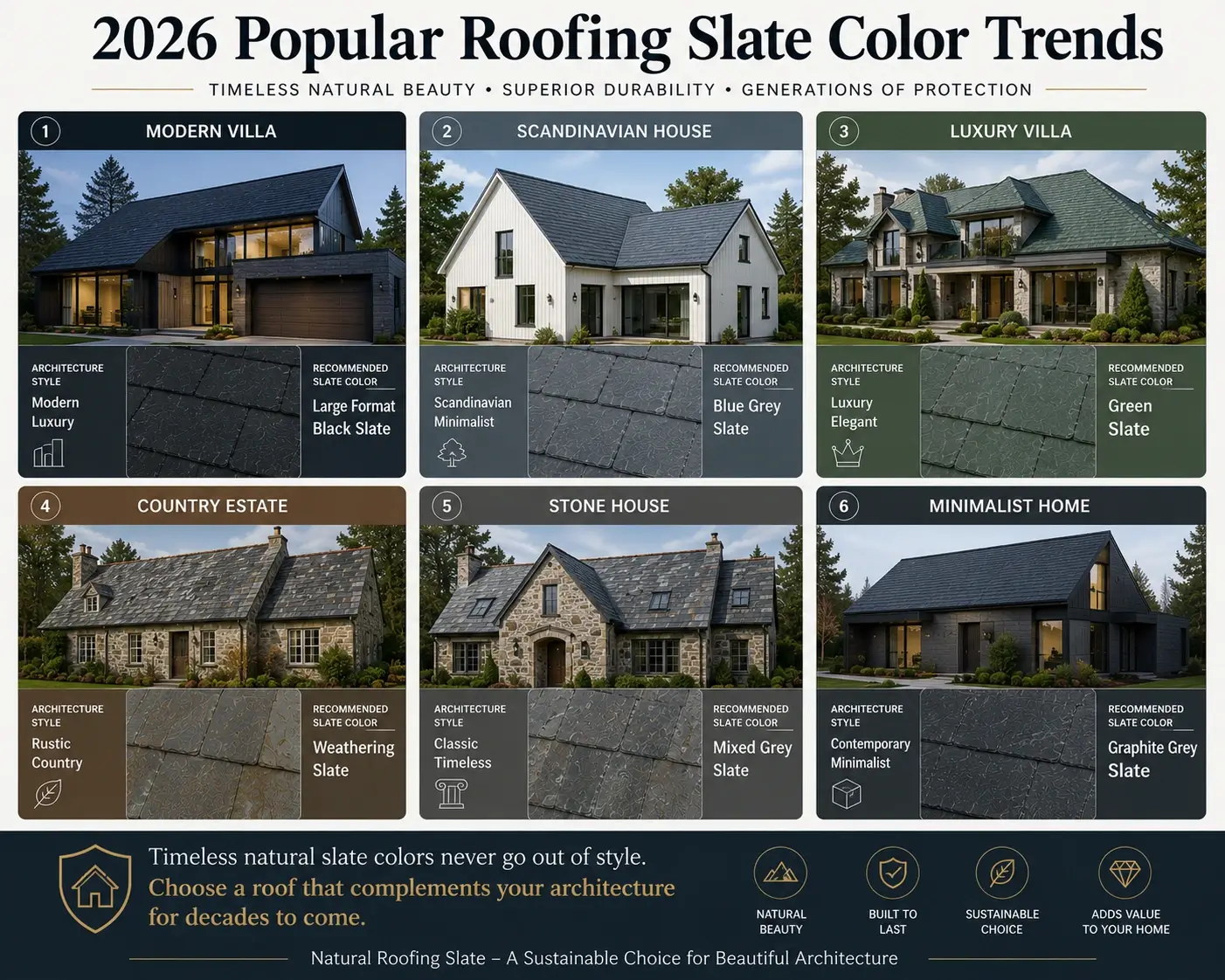
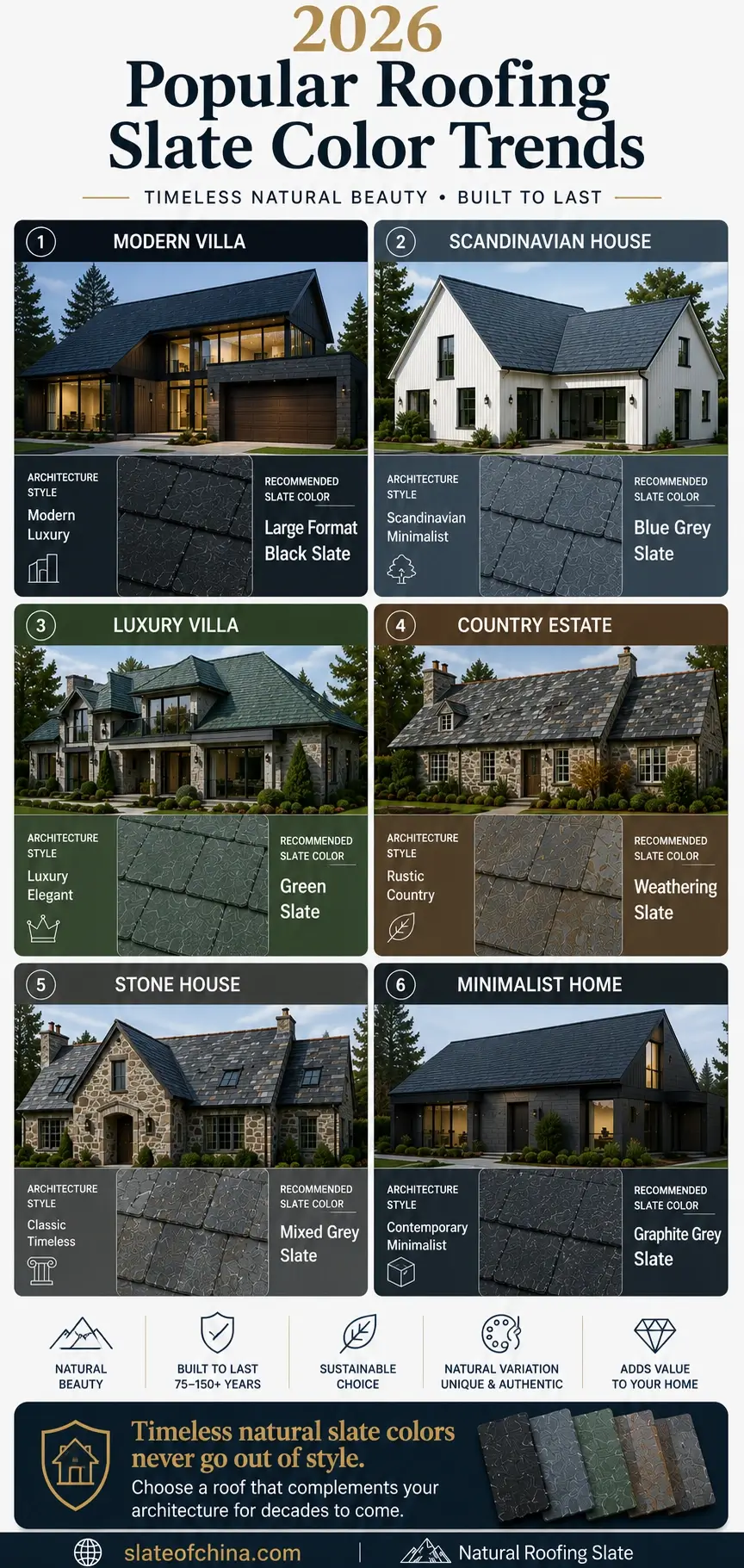
Current design trends across Europe and North America show increasing demand for Black, Graphite Grey, Blue Grey, and naturally varied slate colors…
Whether you’re designing a luxury villa, restoring a historic property, or building a minimalist home, understanding current roofing slate color trends can help you create a roof that remains attractive for decades to come.
Current Popular Roofing Slate Colors
Although natural slate is available in several beautiful shades, a few colors consistently dominate today’s residential and commercial projects.
✔ Black Roofing Slate
Black remains the world’s most popular roofing slate color.
Its clean, sophisticated appearance complements almost every architectural style, from traditional cottages to contemporary luxury homes.
Popular for:
- Modern villas
- Urban homes
- Commercial buildings
- Luxury residences
✔ Graphite Grey Slate
Graphite Grey has become increasingly popular in Europe and North America.
The softer grey tone creates a refined appearance while pairing beautifully with natural stone, timber cladding, and light-colored façades.
It is particularly popular for architects seeking a contemporary but less dramatic alternative to black.
✔ Blue Grey Slate
Blue Grey slate has long been associated with traditional Welsh and European architecture, but it is now enjoying renewed popularity in modern residential design.
Its cool undertones complement:
- White render
- Zinc cladding
- Glass façades
- Coastal architecture
Blue Grey offers a timeless appearance that works equally well on classic and contemporary buildings.
Modern Architectural Trends
Modern architecture continues to influence roofing slate selection.
Rather than focusing only on color, today’s designers consider roof format, texture, and overall visual simplicity.
Large Format Black Slate
Larger slate tiles create:
- Fewer visible joints
- Cleaner roof lines
- Contemporary aesthetics
- Faster installation on suitable projects
This format is increasingly specified for luxury homes and architect-designed residences.
Hidden Fixing Systems
Where appropriate and compliant with local roofing standards, concealed or visually discreet fixing methods help create a cleaner roof appearance.
Combined with dark slate colors, they produce an elegant, uninterrupted roof surface.
Minimalist Design
Minimalist architecture favors restrained color palettes and simple geometric forms.
For these projects, architects typically choose:
- Black Roofing Slate
- Dark Grey Slate
- Graphite Grey Slate
These colors create strong visual contrast while allowing other architectural elements to stand out.
Luxury Home Trends
High-end residential projects increasingly move beyond traditional uniform grey roofs.
Instead, architects often specify natural slate with richer color variation to create individuality and premium character.
Mixed Grey Slate
Mixed Grey combines several natural shades of grey to create greater depth and visual interest.
Each roof develops its own unique appearance while maintaining a harmonious overall color.
Weathering Slate
Weathering Slate is intentionally selected for its evolving appearance.
Over time, subtle mineral changes create a roof with natural tonal variation that cannot be replicated by manufactured roofing materials.
This makes it a favorite choice for bespoke homes and country estates.
Green Roofing Slate
Green slate remains one of the most prestigious natural roofing materials available.
Although less common than black or grey, it is widely specified for:
- Luxury villas
- Mountain homes
- Estate properties
- Premium architectural projects
Its distinctive natural color adds elegance while blending beautifully with landscaped surroundings.
Timeless Trends vs. Short-Term Fashion
Roofing slate is expected to last 75–150 years or more, making it one of the longest-lasting roofing materials available.
Unlike exterior paint colors, roof replacement is a major investment.
For this reason, architects generally recommend choosing colors that will remain attractive for decades rather than following short-term design trends.
Classic colors such as:
- Black
- Dark Grey
- Blue Grey
- Natural Green
continue to perform well across changing architectural styles and are unlikely to go out of fashion.
Choosing a Trend That Lasts
When selecting a roofing slate color, consider:
- Architectural style
- Exterior wall materials
- Surrounding landscape
- Local planning requirements
- Long-term resale value
- Natural lighting conditions
The most successful slate roofs combine contemporary design with timeless natural materials rather than relying on fashionable colors alone.
Popular Roofing Slate Color Trends at a Glance
| Design Style | Popular Slate Colors | Typical Applications |
|---|---|---|
| Modern Minimalist | Black, Graphite Grey | Contemporary homes, urban villas |
| Scandinavian | Light Grey, Blue Grey | White façades, timber cladding |
| Luxury Villas | Green, Mixed Grey | High-end residences, estates |
| Country Homes | Weathering Slate, Mixed Grey | Farmhouses, rustic properties |
| Heritage Buildings | Blue Grey, Traditional Grey | Churches, restoration projects |
Expert Tip
Roofing trends may change, but natural slate never goes out of style. Choosing a timeless slate color that complements your home’s architecture is a better long-term investment than following short-lived design fashions. Premium natural slate combines enduring beauty with exceptional durability, ensuring your roof remains elegant for generations.
Does Roofing Slate Color Affect Quality?
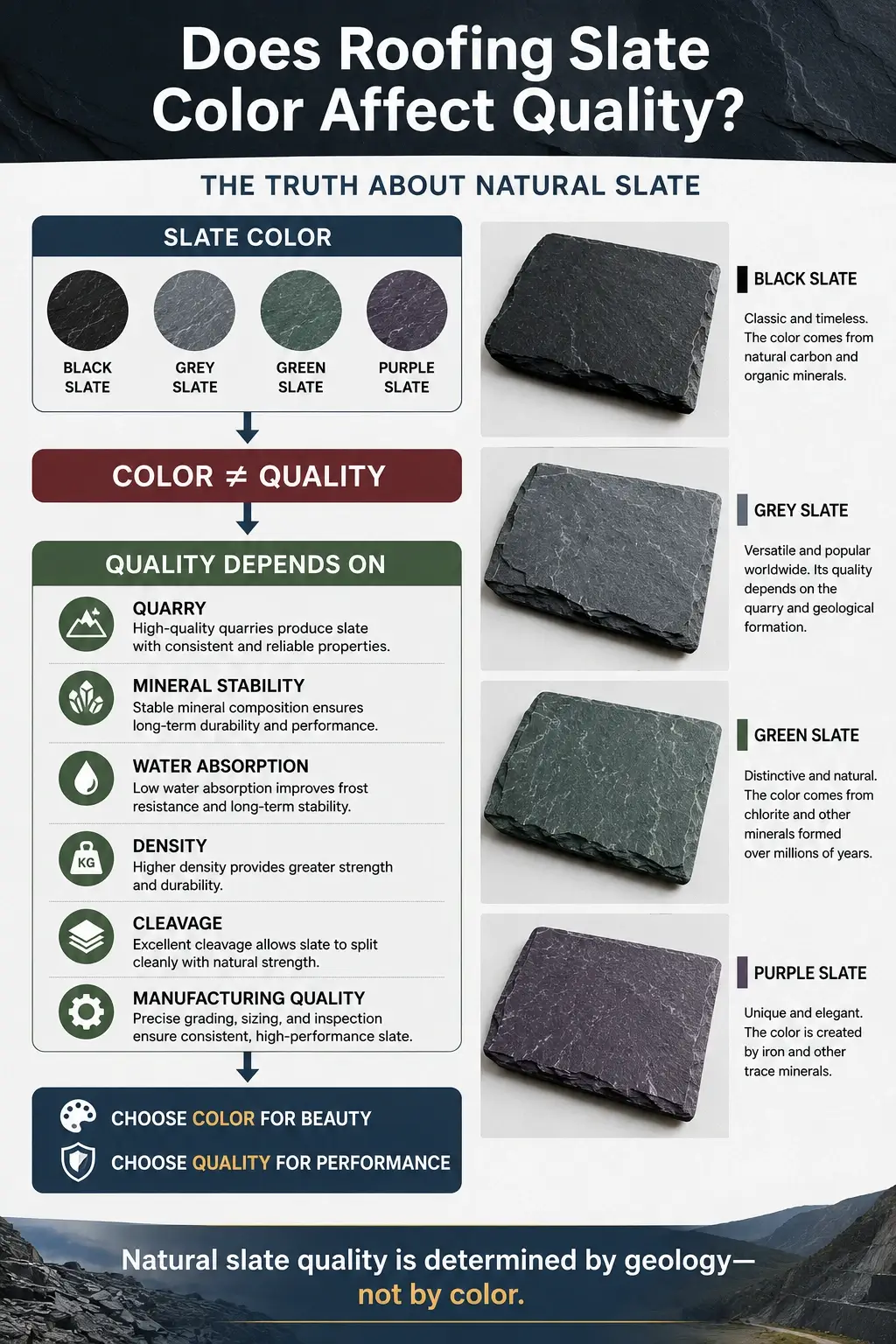
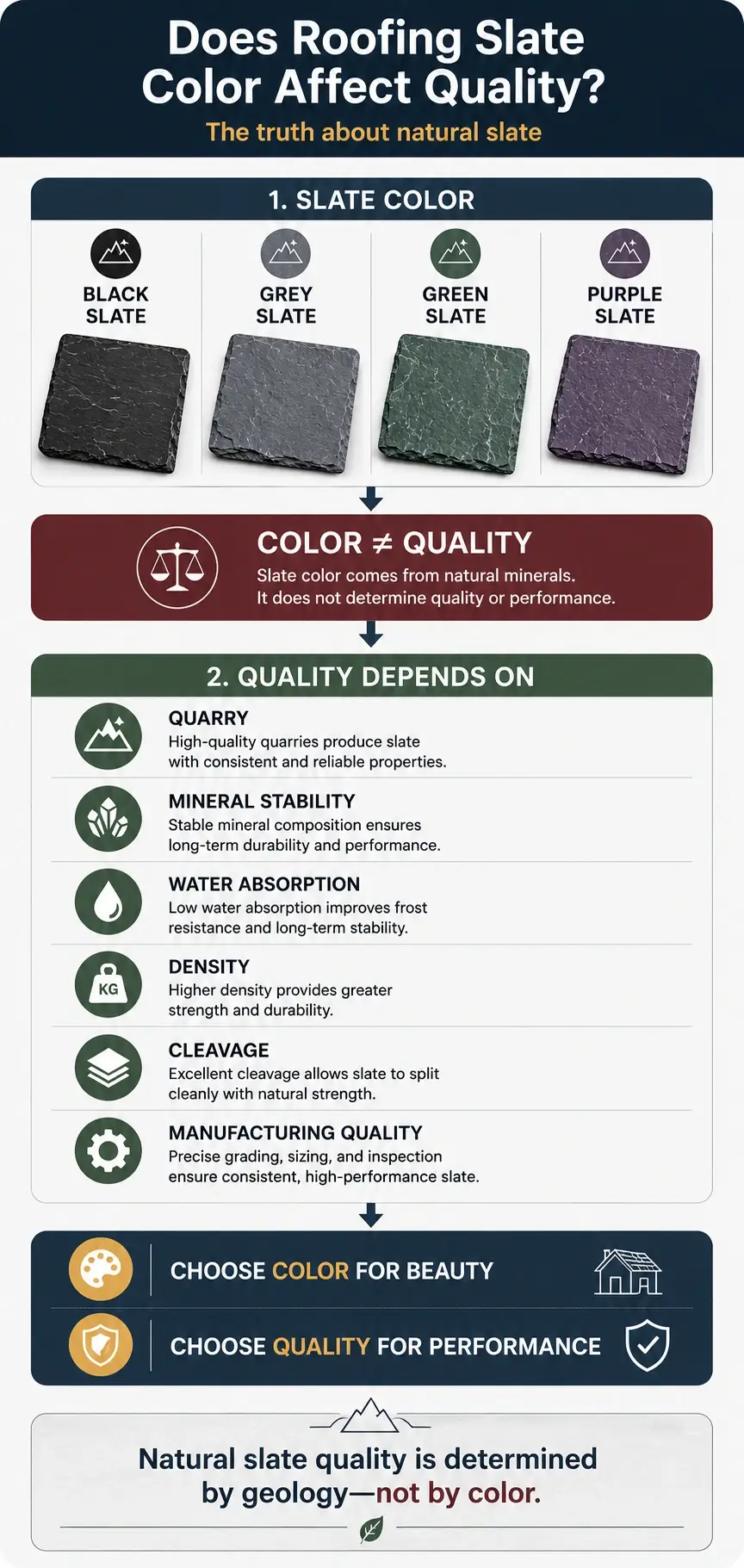
Many people assume that darker roofing slate is stronger or that premium colors automatically indicate higher quality. In reality, the color of natural roofing slate has very little to do with its overall performance.
The quality of roofing slate is determined by its geological characteristics rather than its appearance. A high-quality Grey Slate can outperform a poor-quality Black Slate, while an excellent Green Slate may last just as long as any other premium roofing slate.
When evaluating natural roofing slate, it is important to focus on the stone’s physical properties instead of color alone.
What Really Determines Slate Quality?
Several geological and manufacturing factors influence the long-term performance of roofing slate.
Mineral Stability
Stable mineral composition helps ensure the slate resists weathering, moisture absorption, and long-term deterioration.
Water Absorption
Premium roofing slate typically has very low water absorption.
Lower water absorption improves:
- Frost resistance
- Freeze-thaw durability
- Long-term structural stability
Density
Dense slate generally provides better strength and durability while reducing the risk of splitting or delamination.
Cleavage Quality
High-quality slate splits cleanly along natural bedding planes, producing consistent roofing tiles with excellent strength and appearance.
Quarry Selection
Different quarries can produce slate with very different characteristics—even when the colors appear similar.
This is why experienced suppliers carefully select material from reliable geological formations rather than relying on color as an indicator of quality.
Color Does Not Equal Quality
Natural roofing slate colors are simply the result of different mineral compositions.
For example:
| Slate Color | Main Mineral Characteristics | Quality Indicator? |
|---|---|---|
| Black Slate | Carbon-rich minerals | ❌ No |
| Grey Slate | Mixed silicate minerals | ❌ No |
| Green Slate | Chlorite-rich minerals | ❌ No |
| Purple Slate | Iron-bearing minerals | ❌ No |
The presence of these minerals determines the slate’s natural color—but not whether the slate is high or low quality.
How to Choose High-Quality Roofing Slate
Instead of choosing slate based solely on color, consider:
- Source quarry
- Water absorption
- Density
- Freeze-thaw resistance
- Dimensional accuracy
- Thickness consistency
- Quality inspection
- Supplier reputation
These factors have a much greater influence on roof performance than color alone.
Expert Tip
Choose your slate color for appearance, but choose your slate quality for performance. The most durable roofing slate is not defined by being black, grey, or green—it is defined by its geological stability, careful quarry selection, and consistent manufacturing quality.
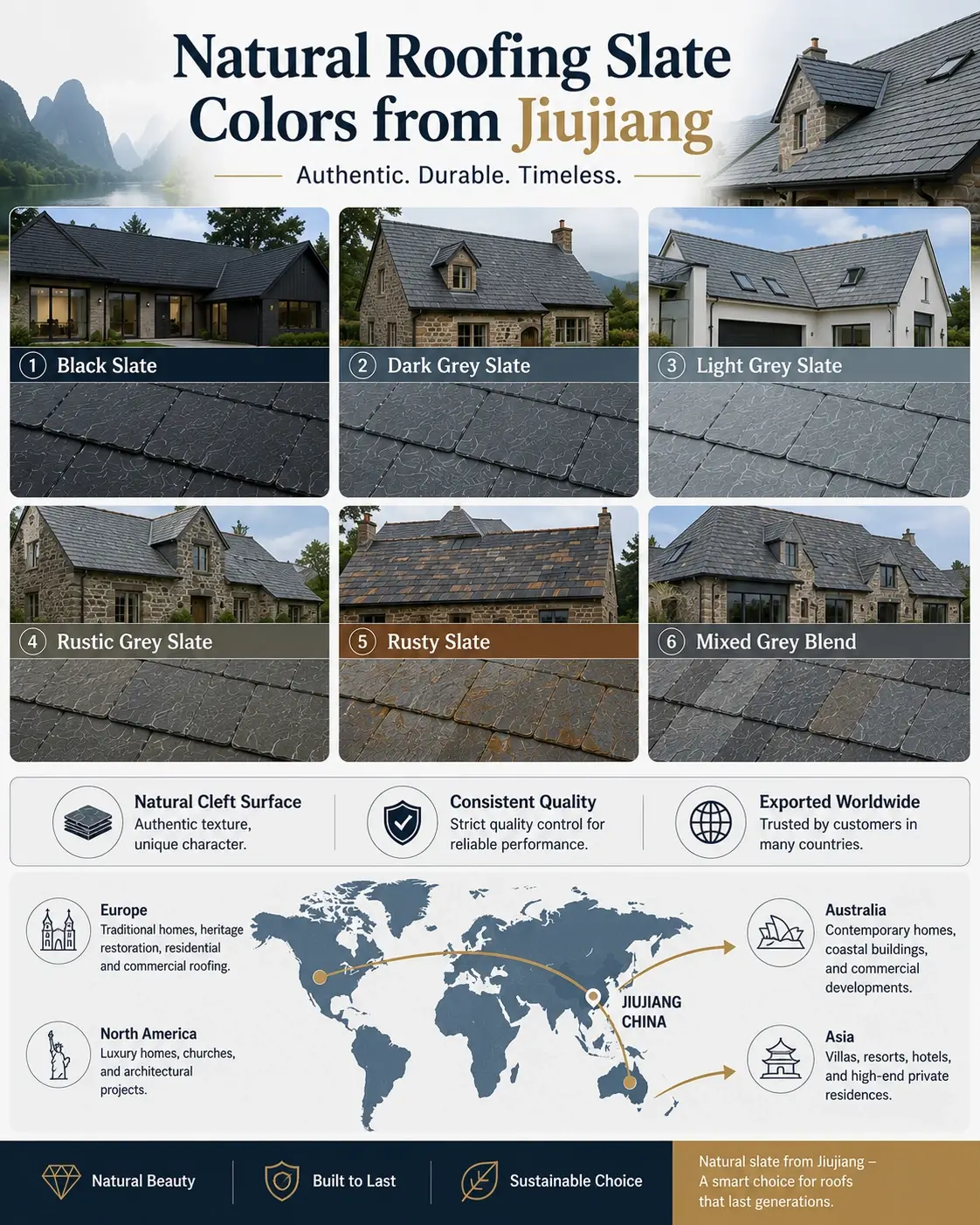
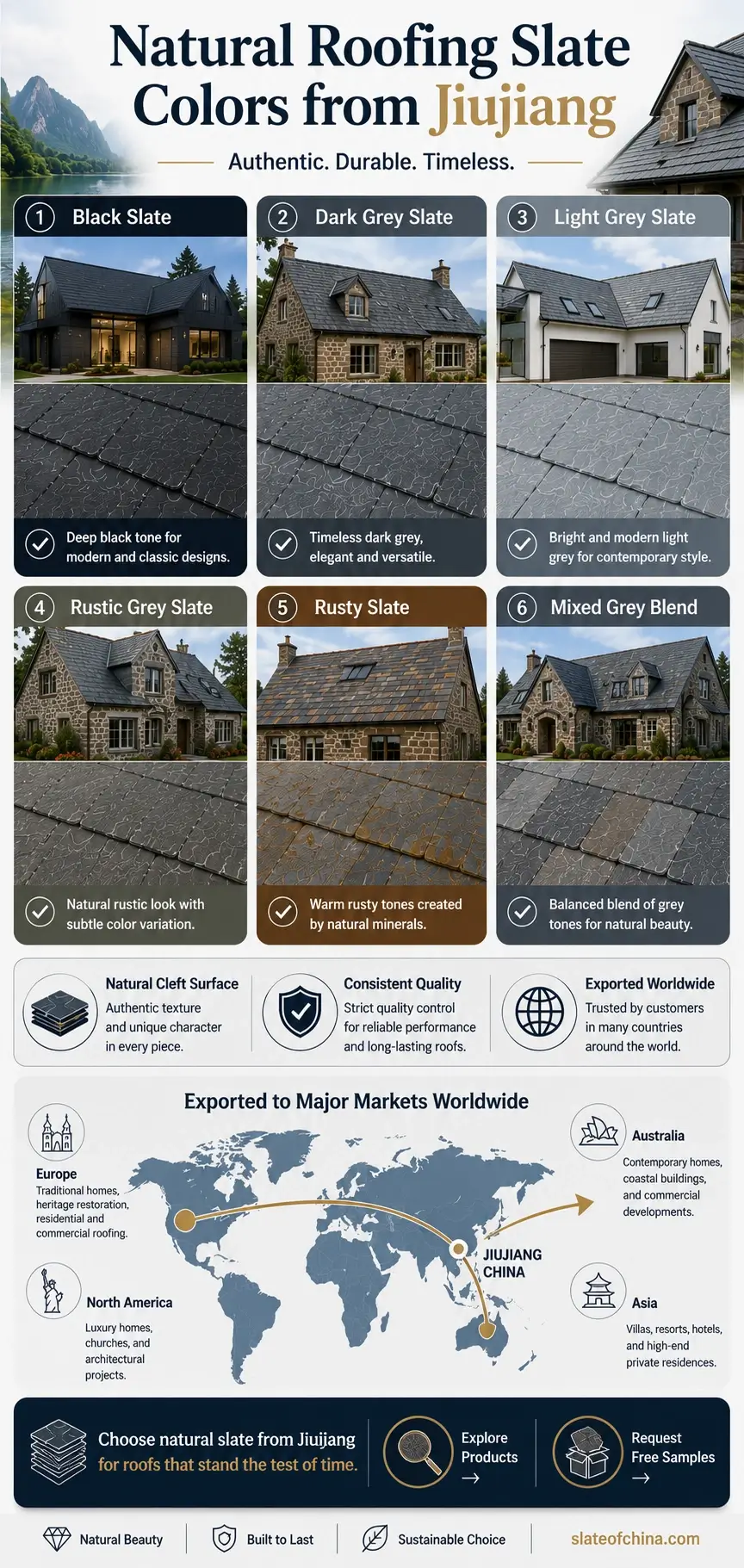
Roofing Slate Colors Available from Jiujiang Slate
Jiujiang, located in Jiangxi Province, China, is one of the world’s well-known natural slate production regions. Thanks to its abundant slate resources and decades of manufacturing experience, Jiujiang roofing slate is exported to Europe, North America, Australia, and many other international markets.
Natural roofing slate from Jiujiang is available in a range of authentic colors created by geological processes rather than artificial pigments. Each color offers its own architectural character while maintaining the durability and natural beauty that slate roofing is known for.
Black Roofing Slate
Black Roofing Slate is the most popular choice for both residential and commercial projects.
Its deep charcoal-black appearance complements almost every architectural style, from traditional cottages to contemporary luxury homes.
Typical applications include:
- Modern houses
- Heritage restorations
- Commercial buildings
- High-end residential projects
Dark Grey Roofing Slate
Dark Grey Slate offers a softer alternative to black while retaining a refined and timeless appearance.
It is widely specified by architects throughout Europe because it pairs beautifully with brick, stone, timber, and rendered façades.
This color is particularly suitable for:
- Traditional homes
- Urban developments
- Public buildings
- Residential roofing
Light Grey Roofing Slate
Light Grey Slate provides a brighter, contemporary look that works well with minimalist architecture.
Its cooler tone complements white render, natural timber, and modern façade materials, making it increasingly popular for Scandinavian-inspired homes and contemporary residential projects.
Rustic Grey Slate
Rustic Grey Slate features gentle natural variation across individual tiles, creating a roof with greater depth and character than a perfectly uniform color.
Rather than appearing manufactured, Rustic Grey reflects the authentic texture and tonal diversity of natural stone.
It is an excellent choice for:
- Country houses
- Farmhouses
- Stone cottages
- Rustic architectural designs
Rusty Slate (where available)
Certain Jiujiang slate varieties may display natural rusty or warm brown highlights caused by mineral composition.
Unlike painted finishes, these colors occur naturally within the stone and create a distinctive appearance that blends well with traditional architecture and natural landscapes.
Availability depends on quarry resources and project requirements.
Mixed Grey Blend (where available)
For projects requiring a more natural and visually dynamic roof, Mixed Grey Blend combines carefully selected slates with complementary grey tones.
The result is a balanced roof with subtle color variation while maintaining an overall harmonious appearance.
This option is increasingly popular for premium residential developments and bespoke architectural projects.
Natural Cleft Surface
One of the defining characteristics of Jiujiang roofing slate is its natural cleft surface.
Rather than being artificially textured, each slate tile is split along its natural bedding planes, creating:
- Authentic natural texture
- Excellent slip resistance during installation
- Traditional handcrafted appearance
- Unique character in every tile
No two slate tiles are exactly alike, which contributes to the beauty of a genuine natural slate roof.
Consistent Quality for International Projects
Although natural variation is an inherent feature of slate, professional production and quality control help ensure excellent consistency throughout each shipment.
Reliable manufacturers typically control:
- Thickness tolerance
- Dimensional accuracy
- Surface finish
- Edge quality
- Color grading
- Packaging for export
These measures help installers achieve an attractive and consistent finished roof while preserving the natural characteristics of the stone.
Exported Worldwide
Jiujiang roofing slate has been supplied to projects across many international markets, including:
- Europe – Traditional homes, heritage restoration, and residential roofing
- North America – Luxury homes, churches, and custom architectural projects
- Australia – Contemporary residential and commercial buildings
- Asia – Hotels, villas, resorts, and high-end private residences
Its combination of natural beauty, durability, and competitive manufacturing makes Jiujiang slate a practical choice for projects in a wide range of climates and architectural styles.
Looking for the Right Slate Color?
Choosing the right roofing slate involves more than selecting a favorite color. It is also important to consider architectural style, local climate, roof design, and long-term performance.
If you’re comparing different natural slate colors, requesting physical samples is the best way to evaluate the stone under real lighting conditions.
You can also explore our full roofing slate collection or contact us to discuss the most suitable options for your project.
Next Steps:
Expert Tip
Natural roofing slate is valued for its authenticity, not perfect uniformity. High-quality Jiujiang slate combines consistent manufacturing standards with the natural color variation that architects and homeowners expect from genuine stone, making every roof both durable and unique.
Frequently Asked Questions About Roofing Slate Colors
Below are answers to some of the most common questions homeowners, architects, contractors, and distributors ask when choosing natural roofing slate colors.
Need Help Choosing the Right Slate Color?
If you’re still unsure which natural roofing slate color is best for your project, the easiest solution is to request physical samples. Viewing real slate under natural daylight allows you to compare colors, textures, and finishes before placing a larger order.
You can also explore our complete range of roofing slate products or contact our team for personalized recommendations based on your project’s location, architectural style, and design requirements.
Choose the Right Roofing Slate Color with Confidence
Choose a Roofing Slate Color That Will Stand the Test of Time
Choosing the right roofing slate color is about far more than aesthetics. The color you select influences the overall character of your home, complements its architectural style, and contributes to its long-term value. Because a natural slate roof can last for more than a century, selecting a timeless color is a decision that will continue to reward you for generations.
Unlike manufactured roofing materials, natural slate is never painted or artificially colored. Every shade—whether Black, Dark Grey, Light Grey, Green, Purple, or naturally blended tones—is created by mineral composition and geological processes that took millions of years to form. This means every slate roof is genuinely unique, with natural variations that enhance its authenticity and lasting beauty.
When choosing a slate roof color, consider more than personal preference. Think about your home’s exterior materials, architectural style, local environment, and the overall visual effect you want to achieve. A carefully selected slate color will create a roof that not only looks beautiful on the day it is installed but continues to perform and age gracefully for decades.
If you’re comparing different roofing slate colors for an upcoming project, viewing physical slate samples remains the best way to appreciate their true appearance. Natural slate can look different depending on sunlight, weather conditions, and surrounding building materials, making real samples invaluable for confident decision-making.
Whether you’re an architect specifying materials, a roofing contractor sourcing reliable products, a distributor expanding your range, or a homeowner planning a new roof, choosing high-quality natural roofing slate from a trusted supplier is the key to achieving exceptional long-term performance and timeless architectural appeal.
Need Help Choosing the Right Roofing Slate Color?
If you’re still deciding which natural roofing slate color best suits your project, we’re happy to help.
We can provide:
- High-resolution photos of different slate colors and finished roofing projects
- Physical slate samples for accurate color comparison
- Professional recommendations based on your architectural style, climate, and target market
- Product specifications and technical information for architects, contractors, and distributors
- Export support for projects across Europe, North America, Australia, and Asia
Explore our Roofing Slate Products to see the full range of available colors and sizes, or contact us to request samples and discuss your project requirements.
The right roofing slate color isn’t simply the one that looks best today—it’s the one that will continue to enhance your building for the next 50, 100, or even 150 years. Choose natural slate, and let nature create a roof with beauty that truly lasts.