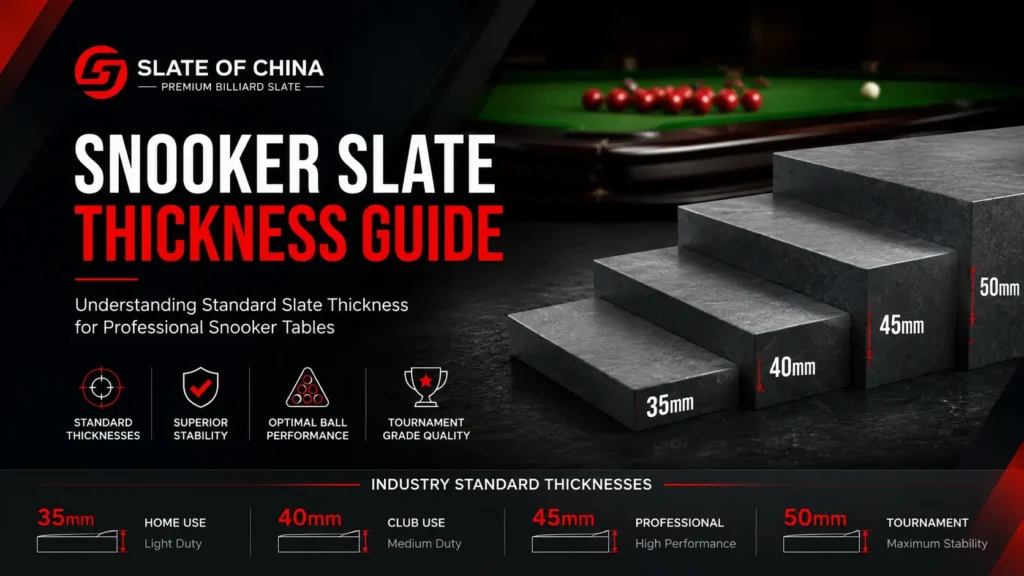
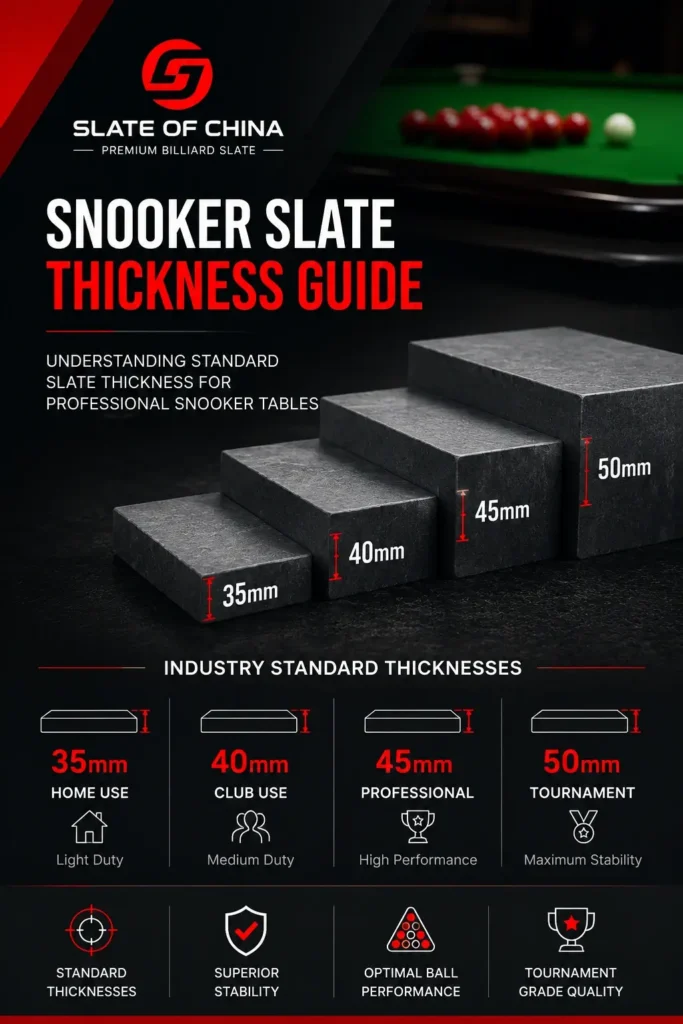
Snooker Slate Thickness Guide: Standard Sizes for Snooker Tables
The thickness of a snooker slate plays a critical role in table performance, stability, and long-term durability. A properly selected slate thickness helps maintain a perfectly level playing surface, supports accurate ball roll, and reduces the risk of deformation over time. Different thicknesses are used for home tables, club tables, professional installations, and tournament-grade snooker tables, each offering specific advantages depending on the application.
In this guide, you’ll learn the standard snooker slate thicknesses used worldwide, how thickness affects playing performance, and how to choose the right slate for your market, project, or table specification.
Table of Contents
45mm vs 50mm Snooker Slate
45mm and 50mm are the most commonly specified thicknesses for professional and tournament snooker tables. While both offer excellent stability and playing performance, their suitability depends on table design, market requirements, and transportation considerations.
Read our detailed 45mm vs 50mm Snooker Slate Comparison Guide.
What Is the Standard Snooker Slate Thickness?
One of the most common questions from table manufacturers, distributors, and project buyers is: What is the standard thickness for snooker slate?
In the global snooker industry, slate thickness varies depending on the table’s intended use, performance requirements, and market positioning. While several thickness options are available, 45mm natural slate is widely recognized as the industry standard for professional snooker tables and is the most commonly specified thickness worldwide.
The following table summarizes the typical thicknesses used for different applications:
| Table Type | Standard Slate Thickness |
|---|---|
| Home Snooker Table | 35mm–40mm |
| Club Snooker Table | 40mm–45mm |
| Professional Snooker Table | 45mm |
| Tournament Snooker Table | 45mm–50mm |
Why Is 45mm the Most Popular Choice?
For decades, 45mm slate has been the preferred specification for professional snooker tables because it offers an excellent balance of stability, precision, weight, and cost.
A properly machined 45mm slate provides:
- Outstanding flatness and structural stability
- Accurate and consistent ball roll
- Long-term resistance to warping or deformation
- Reliable performance for intensive commercial use
- Compliance with professional tournament requirements
As a result, most professional clubs, table manufacturers, and tournament organizers continue to specify 45mm slate as their standard option.
Is 50mm Slate Better?
Not necessarily.
While 50mm slate offers additional mass and rigidity, the performance difference between high-quality 45mm and 50mm slate is often smaller than many buyers expect. In practice, slate quality, machining precision, frame construction, and installation accuracy have a greater impact on playing performance than thickness alone.
For premium tournament projects or luxury installations, 50mm slate may be preferred. However, for most professional and commercial applications, 45mm remains the most practical and widely accepted specification.
Choosing the Right Thickness
The best slate thickness depends on your target market and project requirements.
- Home and recreational tables often use 35mm–40mm slate.
- Commercial clubs typically choose 40mm–45mm slate.
- Professional snooker tables generally use 45mm slate.
- High-end tournament tables may use 45mm or 50mm slate depending on design specifications.
For more detailed information, see our Professional Snooker Slate and Tournament Snooker Slate guides.
Why Does Slate Thickness Matter?
The thickness of a snooker slate affects far more than just the overall weight of the table. It directly influences playing performance, structural stability, long-term durability, and even transportation costs.
Whether you are manufacturing snooker tables, supplying commercial clubs, or building tournament-grade installations, selecting the correct slate thickness is essential for achieving consistent performance and customer satisfaction.
Below are the four key areas affected by slate thickness.
Flatness and Structural Stability
A snooker table is only as good as the stability of its playing surface.
Thicker slate generally provides greater rigidity and resistance to flexing under load. This helps maintain a consistently flat playing surface over many years of use, especially on large 12ft snooker tables where structural demands are significantly higher.
A well-machined 45mm or 50mm slate is less susceptible to:
- Surface movement
- Frame-related stress
- Long-term deformation
- Environmental changes during transportation and installation
For professional and tournament snooker tables, maintaining perfect flatness is critical because even small deviations can affect ball behavior and overall playing quality.
Ball Roll Accuracy
Accurate ball roll is one of the most important characteristics of a high-quality snooker table.
A thicker and more stable slate provides a stronger foundation for the table cloth and cushion system, helping ensure consistent ball movement across the entire playing surface.
Benefits include:
- Smoother ball travel
- More predictable shot outcomes
- Improved positional play
- Greater consistency during competitive matches
However, it is important to note that thickness alone does not determine playing quality. Slate density, machining precision, and installation accuracy are equally important factors.
This is why a high-quality 45mm slate often performs just as well as a thicker slate when properly manufactured and installed.
Table Lifespan and Durability
Snooker tables represent a long-term investment, particularly for clubs, academies, hotels, and tournament venues.
Thicker slate generally offers improved structural durability and can better withstand years of intensive use.
Advantages include:
- Increased resistance to cracking
- Better support for heavy-duty frames
- Reduced risk of surface distortion
- Longer service life in commercial environments
For many commercial operators, the additional durability of professional-grade slate helps reduce maintenance requirements and extends the lifespan of the entire table.
Transportation and Installation Considerations
While thicker slate provides additional stability, it also increases overall table weight.
This affects:
- Shipping costs
- Container loading efficiency
- Handling requirements
- Installation complexity
For example, a 50mm snooker slate set can weigh significantly more than a comparable 45mm set, requiring additional manpower and stronger support structures during installation.
As a result, many manufacturers and distributors consider 45mm slate to be the ideal balance between performance, durability, and transportation efficiency.
Does Thicker Always Mean Better?
Not necessarily.
In professional snooker applications, slate quality, geological consistency, precision machining, and proper installation often have a greater impact on table performance than thickness alone.
For most professional and commercial snooker tables, 45mm slate remains the global industry standard because it delivers excellent stability, accurate ball roll, long service life, and cost-effective logistics.
Premium tournament projects may specify 50mm slate, but the best choice ultimately depends on the intended application, budget, and market requirements.
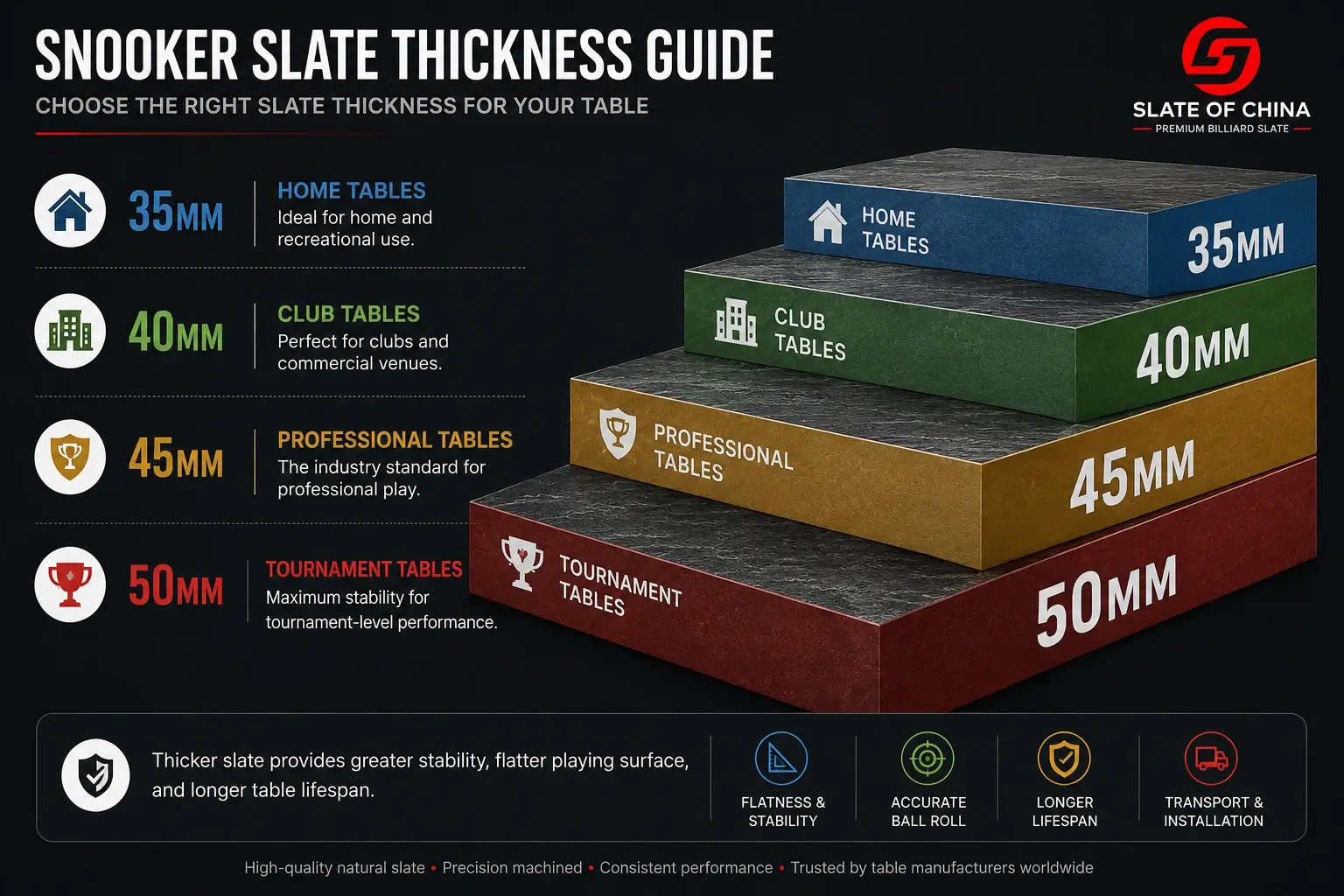
35mm, 40mm, 45mm and 50mm Slate Comparison
| Thickness | Typical Application | Advantages |
|---|---|---|
| 35mm | Home Tables | Lightweight and economical |
| 40mm | Club Tables | Good balance of cost and performance |
| 45mm | Professional Tables | Industry standard for professional play |
| 50mm | Tournament Tables | Maximum stability and rigidity |
35mm Slate
Suitable for home and recreational snooker tables.
Lower weight makes transportation and installation easier while maintaining satisfactory playing performance for casual use.
40mm Slate
A popular choice for clubs and commercial venues.
Offers improved stability compared to 35mm slate while remaining cost-effective.
45mm Slate
The most widely used professional snooker slate thickness worldwide.
Provides excellent flatness, durability and ball roll consistency, making it the preferred choice for professional table manufacturers.
50mm Slate
Designed for premium tournament installations and luxury projects.
The additional thickness increases mass and rigidity, providing maximum structural stability.
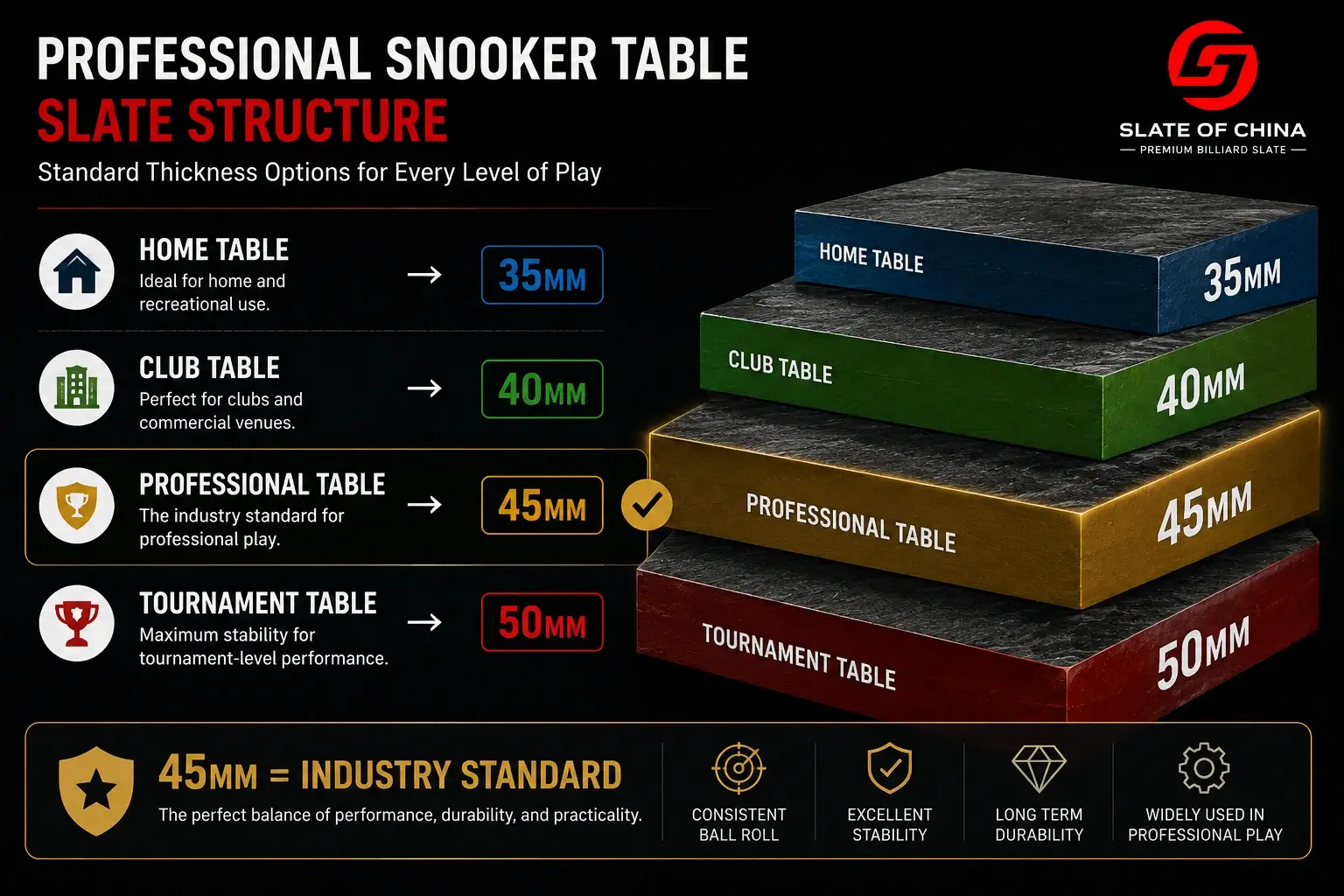
45mm vs 50mm: Which Is Better?
45mm and 50mm are the two most common specifications used for professional and tournament snooker tables.
While 50mm slate provides greater mass and rigidity, 45mm remains the global industry standard because it offers an excellent balance of performance, durability, transportation efficiency, and cost.
For a detailed comparison, see our 45mm vs 50mm Snooker Slate Guide.
Which Slate Thickness Is Used in Professional Snooker?
One of the most frequently asked questions from table manufacturers, distributors, and snooker enthusiasts is:
What slate thickness is used in professional snooker tables?
The answer is straightforward: 45mm natural slate is the most widely used thickness for professional snooker tables worldwide.
For decades, professional clubs, training academies, and table manufacturers have relied on 45mm slate because it delivers the ideal balance of stability, precision, durability, and installation practicality.
Standard Professional Snooker Slate Thickness
Most professional snooker tables use:
| Application | Typical Slate Thickness |
|---|---|
| Professional Snooker Tables | 45mm |
| Tournament Snooker Tables | 45mm–50mm |
| Premium Championship Installations | 50mm |
As a result, 45mm slate has become the global industry benchmark for professional play.
What Type of Slate Is Used in Professional Snooker?
Professional snooker tables are commonly manufactured using high-quality natural slate sourced from several major producing regions:
- Brazilian Slate
- Italian Slate
- Chinese Slate
Regardless of origin, the most important factors are consistency, density, structural stability, and machining precision.
A professionally manufactured slate should provide:
- Excellent flatness
- Accurate ball roll
- Stable long-term performance
- Resistance to warping and deformation
Why Is 45mm Slate So Popular?
A 45mm slate offers sufficient mass and rigidity to support professional-level play while remaining practical for transportation, installation, and table construction.
Key advantages include:
- Consistent playing performance
- Proven reliability in commercial environments
- Lower transportation costs than thicker alternatives
- Compatibility with most professional table designs
- Widely accepted tournament standards
This is why many leading table manufacturers continue to specify 45mm slate as their preferred professional option.
Is 50mm Slate Better for Professional Snooker?
Not always.
While 50mm slate provides additional weight and rigidity, the difference in playing performance is often smaller than many buyers expect.
In real-world applications, factors such as slate quality, geological consistency, machining accuracy, table frame design, and installation quality can have a greater impact on performance than thickness alone.
The quality of the slate is often more important than simply increasing thickness.
A precisely machined 45mm slate can outperform a poorly manufactured 50mm slate, which is why professional buyers should evaluate overall slate quality rather than focusing solely on thickness.
Choosing the Right Thickness for Professional Use
For most professional snooker tables, 45mm slate remains the preferred choice due to its excellent balance of performance, durability, and cost efficiency.
For premium tournament venues or luxury installations where maximum rigidity is required, 50mm slate may be selected.
Ultimately, the best choice depends on the table design, project requirements, transportation considerations, and budget.
How Thickness Affects Slate Weight
When choosing a snooker slate, thickness affects more than playing performance—it also has a significant impact on weight, transportation costs, installation requirements, and overall project planning.
As slate thickness increases, the total weight of the slate set rises substantially. This additional mass can improve rigidity and stability, but it also influences shipping logistics, handling, and installation complexity.
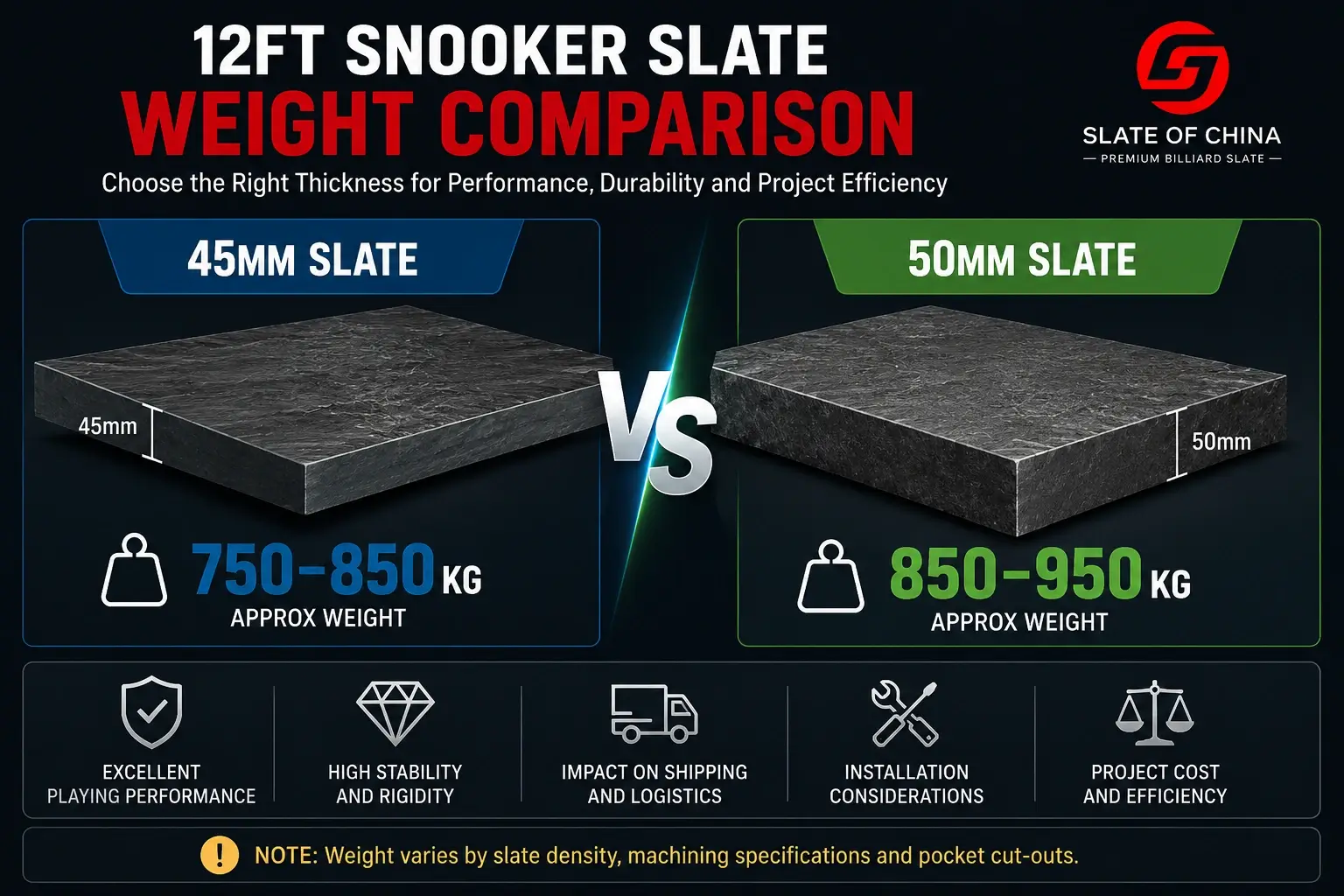
Typical Weight of a 12ft Snooker Table Slate
The following figures represent typical weight ranges for a standard 3-piece 12ft snooker slate set.
| Thickness | Weight (kg) | Weight (lbs) |
|---|---|---|
| 45mm | 750-850 | 1650-1870 |
| 50mm | 850-950 | 1870-2090 |
Note: Actual weight may vary depending on slate density, geological composition, machining tolerances, pocket cut-outs, and manufacturing specifications.
Why Does Slate Weight Matter?
For many buyers, weight is not just a technical specification—it directly affects project costs and installation requirements.
A heavier slate may provide additional rigidity, but it also results in:
- Higher shipping and freight costs
- Increased handling requirements
- More labor during installation
- Greater floor load considerations
- Reduced container loading efficiency
For distributors and table manufacturers exporting internationally, these factors can have a significant impact on total landed cost.
45mm vs 50mm: Weight Considerations
The difference between 45mm and 50mm slate may appear small, but across a complete 12ft table, the additional thickness can add approximately 100 kg or more to the overall slate set.
| Feature | 45mm Slate | 50mm Slate |
|---|---|---|
| Approximate Weight | Lower | Higher |
| Shipping Cost | Lower | Higher |
| Installation Difficulty | Easier | More Demanding |
| Structural Rigidity | Excellent | Outstanding |
| Commercial Popularity | Very High | Growing |
This is one of the main reasons why 45mm slate remains the global industry standard for professional snooker tables. It provides an excellent balance between playing performance, durability, transportation efficiency, and overall project cost.
Weight Is Not the Only Factor
While thicker slate increases mass and rigidity, weight alone does not determine playing quality.
The performance of a snooker table is influenced by several factors, including:
- Slate quality
- Geological consistency
- Precision machining
- Frame construction
- Installation accuracy
A high-quality 45mm slate will often outperform a lower-quality 50mm slate that is poorly machined or improperly installed.
Choosing the Right Thickness for Your Project
In most professional and commercial applications, 45mm slate offers the best balance of:
- Performance
- Durability
- Shipping efficiency
- Cost-effectiveness
For premium tournament venues or luxury installations where maximum rigidity is desired, 50mm slate may be preferred despite the additional weight and transportation costs.
How to Choose the Right Snooker Slate Thickness
Choosing the right snooker slate thickness depends on your target market, table specification, budget, and performance requirements.
While thicker slate generally provides greater mass and rigidity, the best choice is not always the thickest one. A well-selected slate thickness should balance playing performance, durability, transportation efficiency, and overall project cost.
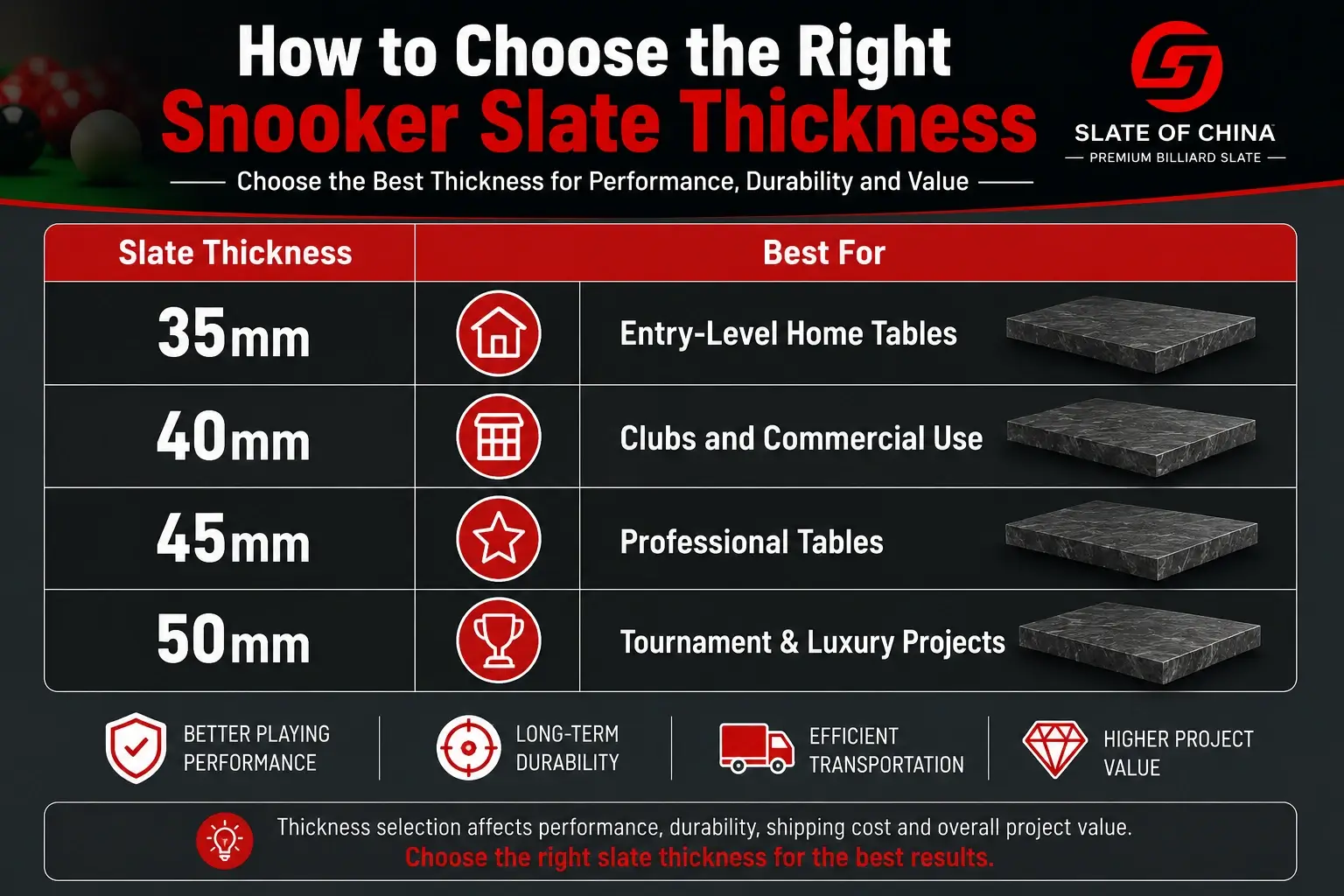
The table below provides a quick guide to the most common snooker slate thickness options and their typical applications.
Recommended Snooker Slate Thickness by Application
| Slate Thickness | Best For |
|---|---|
| 35mm | Entry-Level Home Tables |
| 40mm | Clubs and Commercial Use |
| 45mm | Professional Tables |
| 50mm | Tournament & Luxury Projects |
35mm Slate – Ideal for Entry-Level Home Tables
35mm slate is typically used for budget-friendly residential snooker tables where affordability and easier handling are key priorities.
Advantages include:
- Lower manufacturing cost
- Reduced shipping weight
- Easier transportation and installation
- Suitable for recreational and occasional play
However, 35mm slate is generally not recommended for commercial clubs or professional environments where tables are used intensively.
Best for:
- Entry-level home tables
- Recreational use
- Budget-focused projects
40mm Slate – A Practical Choice for Clubs and Commercial Use
40mm slate provides a noticeable improvement in rigidity and stability compared to 35mm while remaining more economical than professional-grade specifications.
It is often selected by club operators and table manufacturers seeking a balance between performance and cost.
Benefits include:
- Improved flatness and stability
- Better long-term durability
- More consistent ball roll
- Competitive project cost
Best for:
- Commercial snooker clubs
- Training academies
- Mid-range table manufacturers
45mm Slate – The Global Professional Standard
45mm slate is the most widely used professional snooker slate thickness worldwide and remains the preferred choice for many leading table manufacturers.
It offers an excellent balance of:
- Playing performance
- Structural stability
- Durability
- Transportation efficiency
- Cost-effectiveness
This is why 45mm slate is commonly used in professional clubs, academies, and competition-grade tables.
Best for:
- Professional snooker tables
- Commercial venues
- Export markets
- High-volume table manufacturers
50mm Slate – Premium Tournament and Luxury Projects
50mm slate is designed for projects where maximum rigidity, prestige, and premium specifications are priorities.
Although heavier and more expensive than 45mm slate, it is often selected for flagship installations and luxury billiard rooms.
Benefits include:
- Maximum structural rigidity
- Premium project positioning
- Enhanced perceived value
- Excellent long-term durability
Best for:
- Tournament tables
- Luxury billiard rooms
- Five-star hotels
- Premium private clubs
Final Recommendation
For most table manufacturers, distributors, and commercial buyers, 45mm slate remains the best overall choice. It is the global industry standard and offers the optimal balance between performance, durability, logistics, and cost.
If your project focuses on prestige, luxury positioning, or high-end tournament specifications, 50mm slate can be an excellent upgrade option.
Ultimately, the right snooker slate thickness should be selected based on your target customers, project requirements, and long-term performance expectations rather than thickness alone.
Snooker Slate Thickness vs Pool Table Slate Thickness
Pool tables commonly use 19mm–30mm slate.
Snooker tables typically use 35mm–50mm slate due to their larger playing surface and higher stability requirements.
Why Jiujiang Slate Is Ideal for Professional Snooker Tables
Selecting the right slate thickness is only part of the equation. Equally important is the quality and consistency of the slate itself.
For professional snooker tables, tournament installations, and commercial venues, a high-quality slate must provide excellent flatness, structural stability, and long-term reliability. This is why many table manufacturers and distributors around the world choose JIUJIANG Slate for professional snooker projects.
Consistent Density for Reliable Playing Performance
One of the most important characteristics of professional snooker slate is density consistency.
Variations in density can affect:
- Ball roll accuracy
- Surface stability
- Machining precision
- Long-term performance
JIUJIANG Slate is known for its uniform geological composition, helping manufacturers achieve consistent playing characteristics across every slate set.
This consistency is particularly important for professional snooker tables and tournament-grade installations, where even small variations can affect playing quality.
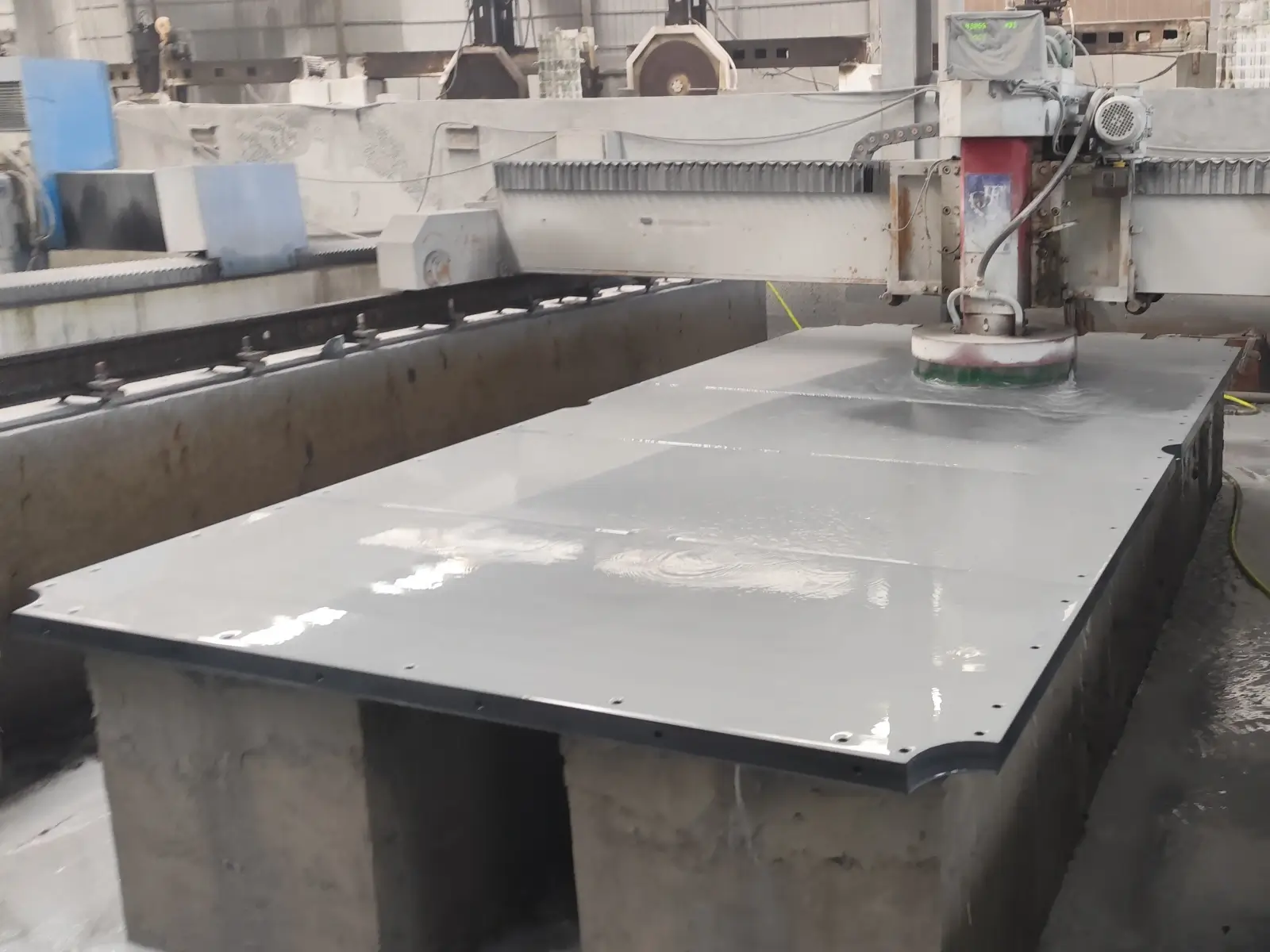
Excellent Machining Precision
High-quality slate is only as good as its machining.
Professional snooker tables require:
- Precise thickness tolerance
- Accurate pocket cut-outs
- Smooth joint surfaces
- Perfect slate leveling during installation
With decades of manufacturing experience, Jiujiang slate producers have developed advanced processing capabilities that meet the requirements of professional table manufacturers worldwide.
The result is easier installation, tighter slate joints, and improved table performance.
Stable Geological Structure
The geological stability of the slate directly affects durability and long-term flatness.
JIUJIANG Slate features:
- Dense natural structure
- Good dimensional stability
- Resistance to deformation
- Reliable performance under varying environmental conditions
These characteristics help maintain a stable playing surface throughout years of commercial and professional use.
Competitive Manufacturing Cost
Professional performance does not always require premium pricing.
Compared with many imported alternatives, JIUJIANG Slate offers an excellent balance between:
- Quality
- Performance
- Manufacturing efficiency
- Export competitiveness
This cost advantage allows table manufacturers and distributors to maintain high product quality while remaining competitive in global markets.
Extensive Global Export Experience
Jiujiang has been one of the world’s major billiard slate production centers for decades.
Today, JIUJIANG Slate is exported to:
- Europe
- North America
- South America
- Australia
- Southeast Asia
- Middle East markets
The industry has extensive experience serving:
- Professional table manufacturers
- Tournament table builders
- Commercial club projects
- International distributors
This export experience helps ensure consistent quality standards, reliable logistics, and stable long-term supply.
Quality Matters More Than Thickness Alone
When choosing a slate for a professional snooker table, thickness should not be the only consideration.
A well-machined 45mm slate manufactured from high-quality stone will often outperform a thicker slate produced from inferior material.
The quality of the slate is often more important than simply increasing thickness.
This is why many professional manufacturers focus first on slate quality, geological consistency, and machining precision before considering whether to choose 45mm or 50mm thickness.
Explore Professional and Tournament Options
Whether you are building professional competition tables or premium tournament installations, selecting the right combination of slate quality and thickness is essential.
Learn more about our:
- Professional Snooker Slate
- Tournament Snooker Slate
- 45mm Snooker Slate
- 50mm Snooker Slate
to find the best solution for your project.
Related Snooker Slate Resources
Professional Snooker Slate
Tournament Snooker Slate
45mm Snooker Slate
50mm Snooker Slate
45mm vs 50mm Snooker Slate
Frequently Asked Questions
With decades of experience in billiard slate manufacturing and exports, JIUJIANG Slate supplies professional snooker slate to table manufacturers and distributors worldwide.
Looking for Professional Snooker Slate?
Choosing the right slate thickness is only part of the solution. The quality of the slate, machining precision, and manufacturing experience are equally important for achieving professional-level playing performance.
JIUJIANG Slate supplies high-quality natural slate for professional, commercial, and tournament snooker tables worldwide.
What We Offer
✓ 45mm Professional Snooker Slate
✓ 50mm Tournament Snooker Slate
✓ Precision-Machined 3-Piece Slate Sets
✓ Consistent Density and Excellent Flatness
✓ OEM Manufacturing for Table Brands Worldwide
✓ Reliable Global Export and Packaging Solutions
Whether you are a snooker table manufacturer, distributor, commercial club supplier, or tournament table builder, our experienced team can help you select the right slate specification for your project.
Request a free quote today and discover why professional table manufacturers worldwide choose JIUJIANG Slate.
Get Expert Advice & Pricing
Get detailed specifications, weight information, packaging solutions, and competitive factory-direct pricing for your next project.
Available in 35mm, 40mm, 45mm and 50mm thicknesses.