
CNC Billiard Slate Machining Guide
Precision CNC Machining for Professional Pool & Snooker Table Slate
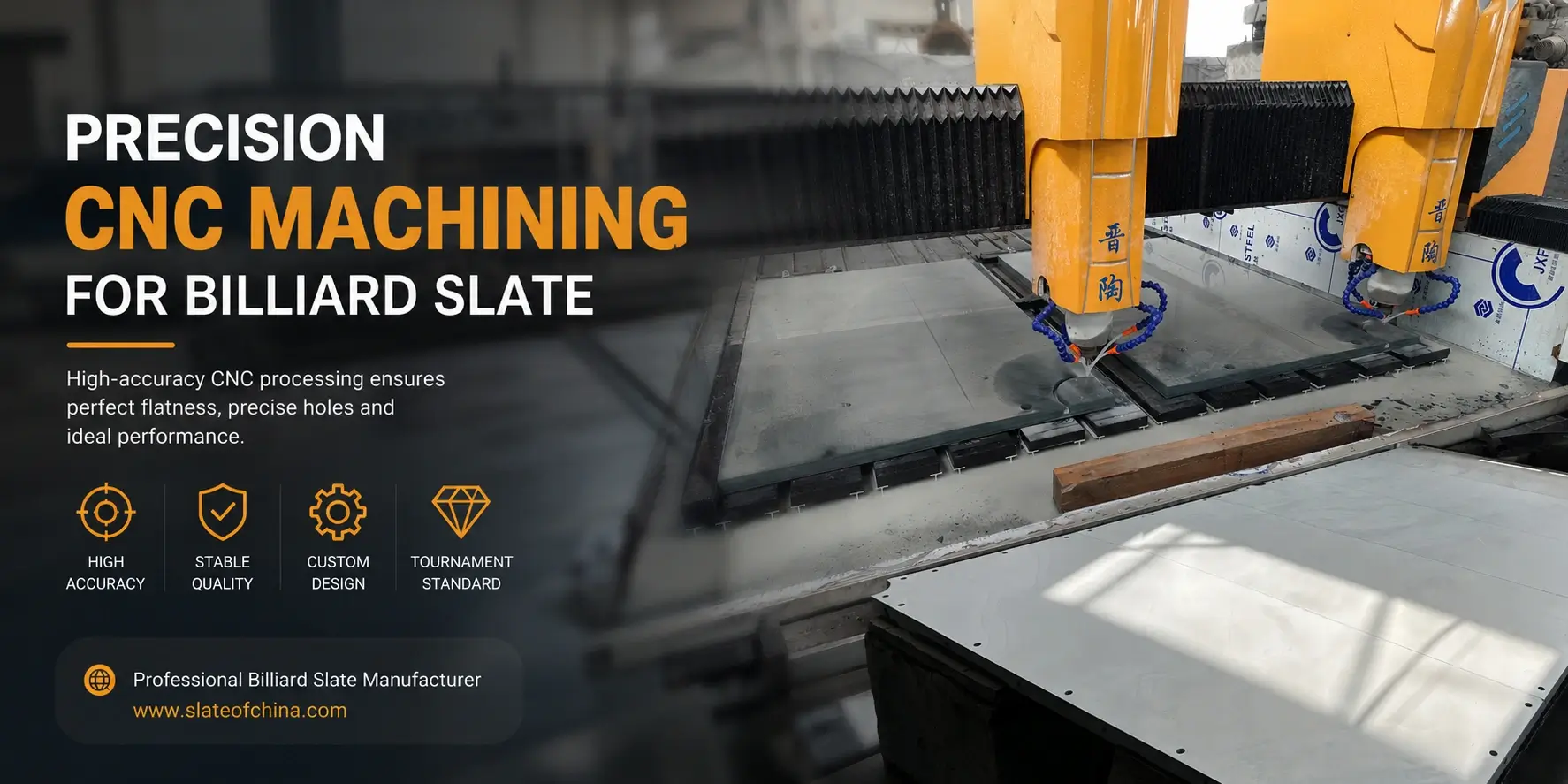
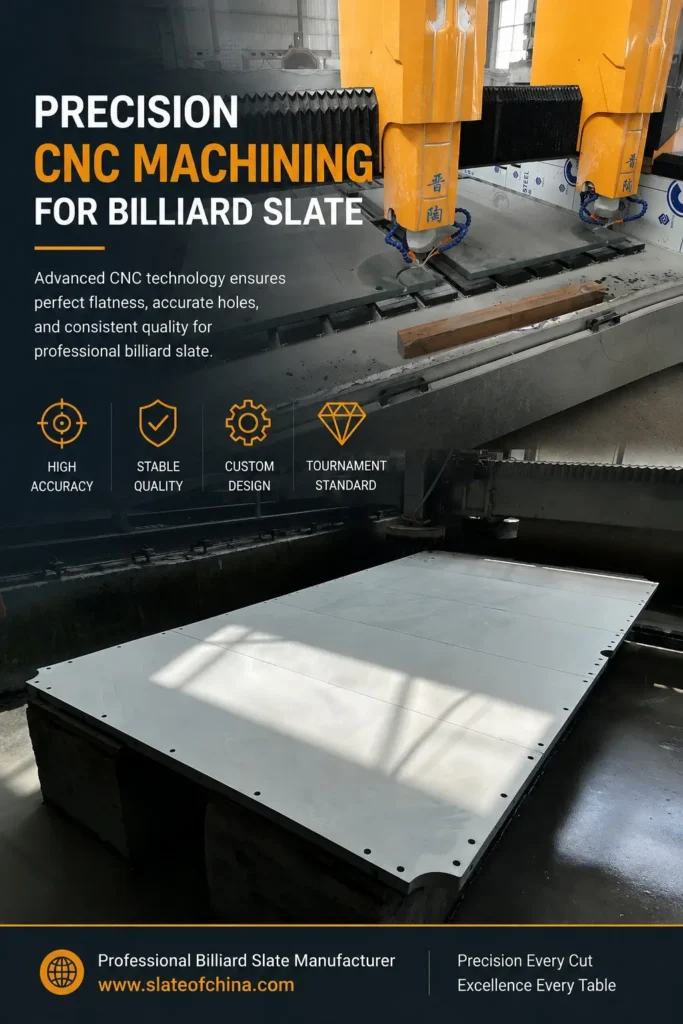
CNC billiard slate machining is the key process that transforms raw natural slate into a precision-engineered playing surface for professional pool and snooker tables. Using advanced CNC machining centers, every pocket opening, rail bolt hole, countersink, edge profile and mounting hole is machined with exceptional accuracy to ensure perfect assembly, consistent cushion alignment and reliable ball roll.
Whether you are manufacturing tournament pool tables, snooker tables or custom billiard tables, precision CNC machining directly affects slate flatness, installation efficiency, pocket geometry and long-term playing performance. This guide explains the complete CNC machining process, machining tolerances, quality inspection standards and custom machining capabilities to help table manufacturers, distributors and OEM buyers choose high-quality billiard slate with confidence.
Table of Contents
Why CNC Machining Matters for Billiard Slate
Natural slate is only the starting material for a billiard table. Before it can be assembled into a professional pool or snooker table, the slate must undergo precision CNC machining to create every functional feature required for accurate installation and consistent playing performance.
Without CNC machining, a slate panel is simply a flat stone slab. It cannot be accurately positioned, securely fastened or correctly aligned with the rails, cushions and pockets. Even high-quality natural slate cannot deliver tournament-level performance without precision machining.
This is why CNC machining is considered one of the most important manufacturing processes in billiard slate production.
What Does CNC Machining Add to a Slate?
During CNC machining, the raw slate is transformed into a finished billiard slate with all the critical features required for assembly.
It typically includes:
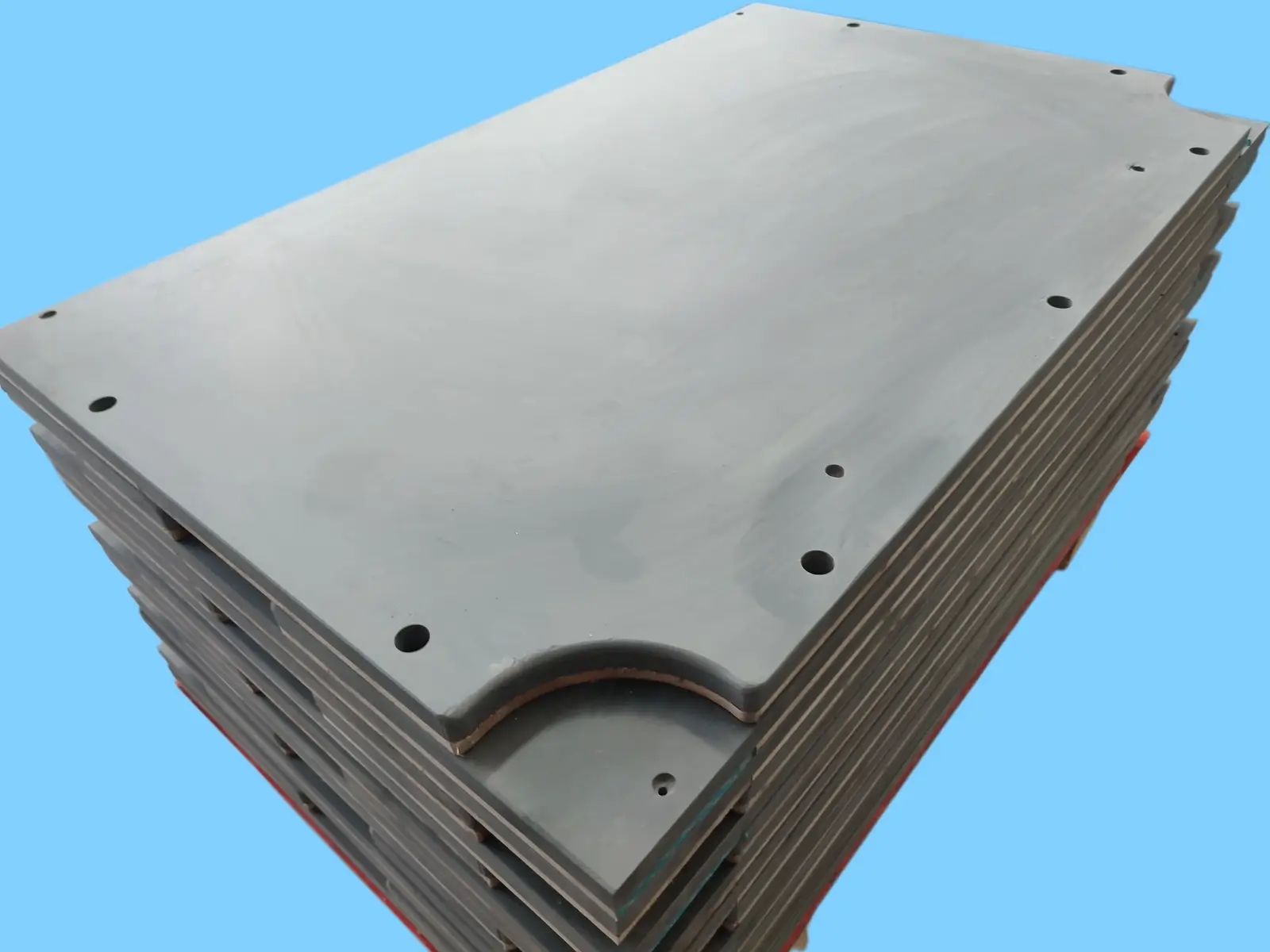
✔ Rail bolt holes – secure the cushion rails accurately to the slate.
✔ Dowel holes – ensure precise positioning between adjoining slate sections.
✔ Pocket openings – create accurate corner and side pocket geometry.
✔ Frame fixing holes – fasten the slate firmly to the table frame.
✔ Countersinks – allow bolt heads to sit flush with the slate surface.
✔ Locating slots – simplify installation and improve alignment.
✔ Edge profiling – produce clean, consistent edges for accurate assembly.
Every machining operation is performed according to engineering drawings with strict dimensional tolerances to ensure all parts fit together correctly.
Why Precision CNC Machining Is Important
For professional billiard tables, every machined feature contributes directly to table performance.
Accurate machining provides:
- Faster and easier table installation
- Precise rail and cushion alignment
- Consistent pocket dimensions
- Accurate positioning of three-piece slate joints
- Better frame stability
- Improved ball roll consistency
- Long-term dimensional accuracy
- Reliable tournament-level performance
Even a small machining deviation can cause rail misalignment, uneven cushion rebound, poor pocket geometry or unnecessary installation adjustments
Why It Matters
Without precision CNC machining, professional billiard table assembly is impossible. Even premium natural slate cannot achieve accurate installation, consistent ball roll or tournament-grade performance without precisely machined holes, pockets and locating features.
In the next section, we’ll walk through the complete CNC machining process, from CAD programming and machine setup to pocket cutting, drilling, edge profiling and final quality inspection.
CNC Billiard Slate Machining Process
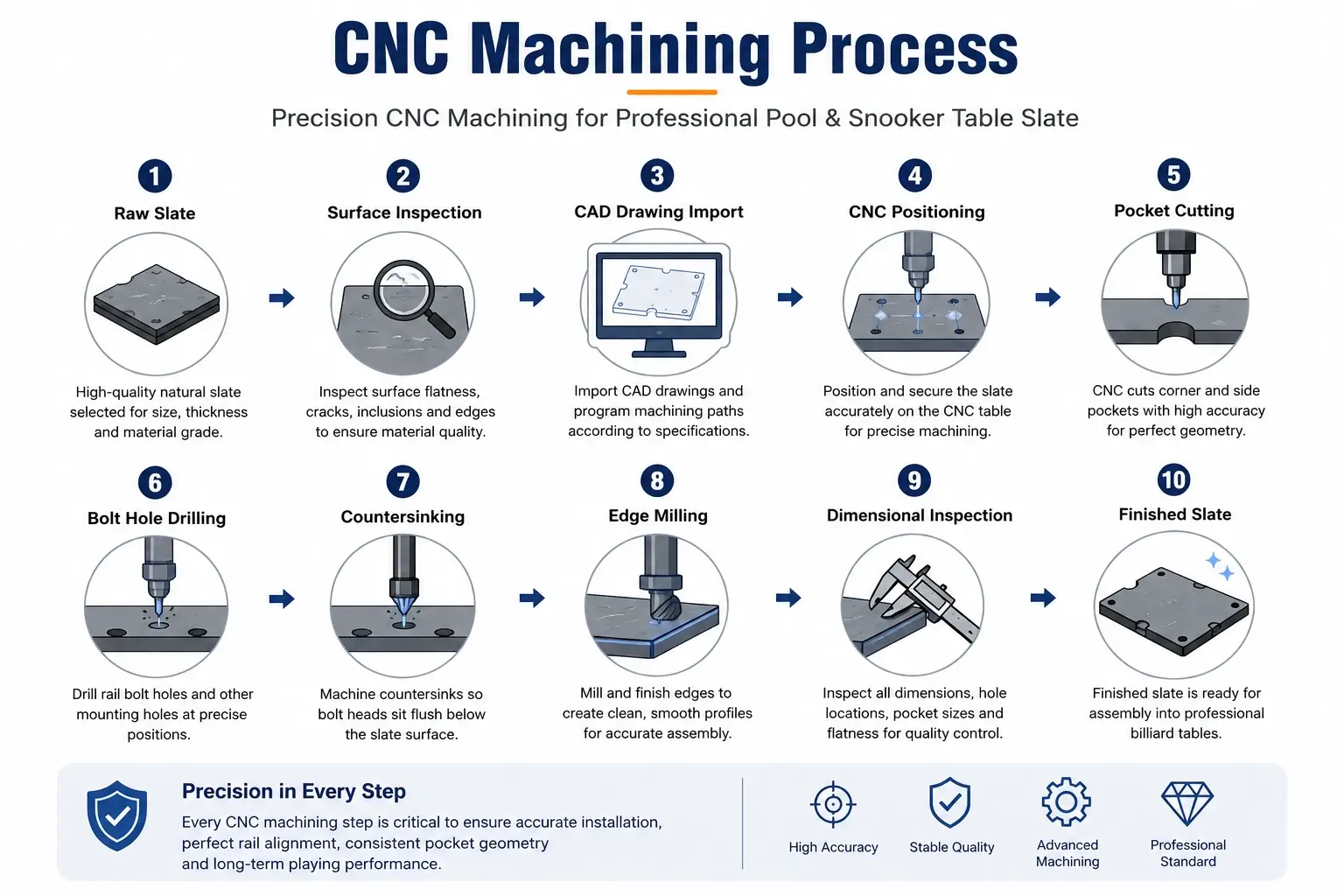
CNC machining transforms raw natural slate into a precision-engineered billiard table playing surface. Every machining operation follows CAD drawings and strict quality standards to ensure accurate dimensions, consistent hole locations and reliable table assembly.
From pocket cutting to bolt hole drilling and final dimensional inspection, each step directly affects installation accuracy, cushion alignment and long-term playing performance.
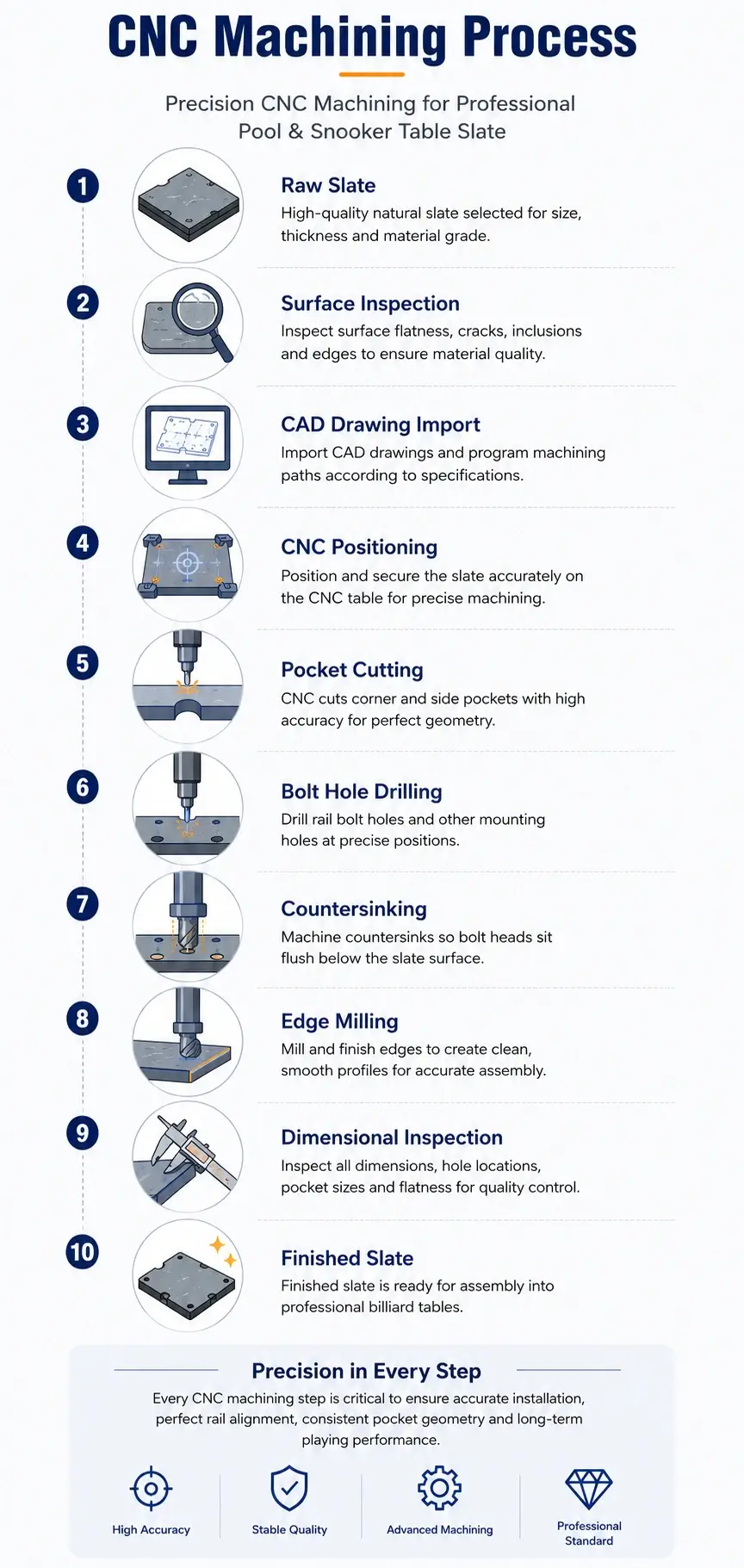
The typical CNC machining process includes the following stages.
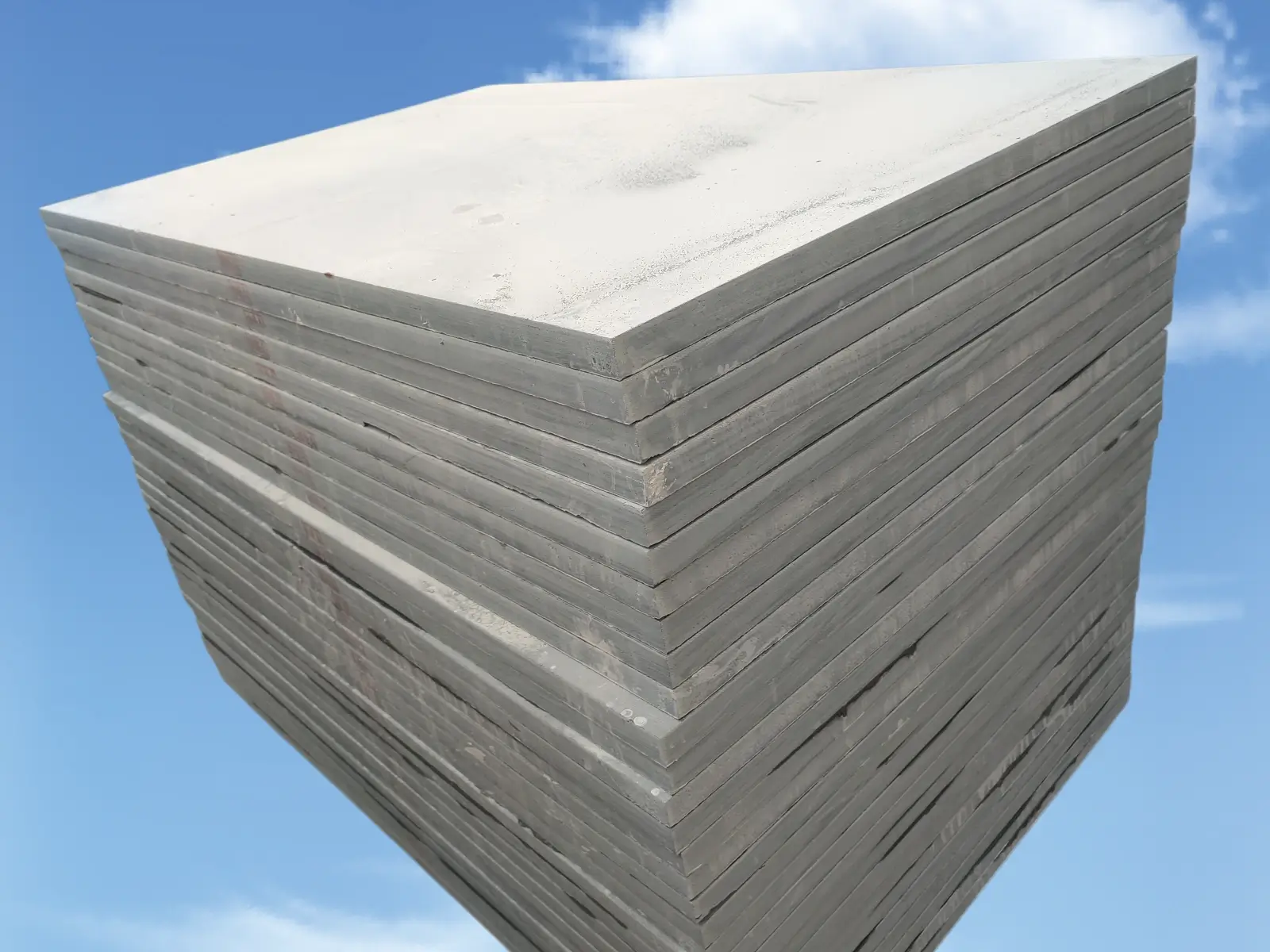
1. Raw Slate
Large natural slate slabs are selected according to the required table size, thickness and material grade before machining begins.
Keywords
Natural slate
Billiard slate
Pool table slate
2. Surface Inspection
Each slate is visually inspected for cracks, inclusions, edge defects and dimensional consistency before entering CNC production.
This step ensures only qualified slate proceeds to machining.
Keywords
Slate inspection
Raw slate inspection
Quality control
5. Pocket Cutting
The CNC machine precisely cuts corner pockets and side pockets according to the required table design.
Accurate pocket geometry is essential for consistent ball acceptance and tournament-level play.
Keywords
Pocket cutting
Corner pocket
Side pocket
Pocket geometry
6. Rail Bolt Hole Drilling
Bolt holes are drilled at precise locations to ensure perfect alignment between the slate and cushion rails.
Accurate hole spacing reduces installation time and prevents rail misalignment.
Keywords
Rail bolt holes
Bolt drilling
Rail alignment
7. Countersinking
Countersinks are machined so bolt heads sit flush below the slate surface, preventing interference with cloth installation and ensuring a smooth playing surface.
Keywords
Countersinking
Flush bolt heads
Slate machining
8. Edge Profiling & Finishing
The slate edges are machined and finished to create clean, uniform profiles for safe handling, accurate assembly and consistent joint alignment.
Keywords
Edge profiling
Edge finishing
Machined edges
9. Dimensional Inspection
Every finished slate undergoes dimensional inspection to verify hole locations, pocket dimensions, thickness, flatness and overall machining accuracy.
Only qualified products proceed to packing and shipment.
Keywords
Dimensional inspection
Flatness
Tolerance
Quality inspection
10. Finished Machined Slate
The completed slate is fully machined, inspected and ready for installation on professional pool, snooker or billiard tables.
Keywords
Finished machined slate
Professional billiard slate
Ready for installation
Why Every Step Matters
CNC machining is a continuous precision process. A mistake in any stage—from positioning and drilling to pocket cutting or final inspection—can affect slate assembly, rail alignment, pocket accuracy and overall table performance. Strict process control ensures every machined slate meets the dimensional tolerances required for professional billiard tables.
Types of CNC Machining Operations for Billiard Slate
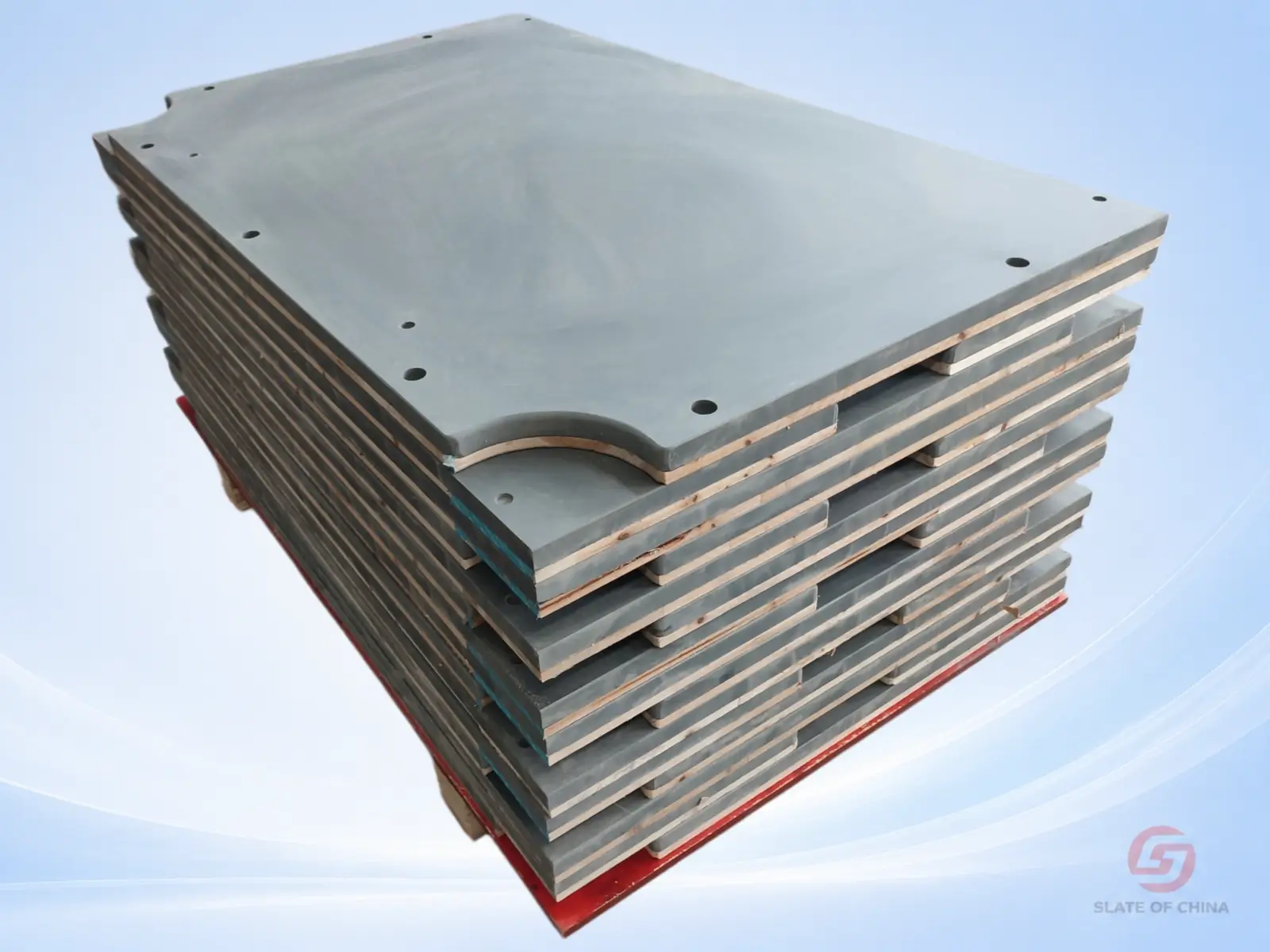
Professional billiard slate requires a series of precision CNC machining operations before it is ready for table assembly. Each operation serves a specific purpose, from creating accurate pocket openings to ensuring precise rail alignment and secure installation.
Understanding these machining operations helps buyers evaluate manufacturing quality, compare suppliers and specify custom machining requirements for OEM or tournament-grade billiard tables.
| CNC Operation | Purpose | Why It Matters |
|---|---|---|
| Pocket Cutting | Machine corner and side pocket openings | Ensures accurate pocket geometry and consistent ball acceptance. |
| Rail Bolt Hole Drilling | Drill bolt holes for cushion rails | Guarantees precise rail alignment and secure rail installation. |
| Frame Bolt Hole Drilling | Drill mounting holes for the table frame | Secures the slate firmly to the cabinet and improves structural stability. |
| Dowel Hole Machining | Machine locating holes for dowel pins | Maintains accurate alignment between multiple slate sections. |
| Countersinking | Create recessed bolt seats | Allows bolt heads to sit flush below the slate surface for smooth cloth installation. |
| Edge Profiling | Machine and finish slate edges | Produces clean edges for accurate assembly and safer handling. |
| Surface Trimming | Final surface calibration | Improves dimensional accuracy and prepares the slate for final inspection. |
Which CNC Operations Are Most Critical?
Although every machining step contributes to the final product, several operations have the greatest impact on billiard table performance.
Critical machining operations include:
- Pocket cutting for precise pocket geometry
- Rail bolt hole drilling for accurate cushion alignment
- Dowel hole machining for perfect three-piece slate positioning
- Countersinking for flush bolt installation
- Final surface trimming for dimensional accuracy
Even small machining deviations can affect table assembly, rail fit, pocket consistency and overall playing performance.
Buyer Tip
When comparing billiard slate suppliers, don’t only ask about slate material. Ask which CNC machining operations are included, what machining tolerances are guaranteed and whether custom hole patterns or OEM drawings are supported. Precision machining is often the difference between a standard table and a tournament-grade table.
The exact machining operations can be customized according to table type, engineering drawings or OEM requirements, ensuring every slate matches the customer’s assembly system and performance standards.
⚪ Pocket Cutting
⚙ Rail Bolt Holes
📍 Dowel Holes
⬇ Countersinks
▭ Edge Profiles
🛠 Surface Trimming
🔩 Frame Bolt Holes
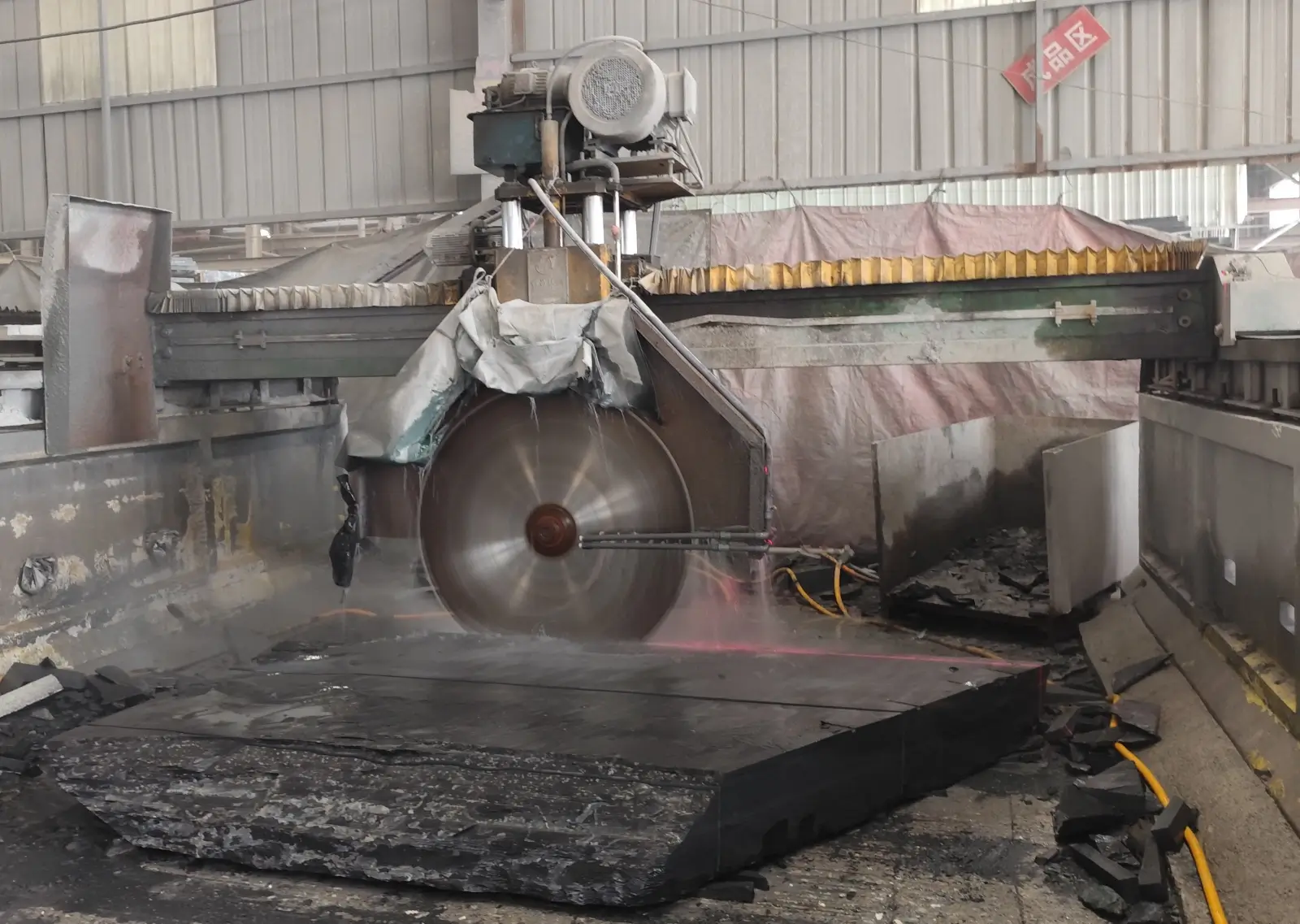
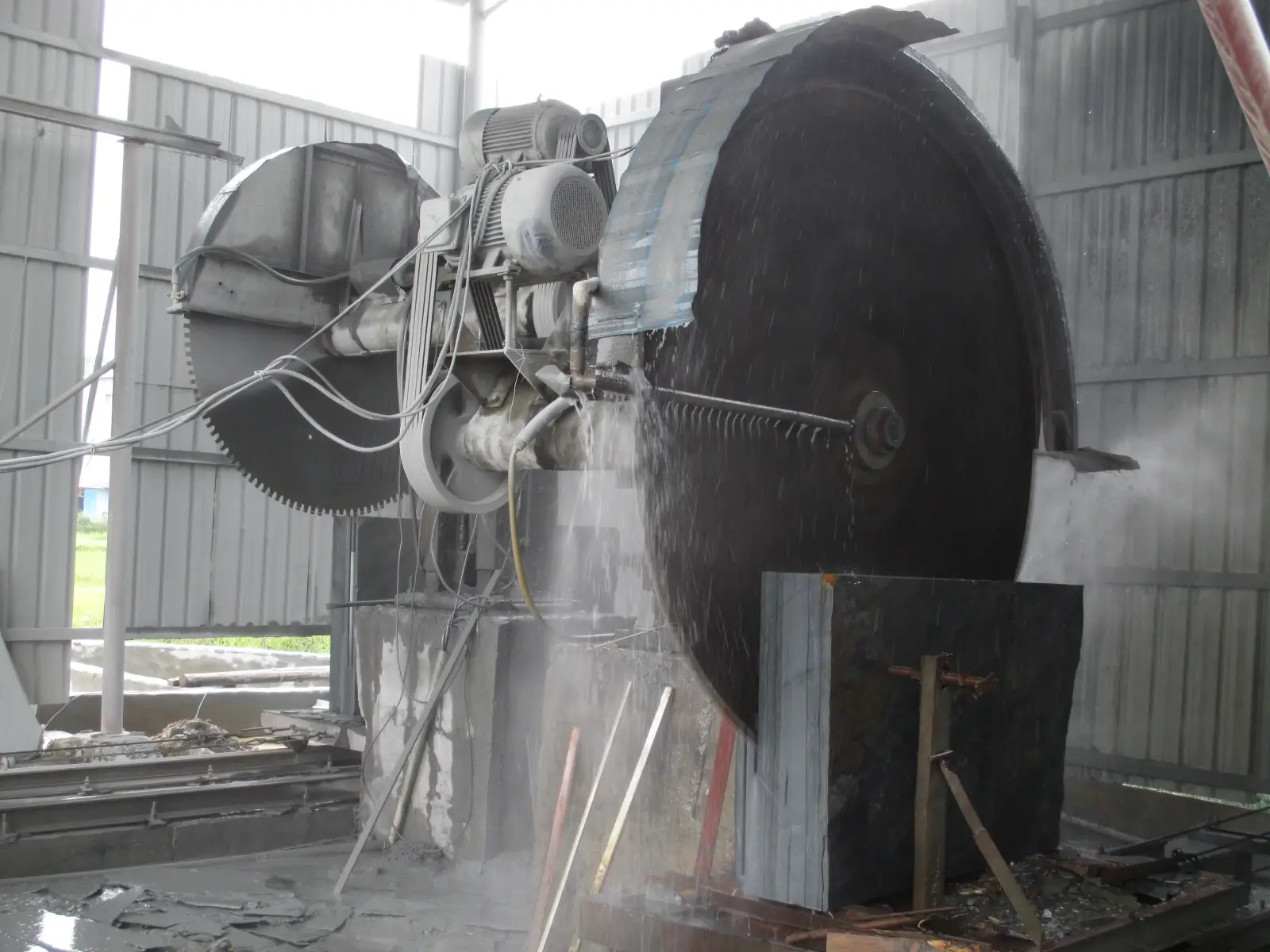
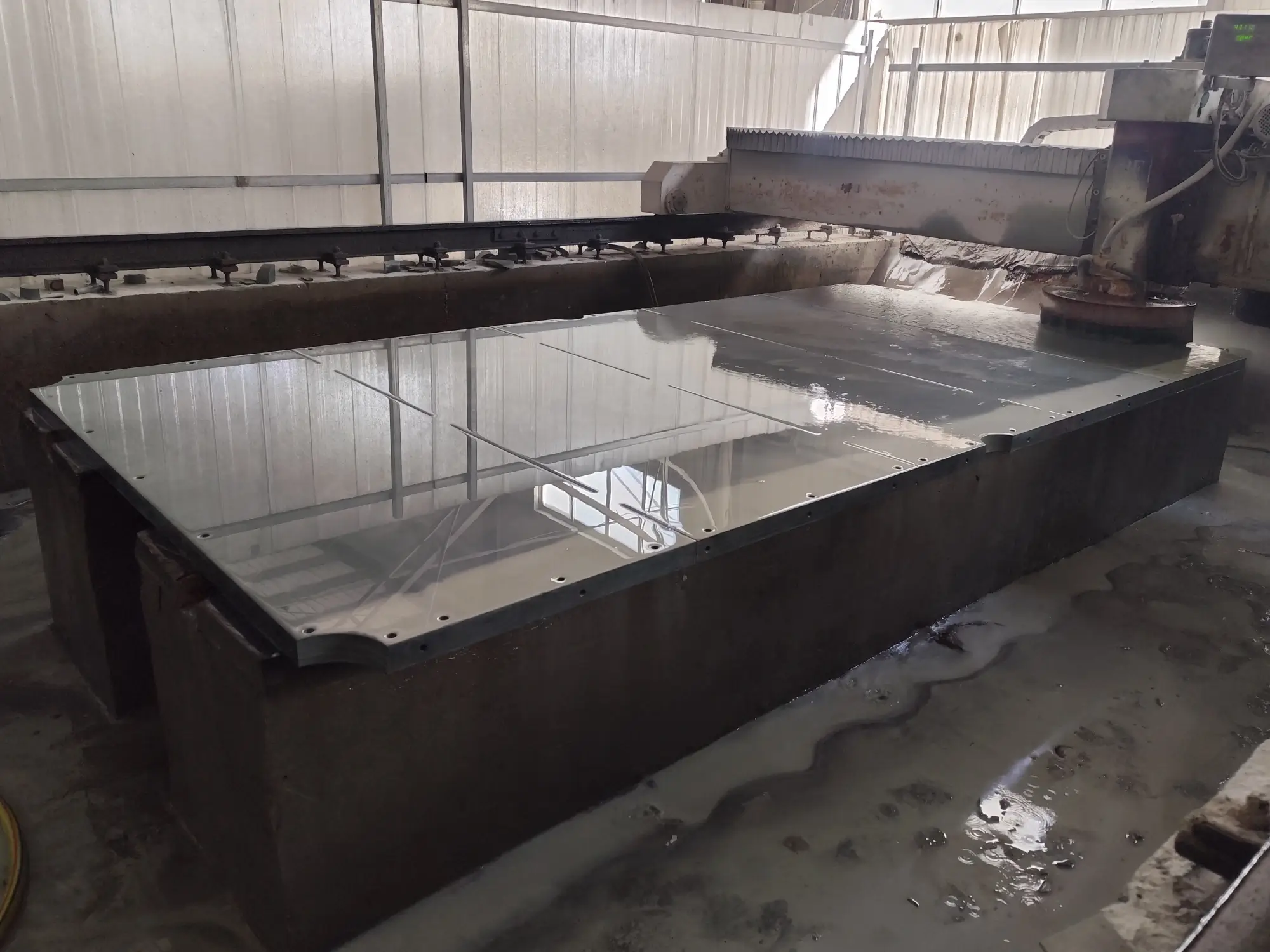
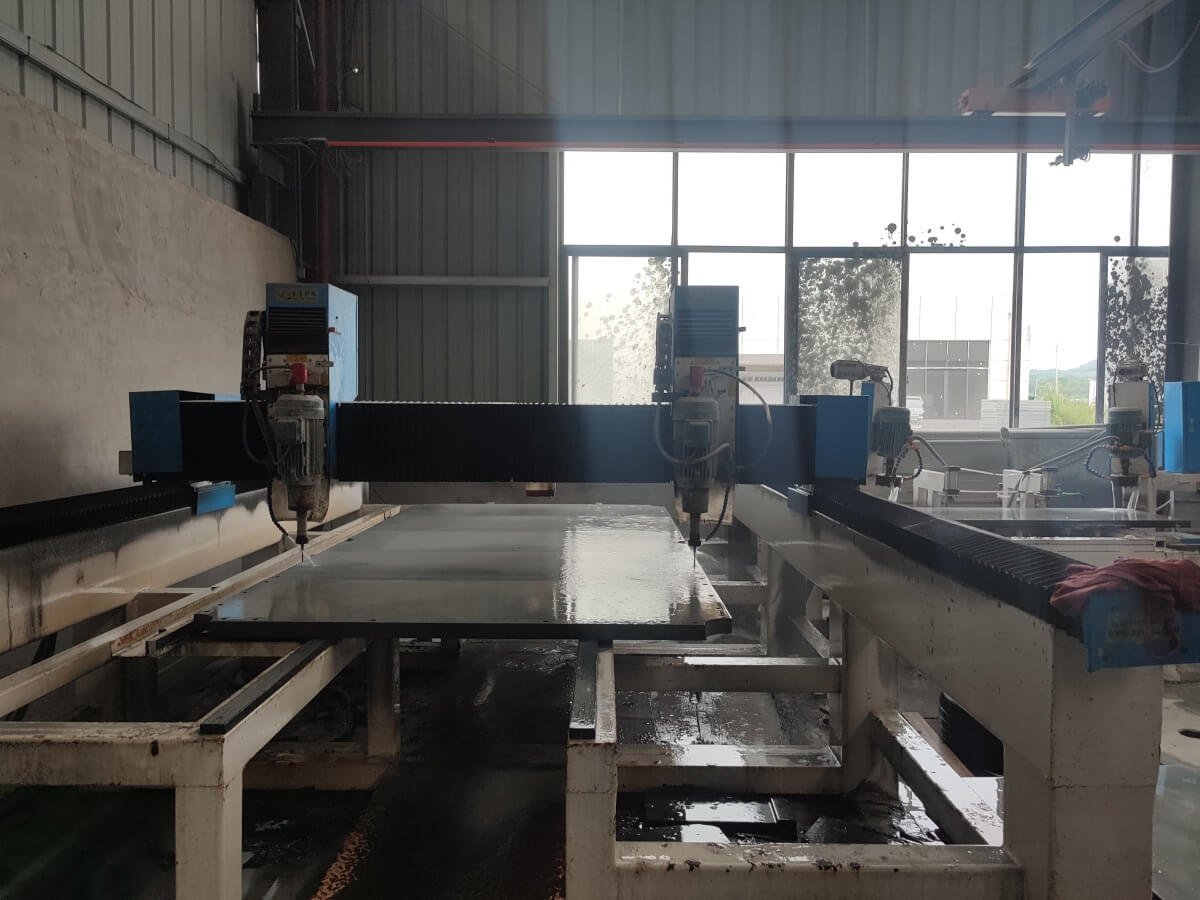
CNC Machines Used for Billiard Slate Machining
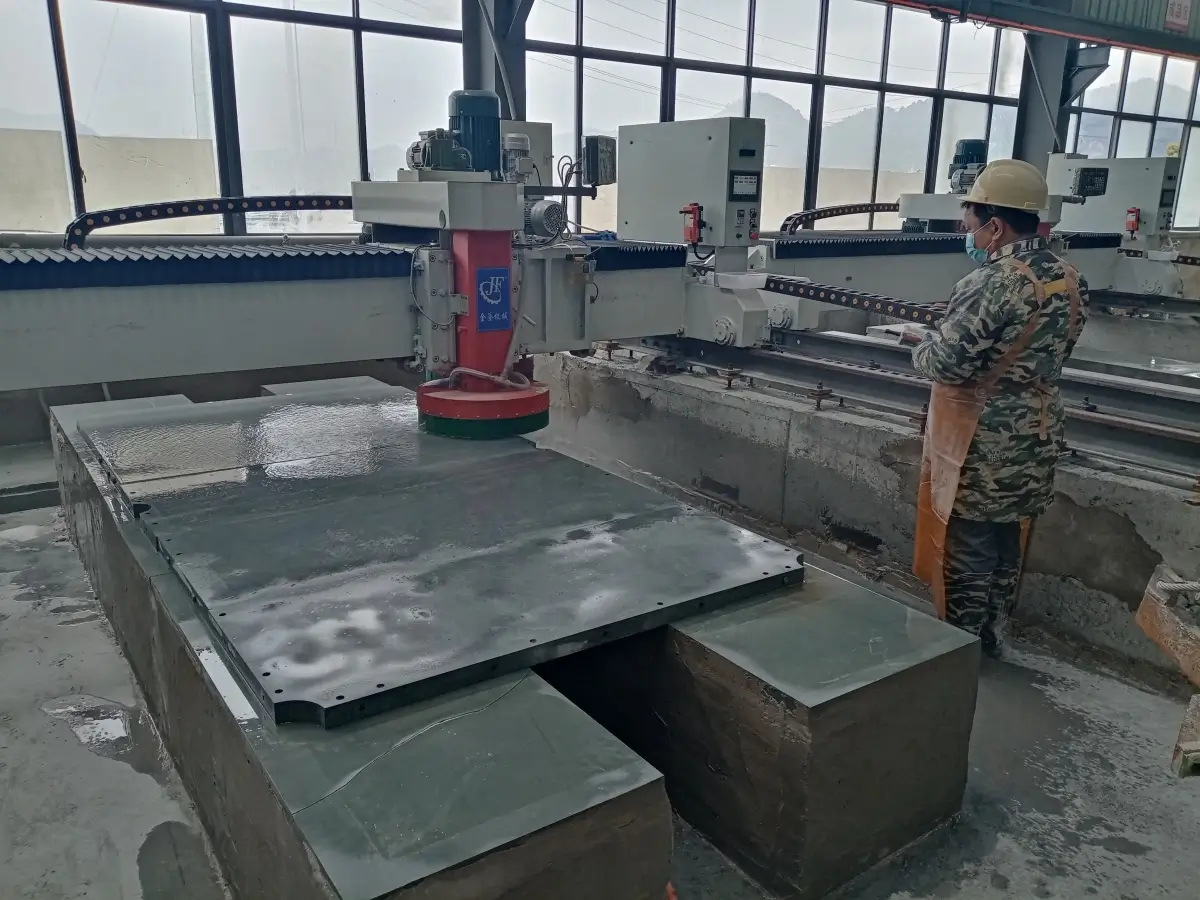
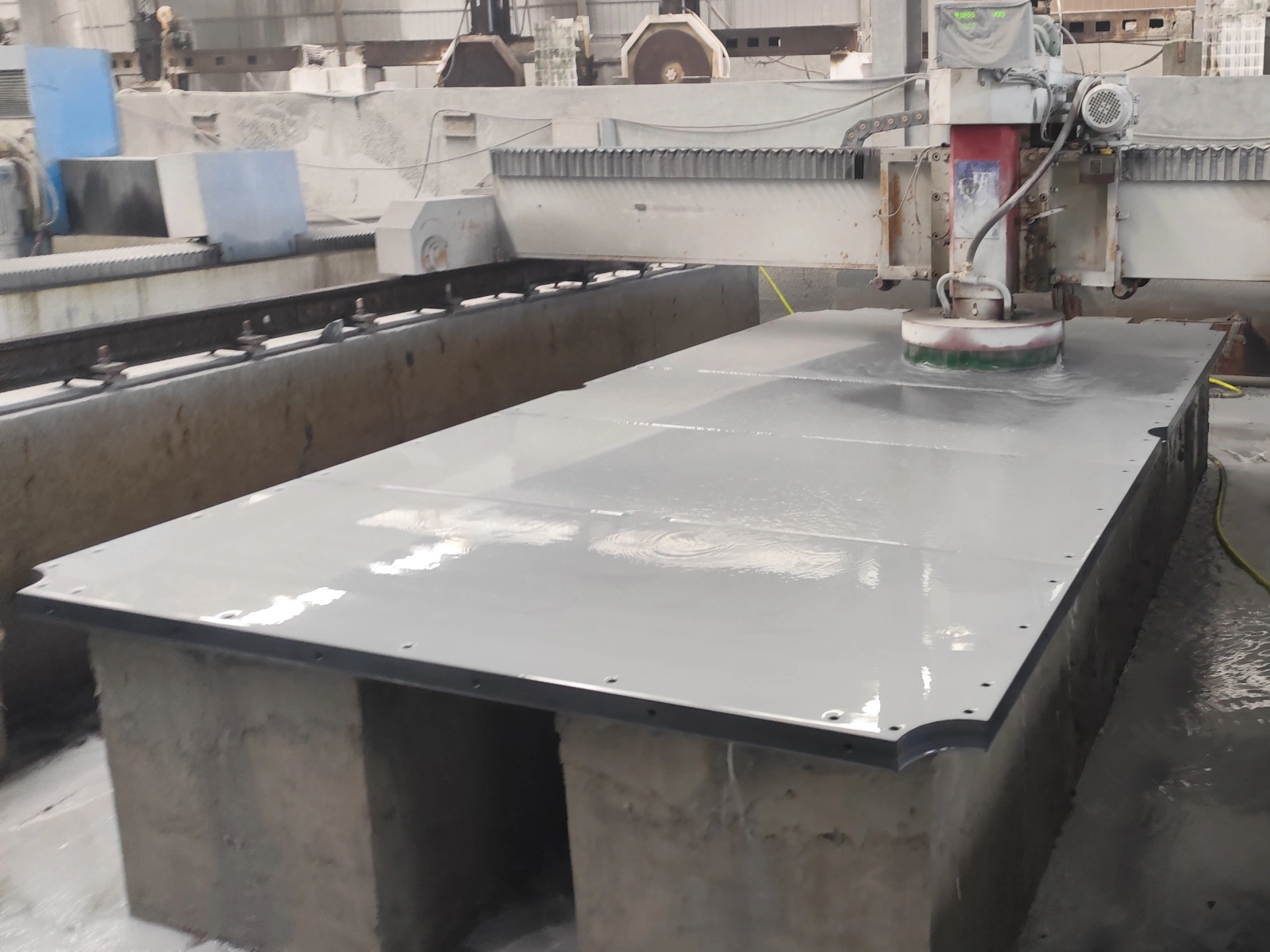
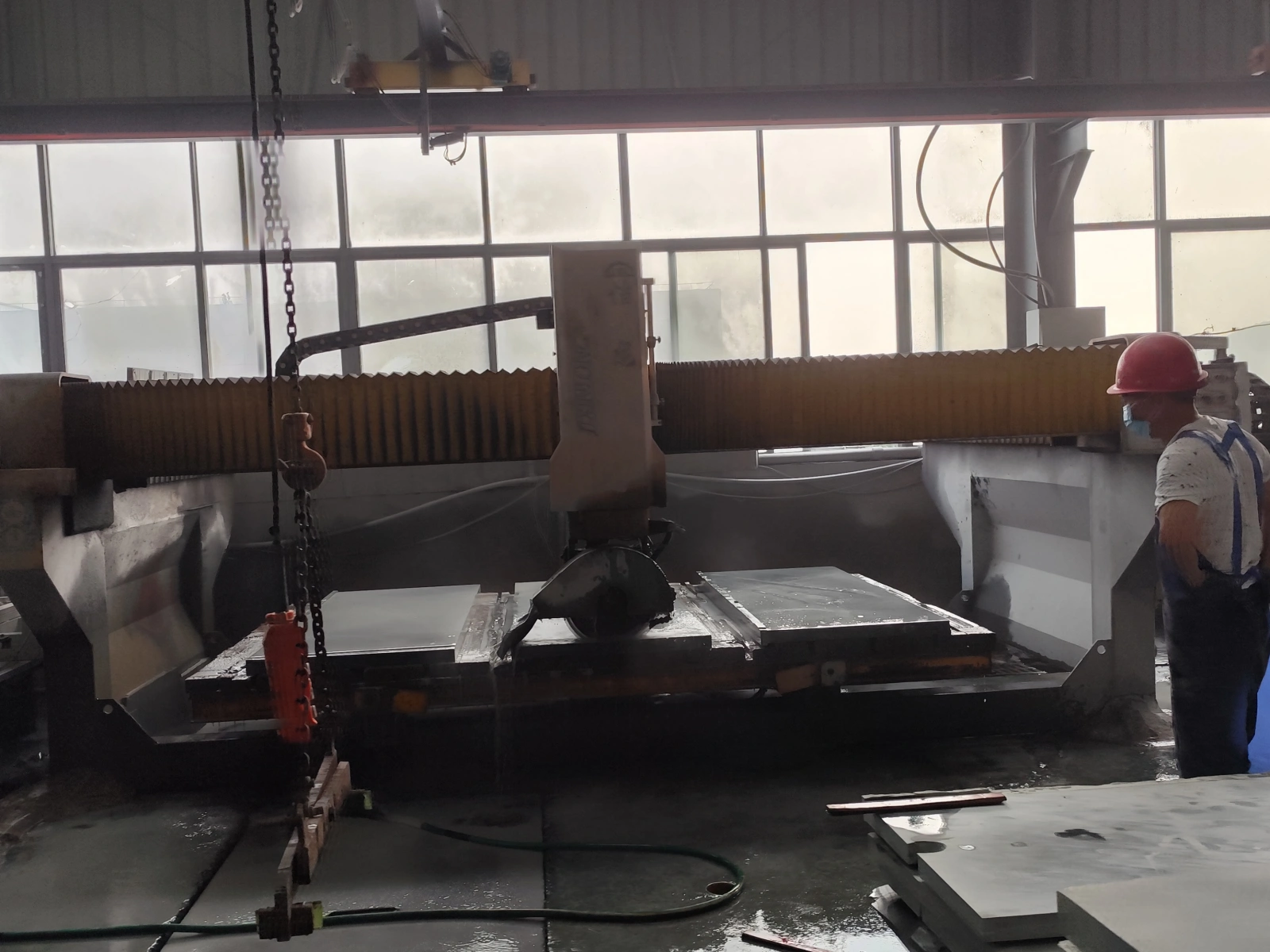
Modern billiard slate manufacturing relies on advanced CNC equipment rather than manual machining. High-precision machines, combined with CAD/CAM programming and automated process control, ensure every pocket opening, bolt hole and machined edge meets strict dimensional tolerances.
For professional pool and snooker tables, the quality of CNC equipment directly affects machining accuracy, assembly efficiency and long-term playing performance.
| Equipment | Primary Function | Customer Benefit |
|---|---|---|
| CNC Bridge Milling Machine | Precision machining of large slate panels | Excellent flatness and dimensional accuracy |
| CNC Gantry Machine | Heavy-duty machining of oversized slate | Stable machining for large-format billiard slate |
| Multi-axis CNC Machine | Complex pocket and hole machining | Higher precision and improved machining flexibility |
| Vacuum Positioning Table | Securely fixes the slate during machining | Prevents movement and improves machining consistency |
| Diamond Cutting Tools | Precision cutting and drilling of natural slate | Clean edges, reduced chipping and longer tool life |
Key CNC Equipment Explained
CNC Bridge Milling Machine
The CNC bridge milling machine is the primary equipment used for machining professional billiard slate. Its rigid bridge structure provides exceptional stability when machining large slate panels, ensuring high dimensional accuracy, consistent pocket geometry and precise hole positioning.
Best for
- Tournament slate
- Pool table slate
- Snooker slate
CNC Gantry Machine
CNC gantry machines are designed for heavy-duty machining of large-format slate. Their robust construction minimizes vibration during cutting, helping maintain machining accuracy even on thick or oversized slate panels.
Benefits
✔ Stable machining
✔ Large work area
✔ High repeatability
Multi-axis CNC Machine
Multi-axis CNC machining enables complex tool movements required for pocket cutting, countersinking and customized machining operations.
Compared with conventional machines, multi-axis systems improve machining efficiency while maintaining tight tolerances.
Vacuum Positioning Table
A vacuum positioning table securely holds the slate throughout the machining process.
Stable positioning prevents movement, improves repeatability and ensures every hole and pocket is machined exactly according to the engineering drawing.
Diamond Cutting Tools
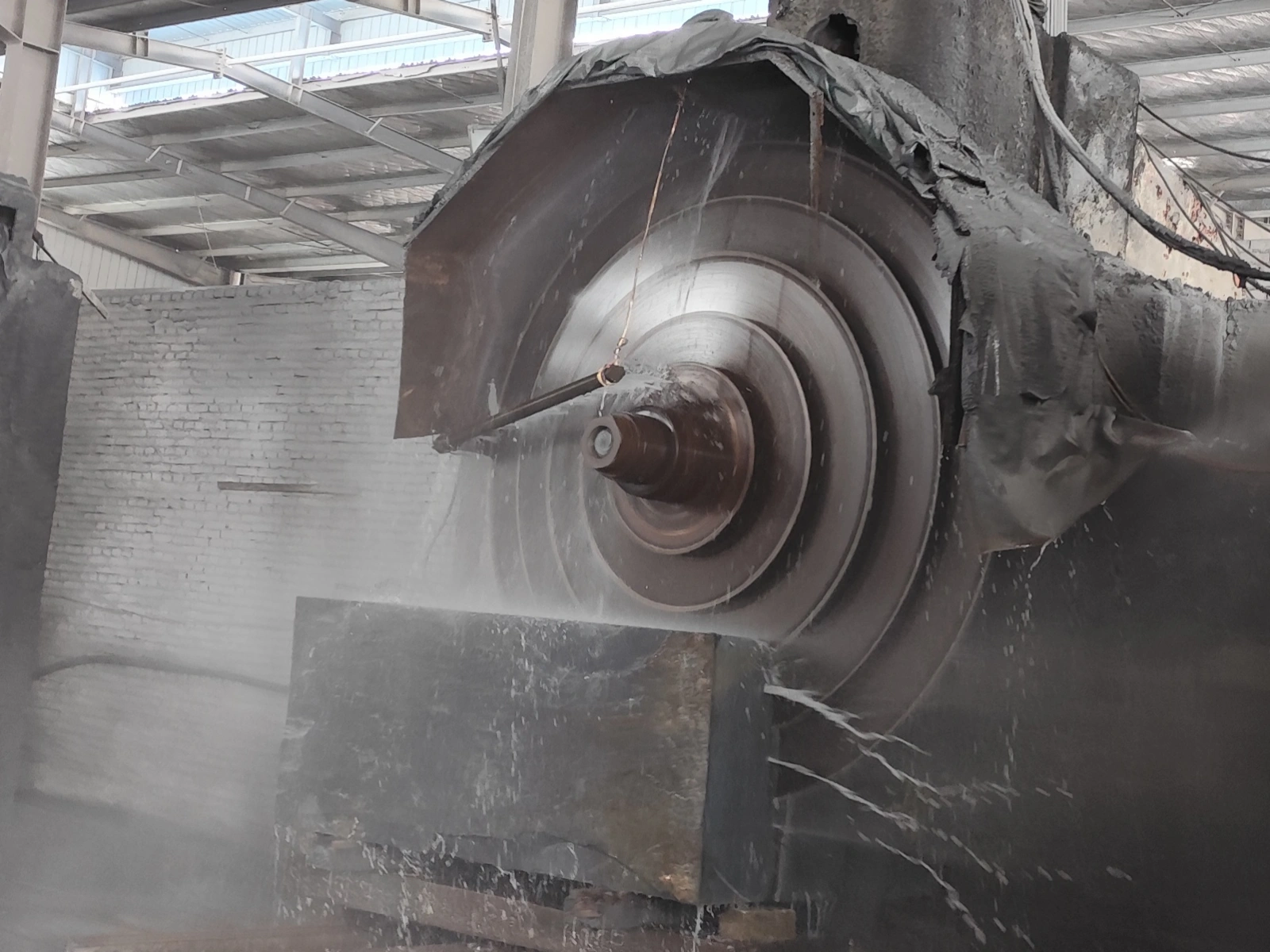
Natural slate is abrasive and requires specialized diamond cutting tools.
High-quality diamond tools produce cleaner cuts, smoother edges and more accurate holes while reducing edge chipping and extending tool life.
Digital Manufacturing with CAD/CAM & CNC Automation
Modern CNC machining is more than advanced equipment—it also depends on digital manufacturing technology.
Our machining workflow integrates:
| Technology | Purpose |
|---|---|
| CAD | Create accurate engineering drawings and machining layouts |
| CAM | Generate optimized machining paths for CNC equipment |
| CNC Automation | Execute machining operations with consistent precision and repeatability |
This digital workflow minimizes human error, improves production efficiency and ensures every machined slate meets the customer’s specifications.
Why Modern CNC Equipment Matters
Precision billiard slate is not produced by machines alone. Consistent quality comes from the combination of advanced CNC equipment, CAD/CAM programming, precision tooling and experienced process control. This integrated manufacturing system ensures every slate is machined accurately, efficiently and consistently.
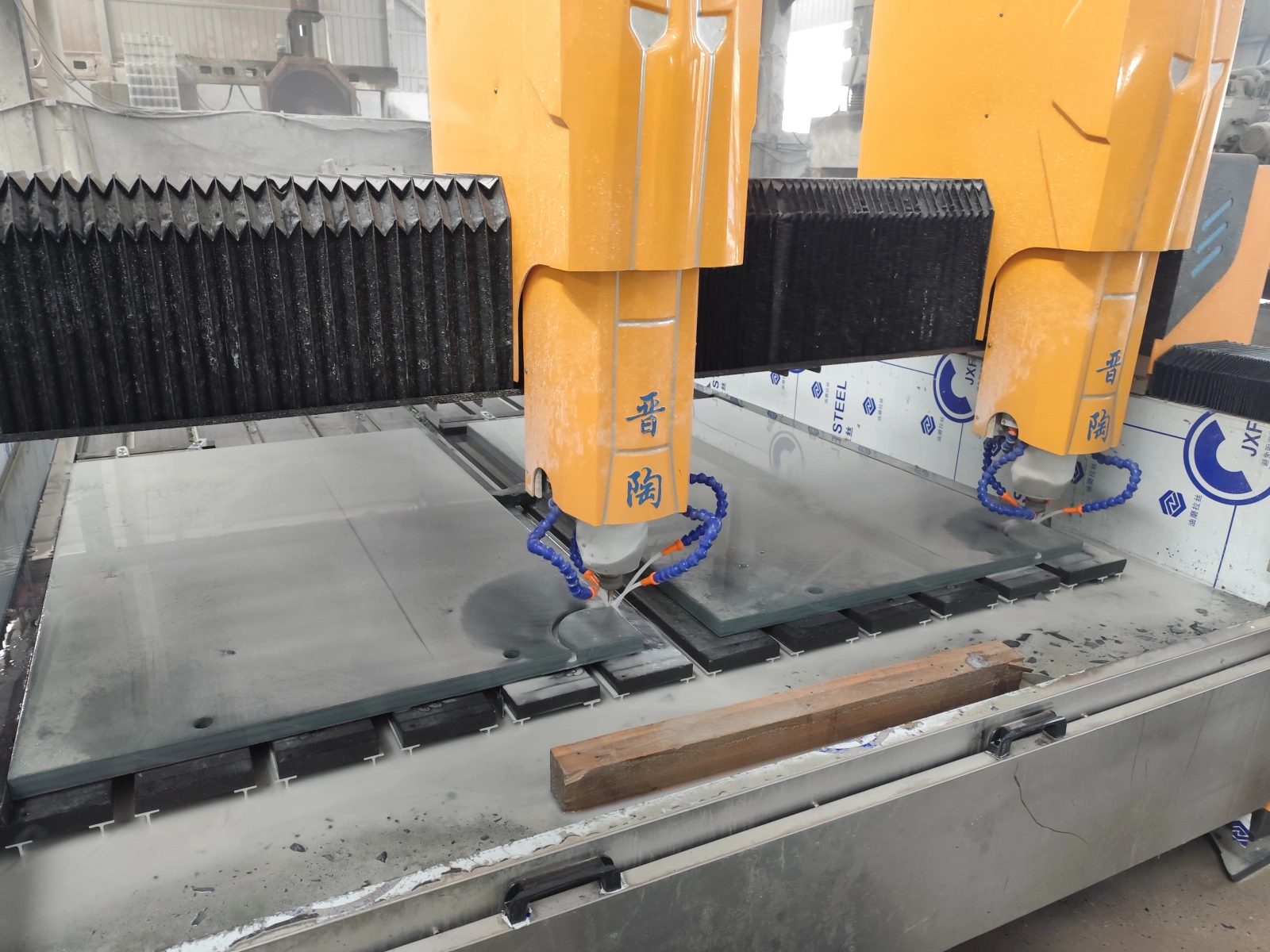
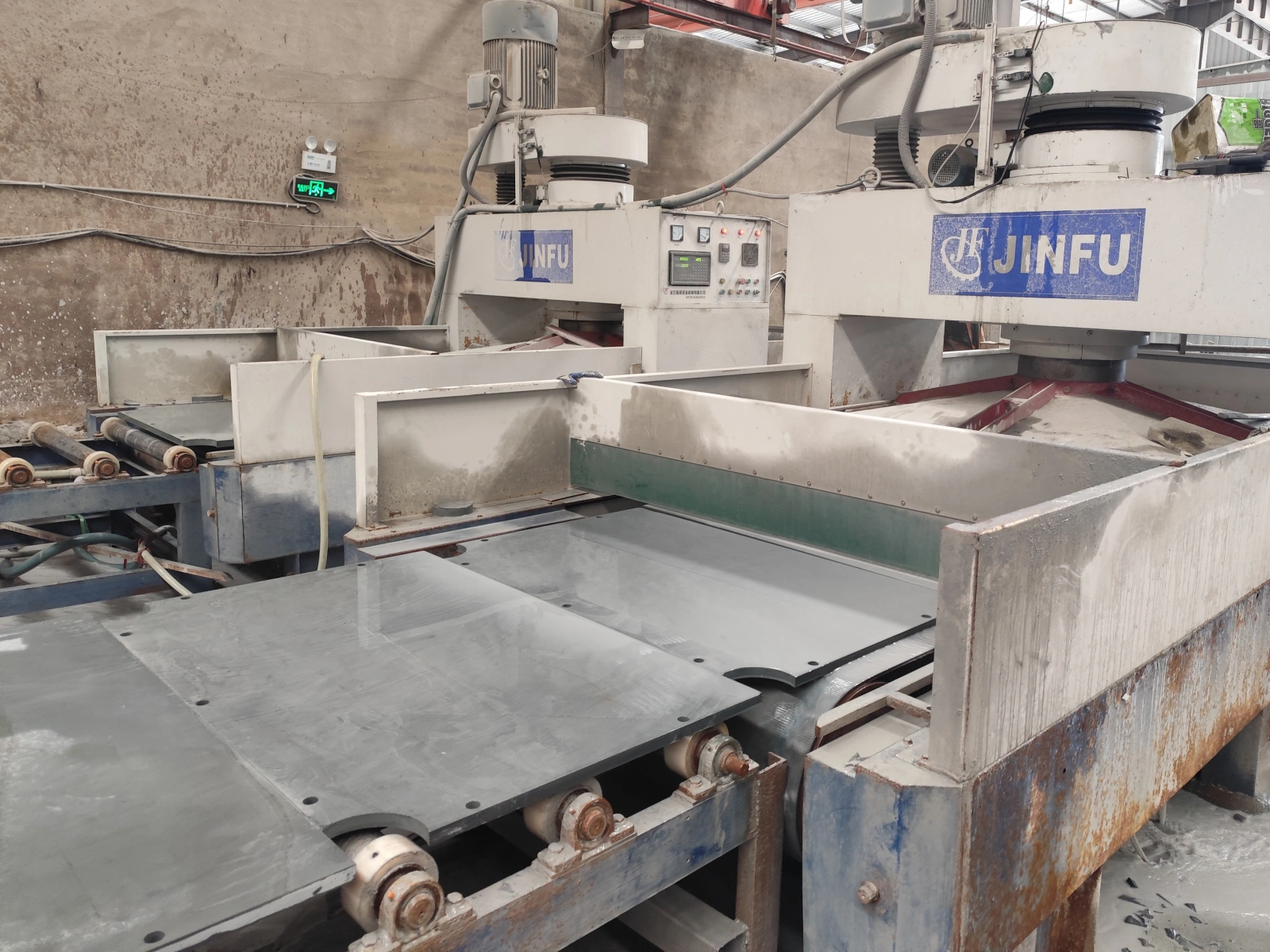
Advanced CNC equipment is only part of the solution. Precision also depends on machining tolerances and quality inspection, which are discussed in the following sections.
Why Buyers Should Care?
| Buyer Question | Answer |
|---|---|
| Can your factory machine large slate panels? | Yes, using CNC bridge and gantry machines. |
| Can you machine OEM drawings? | Yes, with CAD/CAM programming. |
| How do you ensure consistent hole positions? | Vacuum positioning and CNC automation maintain repeatable accuracy. |
| How do you reduce edge chipping? | Precision diamond cutting tools produce clean, accurate finishes. |
CNC Machining Accuracy & Tolerances
Precision is one of the most important quality indicators in CNC billiard slate machining. Accurate machining ensures that every pocket opening, bolt hole and locating feature matches the engineering drawing, allowing the slate to be assembled quickly and correctly.
High machining accuracy also minimizes installation adjustments, improves rail alignment and helps deliver the consistent playing performance expected from professional pool and snooker tables.
The following values represent the typical machining accuracy achieved during CNC processing.
| Machining Feature | Typical Accuracy | Why It Matters |
|---|---|---|
| Surface Positioning | ±0.10 mm | Ensures accurate CNC reference positioning and repeatable machining. |
| Hole Location | ±0.15 mm | Guarantees correct alignment of rail bolts, dowel pins and frame fixings. |
| Pocket Size | ±0.20 mm | Maintains consistent pocket geometry and ball acceptance. |
| Thickness Consistency | ±0.20 mm | Improves slate joint alignment and installation accuracy. |
| Flatness After Machining | ≤ 0.10 mm | Provides a smooth, level playing surface with reliable ball roll. |
Why Machining Accuracy Matters
Precision CNC machining affects far more than the appearance of the slate. Every machining tolerance contributes directly to the quality, assembly and performance of the finished billiard table.
Accurate machining provides:
- Faster and easier slate installation
- Precise rail and cushion alignment
- Consistent pocket dimensions
- Reliable positioning of three-piece slate sections
- Reduced assembly adjustments
- Improved playing consistency
- Better long-term dimensional stability
Even small deviations in hole locations or pocket geometry can lead to difficult assembly, uneven rail alignment or inconsistent ball rebound.
Buyer Tip
When evaluating a billiard slate supplier, don’t only ask “What is your machining accuracy?” Also ask how the accuracy is measured, what inspection equipment is used and whether the tolerances are verified before shipment. Consistent inspection is just as important as precision machining.
Typical Values vs. Customer Specifications
The machining tolerances shown above represent typical production capabilities for professional billiard slate.
Actual machining accuracy may vary depending on:
- Customer engineering drawings
- Table design and slate thickness
- Hole diameter and pocket geometry
- OEM machining requirements
- Tournament or commercial specifications
Custom machining tolerances can be achieved according to customer specifications and approved technical drawings.
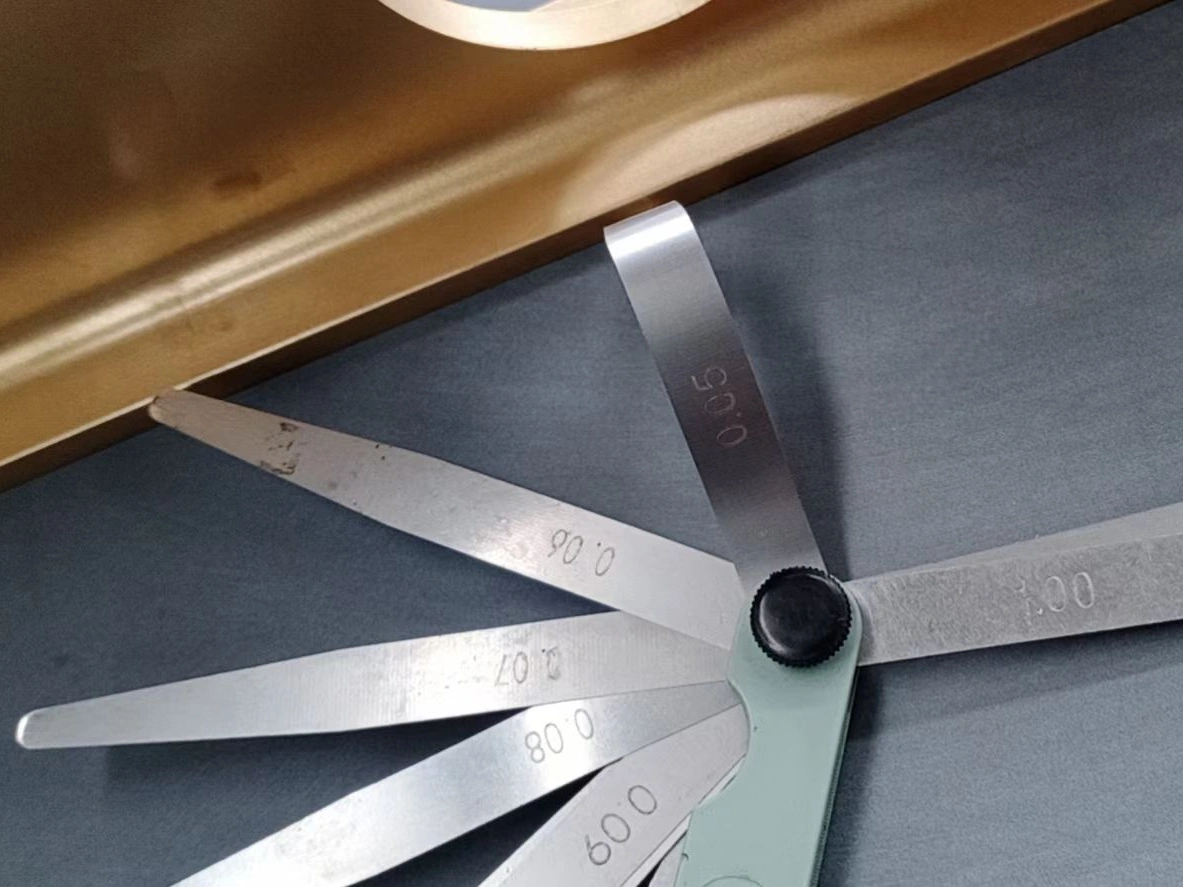
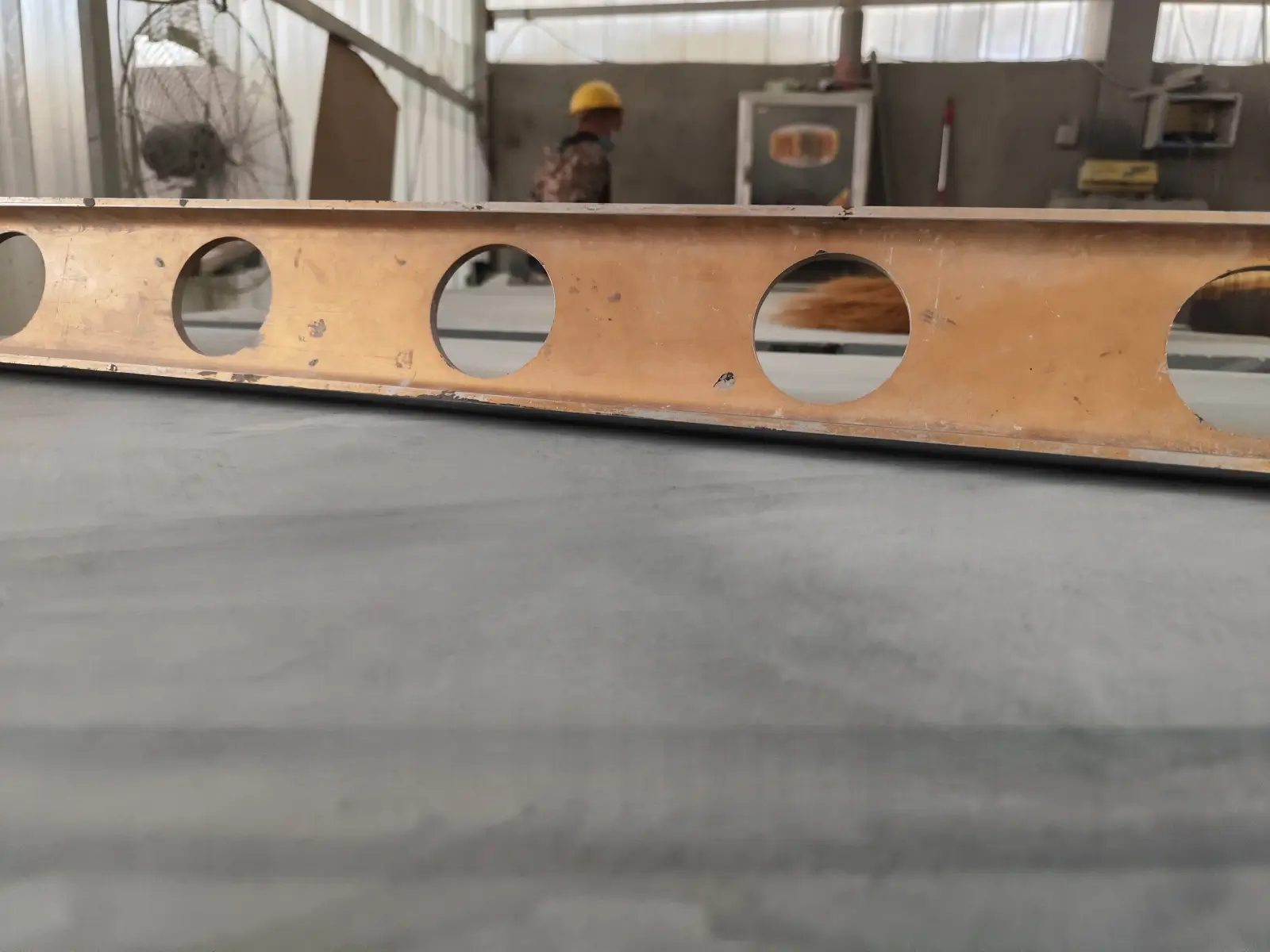
Precision machining is only meaningful when every finished slate is thoroughly inspected. In the next section, we’ll explain how dimensional accuracy, flatness and hole locations are verified through comprehensive quality inspection procedures.
Pocket Geometry Machining for Pool & Snooker Slate
Pocket machining is one of the most critical CNC operations in billiard slate production. The geometry of every pocket directly influences rail installation, pocket acceptance and overall playing performance.
Although pool tables and snooker tables both use corner and middle pockets, their pocket geometry differs significantly. Each table type requires dedicated CNC programming to ensure the correct opening size, jaw angle, radius and pocket profile.
Accurate pocket machining ensures that every slate matches the table design and performs consistently after installation.
Pool Table vs. Snooker Table Pocket Geometry
| Feature | Pool Table Slate | Snooker Table Slate |
|---|---|---|
| Corner Pocket | Larger opening | Smaller opening with tighter tolerance |
| Middle Pocket | Wider opening | Narrower opening |
| Jaw Angle | Designed for faster play | Designed for greater shot precision |
| Pocket Radius | Larger radius | Smaller radius |
| Opening Width | Varies by table specification | Strict tournament dimensions |
Key Features of Precision Pocket Machining
Modern CNC machining centers accurately process every pocket according to approved engineering drawings.
Critical machining features include:
- Corner pocket cutting for precise corner pocket geometry
- Middle pocket machining for consistent center pocket dimensions
- Jaw angle machining to achieve the correct ball entry angle
- Pocket radius profiling for smooth and accurate transitions
- Opening width control to meet tournament or OEM specifications
Every feature is machined within the required tolerance to ensure consistent performance across all slate sections.
Buyer Tip
Pocket geometry should always match the table manufacturer’s engineering drawings. A professionally machined slate ensures that every corner pocket, middle pocket and rail interface fits precisely during assembly, reducing installation time and maintaining consistent playing characteristics.
Custom Pocket Machining for OEM Projects
Every billiard table manufacturer may have different pocket specifications.
We support custom CNC machining based on:
- CAD drawings
- DXF and DWG files
- OEM pocket layouts
- Tournament specifications
- Custom pocket opening designs
This ensures the finished slate is fully compatible with the customer’s rail system and table construction.
Pocket machining is only one part of precision slate production. Accurate rail bolt hole machining is equally important to ensure proper rail positioning and consistent table performance.
Rail Bolt Hole Machining
Rail bolt hole machining is one of the most important precision operations in CNC billiard slate production. Every bolt hole must match the engineering drawing exactly to ensure accurate rail positioning, proper cushion alignment and secure table assembly.
Even premium natural slate cannot deliver professional playing performance if the bolt holes are incorrectly positioned. A small deviation in hole location may affect the installation of the rails, the alignment of the cushions and the consistency of ball rebound.
Why Accurate Rail Bolt Holes Matter
Rail bolt holes do much more than secure the rails to the slate. They establish the reference position for the entire rail assembly.
Accurate hole machining ensures:
- Precise bolt alignment for quick and reliable installation
- Correct rail positioning along every edge of the table
- Consistent cushion alignment for uniform rebound performance
- Proper pocket-to-rail fit without additional adjustments
- Interchangeable parts for efficient production and maintenance
For tournament-quality billiard tables, accurate hole locations are just as important as slate flatness and pocket geometry.
What Happens If Hole Positions Are Incorrect?
Even a small positioning error can create problems during assembly and affect how the table performs.
| Potential Problem | Possible Result |
|---|---|
| Bolt holes out of position | Difficult rail installation and longer assembly time |
| Rails shift during installation | Uneven rail alignment and inconsistent pocket fit |
| Cushions become misaligned | Irregular rebound angles and reduced playing consistency |
| Pocket geometry changes | Inconsistent pocket acceptance |
| Repeated installation adjustments | Increased labor cost and reduced production efficiency |
How CNC Machining Ensures Accurate Hole Positioning
Modern CNC machining centers use CAD/CAM programming and precision positioning systems to drill every rail bolt hole according to the approved engineering drawing.
To maintain consistent hole accuracy, the machining process includes:
- CNC positioning before drilling
- Automated hole location control
- Precision drilling with diamond tools
- Dimensional verification after machining
- Final inspection before shipment
This controlled process helps ensure that every slate can be assembled efficiently without unnecessary adjustments.
Custom Rail Bolt Hole Machining
Different billiard table manufacturers often use different rail systems and bolt patterns.
We support custom CNC machining for:
- OEM bolt hole layouts
- Custom rail bolt spacing
- Customer CAD drawings
- Pool, snooker and carom table designs
- Special assembly requirements
Every hole pattern is machined according to the customer’s approved technical drawings to ensure compatibility with the intended rail system.
Buyer Tip
Accurate rail bolt hole machining reduces installation time, improves rail alignment and helps achieve consistent playing performance. When choosing a billiard slate supplier, ask whether hole locations are CNC machined and verified against the customer’s engineering drawings.
Accurate rail bolt hole machining is only one part of precision slate production. For multi-piece slate, precise matching between each section is equally important to ensure seamless installation and long-term stability.
Three-piece Slate CNC Matching
Three-piece billiard slate must be machined as a complete assembly rather than three separate panels. During CNC machining, all three pieces are referenced to the same coordinate system to ensure that every pocket opening, bolt hole, dowel hole and joint aligns perfectly after installation.
Without precise CNC matching, even high-quality natural slate can become difficult to assemble and may fail to deliver consistent playing performance.
Why CNC Matching Is Essential
Each slate section is part of a single playing surface. During machining, the three pieces are positioned and processed using the same machining reference, ensuring complete dimensional consistency across the entire table.
Precision CNC matching guarantees:
- Identical hole positions across all slate sections
- Consistent pocket geometry at the joints
- Accurate dowel hole alignment
- Perfect rail bolt hole matching
- Smooth slate joint transitions
- Faster and easier installation
This coordinated machining process allows the three pieces to fit together as one continuous playing surface.
One Coordinate System for All Three Pieces
Professional CNC machining does not treat each slate panel independently.
Instead, all three pieces are programmed within the same coordinate system, ensuring that every machining feature is referenced from the same origin.
This approach ensures:
- Uniform machining dimensions
- Accurate hole spacing
- Perfect joint alignment
- Consistent rail positioning
- Reliable interchangeability
Using a common coordinate system significantly reduces assembly errors and eliminates the need for manual adjustments during installation.
What Happens Without Proper CNC Matching?
If each slate section is machined separately without coordinated positioning, installation problems can occur.
| Potential Issue | Result |
|---|---|
| Hole positions do not match | Difficult assembly and poor rail alignment |
| Joint surfaces are misaligned | Visible seams and uneven playing surface |
| Pocket geometry differs at the joints | Inconsistent pocket performance |
| Rail bolt holes are offset | Rails cannot be positioned accurately |
| Different reference points are used | Time-consuming installation adjustments |
Even small machining deviations can accumulate across three slate sections, making accurate installation much more difficult.
Buyer Tip
When purchasing a three-piece billiard slate, ask whether all three pieces are CNC machined using the same coordinate system. This is one of the most important factors affecting assembly accuracy, rail alignment and long-term table performance.
OEM Matching for Custom Table Designs
Different billiard table manufacturers may require unique hole layouts, pocket positions or assembly systems.
We support custom CNC matching for:
- OEM engineering drawings
- Custom hole patterns
- Special rail systems
- Tournament table specifications
- Pool, snooker and carom slate
Every three-piece slate set is machined and inspected as a matched system to ensure complete compatibility during installation.
Accurate CNC matching must be verified through dimensional inspection before shipment. In the next section, we’ll explain how machined slate is inspected to ensure every hole, joint and surface meets the required specifications.
CAD Drawings & Custom CNC Machining
Every billiard table manufacturer has unique engineering requirements. Hole patterns, pocket geometry, rail systems and mounting layouts often vary between brands and table designs.
Our CNC machining process is fully CAD/CAM driven, allowing us to manufacture billiard slate according to your engineering drawings with high precision and repeatability. Whether you require OEM production, custom pocket layouts or private label manufacturing, every machining operation is programmed to match your approved technical specifications.
Supported Engineering File Formats
To ensure accurate machining, we accept a wide range of industry-standard engineering files.
| File Format | Application |
|---|---|
| AutoCAD | 2D engineering drawings and machining layouts |
| DXF | CNC machining data exchange |
| DWG | Native AutoCAD design files |
| STEP (STP) | 3D engineering and assembly models |
| PDF Engineering Drawings | Dimension verification and production reference |
Tip: Providing CAD files together with a dimensioned PDF drawing helps minimize engineering revisions and improves machining accuracy.
Custom CNC Machining Services
Our CNC machining capabilities support a wide variety of custom production requirements.
We provide:
- OEM billiard slate machining
- ODM product development
- Custom pocket geometry
- Custom bolt hole layouts
- Custom dowel hole locations
- Custom slate dimensions
- Tournament specifications
- Private label production
Every project is programmed individually to ensure complete compatibility with the customer’s table design.
From Your Drawing to Finished Slate
Our engineering workflow is designed to simplify OEM production while maintaining machining accuracy.
Typical workflow
Customer Drawing
↓
Engineering Review
↓
CAD/CAM Programming
↓
CNC Machining
↓
Dimensional Inspection
↓
Finished Machined SlateOEM & Private Label Manufacturing
Many of our customers are billiard table manufacturers, distributors and private brands requiring customized slate machining.
We support:
- OEM manufacturing
- ODM product development
- Private label production
- Custom packaging
- Customer-specific machining standards
- Confidential engineering drawings
All customer drawings and technical documents are handled with strict confidentiality throughout the production process.
Buyer Tip
The fastest way to receive an accurate quotation is to send your CAD drawing together with the required slate dimensions, thickness and machining details. Our engineering team will review the drawing and recommend the most suitable machining solution before production begins.
Every custom drawing is verified before production and inspected after machining to ensure dimensional accuracy, hole positioning and full compatibility with the customer’s assembly requirements.
Quality Inspection After CNC Machining
Precision CNC machining is only the first step. Every machined billiard slate must undergo a comprehensive quality inspection before packaging and shipment to ensure that all dimensions, hole locations and assembly features meet the approved engineering drawings.
A complete post-machining inspection helps eliminate installation problems, improves assembly efficiency and ensures consistent playing performance for professional pool and snooker tables.
What Is Inspected After CNC Machining?
Every finished slate is inspected using calibrated measuring tools and quality control procedures.
The inspection typically includes:
| Inspection Item | Purpose | Why It Matters |
|---|---|---|
| Hole Spacing | Verify the distance between bolt and dowel holes | Ensures accurate rail installation and component alignment |
| Pocket Dimensions | Measure pocket opening size and geometry | Maintains consistent pocket performance |
| Edge Quality | Check edge finish and machining condition | Prevents chipping and improves assembly quality |
| Bolt Fit | Confirm bolt holes match the specified hardware | Ensures smooth installation without modification |
| Assembly Fit | Verify alignment between adjoining slate sections | Produces seamless joints and easier installation |
| Dimensional Inspection | Measure overall length, width and thickness | Confirms compliance with engineering drawings |
Why Quality Inspection Is Essential
Even if CNC machining is highly accurate, inspection is necessary to verify that every machined feature meets the required specification before shipment.
Comprehensive inspection helps ensure:
- Accurate hole locations
- Consistent pocket geometry
- Correct bolt fit
- Smooth slate joints
- Reliable rail positioning
- Easier on-site installation
- Consistent playing performance
By identifying any deviation before packing, manufacturers can reduce installation issues and improve product consistency.
Inspection Equipment and Measurement
Depending on the inspection item, quality control may include:
- Steel measuring rules
- Vernier calipers
- Digital calipers
- Height gauges
- Flatness measuring equipment
- Custom inspection fixtures
- Coordinate measurement tools (where applicable)
All critical dimensions are checked against the approved engineering drawings before shipment.
Buyer Tip
Ask your supplier not only about machining accuracy, but also how the finished slate is inspected. A documented inspection process helps ensure that hole positions, pocket dimensions and assembly features are verified before shipment, reducing installation risks at your factory.
Quality Inspection Before Shipment
Before packing, every finished slate should be checked for:
- Hole spacing accuracy
- Pocket dimensions
- Surface condition
- Edge quality
- Assembly compatibility
- Dimensional tolerance
- Visual defects
Only products that meet the required specifications proceed to packaging and export.
While this section focuses on post-machining inspection, our complete inspection procedures—including flatness measurement, tolerance verification and surface quality control—are explained in our Quality Inspection & Flatness Control Guide.
Quality inspection verifies that CNC machining has been completed correctly. Understanding the common machining defects that inspection is designed to prevent can help buyers evaluate the overall manufacturing quality of billiard slate.
Common CNC Machining Defects and How to Prevent Them
Precision CNC machining requires more than advanced equipment. Machine calibration, tooling condition, fixture stability and quality control all influence the final machining quality of billiard slate.
Professional manufacturers continuously monitor the machining process to prevent defects that could affect table assembly, dimensional accuracy and playing performance.
The table below summarizes several common machining issues, their typical causes and how they can be prevented.
| Problem | Possible Cause | Potential Impact | Prevention |
|---|---|---|---|
| Misaligned Hole Positions | Machine calibration error or incorrect positioning | Difficult rail installation and poor bolt alignment | Regular machine calibration and dimensional inspection |
| Chipped Edges | Incorrect cutting tool or excessive cutting force | Edge damage and reduced assembly quality | Diamond tooling, optimized cutting parameters and edge inspection |
| Pocket Geometry Deviation | Incorrect CNC programming or setup | Inconsistent pocket dimensions and playing performance | CAD/CAM verification and first-piece inspection |
| Burrs Around Machined Holes | Tool wear or insufficient finishing | Difficult bolt installation and poor appearance | Scheduled tool replacement and deburring inspection |
| Poor Symmetry | Fixture positioning error or coordinate mismatch | Misaligned slate assembly and inconsistent rail positioning | Precision fixtures and a common CNC coordinate system |
How Professional Manufacturers Prevent CNC Machining Defects
High-quality billiard slate manufacturers use a combination of advanced equipment, standardized procedures and quality inspection to minimize machining defects.
Typical preventive measures include:
- Regular CNC machine calibration
- Scheduled replacement of diamond cutting tools
- CAD/CAM program verification before production
- Precision fixture positioning
- First-piece dimensional inspection
- In-process quality checks
- Final inspection before packaging
By controlling every stage of the machining process, manufacturers can achieve consistent dimensional accuracy and reliable assembly performance.
Why Defect Prevention Matters
Preventing machining defects is far more effective than correcting them after production.
Consistent machining quality provides:
- Faster table assembly
- Accurate rail alignment
- Reliable bolt fit
- Uniform pocket geometry
- Better slate interchangeability
- Reduced installation costs
- Consistent tournament-level performance
Effective process control not only improves product quality but also reduces rework, production delays and customer complaints.
Buyer Tip
When evaluating a billiard slate supplier, ask how machining quality is controlled—not just what CNC machines are used. Reliable process control, tool management and dimensional inspection are essential for producing consistently accurate billiard slate.
Selecting a supplier with standardized CNC machining procedures, documented quality control and comprehensive inspection helps ensure consistent slate quality from every production batch.
Why Precision CNC Machining Matters for Tournament Tables
Tournament-grade billiard tables are built to deliver consistent playing conditions from table to table. Achieving this level of performance requires more than premium natural slate—it also depends on precision CNC machining.
Every pocket opening, rail bolt hole, edge profile and locating feature must be machined with exceptional accuracy. Even small machining deviations can affect table assembly, rail positioning and the consistency of ball rebound. For professional tournaments, maintaining tight machining tolerances is essential.
Small Machining Deviations Can Affect Performance
In professional billiards, seemingly minor machining differences can influence how a table plays.
Potential effects include:
- Changes in rail angle, affecting rebound consistency
- Variations in cushion alignment, influencing shot accuracy
- Differences in pocket acceptance, altering how balls enter the pocket
- Reduced consistency between multiple tournament tables
- Additional adjustments during installation
While recreational players may not notice subtle differences, experienced players and tournament technicians often recognize inconsistencies caused by inaccurate machining or assembly.
Why Tournament Tables Require Precision
Tournament specifications demand repeatable accuracy across every table used in competition.
Precision CNC machining helps ensure:
- Consistent rail positioning
- Uniform pocket geometry
- Accurate slate alignment
- Reliable cushion installation
- Repeatable ball rebound
- Stable long-term playing performance
These factors work together to create the predictable playing conditions expected in professional tournaments and high-end billiard clubs.
| Precision Feature | Benefit for Tournament Tables |
|---|---|
| Accurate Rail Positioning | Consistent rebound angles along every rail |
| Precise Pocket Geometry | Uniform pocket acceptance across all tables |
| Matched Three-piece Slate | Seamless joints and stable ball roll |
| Correct Hole Locations | Faster, more accurate table assembly |
| Controlled Machining Tolerances | Consistent playing performance from table to table |
Why Professionals Notice the Difference
Professional players, tournament referees and table installers expect every table to perform consistently. Precision CNC machining helps deliver uniform rail alignment, accurate pocket geometry and reliable ball rebound, reducing variations between tables and supporting high-level competitive play.
Precision Machining Supports Premium Table Brands
Manufacturers of tournament and premium billiard tables often specify tighter machining tolerances, stricter inspection procedures and consistent assembly standards.
By combining advanced CNC machining, coordinated three-piece slate processing and comprehensive quality inspection, manufacturers can produce slate that meets demanding commercial and competitive applications.
Looking for Custom CNC Machined Billiard Slate?
Whether you need tournament-grade snooker slate, pool table slate or OEM machining based on your engineering drawings, our team can provide precision CNC machining, strict quality inspection and customized manufacturing solutions.
Contact us today to discuss your project or request a quotation.
Internal Links
Our CNC Machining Capabilities
With advanced CNC machining equipment, CAD/CAM programming and experienced engineering support, we provide precision machining solutions for professional billiard slate manufacturers, distributors and private brands worldwide.
From standard pool and snooker slate to fully customized OEM projects, our machining capabilities are designed to deliver accurate dimensions, reliable assembly and consistent quality for commercial and tournament-grade billiard tables.
CNC Machining Equipment
| Capability | Description | Customer Benefit |
|---|---|---|
| 3-axis CNC Machining | Precision drilling, pocket cutting and edge machining | Accurate and repeatable machining for standard slate production |
| Bridge CNC Machine | Machining of large-format slate panels | Stable processing and high dimensional accuracy |
| CAD/CAM Programming | Digital machining based on engineering drawings |
Supported Billiard Slate Types
We manufacture and machine natural slate for a wide range of billiard tables, including:
- Professional snooker slate
- Pool table slate
- Russian Pyramid slate
- Carom billiard slate
- Custom billiard table slate
Each product can be machined according to the customer’s engineering drawings, assembly requirements and tournament specifications.
OEM & Custom CNC Machining Services
We support a wide variety of custom machining requirements for billiard table manufacturers and distributors.
Our services include:
- OEM CNC machining
- ODM product development
- Custom drilling patterns
- Custom pocket geometry
- Custom rail bolt hole layouts
- Logo engraving
- Private label manufacturing
- Export production
Every project is programmed individually to ensure complete compatibility with the customer’s table design and assembly system.
Export Manufacturing for Global Customers
Our CNC machining services are designed for international billiard table manufacturers and distributors.
We support:
- OEM production
- Bulk export orders
- Custom packaging
- Engineering drawing verification
- Consistent batch production
- International shipping preparation
Whether your project requires tournament snooker slate, commercial pool table slate or customized billiard slate, our production process is designed to ensure consistent machining quality from the first shipment to the last.
Why Work With Us?
✔ Advanced CNC machining equipment
✔ CAD/CAM engineering support
✔ OEM & ODM manufacturing
✔ Custom drilling and pocket machining
✔ Logo engraving available
✔ Export-ready production and packaging
✔ Strict dimensional inspection before shipment
| Why Customers Choose Us | |
|---|---|
| ✔ Precision CNC machining | Consistent dimensional accuracy |
| ✔ CAD/CAM engineering | OEM drawings supported |
| ✔ Multiple table types | Pool, Snooker, Carom & Russian Pyramid |
| ✔ Custom machining | Hole patterns, pockets, engraving |
| ✔ Export experience | Reliable production for global markets |
Need Custom CNC Machined Billiard Slate?
Whether you require OEM machining, custom pocket layouts, special drilling patterns or tournament-grade slate production, our engineering team is ready to support your project.
Contact us today to discuss your drawings, request samples or receive a customized quotation.
Frequently Asked Questions About CNC Billiard Slate Machining
Still Have Questions?
If you need custom pocket layouts, OEM drilling patterns or engineering support for your billiard slate project, our technical team is ready to help.
Send us your drawings or specifications, and we’ll recommend the most suitable CNC machining solution for your project.