
How to Request a Billiard Slate Quotation: 5 Details That Get You a Fast, Accurate Price
A billiard slate quotation is an assembled document. Five inputs go in — the table the slate is for, the machining it needs, the quantity behind it, the quality level it must meet and the destination it must reach — and one price comes out. When an input is missing, a number still comes out. It is simply a number about a different slate than the one you need.
I spend my working days at the quotation desk of a slate factory in Jiujiang, and most mornings bring both kinds of inquiry. One arrives with the five details in place and goes back with a firm price, a packing plan and a lead time attached. The other asks, in total, how much for billiard slate? — and the honest reply is a list of questions, because until those questions have answers, any price would be fiction about a product nobody has defined.
This page is the short version of what I would tell that second buyer over the phone. You do not need a finished drawing, a signed specification or a purchasing plan to ask for a price. You need five details — and where one of them is genuinely undecided, saying so openly gets a better answer than leaving a silent gap. Each section below covers one detail: what to send, why it moves the price, and what an empty slot tends to cost. The full sourcing journey around it — samples, inspections, import documents — lives in the billiard slate buying guide.
Send these five details in your first email:
- The table the slate is for — type (snooker, American pool, Chinese 8-ball, pyramid, carom), size class, slab dimensions if known, thickness in millimetres, piece count.
- The machining it needs — pocket openings, hole layout, edge and joint finishing; a dimensioned PDF or DWG drawing where one exists.
- The quantity — the sets you need now, and the repeat demand you expect, if any.
- The quality level — your flatness, thickness and inspection criteria, or a request for the supplier's standard in writing.
- The destination and terms — country and port or delivery address, preferred Incoterm, packing expectation, deadline.
With these five lines, a supplier can start pricing immediately: standard specifications are often priced quickly, while custom machining, drawing confirmation and freight arrangements take the additional time they genuinely need. Without them, the first reply is questions — and the price arrives a week later, if the emails survive that long.
How a Slate Quotation Is Actually Built
Underneath every price sits the same arithmetic. A cubic metre of slate weighs roughly 2.7 tonnes, so dimensions and thickness decide the tonnage and the freight bill; the machining scope decides hours of CNC time, tooling and inspection; the quantity decides how the batch is organised — block selection, scheduling, setup; the quality requirements decide how much stone is rejected at the bench; the destination decides the freight leg, the packing and the paperwork. None of that is secret. What makes quotations slow is not the arithmetic — it is the missing inputs. A supplier who receives an incomplete inquiry must either reply with questions, which is correct but slow, or fill the empty slots with reasonable assumptions and quote the assumed product. The second option is where most friction is born: the quotation arrives quickly, looks complete, and describes a product that was never ordered.
| Detail left blank | What the supplier must assume | What it costs later |
|---|---|---|
| The table and its dimensions | A standard size of the supplier's choosing | A re-quote when your drawing finally appears — sometimes in a different thickness band entirely |
| The machining scope | Unfinished blanks, or a generic hole pattern | A second, higher price for the real product; delivery slips by the difference |
| The quantity | One set — or a full container, depending on the reader's optimism | A unit price built on the wrong batch economics |
| The quality level | The factory's default grade | A cheaper slate that fails your incoming inspection later |
| Destination and terms | EXW, port unspecified | A price that cannot be compared with anyone else's — and usually is anyway |
Assumptions are not dishonesty. A supplier who quotes 12 ft snooker slate, 45 mm, five pieces, FOB has filled every slot with something, and the honest ones say so on the page. The buyer's task is smaller than it looks: make the assumption impossible by occupying the slot yourself. The five sections that follow show what to put in each one.
Detail 1 — The Table the Slate Is For
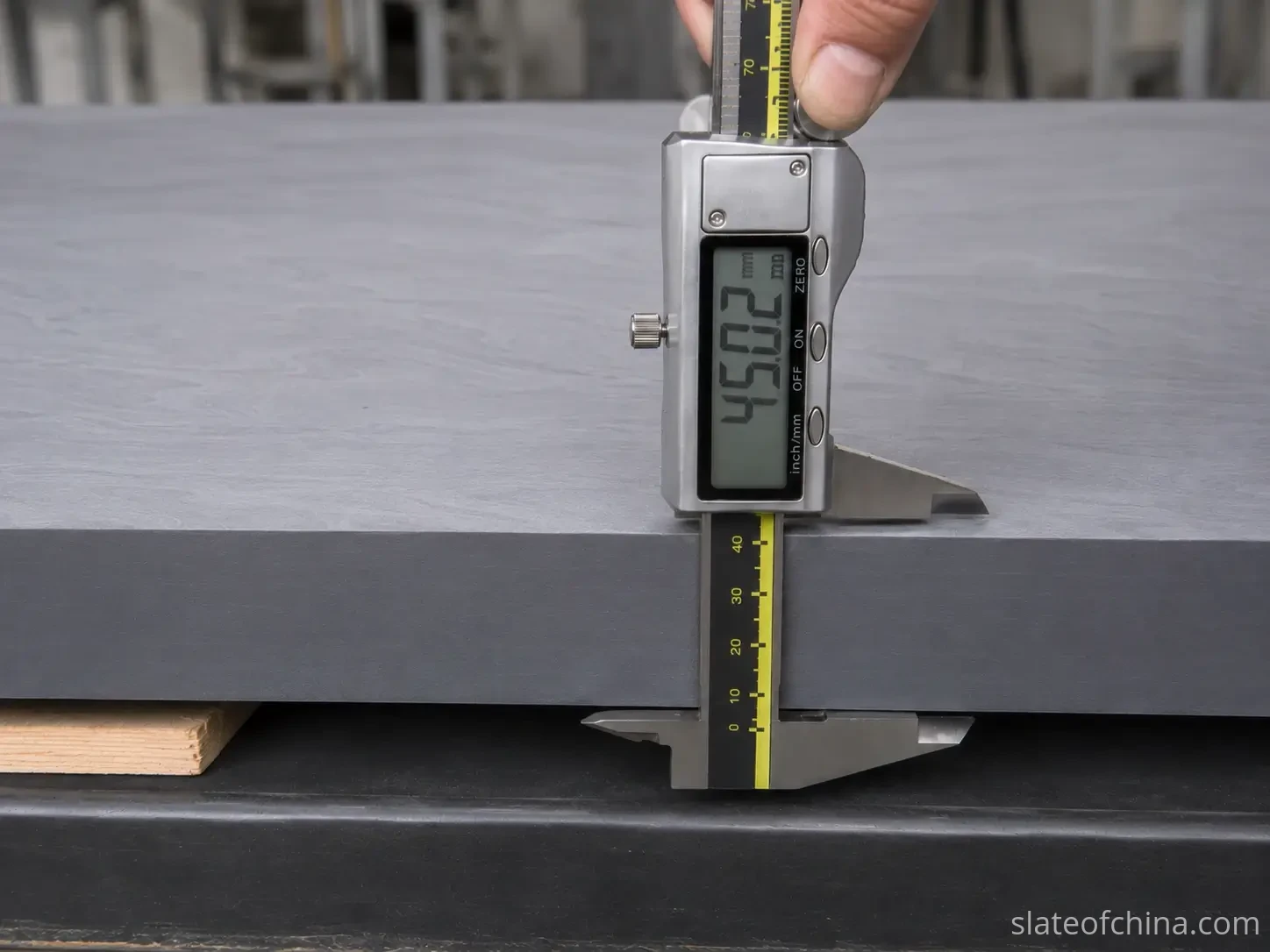
Start with the product, not the stone. Tell the supplier the table type — snooker, American pool, Chinese 8-ball, Russian pyramid, carom — and the size class: 7 ft, 8 ft, 9 ft, 10 ft or 12 ft. Then, as far as you know them, the slate's own numbers: the length, width and thickness of each slab, and how many pieces make up the bed. One caution travels with all of it: state which dimensions you are quoting. Overall slate size, playing-area size and cabinet size are different numbers, and they are never interchangeable.
This detail moves the price more than any other, because it decides the tonnage. As indicative estimates, a 9 ft pool bed in three pieces at 25 mm weighs roughly 250–270 kg per set, and a 12 ft snooker bed in five pieces at 45 mm around 800 kg — more than three times the rock, three times the freight, and a different packing and handling plan on both ends. A set's actual weight always follows its confirmed dimensions, thickness, piece layout and machining, so treat these figures as budgeting numbers rather than constants. A snooker table slate price cannot be recycled for a pool table order, and a 9 ft pool slate price cannot be reused for a 12 ft snooker enquiry — the two products only share the word slate. The same logic runs through the whole family of table types covered in our guide to the types of billiard slate, and through thickness in particular: what 19, 25, 38 or 45 mm each does to a table is covered in how slate thickness affects table performance.
| Table type | A typical example, as an inquiry reads it | What the supplier still needs |
|---|---|---|
| 12 ft snooker | 45 mm five-piece bed, ≈800 kg per set | Overall dimensions, thickness confirmation, drawing |
| 9 ft American pool | 25 mm three-piece bed, ≈250–270 kg per set | Hole pattern, pocket layout, drawing |
| 7 ft pool | 19 mm three-piece bed, ≈130–140 kg per set | Piece count, pocket style |
| Chinese 8-ball | 38–45 mm band, 45 mm the most common | The table manufacturer's drawing — dimensions, thickness, pieces |
| Custom or OEM | Per your drawing | Everything the drawing carries: dimensions, thickness, pieces, holes |
The examples above — including the weights — are indicative estimates, not standards. Sizes, thicknesses, piece counts and weights follow the table manufacturer's design and the confirmed drawing: cutouts and holes remove stone, a thicker bed adds it, and no two 9 ft tables are guaranteed to weigh alike. The Chinese 8-ball variant alone has its own spec culture, covered in our page on Chinese 8-ball table slate — so confirm every number against your own drawing before ordering. Collected reference figures for the standard formats live in the billiard slate technical specifications, and the trade-off behind piece count — flatness of one piece against the transportability of three — is laid out in one-piece vs three-piece slate for manufacturers.
If You Don't Know the Exact Dimensions Yet
Not knowing is normal, and it is not a reason to wait. Buyers reach for a quotation at every stage: replacing a cracked bed on an old club table, budgeting a new model that exists only as a sketch, testing the market before a board approves a project. What matters is that you send what exists instead of guessing at what doesn't.
For an existing table, the strongest first email carries the table's model and brand, clear photographs of the old slate — the top face, the edges, the holes — and a few measurements taken off the old panels: length, width, thickness, and the positions of the mounting holes. How to take those measurements without a drawing is its own discipline, and it is mapped out in replacement slate for existing billiard tables. American table builders will find the hole layouts and approval habits of their own market collected in the American pool table slate buying guide.
For a table still on the drawing board, send the draft drawing anyway — early, and marked as a draft. A preliminary price against a real draft beats a firm price against a guess, because it is built on the geometry you actually intend to build. And where a detail is genuinely open, say so in those words: 38 mm or 45 mm, undecided; please show both. A supplier can bracket a price around two thicknesses; it cannot bracket a silence.
Detail 2 — Machining: What the Drawing Decides
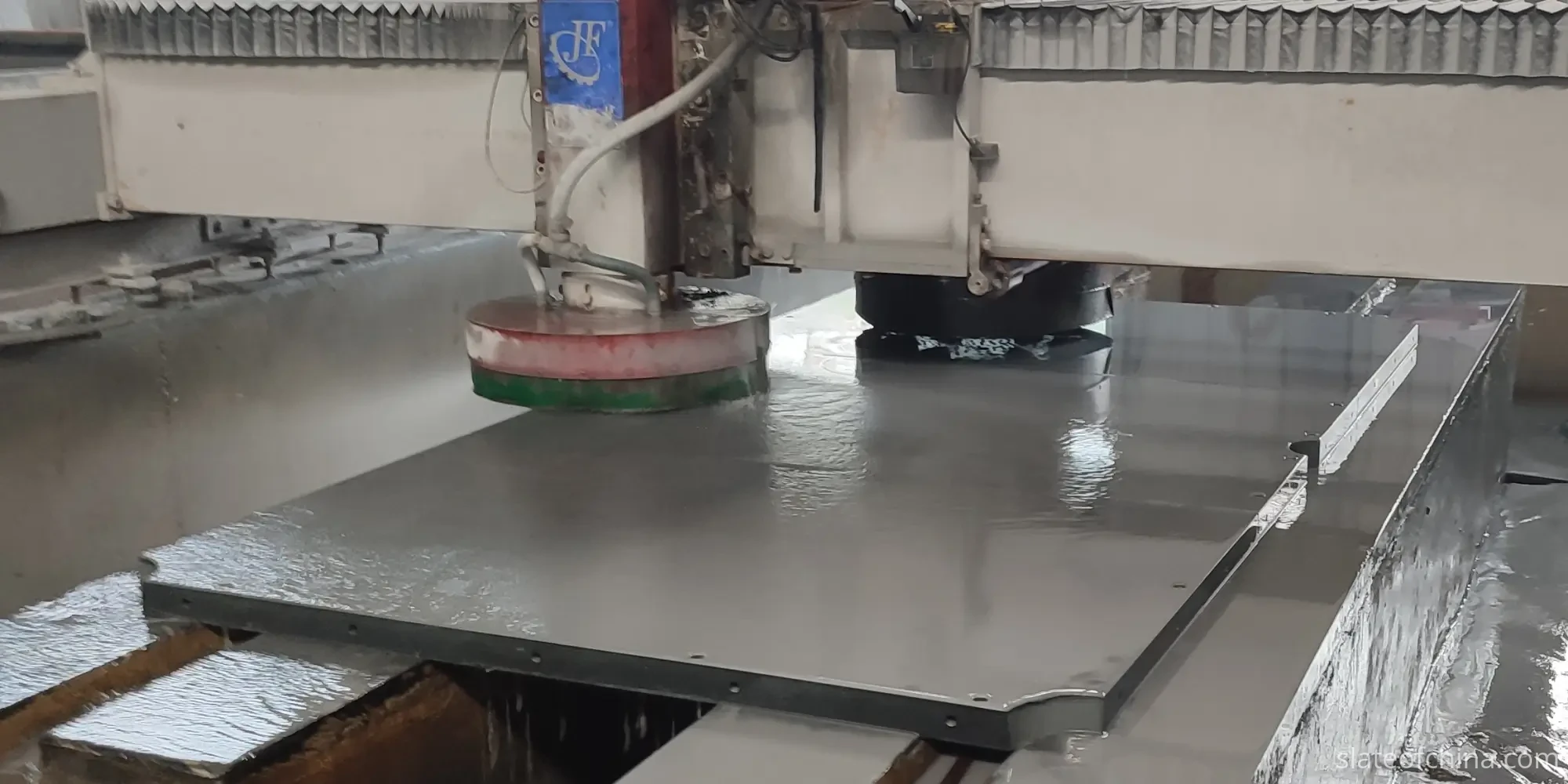
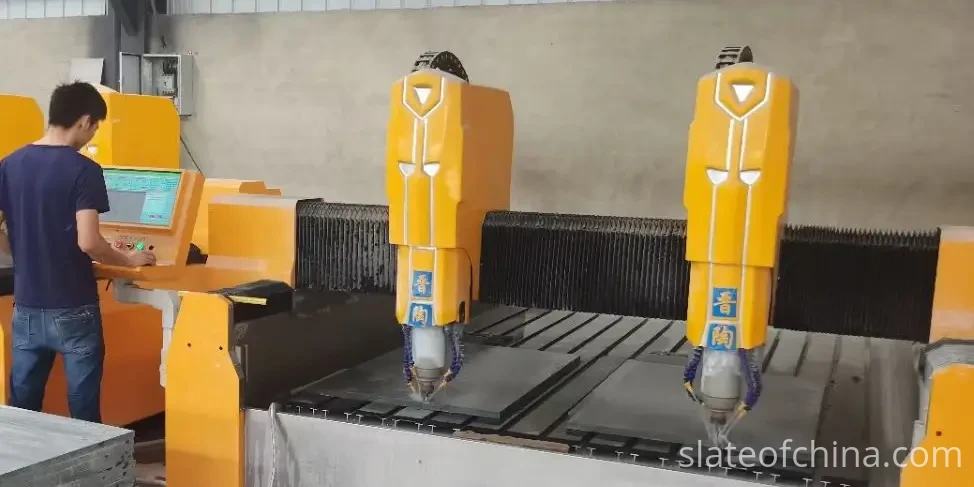
A slate blank and a finished slate bed are two different products, and the distance between their prices is the machining: cutting to size, grinding the edges, machining the pocket openings, drilling the mounting holes, producing the joint faces that let three pieces meet as one surface. Two slate sets with identical outside dimensions can carry completely different machining inside — different pocket radii, different hole counts, different joint designs — which is why a quotation for CNC machined billiard slate is priced from the drawing, not from the silhouette. The supplier's side of that exchange — why we ask for CAD before a single pocket is cut, and how the drawing is confirmed — is covered in CNC pocket cuts and drawing confirmation.
So send a dimensioned drawing where one exists, in a common format such as PDF or DWG, and make sure it marks the dimensions that matter: overall size, hole positions and diameters, pocket openings and radii, joint design, and any tolerances your engineering team actually requires. The hole side of the specification — positions, countersinks, rail-bolt patterns — is detailed in CNC drilling and mounting holes; the edge and joint work that decides how well a multi-piece set lines up is covered in slate edge and joint machining. If you have no drawing, describe which features need machining and send photographs or measurements of the existing product instead — a supplier can work from a good set of photos on a replacement order, and ask the right questions on a new design.
One purchasing habit earns its keep here: before the order is placed, ask the supplier to list any machining details still unconfirmed. On OEM and custom work especially, a hole a few millimetres from where your frame expects it is not a paperwork problem — it is an assembly-line problem, discovered on your floor, at your cost. The full route from your drawing to a production-ready custom order is mapped in custom billiard slate manufacturing.
Detail 3 — Quantity, and the Story Behind It
Tell the supplier how many complete sets you need now, how many slabs each set carries if you know it, and what kind of order this is: a sample, a trial run, or production for a billiard table factory. If you expect repeat orders, say so, with your honest estimate of annual demand — and if you need more than one specification, list them all rather than starting three separate threads.
Quantity moves the price because it changes how the work is organised, not just how much of it there is. Block selection, production scheduling, CNC setup, inspection and packing are arranged differently for one set and for twenty. Twenty 45 mm Chinese 8-ball sets, for instance, is roughly nine tonnes of stone — full-container territory, with its own packing plan and freight economics — while a single replacement set travels as loose cargo in a crate. A wholesale billiard slate supplier prices the two scenarios as two different products, because operationally they are.
Two cautions keep this detail honest. First, a larger order does not automatically guarantee the lowest delivered cost: the specification, machining, packing and destination still rule the total, and a big order of the wrong specification is just a bigger wrong order. Second, if you are comparing several suppliers, make sure each one is quoting the same quantity — a promotional unit price built on fifty sets tells you nothing about your order for four. For manufacturers planning recurring batches, what changes between the first set and the fifty-first is covered in OEM billiard slate for table manufacturers.
Detail 4 — The Quality Level You Are Buying
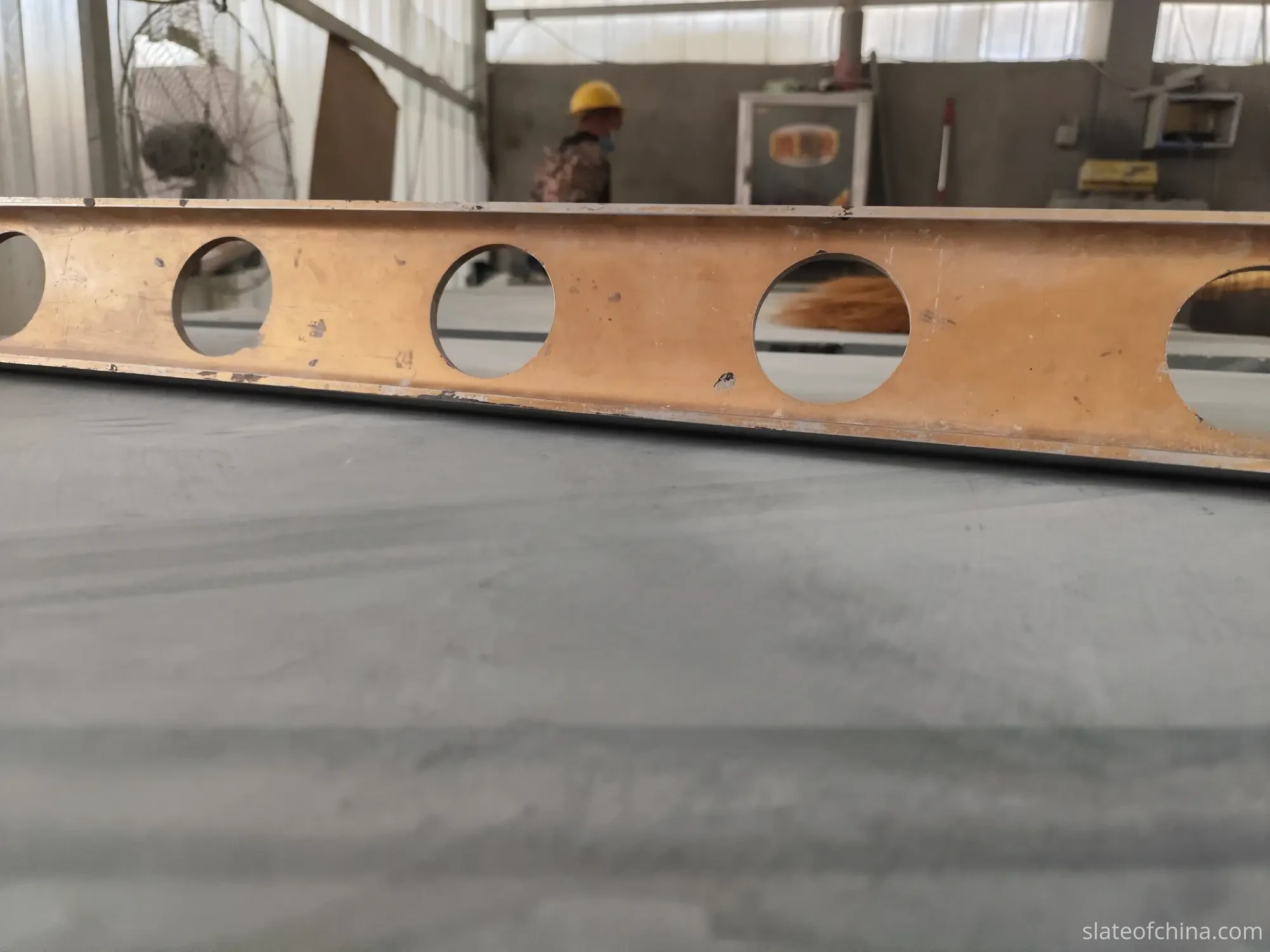
Words like premium and high precision cannot be priced, inspected or argued about. What can: flatness — the maximum deviation, over which reference surface; thickness tolerance; dimensional tolerance on length, width and machined features; surface condition — what counts as a chip, a crack or a usable face; joint matching on multi-piece sets; and the inspection method by which all of it is accepted before shipment.
The craft of writing a flatness requirement is to name three things: the number, the reference and the method. Flat slate required means nothing; flatness within the tolerance stated in our engineering specification, measured with a straightedge across the reference surface, per the inspection method in the same specification is a purchasable detail. Quote your own specification's exact wording and ask the supplier to confirm whether it can be achieved and how it will be inspected — do not assume that all suppliers measure the same way or read a tolerance the same way. If your table design is still in development, discuss achievable tolerances with the supplier before you finalise the specification, not after. What a factory actually measures, and how its figures read, is documented in the billiard slate quality and test data and in thickness and dimensional inspection; your own half of the contract — what to check when the container arrives — is laid out in how to check billiard slate flatness on incoming inspection.
You do not need to specify every item in the first email. If you have an existing quality-control standard, a drawing with tolerances or an approved sample, say so and share it. If you have none, ask the supplier to state its standard in writing and make that document part of the quotation. Either way, the acceptance criteria end up on paper — which is what turns a quality requirement from a hope into a line item.
Detail 5 — Destination, Packing and Shipping Terms
The last detail is where the slate has to go and how it should travel. Send the destination country with the port or delivery address, the Incoterm you prefer if you have decided on one, any packing expectation, the deadline if there is one, and any special requirements — documents, marks, labels — that you know in advance.
The reason this slot earns its place in the five is simple: for an international buyer, the lowest factory price is rarely the lowest landed cost, and slate is an expensive thing to move badly. A dense stone at roughly 2.7 tonnes per cubic metre is freight priced largely by weight, so the same set costs meaningfully different amounts to deliver to a European port and to an inland address in North America — identical slate, different logistics. The billiard slate shipping cost is not a footnote to the quotation; on small orders it can rival the stone.
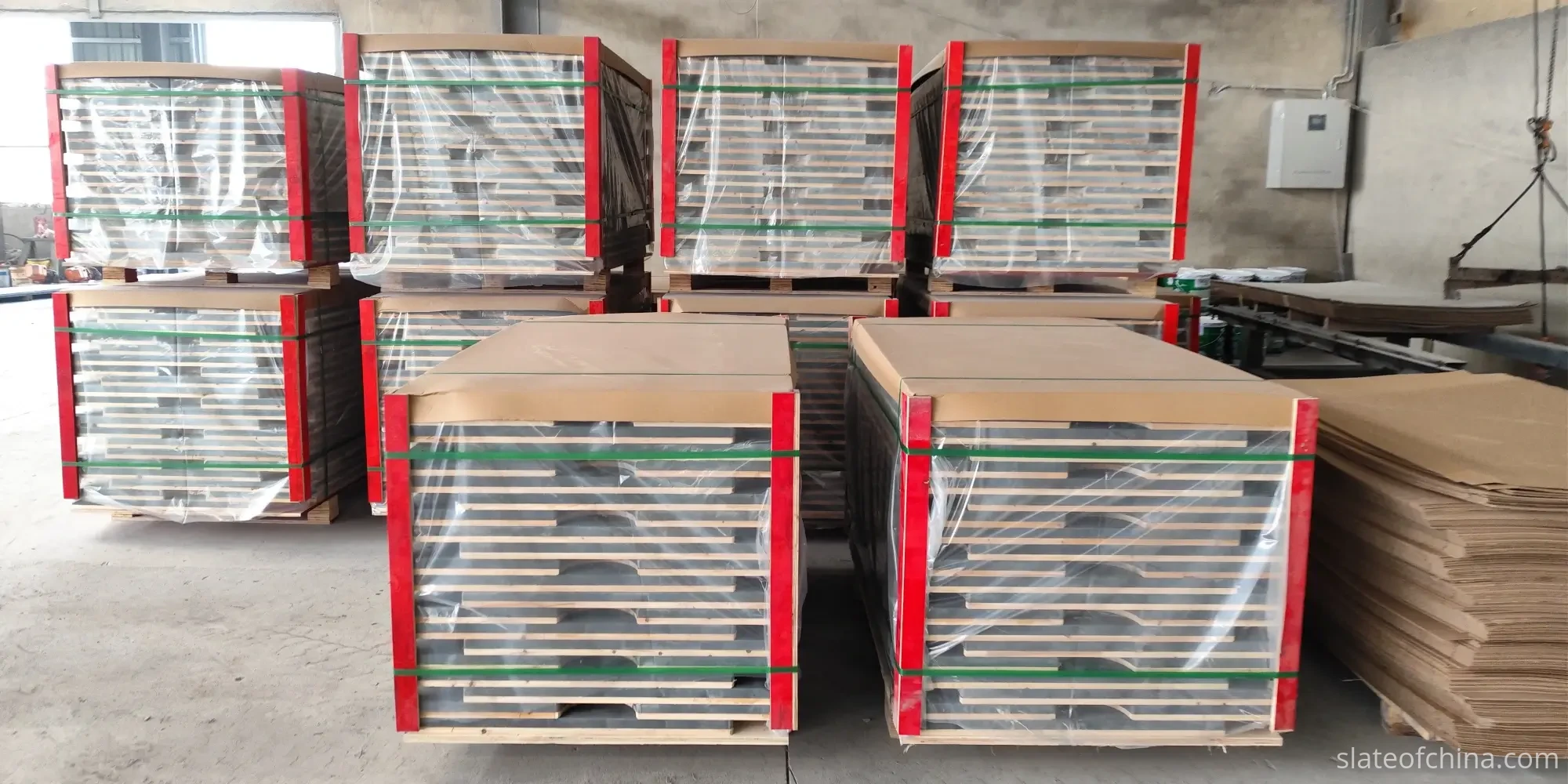
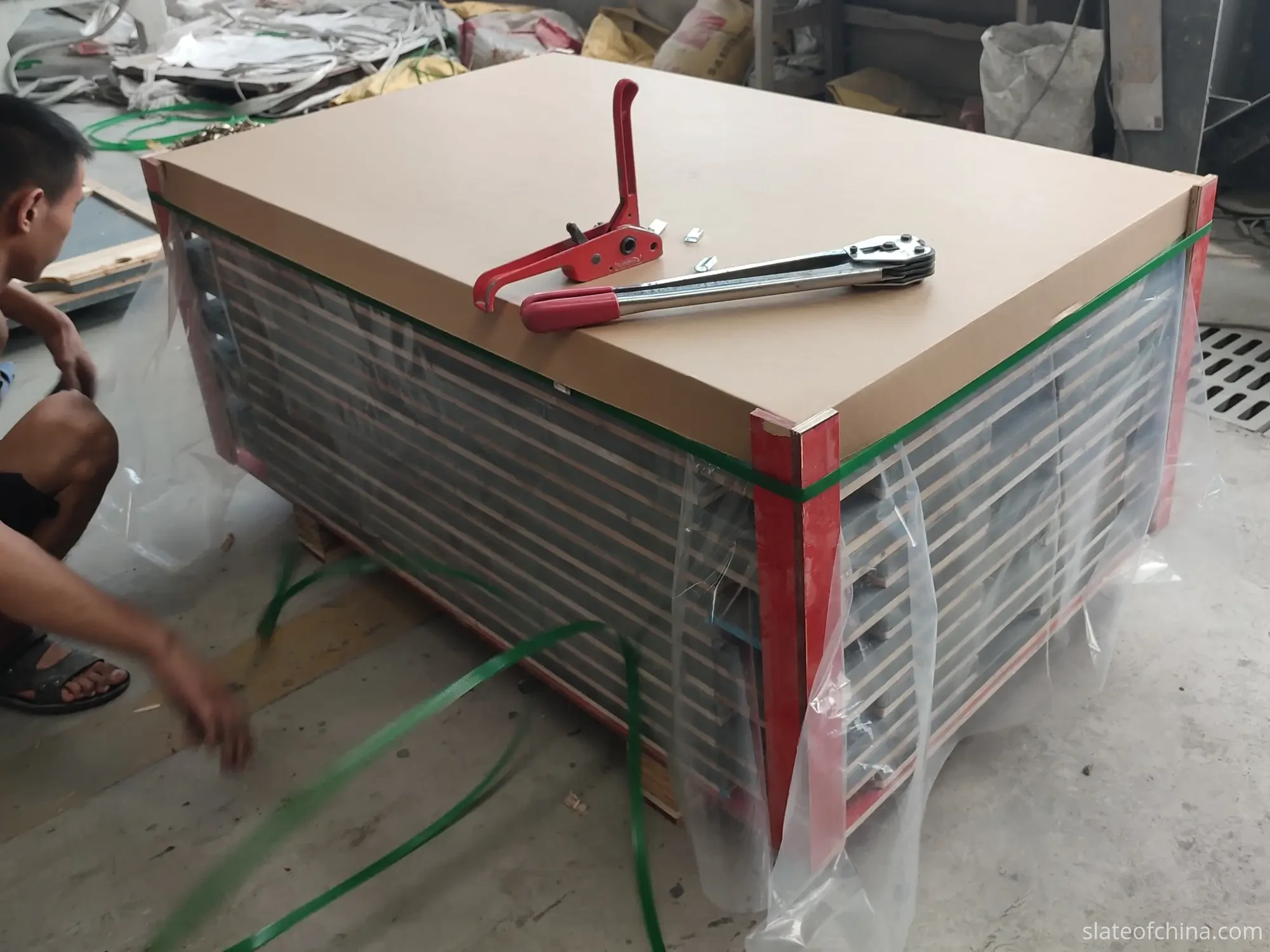
Packing follows the shipment mode, and it is worth knowing the usual logic before you state a preference. In our practice, full container loads usually travel with finished sets flat-stacked on wooden pallets; less-than-container shipments — handled and transferred more often — typically justify strengthened wooden crates; oversized single panels are usually carried on A-frames. The right method for your order is confirmed with the packing plan, not assumed from a rule. What a proper export packing standard should include, from timber treatment to edge protection, is detailed in export wooden crate packing, and how the stacks are arranged and secured inside a container is shown in the container loading guide.
On terms: EXW, FCA, FOB, CFR and CIF place very different shares of cost and responsibility on seller and buyer, so a quotation is only comparable with another quotation when the term and the named port or place match. There is no universal default — FOB is one common option for sea freight, and for containerised cargo FCA can suit arrangements where the buyer's forwarder takes over earlier than the port. If you already know your term, state it. If you are unsure — and first-time importers usually are — ask which options are available and which charges each one includes, rather than comparing an EXW price against someone's CIF. The full vocabulary, from Incoterms to insurance and claims, is covered in the billiard slate shipping guide.
Only Need a Rough Price?
Not every inquiry is ready for production, and none needs to be. If you are at the early budgeting stage of learning how to buy billiard table slate, five short facts are enough for a first number:
- Table type and size — for example, a 9 ft pool table.
- The approximate slate thickness, if your design or your old table suggests one.
- The estimated quantity — even a rough band is useful.
- The destination country or port.
- Whether you need unfinished blanks or machined, finished slate.
A supplier can turn those five lines into a budget-level indication quickly. Treat the result as what it is: a planning number, not a production commitment. It stops being a preliminary estimate and becomes a confirmed quotation only when the exact dimensions, the machining drawing, the quality requirements, the packing method and the delivery terms have been agreed and written down. Until then, it is a useful price for a probable product — which is exactly what early-stage research needs.
A Quotation Request You Can Copy and Send
The template below carries all five details. Replace the brackets, delete what does not apply, and leave an honest to be confirmed where a detail is still open — suppliers price around declared gaps far more willingly than around silent ones.
Subject: Request for Billiard Slate Quotation — [Table Type / Size]

Dear Sales Team,

We are looking for a supplier of natural billiard table slate
and would like to request a quotation.

1. The table the slate is for
- Table type: [Snooker / American pool / Chinese 8-ball / Pyramid / Carom / Other]
- Table size: [e.g., 9 ft pool or 12 ft snooker]
- Slate dimensions if known: [length x width x thickness, per slab]
- Thickness required: [mm]
- Pieces per set: [e.g., three-piece or five-piece]
- Technical drawing: [attached / available on request / not available yet]

2. Machining requirements
- Pocket openings and hole layout: [per attached drawing / per existing
  table — photographs available / to be confirmed]
- Edge and joint finishing: [required / not required / to be confirmed]
- Unfinished blanks or machined slate: [which one]

3. Quantity
- Sets required now: [number]
- Estimated repeat demand: [if any]
- One specification or several: [which]

4. Quality requirements
- Flatness and thickness tolerances: [your figures if available]
- Inspection and acceptance: [your standard, or please quote yours in writing]

5. Destination and terms
- Destination: [country + port or delivery address]
- Preferred Incoterm: [EXW / FCA / FOB / CFR / CIF / to advise]
- Packing: [pallets for FCL / crates for LCL / to be discussed]
- Required delivery date: [if any]

Please include the unit price, any machining or setup charges,
packing details, production lead time, quotation validity, and which
costs the delivery term covers. If any information is missing for an
accurate price, please tell us what you need.

[Name]
[Company, Country]
[Email / WhatsApp]
Comparing Two Quotations Without Fooling Yourself
When the replies land, the unit price is the least informative number on the page. A quotation is a bundle: stone, machining, quality, packing, logistics, promises about time. Two quotations can only be compared line by line, and the lines to check are the same five slots you filled — plus the two promises every serious quotation makes about scheduling.
| Line to check | What it tells you |
|---|---|
| Slate dimensions and thickness | The same tonnage — or a thinner set priced to look cheaper |
| Piece configuration | Three pieces and five change the machining, the matching and the freight |
| Machining scope | Pockets, drilling, edge and joint finishing — included, or an extra waiting to happen |
| Quality criteria | Flatness and thickness tolerances stated — or risk you have quietly accepted |
| Quantity | The same batch economics — or a promotional price built on a volume you did not ask for |
| Packing | Pallets, crates, battens, corner protection — real materials with a real cost |
| Delivery term and named port | EXW one port and CIF another are not comparable lines, whatever the totals suggest |
| Lead time and validity | When it ships — and how long the price remains a promise |
If one quotation comes in lower, ask where the difference lives: the material, the machining scope, the quality requirements, the packing or the terms. The answer is usually a sentence long, and it is the sentence the cheaper quotation was hoping you would not ask for. Properly matched, the two prices become something more useful than a bargain — the start of a supply relationship with numbers you can defend in front of anyone. You can see what we produce for tables like yours across the billiard slate range.
What a Good Reply Looks Like
A serious quotation answers more than it asks: a firm unit price with a plain statement of what it includes, its assumptions declared openly, questions only where points are genuinely open, a lead time from order — and from drawing confirmation, where drawings are involved — a validity date, and the named delivery term and port. The validity date deserves more attention than it gets: a quotation is a promise about a market that can move.
Three quiet signals deserve the opposite attention. A firm price returned within the hour to a one-line inquiry, with no questions anywhere, means nobody read past the subject line. A number with no declared assumptions is a product description you have not been shown. And everything included with nothing itemised is not generosity — it is a quotation that has not yet decided what it is selling.
So if the reply is mostly questions, take it as a good sign. On a machined, ocean-freighted product, the questions are the quotation's quality control: a supplier who asks about your hole positions is a supplier who has read your drawing. The five details in this page exist so that those questions are few, useful and answered in a single exchange — and so that the number which finally lands in your inbox is a price for the slate you actually intend to buy.
Frequently Asked Questions About Requesting a Billiard Slate Quotation
What is the minimum information needed to get a billiard slate price?
Five short lines are enough for a first price: the table type and size, the approximate slate thickness, the estimated number of sets, the destination country or port, and whether you need unfinished blanks or machined slate. That is sufficient for a budget-level indication. A confirmed production quotation follows once the exact dimensions, machining drawing, quality requirements, packing and delivery terms are agreed.
Do I need a technical drawing before asking for a billiard slate quotation?
Not for a first indication on standard table types. A drawing becomes necessary before production — especially for custom pocket layouts, hole patterns or OEM projects — because two slate sets with identical outside dimensions can carry completely different machining. Send a PDF or DWG if you have one; if not, describe the machining you need and ask the supplier to flag anything unconfirmed before production begins.
Can I get a quotation for a single replacement slate set?
Yes — single replacement sets are routine. The most useful details are the original table model and brand, clear photographs of the old slate, and measurements of the panel length, width, thickness and hole positions. Measuring the old panels is more reliable than guessing dimensions, and matching a replacement to an existing table is a well-trodden route.
How quickly should a supplier answer, and how long is a billiard slate quotation valid?
A complete inquiry is answered more efficiently than a vague one, but the timing still follows the specification: standard sizes can often be priced quickly, while custom machining, drawing confirmation and freight arrangements may need additional time. A confirmed quotation usually follows within a few days once drawings and terms are settled. Validity varies with the market, because freight and exchange rates move; treat around thirty days as a common window and confirm the validity date printed on the quotation before planning around it.
Why do two suppliers quote different prices for the same table size?
Because the same table size is not the same slate. The quotations may differ in thickness, piece count, machining scope, quality criteria, packing or delivery terms — and every empty slot is filled with an assumption. Ask both suppliers to state their assumptions, put the quotations on the same basis, and the price gap usually explains itself.
Which Incoterm should a first-time billiard slate importer ask for?
FOB is one option for sea shipments, but the appropriate Incoterm depends on the shipment arrangement and the responsibilities agreed by both parties. Ask the supplier to quote on a clearly stated basis, with the named port or place and the included charges specified — and for containerised cargo, FCA may also be worth considering alongside EXW, CFR and CIF.
Does a larger order always get a lower price per slate set?
Usually some advantage, but not automatically. Larger batches change block selection, scheduling, machining setup, inspection and packing efficiency — yet the delivered cost still depends on the specification, machining, packing and destination. Quote the realistic quantity you actually need, plus your repeat plan if you have one.
Ready to Request a Billiard Slate Quotation?
Send your table type, slate dimensions or drawing, thickness, required quantity and destination port. If you do not have a complete drawing yet, send the information you already have and tell us which specifications are still to be confirmed — as a billiard slate supplier in China shipping to 30+ countries, we would rather price what we can see and ask about the rest than guess at ten details, and the quotation comes back with its assumptions stated in plain language.