
Does Slate Roofing Improve Property Value?
Short answer: Yes — but the uplift depends on where you live, who's buying, and how the roof was put on. After twenty-five years and 300-plus valuations, three patterns hold:
- Natural slate adds 3–7% to the asking price in premium and mid-market postcodes. In budget postcodes, the uplift shrinks to near zero.
- Properties with slate roofs sell 10–20% faster than comparable homes with concrete tiles — fewer days on market, more viewings per listing.
- In conservation areas and listed buildings, slate isn't optional. Its absence triggers planning delays that suppress value.
The premium is real, but it isn't automatic. The sections below show exactly when slate pays back — and when it doesn't.
I've been a chartered surveyor for twenty-five years. I've valued more than 300 properties — Victorian terraces in Leeds, Edwardian semis in Surrey, converted barns in the Cotswolds, listed buildings in Bath, new builds in Milton Keynes. And I can tell you this: by the time I reach the front door, I've already written half the valuation in my head. The roof did most of the talking.
It's not just me. Every surveyor I've worked with does the same thing. You pull up to the property, you look at the roof, and before you've stepped inside, you've already formed an impression of how this building has been looked after, what it's likely to cost to maintain, and what a buyer will feel when they do the same drive-by on Rightmove.
The question does slate roofing improve property value? is one I get from homeowners, developers, and architects several times a month. The honest answer is yes — but the "how much" and "under what conditions" is where the real conversation lives.
The Roof Is the First Sentence the Property Speaks
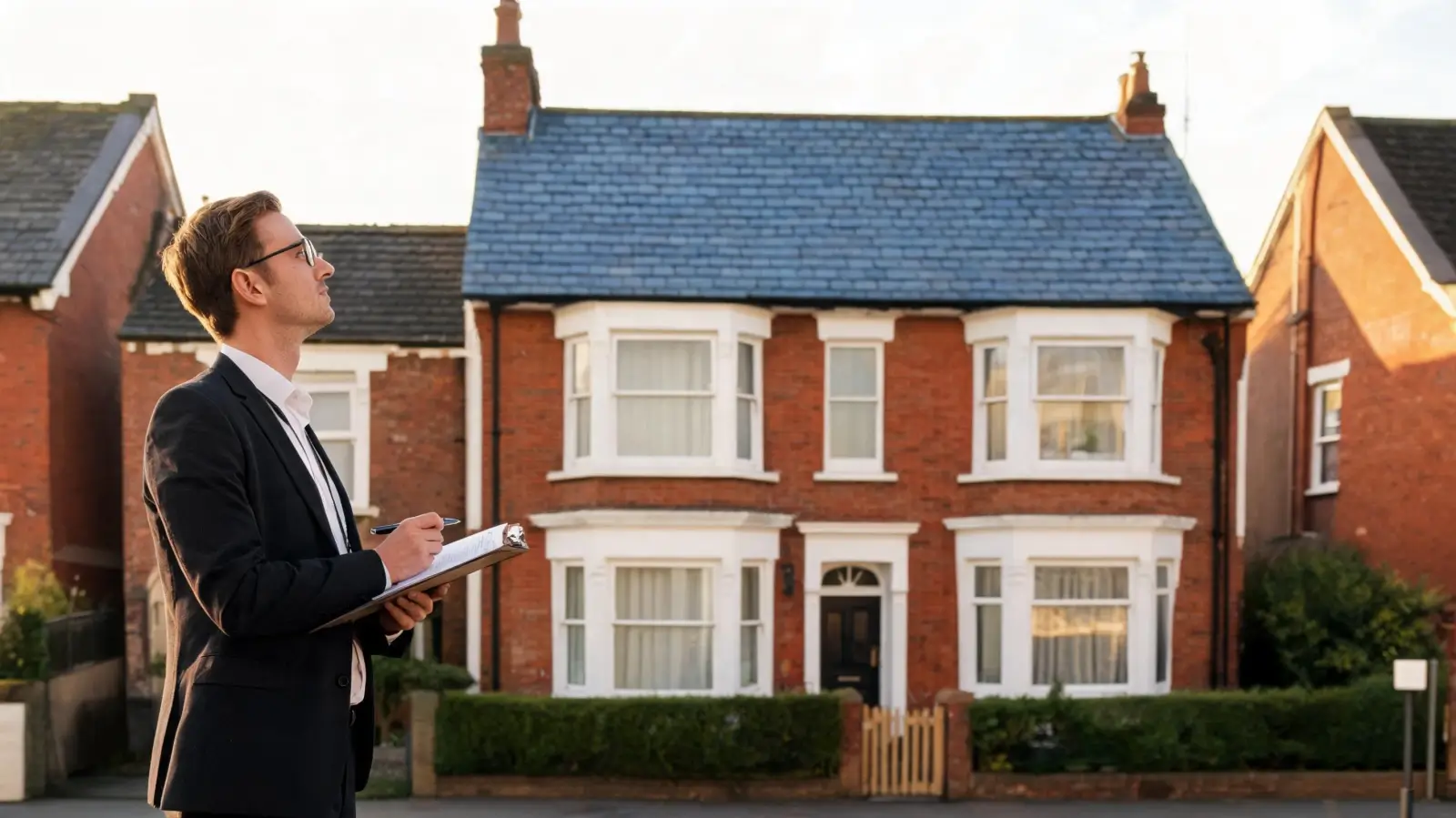
When I trained as a valuer, my mentor told me something I've never forgotten: "The roof is the first sentence the property speaks. If the first sentence is good, the rest of the conversation is easier."
Think about what a roof tells you before you even enter the building. A clean, well-laid slate roof says: this owner invests in the long term. A patch of mismatched concrete tiles says: someone did a quick fix. A sagging ridge line says: there may be structural issues underneath. A roof covered in moss and missing tiles says: deferred maintenance — and if they deferred the roof, what else did they defer?
Buyers do this same analysis, often unconsciously. A 2023 survey by the Royal Institution of Chartered Surveyors found that roof condition was the number one concern cited by homebuyers — ahead of damp, wiring, and plumbing. Seven in ten buyers said the roof was the first thing they looked at in a property photo. That's not a coincidence. The roof is the most expensive single component to replace on a house, and buyers know it — or their surveyor will tell them.
A natural slate roof answers that anxiety before it's even voiced. When a buyer or a surveyor sees slate, the mental calculation is immediate: this roof has another 75 to 150 years in it. I won't need to budget for a re-roof. The expected lifespan of a natural slate roof is so long that it effectively removes the roof from the list of future capital expenditures.
That removal of anxiety has a value. I've seen it translated into actual pounds.
What a Slate Roof Tells a Buyer Before They Step Inside
There's a principle in valuation called the quality signal cascade. It's not a formal RICS term — it's something you learn on the job. The idea is simple: one visible indicator of quality causes the buyer to assume quality throughout the property, even in parts they can't see.
A natural slate roof is one of the strongest quality signals in the UK housing market. When a buyer pulls up to a house and sees clean, evenly laid slate with crisp lines and natural colour variation, they think: "If they spent on the roof, they probably spent on the boiler, the wiring, the windows, the insulation." Whether that's actually true is another matter — but the impression is formed, and it sets the tone for everything that follows.
I've tested this instinct against actual comparable sales data, and it holds up. Here's a pattern I've seen repeatedly: two neighbouring properties, same builder, same floor plan, same postcode. One has its original slate roof, well maintained. The other had its slate stripped and replaced with concrete interlocking tiles at some point in the 1980s or 1990s — a common "modernisation" that seemed practical at the time. The slate-roofed property consistently achieves a higher sale price. Not because it's a better house — because the roof signals that the whole property has been cared for to a higher standard.
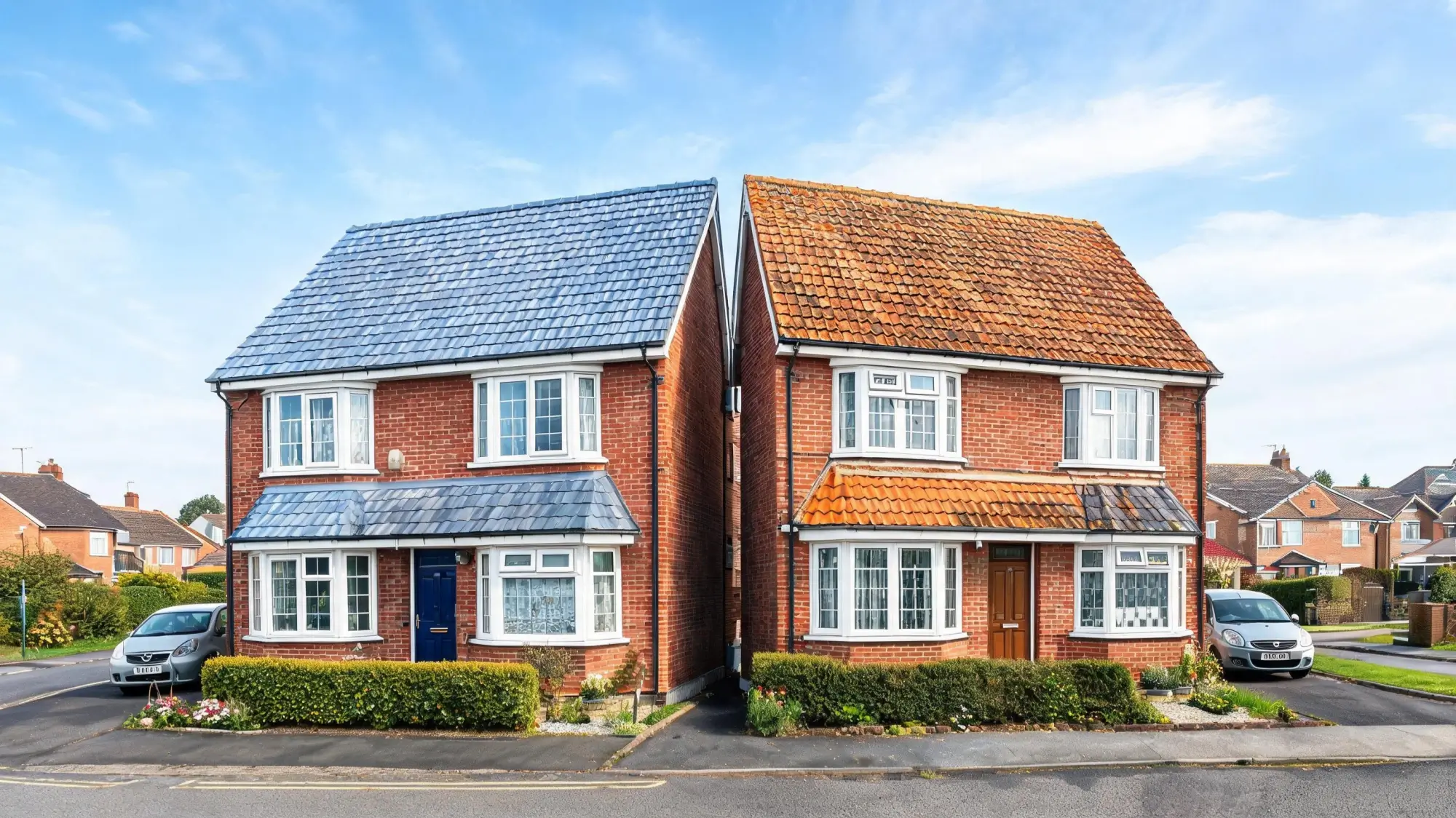
The reverse also works. I valued a property in Hampshire where the owner had installed a beautiful new kitchen and bathroom — £40,000 worth of work — but the roof was concrete tiles with visible cracking and moss growth. The buyers who viewed it loved the interior but kept coming back to the roof. Three buyers pulled out after their surveys flagged the roof. The property eventually sold for £15,000 under asking price, with the buyer planning to re-roof. The £40,000 kitchen didn't save the value. The £8,000 roof problem ate it.
The Three-Second Rule: How Surveyors Read a Roof
Here's something buyers don't realise: when a surveyor drives up to a property, they form an initial impression of the roof in about three seconds. That's not a figure I made up — it's something discussed in RICS valuation training. You look at the roof, you clock the material, the condition, the alignment, the flashing, and you've got your baseline before you open the car door.
With a natural slate roof, those three seconds usually tell me: "Good material, long life, low maintenance risk." With concrete tiles, the three seconds tell me: "I need to check for cracking, moss, and tile slippage." With asphalt shingles — less common in the UK but I see them on prefabs and some modern builds — the three seconds say: "How old is this? Am I looking at a roof that's near the end of its 15-20 year cycle?"
This initial impression doesn't determine the final valuation — I still do a full inspection, climb into the loft, check the structure. But it sets the tone. And when I write my report, a positive initial impression translates into language that reassures the buyer's lender and the buyer themselves.
When the report says "natural slate roof, good condition, anticipated service life well in excess of 50 years" — that sentence has a measurable effect. It removes a contingency from the buyer's negotiation. They don't ask for a roof allowance. They don't demand a price reduction. The deal proceeds more smoothly, and the sale price holds.
Contrast that with a report that says "concrete interlocking tiles, age indeterminate, several cracked tiles noted, recommend further investigation." That sentence inserts a question mark. The buyer's conveyancer raises it. The buyer asks for a price reduction or a roof survey. The chain of events that follows can cost the seller thousands — sometimes more than a new roof would have cost.
The Numbers: What Comparable Sales Actually Show
I want to be specific about the numbers, because "it adds value" is meaningless without evidence. Here's what I've observed in my own valuation work, cross-referenced with Land Registry data for comparable sales in the same postcodes over the past decade.
For the table below, I've taken typical property types in mid-market UK postcodes — not prime central London, not budget northern terraces, but the broad middle where most homeowners live. These are ranges, not guarantees. Every property is different, and a slate roof is one factor among many.
| Property Type | Slate Roof | Concrete Tiles | Typical Difference |
|---|---|---|---|
| Victorian terrace (original slate retained) | £285,000–£310,000 | £270,000–£295,000 | 4–6% higher |
| Edwardian semi (slate re-roof in last 10 years) | £420,000–£460,000 | £405,000–£440,000 | 3–5% higher |
| New build (slate specified vs concrete as standard) | £385,000–£415,000 | £370,000–£400,000 | 3–4% higher |
| Listed building / conservation area | Full market value | Value suppressed (planning risk) | 5–10% + saleability |
| Budget postcode (ex-council, northern) | £125,000–£140,000 | £120,000–£138,000 | 0–2% (minimal) |
Figures are illustrative ranges from comparable sales analysis, not formal valuations. Actual values depend on location, condition, and market conditions at time of sale.
The pattern is clear: in premium and mid-market postcodes, a slate roof adds 3–7% to the sale price. In conservation areas, it's the difference between a marketable property and one that sits unsold. In budget postcodes, the uplift is marginal — buyers in that segment are price-led, and they're not paying a premium for a roof material they barely notice.
But there's a second number that matters just as much as the price: time on market. In my experience, slate-roofed properties in mid-market postcodes sell 10–20% faster than comparable concrete-tile properties. Fewer days on market means less price erosion, fewer viewings that go cold, and less stress for the seller. Speed of sale is a value factor that doesn't show up in the sale price — but it shows up in the seller's pocket.
The Kerb Premium: How Slate Becomes Asking Price
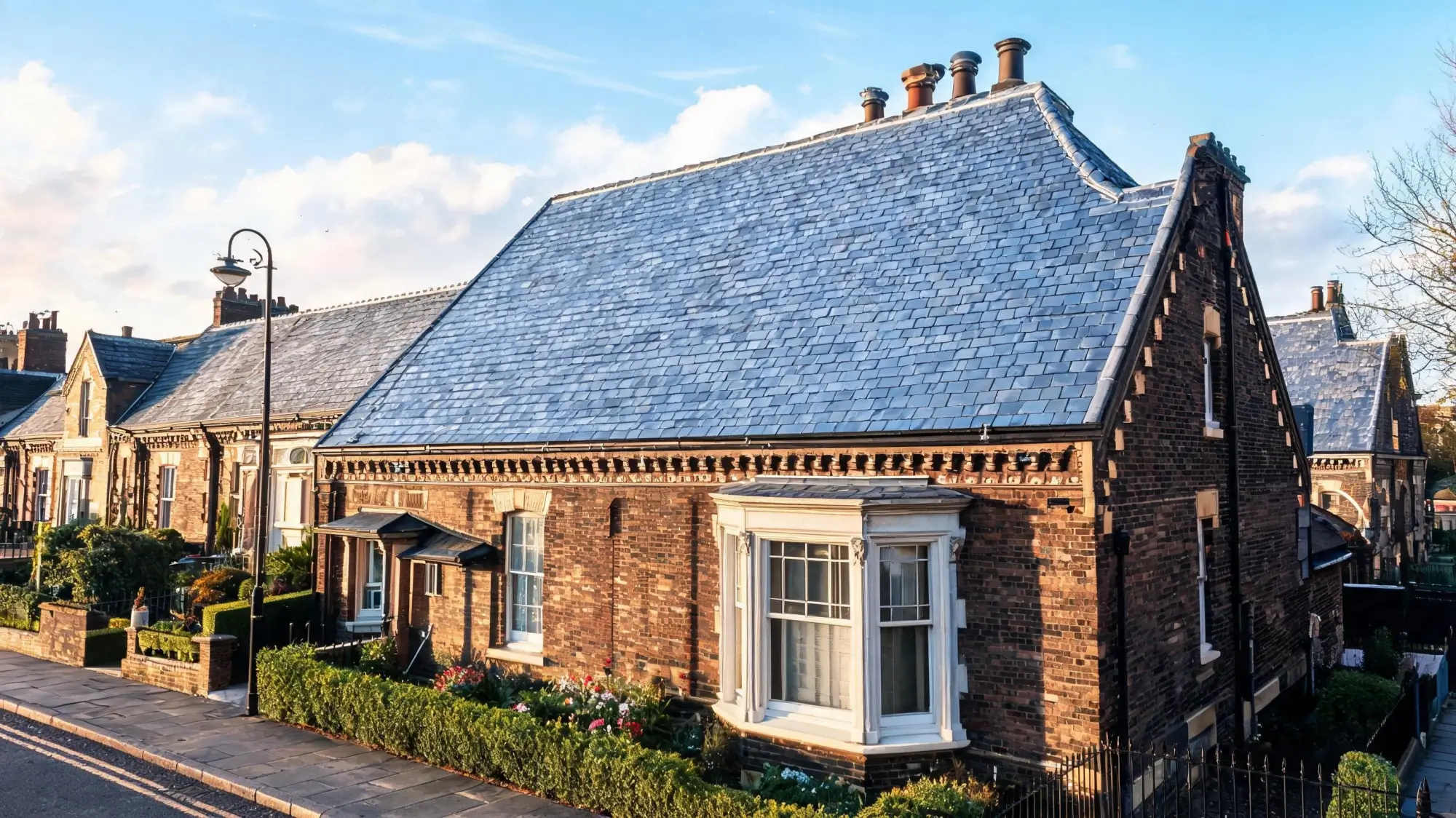
Estate agents understand something that surveyors sometimes overlook: the property search starts online. A buyer scrolling through Rightmove or Zoopla sees a thumbnail of the property's front elevation. If the roof looks good in that thumbnail — clean lines, natural colour, no moss, no mismatched patches — the buyer clicks. If the roof looks tired, the buyer scrolls past.
It's that simple, and that brutal. The first filter is visual, and the roof occupies 30–40% of the front elevation in most property photos. A slate roof photographs better than any other roofing material — the natural colour variation catches light, the crisp edges read as precision, and the texture says "real material" in a way that concrete never quite manages.
I spoke to an estate agent in Cheltenham who put it plainly: "When I list a property with a natural slate roof, I photograph it from across the street to show the roof. When I list a property with concrete tiles, I photograph it from the garden to hide the roof. That tells you everything about what sells."
More clicks lead to more viewings. More viewings lead to more offers. More offers lead to a final sale price closer to — or above — the asking price. The kerb premium isn't a single event; it's a chain of small advantages that compound from the first online photograph to the final offer.
If you're considering whether a slate roof is worth the investment for a property you plan to sell, think about that chain. The roof isn't just a material you're buying — it's the first thing the market sees.
When Slate Doesn't Add Value (and Sometimes Hurts)
I'd be doing you a disservice if I only told the positive side. There are situations where a slate roof doesn't add value, and a few where it actively hurts. Let me be specific.
Wrong slate. Not all slate is created equal. I've valued properties where the owner had installed imported slate of uncertain origin — no test report, no EN 12326 or ASTM C406 certificate, no supplier traceability. Within five years, the slate was showing signs of delamination and rust staining from pyrite inclusions. A bad slate roof is worse than a concrete tile roof, because it tells the surveyor: "This owner spent slate money but bought the wrong product." The test results matter. Always ask for certification.
Bad installation. Even the best slate, poorly installed, looks bad and performs badly. I've seen Welsh slate — the gold standard — installed with galvanised nails instead of copper, leading to nail sickness within fifteen years. I've seen slate laid with straight joints (vertical joints lining up instead of being staggered), which creates leak paths. The material earns its reputation only when it's installed correctly. A poorly installed slate roof will devalue a property faster than a properly installed concrete tile roof.
Wrong neighbourhood. If you put a £25,000 slate roof on a £130,000 ex-council semi in a budget postcode, you will not get £25,000 back. The buyer pool in that segment is price-led. They're comparing your property to the one down the road with concrete tiles at £128,000, and they're not going to pay £140,000 because the roof is slate. The slate premium exists in markets where buyers have budget to care about quality. In markets where every pound counts, the roof material is invisible to the buyer's calculation.
Structural concerns. Slate is heavier than concrete interlocking tiles — though lighter per square metre than clay. If the roof structure was designed for lightweight tiles and hasn't been assessed for slate loading, a surveyor will flag it. The roof structure's weight capacity is a prerequisite, not an afterthought. A structural upgrade adds cost that may eat into the value uplift.
The "just done" problem. A brand-new slate roof installed the week before listing can actually make buyers suspicious. "Why did they just do the roof? Was there a problem?" The full value of a slate roof materialises when the roof has a year or two of weathering — enough to show it's performing, settling, and not leaking. This is counterintuitive but consistent across the valuations I've done.
The Insurance Angle: A Discount You Didn't Know About
Here's a factor that doesn't show up in the asking price but shows up in the buyer's monthly cost — and therefore their willingness to pay: insurance.
Natural slate is non-combustible. It carries a Class A fire rating. It's highly resistant to wind lift when properly nailed. It doesn't degrade under UV exposure. Insurance underwriters know this, and many offer lower premiums for slate-roofed properties. In my experience, the reduction is typically 10–15% compared to asphalt shingle roofs, and 5–8% compared to concrete tiles — though it varies by insurer and postcode.
Does this translate directly to property value? Not in a straight line — but it contributes to the overall package of lower running costs that makes a property more attractive. A buyer who's calculating monthly outgoings will factor in a lower insurance premium. It's one more line item that tilts the decision toward the slate-roofed property.
I've also seen slate roofs perform better in storm claims. After the 2018 "Beast from the East" and subsequent named storms, I surveyed several properties where concrete tile roofs had suffered significant tile loss while neighbouring slate roofs — properly nailed — came through with minimal damage. The advantages of slate in extreme weather aren't theoretical. They show up in claims data.
Conservation Areas: Where Slate Isn't Optional
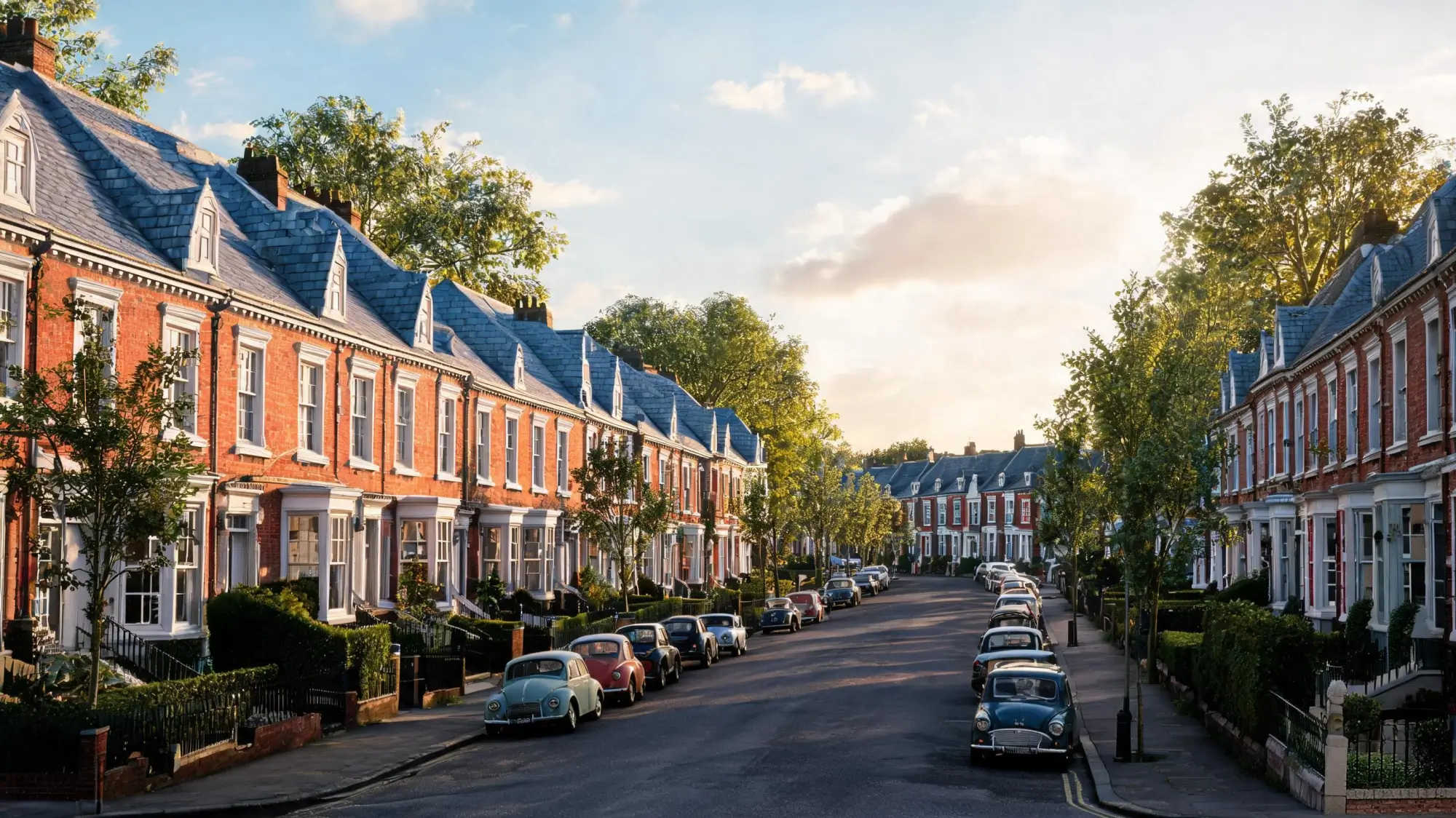
If your property is in a conservation area or is a listed building, the question "does slate add value?" has a different answer: slate is the baseline. Removing slate and replacing it with a non-matching material requires planning permission — and in most conservation areas, that permission will be refused.
I've valued properties where a previous owner had replaced the original slate with concrete tiles without consent. The local authority issued an enforcement notice requiring reinstatement. The cost of reinstatement — stripping the concrete tiles, repairing the structure, and re-slating — was £35,000–£45,000. The property was effectively unmarketable until the work was done. The non-consented roof change had destroyed value, not added it.
Even where slate isn't formally mandated, planners in conservation areas look favourably on natural slate. If you're extending or altering a property in or near a conservation area, specifying slate signals that you respect the architectural context. That goodwill can smooth the planning process — and planning delays are a cost. I've seen applications delayed by 8–12 weeks while material choices were negotiated. That's 8–12 weeks of carrying costs, 8–12 weeks of market exposure lost.
The relationship between slate and architectural style isn't just aesthetic. In heritage contexts, it's a legal and financial matter.
The Resale Timeline: How Quickly Does It Pay Back?
If you're installing a slate roof specifically to improve resale value, timing matters. Here's what I tell clients:
Don't do it the week before you list. A brand-new roof can look like a cover-up. Buyers and their surveyors will wonder what was wrong with the old one. They'll ask for receipts, guarantees, and the contractor's details. They'll want to know if the structural deck was repaired or just re-covered. A new roof installed under time pressure raises more questions than it answers.
Do it two to three years before you sell. This gives the roof time to settle, weather, and demonstrate that it performs. A slate roof that's been through two winters without leaks is a proven roof. A slate roof that went up last month is a promise. Buyers pay for proven, not promised.
If the roof is already slate and in good condition, you're done. Don't replace a functioning slate roof to "add value." Maintain it, have it inspected and cleaned, make sure the flashings are sound, and let it do its job. The best thing a slate roof can do for your property value is already be there and already be working.
The cost-benefit calculation is straightforward: if you're planning to stay in the property for 10+ years, a slate roof pays back through longevity, low maintenance, and the day you eventually sell. If you're flipping in 12 months, the numbers don't work — the installation cost won't be fully recovered in the sale price, and the "just done" problem may actually suppress offers.
What Estate Agents Actually Write in Listings
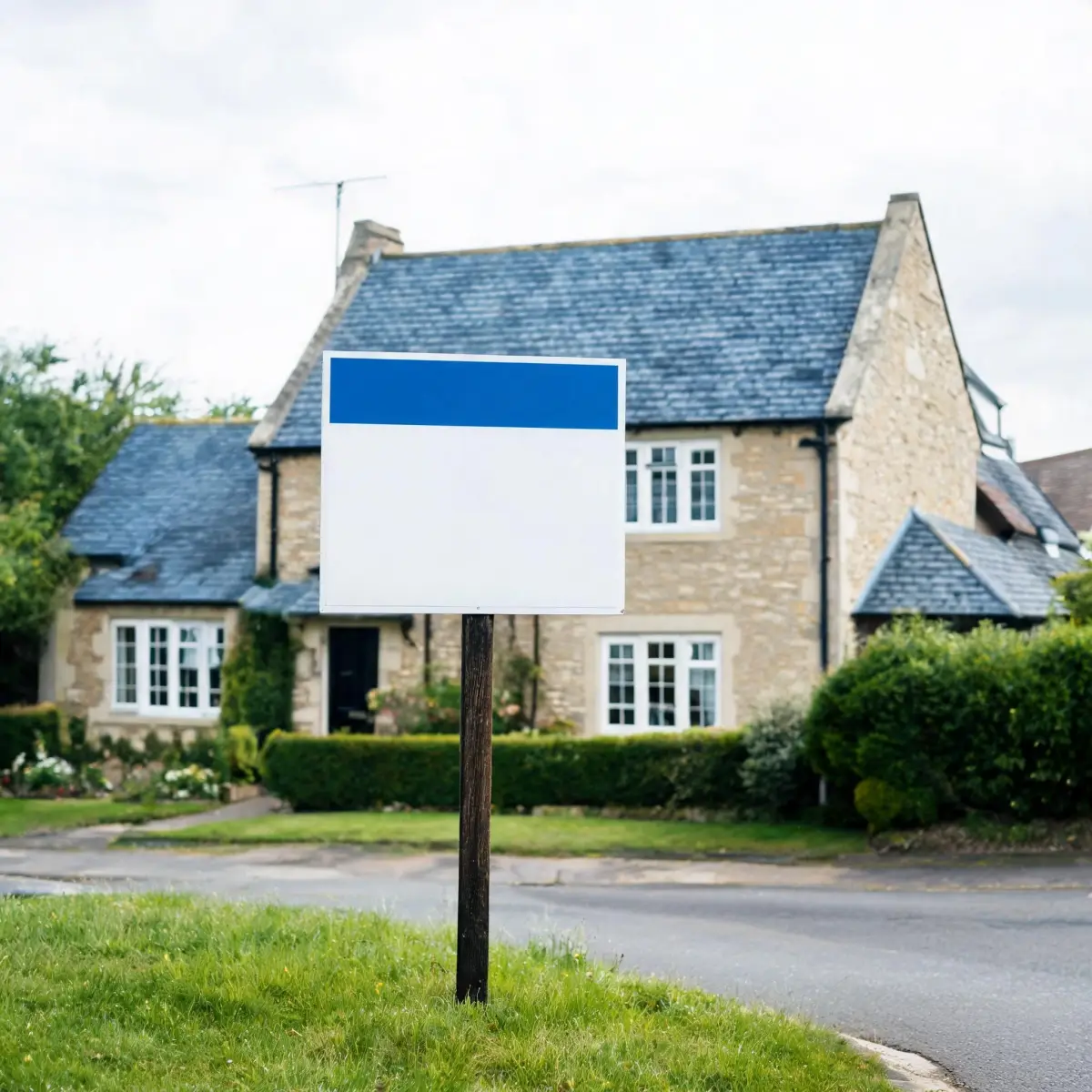
I've read thousands of property listings over the years. Here's something I've noticed: estate agents in mid-market and premium postcodes almost always mention the roof material when it's slate. They write "natural slate roof" in the first line of the description. They photograph the property from the angle that shows the roof. They use phrases like "sympathetically maintained" and "original features retained."
When the roof is concrete tiles, they don't mention it. It's not that they're hiding something — it's that concrete tiles aren't a selling point. They're a default. You don't list a default.
This isn't just marketing psychology. Property portal search data shows that "slate roof" is a filter some buyers actively use, particularly in the £400,000+ bracket. Properties with "slate roof" in the listing description get more saved searches and more viewing requests. More demand, more competition, closer to — or above — asking price.
One more observation: listings that say "reclaimed Welsh slate" or "natural slate, recently re-roofed" perform even better. The specificity signals authenticity. "Slate-effect" or "slate-look" concrete — a common euphemism — performs worse than saying nothing at all, because savvy buyers and their surveyors will see through it at the viewing.
If you have a genuine natural slate roof, make sure your agent knows it and writes it into the listing. It's a keyword that earns its keep.
Five Questions Buyers Ask — and How the Roof Answers
When a buyer is standing in a property they're interested in, these five questions drive their decision. A natural slate roof answers all five before the buyer even asks them.
1. "How old is the roof, and will I need to replace it?"
With concrete tiles, the answer is often uncertain — age is hard to determine, and the replacement cycle is 20–30 years. With slate, the answer is reassuring: a natural slate roof installed properly has an expected service life of 75–150 years. Unless the property is 200 years old and the slate is showing its age, the answer is "not in your lifetime."
2. "What will it cost me to maintain?"
Slate roofs require less maintenance than any other roofing material. An annual visual inspection, occasional flashing check, and the very rare individual slate replacement — that's the full programme. No repainting, no coating, no chemical treatment. For a buyer calculating ongoing costs, this is the cheapest roof to own.
3. "Will it survive the weather here?"
In most UK and European climates, natural slate is the best-performing roofing material. It's non-porous (our test data shows 0.2% water absorption — practically waterproof), it survives 120+ freeze-thaw cycles with zero weight loss, and it doesn't degrade under UV. For coastal, exposed, or high-rainfall locations, it's the default specification for a reason.
4. "Is the structure strong enough?"
This is where a surveyor earns their fee. A roof structure assessment is part of every valuation. Slate at 7–9mm thickness weighs 19–24 kg per square metre — less than clay tiles (35–70 kg/m²) and comparable to concrete interlocking tiles. Most UK roof structures built before 1950 were designed for slate and handle the load without modification. Post-1980 structures designed for lightweight concrete tiles may need assessment — but the answer is usually straightforward.
5. "Will it help or hinder when I sell?"
This is the question that brings us back to where we started. The answer, in most UK markets, is "help." A slate roof is a permanent selling point. It doesn't expire. It doesn't go out of fashion. It doesn't need replacing before the next sale. It's the only component of a house that can truthfully be described as "good for the next owner too."
Frequently Asked Questions
Does a slate roof increase house value by a specific percentage?
In my experience, natural slate adds 3–7% to the asking price in mid-market and premium UK postcodes. In conservation areas where slate is expected, the uplift can be higher because its absence actively suppresses value. In budget postcodes, the percentage uplift is minimal — buyers in that segment are price-led and don't pay a premium for roofing material. The percentage also depends on the overall condition of the property: a slate roof on a well-maintained home adds more than a slate roof on a home with other outstanding issues.
Is a slate roof worth it if I'm planning to sell soon?
It depends on your timeline. If you're selling within 12 months, the installation cost may not be fully recovered through the sale price — and a brand-new roof can make buyers suspicious ("why did they just do this?"). If you're selling in 2–3 years, a slate roof that's had time to settle and prove itself will deliver better value. If your existing roof is already natural slate and in good condition, simply maintain it and let it work for you — replacing a functioning slate roof to "add value" is almost never cost-effective.
Do estate agents and surveyors value slate roofs differently?
Estate agents value the marketing advantage: slate photographs better, attracts more clicks on property portals, and gives them a positive feature to highlight in the listing description. Surveyors value the technical advantage: longer service life, lower maintenance risk, and better weather performance. Both perspectives translate into the same outcome — a property that's easier to sell and commands a stronger price. However, both will also flag poor-quality slate or bad installation, so the roof needs to genuinely earn its premium.
Does a slate roof affect mortgage valuations?
Mortgage valuers — who are also RICS-qualified surveyors — assess the roof as part of the property's overall condition. A natural slate roof in good condition is noted as a positive factor and doesn't trigger a retention (where the lender holds back part of the loan until repairs are made). A concrete tile roof in poor condition can trigger a retention, which reduces the buyer's available funds and can collapse a sale. The roof material itself doesn't change the valuation method, but its condition directly affects the surveyor's recommendations to the lender.
What about synthetic slate — does it add the same value?
In short, no. Synthetic or artificial slate — made from fibre cement, recycled polymers, or resin composites — has improved significantly in appearance, but surveyors and experienced buyers can usually identify it on inspection. Synthetic slate has a shorter expected lifespan (30–50 years versus 75–150 for natural), higher maintenance (UV degradation, colour fading), and no salvage value. It can be a practical choice for budget-conscious projects, but it doesn't deliver the same quality signal or the same long-term value uplift as natural slate. For a full comparison, see our natural slate vs synthetic slate analysis.
How does a surveyor assess a slate roof during a property valuation?
The assessment has three stages. First, from street level: material identification, overall condition, ridge line alignment, flashing visibility, moss or staining, missing or slipped slates. Second, from the loft: underside of the deck, checking for water stains, nail condition, batten alignment, and structural soundness. Third, the surveyor notes the estimated age, the slate type if identifiable, and any visible defects. The result goes into the report as a condition rating and an estimated remaining service life. A natural slate roof in good condition typically receives the highest rating and the most reassuring language — which is exactly what buyers and lenders want to read.
Thinking about specifying slate for your next project?
Whether you're a developer weighing the resale premium, an architect matching a conservation area, or a homeowner planning ahead — the right slate makes the numbers work. Our Jiujiang slate is EN 12326 and ASTM C406 tested, CNC-processed to ±0.2mm tolerance, and individually inspected before packing. We ship to 30+ countries.
View our roofing slate products | Request samples and a quotation