
From Jiujiang Quarry to Billiard Table
Somewhere off the coast of Sri Lanka, a shipping tracker updates: Vessel departed Colombo. One line, one timestamp. For most cargo, that line is the whole journey.
The three-piece slate bed inside that container has been travelling much longer than the vessel carrying it. Before that update — before there was even a container — it was a technical drawing in my inbox, a twenty-tonne block on a quarry bench, three oversized blanks on a saw bed, a numbered set on an inspection bench. None of that appears on any tracking page. None of it ever will.
I run the factory in Jiujiang that ships these containers. This is the journey one order actually takes, from our quarry to the first shot someone plays on the finished table. Twelve milestones. The tracker sees exactly one of them.
Quick Answer — the twelve milestones one slate bed passes through:
- The drawings are confirmed — in the office, not at the quarry
- The quarry decides whether the order is physically possible
- One block becomes three deliberately oversized blanks
- Both faces are ground flat — calibration, not polishing
- The CNC gives the blanks their identity as components
- Three pieces are matched into a single set and numbered
- The inspection bench passes or fails the bed, piece by piece
- The set is lined with foam and sealed into a wooden crate
- An empty container arrives at the factory; the slate is loaded at home
Then — and only then — Milestones 10–12: the ocean, the customer's workshop, and the first break, which nobody in this factory ever sees.
Milestone 01 — The Journey Starts as a PDF
Most people assume a slate order begins with stone. It doesn't. It begins with a file — a CAD drawing or a dimension sheet arriving from the table maker: pocket positions, bolt holes, joint lines, thickness, finished sizes.
We check it against what the stone can do, add our own notes, and send a counter-signed copy back. Production does not start when the purchase order arrives. It starts when that counter-signed drawing comes back to us. The kerf allowance, the CNC program, the inspection standard — every station downstream will work to that one piece of paper.
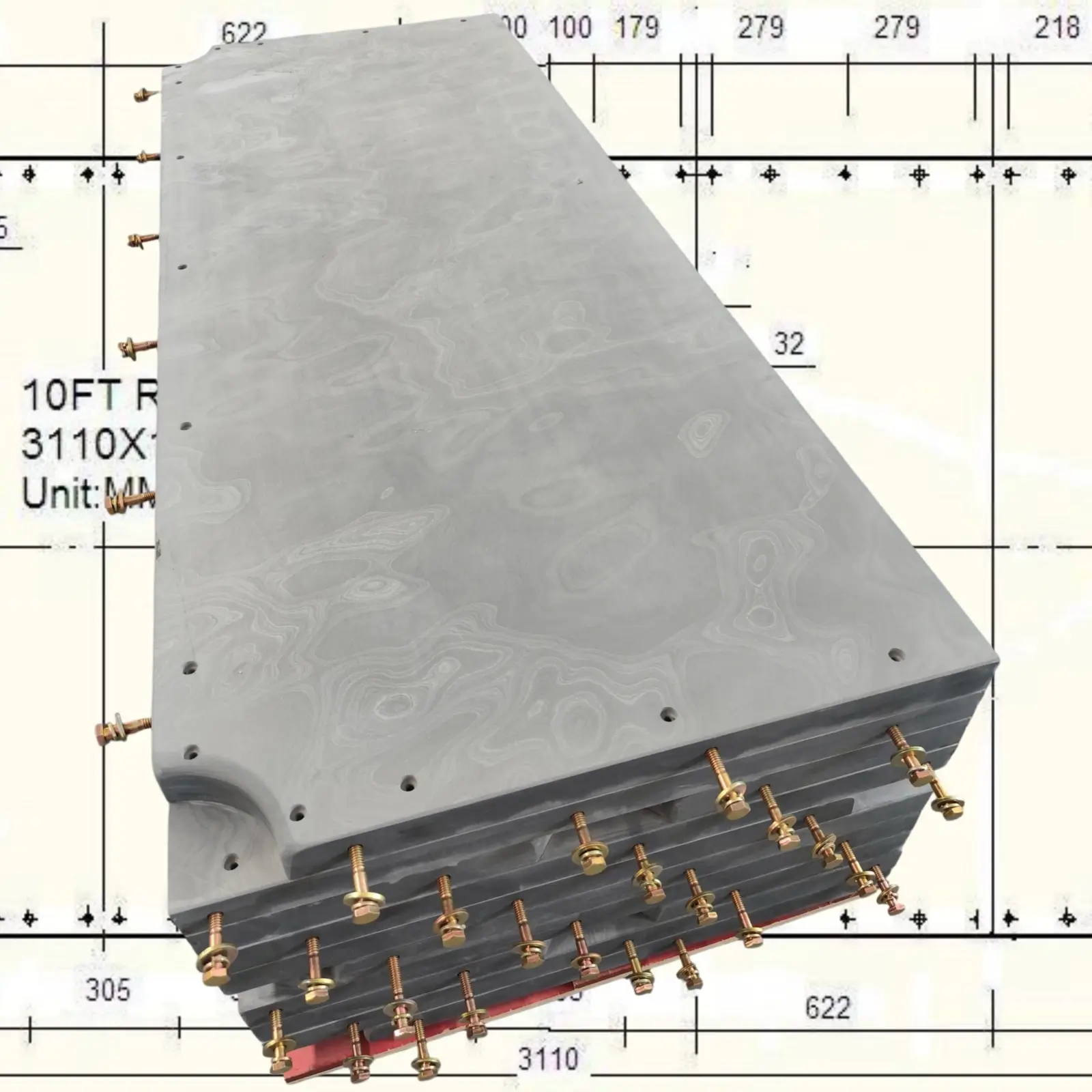
This is also why two slate orders are never quite identical. A 12-foot snooker bed and a 9-foot pool bed differ in more than size: pocket geometry, frame interface, number of pieces, fixing-hole pattern. There is no universal slate bed, only the slate bed your drawings describe. The quarry decides nothing about where the holes go. The drawings decide.
Milestone 02 — The Quarry Says Yes or No
Once the drawings are confirmed, the first question is not how to machine the slate. It is whether the slate exists. A 12-foot snooker bed needs a clear 3.6 metres of stone; the block has to be bigger still. Rock that large is a minority of quarry output — on our benches, roughly a fifth of what comes off the face is ever clean enough and large enough for billiard beds. The rest becomes roofing.
So before anything is cut, someone walks the block yard with a tape measure and a hammer. Measure the block against the drawing. Tap it and listen. A clear ring means solid stone; a dull note means a hidden fracture somewhere inside, and the block is out — no tape measure will change that.
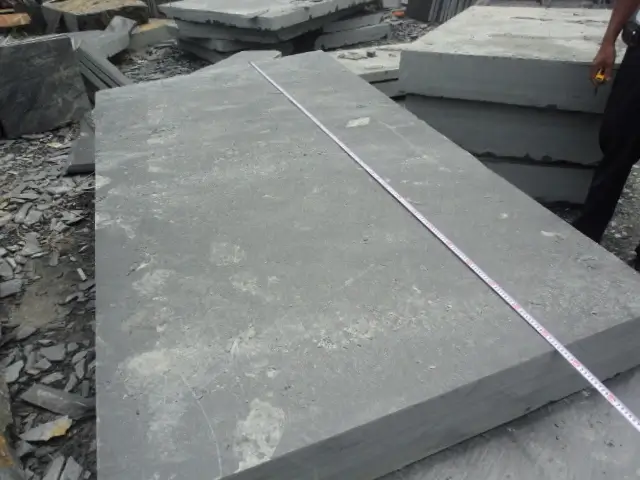
It is the least glamorous milestone of the twelve, and the one where an order most often dies. When the yard cannot supply the block, we do not pretend otherwise; we tell the customer honestly and wait for the next bench of the quarry to be opened. How those benches are actually worked is the quarry article's story; on the timeline of an order, what matters is simpler — this gate comes first, and nothing downstream can replace it.
Milestone 03 — Three Blanks, Deliberately Too Big
The block that qualifies goes to the saw. It is not split — a billiard bed is far too thick for hand splitting, and its surfaces must be sawn, not cleft. The saw releases the block into slabs, and the slabs are cut to the three panel sizes the drawing calls for. Deliberately too big: each blank leaves the saw with ten to twenty millimetres of extra length and width.
That allowance is the quiet logic of the whole chain. Grinding will eat some of it. Machining will eat more. The final dimensions arrive exactly when the allowance is used up — not before, and never after. We also try to cut a full set from the same block, or at least from the same bench of the quarry, so the three pieces that will spend the next fifty years bolted together started as neighbours in the ground.
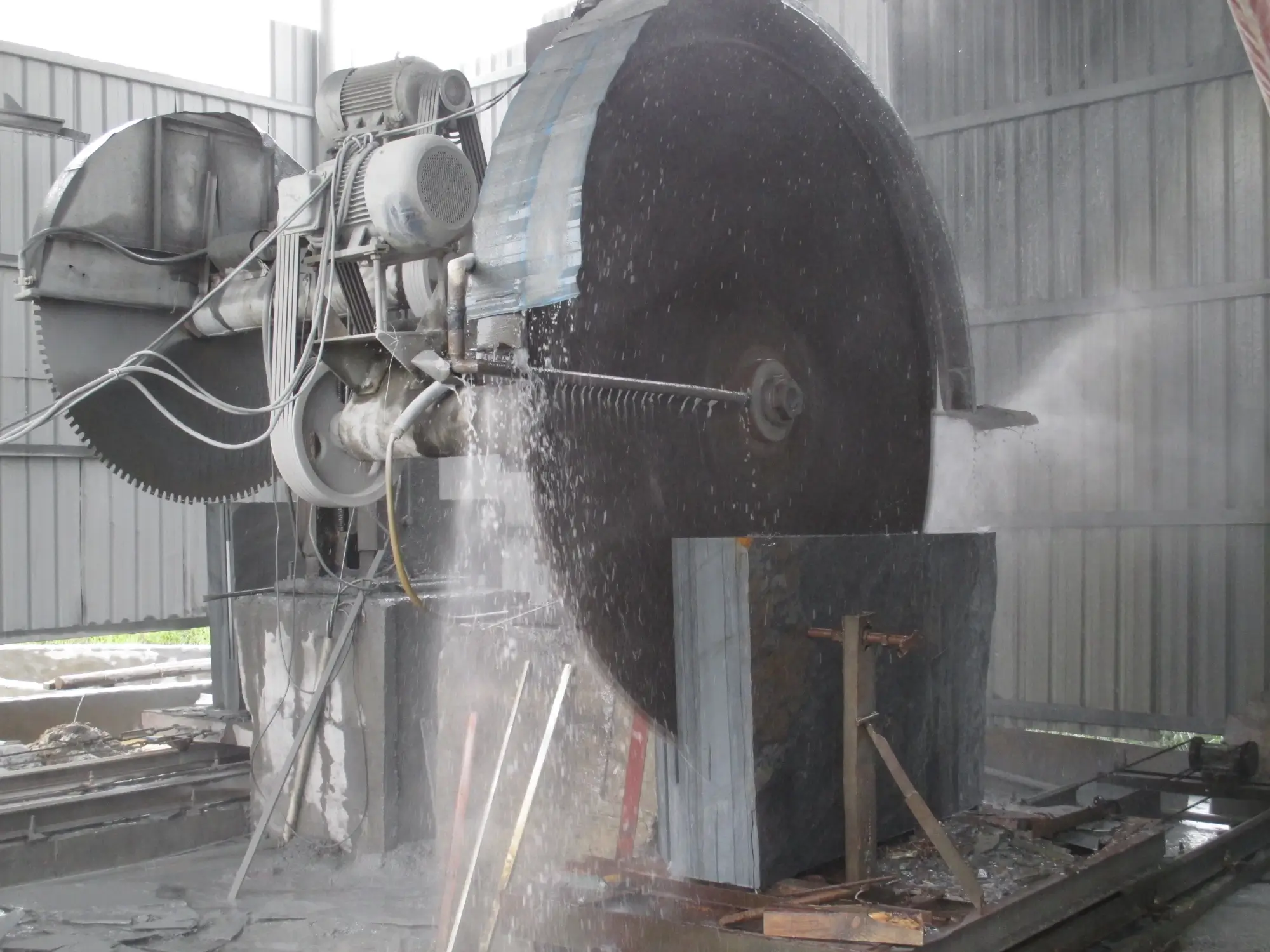
How the saw itself works, pass by pass, is covered in the panel journey article. What the timeline adds is this: by the end of Milestone 03, the order has a shape. It is no longer a block that might become anything. It is three specific stones with three specific fates.
Milestone 04 — Flat Before It Is Precise
Calibration is not polishing. Nothing about this stage is meant to make the slate shine — a billiard bed finishes matte, and the cloth does the looking good. Calibration exists for one reason: to give the CNC a stable, flat reference to work from. A machine refines a flat panel. It cannot negotiate with a warped one.
Both faces go through the grinding machine, because a bed that is flat on the playing side and hollow underneath will rock on the frame like a chair with one short leg. The two-stage grinding detail — coarse pass, fine pass — belongs to the panel journey article. On the timeline, this milestone is where the blank stops being a rough slab and starts holding a tolerance.
Milestone 05 — The CNC Gives the Slate Its Job
Until this milestone the stone is still, technically, stone — a flat grey panel that could become anything. The CNC pass is where it becomes something: pocket recesses, bolt holes, joint edges and the frame interface of one specific table model, machined against the counter-signed drawing from Milestone 01.
This is why we cannot start the program before the drawings are frozen, and why a change request that arrives after this milestone costs more than one that arrives before it. A drawing revision at Milestone 01 costs an email. The same revision at Milestone 06 costs a set. From here on, the panel is not material any more — it is a component. Ours to inspect, wrap and ship; no longer ours to redefine.
The machines themselves, their tables and probes and the tolerances they hold, have their own article: CNC machining in our Jiujiang factory. On this journey they play a single role — they are the station where the customer's drawing becomes the stone's identity.
Milestone 06 — Three Pieces Learn to Be One Bed
A three-piece bed is only three pieces until they are matched. The set is machined in the same program, from the same zero point, so the three surfaces land in one plane. The joint edges are then dressed and checked until a feeler gauge can no longer find the seam — the head-centre-foot numbering and the 0.05 mm gauge work are told properly in the panel journey article.
What changes at this milestone is not the stone. It is the unit of accounting. From Milestone 06 onwards, nobody in the factory treats the order as three panels. It is one bed: inspected together, crated together, and replaced together if it ever comes to that. The set number that goes on the crate later is already the set's name by the end of this station.
Why three pieces instead of one enormous slab? The short version is geology and doorways — stone the size of a snooker bed is rare, and even a rare one will not fit through a standard door. The long version, with the numbers, sits in the panel journey article. For the journey, the point is that Milestone 06 is where a design decision made in someone else's office becomes a physical fact in our workshop.
Milestone 07 — The Bench Decides
Every piece — every piece — goes across the inspection bench before it can travel. Dimensions against the drawing. Thickness. Flatness under straightedge and gauge. The joint seams as a set. A steel hammer tap for anything hidden that no earlier stage caught. What the bench looks for, tool by tool, is written up in our 100% inspection guide. On an order's timeline, the bench is the milestone where the factory's opinion of the slate stops mattering and the specification becomes the only judge.
For the buyer, this stretch of the journey also holds the second of three windows. The first window was the counter-signed drawing — you saw the specification take shape. The second is here: after the first piece is machined, we send photographs and video, so you approve the pattern before the rest of the set runs. The third window comes at Milestone 09, at the container. If you are building your own supplier checklist, what to ask for at each stage is worth a read; the short rule is that evidence is worth asking for while it can still change the outcome.
Milestone 08 — Lined, Labelled, Sealed in Wood
The crate is built to the set, not the other way around. Panels travel upright, never flat, separated by closed-cell foam — the packing logic, and why one set means one crate, is laid out in the panel journey article. What the crate is really designed for, though, is not people who know what slate is. It is for people who do not: a forklift driver at midnight in a hurry, a container dropped twenty centimetres onto its chassis, a crane swinging at a dock. We assume none of them has been briefed.
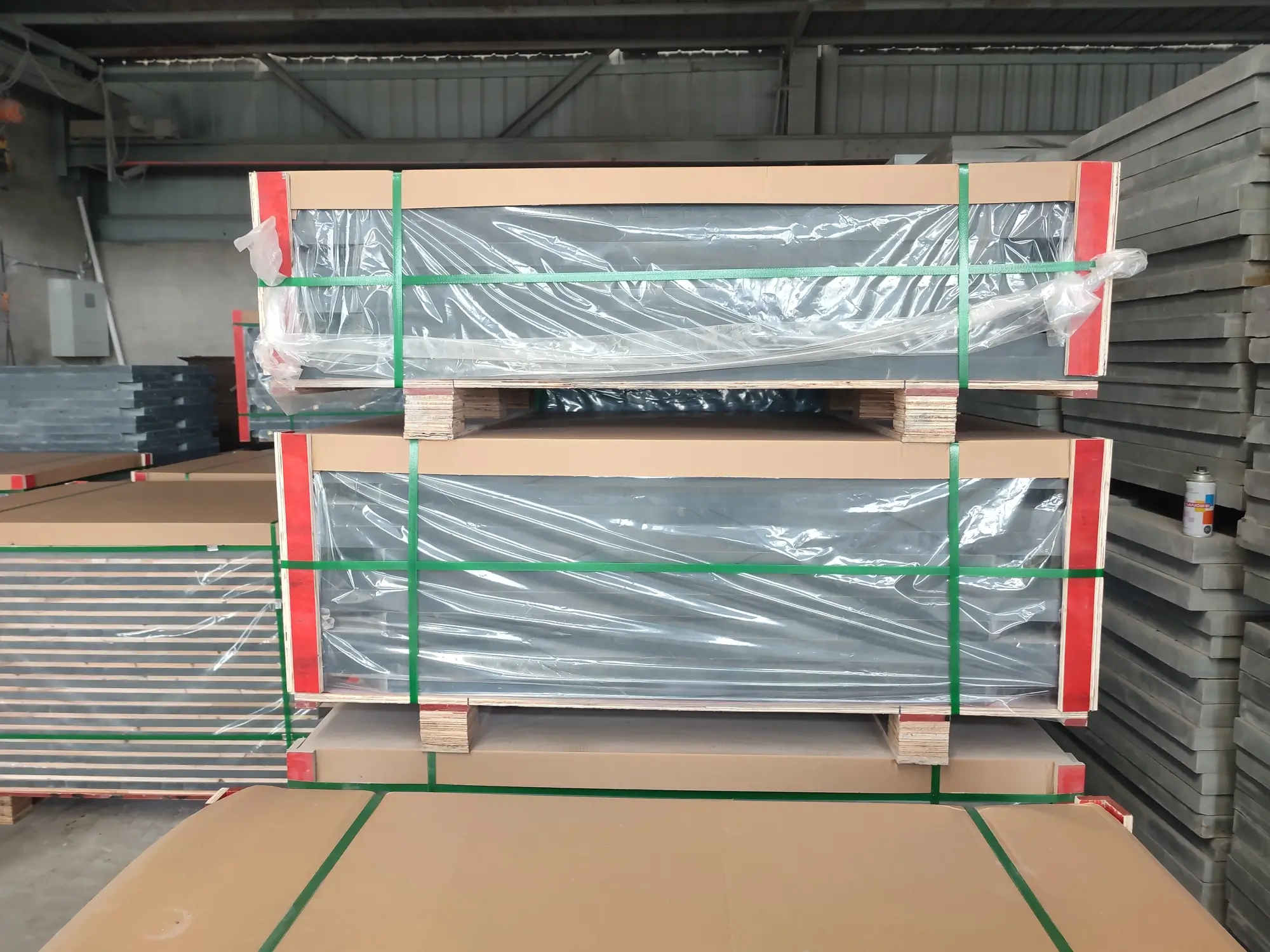
The set number goes on the label. The specification goes on the packing list. The whole document trail — inspection records included — travels inside the crate in a sealed sleeve, so the paper that describes the stone and the stone itself cannot be separated by a customs shed. If the label and the stone ever disagree, the stone wins the argument, and we trace the set back through its numbers.
Milestone 09 — The Container Comes to the Slate
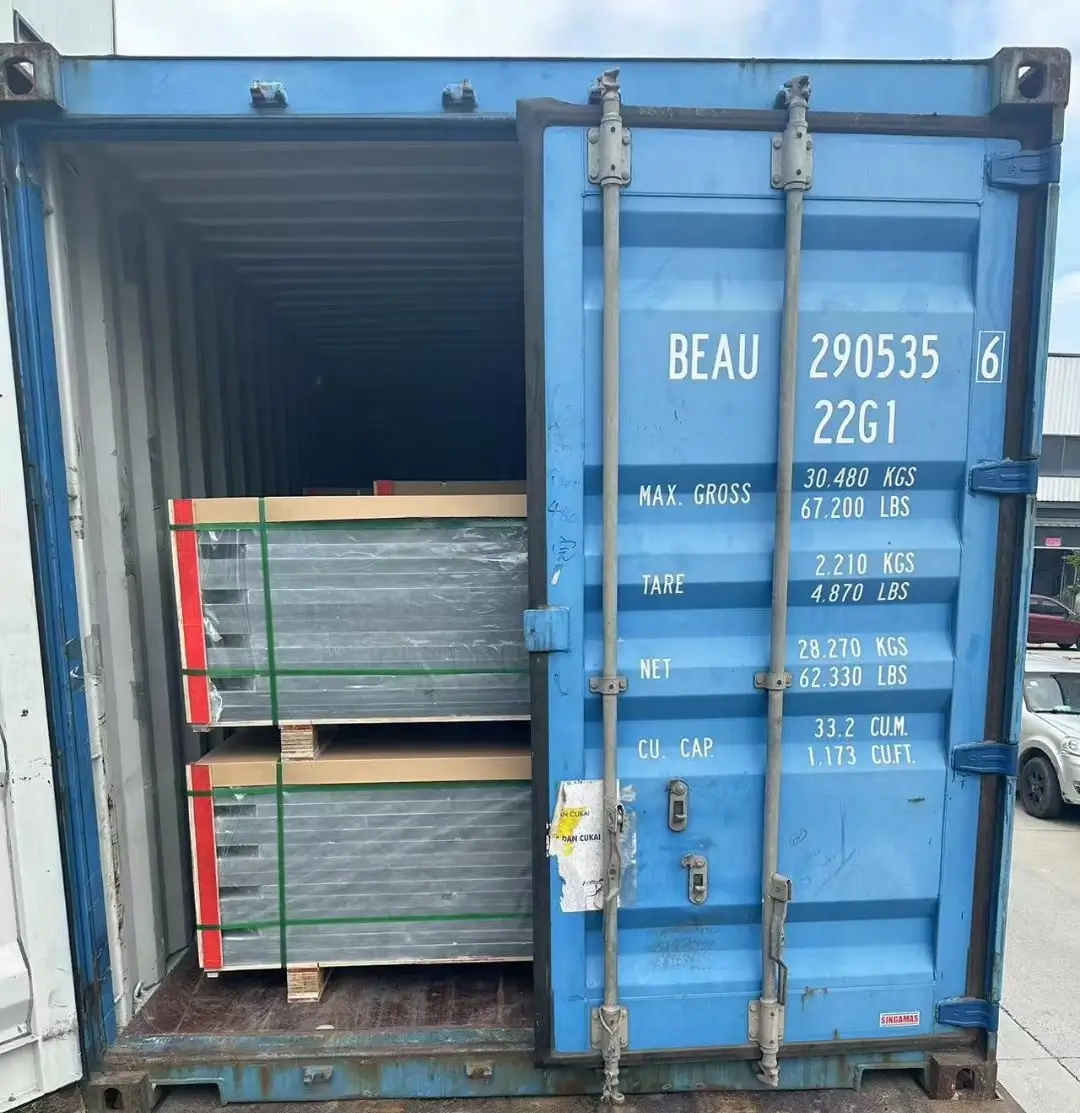
Here is the part of the journey almost nobody outside the trade expects: the container comes to the slate, not the slate to the container. An empty box is trucked the forty minutes from Jiujiang port to our yard. We load the crates ourselves — our people, our forklift, our slings. Then the sealed box goes back to the port, onto the river down the Yangtze, and transfers to the ocean vessel at Shanghai.
Loading at home is slower than loading at a warehouse. We do it anyway. Every extra handling between our yard and the vessel is a transfer we do not control, done by people who have never been told what a billiard bed is. Loading in our own dock keeps the number of touches to a minimum, and it makes our yard the last place on land the stone is handled by anyone who knows its name.
This is also the buyer's third window. Come to the factory for the loading, or send an inspector, or watch the photographs and video we take as the crates go in. Once the doors shut, the photographs are what remain — which is why we take them seriously.
Milestone 10 — Five Weeks of Quiet Physics
Most sailings we ship to Europe run four to six weeks on the water. The customer watches the tracker; we watch the weather. Inside the container, the crate is doing unglamorous physics. Day-night temperature swings above deck can be large, but slate is a patient traveller: a ten-degree swing moves a panel by a couple of tenths of a millimetre at most, well inside what the joints absorb. The full argument, with numbers, lives in why Jiujiang slate works for billiard tables.
This is where upright packing earns its keep. A slate panel's strength runs in the plane of the stone; its weakness runs across the cleavage. Standing the panels on edge turns road shock and ship pitch into forces the stone shrugs off, instead of forces aimed straight at its weakest plane. The foam does not coddle the slate. It just makes sure the wrong kind of force never gets a clean shot at it.
The Milestone We Never See
The last two milestones happen in rooms we will probably never enter. After the port, the customs hall and a final truck ride, the crates arrive at the table maker's workshop. Milestone 11: the bed is lifted onto the frame, the three pieces are set by their numbers, levelled, joined and sealed, and the cloth goes on. From that moment the slate disappears — the next anyone sees of it will be a corner of grey during a re-clothing, years from now.
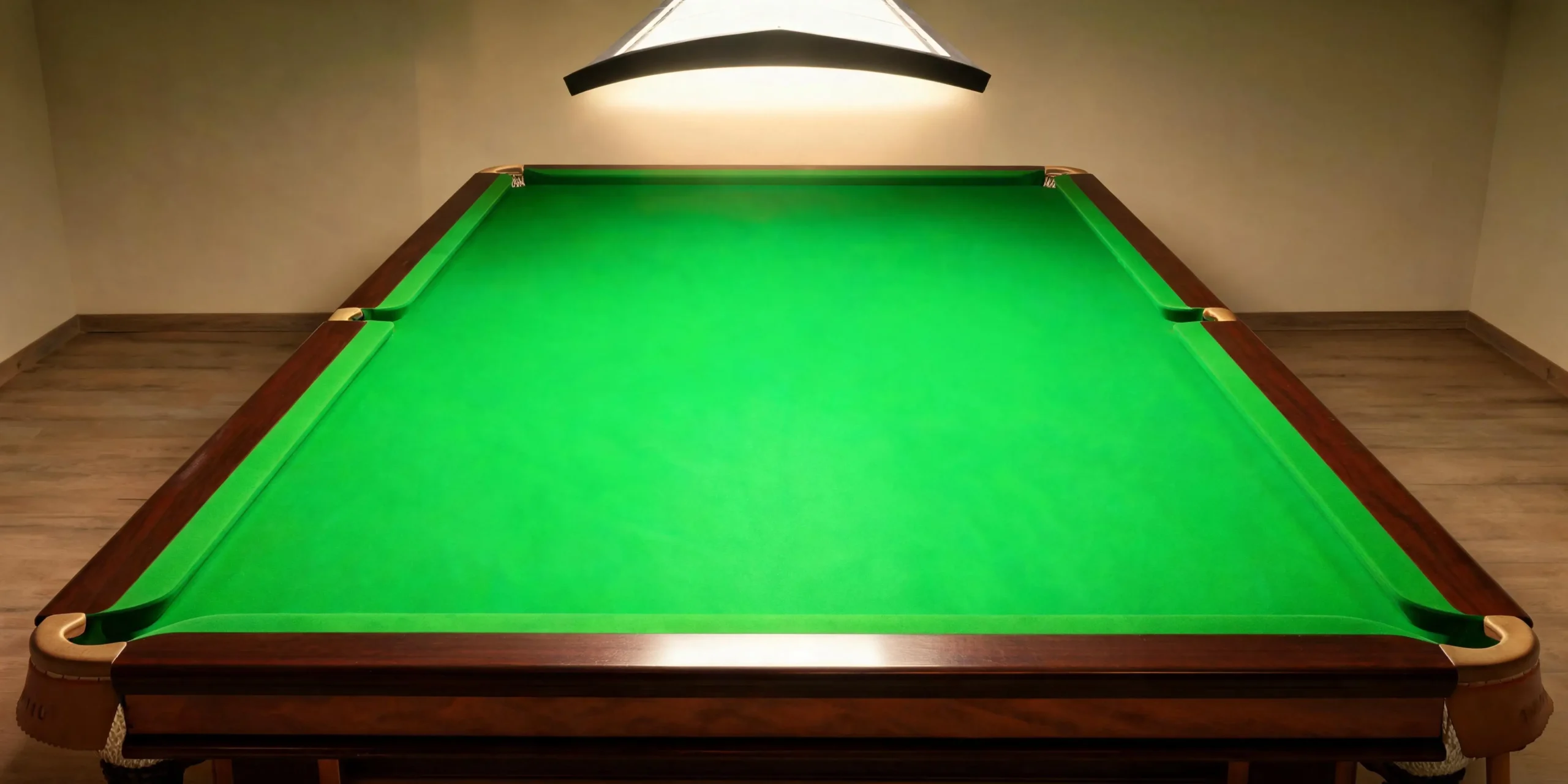
Milestone 12 is a break-off shot. That is the honest ending of this journey: it finishes in a club or a family room we are not in, on a table we will mostly never touch again. Every so often a photograph arrives instead — the table dressed in green, someone's hand bridging over the spot where three pieces of our mountain have finally learned to behave as one. We keep those photographs.
The slate began as sediment and ended as a specification. What happened in between — the counter-signed drawing, the tape measure in the block yard, the tenth of a millimetre on the bench, the crate built for strangers — is the part of the journey no tracker will ever show. It is also the part that decides how the ball rolls.
Frequently Asked Questions
How long does the whole journey take, from drawings to a finished table?
Count it in four legs. Drawing confirmation: a few days to a week, depending on how quickly revisions settle. Production: typically ten to fifteen working days from block to sealed crate. Ocean freight: around four to six weeks to most European ports. Assembly at the table maker: usually one to two days. End to end, an order usually runs two to two-and-a-half months — and the leg people watch most closely, the ocean, is the one nobody can speed up.
Why can't production start before the drawings are confirmed?
Because the drawing is the order. The kerf allowance, the CNC program, the inspection standard and the crate design are all derived from it, so a drawing that changes after machining begins means scrapped work, not amended work. We counter-sign a dimension sheet and return it before the first cut, so both sides hold the same piece of paper before anything is committed to stone.
Can I see the slate at any point during the journey?
Three windows exist. During drawing confirmation, you see the specification take shape. After the first piece is machined, we send photographs and video so you approve the machining pattern before the rest of the set runs. Before loading, you can stand at the factory for the container — or send an inspector to stand there for you. After the doors close, the photographs and the records inside the crate are what remain.
Does one table really need its own container?
A full snooker order — beds, sometimes frames and rails as well — fills a container on its own, and that is the cleanest way for stone to travel. Sharing a container is physically possible for small orders, but every extra unloading adds transfers by people who have never been briefed on slate. Our advice to customers is the same either way: consolidate. Fewer, fuller containers beat frequent, half-full ones on arrival condition, not just on freight cost.
What happens if a panel is damaged in transit?
The crate is built for the journey, but stone is stone. The practical defence is procedural: open the container and inspect before signing the delivery receipt, photograph any damage on the spot, and report it with the set number from the crate label. A documented claim against the carrier and the insurance is a clean one. And if a panel is lost, the order is reproducible — the drawing, the batch records and the set numbers are what make that possible.
What does the table factory do with the slate after it arrives?
The remaining work is assembly and tuning: lift the pieces onto the frame in the order of their set numbers, position and level each panel, dress the joints, seal the seams, then stretch the cloth. A good installer re-checks the level under the cloth as well as before it, because the cloth itself can pull a marginal bed slightly out of plane. The tolerance our bench certifies only survives the journey if that last levelling is done properly.
Related Reading
Your Table's Bed Starts This Journey as a Drawing
Three-piece and five-piece slate beds, machined to your confirmed drawings, inspected piece by piece and shipped from Jiujiang to table builders in over 30 countries. See our billiard slate or send us your CAD files.