
Pool vs Snooker vs Chinese 8-Ball Slate: Key Differences
An email lands in the inbox: "Please quote billiard slate, 9 ft, 25 mm."
That message could describe three completely different products. A 9 ft American pool table, a 9 ft Chinese 8-ball table, and a table that happens to measure 9 ft but was built for a regional game — all three use natural slate as the playing surface. But the slate for each one is machined to a different drawing, and only one of those drawings matches the table the buyer actually has.
If you manufacture, import, or distribute billiard tables, the cost of ordering the wrong slate usually shows up at assembly. The rails do not fit. The pocket cutouts are in the wrong position. The playing surface is the wrong size. By then the slate has crossed an ocean and sat in a warehouse, and the only fix is to start over.
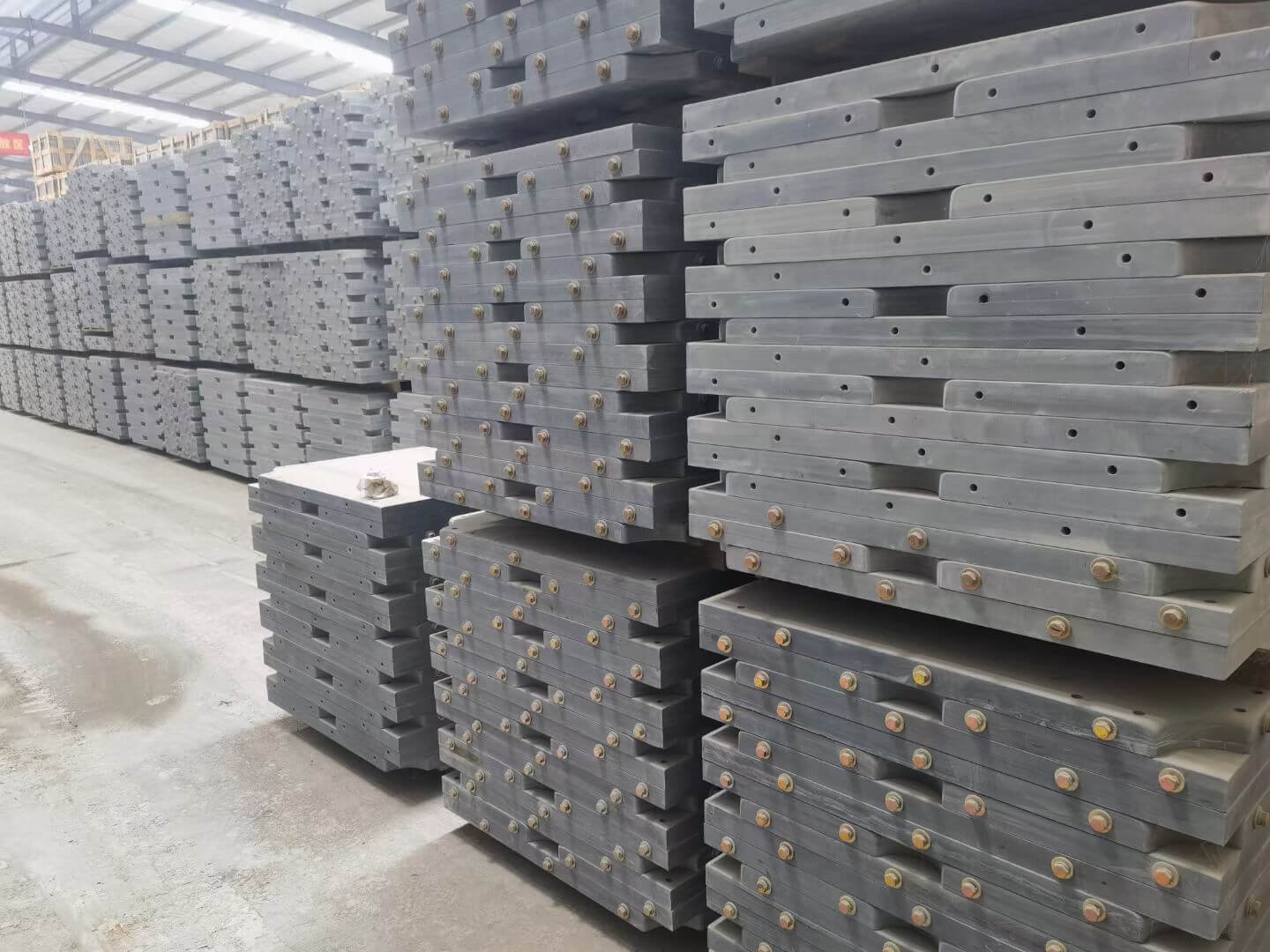
The short answer: no — pool, snooker and Chinese 8-ball slate are not simply interchangeable. The differences go well beyond thickness. They include the playing area, the slate outline, piece configuration, pocket geometry, mounting holes and CNC machining. For manufacturers and importers, the correct specification is matched to the table drawing — not selected by table size alone.
The comparison at a glance. Each row is a specification buyers need to confirm before ordering.
| Pool Table Slate | Snooker Table Slate | Chinese 8-Ball Slate | |
|---|---|---|---|
| Playing area | Table-specific | Table-specific | Table-specific |
| Slate outline | Drawing-specific | Drawing-specific | Drawing-specific |
| Common table sizes | 7, 8, 9, 10 ft | 10 ft and 12 ft | Commonly 9 ft class |
| Common thickness | 19–30 mm, depending on design | 45 mm commonly requested; 50 mm also available | 45 mm commonly ordered in our production |
| Typical piece configuration | 1 or 3 | 3 or 5 (12 ft typically 5) | 3–5, depending on design |
| Pockets | 6 | 6 | 6 |
| Pocket style | Wider openings, pool rail design | Narrower, more rounded | Chinese 8-ball table design |
| CNC pocket machining | Yes, per table drawing | Yes, per table drawing | Yes, per table drawing |
| Mounting holes | Drawing-specific | Drawing-specific | Drawing-specific |
| Interchangeable? | Generally no | No | Generally no |
These are practical production references, not universal standards. Always confirm the final dimensions and machining requirements against the table manufacturer's drawing — and note that mounting holes are drawing-specific for all three types, because bolt-hole patterns follow the table manufacturer's frame design, not the game.
Three Tables, Three Engineering Briefs
Pool, snooker, and Chinese 8-ball are different games played on different tables. The slate follows the table — not the other way around.
Pool tables (American-style) come in several sizes, from 7 ft bar boxes to 10 ft tournament tables — the pool table slate size guide covers the full range. The slate is relatively thin — typically 19 to 25 mm depending on the table design — and is often supplied in one or three pieces. Because pool tables span such a wide size range, "pool table slate" does not refer to one set of dimensions. It refers to a family of products cut to different drawings. Why are pool tables made with slate?
Snooker tables are larger. A full-size tournament snooker table is 12 ft, and its playing surface is roughly double the area of a 9 ft pool table. The slate is thicker — 45 mm is a common specification — and is commonly supplied in five pieces so the table can be transported, installed, and supported correctly. For grade-by-grade detail, see the snooker slate thickness guide.
Chinese 8-ball is a newer table design that combines elements of pool and snooker. The table has its own dimensions, pocket geometry, and slate construction. 45 mm is the thickness most commonly requested in our production, with 38 to 50 mm also specified depending on the design. The slate outline is larger than the playing area, and the pocket machining follows the Chinese 8-ball table design — not pool, not snooker. Chinese 8-ball table slate: full spec page
Russian pyramid and Korean carom tables use their own slate designs as well. For a full classification of all slate types, see types of billiard slate — that page answers "what types exist"; this page answers "how the three most-sourced types actually differ when you order."
Can You Use One Slate for a Different Table?
Generally, no.
A piece of natural slate may have excellent physical properties, but the finished billiard slate is a combination of dimensions, thickness, pocket machining, mounting holes, piece configuration and surface finishing. A slate manufactured for one table design is generally unsuitable for another — even when two tables have similar overall dimensions, and even when both use six pockets.
A billiard slate should therefore be treated as a table-specific component — not simply as a piece of stone of a certain size.
We have seen buyers try. A distributor ordered 9 ft pool slate and attempted to install it on a Chinese 8-ball table. The overall dimensions were close, but the pocket cutouts did not match the rail system. The table could not be assembled. The slate had to be reordered with the correct drawing — and the first shipment became scrap.
Another buyer ordered 12 ft snooker slate for a 10 ft pool table, thinking the extra material could be trimmed. The thickness, pocket positions, and piece configuration were all wrong. The slate was too heavy for the cabinet, the pockets were in the wrong place, and the five-piece configuration did not match the three-piece rail system.
For commercial production, the safest approach is simple: manufacture the slate to the table drawing. If you are unsure whether a specification is correct, send the drawing to the manufacturer before placing the order.
Slate Outline vs Playing Area
One of the most common sourcing mistakes is confusing the playing area with the slate outline. They are not the same measurement.
The playing area is the surface inside the cushions — the part of the table where the balls actually roll. The slate outline is the physical dimension of the stone component. The slate must extend beyond the playing area to accommodate the cushion rails, pocket cutouts, and mounting structure.
Here is how this plays out for each type:
A 9 ft pool table may have a playing area of approximately 2540 × 1270 mm, but the slate outline is larger — around 2718 × 1448 mm. The difference, roughly 180 mm in length and 180 mm in width, is where the cushions, rails, and pocket structures sit.
A Chinese 8-ball table may have a playing area of approximately 2540 × 1260 mm, but the slate outline is around 2640 × 1360 mm. Again, the slate extends beyond the playing surface.
A 12 ft snooker table follows the same principle: the slate outline is larger than the playing area by a margin that accommodates the cushion system and pocket construction.
A 9 ft table does not automatically mean one universal slate size. The final specification depends on the playing area, the slate outline, the rail system, the cabinet construction, the pocket machining and the mounting requirements. When you request a quotation, providing only the playing area — or only the table size — is not enough. The manufacturer needs the complete slate outline and, ideally, the full drawing.
Thickness: 19 mm and 45 mm Are Not the Same Product
Thickness is the specification buyers focus on most, and it is also the one most often misunderstood.
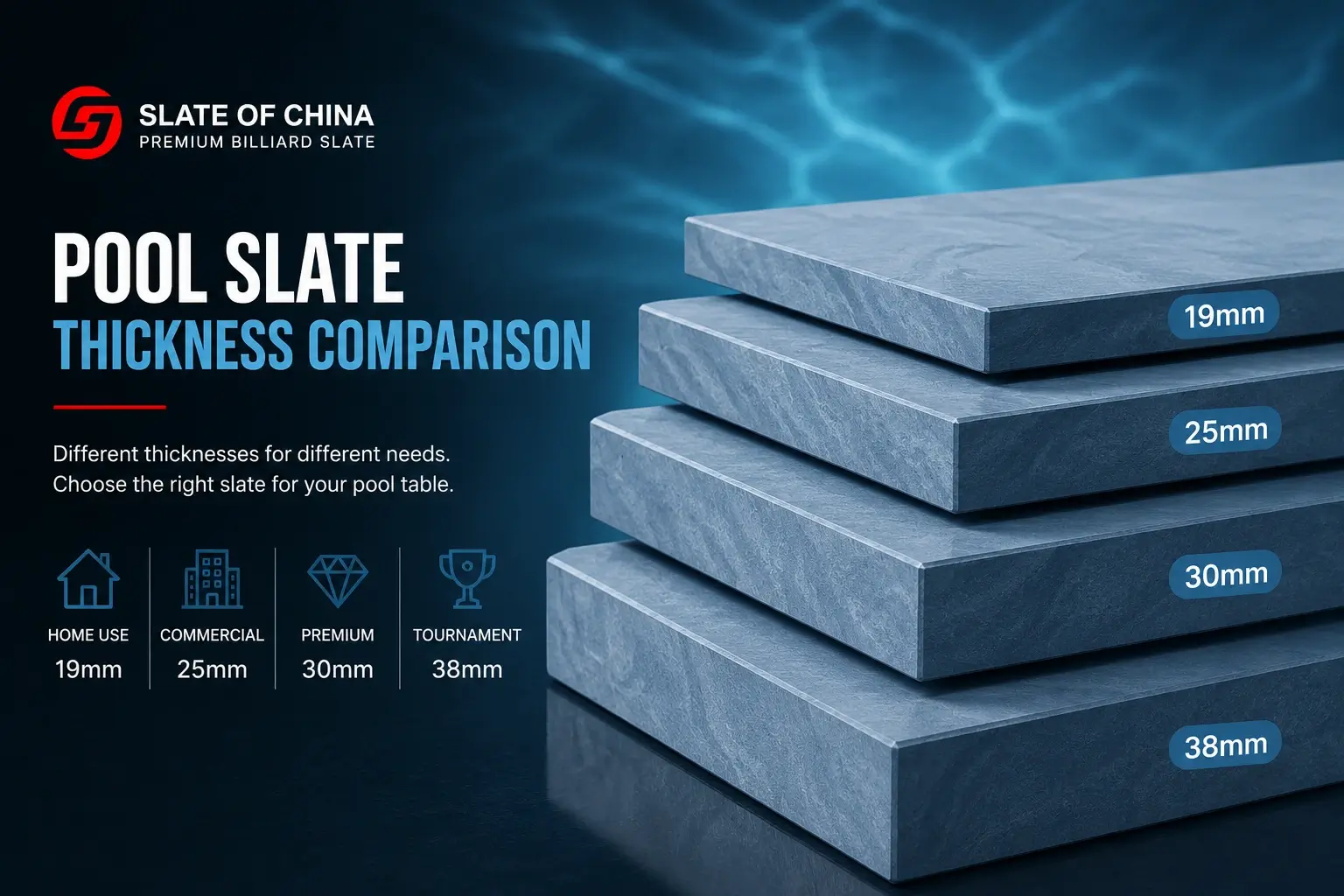
Pool table slate is typically 19 to 30 mm thick depending on the table design — 19–25 mm is common in many pool-table applications, while thicker specifications are also used, up to 38 mm in tournament-grade designs. The exact thickness depends on the cabinet structure, the support system, and the rail height. The pool table slate thickness guide covers what each grade is for. A table designed for 19 mm slate has a cabinet and hardware system built around that thickness. You cannot simply swap in a thicker slate without checking whether the rails, cushions, and hardware still align.
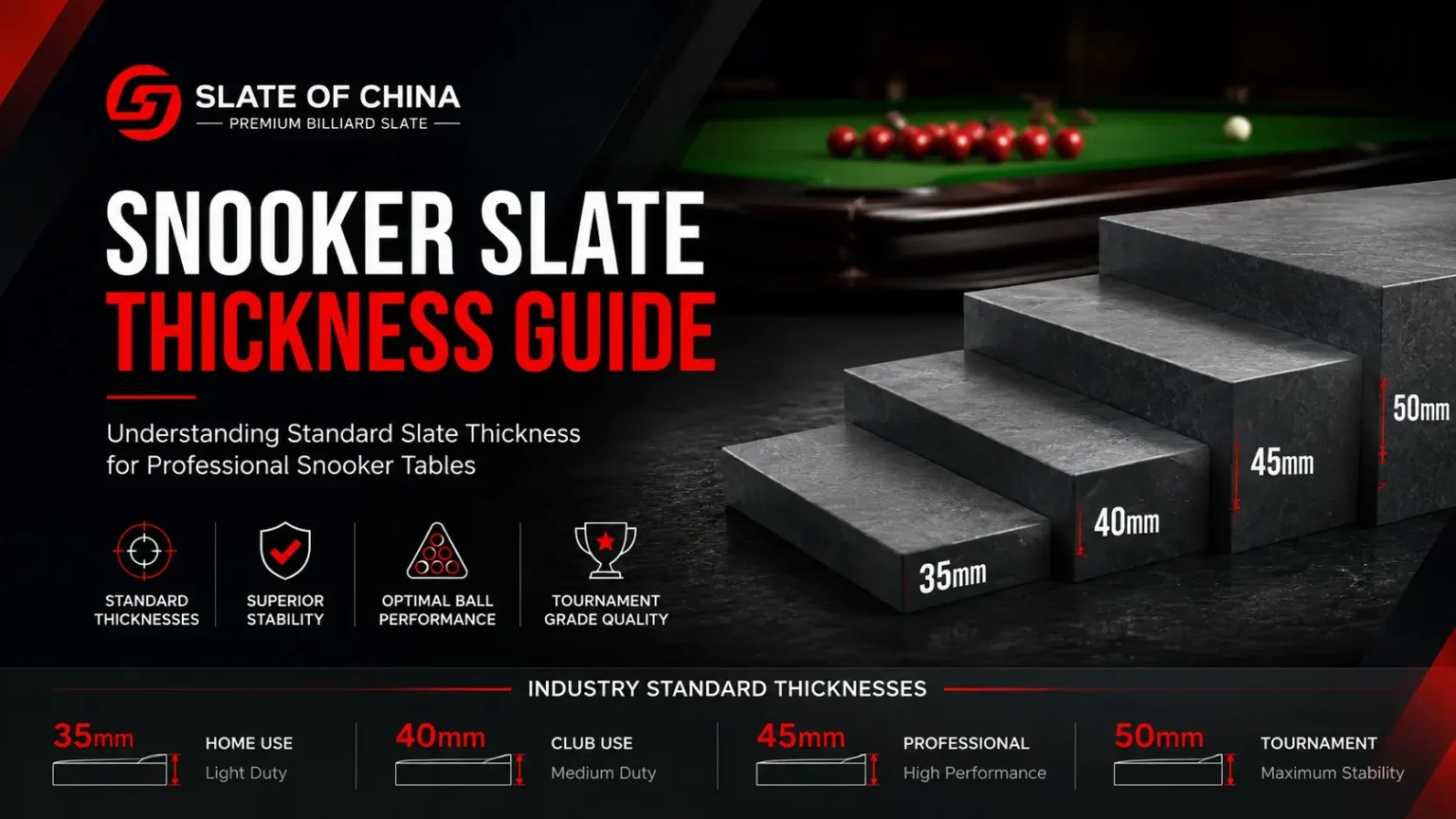
Snooker slate is commonly 45 mm for professional tables, with 35 mm, 40 mm, and 50 mm also specified for different table grades — see 45 mm vs 50 mm snooker slate for that comparison. The larger playing surface of a 12 ft table requires more structural mass, but thickness is one factor in table stability — it should not be evaluated independently of the frame and support structure. A full-size snooker table typically uses thicker, heavier slate as part of that engineered system.
Chinese 8-ball slate — our production experience shows 45 mm is the most commonly requested specification, while 38, 40, 42 and 50 mm are also specified for different table designs. The thickness follows the table manufacturer's engineering, not a universal standard.
The weight difference is significant. Slate has a density of approximately 2.7 tonnes per cubic metre. A 9 ft pool table with 25 mm slate in three pieces weighs roughly 250 to 270 kg. A 12 ft snooker table with 45 mm slate in five pieces weighs around 800 kg. That weight difference drives everything from cabinet design to shipping cost to the number of people needed for installation.
45 mm is not "better" than 25 mm, or vice versa. The correct thickness is a system specification, not simply a quality ranking — it works together with the slate support, frame construction, flatness, machining and installation to determine how the table plays. A table designed for 25 mm slate should not be converted to 45 mm without checking the cabinet, support frame, rail height, hardware, and playing-surface elevation.
Pocket Patterns: Six Pockets Does Not Mean Six Same Pockets
All three may have six pockets, but the pocket geometry is not the same — and the difference is in the machining, not the label.
Pool tables have four corner pockets and two side pockets. The side pockets sit at the midpoint of the long rails. The openings are relatively wide — pool uses larger balls and the pocket design accommodates that.
Snooker tables also have four corner pockets and two middle pockets at the midpoint of the long rails. But snooker pocket geometry is notably different — the openings are narrower and more specialised. A snooker pocket is designed for the smaller balls and the precision that snooker demands.
Chinese 8-ball tables have four corner pockets and two side pockets, typically with rounded, snooker-style pocket entrances rather than the wider corner cut of an American pool table. The positions may appear similar to pool at first glance, but the opening, angle, cutout, and machining follow the Chinese 8-ball table design — which is not the same as a standard pool table.
This is why "six pockets" does not mean the slates are interchangeable. The pocket positions and geometry are machined into the slate for a specific table. A 9 ft pool slate and a Chinese 8-ball slate may both have six pockets in similar positions, but the pocket cutouts, angles, and mounting details are different.
For OEM production, the pocket geometry is often more important than the slate's nominal length and width. Two slates with identical overall dimensions can have completely different pocket machining.
Mounting Holes Are Table-Specific
One point that surprises many first-time buyers: bolt-hole and mounting-hole patterns are not determined simply by whether a table is used for pool, snooker or Chinese 8-ball. They normally depend on the cabinet, frame, rail system and hardware used by the table manufacturer — two 9 ft pool tables from different brands can use completely different hole layouts.
This is why the comparison table above lists mounting holes as drawing-specific for all three types. The game determines the pocket style; the table manufacturer determines the holes.
For OEM production, provide the hole drawing together with the slate dimensions. Do not assume that two tables of the same nominal size use the same hole pattern.
Piece Configuration: 1, 3, or 5 Sections
Billiard slate is rarely supplied as a single piece — except for smaller tables. The number of pieces affects transport, installation, and how the playing surface is assembled.
Pool table slate: smaller tables (7 ft, 8 ft) may use a single piece. Larger tables (9 ft, 10 ft) commonly use three pieces. The individual sections must align precisely at the joints so the playing surface is flat across the seams.
Snooker table slate: a full-size 12 ft snooker table commonly uses five pieces. A typical production reference is 3658 × 1867 × 45 mm, 5-piece. Each piece must be manufactured accurately enough to form a stable, flat playing surface after installation.
Chinese 8-ball slate: may be supplied in three to five pieces depending on the table design, cabinet construction, and transportation requirements. Always confirm the piece configuration before quotation.
The piece count matters because each joint is a potential flatness problem. If two adjacent pieces are not machined to the same thickness and edge quality, the seam becomes visible — or worse, a ball rolling across it deviates. This is why joint preparation is part of CNC machining, not just cutting to size.
CNC Machining: Where the Drawing Becomes the Product
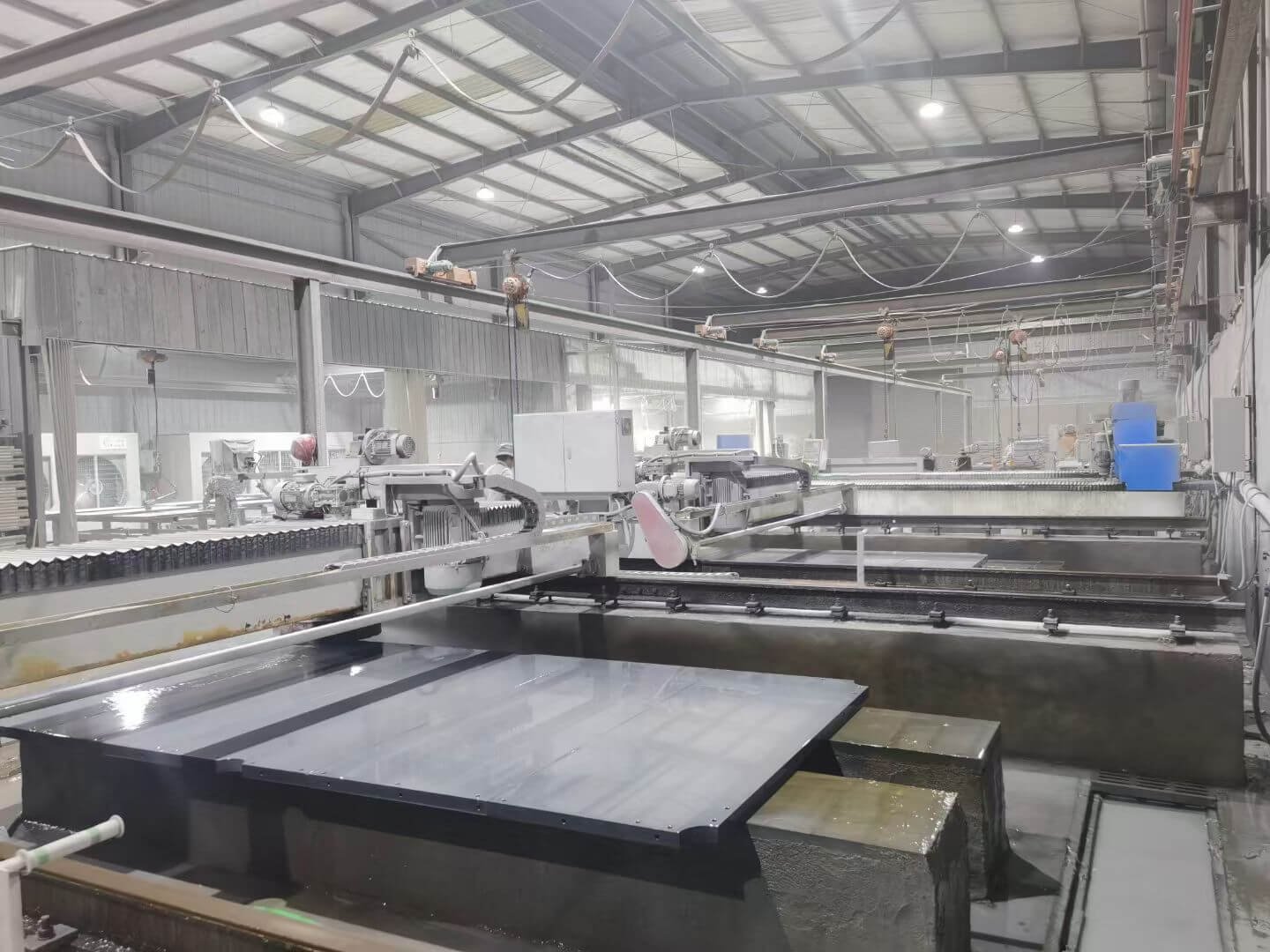
Modern billiard slate is not simply cut to length and width. For OEM and professional table production, the slate requires CNC machining that may include:
- outside profile cutting
- pocket cutouts and recesses
- mounting and screw holes
- rail mounting areas
- cushion-related machining
- joint preparation
- edge processing
The machining requirements differ between table types. Pool slate needs pocket and mounting machining matched to the pool table's rail system. Snooker slate needs precise pocket and installation machining for a five-piece assembly — five pieces means four joints, and each joint must be flat to within a tolerance the table design specifies. Chinese 8-ball slate needs pocket, mounting, and CNC machining per the table design, which may include features that pool and snooker slate do not have.
This is where the drawing becomes essential. "9 ft pool slate" tells the manufacturer the table type, but it does not specify the pocket opening, the mounting hole positions, the joint configuration, or the edge treatment. A PDF or CAD drawing eliminates that uncertainty. See billiard slate quality and test data for how machining accuracy is verified at the factory.
What to Send When You Request a Quote
Sending complete technical information reduces quotation errors and production mistakes. Ideally, provide:
- Table type — pool, snooker, Chinese 8-ball, Russian pyramid, carom, or other
- Playing area dimensions — the actual playing surface, not just the nominal table size
- Slate outline dimensions — the complete length and width of each slate section
- Thickness — 19 mm, 25 mm, 38 mm, 45 mm, 50 mm, or other
- Number of pieces — 1-piece, 3-piece, 5-piece, or other
- Pocket dimensions — corner and side/middle pocket openings, positions, and cutout details
- Mounting-hole pattern — hole positions and diameters from the table drawing
- CNC drawing — PDF or CAD, especially important for OEM production
- Quality requirements — flatness, surface finish, joint quality, edge condition
- Quantity and destination
Compare these two inquiries:
| Poor inquiry | Better inquiry |
|---|---|
| "I need 9 ft pool slate." | "Table type: 9 ft pool / Slate: 2718 × 1448 mm / Thickness: 25 mm / Pieces: 3 / Pockets: 6 per attached drawing / Mounting holes: per drawing / Machining: per CAD / Quantity: 20 sets / Destination: Hamburg" |
The second inquiry gives the manufacturer enough information to check production feasibility and provide an accurate quotation. The first one does not. If you have the table drawing, send it before production rather than trying to specify the slate from table size alone.
Frequently Asked Questions
Can I use pool table slate on a snooker table?
No. Pool and snooker slate have different dimensions, thickness, pocket geometry, and piece configurations. Even if the overall size appears similar, the pocket positions and machining will not match the snooker table's rail system. Pool slate is typically 19–25 mm thick, while snooker slate is commonly 45 mm — the cabinet and support structure are designed for that difference.
Is 45 mm slate always better than 25 mm?
Not necessarily. Each thickness is engineered for a specific table design. A table built for 25 mm slate has a cabinet, support structure, and rail system designed for that thickness. Installing 45 mm slate on a table designed for 25 mm would change the rail height, playing-surface elevation, and hardware alignment. The correct thickness is the one the table manufacturer specifies.
Do all Chinese 8-ball tables use the same slate?
No. While 45 mm is a commonly ordered thickness, the slate outline, playing area, pocket geometry, and piece configuration can vary between table manufacturers. Always confirm the table drawing before ordering — even when the table type is the same.
Why does snooker slate come in five pieces?
A full-size 12 ft snooker table has a large playing surface. Five-piece construction makes the slate transportable, installable, and supportable. Each piece must be machined accurately to form a flat, stable playing surface at the joints. A typical production reference is 3658 × 1867 × 45 mm, 5-piece, but the exact dimensions should always be confirmed against the table manufacturer's drawing.
What is the most common mistake when ordering billiard slate?
Confusing the playing area with the slate outline, or ordering by table size alone without sending a drawing. Both lead to slate that does not fit the table. The playing area is the surface inside the cushions; the slate outline is the physical dimension of the stone. Always provide the complete slate outline and, ideally, the manufacturer's drawing.
Do I need to send a drawing, or is the table size enough?
The table size alone is not enough for OEM production. "9 ft pool" tells the manufacturer the table type, but not the pocket opening, mounting hole positions, joint configuration, or edge treatment. A PDF or CAD drawing eliminates uncertainty and significantly reduces the chance of production errors. If you do not have a drawing, send as many confirmed dimensions as possible and ask the manufacturer to help identify the specification.
Related Reading
Need a Slate Specification Checked?
If you are developing or sourcing a pool, snooker or Chinese 8-ball table, send us your table drawing, slate dimensions, thickness, piece configuration and required quantity. We can check the slate specification, machining requirements and piece configuration before production — and flag any conflicts before the stone is cut.
Send Your Drawing →