
Jiujiang Roofing Slate in Cold and Coastal Climates
| Climate Stress | Key Metric | What the Data Shows |
|---|---|---|
| Frost & freeze-thaw | Water absorption | 0.1% — far below EN 12326's 0.6% threshold |
| Wind | Flexural strength | 60 MPa dry / 45 MPa wet — but the fixing system decides |
| Salt-laden air | Absorption + fixing materials | Dense slate resists uptake; metal fixings are the weak link |
Three Stresses, One Roof
Three things end a slate roof early: water that freezes, wind that lifts, and salt that corrodes the fixings. Not the slate itself — almost never the slate itself.
A slate that looks excellent in the quarry yard may still fail if it absorbs too much water, loses strength after repeated freezing, or sits under a fixing system that rusts in sea air. Climate decides which of these threats matters most. The right way to evaluate slate for a demanding environment is not to ask whether it is "hard" or "durable" in the abstract. It is to look at the specific properties that determine performance under the actual stresses the roof will face: water absorption, density, flexural strength, freeze-thaw behaviour, and chemical composition — and then consider how the slate will actually be installed.
Jiujiang roofing slate from Lushan and Xingzi in Jiangxi Province is used across markets with very different weather conditions, from northern Europe and Scandinavia to coastal projects in the UK and beyond. This article examines how the stone performs under the three climate stresses that matter most to roofing buyers: frost, wind, and salt-laden air.
Frost — What Freezing Water Does Inside the Stone
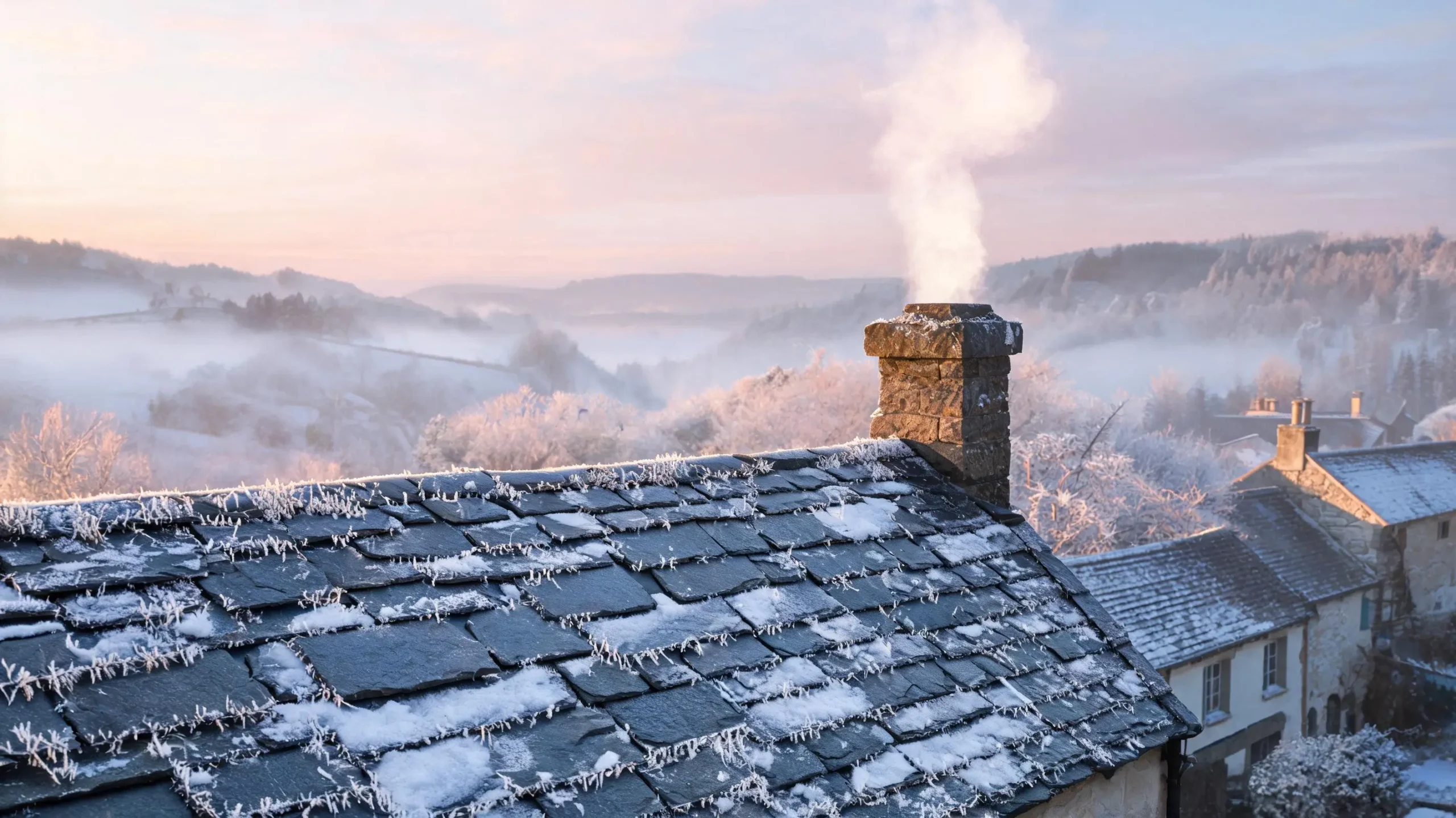
Water expands by roughly 9% when it freezes. That single physical fact drives almost everything about cold-climate roofing.
When water enters the pore system of a slate tile and the temperature drops below zero, the ice exerts pressure from inside the stone. Repeated freeze-thaw cycles can gradually open microcracks in susceptible material — not because the slate is weak, but because water was present where it should not have been.
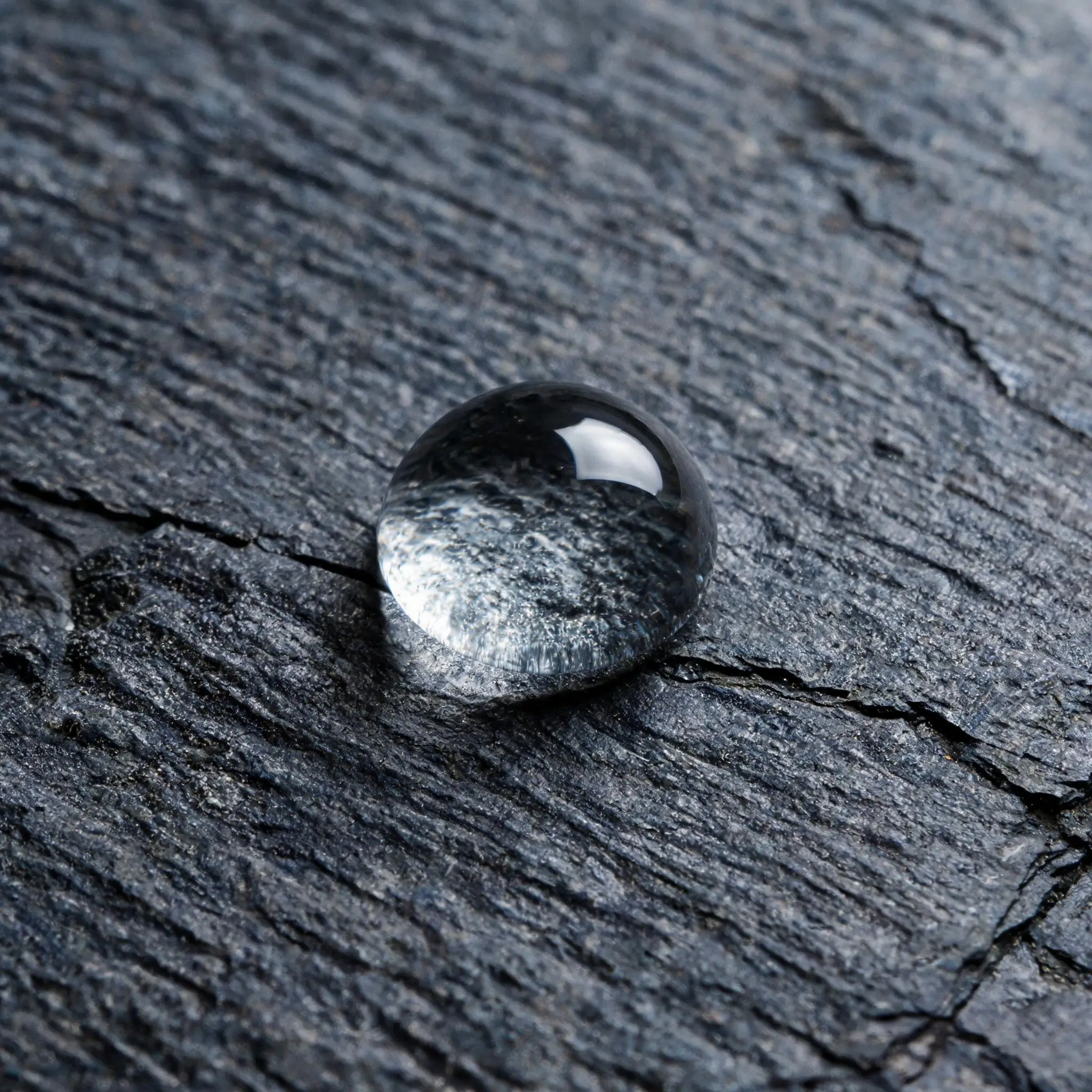
This makes water absorption the most predictive single number on a slate test report for cold-climate projects. Our tested Lushan roofing slate has shown water absorption as low as 0.1% in one laboratory dataset, with other tests reporting 0.13% and 0.2% depending on the standard and sample. All three values sit far below the EN 12326 threshold of 0.6% for the top performance class. The variation between datasets is normal — natural stone is not a manufactured composite, and different test methods (EN soak vs ASTM boil) produce slightly different readings on the same material.
The stone also carries a high bulk density of approximately 2,819 kg/m³, which describes how tightly the mineral grains are packed. Dense stone with low absorption simply holds less water — and less water means less ice, less internal pressure, and less risk of freeze-thaw damage over a service life measured in decades rather than years.
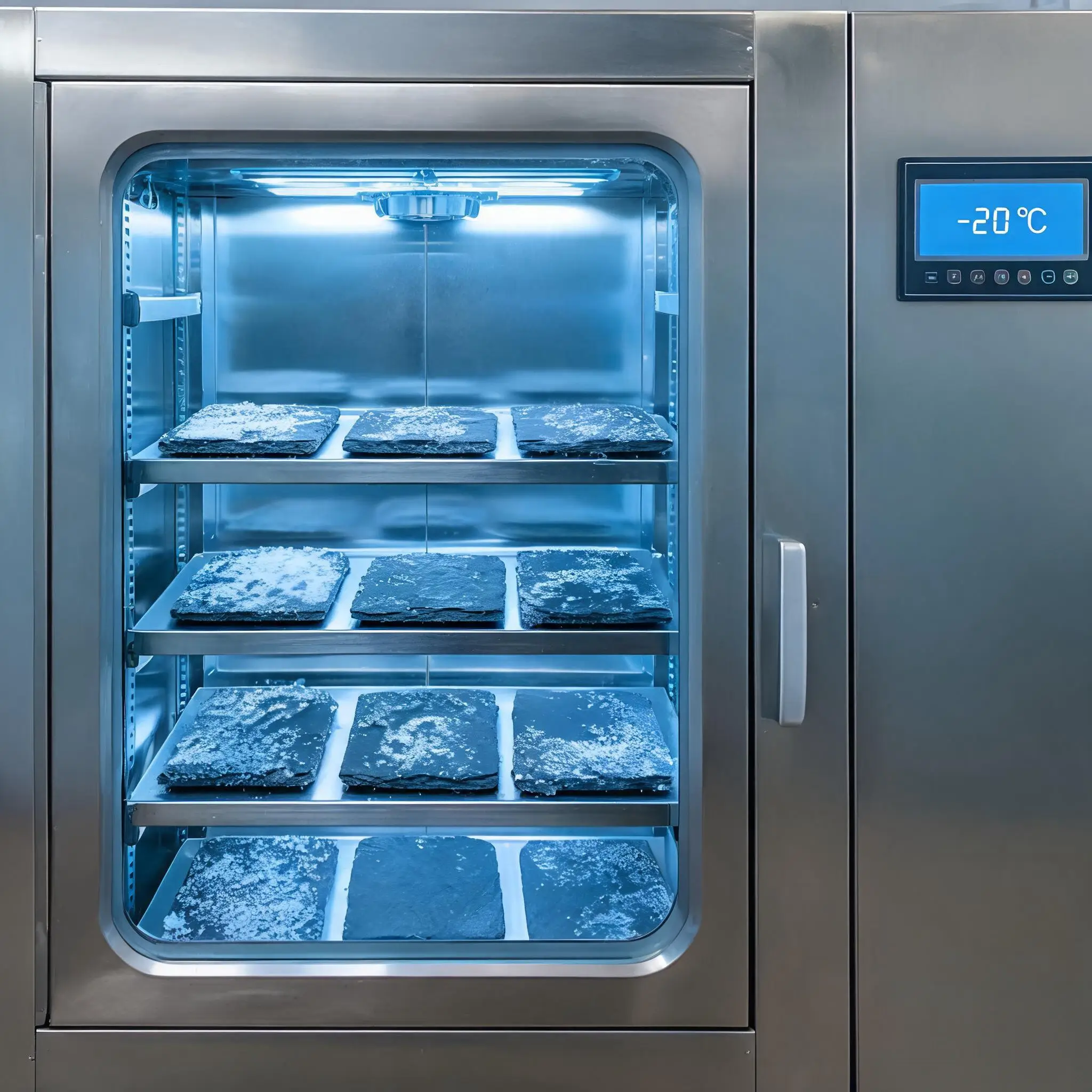
Under EN-related freeze-thaw procedures, the tested material showed no visible cracking or delamination after the specified exposure, with stable mechanical performance. We have published the key test results on our quality test results page, and the original laboratory documentation is available to serious buyers on request. For a detailed examination of the freeze-thaw mechanism — including 200-year field evidence from a local tombstone and the 120-cycle laboratory data — see our dedicated freeze-thaw resistance article.
The First Number to Check: Water Absorption
If a buyer checks only one number before specifying slate for a cold or coastal project, water absorption is the one the trade always checks first.
The reasoning is straightforward. Lower absorption means less water inside the stone, which means less material available for freeze-thaw processes. A slate that absorbs 0.1% by weight takes up very little water even after 48 hours of soaking; a slate that absorbs 1% or more may approach saturation after a single rainstorm followed by a freeze. The difference between 0.1% and 1% is not a rounding error — it is the difference between a roof that lasts 75 years and one that starts delaminating in year 15.
EN 12326 places water absorption and freeze-thaw behaviour among the critical performance characteristics for roofing slate. The standard's top classification sets a threshold of 0.6%, and our tested material clears that gate by a factor of three to six, depending on the dataset. For a deeper look at why water absorption matters so much for roof longevity — including the "saturation logic" that explains why a 0.1% stone is not just a little better than a 0.6% stone but fundamentally different in how it behaves — see our water absorption guide.
But water absorption should never be the only number on the specification. A responsible evaluation also examines the actual freeze-thaw test result, flexural strength, and the specific product being supplied. Two slates with identical absorption values may behave differently if one has a higher carbonate content or a weaker microstructure. Read the test report, not the catalogue.
Wind — Why the Slate Alone Can't Answer
Wind does not test the slate in isolation. It tests the entire roof assembly.
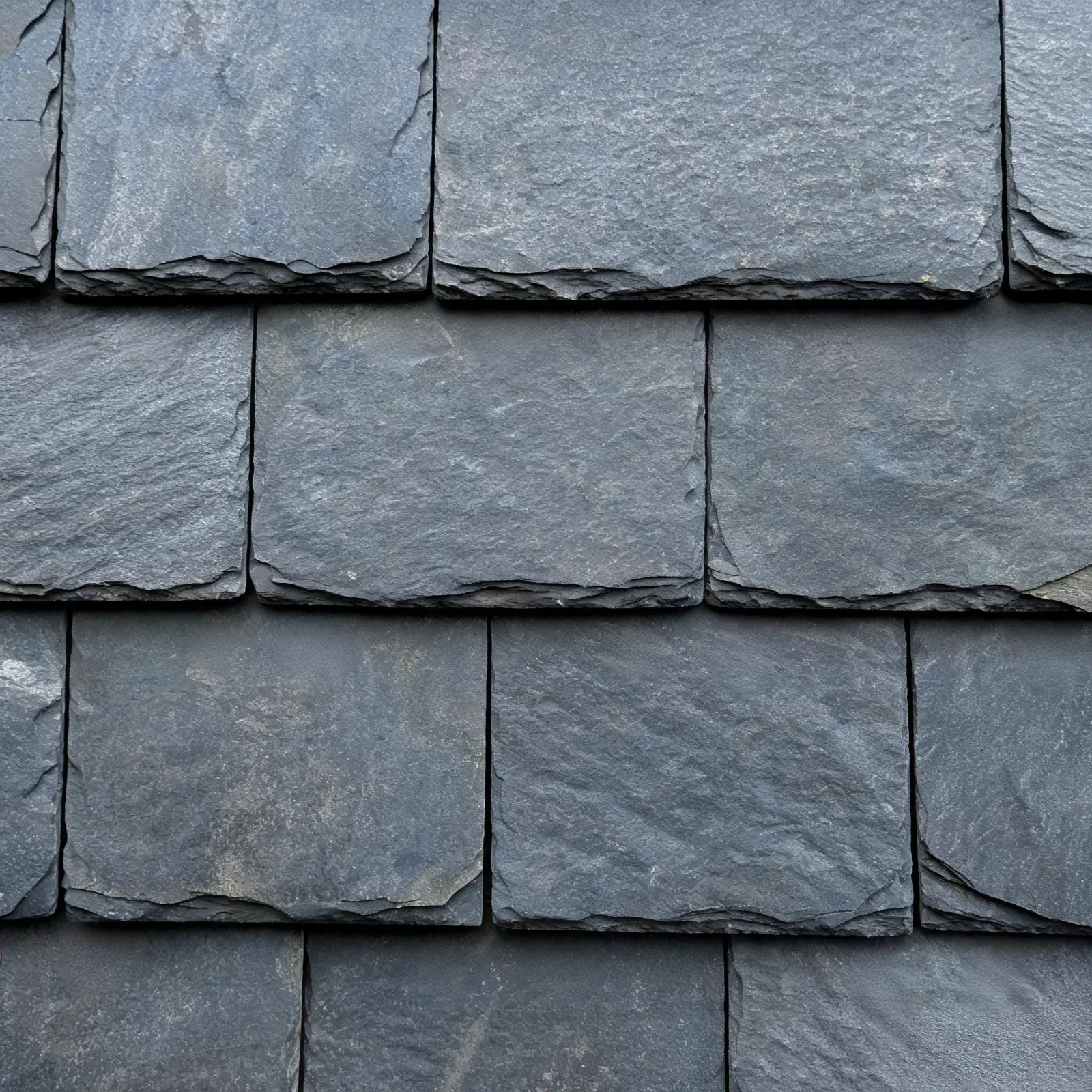
A slate tile itself does not "resist wind" the way a structural component does. Wind performance depends on a chain of factors: slate thickness and dimensions, flexural strength, fixing method (nail or hook), nail or hook specification, batten spacing, roof pitch, headlap, exposure zone, building height, and edge detailing. The slate must be strong enough for the application — but the installation system is equally important, often more so.
Our tested Lushan slate reports flexural strength of approximately 60 MPa dry and 45 MPa wet. The wet value matters more than the dry value for roofing, because a roof is wet more often than it is dry, and a saturated slate is the one most vulnerable to wind lift. A 75% strength retention from dry to wet is the mark of a stone that does not lose its structural integrity when it needs it most. For the full flexural strength analysis — including breaking load calculations for wind uplift and snow load — see Jiujiang Slate Flexural Strength.
But a 6 mm slate with suitable mechanical properties and correct fixing may be perfectly adequate for a sheltered project, while an exposed coastal building may require a different thickness, format, and fixing system entirely. We do not recommend choosing slate by thickness alone. For a detailed guide to specifying and installing slate in high-wind areas — including the wind-lift mechanism and fixing strategies for exposed sites — see our wind installation guide.
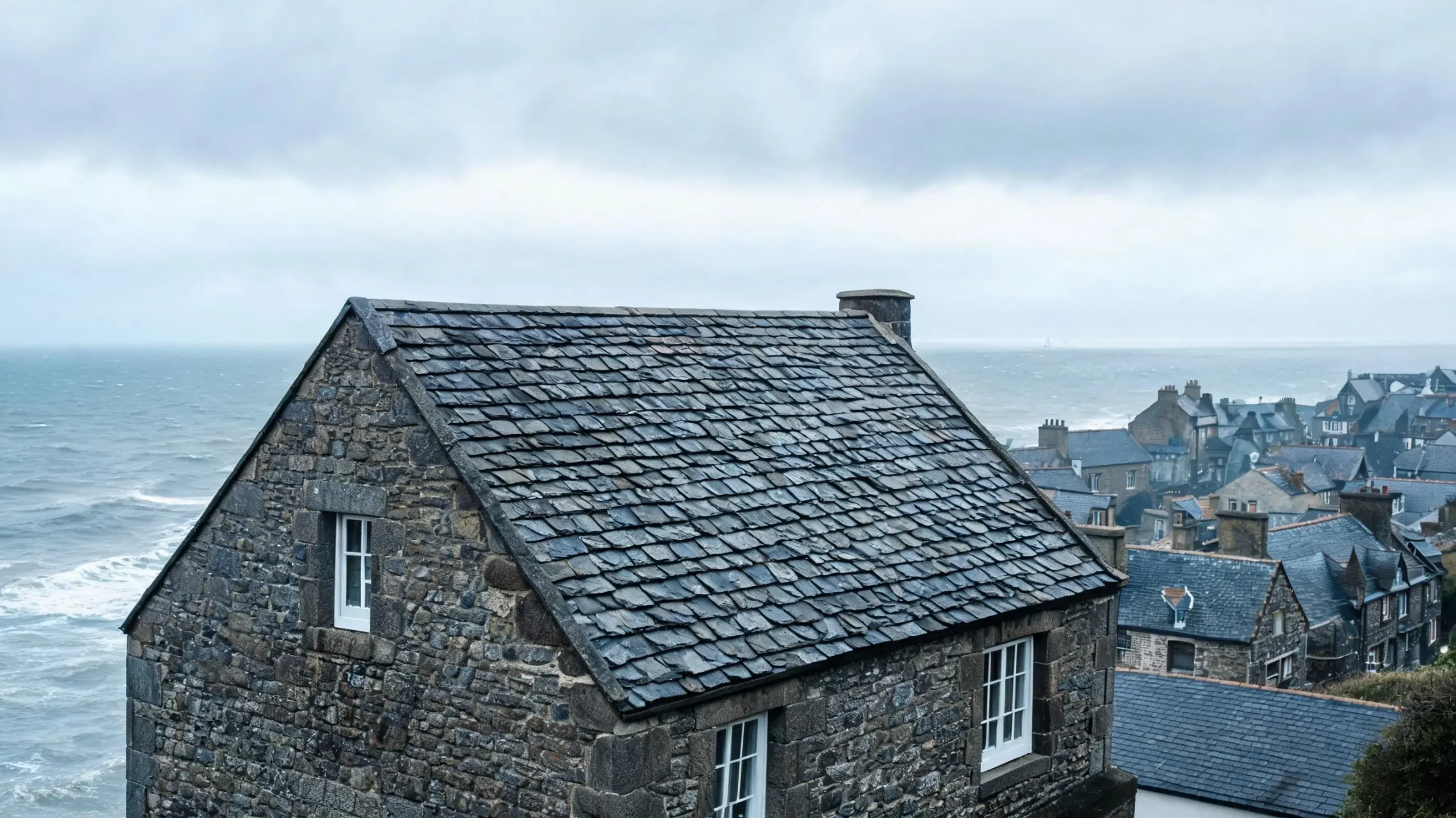
Salt Air — What the Tests Don't Cover
This is where many slate specifications go wrong.
A roofing slate that has passed freeze-thaw testing has demonstrated useful durability characteristics. But that does not automatically mean it has passed a dedicated salt-spray test. EN 12326 covers water absorption, flexural strength, freeze-thaw behaviour, and chemical composition — it does not include a salt-fog exposure protocol. Conflating freeze-thaw resistance with salt-air resistance is a common and costly mistake. A supplier who says "our slate passed freeze-thaw, so it is fine for coastal use" is not lying, but they are answering a different question from the one you asked.
For natural slate in a marine environment, the relevant questions are different from what most buyers assume:
- Does the slate absorb significant amounts of water? If absorption is below 0.2%, salt deposition on the surface has very little material to work with.
- Does repeated wetting with salt water cause the stone to deteriorate? The freeze-thaw test answers this for cold coastal climates — but it does not simulate salt exposure specifically.
- Does the stone contain minerals susceptible to marine weathering? Low carbonate content helps, because salt and acid work together on carbonate minerals.
- Are the nails, hooks, flashings, and other metal components suitable for marine exposure? This is the question that actually matters most.
That last point is where most coastal roof failures occur. A slate may remain perfectly sound for 75 years while the fixing system fails at year 20 because of salt corrosion. For marine and near-marine projects, the roofing specification must consider the complete roof assembly — not only the stone. Copper or 316 stainless steel fixings are not an upgrade in salt environments; they are the baseline. Galvanised steel is not adequate. For a detailed comparison of fixing materials in corrosive environments, see our copper nails vs stainless steel nails guide.
The most realistic approach is to treat "salt air resistance" not as a single number on a test report but as a system-level specification: the right slate, the right fixings, the right flashings, and the right roof design for the distance from the sea and the local wind exposure.
The Chemical Backbone
Natural slate is not chemically identical from one quarry to another. The mineral composition influences long-term weathering behaviour, and two slates with similar absorption and strength may age differently if their chemistry differs.
One of our laboratory datasets for Jiujiang/Lushan slate records approximately:
| Component | Value |
|---|---|
| SiO₂ (silica) | 70.10% |
| Al₂O₃ (alumina) | 12.86% |
| CaO (calcium oxide) | 0.32% |
| Iron oxides | 6.54% |
| Sulfur | 0.046% |
A high silica content is consistent with a hard, dense mineral composition — the kind of stone that resists physical weathering. The relatively low calcium content (0.32%) is useful when considering acid rain exposure: acid dissolves carbonate minerals, and a stone with almost no carbonate has almost nothing for the acid to attack. The very low sulfur content (0.046%) means the stone is unlikely to produce acid-runoff staining as it weathers.
But chemical composition should not be turned into a simple claim that "high silica equals a hundred-year roof." Roofing durability is determined by the combination of mineralogy, microstructure, water absorption, mechanical strength, freeze-thaw behaviour, installation, and climate. This is why laboratory testing of the actual material remains more useful than chemistry alone. For the full mineral analysis of Jiujiang slate — including the "mineral lock" model that explains how quartz, mica, chlorite, and pyrite work together — see Jiujiang Slate Mineral Composition.
The Roof Is a System, Not a Stone
The most common mistake in specifying slate for cold and coastal environments is treating the stone as the only variable that matters.
A roof is a system. The slate is one component. The nails or hooks that hold it, the battens that carry it, the underlayment beneath it, the flashings that seal the edges, and the roof design that directs water away — all of these must work together. A coastal specification that gets the slate right but specifies galvanised nails instead of copper has simply chosen a different failure mode.
For a cold-climate or coastal project, the specification should consider:
- Slate: water absorption, freeze-thaw resistance, flexural strength, thickness appropriate for the exposure zone
- Fixings: copper or 316 stainless steel for marine environments — never galvanised
- Flashings: compatible metal or non-metallic alternatives rated for salt exposure
- Underlayment: breathable membrane appropriate for the climate — moisture vapour must escape, not trap
- Roof design: pitch, headlap, and drainage adequate for wind-driven rain and snow
The weakest link decides the service life. Good slate on bad nails lasts exactly as long as the nails. For guidance on the complete roof assembly — including batten spacing, underlayment selection, and ventilation — see our guides on roof deck and underlayment and installing slate in snow and freeze-thaw climates.
What to Ask Before You Order
If you are sourcing roofing slate for a cold or coastal project, ask the supplier for the following before placing a large order.
Technical data
- Quarry location and source identification
- Slate type, colour, and thickness range
- Density and water absorption values (with the test standard used)
- Flexural strength — both dry and wet values
Durability evidence
- Freeze-thaw test report with the standard and number of cycles
- Weather resistance classification under EN 12326 or ASTM C406
- Chemical composition — especially CaO and sulfur content
Documentation
- Test laboratory name and accreditation
- Test standard used (EN 12326, ASTM C406, or both)
- Test date and sample identification
- Quarry or source identification linked to the report
- The original laboratory report — not a one-page summary
And the most important question of all: does the test report correspond to the material you are actually buying? A generic "Chinese slate certificate" is far less useful than a traceable report linked to a specific quarry, batch, and product. "Jiujiang slate" describes a production region; a technical specification must describe the actual quarry, material, and product being supplied. For a structured guide to requesting and verifying test documentation, see our article on what buyers should ask for when sourcing slate.
Frequently Asked Questions
Can I use Jiujiang roofing slate in Scandinavia or Canada?
Yes — the tested Lushan material shows very low water absorption (0.1–0.2%) and documented freeze-thaw performance under EN-related procedures. For cold-climate projects, request the freeze-thaw test report and verify that the water absorption value corresponds to the material being supplied. The climate data alone does not qualify a slate; the test report does.
Does passing a freeze-thaw test mean the slate is resistant to salt air?
No. Freeze-thaw testing evaluates what happens when water freezes inside the stone. It does not include a salt-fog exposure protocol. Salt-laden air affects roofing systems differently — the more common failure point in marine environments is the metal fixing system, not the slate itself. For coastal projects, specify copper or 316 stainless steel fixings and evaluate the complete roof assembly, not just the stone.
What water absorption value should I look for in a cold climate?
The lower the better, but anything below 0.6% qualifies for the top class under EN 12326. Our tested Jiujiang/Lushan slate reports 0.1–0.2% depending on the standard and sample, well below the threshold. However, water absorption should be read alongside freeze-thaw test results and flexural strength — not in isolation. A stone with 0.1% absorption and poor flexural strength is not automatically a good choice.
How does wind affect which slate I should choose?
Wind performance depends on the entire roof system, not just the slate. Factors include slate thickness, dimensions, flexural strength, fixing method, batten spacing, roof pitch, headlap, and exposure zone. A strong slate with inadequate fixing will fail before a weaker slate with correct fixing. Start with the wind exposure rating for your location and work backwards to the slate specification.
What fixing materials should I use in a coastal environment?
Copper or 316 stainless steel nails and hooks are the baseline for marine environments. Galvanised steel is not adequate for salt-air exposure and will typically fail decades before the slate. The fixing system is often the weakest link in a coastal roof — specifying the right metal is as important as specifying the right stone.
How do I make sure the test data applies to the slate I receive?
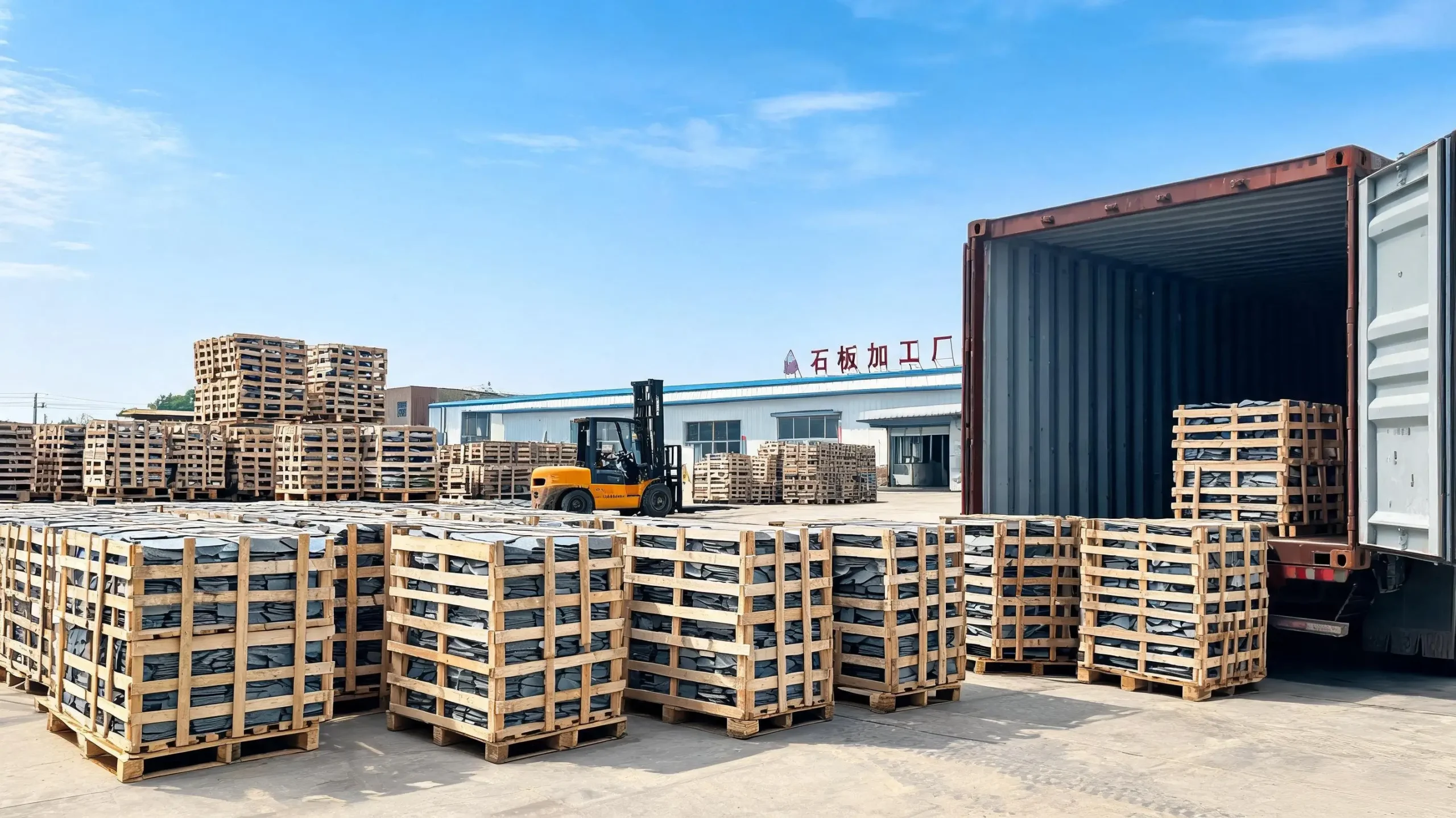
Ask for the original laboratory report, not a summary, and check that it includes the quarry or source identification, test date, and sample batch number. "Jiujiang slate" describes a region — a technical specification must describe the actual quarry and product. Request that the batch number on the test report matches the batch number on the packing list and crate labels when the shipment arrives.
Related Reading
Specifying Jiujiang roofing slate for a cold or coastal project?
Send us your requirements — slate size, thickness, colour, destination, and exposure zone. We will provide the test documentation that matches your climate: water absorption data, freeze-thaw results, flexural strength values, chemical composition, and quarry identification linked to the actual material being quoted.