
Copper Nails vs Stainless Steel Nails for Slate Roofing: Which One Lasts Longer?
A natural slate roof is designed to last for generations, but its durability depends on more than the quality of the slate itself. Even high-quality roofing slate can fail prematurely if the nails securing it corrode, loosen, or are incorrectly specified.
Copper and stainless steel nails are two widely used fastening options for natural slate roofing. Both can provide excellent long-term performance, but they differ in corrosion resistance, mechanical properties, cost, and suitability for different environments. So which is better for your project?
This guide compares copper and stainless steel slate nails, explains their advantages and limitations, and helps roofing contractors, architects, and buyers select appropriate fasteners for long-lasting natural slate roofs.
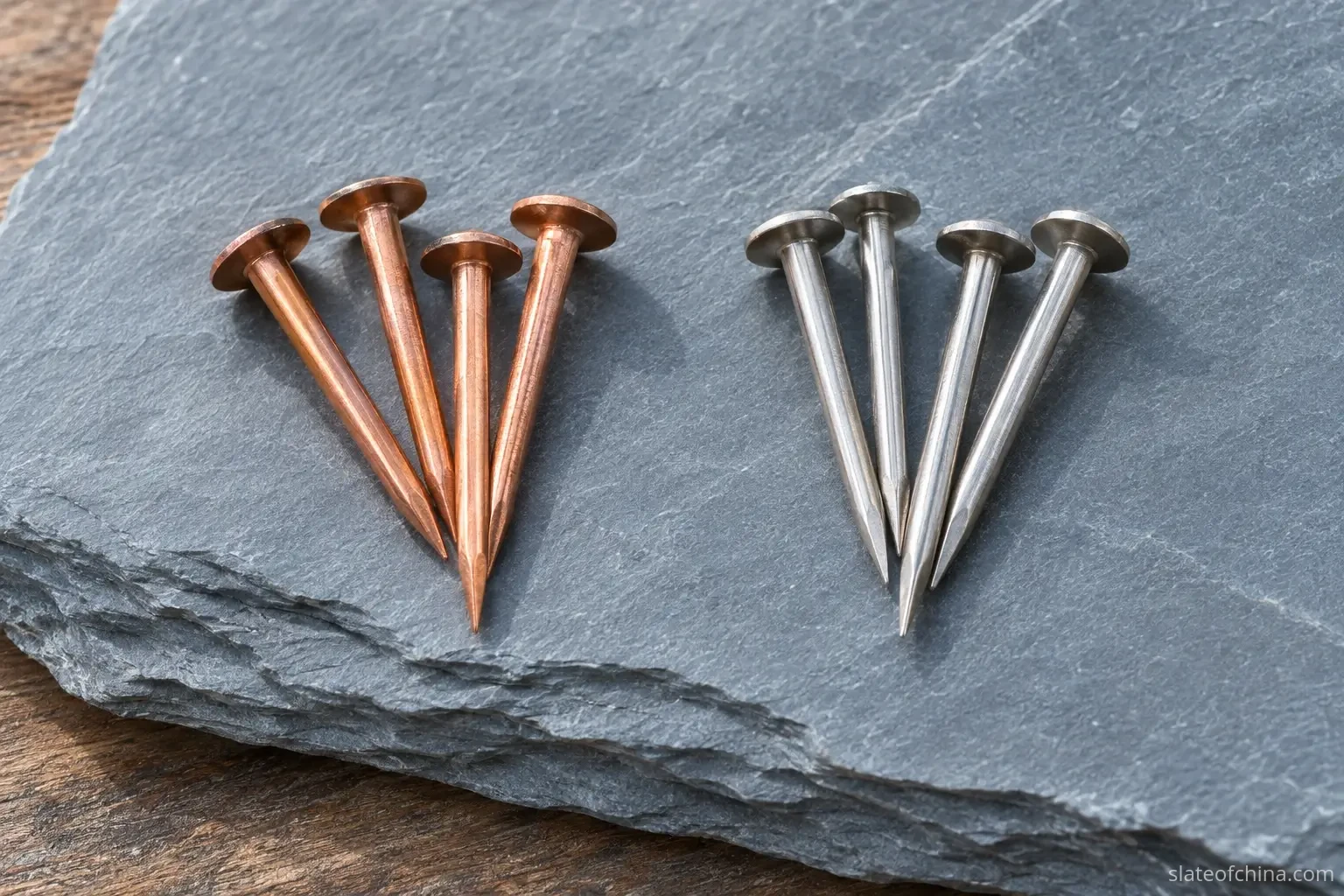
First, Match the Fixing to the Life of the Slate
Before comparing metals, start with the rule that frames the whole decision: the fixing should be expected to last at least as long as the slate it holds. Natural slate tested under EN 12326 or graded under ASTM C406 is routinely specified for roof systems with design lives measured in generations. ASTM C406, for example, grades slate into S1, S2 and S3 classes based largely on water absorption, and S1 slate is associated with the longest expected service. The fastening is part of that system, and it has to age with it.
This is where budget zinc-coated nails fail the logic test. A galvanised nail is mild steel carrying a finite zinc layer, and how long that layer survives depends on the coating class and the corrosivity of the environment. Once the zinc is consumed, the exposed steel core corrodes and loses section. Measured against a slate specified for seventy-five years or more, a fastener whose protective layer has a service life of decades is not an economy - it is deferred maintenance with a date on it.
Fixings are also a very small share of the total cost of a slate roof when set against material, labour and access. That arithmetic is why most specifications simply rule coated-steel fixings out for natural slate, and move the real decision to the two metals that can realistically stay the course: copper and stainless steel.
Copper Nails: Corrosion That Works With Time
Copper has fixed natural slate for centuries, and the reason it still does is that copper corrodes in a controlled, self-limiting way. On exposure to air and rain, it first forms a thin oxide layer which over the years converts to the familiar green patina seen on old roofs and church spires. The patina is an adherent film, not flaking rust: as it thickens, the corrosion rate falls rather than rises.
How fast does the metal actually disappear? Atmospheric corrosivity standards such as ISO 9223 and ISO 9224 classify environments and publish guiding corrosion rates. In most atmospheric environments, loss on copper is measured in micrometres per year, at a rate that continues to fall as the patina matures - and against a commercial 3.0-3.35 mm shank, that margin is measured in generations. Where a durability calculation genuinely matters, take the corrosion rate for the applicable corrosivity class rather than any single universal figure.
Soft copper also behaves differently in the hand. Driven at a poor angle it bends rather than snapping, so a mis-hit can usually be noticed and corrected before the slate is damaged - one reason copper remained the traditional choice for repairs on old and re-used slates. Copper contains no iron, so it cannot produce rust runs down the roof face. The only visible change is the patina itself, darkening from bright pink-brown to brown and finally green, and most of it sits under the headlap where nobody looks.
The practical objection is price. Copper is a commodity: box prices follow the London Metal Exchange and can move sharply between orders, which frustrates fixed-price contracting. What the metal buys is stability of a different kind - a corrosion mechanism that keeps working in chloride-bearing coastal and industrial air, where a 304 stainless nail can begin to pit.
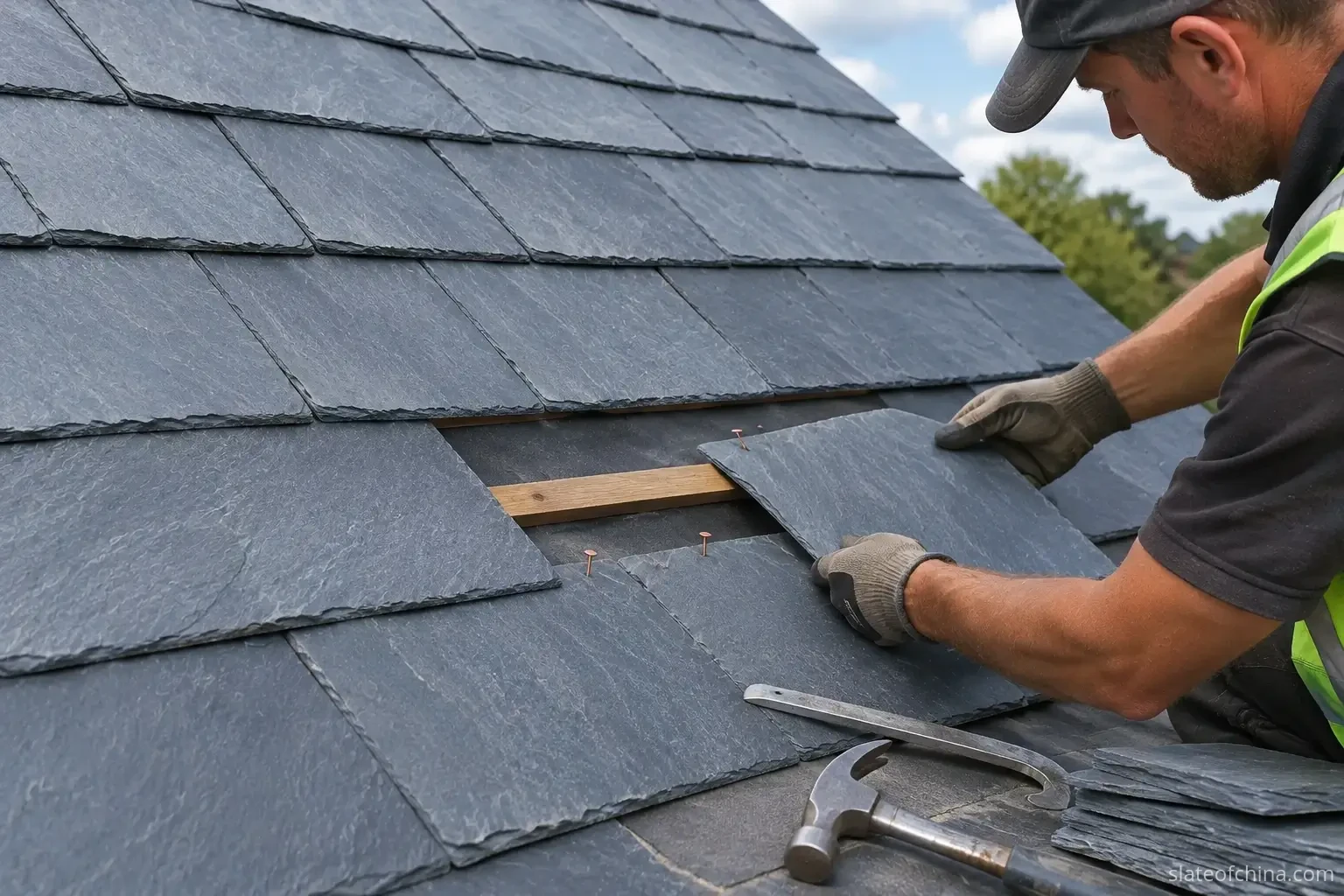
Stainless Steel Nails: Excellent, if the Grade Matches the Environment
What makes stainless steel valuable is invisible: a chromium-rich passive film only a few nanometres thick forms spontaneously on the surface and isolates the metal from the environment. While that film remains intact, the steel essentially does not corrode - no rust, no staining, no loss of section.
The weakness is specific. The chloride ion - deposited by sea spray, de-icing salt or certain industrial emissions - can break the passive film locally and start pitting corrosion: a narrow pit that grows inward while the surface above still looks sound. The failure can remain invisible until the section is gone. This is why the grade matters more than the word "stainless" on the box: 304 stainless (18% chromium, 8% nickel, no molybdenum) is vulnerable to chloride pitting, while 316 adds 2-3% molybdenum and resists it far better.
Selecting between them is an environmental assessment, not a distance measurement. Salt deposition, prevailing wind, humidity cycles, sheltering and local practice all shape how corrosive a site actually is, and atmospheres are formally classified into corrosivity categories under ISO 9223. An exposed headland or a roof beside a heavily salted road can require 316 far beyond any fixed distance from the sea, while a sheltered inland town may sit comfortably within 304 territory. Check the label too: nails sold simply as "stainless steel" with no grade stated are most likely 304.
Mechanically, stainless slate nails in the smaller 2.2-2.8 mm commercial diameters have roughly double the tensile strength of soft copper, so they drive straight and resist bending. Withdrawal performance, though, is a property of the whole fixing - diameter, shank form, embedment depth and batten condition - not of the metal alone. And one distinction worth writing down: the fixing pattern is independent of the nail metal. Slates are holed for head fixing (single or double nails near the slate head) or centre fixing according to the slate's size, the lap, the roof system and local standards; copper and stainless nails are both used across every pattern. The metal follows the environment; the pattern follows the roof.
One more piece of chemistry, usually described badly: galvanic corrosion does not occur simply because two different metals exist on one roof. It requires electrical contact between the metals and a conductive electrolyte - a wet path - and it accelerates fastest when the paired metals sit far apart in the galvanic series. Copper and the stainless steels lie reasonably close together, so a copper nail touching a stainless one is not the automatic disaster it is sometimes painted. The pairings that deserve care involve significantly less noble accessories: galvanised steel or aluminium in contact with copper, in wet conditions. The practical rules: keep the primary fixing uniform, and check the compatibility of adjacent metal components - flashings, gutters, fixings - as part of the specification rather than after they are installed.
Copper vs Stainless: The Side-by-Side Table
| Dimension | Copper nails | Stainless steel nails |
|---|---|---|
| Corrosion mechanism | Grows a dense, adherent patina that slows further attack | Passive chromium-oxide film; pitting once chlorides break through |
| Marine / chloride-rich exposure | Long track record in marine atmospheres | 316/316L preferred; 304 vulnerable to pitting |
| Inland / moderate exposure | Performs well; the traditional choice | 304 widely used; match grade to the assessed corrosivity |
| Typical commercial diameter | 3.0-3.35 mm | 2.2-2.8 mm |
| Typical tensile strength | ~200-300 MPa (soft) | ~500-700 MPa |
| Driving behaviour | Bends before snapping; forgiving on old or uneven slates | Stiff and straight; over-driving can crack a slate edge |
| Cost and stability | Higher; moves with the LME copper price | Generally lower and more stable |
| Staining | No rust runs; rare pyrite-bearing slates need a compatibility check | No staining; hidden pits are the risk |
| Typical use | Heritage work, re-covers, repairs | New-build and large projects; coastal specifications |
Typical commercial reference values; always confirm diameters, strengths and certification against the supplier's mill documentation and local codes.
Three Questions That Decide It for Your Roof
Q1. What is the environmental exposure? Coastal, estuarine or salted-road locations, and industrially polluted air carrying chloride or acid deposition, call for 316 stainless or copper. Sheltered inland sites are where 304 has served well for decades, and copper remains a fully valid traditional choice. Where the exposure is uncertain, assess the site against the ISO 9223 corrosivity categories, or follow the local roofing standard.
Q2. What is being fixed into? New battens at a uniform gauge suit either metal, and stainless is often the economical bulk buy. On a re-cover with slates of mixed thicknesses, or on listed fabric where gentleness matters, soft copper's forgiving behaviour has kept it the conventional answer. In either case the nail length follows the actual build-up - slate thickness, hole position and batten - as set out in the fixing schedule, not by rule of thumb.
Q3. What is the slate itself? A small number of slates contain pyrite, an iron sulphide that can oxidise in damp conditions and, in rare combinations with copper, contribute to green staining or local corrosion. That is a reason to ask questions, not to avoid copper: ask whether the specific colour and source are screened for pyrite. Our production screens for pyrite spots during inspection, and the test reports are available - the nail and the slate have to live together for a century, not just arrive in the same box.
That leaves three decisions, each made independently: the metal by the environment, the length by the build-up, and the fixing pattern by the slate and the roof system. Written that way, the nail line of a specification stops being folklore and becomes three or four defensible engineering decisions.
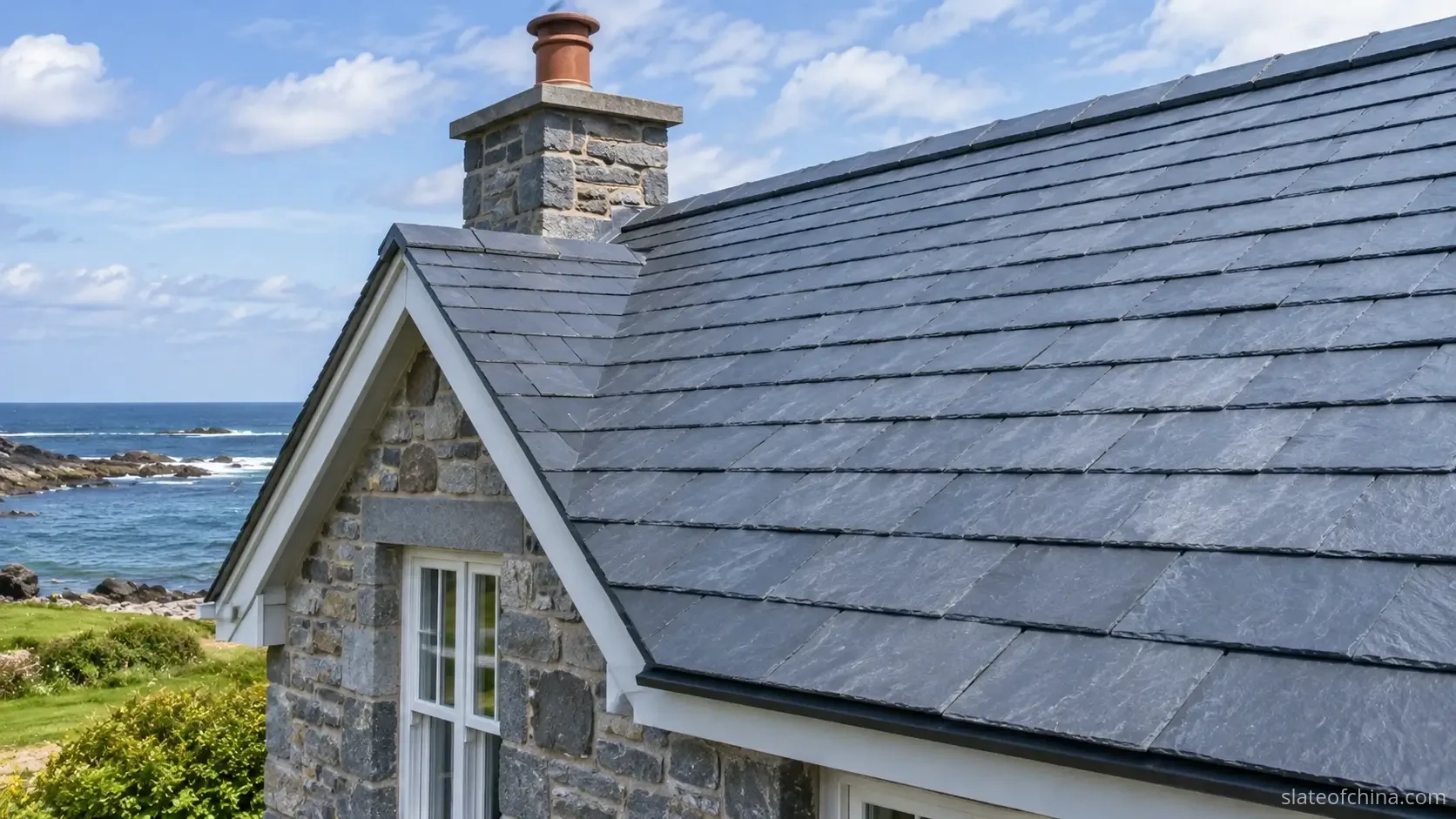
Facts Most People Still Get Wrong About Slate Nails
- "Stainless steel never rusts." — It does not rust like plain steel, but chlorides can pit the passive film. The grade and the environment, not the word "stainless", decide the outcome.
- "Copper nails rust faster than steel nails in the rain." — The opposite: copper develops a self-sealing patina, while unprotected steel corrodes continuously.
- "Galvanised nails are fine, they're just not premium." — Their zinc layer is consumed at a rate set by coating class and environment, and it is the coating, not the slate, that then sets the maintenance date. Against a multi-generation slate specification they are the wrong place to economise.
- "A thicker nail is always safer." — Fixing performance is a system property: shank form, embedment and batten condition decide the holding, while an oversized nail can split a slate nib or the batten edge. Use the specified diameter.
- "Mixed fixings on one roof save money." — Galvanic corrosion needs electrical contact and a wet electrolyte, so mixed metals are not automatically doomed. But inconsistent fixings complicate repairs, and copper alongside galvanised or aluminium accessories is the pairing that genuinely needs checking. Keep the primary fixing uniform and verify adjacent metals.
- "A bigger head holds the slate on better." — The head only matters where it seats against the nib or slot. A typical 6-8 mm head does the job; oversized heads sit proud, mask gauge problems and add no holding power.
What to Write on the Order: A Nail Spec in Six Lines
Whether you buy from a merchant or import nails with your slate, the order must say more than "copper nails". Here is the six-line check that turns a purchase into a specification:
| Line | What to write | Why it matters |
|---|---|---|
| 1 Material | Copper (soft), or stainless steel 304 / 316 (L), grade stated | The grade, not the word "stainless", decides corrosion performance |
| 2 Diameter | Copper 3.0-3.35 mm; stainless 2.2-2.8 mm | Match the slate, the batten and the fixing schedule; do not simply oversize |
| 3 Length | Set by slate thickness + hole position + batten + the specified minimum penetration | Taken from the roof system documentation and local standards - never a blanket number |
| 4 Head | Round head, typically 6-8 mm | Seats in the nib without cracking the slate edge |
| 5 Shank | Plain or ring shank, stated on the order | Ring shanks improve withdrawal in exposed, high-wind locations |
| 6 Documentation | Batch or mill certificate: material, dimensions, grade | EN 12326 and ASTM C406 are slate standards - they classify the slate, not the nails; fastener evidence follows the mill certificate and the project specification |
One habit worth borrowing from the quarry side of the trade: ask your slate supplier what fixings the shipment is expected to be laid with, and have quantities packed with the re-roof allowance in mind. Nails are a small fraction of the cost of a natural slate roof - and the cheapest insurance in the whole specification, if the grade and the schedule are right.
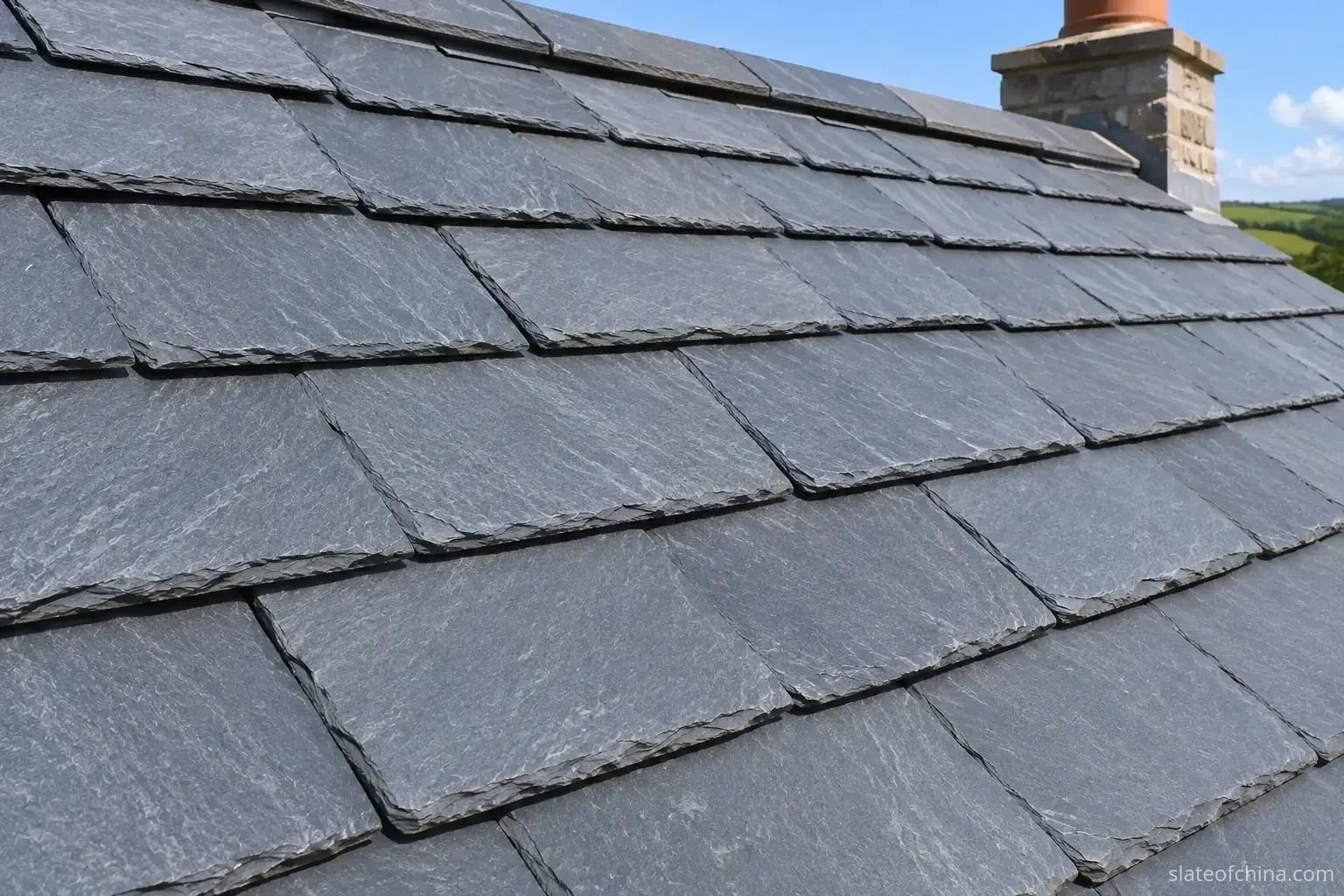
If you are specifying a new roof, our roofing slate range comes with fixing guidance in every quotation, and the nailing and hooks guide pairs with this page - read the two together and the fastening section of your specification writes itself.
Copper vs Stainless Slate Nails: Frequently Asked Questions
Do stainless steel nails rust on a slate roof?
They do not rust like plain steel, but in chloride-rich coastal air chlorides can break the passive film and cause pitting corrosion: small pits that grow inward while the surface still looks sound. Coastal roofs should therefore specify 316 stainless rather than ungraded or 304. In sheltered inland conditions, 304 typically lasts the life of the roof.
Which is better on the coast: copper or stainless steel nails?
Both are used successfully. Copper performs well in marine atmospheres thanks to its self-renewing patina, and 316 stainless steel is the modern coastal specification. The choice usually comes down to the roof system, availability and budget; the mistake to avoid is ungraded or 304 stainless where chloride deposition is high.
Are copper nails more expensive than stainless steel nails?
Usually yes. Copper follows the London Metal Exchange, so box prices are higher and can move between orders, while stainless is generally cheaper and more stable. Over a whole roof the difference is a small fraction of total cost, so it makes sense to choose by environment first and price second.
Can I mix copper and stainless steel nails on the same roof?
As a working rule, keep the primary fixing uniform, but the reason is practical rather than chemical. Galvanic corrosion needs electrical contact and a wet electrolyte, and copper and stainless steels sit fairly close in the galvanic series, so occasional contact is not automatically dangerous. The pairings to check carefully are copper or stainless next to galvanised or aluminium accessories; verify the compatibility of any adjacent metal components before ordering.
Why do copper nails turn the slate edge green sometimes?
The green is a copper salt leaching to the surface, usually where slate chemistry or local acidity reacts with the copper. It is uncommon and mostly cosmetic, but if your slate is known to contain pyrite it is worth checking compatibility before ordering.
What size slate nails should I use?
Typical commercial diameters are 3.0-3.35 mm for copper and 2.2-2.8 mm for stainless steel. Length is not a blanket rule: it comes from the slate thickness, the hole position, the batten and the minimum penetration set by the roof system documentation or local standards such as BS 5534 in the UK. Always follow the fixing schedule for the specific roof.
Related Reading
Spec the Right Slate — and the Right Nail
We supply natural roofing slate tested to EN 12326 and ASTM C406 test methods, with test reports available and each slate inspected before packing, and our team can compare fixing materials, grades and coastal exposure against your specification. Request samples and a technical specification for your next roof.