
Heritage Building and Restoration Projects: How Old Slate Roofs Are Honestly Brought Back
Inside a 1994 condition survey of a Dorset church tower, on page 11, someone from the firm that inspected it before me wrote a pencil note beside the roof section. Nine words: "All slates sound. The nails are not." I have that page pinned above my workbench, and thirty years on it still tells you most of what a heritage roof restoration is actually about.
Old roofs rarely die of bad slate. They die of rusted nails, of skip-hired stripping crews, of a matching decision made in a hurry, of consent applications that promised one thing and delivered another. The stone is almost never the problem. The process is. So instead of a gallery of finished roofs — we have a project gallery for that — I want to walk you through how a heritage restoration actually runs, stage by stage, using one church I have known since that 1994 survey. It was built in 1897, re-nailed in the 1930s, and by the time scaffolding went up last spring it held 6,200 slates, of which 63% went back onto the roof.
Quick answer, in surveyor's shorthand:
"Stage 1 — Survey before scaffold: pencil notes, measured drawings, physical samples; consent for the method, not just the material. Stage 2 — Hand-strip, never skip-fill; salvage is the budget. Stage 3 — Sort by soundness, not by looks; the ring test decides. Stage 4 — Match what survived: thickness, then colour, then patina you cannot fake. Stage 5 — Hand-dress and re-punch; no tile reuses a failed nail hole. Stage 6 — Like-for-like fixing: copper nails, same gauge, same headlap. Stage 7 — Handover with a written record; the roof should look untouched."
One rule sits above all seven stages. In heritage work the aim is not a new roof. The aim is an old roof that keeps working. If a finished restoration is the first thing people notice in the village, we have usually failed. The best compliment I have ever been paid came from a churchwarden who looked up and said, "You can't tell it was done."
Stage 1 — The Survey That Wins Consent
Every heritage roof job I have won, and every one I have watched someone else lose, was decided before a single scaffold pole went up. The survey is where a restoration is designed, and in listed buildings the survey is also what you submit with your consent application.
The Dorset church file had the three things a conservation officer actually reads. Measured drawings of the roof, bay by bay, with the gauge and headlap written on them. A condition report with honest percentages — not "generally sound", which means nothing, but "62% fixed firmly, 24% slipped or nail-sick, 14% cracked or missing". And physical samples: two sound slates off the roof, both labelled with the bay they came from. A photograph lies about colour under different light; a slate in an officer's hand does not.
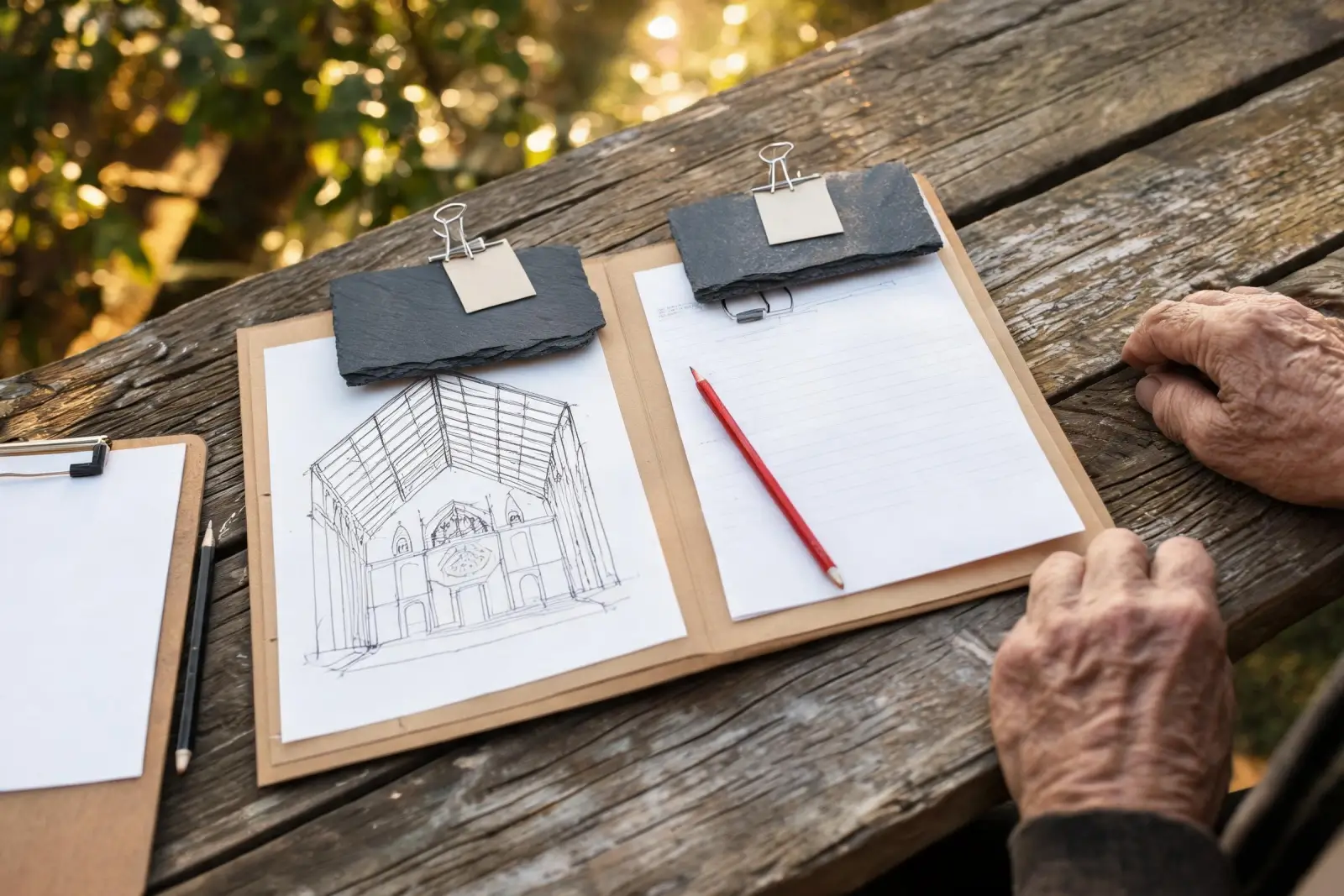
I hold a small grudge against the phrase "you can't get the old slate anymore", because it is almost never true. It is a procurement shortcut dressed up as a fact. If you want a deeper look at judging what a sound slate actually is, our piece on evaluating roofing slate quality covers the hands-on tests; the survey stage is where those tests stop being theory.
Stage 2 — Hand-Stripping: Where the Budget Lives or Dies
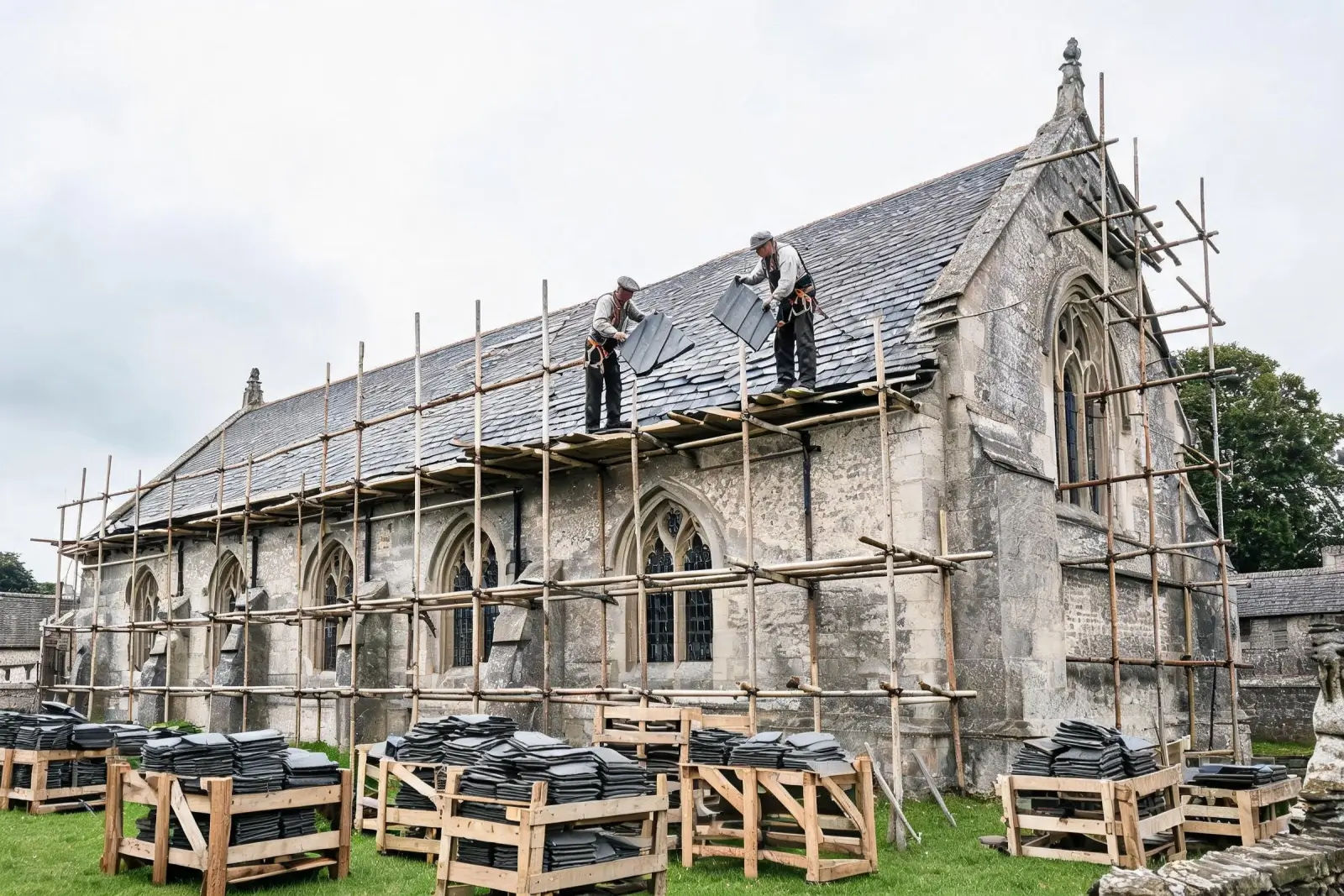
The 1897 church held roughly 6,200 slates. A skip-hire stripping crew with slate rippers can clear a roof that size in four days and put every tile in a skip. My two slaters took three weeks and put 4,200 of them on stillages in the churchyard. That difference is the entire economics of heritage restoration: reclaimed slate costs a fraction of new, but only if it comes down the roof the way it went up — by hand, one tile at a time, each one carried, none of it thrown.
Nail sickness, incidentally, is why most of these roofs come apart in the first place: the 1930s re-nailing on this church used galvanised nails that had rusted to lace after ninety years. The slates were mostly fine. If you want the full decision framework — when a roof justifies strip-and-relay against spot repair — it is covered honestly in repair or replace; here I will only say that on heritage buildings the threshold for stripping is higher, because every tile you keep is money and history kept.
The most common failure at this stage is not breakage. It is bookkeeping. Slates come down from different bays of a roof that was re-slated twice in its life — 1897 on the south pitch, a 1930s patch on the north — and if they all land in one mixed pile, you have destroyed the information that tells you which tile belongs where. We strip bay by bay and never merge the piles. A church roof with two re-slating dates is two quarries' worth of stone sitting on one building, and they do not necessarily match each other.
Stage 3 — The Ring Test: Sorting by Sound, Not by Looks
Sorting is the least glamorous stage and the one I supervise personally, because it is where wishful thinking creeps in. A tile that "looks about right" goes back on the roof and slides off it in five years. A tile that passes the ring test goes back on and stays for the next century.
You hold the slate flat on your fingertips, away from your body, and tap it once with a knuckle or a small hammer. A sound slate rings, like a dull church bell. A delaminated or cracked slate answers with a dry thud, like tapping a stuck drawer. On this church we ring-tested every one of the 4,200 salvaged tiles. The tower secretary, watching from below, counted 96 tiles she would have sworn were "nearly gone". Twenty-three of them actually failed. Old slate is almost always better than the eye says it is — that is the lesson of the ring test, and it is why we test by hand rather than by inspection from a cherry picker.
The survivors get three grades, and I keep the labels the same on every job so the stillages never need explaining:
| Grade | What it means on the bench | Where it ends up |
|---|---|---|
| A — Sound | Rings clean; edges honest; old nail hole intact or re-punchable | Straight back onto the roof, bay-marked |
| B — Dressable | Rings clean; edge chipped or out of square | Hand-dressed smaller, goes to hips, valleys, verges and cuts |
| C — Skip | Thuds, splits, or crumbles at the nail hole | Off site; never patched onto a heritage roof |
If you want the fuller craft of giving an old tile a second life — re-punching aged nail holes, grading beyond the ring test — it is written up in our guide to reusing existing roofing slate. The sorting bench here is that article's logic, run at church scale.
Stage 4 — Matching: Thickness First, Colour Second, Patina Never
Of the 6,200 tiles, 4,200 survived salvage, and ring testing left about 3,900 dressable or sound. The missing third had to be new slate, and this is the stage where heritage projects earn or destroy their reputation, because "matching" is three separate decisions made in a strict order.
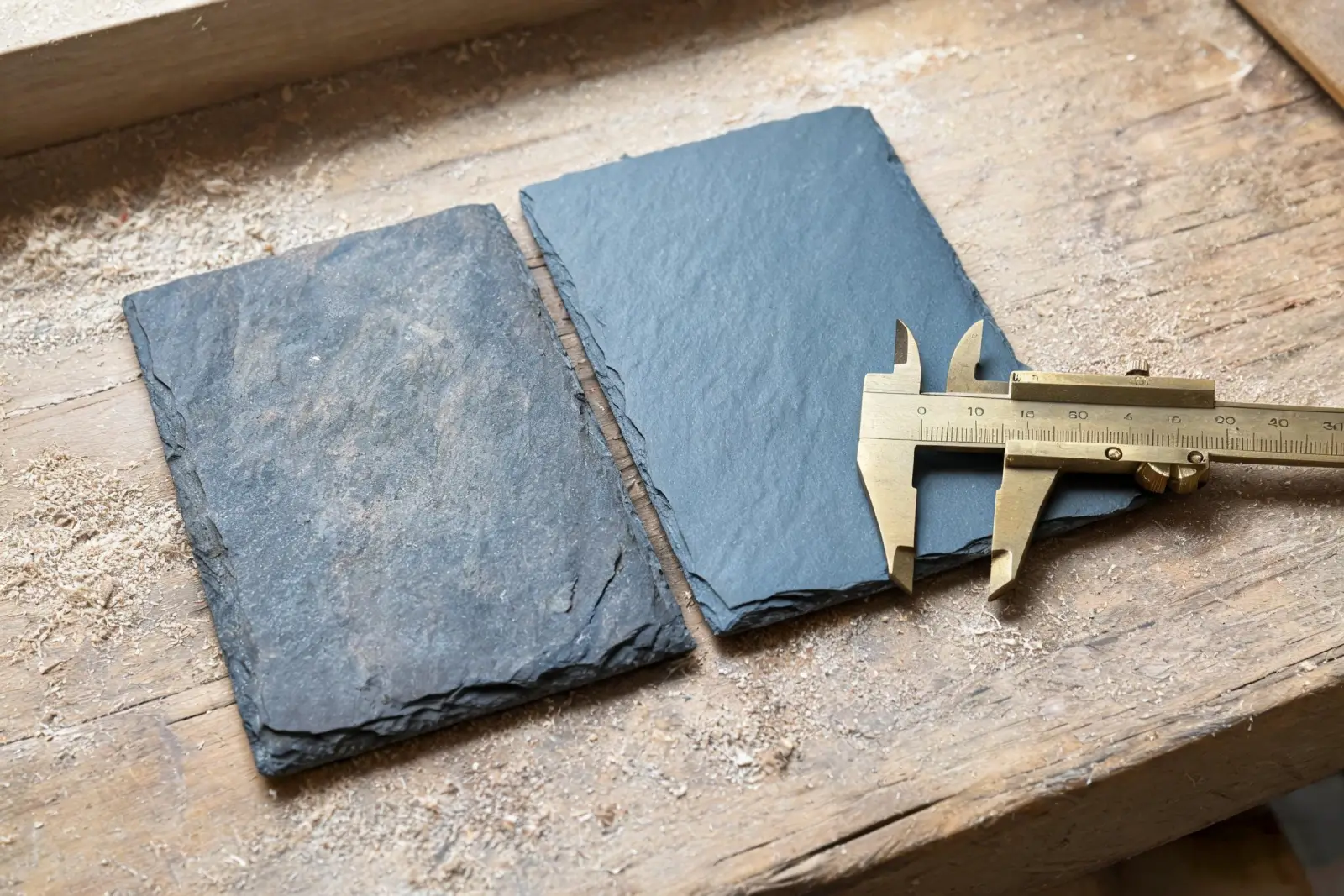
Thickness comes first, because a wrong thickness is visible from the far side of the street even when the colour is perfect. The 1897 slates sat between 7 and 8 mm. We specified new tile at 7–9 mm — a band, not a target — and checked every delivered bundle with a caliper at the dock. Then colour: old weathered slate is darker than the same stone fresh from the quarry, so you match against a wetted sample of the original, never against the dry stack in the churchyard. If you are matching patchwork on a roof that stays, the finer art is in how to match replacement slate; on a full strip-and-relay the task is simpler, because the whole roof gets relaid together and blends as one.
Patina — the silvery bloom a century of weather puts on slate — is the part you cannot buy. New slate arrives clean and blue-grey, and no honest conservator stains or distresses it to look old. What we do instead is distribution: the church got its new tiles in a planned scatter through every course on both pitches, just over a third new overall, never a block of new slate in one corner. From the churchyard wall, eighteen months on, you cannot find the boundary. The roof weathered as one skin because it was laid as one skin.
Getting that right in the specification is also a sourcing question: when the officer asks where the new slate will come from, the answer needs test data behind it, not a brochure. Ours comes from Jiujiang with EN 12326 and ASTM C406 reports attached to the batch — the test results page shows the numbers — and the batch travels with the sealed samples we approved before production. On a listed building, "the supplier sent a certificate" is worth less than the paper if the certificate's batch number is not your batch number.
Stage 5 — Hand Dressing: Thirty Seconds a Tile, Six Hours a Day
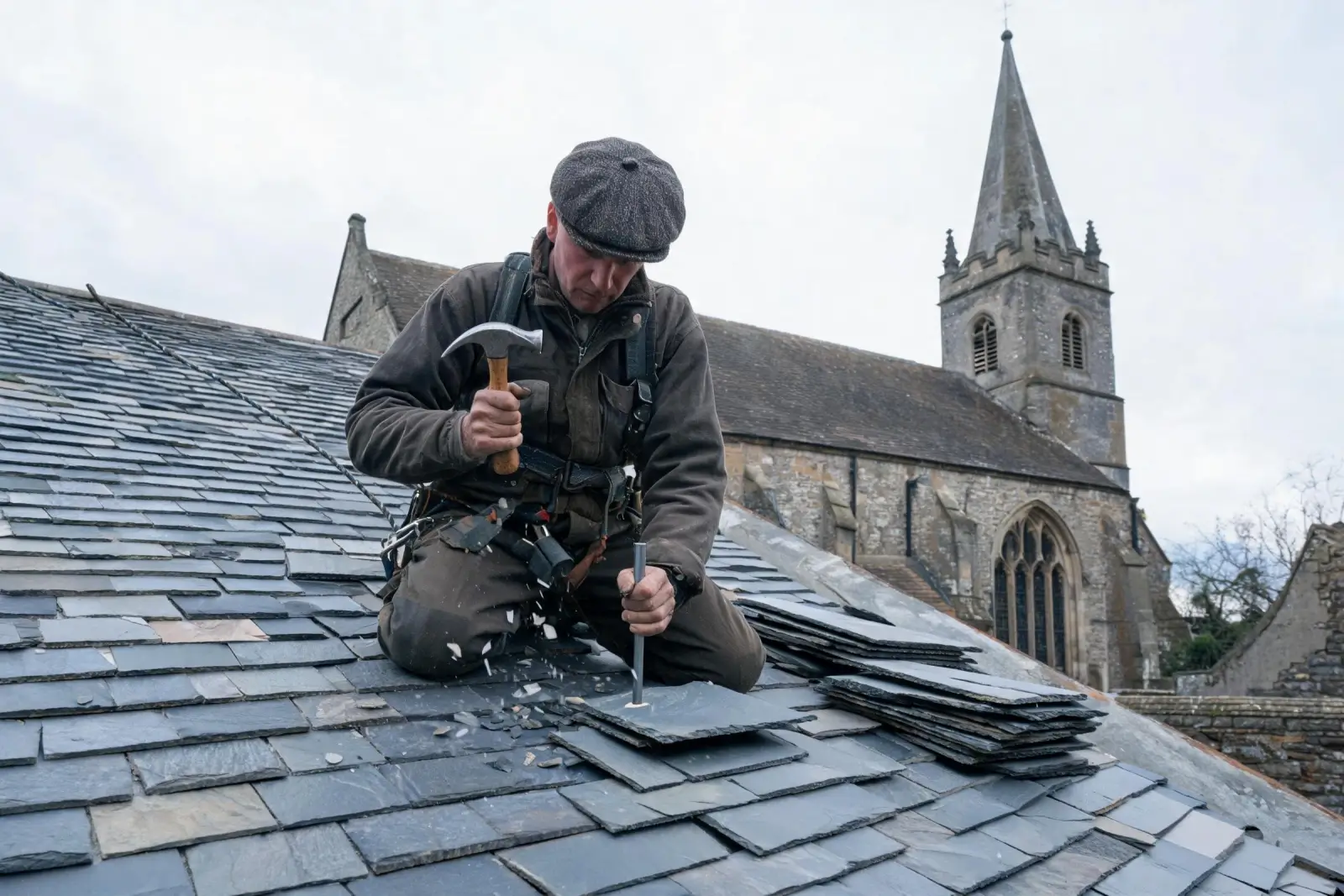
Roughly one tile in six that came off the church needed its edges trued up before it could go back on, and every one of them went under the hammer. Hand dressing is the oldest skill on the site: the slate sits on a steel stake, and the hammer takes off a clean shaving along the edge with a half-second rhythm. It sounds like nothing and it is the difference between a course that lies flat and a course that clicks underfoot for forty years.
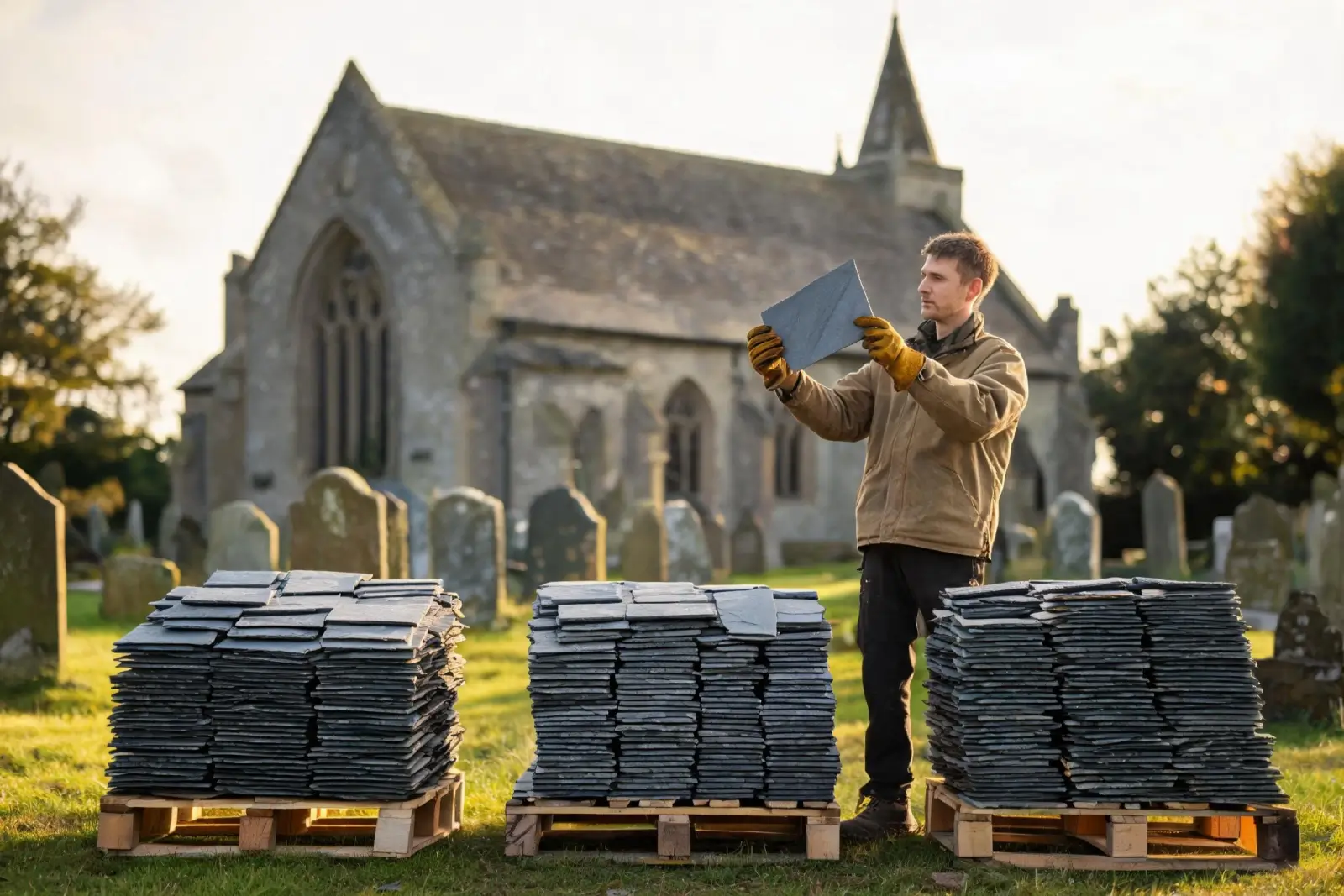
Old nail holes get the same respect. The 1930s galvanised nails had rusted into their holes and some had partially sawn through the slate from ninety years of micro-movement — re-using those holes would give the tile a week. Every re-used tile is re-punched fresh, the old hole left as a quiet witness mark on its back, and the technique is the same one we describe for cutting and punching natural roofing slate: start the hole shallow, seat it, then punch clean. On heritage work you punch one new hole, not two, and you keep it clear of the old one — two failed holes in one tile is a tile that goes to Grade C no matter how well it rings.
Stage 6 — Like-for-Like: The Fixing Is the Promise
"Like-for-like" is the phrase you will hear from every conservation officer, and on the roof it means something very concrete: same gauge, same headlap, same fixing philosophy, upgraded metal. The church was centre-nailed in 1897, so it went back centre-nailed. The gauge was measured off the surviving courses, not recalculated, because the original courses are part of the building's history and they worked for 127 years. The headlap we kept at the survey's measured figure. What we did not reinstate was the 1930s galvanised steel: every tile, old and new, went back on copper nails, which will outlast the slate they hold. The reasoning — and the honest comparison with stainless — is in copper versus stainless nails; the heritage rule of thumb is simply that the fixing must be the longest-lived component you can reasonably install, because the tile will certainly outlive the nail if you let it.
The underlayers under a heritage strip-and-relay also deserve one honest paragraph. On this church the 1897 boarding was sound but the 1930s bitumen felt had done its fifty years and was replaced with a breathable membrane over counter-battens — a modern layer under a traditional roof, and on most consent applications the one place officers will ask you to justify a departure from the original. If the deck layers are new to you, the system is explained in roof deck, battens and underlayment, including why the breathable route earns its place on old buildings: it lets the boarding dry, and dry boarding keeps nails tight. The slates stay wet for an hour after rain and dry for a week; the difference in nail life is measured in decades.
Stage 7 — Handover: The Record Is Part of the Roof
The last week of a heritage job is paperwork, and I mean that as a compliment. The church received a lever-arch file: the survey, the consent approval, the salvage tally (6,200 stripped, 4,200 saved, 3,900 relaid, 96 to 23 by the ring test's honest accounting), the new slate's test certificates with batch numbers, the fixing schedule, and a photograph of every elevation before, during and after. The next contractor — and on a 127-year-old roof there will be one, sometime around 2120 — starts from evidence instead of guesswork. That file is why the 1994 pencil note existed, and it is the part of the trade I would most like to see copied everywhere: the roof above your head is a document with a missing appendix if nobody writes the restoration down.
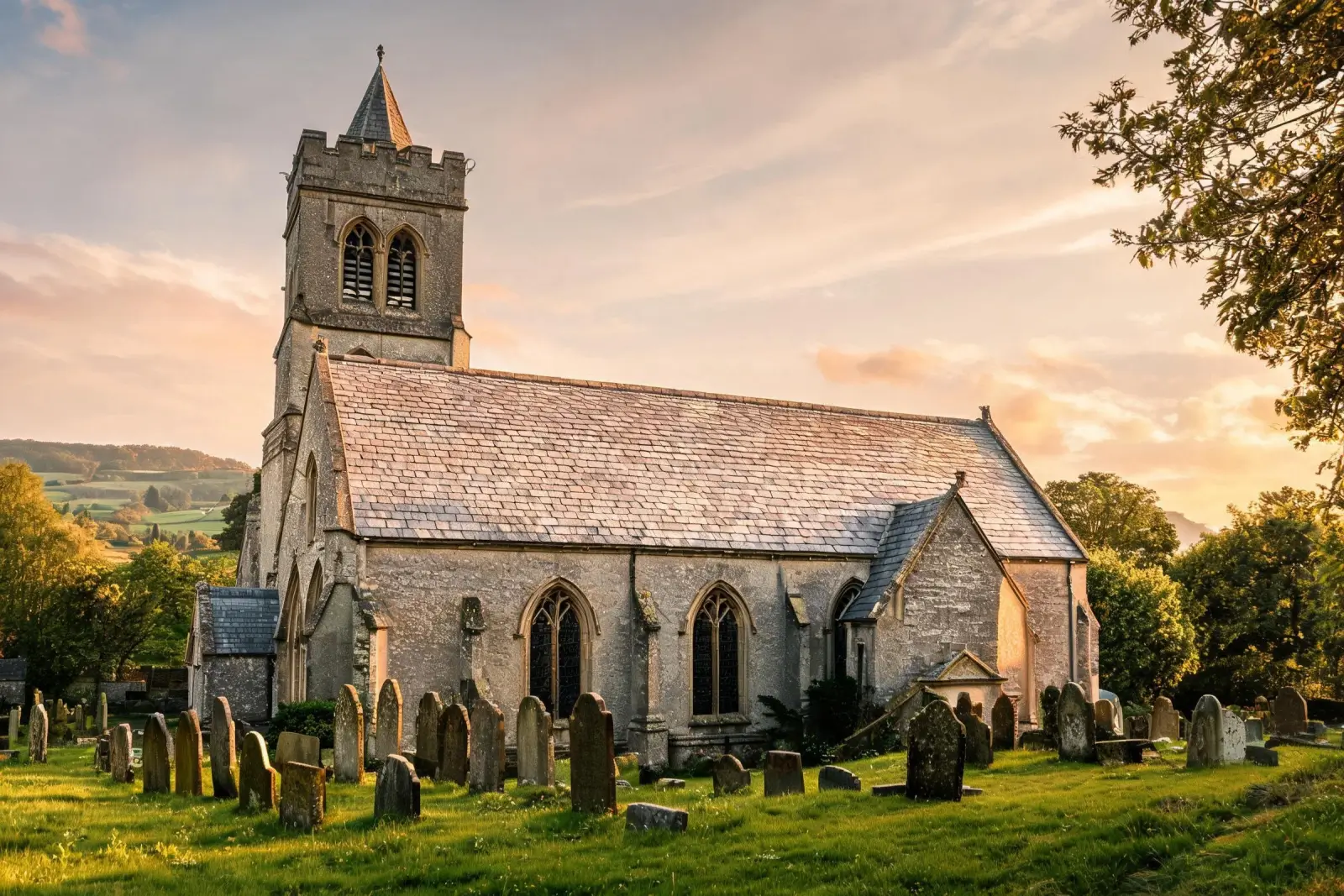
When the scaffolding came down last June, the tower secretary said the thing people always say when a heritage roof has been done properly: "It looks exactly the same." She meant it as a small complaint. I took it as the certificate.
Frequently Asked Questions
Do I always need listed building consent to repair a slate roof?
If the building is listed, almost always yes — and the surprise for most owners is that consent covers the method, not just the material. Hand-strip and relay like-for-like is one application; a change of tile size, thickness, colour or fixing pattern is a different one and gets scrutinised harder. Emergency temporary works are usually permitted to make the building weather-tight, but the permanent repair still needs the paperwork. Build the survey first; the consent application is mostly the survey retold as a promise.
What does "like-for-like" actually mean on a heritage roof?
Same size, same thickness band, same surface character, same gauge and headlap, same fixing philosophy — centre-nailed stays centre-nailed. The one standard upgrade is the metal: original galvanised or iron nails are replaced with copper (or stainless in coastal parishes), because the originals are usually what failed, not the slate. Changing anything else — headlap, fixing position, tile size — needs to be argued for in the consent, and on old buildings it rarely is.
Can new slate be mixed with salvaged slate on an old roof?
Yes, and done well it is invisible — but the mixing must be planned, not accidental. Scatter the new tiles through every course on every elevation rather than letting new slate collect in one bay, and match thickness with a caliper before you match colour. On the church in this article roughly a third of the relaid roof was new slate; eighteen months on, the boundary cannot be found from the ground. The failure mode is the opposite: one wall of brand-new tile against three walls of weathered slate, which reads as a patch no matter how good the colour match is.
How much of a heritage roof budget should the salvage plan carry?
Treat the salvage as income, not as a virtue. Sound reclaimed slate on stillages is worth a fraction of new tile — often between a third and two-thirds of new price — and on the Dorset church the 4,200 saved tiles were the difference between a restoration and a re-roof the parish could not have funded. The number moves with the roof's condition, which is exactly why the survey's honest percentages matter: a "70% salvageable" roof and a "30% salvageable" roof are entirely different projects wearing the same specification.
How do I know whether old slates are worth keeping?
Ring test, one tile at a time, on the bench — never from the scaffold or from a photograph. A clean ring means the tile is structurally whole; a thud means it is delaminating or cracked inside even when the face looks perfect. Expect the result to surprise you in the tile's favour: on the church, of 96 slates the parish assumed were finished, only 23 actually failed. Old slate that rings is almost always better than new slate that has not yet earned anything.
How long does a heritage slate restoration take?
Count in months, not weeks, and most of the calendar is not hammering. The Dorset church ran six months: four to five weeks of survey and consent before any scaffold, three weeks of hand-stripping, two of sorting and dressing, six of relaying, and the rest is drying time, timber repairs found mid-job, and weather. Roughly a third of the programme is spent before the roof is touched. Budget the patience with the money, because the two are the same thing on a listed building.
Related Reading
Restoring a heritage roof and need slate that passes both the conservation officer and the lab?
We supply EN 12326 and ASTM C406 tested roofing slate in traditional UK and European sizes, thickness bands matched to your survey, batch-sealed samples before production, and crate packing designed for hand-carry to the scaffold — the way heritage roofs are actually built. See our roofing slate products or request samples with your measured specification.