
Life-Cycle Cost of a Natural Slate Roof: What 100 Years Really Costs
Quick answer: A natural slate roof is one of the few building products that gets cheaper the longer you look at it. On a typical 100 m² roof, expect roughly £18,000–£28,000 to install depending on slate grade and roof complexity — and after that, almost nothing. No coatings, no treatment, no planned replacement. Spread across the 100-year ledger below, that works out at roughly £2.30–£3.30 per square metre per year: about £278 a year on the mid-range estimate, or 76p a day — and the stone carries a 100–150 year service life, so the true per-year figure only falls from there. A concrete-tile roof starts around £12,000 and needs stripping and relaying around years 35 and 70 — three invoices for a roof that never improves. Slate sends one. The cheapest roof to buy is rarely the cheapest roof to own.
Every roofing material sends you a bill on day one. Only slate knows how to stop.
Strip a century of roofing costs down to the bare structure and most materials behave the same way: a heavy installation invoice, then a slow, patient drip of maintenance, then — and this is the part nobody prices in — a second invoice that arrives with scaffolding and a skip on the driveway. Slate behaves differently. The first invoice is heavier. Then the account goes quiet for the rest of your life, and your children's, and very possibly theirs.
This page is that ledger, laid out honestly: what you pay in year one, what you pay in year two, and what you keep paying — or stop paying — by the time the roof is older than the bank that financed it. The maths is not complicated. What is complicated is the way most people read the first line of the bill and stop.
Year One: The Heavy Invoice Nobody Forgets
Let's start where every budget discussion starts: the number that makes people flinch.
For a typical UK or European detached house, a natural slate roof on a 100 m² roof area usually lands between £18,000 and £28,000 fully installed — the same £180–280 per m² range used in our other cost articles, so every page on this site stays internally consistent. The range is wide on purpose, because three variables move it: the slate itself, the labour, and the roof you already have.
The slate. Material for a 100 m² roof runs roughly £35–£60 per m² for good Chinese slate up to £80–£155 per m² for premium Spanish or Welsh slate at retail. The spread between a well-sorted Chinese slate and a heritage name is often a factor of three on the material line alone. The stone itself is not the expensive part of the invoice, and the difference between a £23,000 roof and a £28,000 roof is mostly which quarry the stone came from, not how much stone there is. If your only reference point is today's unit price, the cost guide breaks that line of the budget down stone by stone.
The labour. Here is the uncomfortable truth: skilled slating is slower than laying interlocking tiles, and slower means dearer. A competent slating team bills more per day, and on a complex roof — dormers, valleys, hips — that difference compounds. Budget £90–150 per m² for the labour line and you will not be far wrong in most of Western Europe — installation, not stone, is where half to two-thirds of a slate invoice goes. This is the part of the invoice that thins the wallet, and it is also the part most vulnerable to false economy. A roofer who quotes half the going rate is quoting a roof with a shorter life in it.
The roof beneath. The line-item people forget. A natural slate roof is heavier than the fibre-cement or thin-metal roof it replaces — typically around 40–70 kg per m² fully installed — and some older trussed roofs need strengthening before they can carry stone. If your structural surveyor wants a new purlin or two, that is £500–£2,000 of year-one money that was never in the brochure. This guide on slate roof weight shows how to check the numbers before you commit.
So yes: the day-one invoice is real, and it is the single biggest number you will ever see for your roof. Now let's look at what happens after it.
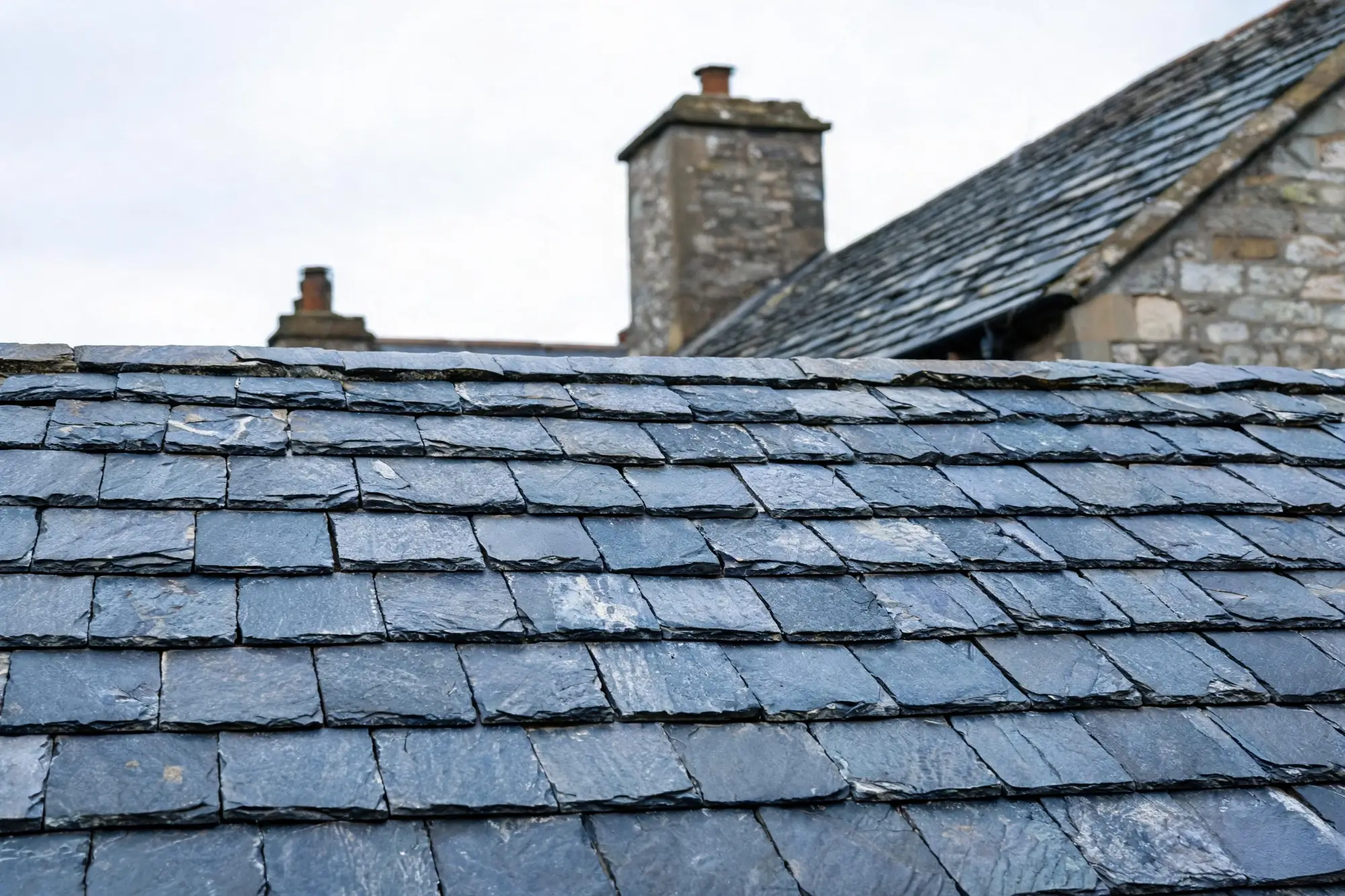
Years Two to One Hundred: The Silence After
Here is where the ledger stops behaving like everyone expects it to.
Years two to five pass with nothing. Not "nothing major" — nothing. The slate does not need treating, sealing, painting or coating, because a properly vitrified slate with water absorption around 0.2–0.4% simply does not take in enough water to need protecting. That figure is worth pausing on: our own test results run at 0.2%, against an EN 12326 pass mark of 0.6% — the material is already more water-resistant than the standard requires it to be, so there is no protective chemistry to reapply and no maintenance schedule to forget to follow.
Years five to twenty bring what I privately call the
Years twenty to fifty: more of the same, at the same gentle rate. The rafters and battens under a well-ventilated slate roof stay dry for generations, so there is no rot-line growing under your budget. Compare that with a coated steel roof that wants repainting around years 25 and 35, or a concrete roof whose own manufacturers' warranties tap out at 30–50 years while the material itself starts to look tired far sooner. The slate just keeps being stone.
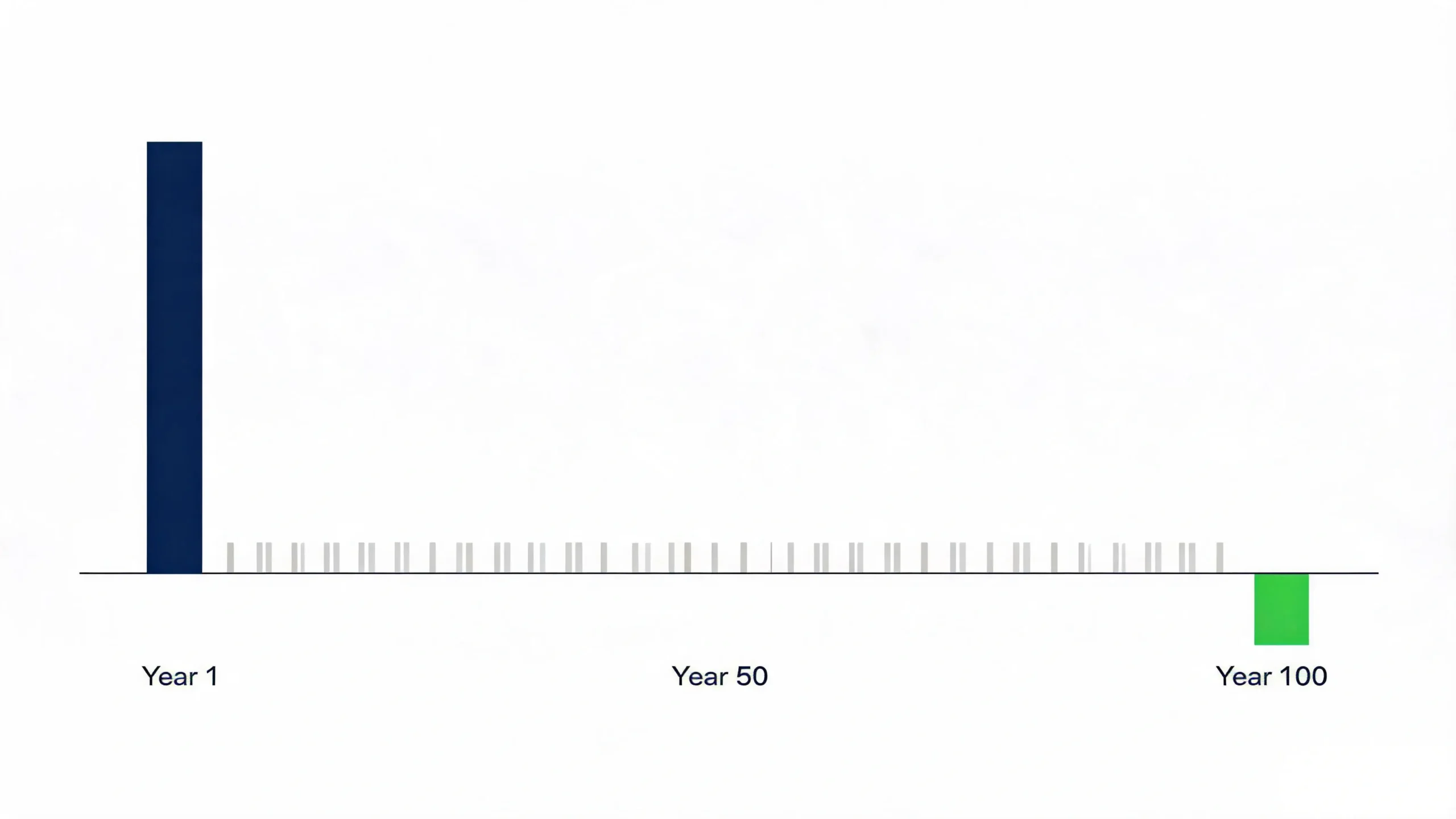
The 100-Year Ledger, Line by Line
Time to put the whole century in one table. The model is deliberately conservative: a 100 m² roof at £23,000 installed — the middle of the £18,000–£28,000 range above — plus £50 a year of minor upkeep, a survey-and-repairs visit every 25 years, and — crucially — no energy savings counted at all, even though a slate roof's thermal mass and draft-tight detailing quietly earn their keep every winter.
| Ledger line | When it falls due | Typical cost, 100 m² roof |
|---|---|---|
| Supply and install, complete roof | Year 1 | £18,000–£28,000 |
| Minor upkeep (slipped tiles, flashings, valleys) | Years 2–100, ~£50/yr | ~£5,000 |
| Professional survey and small repairs | Years 25, 50, 75 | ~£1,800 (3 × £600) |
| Coatings, treatments, repaints | — | £0 |
| Planned replacement or reroofing | — | £0 |
| Salvage value of sound slate at year 100 | Year 100 (credit) | −£2,000 |
| 100-year total | — | ~£27,800 |
The model uses £23,000 installed (the middle of the range above); at the £18,000 end the century comes to about £22,750, at £28,000 about £32,750. Totals are indicative 2025–26 UK prices, rounded to the nearest £50.
Read the total aloud: £27,800 over a century is £278 a year. About 76p a day. Less than most households spend keeping a car on the road for a single month — for a roof expected to outlast the mortgage, the owners, and possibly the building's listed status. That is the whole argument of this page in one division sum, and it explains why heritage bodies, insurers and churchwardens have been quietly doing this maths for generations while the marketing of cheaper materials talks about everything except the year the second invoice arrives.
What the Other Roofs Cost You Over the Same Century
A ledger only means something next to another ledger. Here is the same 100 m² roof in three common alternative materials — same house, same century, same method. The projection method is the same one used in our asphalt-shingles comparison — day-1 cost, upkeep, replacement dates, nothing else — applied here to the three materials UK buyers most often weigh against slate; the pattern it draws is not unique to any one rival.
| Roofing material | Day-1 install | Reroof events in 100 years | 100-year total | Cost per year |
|---|---|---|---|---|
| Natural slate | £18,000–£28,000 | 0 | ~£27,800 | ~£278 |
| Clay tiles | £14,000–£17,000 | 1 (year ~50) | ~£41,800 | ~£418 |
| Coated steel | £11,000–£14,000 | 1 (year ~45) + repaints at years 25 & 35 | ~£36,200 | ~£362 |
| Concrete tiles | £11,000–£13,000 | 2 (years ~35 & ~70) | ~£56,700 | ~£567 |
Same 100 m² roof, mid-range UK prices, 2025–26. Clay and steel are costed at the middle of their day-1 ranges, reroofs at day-1 plus 30% for stripping and disposal, on the same £50-a-year upkeep as the slate ledger. Steel's two repaints (about £2,500) double as its inspections; clay carries two standalone £600 surveys either side of its reroof. Concrete is costed at the top of its range — a tile that heavy wears the structure harder — with the upkeep line doubled to £100 a year, because moss clearing and brittle-tile repairs are what that material bills for. Totals are rounded; run your own numbers before you run a budget.
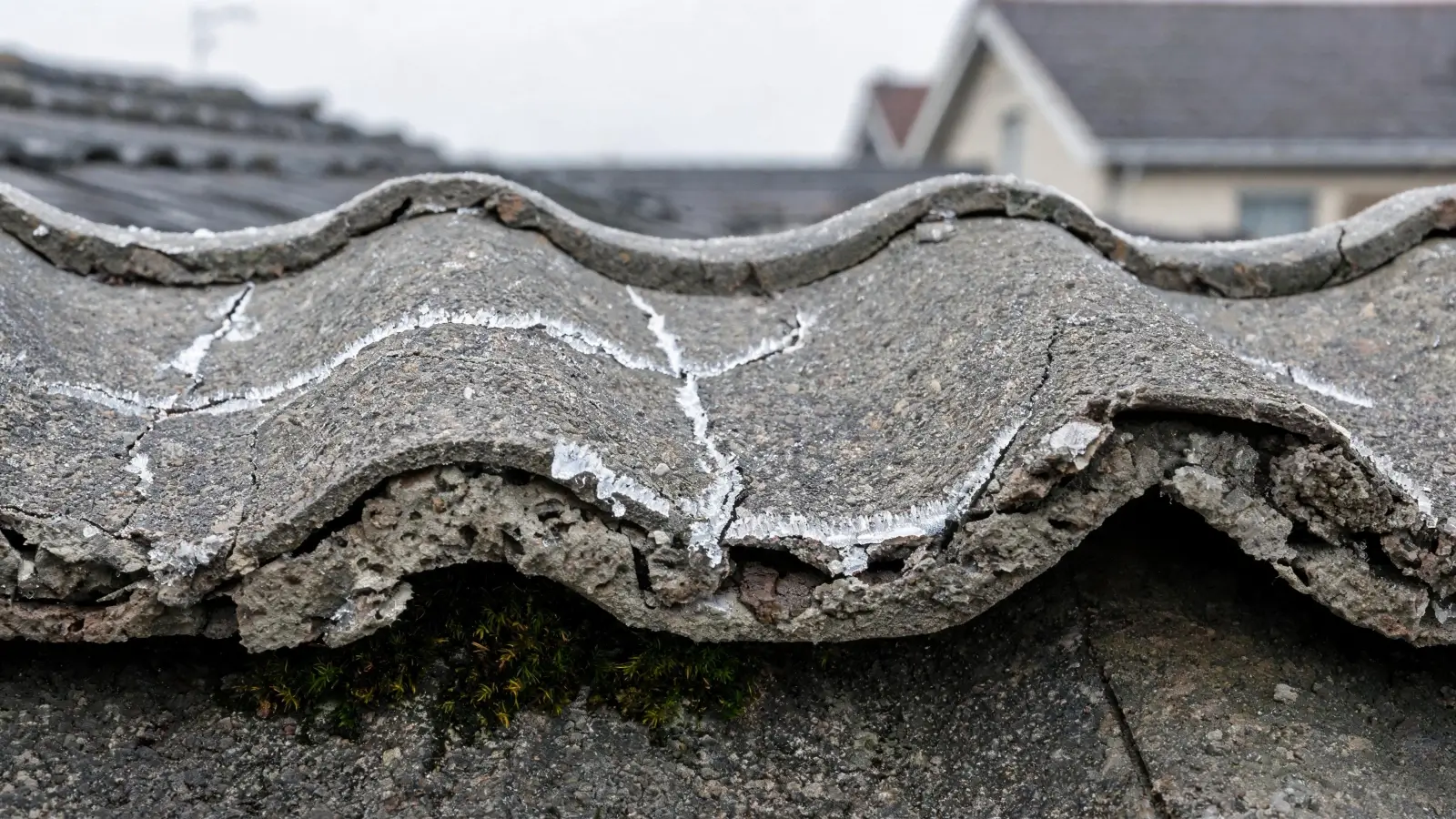
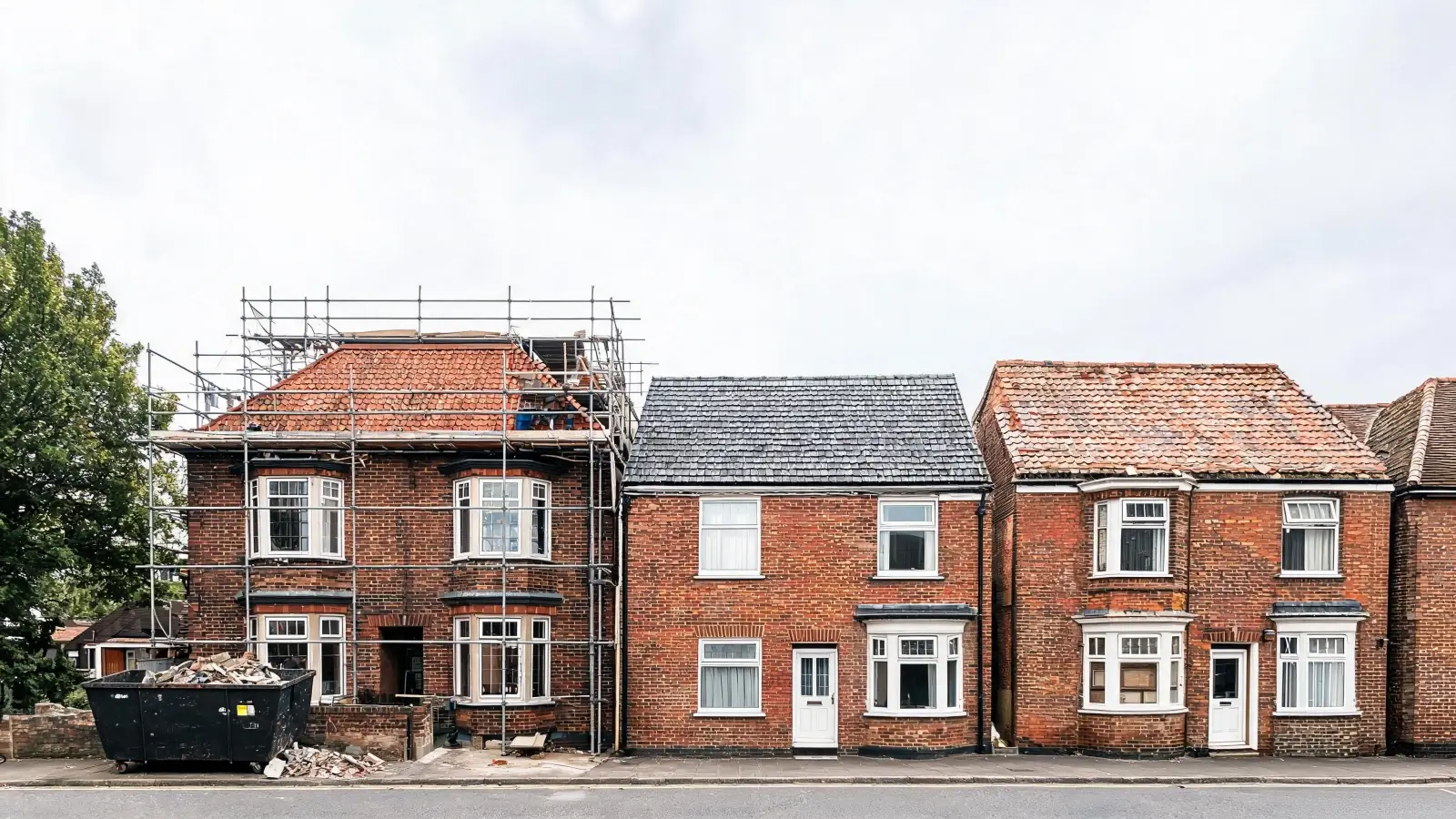
Notice the shape of each row, not just its total. Slate spends the century being paid down — the £23,000 roof costs less per year than the £11,000 one, which sounds like an accounting trick until you see the concrete row: three roofs, three sets of scaffolding, three skips on the drive, and at no point does the house hold a roof that is improving. Clay and steel sit between the two, but they both hit what I call the cost cliff — the moment the original bill has been fully digested and a new one, at future prices, lands on the next generation's doormat. Slate is the only row in that table with no cliff in it. The material does not decay on a schedule, so the ledger never has to restart.
How to Actually Calculate the Life-Cycle Cost of Your Roof
You do not need a spreadsheet licence to do this properly. The whole life-cycle cost of any roof is four lines:
Line 1 — Installation, all in. Materials + labour + scaffolding + waste removal + anything the surveyor says about your rafters. If a quote leaves scaffolding out, ask. On a 100 m² roof scaffolding alone can be £1,500–£3,000, and it is a real part of the day-one bill.
Line 2 — Annual upkeep, honestly averaged. Not the best year. Not the storm year. The decade average: for slate, £40–£60; for coated steel, add the repaint fund; for concrete, add a rising figure after year 20 as the tiles age.
Line 3 — Major events, on the material's own schedule. Every material except slate carries a reroof date. Ask any supplier for it in writing and watch the confident ones go quiet; a genuine T1/S1 slate supplier will simply point at the grades and the test report — EN 12326 and ASTM C406 both classify expected service life, and the top classes run past 75 years in the standards' own wording, while installed roofs on real buildings keep going well beyond that. The alternative to asking is discovering the date when the scaffold arrives.
Line 4 — What the roof is worth at the end. The line almost nobody includes. Sound slate has a resale market — reclaimed slate sells by the tonne and is prized for restoration work — so a 100-year-old slate roof is not worthless, it is a credit. A 100-year-old concrete roof is a skip fee. Over a full century that single line is worth about £2,000 on our model roof, and more if reclaiming is done properly.
Add the four lines, divide by the years, and compare materials on the same horizon — 50 years if you are sure the building will be sold, 100 if it is a family seat. Just do the division honestly: a 50-year comparison quietly flatters every material that was going to fail halfway through it anyway.
The Fine Print: Discounting, Energy and Honest Disclaimers
Any accountant reading the table above has one raised eyebrow by now, and it deserves an answer.
Discounting. In strict financial terms, £600 spent in year 50 is not worth £600 today. At a 3.5% discount rate over a 60-year horizon, the raw maintenance stream of about £4,150 shrinks to roughly £1,600 once each future payment is discounted back to today's money. Discounting compresses far-future costs more than near-future ones, which — and this is the uncomfortable half — flatters long-life materials less than you would think, because it also compresses the value of their far-future advantages. The honest summary: slate's case survives discounting, but it is strongest for owners who genuinely expect to hold the building long-term, and weakest for an owner planning to flip in five years. That is a fact, not a sales line, and it is the one line in this page a competitor can quote against us without lying.
Energy. The ledger above counts zero energy benefit, which is conservative to the point of pessimism. A slate roof carries real thermal mass, and a well-detailed slate installation is draft-tight in ways that aged interlocking tiles stop being. The savings are real but house-specific and modest — a few tens of pounds a year — so they belong in the "nice bonus" column, not the argument.
Assumptions. All figures are indicative 2025–26 UK prices for a straight-gable 100 m² roof, and your own roof may sit anywhere inside — or outside — those ranges, which is why the method in the previous section matters more than the model. One condition underneath the whole ledger is not a price at all: the stone must be what it claims to be. T2 or S3 slate dressed up as top grade turns every quiet year in the table noisy — carbonate decay and pyrite rust do not read price lists — so before you trust any century-long arithmetic, check the stone the way this guide shows and ask to see the test report behind it.
When the Ledger Says Slate Isn't the Answer
A page that ends "slate always wins" is a brochure, not a ledger. So here is the honesty section, because the maths genuinely does have edges.
If you are selling within five to ten years and the local market pays nothing for premium roofs, the un-recovered premium is real. The life-cycle case is built on holding the asset; a short horizon turns the heavy year-one invoice into a sunk cost, and no amount of future quiet years changes that arithmetic for you, even though the next owner will thank you. (Whether the market pays for a slate roof is its own question — one we will take up in a separate article on resale value.)
If the roof structure cannot be strengthened for stone — rare on traditional buildings, more common on some post-1960 trussed roofs — the year-one bill grows faster than the lifetime savings. Get the structural answer before falling in love with the material; the weight guide covers what to ask.
If you buy bad slate — high carbonate, thin corners, T2 or S3 grade dressed up as something better — every quiet year in the table above turns noisy. The ledger on this page assumes the material passes its tests honestly; the test results page shows what an honest one looks like, ours included.
If your budget is genuinely fixed at £13,000 and cannot stretch, a good coated-steel roof installed well beats a bad slate roof installed badly. The ledger here is an argument for doing slate properly or not at all — never for doing it cheaply.
None of these edges change the shape of the century. They change who is holding the roof when the century's numbers come true. That is the real conclusion of a life-cycle analysis: it does not tell you what to buy, it tells you what you are actually buying — and with slate, what you are buying is decades of not thinking about your roof.
Why the Numbers Behave the Way They Do
It is worth closing with the reason behind the ledger, because it is more interesting than the ledger itself.
Slate is the only common roofing material whose service life is not a manufacturer's promise but a geological fact. The stone was formed under heat and pressure over millions of years; it was already old when the roofer arrived. Its 0.2% water absorption means frost has almost no purchase on it — water that cannot get in cannot freeze and split it. Its colour sits in the mineral, not in a coating, so there is nothing to fade and nothing to reapply. It does not support combustion, so it does not age through fire risk. All of this is measurable, and all of it points the same way: the material has no scheduled failure date, so the cost of owning it has no scheduled restart.
There is a pleasing etymology hiding in the economics, too. The English word slate comes from the Old French esclate, a splinter — a thin piece split off the block — and the shopkeeper's slate of accounts is the same word: sheets of stone were the era's writing tablets, debts chalked on and rubbed off daily, which is where the phrase "a clean slate" comes from. The material has been keeping ledgers honest for a very long time. On a roof, it keeps the same promise it kept on the shopkeeper's wall: one entry, and then silence.
That is the whole case. Not "slate is cheap" — it is not, on day one, and pretending otherwise insults the reader. The case is that expensive things that stop billing you can cost less than cheap things that never stop. A century of roofing invoices proves it with unusual clarity, and the houses still standing under their original slate roofs — some of them older than the statistics industry that now measures them — are the buildings where the ledger, year on year, simply went quiet.
Frequently Asked Questions
Is a slate roof worth the money if I plan to sell the house?
On a pure life-cycle basis, slate's advantage compounds the longer you hold the asset — so a five-to-ten-year ownership horizon recovers less of the premium. Two honest caveats though. First, recovery is not zero even on a short hold: premium roofs tend to help a listing stand out, and buyers increasingly ask about roof age and replacement dates. Second, the buyer after you inherits the remaining century of quiet years, which is exactly why slate holds appeal in resale markets that value longevity. If maximising your own return inside a short window is the primary goal, run the four-line calculation in the article with your real sale horizon — the maths will tell you which side of the edge you are on.
How much does a slate roof cost per year?
On the model used throughout this page — a 100 m² roof installed for £18,000–£28,000, £50 a year of minor upkeep, a survey every 25 years, no coatings and no reroofing — the 100-year total of about £27,800 works out at roughly £278 per year, or £2.30–£3.30 per square metre per year. Using the £18,000 end of the installation range the figure falls to about £228 a year. The daily figure is less than a takeaway coffee: about 76p on the mid-range estimate.
Does a slate roof reduce home insurance?
It can, though the effect is house- and insurer-specific, so treat it as a possible discount rather than a promise. The logic insurers apply is straightforward: slate is non-combustible, highly resistant to impact and wind-lift when properly fixed, and unlikely to generate the mid-life water-damage claims that ageing tile and shingle roofs produce. Some insurers price those factors into premiums for stone roofs or heritage buildings; others do not differentiate. The practical advice is to ask your insurer directly after installation — and if they do not care, the ledger on this page still stands without the discount.
Doesn't discounting make future savings worthless, so the cheapest day-one roof is really the cheapest?
No — and the reason is worth being precise about. Discounting compresses far-future costs, but it does not delete them. On our model roof, the maintenance stream over 60 years has a raw total of about £4,150 but a present value of roughly £1,600 at a 3.5% discount rate. The concrete roof's year-35 and year-70 reroofs, discounted honestly, still add about £5,100 + £1,500 of today's-money cost — real money, arriving on a date your savings will also have grown towards. Discounting narrows slate's margin; it does not erase the cliff. The only scenario where the cheapest day-one roof truly wins is a genuinely short ownership horizon, which the article above says plainly.
What is the biggest hidden cost with a slate roof?
Two candidates, both of them year-one costs rather than running costs. The first is structural: slate weighs around 40–70 kg per m² installed, and some modern trussed roofs need strengthening first — budget £500–£2,000 if your surveyor raises it. The second is labour quality: the labour line on an honest slate quote runs £90–£150 per m² in most of Western Europe, and a quote far below that is not a bargain, it is a shorter-lived roof wearing a slate costume. Once those two lines are paid honestly, the hidden-cost column of a genuine slate roof is, unusually for construction, empty.
Does the life-cycle maths change for very cold or coastal climates?
It strengthens, if anything. The ledger above already assumes frost, rain and wind — but the materials slate competes against decay faster where those forces are extreme. Concrete tiles in heavy freeze–thaw territory begin spalling well before their nominal 40-year life, moving their cost cliff earlier; coated steel near salt air ages faster and repaints more often. Slate's 0.2–0.4% water absorption leaves frost almost nothing to work with, which is why the same material serves Scottish winters and Atlantic coastlines on century-old buildings. The one climate-driven cost to plan for is fixing specification — more hooks or copper nails in exposed sites — a year-one detail, not a running bill.
Get Your Ledger Written on Tested Slate
A 100-year cost argument only holds if the material underneath it is genuinely sound. We produce S1/T1 roofing slate to EN 12326 and ASTM C406 in our Jiujiang factory, CNC-cut to ±0.2 mm and individually inspected — every tile, not a sample — before it ships. The test results are public, and the current material range is here. Ask us for a quote on your square metres and we will price the first line of your ledger honestly.