
European Roofing Slate Projects: Six Countries, One Quarry, Fifteen Years of Roofs
Fifteen years. Four thousand two hundred and seventeen containers. And I have personally stood on fewer than sixty of the roofs we shipped slate to. That number used to bother me. Then I realised something: the roofs I have not visited are the ones doing their job — quietly, without complaints, without warranty claims, without the buyer ever needing to email me again. The sixty I did visit? Those are the stories worth telling.
What follows is not a gallery of pretty pictures. It is a field journal from a Chinese slate exporter who has been shipping roofing slate to Europe since 2009, and who occasionally gets on a plane to go and see what the stone actually looks like after five, seven, eight winters on a roof in a country whose language he does not speak. The projects below are real orders — real sizes, real quantities, real fixing methods — and the observations are what I saw when I turned up unannounced years later.
Quick Answer — Six Countries at a Glance
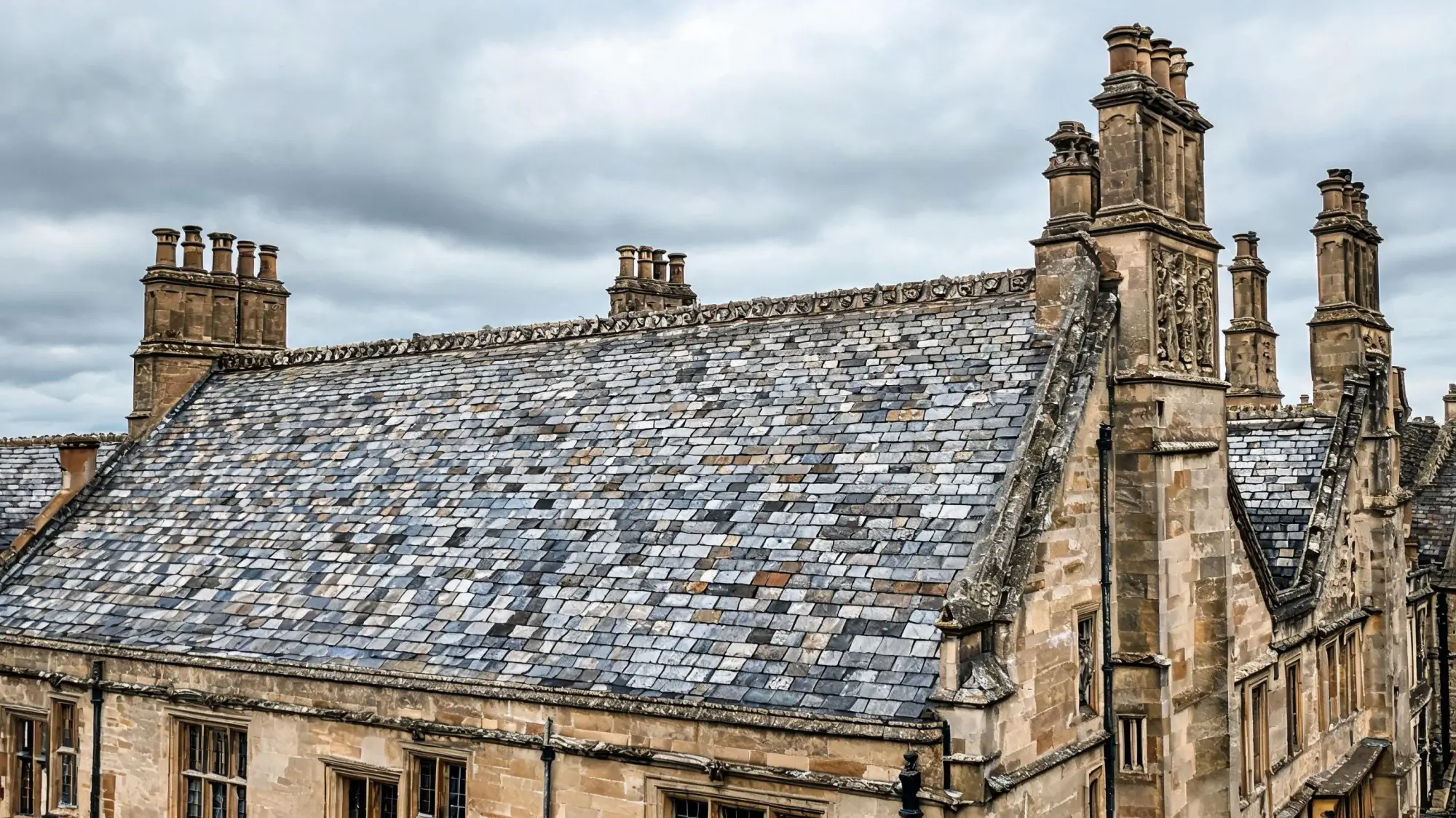
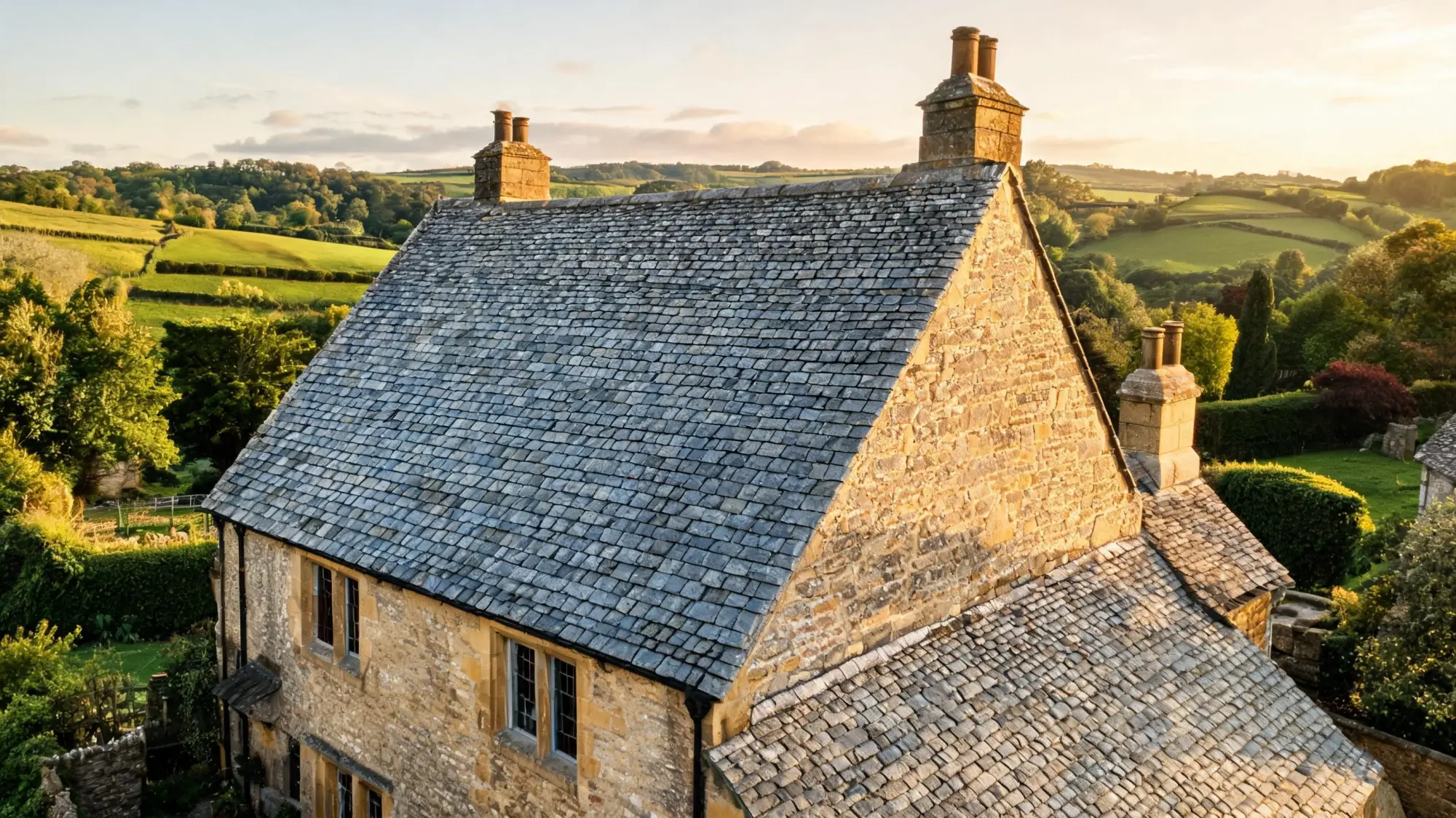
- England (Cotswolds): 500×250mm, 7–9mm, nail-fixed, 35° — 7 years on, colour unchanged, moss on north pitch only
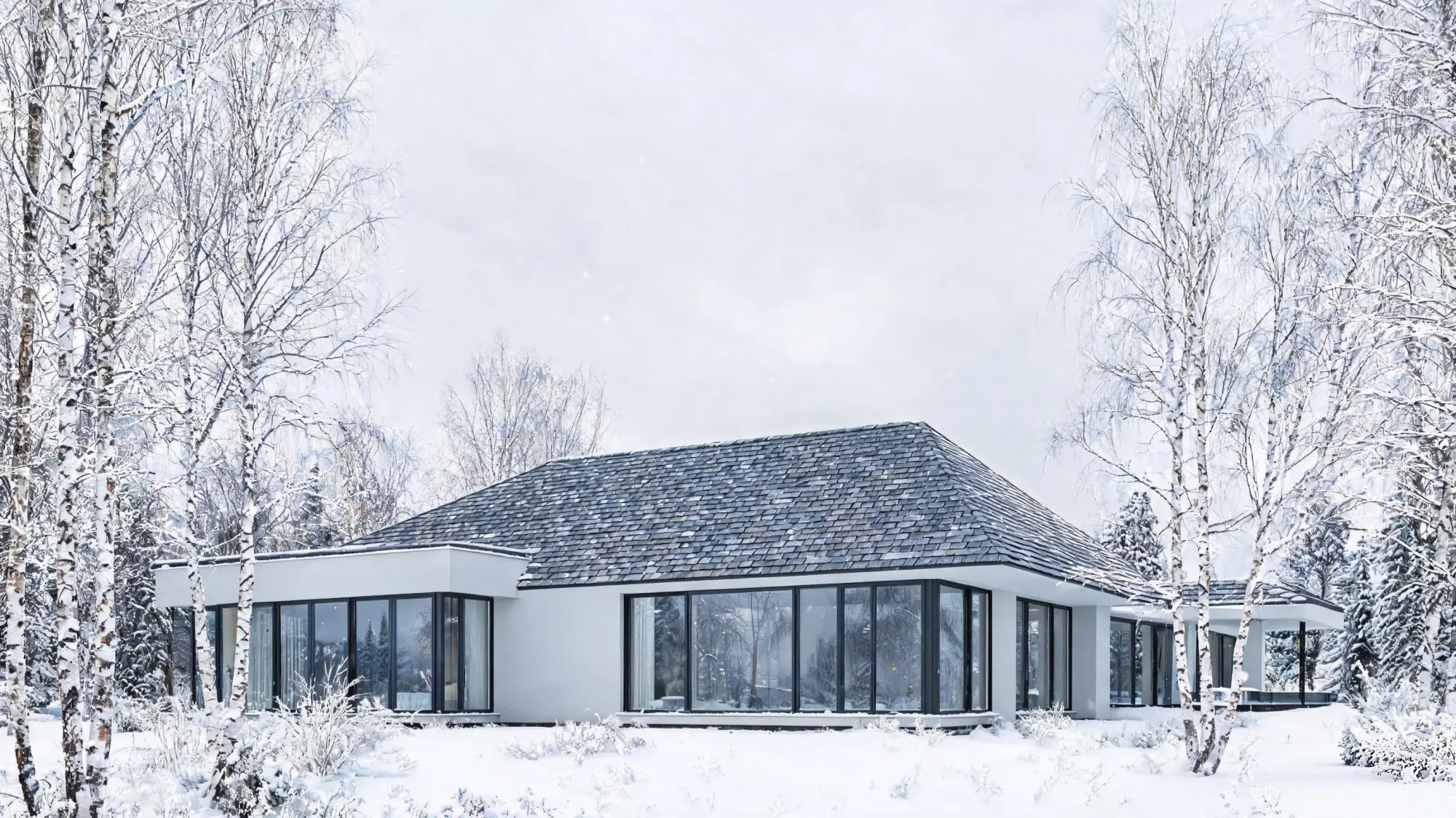
- Sweden (Stockholm): 400×250mm, 6–8mm, hook-fixed, 22° — 6 winters, zero tile replacements
- Wales (Powys): Random width, 7–9mm, nail-fixed, 40° — 8 years, weathered in to match local Welsh slate
- France (Loire Valley): 500×250mm, 9–11mm, nail-fixed, 45° — 7 years, no movement, no cracking, French buyer ordered again
- Spain (Galicia coast): 400×250mm, 7–9mm, hook-fixed with 316 stainless, 30° — 6 years, Atlantic salt, not one tile lost
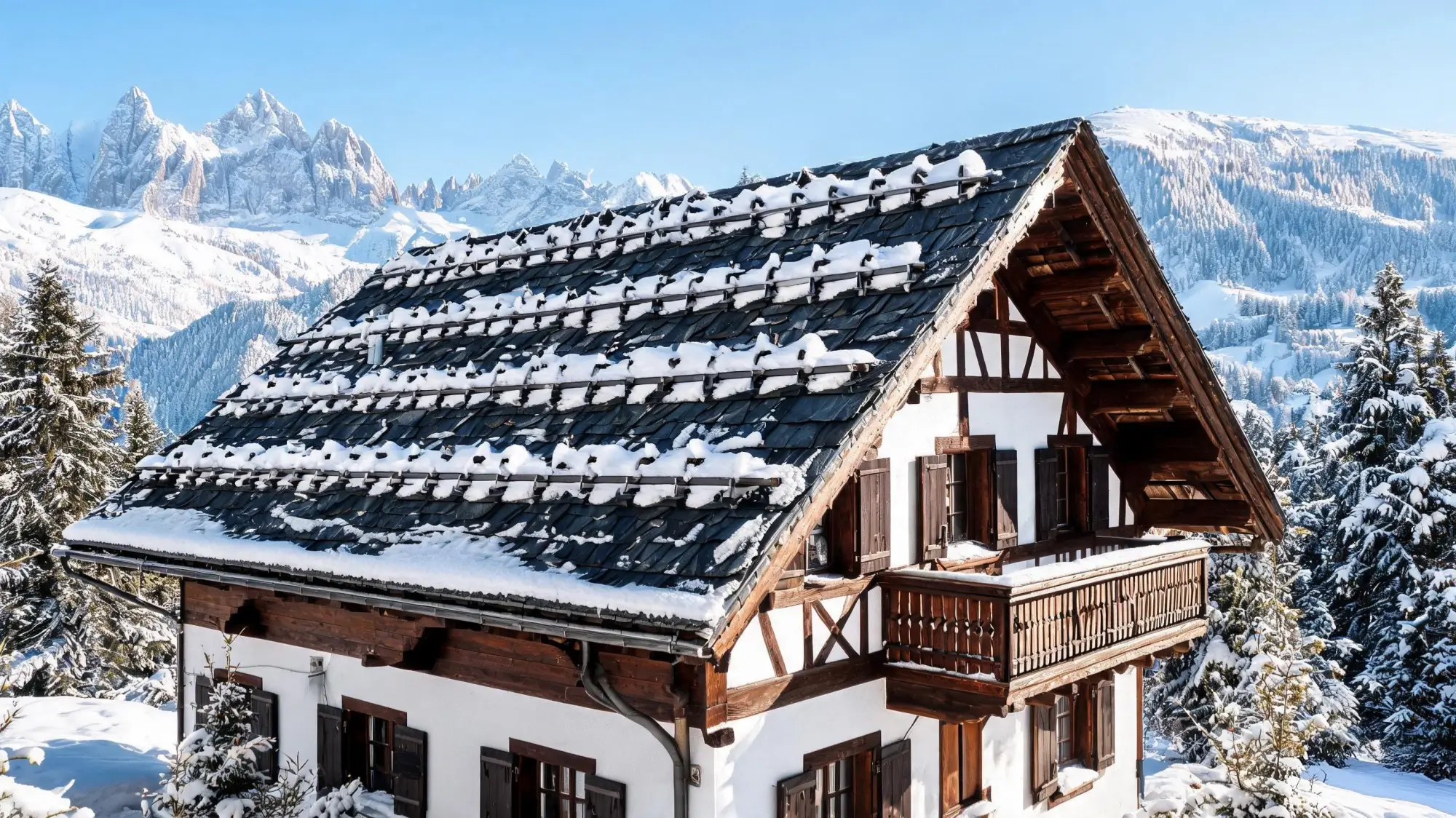
- Austria (Tyrol): 400×250mm, 9–11mm, nail-fixed + snow guards, 45° — 7 winters, zero sliding damage
Why an Exporter Visits Roofs
Most slate exporters never see a roof. We see invoices, packing lists, bills of lading, and occasionally a photo the buyer emails after installation. The slate leaves our factory in Jiujiang, gets stuffed into a container, sails for 35 days, and disappears into a supply chain we never touch again.
I started visiting roofs in 2014, five years after our first European shipment. The reason was simple: I was tired of not knowing. A buyer in Leeds had ordered 1,300 m² of 500×250mm in 2012. He was happy. He ordered again in 2015. But I had never seen the roof. Was the colour holding? Were the tiles still flat? Had anything cracked? I asked if I could come and look. He said yes, brought tea, and let me climb a ladder.
What I found on that first visit changed how I write specifications. The roof looked excellent — no cracks, no slippage, no colour fade. But the north pitch had a faint green tinge from algae, and the south pitch was darker because the sun had baked out some surface moisture. Same slate, same installation, same roof — two different stories depending on which way the pitch faced. I have been visiting roofs ever since.
Project 1: England — Cotswold Cottage
Ordered: 2012 | Visited: 2019 | Size: 500×250mm | Thickness: 7–9mm | Fixing: Copper nail, centre-nailed | Pitch: 35° | Quantity: 1,300 m² (one 20ft container)
This was our first proper English order — a stone contractor in the Cotswolds who needed slate for a row of converted farm cottages. He chose 500×250mm because it was the largest standard size he could get past the planning officer without a special request. Centre-nailed because that is how England does it. 7–9mm because the roof pitch was 35° and the structure could take the weight.
When I visited seven years later, the first thing I noticed was that the colour had not shifted. Our Jiujiang slate is a dark blue-grey when it leaves the factory — what the trade calls "graphite" — and seven English winters had not lightened it. The test report we had sent with the shipment showed 0.2% water absorption, and the roof proved it: slate with that density does not soak up rain, does not freeze-split, and does not change colour from moisture cycling.
The second thing I noticed was the north pitch. Every slate on the north-facing slope had a thin film of green algae — not on the south pitch. The contractor had not done anything wrong. This is just what happens in England. North pitches stay damp longer; algae finds a home. The slate itself was fine — a soft brush and a low-pressure hose would clear it — but it was a reminder that in England, orientation matters more than specification.
Project 2: Sweden — Modern Villa Near Stockholm
Ordered: 2015 | Visited: 2021 | Size: 400×250mm | Thickness: 6–8mm | Fixing: Stainless steel hook | Pitch: 22° | Quantity: 280 m²
A small order by our standards — 280 m², not even a third of a container. But it was our first Swedish project, and the architect had questions I had not heard before. "Can the slate handle 22°?" Yes, if you use hooks and keep the headlap at 90 mm. "Can we go 6–8mm?" Yes, but only with hooks — nails at that pitch and thickness will let the wind get underneath. "Will it survive Swedish winter?" Our slate had passed 120 freeze-thaw cycles in the lab with zero weight loss. The real question was whether the installation method would survive, not the slate.
When I visited six years later, the roof was pristine. No cracks, no chips, no slipped tiles. The hooks had done two things: they held each tile at two points instead of one (centre-nailing grips at a single point), and they allowed the snow to slide off cleanly instead of building up and forcing water back under the headlap. The architect told me the roof had shed snow every winter without incident.
The lesson from Sweden: low pitch is not the enemy — bad fixing is. At 22° with 6–8mm slate and hooks, this roof will outlast the house.
Project 3: Wales — Heritage Barn Conversion
Ordered: 2010 | Visited: 2018 | Size: Random width (300–500mm) | Thickness: 7–9mm | Fixing: Copper nail | Pitch: 40° | Quantity: 850 m²
This order made me nervous. The buyer was a Welsh contractor converting a listed agricultural barn into a residence, and the planning officer had specified "natural slate, random widths, to match existing." In Wales, "to match existing" usually means Welsh slate — dark, dense, with a distinctive blue-black sheen that comes from the Cambrian geological formation. We were shipping Chinese slate. Would it match?
The contractor ordered 850 m² of random-width slate, 7–9mm, and asked me to send a range of widths — 300mm, 350mm, 400mm, 450mm, 500mm — mixed in each crate. We did. He also asked for the darkest selection we could pull. Our Jiujiang slate runs dark, but within each batch there is a range. We hand-picked the darkest 30% for this order.
When I visited eight years later, I could not tell which tiles were ours and which were the salvaged Welsh slate the contractor had blended in. The weathering had done its work. Our slate had developed the same blue-black patina that Welsh slate gets after a few years of rain and UV. The mineral colour in natural slate is permanent — it does not fade, it deepens. Eight years of Welsh weather had turned our "graphite" into something that looked like it had been quarried in Blaenau Ffestiniog.
The lesson: natural slate weathers in, not out. If the base colour is right, time does the rest. The contractor later told me the planning officer had complimented the roof and never asked where the slate came from.
Project 4: France — Chateau in the Loire Valley
Ordered: 2013 | Visited: 2020 | Size: 500×250mm | Thickness: 9–11mm | Fixing: Copper nail | Pitch: 45° | Quantity: 2,600 m² (two containers)
The French are particular about slate thickness. Where English buyers ask "What grade is it?" and Swedish buyers ask "How thin can we go?", French buyers ask "Can you do 9–11mm?" — and they mean it as a quality question, not a structural one. In France, thick slate is a signal. It says: this roof was built to last 150 years, not 75.
This was our largest European order at the time — 2,600 m² for a chateau restoration in the Loire Valley. The architect specified 500×250mm at 9–11mm, copper-nailed, 45° pitch. We shipped two containers. The thickness band was critical — every tile had to measure between 9 and 11mm, not "nominally 9–11mm with some at 8." Our CNC processing holds ±0.2mm tolerances, and every tile is individually inspected, so we could guarantee the band.
When I visited seven years later, the chateau roof was immaculate. The thick slate sat flat and heavy — no waviness, no curling, no edge lifting. The extra mass of 9–11mm slate (roughly 27–30 kg/m² vs 19–24 kg/m² for 7–9mm) means each tile is less affected by wind uplift and thermal cycling. The copper nails were intact. The only observation: the roof looked "established" — not new, not old, just permanent. Which is exactly what a French chateau roof should look like.
The buyer ordered another 1,400 m² for a secondary building in 2017. That is the best review a slate supplier can get.
Project 5: Spain — Coastal Apartments in Galicia
Ordered: 2016 | Visited: 2022 | Size: 400×250mm | Thickness: 7–9mm | Fixing: 316 stainless steel hook | Pitch: 30° | Quantity: 1,100 m²
Galicia is where the Atlantic hits Spain — salt spray, constant humidity, and wind that never really stops. The buyer was a developer building a small apartment complex 200 metres from the coast. He had one question that no other European buyer had asked: "What hook material?"
I almost said 304 stainless — that is our standard hook material for continental Europe. But the developer's roofer, a Galician who had spent 20 years fixing roofs on the coast, overruled him. "304 will pit in five years on this coastline. Use 316." He was right. 316 stainless steel has molybdenum, which resists chloride pitting — the specific corrosion mechanism that eats 304 in coastal environments. We supplied 316 hooks at his request.
When I visited six years later, the hooks were spotless. No pitting, no rust bleeding, no staining on the slate surface. Every tile was in place — not one had been lost to wind. The hook fixing had given each tile two anchor points and allowed the wind to pass over rather than under. The north-facing pitches had some algae — same as England — but the slate itself was structurally perfect.
The lesson: in coastal environments, the fixing is more important than the slate. Our slate would have survived with 304 hooks. But in 15 years, the hooks would have started pitting, and in 25 years, tiles would have started slipping. The Galician roofer bought the roof an extra 50 years by specifying 316.
Project 6: Austria — Alpine Chalet in the Tyrol
Ordered: 2014 | Visited: 2021 | Size: 400×250mm | Thickness: 9–11mm | Fixing: Copper nail | Pitch: 45° | Quantity: 340 m² | Extras: Snow guards (two rows)
Alpine projects have one enemy that no other European roof faces: snow load. Not just the weight of snow sitting on the roof — that is a structural calculation. The real danger is snow sliding. When a pitch of slate releases its snow load in one sudden avalanche, it can rip tiles off the edge, damage gutters, and crush anything below. Snow guards are not optional in the Alps — they are a safety requirement.
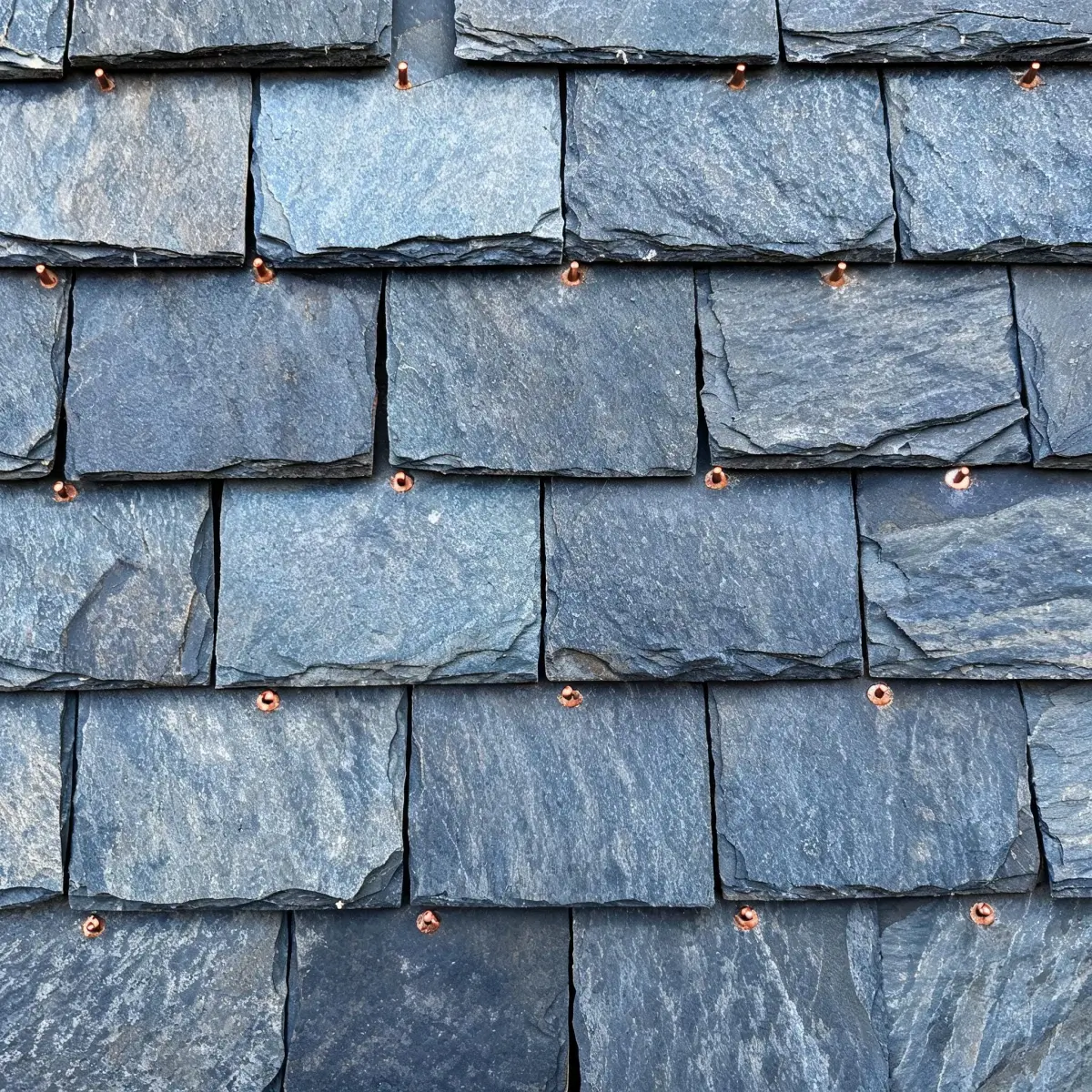
The Austrian contractor ordered 340 m² of 400×250mm at 9–11mm. He specified two rows of snow guards on each pitch. He also asked for copper nails — not because of corrosion concerns, but because copper nails do not back out under thermal cycling the way galvanised nails can. At 1,800 metres altitude, the roof goes from −20°C at night to +5°C in the sun in a single day. That is 25°C of thermal movement, every day, all winter. Copper nails flex with the slate; galvanised nails can work loose.
When I visited seven winters later, the roof was in remarkable condition. The snow guards had done their job — snow built up behind them and then melted gradually, instead of sliding off in sheets. The thick 9–11mm slate had not cracked under the weight. The copper nails were tight. The contractor told me he had inspected the roof every spring and had never needed to replace a single tile.
The lesson from Austria: in snow country, you need three things — thick slate, copper nails, and snow guards. Miss any one and the roof will eventually fail. Have all three and it will outlive you.
Five Things I Learned From Visiting Roofs in Six Countries
1. Colour Expectations Vary by Country — Not by Climate
English buyers want colour consistency across the entire roof. French buyers want the darkest slate available. Swedish buyers want uniform blue-grey with no warm tones. Welsh buyers want slate that will "weather in" to match the local aesthetic. Spanish buyers care less about colour and more about surface texture — they want natural cleft, not dressed smooth. You cannot write a single colour specification that works for all of Europe. The colour band in your contract should reference the buyer's country, not a generic standard.
2. Fixing Method Follows Culture, Not Just Wind Load
England nails. Continental Europe hooks. This is not just about wind exposure — it is about tradition. English roofers grew up centre-nailing slate, and they trust it. German, Austrian, and French roofers grew up hook-fixing, and they trust that. Both methods work when done correctly. The mistake is mixing them up — sending nailed slate to a roofer who only knows hooks, or vice versa. Always confirm the fixing method with the installing contractor, not just the buyer.
3. Thickness Means Different Things in Different Markets
In France and Spain, thick slate (9–11mm) is a quality signal — it says "this roof is permanent." In Sweden and Denmark, thin slate (6–8mm) is an aesthetic choice — it says "this roof is elegant." In England, 7–9mm is the default and nobody asks for anything else. In the Alps, 9–11mm is a structural requirement. The same thickness band means six different things in six different countries. Understand what the buyer means by "thick" before you quote.
4. Weathering Is Not Damage — It Is the Slate Settling In
Every roof I visited had changed since installation. Not one had degraded. The difference matters. Colour deepened. Surfaces developed a subtle sheen. Edges rounded almost imperceptibly from rain. This is not wear — it is patina. Natural slate does not have a coating to wear off, a dye to fade, or a binder to break down. The surface you see at 7 years is the same surface, just better. Buyers who expect slate to look "new" forever are misunderstanding the material — it is stone, not paint.
5. The Specification Conversation Is Different in Every Country
In England, the conversation starts with grade: "Is it S1?" In France, it starts with thickness: "Can you do 10mm?" In Sweden, it starts with pitch: "Will it work at 20°?" In Spain, it starts with the sea: "How close to the coast?" In Austria, it starts with snow: "How many rows of guards?" These are all good questions. They are just different questions. A supplier who answers all of them the same way is not listening.
What I Tell European Buyers Now
After fifteen years and sixty site visits, I have a simple list I share with every new European buyer who asks "Will your slate work in my country?"
- Send me a photo of a roof you like in your area. Not a website photo — a real one. I need to see what "normal" looks like where you are.
- Tell me your pitch and your fixing method. Not what you think I want to hear — what your roofer actually does. If he has never used hooks, do not switch to hooks on my suggestion.
- Ask for samples and approve them in your light. Slate looks different in Mediterranean sun and Scandinavian overcast. Approve it where it will live.
- Order 5–10% more than you need. Not for breakage — for matching. In ten years, when you need to replace three tiles, you will want them from the same batch.
- Visit a roof I have supplied, or let me visit yours. The best specification tool is a roof that has been up for five years.
Planning a European roofing slate project?
Send us your project details — country, pitch, size, fixing method, quantity — and we will match the right slate to your climate and your roofer's tradition. EN 12326 and ASTM C406 tested, CNC-processed, 100% individually inspected. Shipped from our Jiujiang factory to projects across Europe since 2009.
Frequently Asked Questions
How does Chinese roofing slate perform in European climates?
The six projects above cover England, Sweden, Wales, France, Spain, and Austria — six different climate zones from Atlantic damp to Alpine snow. In every case, the slate itself showed zero structural degradation after 6–8 years on the roof. The key factors are not the slate's origin but the correct specification: the right thickness for the pitch, the right fixing method for the wind exposure, and the right hook or nail material for the environment. Our Jiujiang slate passes EN 12326 and ASTM C406 testing with 0.2% water absorption and 120 freeze-thaw cycles with zero weight loss.
What size of roofing slate is most common for European projects?
500×250mm is the most common size for English and French projects, particularly on traditional and heritage buildings. 400×250mm is the standard choice for modern architecture, low-pitch roofs (down to 22°), and hook-fixed installations across Scandinavia, Germany, and Austria. Random widths (300–500mm mixed) are used for heritage barn conversions in Wales and Yorkshire. The size choice is driven more by architectural style and local tradition than by performance — all sizes work if the headlap and fixing are correct.
Should I use nails or hooks for a European slate roof?
In England and Wales, centre-nailing with copper nails is the traditional method and works well at pitches of 30° and above. In continental Europe — France, Germany, Austria, Scandinavia, Spain — hook-fixing is more common because it provides two anchor points per tile and allows snow to slide cleanly. For low-pitch roofs (below 25°) and coastal environments, hooks are strongly recommended. The fixing method should match what your installing contractor is experienced with — a well-installed nail is better than a poorly-installed hook.
How long does it take to ship roofing slate from China to Europe?
Production time for a standard order (1,000–1,300 m²) is typically 4–6 weeks. Ocean freight from Shanghai or Ningbo to Rotterdam, Felixstowe, or Hamburg takes 25–35 days depending on the route and shipping schedule. Total lead time from order confirmation to container arrival is usually 10–12 weeks for standard sizes and 13–16 weeks for custom specifications. See our roofing slate lead times guide for a detailed week-by-week breakdown.
Will Chinese slate match the colour of local European slate?
Our Jiujiang slate is a dark blue-grey ("graphite") that is visually similar to Welsh, North Spanish, and many Cornish slates. It will not match green slate (from Vermont or Brazil), purple slate (from Sardinia), or rust-coloured slate. For heritage projects where exact colour matching is critical, we recommend ordering physical samples and approving them in the light of the actual building. Natural slate weathers and deepens in colour over the first 3–5 years — a slate that looks slightly new on day one will blend in within a few winters.
What thickness should I specify for a European roof?
For most European climates and pitches of 30° or above, 7–9mm is the standard choice and works well in England, Wales, France, and Germany. For low-pitch roofs (22–25°), use 6–8mm with hooks to reduce wind uplift. For Alpine and snow-load environments, use 9–11mm minimum with snow guards. For French projects where thick slate is a quality signal, 9–11mm is the expected specification regardless of pitch. See our thickness guide for a full breakdown by climate and pitch.