
Billiard Slate Technical Specifications: Sizes, Thicknesses, Weights & Tolerances
This page is a working reference for the people who actually order slate: table manufacturers, distributors, OEM factories and importers. It collects the dimensions, thicknesses, weights, configurations and machining requirements that come up in production drawings and purchase orders — pool, snooker, Chinese 8-ball, carom and Russian pyramid — in one place, so a specification can be checked in minutes instead of assembled from a dozen sources.
Everything below is a representative production reference, not a universal international standard. There is no single industry-wide dimension table for billiard slate. Two table brands can build the same nominal "9 ft" table around different slate outlines, so the approved production drawing always takes priority over any figure on this page.
Billiard Slate Specification Table
| Table Type | Nominal Size | Configuration | Common Thickness | Typical Slate Outline* | Approx. Slate Weight* |
|---|---|---|---|---|---|
| 7 ft Pool | 7 ft | 3-piece | 19 mm | approx. 2169 × 1170 mm | 130–140 kg |
| 8 ft Pool | 8 ft | 3-piece | 19 / 22 / 25 mm | approx. 2413 × 1295 mm | 160–210 kg, varies by thickness |
| 9 ft Pool | 9 ft | 3-piece | 25 mm | approx. 2718 × 1448 mm | 250–270 kg |
| 10 ft Pool | 10 ft | 3-piece | 25 mm | approx. 3030 × 1600 mm | per drawing |
| 10 ft Snooker | 10 ft | 5-piece | 38 mm | approx. 3048 × 1562 mm | per drawing |
| 12 ft Snooker | 12 ft | 5-piece | 35 / 45 mm | approx. 3658 × 1867 mm | approx. 800 kg at 45 mm |
| Chinese 8-Ball | varies by brand | commonly multi-piece | 38–50 mm; 45 mm most common | per table drawing | per drawing |
| Korean Carom | varies | multi-piece | 45 mm and above | per table drawing | per drawing |
| Russian Pyramid | 12 ft class | multi-piece | 45 mm and above | per table drawing | per drawing |
*Approx. finished slate weight. Theoretical weight before machining runs higher — a 9 ft set at 25 mm calculates to roughly 266 kg at 2.7 t/m³ — and falls after pocket cut-outs, holes and edge machining. A drawing-based calculation is the only reliable figure for a specific order.
Units: dimensions are shown in millimetres (mm); weight in kilograms (kg); thickness is nominal finished slate thickness unless otherwise stated.
How to Read These Specifications
Three rules keep a billiard slate specification honest, and they apply to every table type on this page.
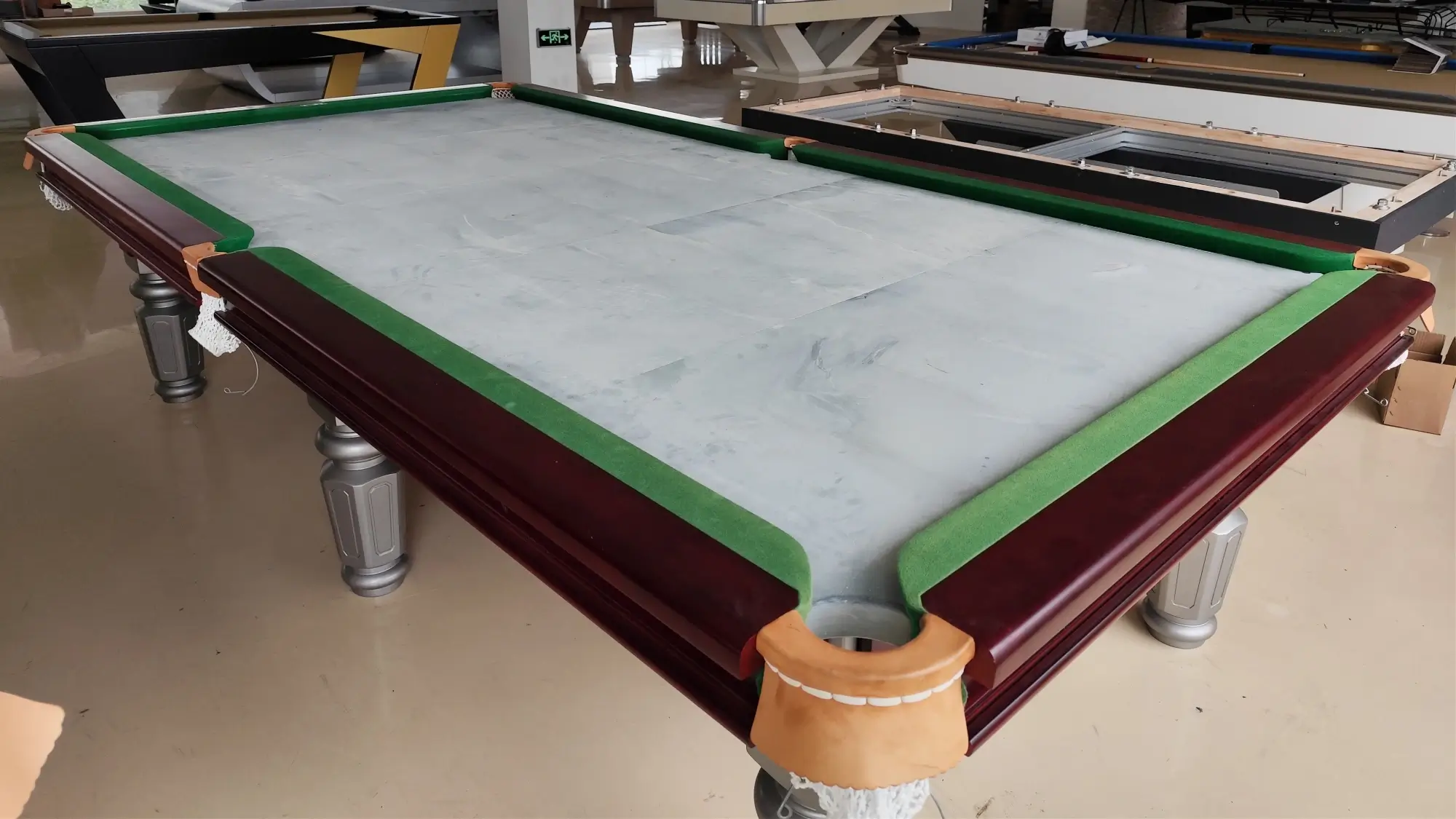
First, "9 ft" is a table label, not a slate dimension. The slate outline is larger than the playing area because it extends under the cushions and, on most designs, carries the pocket cut-outs and rail mounting zones. A "9 ft" table typically takes a slate outline around 2718 × 1448 mm, while the playing area itself is closer to 2540 × 1270 mm. Two different numbers, one table. When a drawing or an order quotes a single figure without saying which one it is, that order is not yet a production document.
Second, no figure here overrides the table manufacturer's drawing. Table brands work to their own cabinet designs, cushion profiles and pocket layouts. The same nominal size can carry a different outline, a different joint position or a different hole pattern from one brand to the next. This is why our production always starts from the customer's approved drawing — the numbers in the table above describe what is commonly produced, not what any given factory must produce.
Third, thickness and configuration are table-design decisions, not quality grades. A 19 mm pool slate is not "worse" than a 45 mm snooker slate — it is a different specification for a different table structure. A thicker slate only performs better when the cabinet and support system were engineered for it. For an introduction to the material itself, see What Is Billiard Slate?, and for identifying table types at a glance, Types of Billiard Slate.
Pool Table Slate Specifications: Size, Thickness & Weight
Pool slate covers the widest range of sizes in the industry, from home 7 ft tables to tournament 9 ft and 10 ft equipment. The three-piece configuration dominates: it splits the weight for handling and shipping while keeping the playing surface continuous under the cloth.
| Size | Configuration | Common Thickness | Typical Outline | Approx. Weight |
|---|---|---|---|---|
| 7 ft | 3-piece | 19 mm | approx. 2169 × 1170 mm | 130–140 kg |
| 8 ft | 3-piece | 19 / 22 / 25 mm | approx. 2413 × 1295 mm | 160–210 kg |
| 9 ft | 3-piece | 25 mm | approx. 2718 × 1448 mm | 250–270 kg |
| 10 ft | 3-piece | 25 mm | approx. 3030 × 1600 mm | per drawing |
A few things worth knowing when these numbers meet a real order:
The 9 ft, 25 mm, three-piece set is one of the most frequently requested configurations in our export pool-table business. The theoretical stone weight before machining is roughly 266 kg; the finished slate lands at 250–270 kg because pocket cut-outs, bolt holes and edge machining remove material. That total splits into three panels of roughly 80–90 kg each, which two people can carry onto a table frame. The 8 ft table is the most variable: some cabinet designs stay at 19 mm to keep the table light for home floors, others go to 22 mm or 25 mm for commercial durability. On a 10 ft table the outline depends heavily on the brand, so we treat 10 ft pool slate as a drawing-first product rather than a catalogue item.
One-millimetre differences in historical drawings — 2412 × 1296 mm on an old print versus 2413 × 1295 mm on a new one — are common and rarely significant, but the approved drawing still wins. If the difference matters to the assembly, confirm which revision is current before production.
Snooker Table Slate Specifications: Size, Thickness & Weight
Snooker slate is built on a different scale from pool slate: larger outlines, thicker panels and, on full-size tables, a five-piece configuration that keeps each panel inside a manageable lifting weight.
| Size | Configuration | Common Thickness | Typical Outline | Approx. Weight |
|---|---|---|---|---|
| 10 ft Snooker | 5-piece | 38 mm | approx. 3048 × 1562 mm | per drawing |
| 12 ft Snooker | 5-piece | 35 / 45 mm | approx. 3658 × 1867 mm | approx. 800 kg/set at 45 mm* |
The 12 ft snooker table is one of the most demanding applications for natural slate. The outline runs to roughly 3658 × 1867 mm, and in our production experience 45 mm is the thickness most commonly manufactured for this table class — though 35 mm, 40 mm and 50 mm all appear on different brand drawings, so thickness is confirmed against the table design, never assumed. At 45 mm the approximate finished set weight is in the region of 800 kg depending on the drawing and machining, with individual panels around 160–170 kg. That weight is a structural input: the table frame, the floor and even the room access route are all engineered around it.
Five-piece configuration divides the large surface into panels that can be lifted, crated and installed without gantry equipment, at the cost of more joint faces to machine accurately. The joints are machined so the finished surface reads as one plane — the specification for joint fit belongs in the drawing, and the measured results belong in the inspection record (see Billiard Slate Quality & Test Data).
Chinese 8-Ball, Carom and Russian Pyramid Slate
Three table families sit outside the classic pool/snooker pattern, and each has its own specification page in this guide. The short version for specification purposes:
Chinese 8-ball tables run multi-piece beds at 38–50 mm thickness, and 45 mm is the thickness most commonly manufactured in our production — the same heavy-grade panel as a full-size snooker table, applied to a smaller outline that varies by brand. Pocket openings are machined to tighter radii than pool cut-outs. Details: Chinese 8-Ball Table Slate.
Carom tables — including the Korean market, which is a specification world of its own — carry no pockets at all. The specification burden shifts to flatness and thickness (45 mm and above is common), and Korean carom drawings frequently add machining for under-bed heating. Details: Korean Carom Table Slate.
Russian pyramid tables use 12 ft-class playing surfaces at 45 mm and above, with pocket geometry unlike either pool or snooker. Details: Russian Pyramid Table Slate.
For a side-by-side view of how these families differ in size, thickness and hole layout, see Pool vs Snooker vs Chinese 8-Ball Slate.
Slate Thickness Reference
Thickness is the specification with the widest range across the industry — and the one most often ordered wrong. These are the thicknesses that actually appear in production drawings:
| Thickness | Typical Application | Notes |
|---|---|---|
| 19 mm | 7 ft and some 8 ft pool tables | Common thinner specification for lighter table designs |
| 22 mm | 8 ft pool | Used on some 8 ft cabinet designs |
| 25 mm | 9 ft and 10 ft pool | Common specification for many commercial pool tables |
| 35 mm | 12 ft snooker | Used on some 12 ft table designs |
| 38 mm | 10 ft snooker; Chinese 8-ball | Common production specification |
| 40 mm | Chinese 8-ball | Brand-specific drawings |
| 42 mm | Chinese 8-ball | Brand-specific drawings |
| 45 mm | 12 ft snooker; Chinese 8-ball; carom; pyramid | Most commonly manufactured heavy thickness in our production |
| 50 mm | 12 ft snooker; some tournament designs | Requires confirmation against frame and floor loading |

Two practical rules when specifying thickness:
Thicknesses are not interchangeable. A 19 mm panel cannot replace a 25 mm panel in a cabinet designed for 25 mm — the bolt lengths, rail heights and support spacing all assume the drawn thickness. Substitute only when the table manufacturer confirms the change in writing.
Thicker is not automatically better. A heavier panel improves rigidity and sound, but it also raises shipping cost, floor loading and installation labour. The correct thickness is the one the table was engineered around — anything else is a modification, not an upgrade.
Billiard Slate Weight Reference
Weight drives freight quotes, container plans, crate design and the crew size on delivery day — so it deserves the same attention as the dimensions. The reference density of natural slate is approximately 2.7 t/m³, which gives a simple working formula:
Weight (kg) ≈ length (m) × width (m) × thickness (m) × 2700
Worked example — a 9 ft pool set at 25 mm: 2.718 × 1.448 × 0.025 × 2700 ≈ 266 kg. That is the gross stone weight; the finished set lands in the 250–270 kg band after pocket cut-outs, bolt holes and edge machining take their share. The same calculation on a 12 ft snooker outline at 45 mm gives roughly 830 kg of raw stone — which is why we quote the finished set weight from the drawing, not from the formula alone.
Four factors move the finished weight away from the theoretical figure:
- Cut-outs and pocket openings remove material — more on pool tables than on pocketless carom beds
- Bolt holes and counterbores, typically dozens per set, trim a few more kilograms
- Density varies slightly by seam and block within the same quarry belt
- Edge profiling and chamfers reduce the outline weight on finished panels
The practical consequence for buyers: ask for the weight per piece as well as the total. A three-piece 9 ft set at 250–270 kg total means individual panels of 80–90 kg — and it is the per-piece figure that determines whether two people can carry the panel up a staircase. For shipping configuration, the packing and container plan works from the same per-piece numbers: see Billiard Slate Buying Guide for the full sourcing sequence.
One-Piece, Three-Piece and Five-Piece Slate
Configuration — how many panels make up one bed — is a specification in its own right, with consequences for machining, packing, installation and repair:
| Configuration | Typical Use | Specification Implications |
|---|---|---|
| One-piece | Smaller pool tables; some commercial designs | No joints; heaviest single panel; transport and access limits apply |
| Three-piece | 7–10 ft pool | Industry workhorse; two joint faces per set; panels individually replaceable |
| Five-piece | 10–12 ft snooker | Four joint faces; keeps panel weight manageable at full snooker size |
Every additional joint is a machined interface that must stay flat and aligned for the life of the table, so joint machining and assembly accuracy are part of the configuration specification, not an afterthought. For the manufacturer's cost perspective on choosing between one-piece and three-piece construction, see 1-Piece vs 3-Piece for Manufacturers.
Flatness and Tolerance Requirements
Flatness is the quality characteristic that separates a specification-grade billiard slate from a raw stone panel — a slate can carry correct dimensions and weight and still be unusable if the playing surface does not hold its plane. What a specification should define:
- Flatness tolerance over the whole playing surface, and the measurement method used to verify it — a tolerance without a method is a number nobody can check
- Thickness tolerance — both the variation within one panel and, more critically for multi-piece sets, the difference between panels that must sit flush at the joints
- Dimensional tolerance on length, width and diagonal — the diagonal is what keeps a rectangular bed square on the frame
- Joint face tolerance for multi-piece beds, so adjacent panels meet without a step under the cloth
We do not publish a single universal tolerance figure here, because a defensible tolerance number only means something together with its measurement method, tooling and inspection plan — and those belong to the order-specific agreement between manufacturer and buyer. What a buyer should do instead is ask two questions: how is flatness measured and recorded? and what tolerance can you commit to for this specific order? For how our factory answers those questions in practice — with measurement grids, multi-point thickness records and per-set inspection data — see Billiard Slate Quality & Test Data.

CNC Machining Specifications
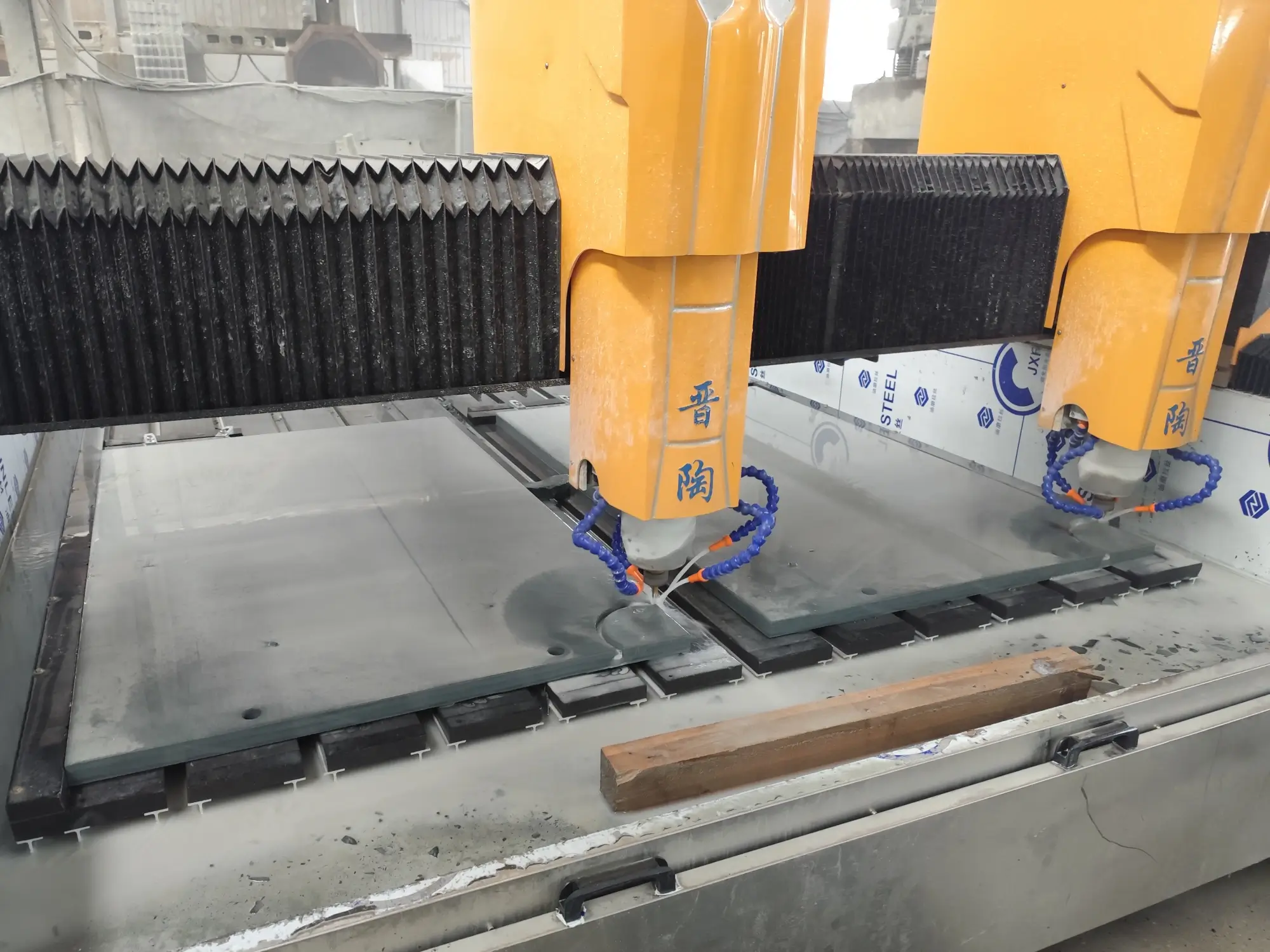
A raw slate panel and a finished billiard slate are different products. The specification that reaches the factory should distinguish between them and cover what machining turns one into the other:
- Pocket openings — position, radius and depth, machined to the table brand's geometry, not to a generic pool shape
- Bolt and screw holes — rail mounting positions, countersinks and diameters, matched to the frame hardware
- Joint faces — machined flat and square so multi-piece panels align without steps
- Edge treatment — chamfers and profiling that prevent edge chipping in handling and under the cushion
- Surface finish — the grinding stage that brings the playing surface into the flatness specification
CNC machining holds these features against the drawing rather than against hand layout, which is what keeps a hundredth set of a repeated order identical to the first. The controlling document is always the customer's CAD drawing — we machine to the drawing, and a drawing change is a production change, agreed before the machine runs. For the practical workflow of confirming a drawing before machining starts, see the buying guide.
What a Purchase Order Should Specify
A slate order that arrives as "12 ft snooker slate, 45 mm" is not yet a production document. A complete specification gives the factory everything it needs to cut, machine, inspect and pack without guessing — and without a round of clarification emails that costs a week. This is the checklist we work from:
- Table type and nominal size
- Playing area dimensions, stated as playing area
- Overall slate outline dimensions, stated as overall
- Thickness, with the configuration (pieces per set)
- Slate material and origin, if specified
- CAD drawing as the controlling document, with revision number
- Pocket dimensions and locations (pool, snooker, Chinese 8-ball, pyramid)
- Bolt-hole layout, diameters and countersinks
- Joint positions for multi-piece beds
- Edge treatment and surface finish requirements
- Flatness, thickness and dimensional tolerances, with measurement method
- Weight per piece and total, for packing and logistics planning
- Inspection plan — what is measured, recorded and reported before shipment
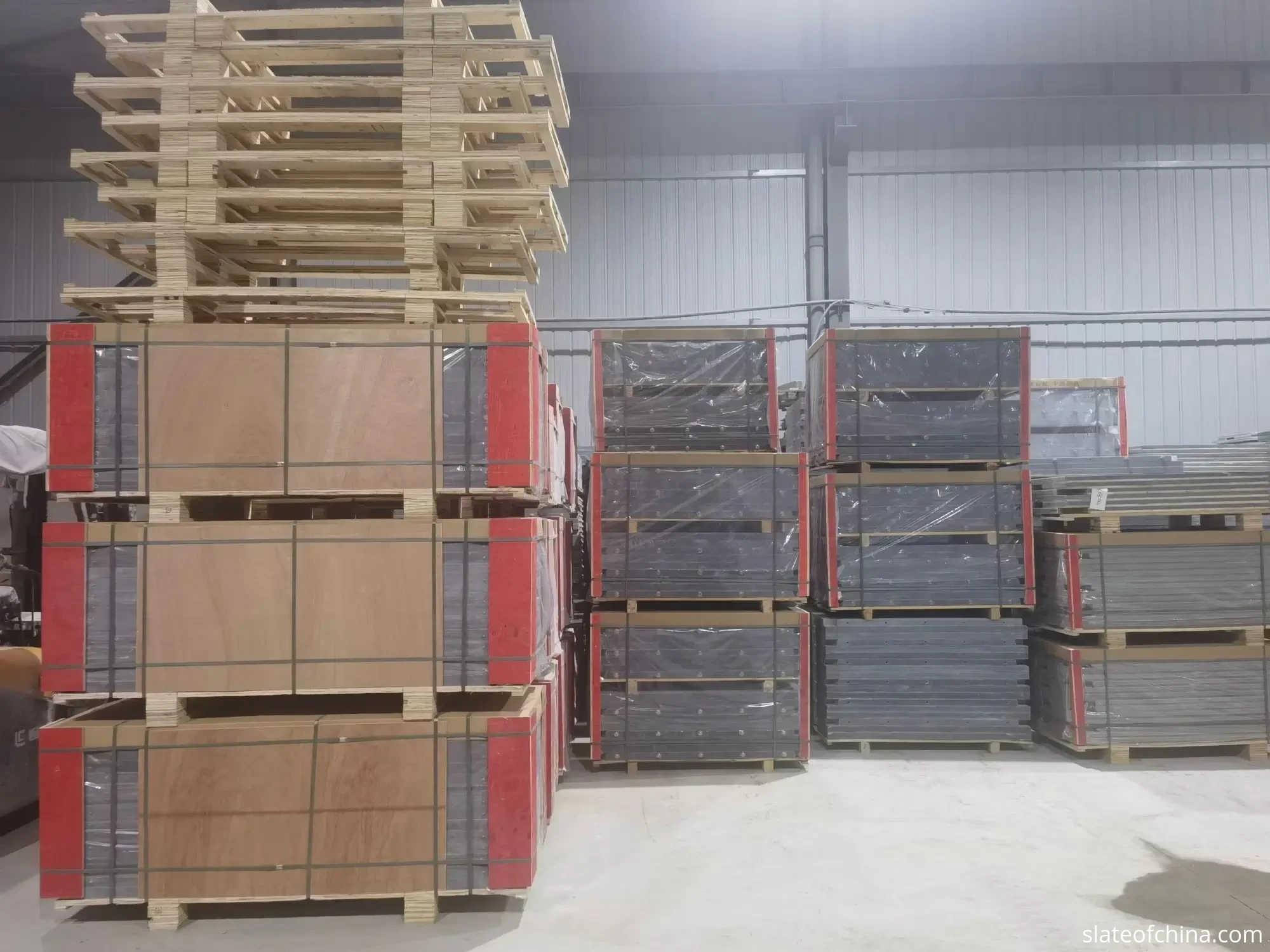
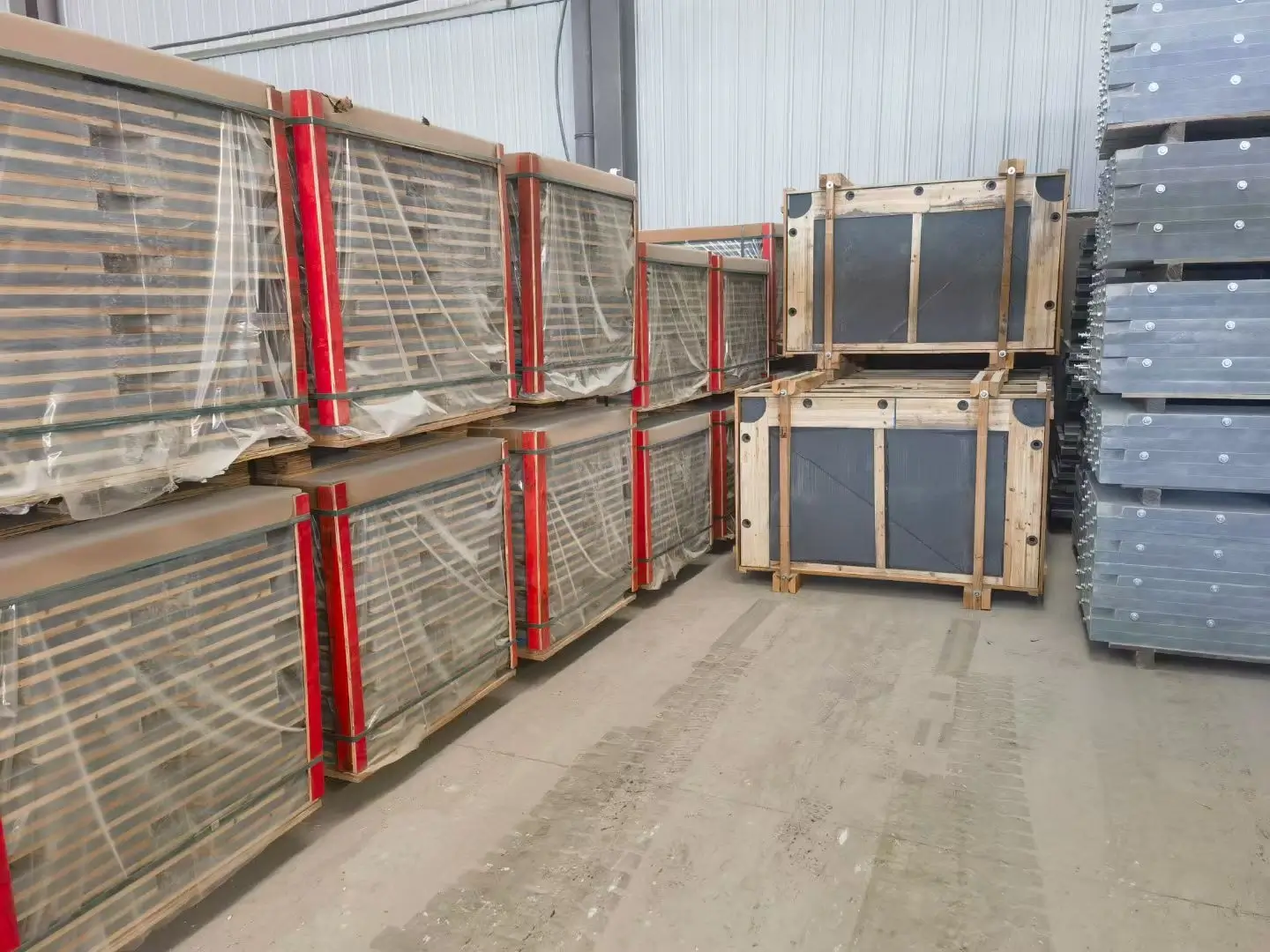
- Packing method — for billiard slate this means export wooden crates, not palletised bundles
- Quantity, destination port and any container-loading requirements
Not every order needs every line filled — a repeat order often references an approved drawing and changes only the quantity. But the first order for a new table design should read like the list above, because every line that is missing becomes a question, and every question becomes a delay.
What to Confirm Before Ordering
If you are comparing suppliers or writing the first order for a new table design, this ten-line table is the fastest way to check that every specification has been answered:
| Specification | What to Confirm |
|---|---|
| Slate size | Overall outline or playing area? |
| Thickness | Nominal or finished thickness? |
| Configuration | 1-piece, 3-piece or 5-piece? |
| Weight | Per piece or total set? |
| Flatness | What tolerance and measurement method? |
| Machining | CNC according to which drawing? |
| Holes | Position, diameter and countersink? |
| Joints | Joint location and machining tolerance? |
| Packing | Wooden crate and per-piece protection? |
| Drawing | Which revision controls production? |
Sample Specification Sheet
This is what the specification looks like assembled into one sheet — the format we return to buyers who ask us to check a specification before quoting:
| Item | Specification |
|---|---|
| Application | 12 ft snooker table |
| Material | Natural slate |
| Configuration | 5-piece |
| Overall outline | 3658 × 1867 mm |
| Playing area | per approved drawing |
| Thickness | 45 mm |
| Pocket machining | per drawing |
| Bolt holes | per drawing |
| Joint machining | included, flat and square |
| Surface finish | precision ground |
| Flatness / thickness tolerance | per agreed inspection plan |
| Weight per piece | confirmed after production, before packing |
| Packing | export wooden crate |
| Inspection | pre-shipment QC with measurement record |
A sheet in this form can be compared line by line between two suppliers — which is the point of a specification. Two quotes that both say "45 mm snooker slate" may differ in joint machining, in inspection scope or in packing standard, and the differences only surface when the specification is explicit.
Checklist for Comparing Slate Suppliers
Whether comparing two quotes or auditing an existing supplier, these eight questions separate a specification-driven factory from a price-first one:
- Are the quoted dimensions overall slate dimensions or playing-area dimensions?
- Is the quoted weight theoretical or based on actual production records?
- Is the thickness confirmed against the table drawing, or assumed from the nominal size?
- Are pocket and hole positions machined to a drawing — and can you machine to our drawing?
- What flatness tolerance can you commit to, and how is it measured and recorded?
- What does the inspection plan cover, and what documentation ships with the order?
- Is packing built to the panel dimensions — wooden crates for billiard slate, not pallets?
- Can you supply per-piece weights for logistics planning before the container is booked?
A supplier who answers these in specifics — with drawings, records and methods — is specifying. One who answers in adjectives is selling. For the full sourcing sequence from first inquiry to container loading, see Billiard Slate Buying Guide.
Billiard Slate Manufacturer in China
Slate of China produces natural billiard slate for pool, snooker, Chinese 8-ball, carom and Russian pyramid tables from its own production base in Jiujiang, Jiangxi — the slate belt that supplies table manufacturers in more than 30 countries. Production is organised around the customer's drawing: every order starts with a specification check and a drawing confirmation, and machining, inspection and packing all reference the same approved document.
For OEM and table-manufacturer supply, we work from CAD drawings, technical specification sheets, existing slate samples or approved production samples — whichever form the specification arrives in. Custom outlines, non-standard thicknesses and brand-specific pocket layouts are routine production, not exceptions. For an overview of factory capabilities, see Professional Billiard Slate Manufacturer in China, or browse billiard slate products.
Billiard Slate Specifications: FAQ
What is the standard thickness of pool table slate?
There is no single standard thickness — pool slate is commonly produced at 19 mm, 22 mm and 25 mm, and the right one depends on the table design. 7 ft tables commonly use 19 mm, 8 ft tables appear at 19–25 mm depending on the cabinet, and 9 ft commercial tables most commonly use 25 mm. The thickness should always be confirmed against the table manufacturer's drawing rather than chosen from a chart.
What are the dimensions of a 9 ft pool table slate?
A commonly produced 9 ft pool slate is a three-piece set with an overall outline of approximately 2718 × 1448 mm at 25 mm thickness, weighing roughly 250–270 kg in total. The playing area is smaller than the outline — around 2540 × 1270 mm — because the slate extends under the cushions. Different table brands use slightly different outlines, so the approved drawing takes priority.
How much does billiard slate weigh?
Weight follows from size and thickness at a slate density of about 2.7 t/m³. Typical finished weights: a 7 ft pool set around 130–140 kg, a 9 ft pool set around 250–270 kg, and a 12 ft snooker set at 45 mm roughly 800 kg. Finished weight falls slightly below the theoretical figure because pocket cut-outs, holes and machining remove material. Always ask for per-piece weight as well as the total, because per-piece weight determines handling and installation.
What size is a 12 ft snooker table slate?
A commonly produced 12 ft snooker slate is a five-piece set with an overall outline of approximately 3658 × 1867 mm. Thickness is most commonly 45 mm in our production experience, though 35 mm, 40 mm and 50 mm appear on different brand drawings. The set weighs approximately 800 kg at 45 mm, split into panels of roughly 160–170 kg each.
Is there an international standard for billiard slate dimensions?
No. Billiard slate dimensions are manufacturer-driven, not governed by a universal international standard. The same nominal table size can carry different slate outlines, joint positions and hole layouts from one table brand to the next. Any published dimension table — including this one — is a reference of commonly produced specifications, and the controlling document for any specific order is the table manufacturer's approved drawing.
What tolerance should billiard slate meet?
A defensible tolerance covers flatness over the whole playing surface, thickness variation within each panel, thickness consistency between panels of a multi-piece set, and dimensional accuracy including the diagonal — each paired with a stated measurement method. A tolerance number without a measurement method cannot be verified. Buyers should agree the tolerance and inspection plan with the manufacturer for each order and require measurement records before shipment.
What information should I send to a billiard slate manufacturer?
The fastest route to an accurate quotation is: table type, playing-area dimensions, overall slate outline, thickness, number of pieces per set, and the CAD drawing if available. Adding your tolerance and inspection requirements helps too. The manufacturer then confirms the specification against the drawing and returns a confirmed spec sheet before production — an order that arrives without these details becomes a round of clarification emails.
Can billiard slate be made to custom dimensions?
Yes. Custom outlines, non-standard thicknesses and brand-specific pocket layouts are routine production for table manufacturers and OEM buyers. Production starts from the supplier's CAD drawing or an approved sample, so custom dimensions are confirmed against the drawing before machining. There is no standard-size barrier to a custom billiard slate order — the drawing and quantity determine the specification and the quotation.
Related Reading
Check Your Specification Before Production
Send your table type, playing-area dimensions, overall slate outline, thickness, piece count and CAD drawing if available. We will review the specification against our production records and return a confirmed spec sheet and quotation based on your actual table design — not a nominal size guess.
Request a Specification Review & Quote
Prefer email? Write to us with your drawing attached — specifications are confirmed in one working day.