
Why Are Pool Tables Made with Slate?
Slate, wood and composites compared for the one job that matters: keeping ball roll true.
Every table I re-cloth gets the same small ritual before the new cloth goes on. I put a ball on the bare bed and roll it slowly — barely faster than it wants to go — straight down the centre line, then again along each cushion line. On a good bed the ball behaves like it is on rails. On a poor one it drifts, hesitates, or breaks off towards a corner as if it has seen something I haven't. Twenty-odd years of fitting, moving and re-clothing tables, and that slow roll has never once lied to me.
That test is more or less the whole answer to the question in the title — but let me earn it properly. Look at a pool table and you are mostly looking at wood: frame, rails, legs, pockets. The part that decides whether the table plays true is the one part you never see, the bed under the cloth. On any table that takes the game seriously, that bed is natural slate. Not because slate is traditional, and not because it is expensive. Because of the one job the bed has to do.
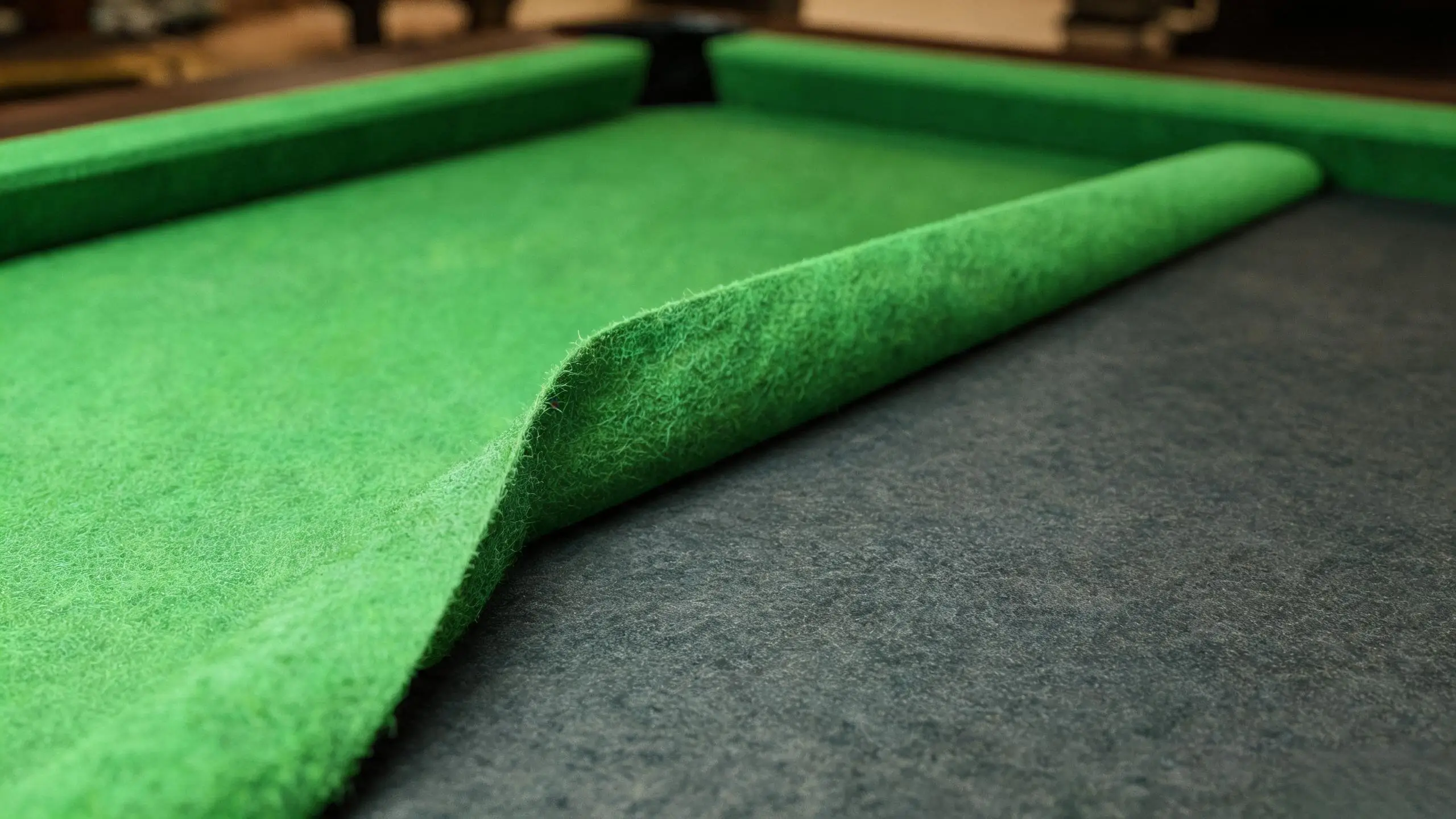
Short answer: the bed under the cloth has one job — stay flat, rigid and unmoved for decades. Of the three materials used for that job, natural slate offers the most dependable combination of precision, rigidity and long-term dimensional stability.
Slate: ground flat, far less sensitive to normal humidity than wood-based beds, stays where it was machined — the club and tournament standard for a century and a half.
Wood: honest in furniture-grade and light household tables, but it reads the weather and moves with the seasons.
MDF / composite: flat on delivery day, cheap and light — the right bed for occasional play, the wrong one for a decade of it.
The Slow Roll Is the Whole Argument
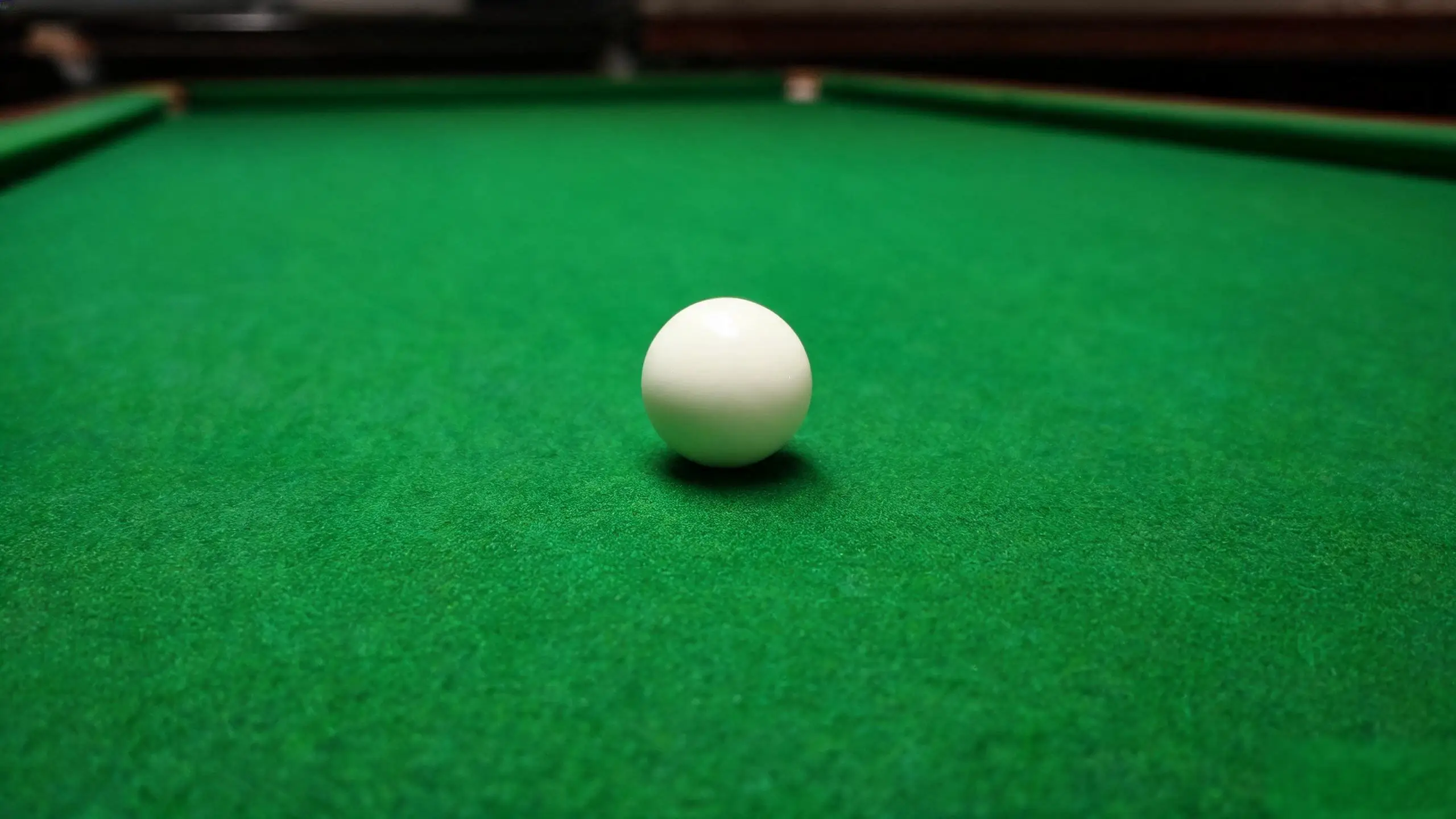
A cue ball weighs about 170 grams. Roll it gently from end to end and it spends three, four, sometimes five seconds on the bed — and every one of those seconds it is reporting on the surface beneath it. A ball rolling with pace forgives a table; a ball rolling slowly listens. It finds the dip nobody can see through the cloth, and it answers with a lazy, unmistakable drift.
That is the standard a bed is held to. Not "level when the fitter leaves", but "a slow ball rolled down the middle in year ten runs the line it ran in week one". The material under the cloth — natural slate, solid wood, or an MDF-type composite board — is not an aesthetic choice or a price point. It is the single decision that decides whether the table can keep that promise, and it is the reason the rest of the Billiard Slate Guide exists.
What the Bed Is Actually Employed to Do
Before the three candidates make their case, here is the job description. A pool table bed has six duties, and every one of them serves the ball:
- Stay flat. Not flat to the eye — flat where a straightedge and a feeler gauge say it is flat, and still flat tomorrow.
- Stay rigid. A nine-foot bed spans more than two and a half metres and has to carry itself across that span without sagging between frame supports.
- Ignore the weather. Games rooms are not laboratories. February is damp, July is dry, somebody leaves a window open. The bed's geometry should not know the difference.
- Sit still when hit. A ball driven hard into a cushion is a small collision. The mass in the bed is what stops the table flinching and giving the rebound away.
- Accept machining. Pocket cut-outs, bolt holes, joint faces — the bed has to take precise work, not just rough cutting.
- Outlast everything else. Cloth wears out, rubber ages, legs get chewed by vacuum cleaners. The bed is the one component that should never need replacing.
Now walk that list past the three materials actually used under pool table beds — natural slate, solid wood, and medium-density fibreboard composites — and you can see why the industry settled its answer more than a century and a half ago and has never seriously reopened the question.
Slate: The Candidate With the Track Record
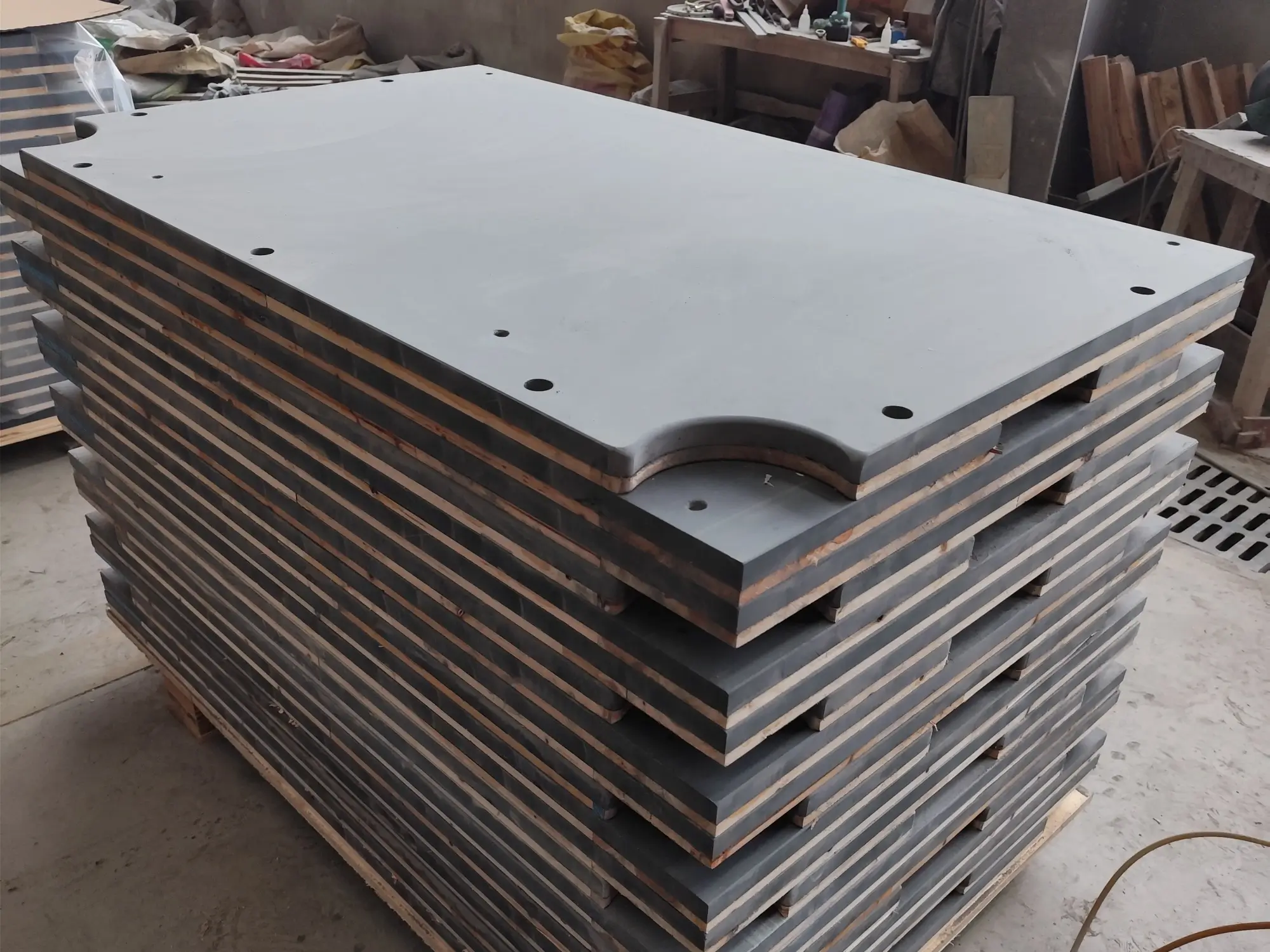
Natural slate is a fine-grained metamorphic rock — ancient clay compressed and recrystallised until it splits along true, flat planes. That is the raw gift. What makes it a table bed is what happens next in the workshop: blocks are selected for billiard duty, cut to slab, calibrated for thickness, then ground, and the finished face is checked with straightedges and feeler gauges rather than by eye. Pockets, bolt holes and joint edges are CNC-machined to the table factory's drawing, so what arrives is a component, not a piece of rock.
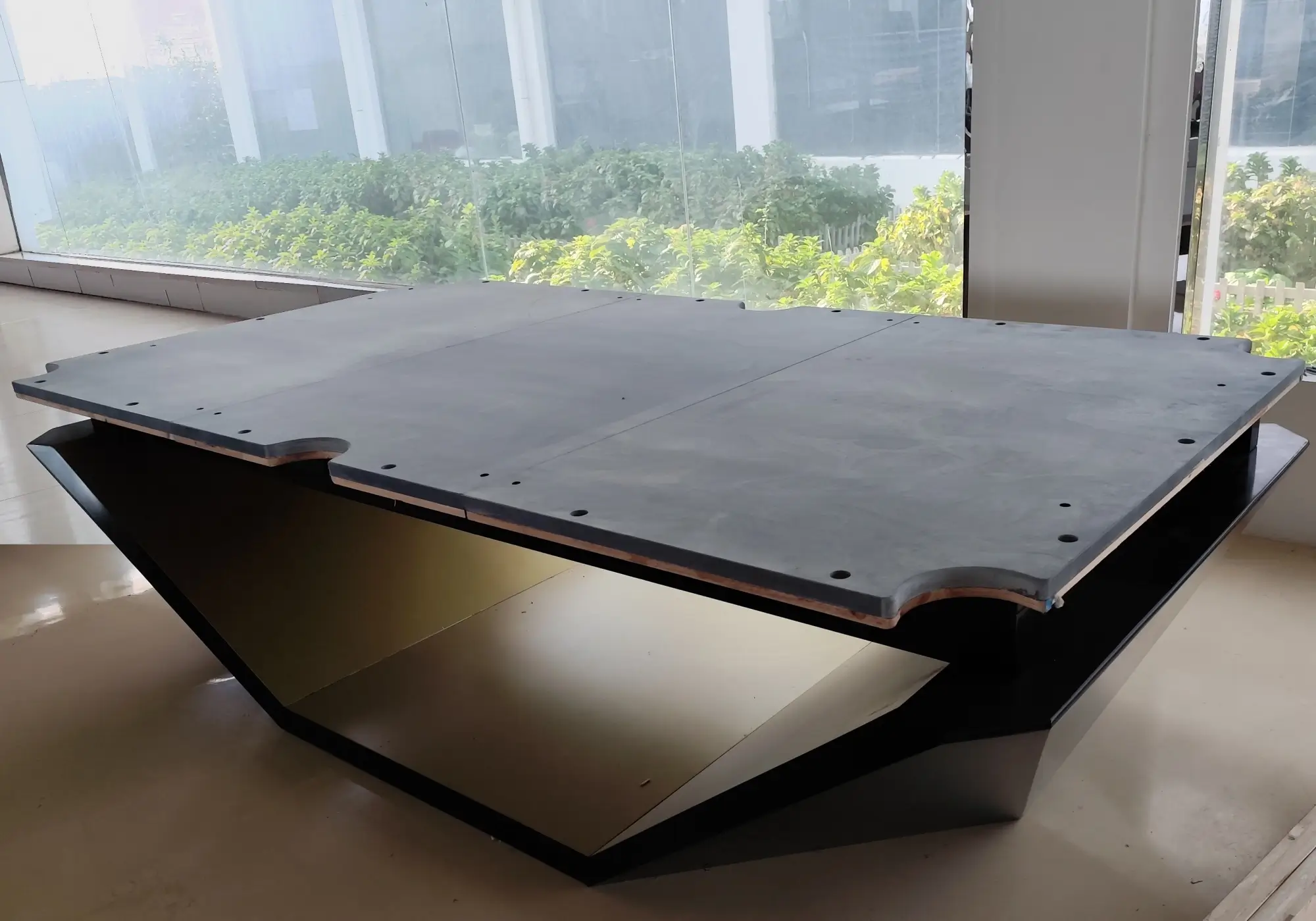
Then there is the physics. Slate runs around 2.7 tonnes per cubic metre — roughly four times the density of an MDF board and three to four times most timbers. Run the arithmetic on a typical nine-foot, three-piece bed at 25 mm and the finished set comes to roughly 250 to 270 kilograms of stone, usually three pieces of 70 to 90 kilograms each — the exact figure depends on the finished dimensions, the machining and the density of that particular slate. Two men and a plan per piece; never one man and optimism. And that mass is not a nuisance you tolerate for tradition's sake. It is the reason a hard shot into the cushion sounds like a full stop: the table does not flinch, because a quarter-tonne of stone has decided not to.
Its great advantage in this job is its indifference to the ordinary changes that make wood-based beds move. A stone bed has no grain direction to follow, and it exchanges far less moisture with the room than any board in this comparison — a damp month has plenty to say to wood and MDF, and very little to say to slate. The bed that left the factory flat is the bed that is still flat in the humid August of year eight, in a garage, in a basement, wherever the table ends up living. Beds were made of wood once — the earliest tables all were — but slate took the job over during the 1800s, and in the century and a half since, the trade has never seriously looked back. Snooker, which is even fussier about a true roll, went the same way, thicker.
If you want the material itself taken apart — what separates billiard slate from roofing slate cut from the same quarry, what the thicknesses from 19 to 45 mm actually mean — that lives on What Is Billiard Slate?. The deeper case for the material — flatness, stability, dimensional accuracy — is the business of Why Natural Slate Is Used for Billiard Tables, and the physics of the stone we cut sits on Why Jiujiang Slate Works for Billiard Tables. This page stays on the comparison.
The Same Quarry, Two Different Jobs
One distinction worth making while the candidates are on the bench, because the words "natural slate" get borrowed a lot. Roofing slate and billiard slate can come out of the same quarry — sometimes from neighbouring blocks — and neither can do the other's job. Roofing slate is split and graded for weather: it has to shed water, shrug off frost, and hold its lap on a roof for a century. Billiard slate is selected and machined for geometry: calibrated thickness, a ground face, CNC-cut pockets and bolt holes, and dimensional accuracy that has to survive decades under cloth. "Natural slate" tells you what the rock is; it does not tell you what the workshop did to it. The full breakdown of the difference lives on What Is Billiard Slate?, and the roof side of the same stone has its own reference in the Jiujiang Slate Guide.
Wood: The Bed That Reads the Weather
Let me be fair to wood, because most of the internet will not. The earliest billiard beds were wooden, and wooden beds still turn up today in light household tables and furniture-first designs, where the table is a handsome piece of a room before it is a game. For that job, wood is an honest material: warm, light, pleasant to work with, and perfectly capable of hosting a family game night.
The problem is simply what wood is: an organic material that exchanges moisture with the room it stands in. Its moisture content tracks the atmosphere. It swells across the grain in damp air and shrinks in dry air, and a bed is only as flat as its least cooperative board. A board that was dead flat in a dry workshop can crown or cup in a British games room over one wet winter. I have looked after a well-loved wooden-bed table that needed re-levelling twice a year, once either side of the damp months. Lovely table, conscientious owner — the wood simply kept its own calendar.
None of that makes a wooden bed a scam. It makes it a different contract: you are trading long-term trueness for weight, price and looks, and for a family table used a few times a month that trade can be entirely sensible. Where it stops being sensible is the moment someone expects tournament behaviour — a slow roll that runs the same line every December and every June. Wood cannot promise that. Nobody's wood can.
MDF: Flat on Delivery Day, Interesting by Year Three
Medium-density fibreboard is wood fibre and resin compressed under heat and pressure into a board of very uniform thickness. As a bed material it has real virtues: cheap, light, easy to machine, and — I mean this sincerely — flat on the day it is installed. An MDF bed needs no grinding; the press handed it uniformity for free, and a nine-foot bed in MDF weighs roughly 65 to 70 kilograms. You and a mate can carry it upstairs and set the table up in an afternoon. On assembly day, the slow roll will very likely run straight.
Here is the catch, and it is the whole catch: what the press gave, the room can take back. MDF absorbs moisture eagerly — a spilled drink, a damp basement, a garage with poor ventilation, one bad winter. Swollen edges, cupped faces, a gradual sag across an unsupported span that gets blamed on the frame. And unlike a slate bed, an MDF bed cannot be re-trued. You can shim a slate seam and re-level a stone bed for the price of an hour's labour; there is no tool that turns a swollen board back into a flat one. For an MDF bed, "repair" is a polite word for "replacement".
A word on shopping, because the marketing borrows where the material cannot. Composite beds are sold as "slate-effect", "Slatron", "PermaSlate", "slate-lined" — names that exist to dress a fibreboard in stone's reputation. The truth is always in the specification rather than the name: a genuine bed is written down as natural slate with a thickness and a piece count, and a weight that agrees. The full, honest comparison between slate and the composite boards sold as its substitutes deserves a page of its own — Natural Slate vs Alternative Playing Surfaces — so I will stop this paragraph where that comparison starts.
The Honest Score Sheet
Most people arrive at this question as "slate vs MDF pool table" or "slate vs wood pool table", as if one material has to win outright and the others are losers. The truer picture is three materials holding very different amounts of the same promise:
| Property | Natural slate | Solid wood bed | MDF / composite |
|---|---|---|---|
| Flat when new | Ground flat, verified by measurement | Depends on the millwork | Very uniform off the press |
| After a damp year | Essentially unchanged | Can crown, cup or twist with the season | Can swell and lose its plane |
| Rigidity over a nine-foot span | High — the stone carries itself | Needs a strong frame behind it | Needs full support underneath |
| Precision machining | Excellent — ground flat and CNC-machined to the drawing | Possible | Possible |
| Typical nine-foot bed weight | Around 250–270 kg | Far lighter | Around 65–70 kg |
| Can it be re-trued in service? | Re-shim and re-level; the stone holds | Possible, but the wood will move again | No — replacement is the repair |
| Where you normally meet it | Clubs, tournaments, long-term tables | Light household and furniture-grade tables | Kids' rooms, budget and portable tables |
| What the slow roll says in year five | "Same line as year one." | "Depends on the season." | "Depends on the room." |
Typical behaviour of well-made beds in each material. Bed weights are indicative — the finished set depends on the dimensions, the machining and the slate density — and construction quality and room conditions vary; a poorly built slate table is not automatically better than a well-built light table, as the next section is honest enough to admit.
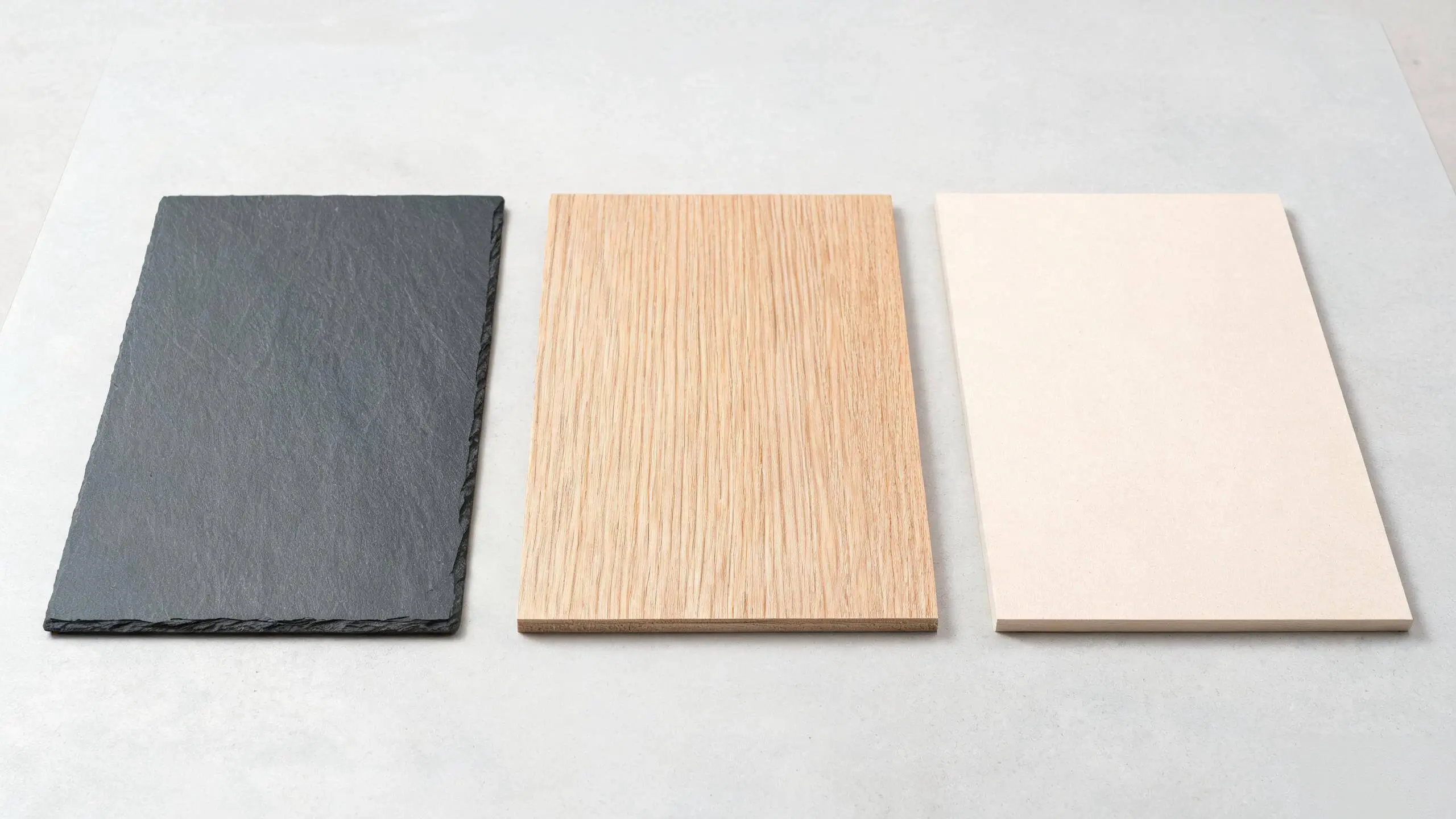
The row that decides it is the last one. On delivery day, all three beds can pass a spirit level — delivery day is simply the wrong day to judge a bed. A bed's job is not to be flat once; it is to stay flat while nobody is watching. Year five is where the materials stop pretending. That is why a slate table, a wooden table and an MDF table can all be honest purchases, and still not be substitutes for one another.
Does Slate Actually Make Balls Roll Better?
Let me kill a myth on the way past: slate does not make balls roll better. It does not make them faster, and it is not kinder to your aiming errors. What it buys is repeatability — a properly manufactured and installed slate bed gives the ball a stable foundation, so the ball rolls the same line today that it rolled last month, because the surface under the cloth has not moved since the fitter left.
Picture two tables that both pass a level on installation day. Under one cloth is a rigid stone slab that barely notices the weather in the room. Under the other is a board quietly doing what organic and engineered boards do: drinking, exhaling, relaxing across its span. Six months later the two tables still look identical, and the ball knows the difference long before your eye does. A straight, slow pot that drifts a centimetre off line over two metres of travel is a missed pot, and it will be blamed on the player.
Every fitter has taken the phone call that goes with this. "The table's started rolling left." The bubble says the table is level — and it is; the legs are fine, the frame is fine. What moved is the bed under the cloth, and the room, not the table, moved it. On a composite bed that phone call ends with a new bed. On a slate bed it almost always ends with an hour of shimming and a cup of tea, because the stone itself never moved. When the bed is true, every other fault a table can develop — cloth, cushions, frame, installation — is fixable. When the bed is wrong, everything else is rearranging furniture in a house with a cracked foundation.
One honesty note, because this trade sees cheap tables and good ones: the bed is the biggest single vote in how a table plays, not the only vote. Poorly ground slate, badly machined joints or a wretched frame can make a "slate table" play worse than a well-built lighter table. The bed sets the ceiling; the build decides whether the table ever reaches it. How flat a bed needs to be — and how flatness is actually measured — is covered properly on Jiujiang Slate Flatness and Dimensional Stability and in the factory's own billiard slate quality and test data.
Thickness, Pieces and the Weight Nobody Warns You About
None of this means every slate bed is the same slab. Three practical things follow from the material, and buyers meet all three at the point of purchase.
Thickness. Pool table slate commonly runs 19, 22 or 25 mm, with professional pool tables usually at the thicker end of that band; snooker, with a bigger span and fussier standards, goes up to 45 mm. The number follows the table's structural design, not its prestige — a thicker bed on a light frame is simply heavier, not better. The full logic of thickness has its own page in the guide: Pool Table Slate Thickness Guide.
Piece count. Most pool beds are built as three pieces — one-piece beds exist for smaller tables that will never be moved, and large snooker beds often go to five. Three-piece slate is the configuration that made stone beds shippable at all: each piece can be handled, crated and carried, then the set is aligned and levelled as one surface on the frame. The trade-off is two joints to get right, which is engineering rather than luck — compared properly in One-Piece vs Three-Piece Pool Table Slate.
Weight. Here the physics sends its bill, and it is worth reading before the lorry arrives. Two hundred and fifty-odd kilograms of bed means stairs need planning, floors need asking about, and friends need bribing. For manufacturers and importers, the same number drives the freight quotation, the container plan and the size of the unloading crew at the other end — crates of stone are handled like stone, not like furniture. That planning has a page of its own in the container loading guide. The unglamorous truth: the property that keeps the ball roll true is the same property that costs the freight.
How to Tell What Is Under the Cloth Before You Buy
Since the bed is invisible and the marketing is creative, here is the fitter's method — four moves, no detective work, just reading what is already written:
- Read the specification, not the brochure. A genuine slate bed is written down as material, thickness and piece count: "natural slate bed, 25 mm, three-piece". "Slate-effect", "Slatron" and "slate-lined" are composite beds wearing stone's coat. The substitutes have their own names for a reason.
- Use the shipping weight as an X-ray. Look up the packed weight or the assembled weight in the manufacturer's documentation. If a complete nine-foot table is declared at 90 to 120 kilograms, there is no quarter-tonne of stone inside it. Numbers do not flatter; adjectives do.
- Ask for the bed spec in writing before money moves. "What exactly is the bed — material, thickness, pieces?" A seller of a genuine slate table answers in one sentence and enjoys doing it. A seller who answers with the word "premium" has answered a different question.
- Check where the model actually works. Tables in commercial halls and club leagues publish their bed specifications, because operators ask for them. A model listed with "three-piece natural slate, one-inch" and a weight to match is not guessing — and neither are you.
That is the whole trick: four numbers — material, thickness, pieces, weight — and a refusal to accept adjectives in their place.
If You Build the Tables
Most of this guide is written for the people who make and import tables, so a last word aimed their way, and then I will step aside. The bed is the one component your customer will never see and will feel on every shot of the table's life. Your frame can be over-engineered, your cushions tournament-grade, your finish flawless — if the bed does not hold its plane, the table is a beautiful advertisement for somebody else's table. The specification that decides it is short: ground flatness and how it is measured, matched sets with machined joint faces, CNC work to your drawing, and honest piece weights and totals so the freight plan is not fiction.
The full sourcing route lives in the Billiard Slate Buying Guide; the inspection numbers a supplier should be able to show you — not claim, show — are laid out on the quality and test data page. Ask every supplier you are comparing for those two pages' worth of answers, and let the paperwork argue. The beds themselves — sizes, thicknesses, machined and matched sets — sit in the billiard slate catalogue, cut and inspected in Jiujiang and shipped to table builders in 30-plus countries.
Frequently Asked Questions
Why do pool tables use slate instead of wood?
Because the bed has to stay flat and stable for decades, and slate is the material that can be ground flat and then holds that plane: it does not swell, shrink or warp with humidity the way wood does. A wooden bed can be built flat, but it keeps reading the weather for the rest of its life.
Is an MDF pool table a waste of money?
Not necessarily. For occasional family play in a dry, stable room, an MDF bed is a reasonable buy — it starts flat, it is light and it is cheap. It becomes the wrong choice when the table is expected to hold a true roll for years, or when the room is damp, because a swollen MDF bed cannot practically be re-trued.
How heavy is a slate pool table?
For a typical nine-foot three-piece bed at 25 mm, the finished slate set weighs roughly 250–270 kg in three pieces of about 70–90 kg each — the exact figure depends on the finished dimensions, machining and slate density. A complete table usually lands well over 300 kg depending on the frame. A "slate" table declared under about 150 kg in total is not carrying a full stone bed.
How can I tell if a pool table really has a slate bed?
Read the written specification — material, thickness and piece count ("natural slate, 25 mm, three-piece") — and check the declared packed or assembled weight. Terms like "slate-effect", "Slatron" or "slate-lined" describe composite boards, not natural slate.
Why does pool table slate come in three pieces?
Because a one-piece bed of that size would be too heavy and awkward to ship, carry and install. Three pieces make the bed practical to transport and level on site; the joints are machined to match and the set is levelled as one surface, so the ball never notices the seam.
Is thicker pool table slate always better?
No. Thickness has to match the table's span and frame design. A thicker bed is heavier and costlier to ship and install, and on a light frame it adds nothing. The right thickness is the one the table was engineered for — usually 25 mm on a professional nine-foot pool table.
Can a warped or swollen table bed be repaired?
A slate bed rarely warps — when a slate table plays unevenly, the fix is normally re-shimming and re-levelling, not replacing the stone. A wood or MDF bed that has warped or swollen generally cannot be re-trued in practice and is replaced instead.
Related Billiard Slate Guides
The Bed Decides How the Table Is Judged
If you build or import tables, send your table type, finished bed dimensions, thickness, piece count, machining drawing and destination. We cut and CNC-machine slate beds to your drawing, check each set before packing, and ship from Jiujiang to table builders in 30+ countries. If you already hold your own bed specification, send that instead — we build to yours, not ours.