
Documents for Importing Slate from China
Invoice, packing list, bill of lading, test certificates — the paperwork pack behind a shipment of natural slate from China.
Every container that leaves our factory in Jiujiang makes two journeys. The first is physical — slate loaded onto a truck, driven forty minutes to the port, then shipped across the ocean to your nearest terminal. The second is paper.
In our experience, paperwork problems are rarely caused by one missing PDF. More often, the problem is that important information does not match across documents. A consignee name spelled differently on two documents. A gross weight that does not agree between the packing list and the bill of lading. A buyer who assumed their country did not require a certificate of origin when it did.
The stone is the easy part. The paperwork is where you need to be careful.
This guide walks through the documents that accompany a typical slate shipment from China — what each one does, who prepares it, and what you should check before the container leaves the factory. It covers both roofing slate and billiard slate, because the document pack is similar but the focus is different.
Quick answer: The core document set for most international slate shipments includes the Commercial Invoice (declares the sale), Packing List (describes the cargo), Bill of Lading (transport and title document), Certificate of Origin (when required), Test Reports or Certificates (when applicable), and wood-packing compliance documents (when wooden crates are used). Not every shipment needs every document — the exact set depends on your country, your product, your Incoterms, and what your customs broker requires. The most important habit: check the documents before the vessel sails, not after it arrives.
The Core Document Set
A typical container shipment of slate from China involves the following documents. The list looks long, but most of them are prepared by the exporter — your job as a buyer is to know what to expect and what to check.
| Document | Main purpose | Usually prepared by |
|---|---|---|
| Commercial Invoice | Declares commercial value and terms of sale | Exporter |
| Packing List | Shows packages, quantities, dimensions and weights | Exporter |
| Bill of Lading | Transport document issued by the carrier | Shipping line or forwarder |
| Certificate of Origin | Shows the country of origin | Exporter or authorised body |
| Test Report / Technical Documentation | Provides technical evidence for the product | Testing laboratory or supplier |
| Customs Declaration Data | Supports export and import clearance | Exporter or customs broker |
| Insurance Document | Evidence of cargo insurance when arranged | Insurer, seller or buyer |
| Wood-Packing Compliance | May apply when wood packaging is used | Supplier or authorised provider |
Not every shipment requires every document. A buyer purchasing under FOB terms may arrange transport and insurance independently. A shipment under CIF may involve different responsibilities. The safest approach is to agree on the document set before production begins, not after the container is loaded.
Commercial Invoice — What Was Actually Sold
The Commercial Invoice is the document that declares the transaction between seller and buyer. Customs uses it to assess duty. Banks use it if payment is linked to documents. Your accountant uses it for the import record.
For a slate shipment, the invoice normally contains:
- Seller and buyer legal names and addresses
- Invoice number and date
- Product description
- Quantity, unit price, and total value
- Currency and trade term (FOB, CFR, CIF)
- Port of loading and destination
- HS code, where appropriate
- Country of origin
- Payment terms
The product description matters more than people think. A roofing slate invoice should describe the goods specifically — for example, "Natural roofing slate, blue-black, 500 × 250 × 6–8 mm." A billiard slate invoice should identify the table-bed dimensions, thickness, and number of pieces.
A description that just says "stone" tells customs nothing and can slow down clearance. But the description should not invent technical claims either. The invoice should describe what was actually sold — nothing more, nothing less.
Packing List — What Is in the Container
The Packing List is particularly important for slate because natural stone is heavy and shipments may contain many crates. A packing list typically includes:
- Number of crates or packages
- Package numbers
- Product description
- Quantity per package
- Net weight and gross weight per package
- Total net weight and total gross weight
- Package dimensions, where relevant
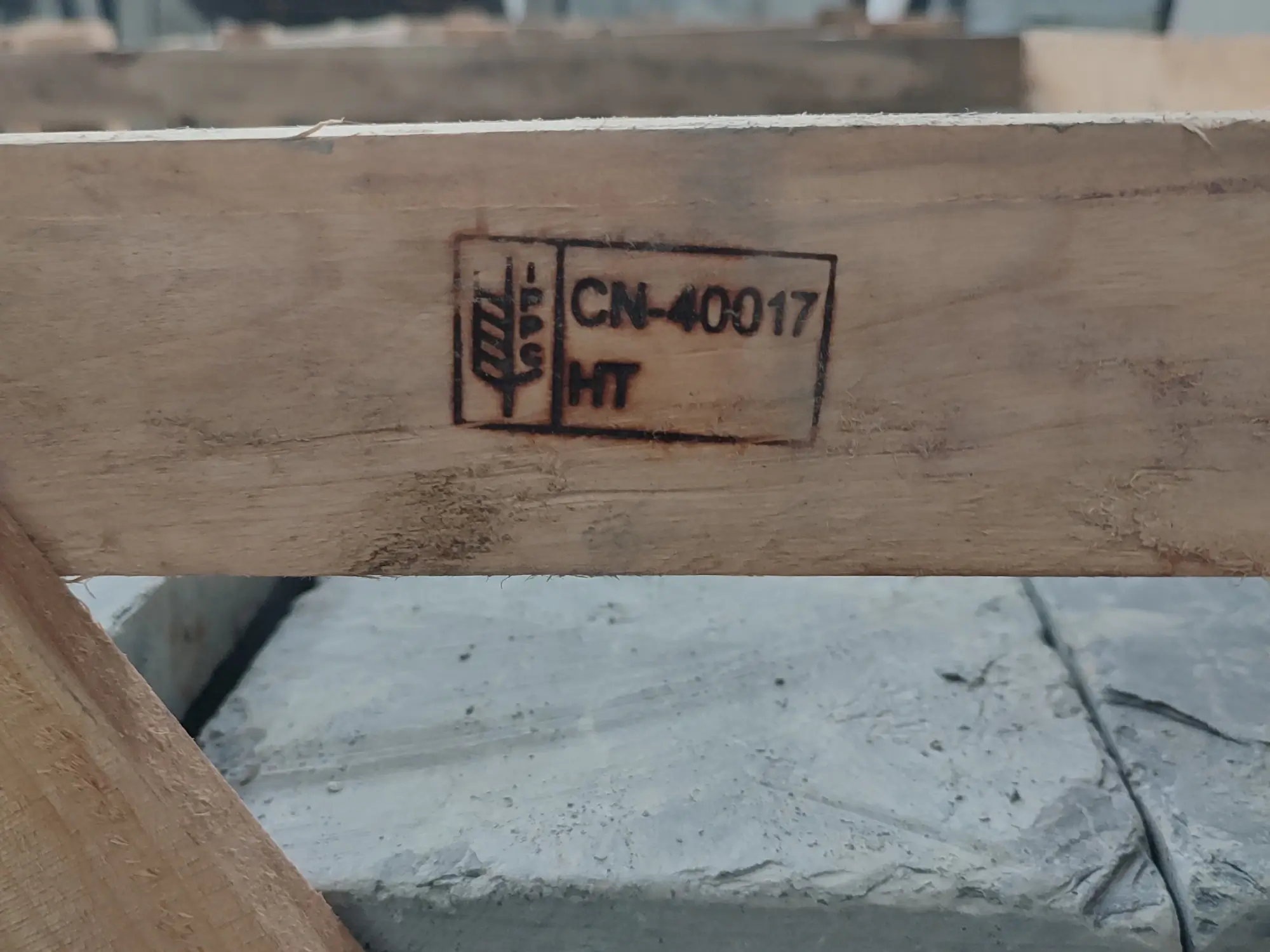
Slate is dense, so the weights on the packing list deserve particular attention. If the declared gross weight looks unusually low for the quantity and thickness ordered, ask the supplier to verify the figures before the container leaves. The exact loading weight depends on thickness, packing method, crate count, and the container's permitted payload — for a detailed breakdown of how much slate fits in a container and what it weighs, see our guide on containers, freight and delivery from Jiujiang.
Before the container leaves the factory, the packing list should form a coherent set with the commercial invoice and the bill of lading. Package count, quantity, net weight, and gross weight should all tell the same story. For large stone shipments, the packing list becomes especially useful when the buyer, forwarder, customs broker, or warehouse needs to identify individual packages.
Bill of Lading — What to Check Before Sailing
The Bill of Lading (B/L) is the key transport document for an ocean shipment. It records the shipper, consignee, notify party, vessel, voyage, ports of loading and discharge, container number, seal number, cargo description, package count, and gross weight.

For a buyer, the most important thing is to check the B/L before it is finalised. Correcting a bill of lading after the vessel has sailed is possible, but it costs time and sometimes money. If a letter of credit is involved, the correction process can be more complex.
The information on the B/L should be consistent with the commercial documents. Seller and shipper names, buyer and consignee names, ports, container number, seal number, cargo description, package count, and gross weight should all be cross-checked.
Not every field needs to be identical across every document — different documents serve different purposes. But significant inconsistencies should be caught and resolved before the vessel departs. The exact form of the B/L depends on the carrier and the type of bill issued. Some bills can be issued as electronic documents or sea waybills; others may still involve original paper documents.
Certificate of Origin — When and Which Type
A Certificate of Origin (COO) identifies the country of origin of the goods. For slate exported from China, this may be relevant when the destination country's customs authority requires proof of origin, or when the buyer needs origin documentation for tariff or commercial purposes.
Not every country requires a certificate of origin for every shipment. And not every country uses the same certificate format. Some destinations accept a standard certificate of origin. Others may require a specific preferential-origin document if a trade agreement applies.
The practical approach is to ask your customs broker two questions before production begins: Do I need a certificate of origin for this shipment? If yes, which type is required? Then confirm the requirement with the supplier so the document can be prepared in time. Do not assume that every country uses exactly the same certificate — or that the requirement is the same for every product.
Test Reports vs. Product Certificates — Know the Difference
These terms are sometimes used loosely in the stone trade, but they should not be treated as interchangeable. A test report records the results obtained from testing a specific sample under specified conditions. A certificate may serve a different purpose and may involve a particular conformity or certification procedure.
For a buyer, the question to ask is: what does this document actually prove?
A laboratory report showing a water absorption result does not necessarily prove that every future shipment will have the same value. A general company certificate does not necessarily prove compliance of a particular batch of slate with a project specification.
For roofing slate destined for European markets, buyers may encounter requirements related to EN 12326. For American markets, ASTM C406 may be relevant. The exact requirements for a particular project should be confirmed with the buyer's technical adviser, architect, or relevant authority. For more on reading a test report, see our guide on how to read a roofing slate test report.
A report from one slate deposit should not automatically be presented as proof that every product from the factory has identical performance. Good procurement practice is to connect technical documents to the actual product being purchased — ideally with a batch number that links the report to the shipment. Our test results page shows the reports we use for our own slate, with the relevant standards identified.
Roofing Slate vs. Billiard Slate — Same Folder, Different Focus
The document pack for a roofing slate shipment and a billiard slate shipment shares the same core: commercial invoice, packing list, bill of lading, and certificate of origin when required. But the technical documents and the level of detail in the product description are different.
For roofing slate, the technical focus is on performance: water absorption, freeze-thaw resistance, flexural strength, density, and dimensional conformity. A buyer may need test reports to support a project specification, and the invoice should describe the slate by size, thickness, and colour. For a professional roofing project, technical approval should happen before production whenever possible — do not wait until customs clearance to ask whether the slate meets the project specification.
For billiard slate, the technical focus is on geometry: table size, number of pieces per set, playing-area dimensions, overall dimensions, slate thickness, machining status, and hole locations where applicable. A three-piece billiard slate set should not be described only as "stone slabs" if the buyer has purchased a precisely machined table-bed set. The commercial documents should reflect the actual product being shipped.
This distinction matters because customs, brokers, and project managers all read the documents. A vague description creates questions. A precise description answers them.
Wood Packaging and Customs Classification
Two areas that cause avoidable problems: wood packaging compliance and customs classification.
Wood packaging. Slate is often packed in wooden crates, and when wood packaging is used for international trade, the destination country may require compliance with international phytosanitary standards such as ISPM 15. The crate should bear the appropriate IPPC treatment mark.
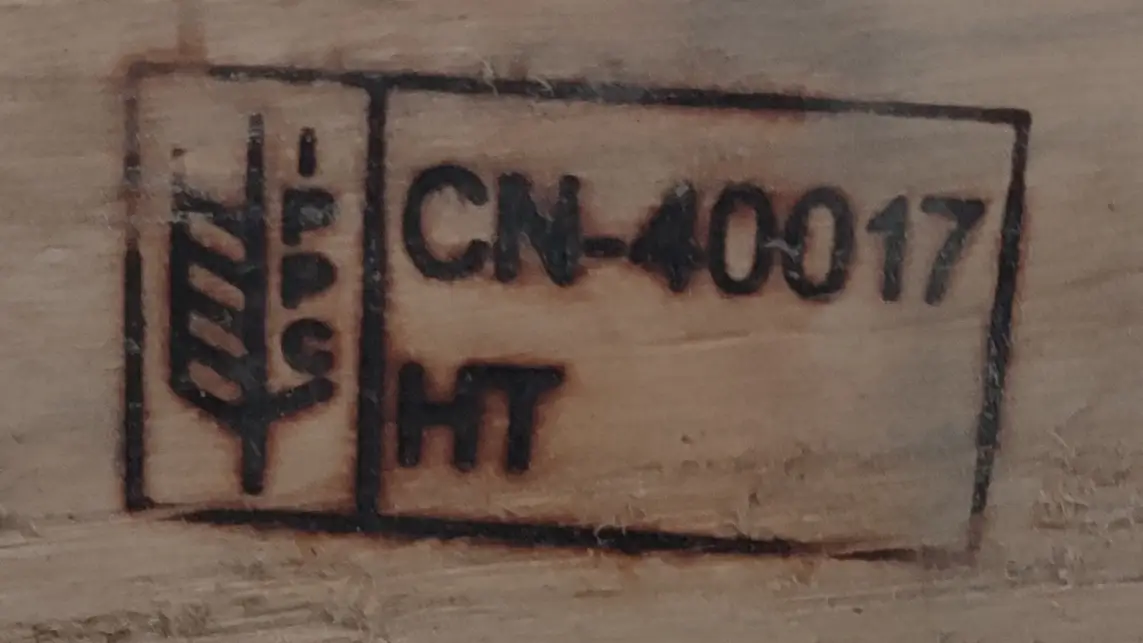
The exact requirements and documentary evidence should be confirmed for your destination country. This is not something to discover after the container arrives — if the wood packaging does not meet the destination country's requirements, the shipment may face inspection, treatment, repacking or other remedial measures at the destination, all of which can cost time and money.
Customs classification (HS code). Natural slate products can have different classifications depending on their form, processing, and intended use. A roughly shaped stone product and a processed roofing product may not be classified the same way. Do not simply copy an HS code from another supplier without checking whether the goods are actually comparable.
Before a first shipment, ask your customs broker to confirm which HS classification applies to your specific slate product in your country. The exporter in China and the importer's customs broker may also need to coordinate the description and classification used in the export and import declarations. The final classification is a customs matter, not something that should be guessed from a supplier's website.
The Consistency Cross-Check — Before the Vessel Sails
A buyer may receive ten different PDFs and still have a paperwork problem if the information does not match.
Imagine a shipment where the invoice says 1,450 m², the packing list says 1,420 m², and the bill of lading says 1,400 m². Each difference may have an explanation — perhaps the packing list counts net usable area while the B/L counts total loaded area. But the buyer should not discover these discrepancies after the vessel has sailed.
A simple cross-check before shipment can prevent most problems. Compare the following across the documents that apply:
- Buyer and seller names
- Product description
- Quantity
- Package count
- Net weight and gross weight
- Container number and seal number
- Port of loading and port of discharge
- Invoice value and trade term
- Country of origin
Do not aim for identical wording on every document. Aim for consistent facts. An invoice may say "natural roofing slate," a packing list may say "blue-black slate 500×250×6–8 mm," and a bill of lading may say "natural stone / roofing slate" — these are not necessarily contradictory. What matters is that the facts are consistent and can be reasonably traced to the same shipment.
Not every document will contain every item. The purpose is to identify important inconsistencies across the documents that do apply — and resolve them while the container is still at the factory. For roofing-specific document checks, see our roofing slate import documents guide, which covers the roofing-specific document set and the key quantity and weight checks in more detail.
This is the single most valuable habit in slate import documentation. It takes ten minutes. It can save days of delay and hundreds of dollars in correction fees.
Ask for Drafts — The Habit That Saves Money
One of the simplest ways to reduce documentation problems is to review drafts before the vessel sails. You can ask the supplier to send the draft commercial invoice, packing list, and bill of lading information for checking before final issuance.
This gives you the opportunity to catch and correct:
- Company names and addresses
- Product descriptions
- Quantities and weights
- Ports and consignee information
- Container and seal numbers
Once the vessel has sailed and documents have been finalised, corrections may become more complicated and may involve additional costs. In some cases, a corrected bill of lading requires the carrier's cooperation and a fee. In others, a letter of credit may reject documents with discrepancies — even minor ones.
The best time to discuss documents is before production, not after loading. When you order slate from China, the document requirements should be discussed alongside product specifications, quantity, packaging, Incoterms, and payment terms. A simple question at the beginning — "What documents will I need for customs clearance in my country, and can you provide them?" — can prevent a difficult problem later.
The supplier can then confirm what it normally provides, while the buyer's customs broker confirms what the destination country actually requires. For the full sourcing process from first inquiry to loading, see our guide on how to source roofing slate from China.
A Practical Document Checklist for Slate Buyers
Before a container leaves China, use this checklist:
Commercial
- Seller's legal name is correct
- Buyer's legal name is correct
- Product description is specific
- Quantity, price, and currency are correct
- Incoterm is correct
Packing
- Package count is correct
- Net weight is reasonable for the product
- Gross weight is reasonable for the container
- Packing method is recorded
Shipping
- Container number is recorded
- Seal number is recorded
- Port of loading is correct
- Port of discharge is correct
- Consignee information matches the order
- Bill of lading has been reviewed in draft
Technical
- Required test reports are available
- Test standard is identified
- Test sample is relevant to the purchased product
- Product specification matches the approved sample
Customs and destination
- HS classification has been confirmed with your broker
- Certificate of origin requirement has been checked
- Wood packaging requirements have been confirmed
- Any preferential-origin documentation has been confirmed, if applicable
For a first shipment, send the complete document pack to your customs broker before the vessel sails. Your broker may identify a destination-specific requirement that a supplier in China would not know. For what to check physically before the container is sealed, see our pre-shipment inspection checklist. For how the container is packed and loaded at our factory, see how Jiujiang slate is packed and shipped.

Good slate sourcing is not only about buying the right stone. It is about making sure the right stone arrives with the right paperwork. For shipping costs, container choice, and delivery timelines from Jiujiang, see our guide on containers, freight and delivery from Jiujiang. For the full range of roofing slate products we export, browse our catalogue.
Frequently Asked Questions
Do I need original paper documents, or are electronic copies enough?
This depends on the destination country, the carrier, the payment method, and the document type. Some bills of lading can be issued as electronic documents or sea waybills. Some transactions still involve original paper documents. Letters of credit often create specific documentary requirements. Agree in advance which documents need originals, which scanned copies are sufficient, and whether the bank has additional requirements.
What if the product description on the invoice does not match what I ordered?
Ask the supplier to correct the invoice before it is finalised. A vague or incorrect product description can slow down customs clearance and create confusion about what was actually shipped. The description should be specific enough to identify the goods — for example, "natural roofing slate, blue-black, 500 × 250 × 6–8 mm" rather than simply "stone."
Can I use the HS code the supplier gives me?
The supplier's HS code can be a useful reference, but it should not be copied without checking whether the goods are actually comparable and whether the classification applies in your country. Natural slate products can have different classifications depending on form, processing, and intended use. Ask your customs broker to confirm the correct classification for your specific product.
What is a telex release, and when would I need one?
A telex release allows the carrier to release the cargo to the consignee at the destination port without requiring the original paper bill of lading to be presented. This can save time when the original documents would not arrive before the cargo. Whether a telex release is available depends on the carrier and the payment arrangement. If your transaction involves a letter of credit, a telex release may not be suitable — confirm with your bank and forwarder.
Should I ask for draft documents before the ship sails?
Yes. Reviewing draft documents before final issuance is the single most effective way to catch errors. Ask the supplier to send the draft commercial invoice, packing list, and bill of lading information for checking. Corrections after the vessel has sailed may involve carrier fees and additional time.
Does every country require a certificate of origin for slate?
No. The requirement varies by destination country and by whether a trade agreement applies. Some countries require a standard certificate of origin; others may require a specific preferential-origin document. Ask your customs broker whether a certificate of origin is needed for your shipment and which type is required, then confirm with the supplier before production begins.
What documents should I send to my customs broker before the shipment arrives?
Usually send the commercial invoice, packing list, bill of lading or shipping details, certificate of origin if applicable, and any product-specific certificates or test documents requested by your broker. Your broker can then confirm whether anything else is required for your particular shipment and destination.
Related Reading
Planning your first slate shipment from China?
If you are preparing your first order, confirm your document requirements with your customs broker or freight forwarder before production begins. We can also confirm which standard export documents we normally provide for Jiujiang slate shipments.