
Jiujiang Slate vs Spanish Slate
Both Jiujiang and Spanish slate can outlast the building under them. The real question is not which country makes "better" stone — it is which specific quarry, specification and test report fits your project. Spanish slate wins on freight proximity and heritage-grey colour matching; Jiujiang wins on container economics for large orders and specification flexibility. Compare the slate, not the flag.
| Factor | Jiujiang Slate | Spanish Slate |
|---|---|---|
| Main producing region | Jiangxi, China | Galicia, Spain |
| Typical roofing colours | Black, dark grey, grey-green, green | Black, dark grey, blue-grey |
| Market position | Competitive factory export pricing | Established European premium supply |
| Supply model | Factory production, container-scale | Mature quarry and processing industry |
| Delivery to UK/Europe | 4–6 weeks sea freight + 2–4 weeks production | 3–5 days by truck for stocked items |
| Custom specifications | Flexible factory production | Available, depends on supplier |
| Key strength | Container economics, spec flexibility | Heritage reputation, proximity |
| What to verify | EN 12326 test report, physical samples | EN 12326 test report, physical samples |
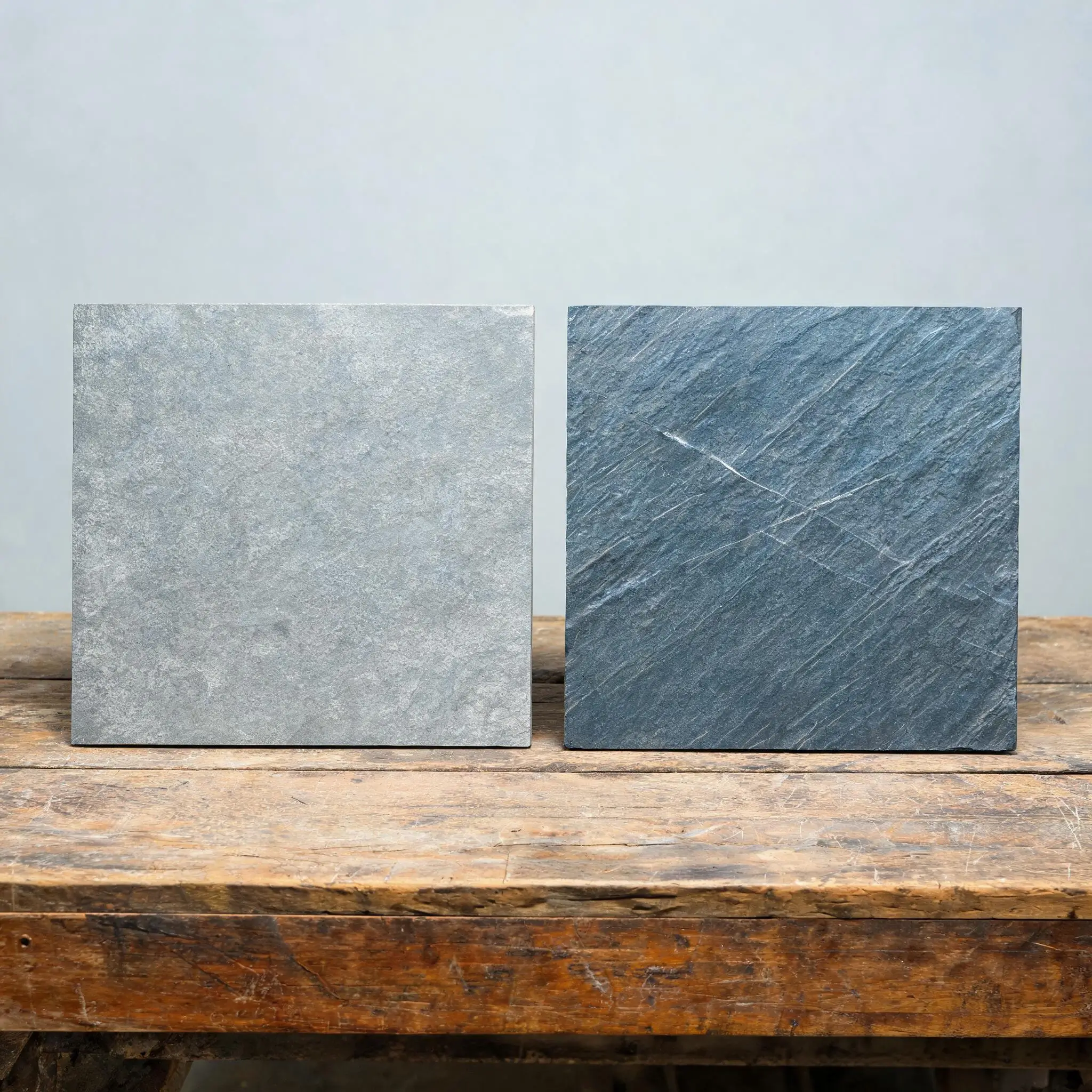
Where Spanish Slate Comes From
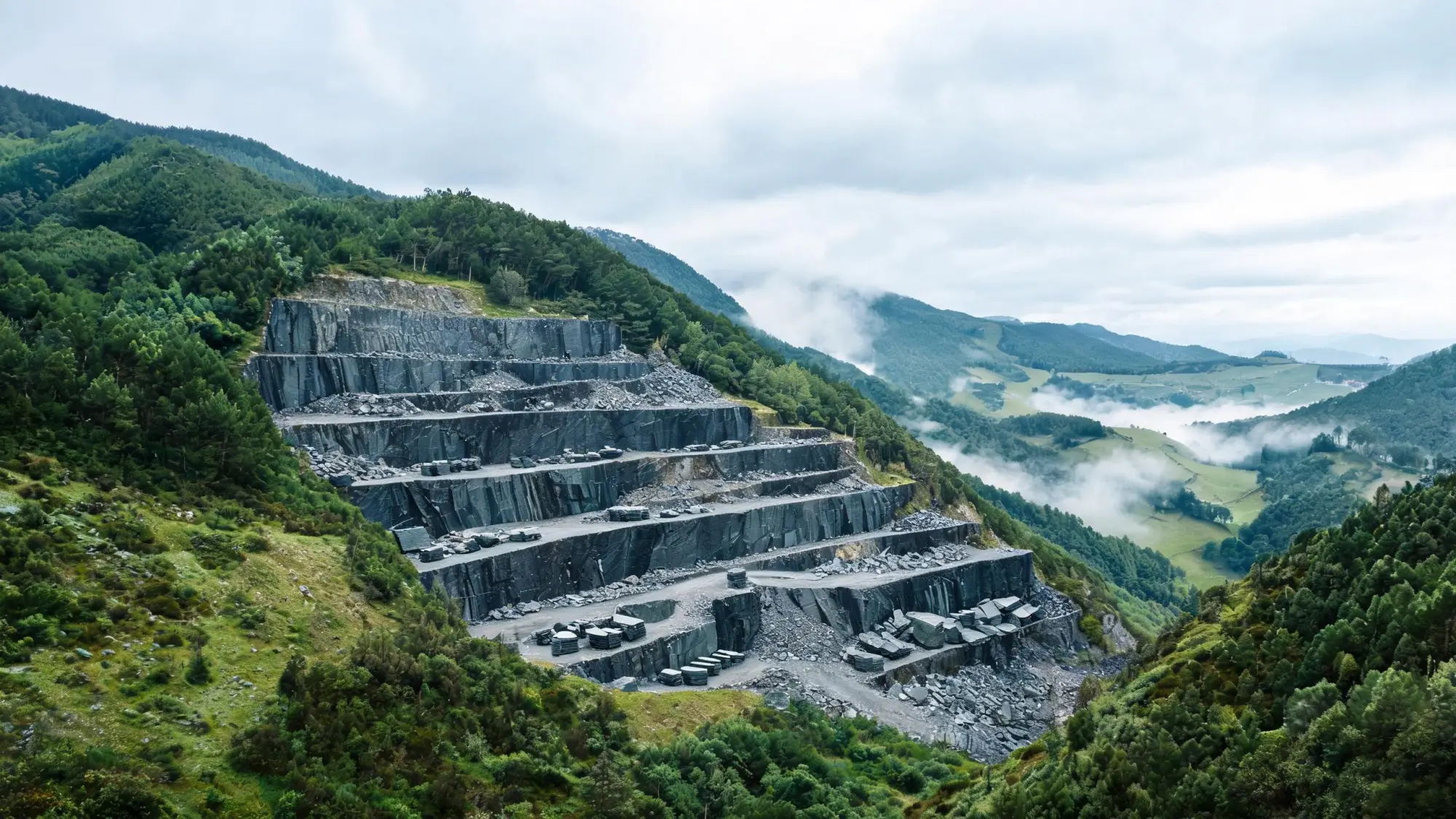
Spain is one of the world's largest natural roofing slate producers. Galicia, in the northwest, is the centre of the Spanish slate industry — the Galicia Slate Cluster reports approximately 460,000 tonnes of production in 2023.
That scale comes with infrastructure: quarries, splitting sheds, cutting lines, grading halls and export logistics built over decades. Spanish slate has a strong international reputation, particularly in European roofing markets, and that reputation is earned — not marketing.
For buyers, this means Spanish slate comes from a mature industry that knows how to supply European roofing projects. The weakness is not in the industry but in the assumption that "Spanish" automatically means consistent quality. Galicia has dozens of quarries, and they do not all produce the same slate.
Procurement note: Ask which specific Galicia quarry the slate comes from — the region has dozens, and quality varies between them.
Where Jiujiang Slate Comes From
Jiujiang slate comes from the Lushan and Xingzi area in Jiangxi Province, China. The region has something unusual: the same local slate industry serves two very different applications.
Roofing slate needs reliable cleavage, low water absorption, frost resistance and consistent dimensions. Billiard slate needs large blocks, structural stability and precision machining to very tight flatness tolerances. The CNC equipment that cuts billiard slate to ±0.1 mm also handles roofing tile dimensions — and that crossover is why Jiujiang roofing slate tends to have tight dimensional tolerances compared with hand-split production from other regions.
The supply chain covers quarrying, splitting, cutting, CNC machining, inspection, packing and export from the same region — factory to container without intermediaries.
Procurement note: The same CNC equipment that cuts billiard slate to ±0.1 mm also handles roofing tile dimensions — ask for dimensional tolerance data.
Price: Why There Is No Single Number
"Chinese slate is cheap and Spanish slate is expensive" is the kind of statement that sounds useful until you try to apply it to an actual purchase.
The price of roofing slate depends on: quarry and geological quality, colour, thickness, tile size, surface finish, sorting grade, dimensional tolerance, packaging, order quantity, container utilisation, certification and testing, Incoterms and freight destination. Move any one of those and the unit price is no longer the same number.
A premium Spanish slate and a basic Chinese slate are not equivalent products. The fair comparison is between equivalent specifications: the same size, thickness, colour, grade and packaging. For container-scale orders, Jiujiang slate is typically price-competitive because of lower manufacturing costs, factory-scale processing and container-oriented logistics. A 20-foot container holds 1,130–1,450 m² of roofing slate at 7–9 mm thickness — and at that volume, the per-square-metre delivered cost can work out favourably even after ocean freight.
But a lower price is not a bargain if the colour shifts between batches, dimensions are inconsistent or the material fails a water absorption test. Price matters; verification matters more.
Procurement note: Request pricing for your exact specification from both origins — a 500×250 mm, 7 mm, grey, crate-packed slate is the only fair comparison.
Colour: The Heritage Grey and the Green Alternative
Spanish roofing slate is strongly associated with black, dark grey and blue-grey. These colours are part of the architectural identity of many European regions — particularly in the UK, where grey slate roofs define entire streets.
I lost a tender once because of exactly that. The project was a church roof in southwest England. Our Jiujiang slate was priced competitively and met all the technical requirements. But the neighbouring roofs were Spanish grey, and the architect wanted a colour match. The "matching cost" — the risk of a visible colour difference on a street where every roof was the same tone — outweighed the unit price advantage. We lost that bid, and rightly so: on a heritage street, the cheapest slate is the one that matches its neighbours.
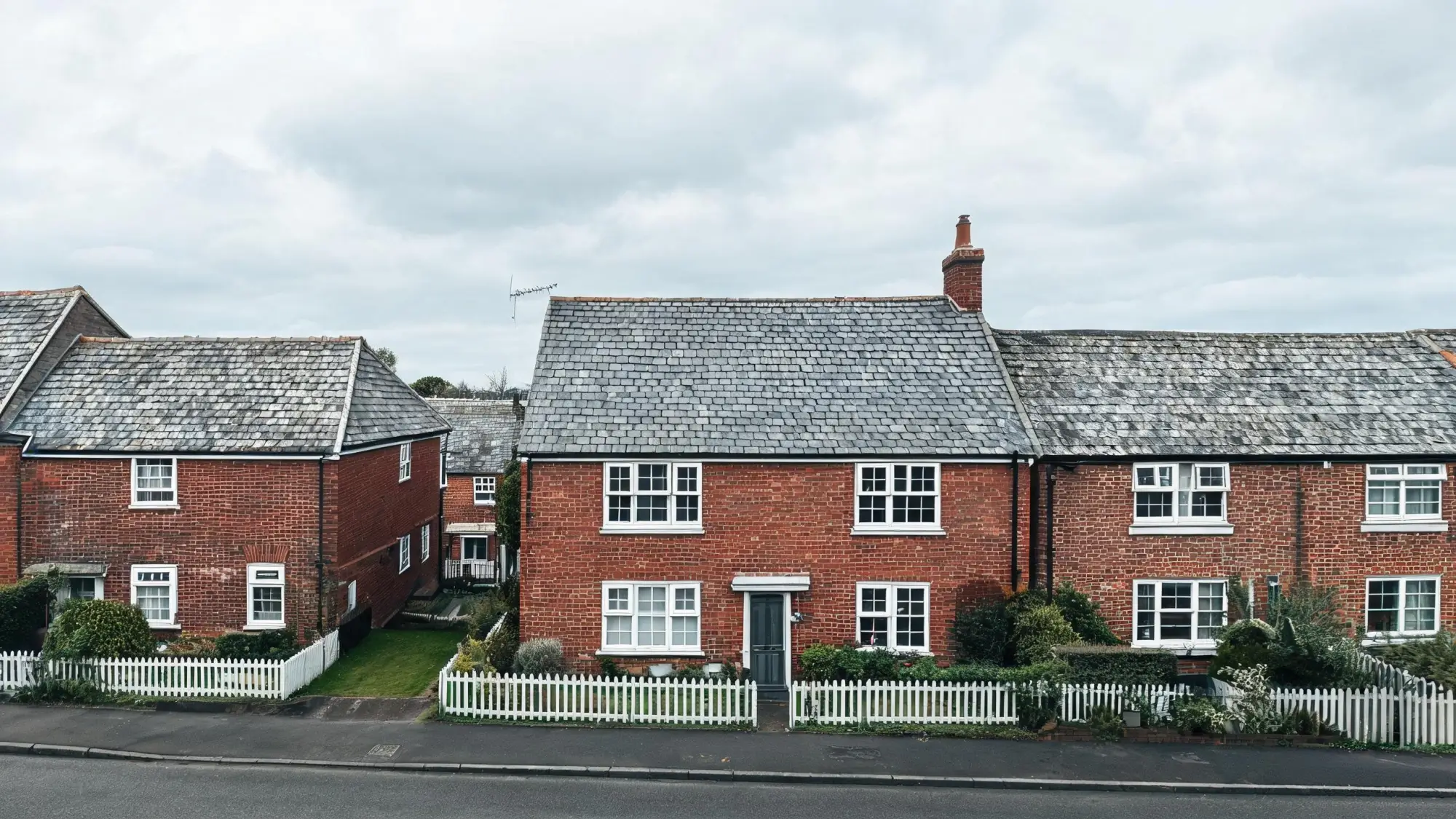
Jiujiang slate also produces black and dark grey, but its distinctive option is grey-green and green — colours that some Spanish quarries do not offer. For projects that want a natural variation rather than a uniform grey roof, the green spectrum from Jiujiang is worth considering.
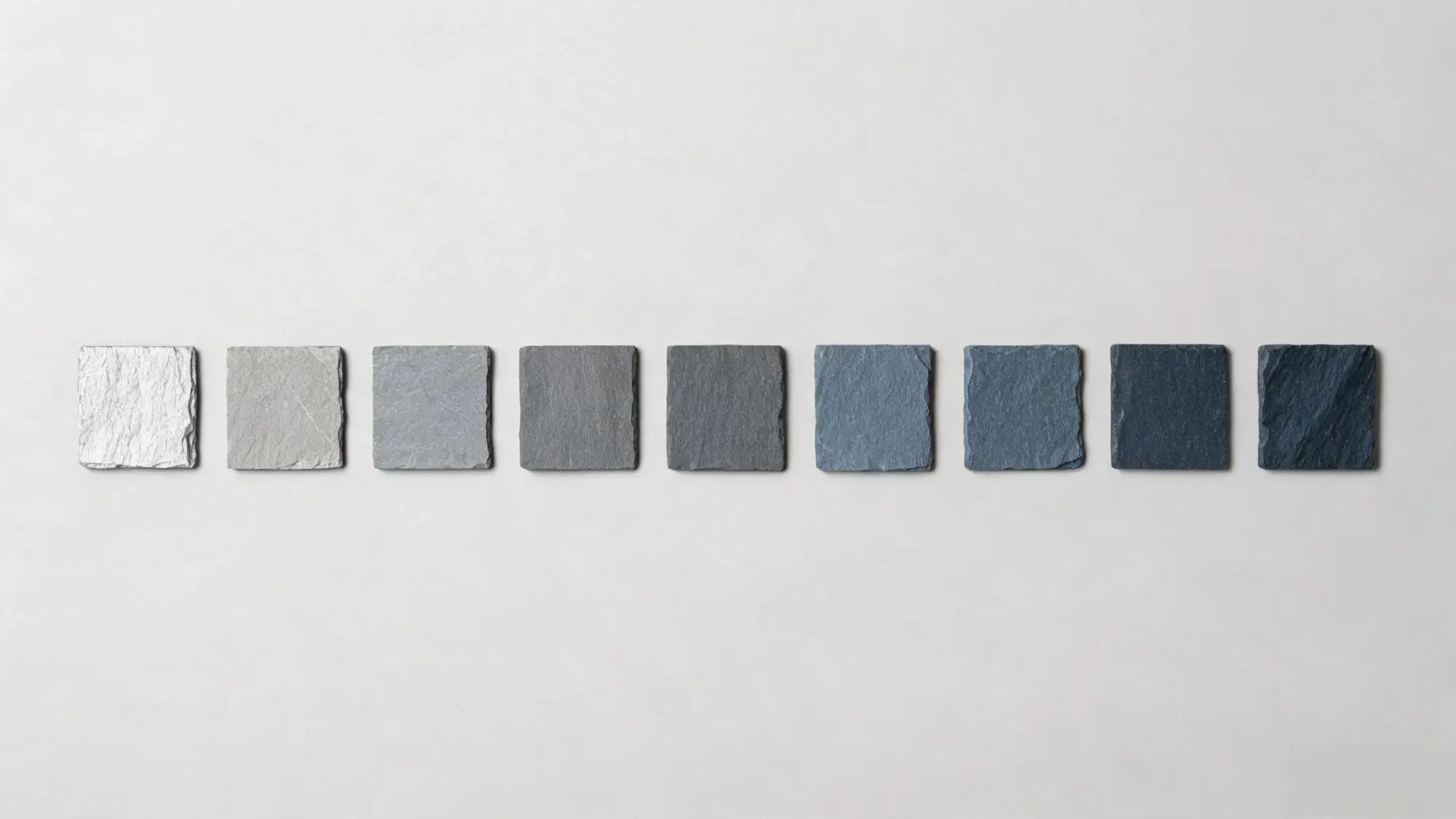
The point is simple: evaluate colour from physical samples, not from a country name. Two quarries a few kilometres apart can produce noticeably different tones.
Procurement note: If matching an existing roof, send a piece of the original slate to both suppliers and compare the returned samples side by side — in natural daylight, not under showroom lamps.
Density and Water Absorption: What the Numbers Mean
A slate roof is exposed to rain, snow, freeze-thaw cycles, wind, UV and temperature changes. Two indicators matter most: water absorption and flexural strength.
Dense slate with very low water absorption has less water in its pore structure — and less water means less frost damage in cold climates. But density alone does not prove durability. A full comparison should consider water absorption, flexural strength, freeze-thaw resistance, thermal cycling and dimensional stability.
For Jiujiang slate, published test data for specific Lushan slate products shows: water absorption 0.1% (the EN 12326 A1 limit is 0.6%), flexural strength 60 MPa dry / 45 MPa wet, freeze-thaw retention 92.7% after 120 cycles, and density 2.7–2.8 g/cm³. You can read more about why water absorption decides longevity and how Jiujiang slate performs in freeze-thaw testing, or see the full properties explained.
I am not giving you those numbers to say "our slate is better." I am giving them to you because they are verifiable — you can ask for the test report and check them. What I cannot do is give you equivalent numbers for Spanish slate, because Spanish production comes from many quarries, each with its own test data. To compare fairly, you need test reports from both origins using the same method.
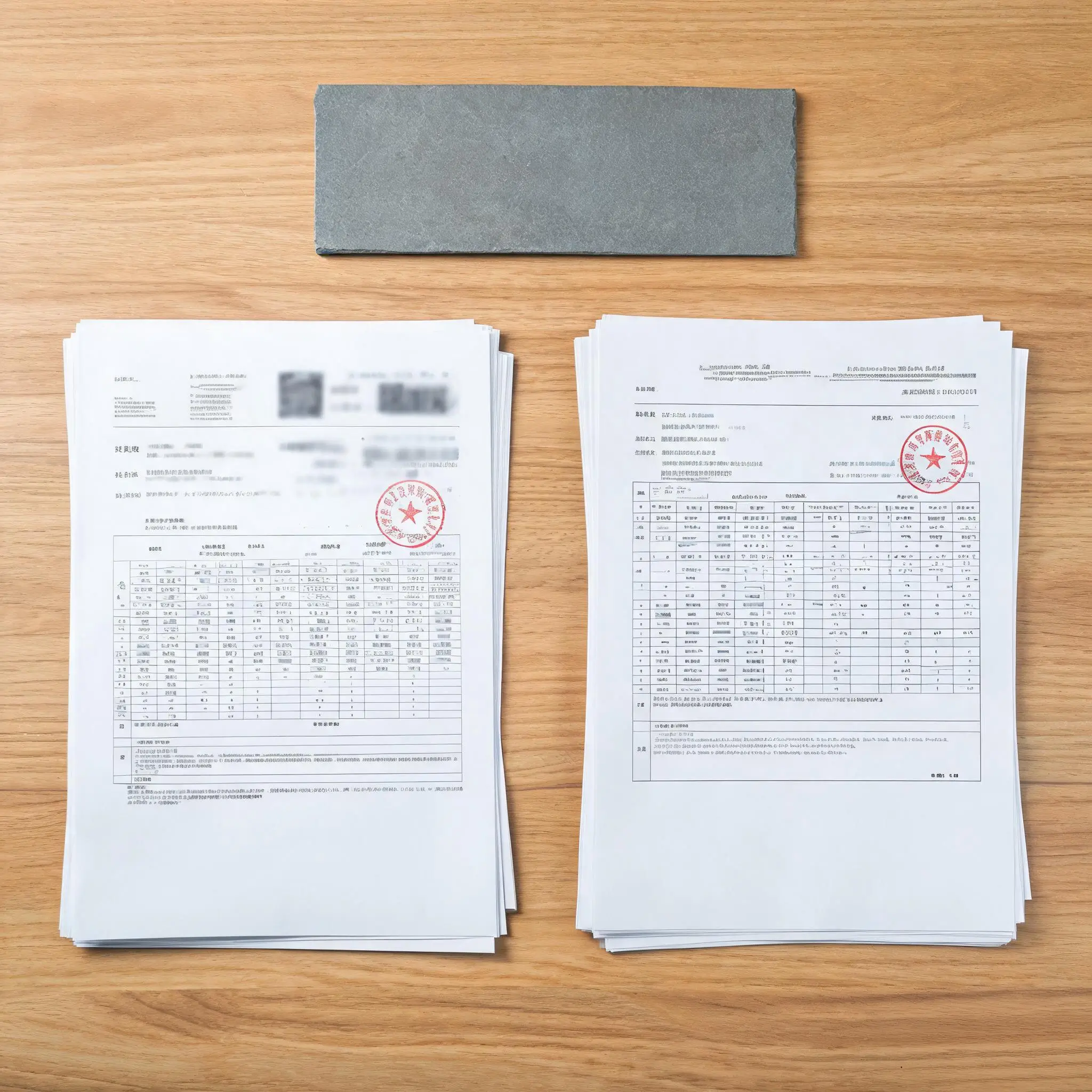
A test report belongs to a specific material, quarry and sample — not to an entire country.
Procurement note: Ask both suppliers for EN 12326 water absorption and flexural strength values — then compare the numbers, not the flags.
EN 12326: The Common Language
For European roofing projects, EN 12326 is the most useful comparison framework. It tests water absorption, flexural strength, freeze-thaw resistance, thermal cycling, dimensions and tolerances — all on the same scale, regardless of origin.
This changes the question. Instead of "Is Spanish slate better than Chinese slate?" the question becomes: "Does this particular slate meet my project's performance requirements?"
If a Spanish slate has excellent test results, evaluate it on those results. If a Jiujiang slate has excellent independent test results, evaluate it on those results. The country on the packing list is not a substitute for technical evidence. Read our EN 12326 vs ASTM C406 walkthrough and how to read a slate test report line by line, or see our published test results.
Procurement note: If both origins provide EN 12326 reports, you can compare water absorption and flexural strength on the same scale — that is the only fair comparison.
Supply Capacity: Two Different Models
Spanish slate benefits from an established European supply chain: supplier networks, familiar specifications, large product selections and shorter logistics routes. Some Spanish suppliers maintain significant warehouse stock for rapid delivery.
Jiujiang offers a factory-based model. Buyers source directly from quarries and processing factories, purchasing by full container, multiple containers, annual contracts or project-specific production. The advantage is flexibility: a factory can produce your required combination of size, thickness, colour, grade and packing rather than relying on standard warehouse stock.
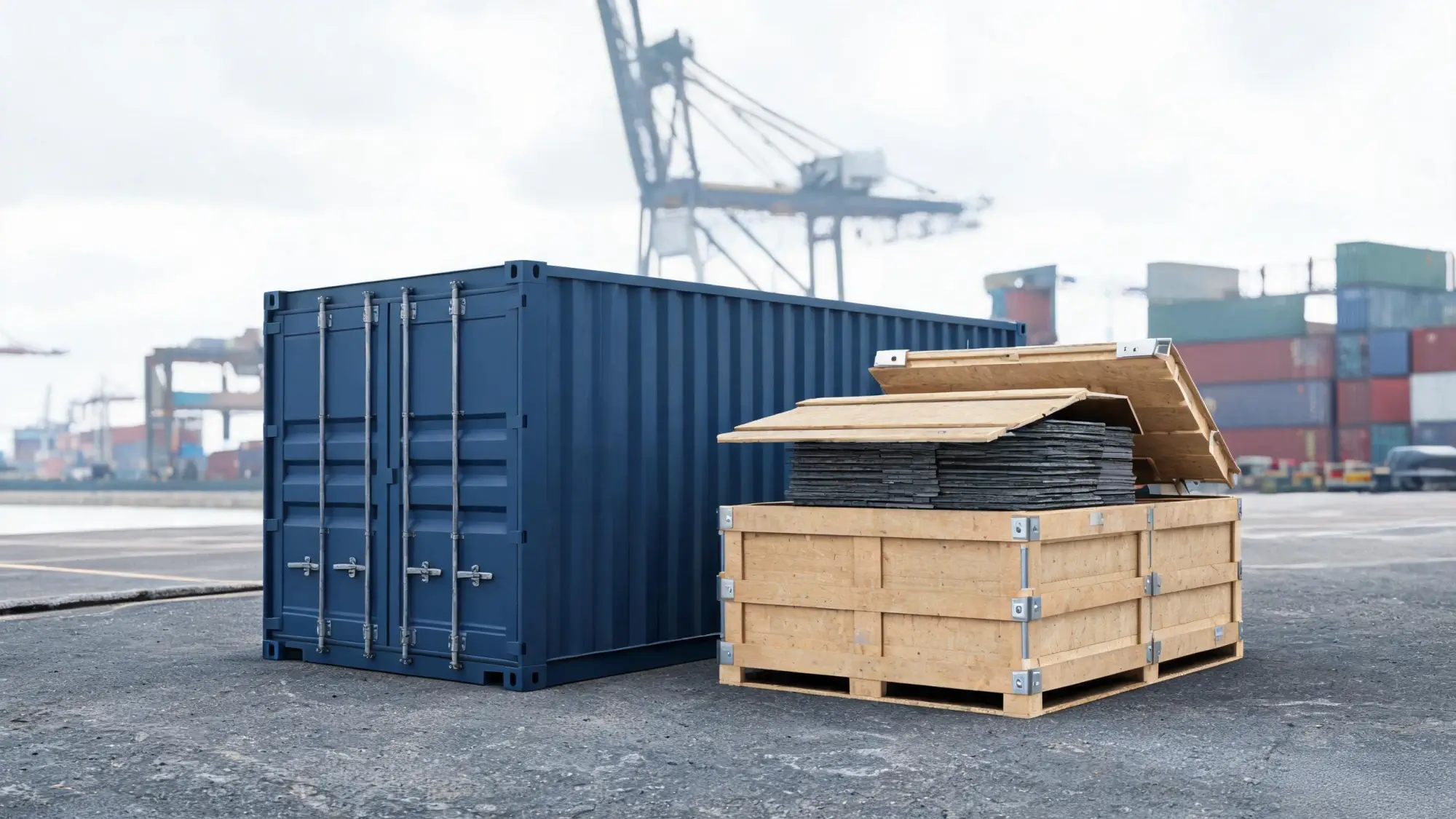
Procurement note: Ask both suppliers about monthly production capacity and backup quarry access — a single quarry is a supply risk regardless of country.
Lead Time: Proximity vs Planning
Spanish slate can reach a UK or European site in 3–5 days by truck. Jiujiang slate travels quarry → factory → inspection → packing → container loading → ocean freight → destination port → local delivery. Production takes 2–4 weeks; sea freight takes 4–6 weeks.
For a small urgent repair, local European stock wins. For a multi-container project planned 10–12 weeks ahead, the Chinese factory model is competitive — and sometimes preferable, because production is scheduled for your project rather than allocated from existing stock.
Procurement note: For projects over one container, order 10–12 weeks ahead from China; for urgent repairs under 100 m², European stock may be more practical.
Batch Consistency: Your 10-Point Spec Checklist
No natural slate is identical from one quarry layer to another. Colour, grain, cleavage, thickness, surface texture and mineral inclusions all vary. This applies to both Spanish and Chinese slate.
The solution is not to assume one origin is more consistent. It is to establish a reference sample and specification before production:
- Slate origin and quarry
- Colour (reference sample approved)
- Tile dimensions
- Thickness
- Permitted tolerances
- Sorting grade
- Surface characteristics
- Packaging method
- Required testing (EN 12326 or ASTM C406)
- Sample approval procedure
For repeat orders, retain an approved production sample. When the next batch arrives, compare it against the original before accepting.
Procurement note: Before production, sign off a physical reference sample with both suppliers — that sample is your quality benchmark for every shipment.
Heritage and Restoration: When Origin Genuinely Matters
Spanish slate has a long-established architectural identity in Europe. For projects where the specification calls for Spanish origin — a listed building, a conservation area or a historically appropriate material — origin is not a choice but a requirement.
Jiujiang slate is attractive where the priority is natural appearance, technical performance, competitive cost, large-volume supply, custom specifications or direct factory sourcing. Read more about whether Jiujiang is the right source for your project.
For heritage restoration, the correct approach is to match the original building as closely as practical — in origin, colour, texture and thickness.
Procurement note: If the project is a listed building or conservation area, check whether the specification requires a specific origin — if so, origin is not a choice but a requirement.
Which One Should You Choose?
There is no universal answer. The right choice depends on the project.
Spanish slate may be the better choice when you prioritise: European origin, established Spanish roofing brands, heritage appearance, existing distribution networks, regional availability or specific quarry specifications.
Jiujiang slate may be the better choice when you prioritise: competitive pricing, direct factory sourcing, container-scale purchasing, flexible specifications, custom sizes and colours, or long-term factory supply.
The key is to compare equivalent products — not countries.
Procurement note: Write down your top three priorities before contacting suppliers — if price and volume are in the top two, Jiujiang deserves a quote.
How to Compare Two Suppliers Side by Side
Send both suppliers the same information request. The one who responds with numbers rather than adjectives is usually the one worth continuing with.
Technical: exact quarry, slate type, thickness, dimensions, water absorption, flexural strength, freeze-thaw results, thermal cycling, EN 12326 or ASTM C406 documentation.
Appearance: physical sample, production photographs, natural colour variation, surface texture, cleavage characteristics.
Commercial: price per m², minimum order quantity, container loading quantity, packaging, production lead time, payment terms, Incoterms.
Supply: quarry capacity, factory capacity, monthly production capability, stock availability, backup production capacity, ability to reproduce the approved specification.
This turns a "Spanish vs Chinese" discussion into a measurable procurement comparison.
Procurement note: Send the same information request to both suppliers — the one who responds with test data and production numbers is the one who has actually tested their slate.
Compare the Slate, Not the Flag
Spanish slate has earned its reputation through a mature, highly developed roofing-slate industry. Jiujiang slate comes from a different production environment: a Chinese quarrying and manufacturing cluster with strong processing capacity, flexible specifications and competitive export economics.
Neither origin should be judged by nationality. The best comparison is not China vs Spain. It is specific quarry vs specific quarry, specification vs specification, test report vs test report, and delivered cost vs delivered cost.
Procurement note: The country on the crate tells you where the slate was quarried. The test report tells you whether it will still be on the roof in 50 years.
Frequently Asked Questions
Is Jiujiang slate better than Spanish slate?
Neither is universally "better." Both origins produce slate that can meet EN 12326 requirements and last for decades. The right question is whether a specific quarry's slate meets your project's specifications — not whether one country's slate is superior.
Is Spanish slate always more expensive than Chinese slate?
There is no single price for either origin. The cost depends on specifications — thickness, size, colour, grade, packaging, quantity and Incoterms all change the unit price. Compare equivalent specifications from both origins to get a meaningful price comparison.
How do I compare density between the two origins?
You cannot compare density meaningfully without test reports using the same method. Ask both suppliers for EN 12326 test data, which includes water absorption and flexural strength on a standardised scale. Published Jiujiang test data shows water absorption at 0.1% and density at 2.7–2.8 g/cm³ — but those numbers apply to the tested quarry, not every quarry in China.
Can Jiujiang slate match the colour of an existing Spanish roof?
It depends on the colour. Jiujiang produces black, dark grey and grey-green slate. For blue-grey Spanish slate, the match may not be exact. The only reliable way to check is to send a piece of the existing roof to the supplier and compare the returned sample in natural daylight.
Does the longer shipping time from China cause problems?
For projects planned 10–12 weeks ahead, the lead time is manageable: 2–4 weeks production plus 4–6 weeks sea freight. For urgent small repairs under 100 m², local European stock is more practical. The key is matching the supply model to the project timeline.
What should I ask both suppliers for?
The same information: exact quarry, EN 12326 test report, physical samples, price per m² for your specification, container loading quantity, production lead time and payment terms. Send the same request to both — then compare the answers.
Related Reading
If you are currently sourcing Spanish slate and want to compare directly, we can send a Jiujiang roofing slate sample, technical specification and test documentation. You compare the actual slate — not just photographs or marketing claims.
Request a Jiujiang Slate Sample →