
Is Jiujiang Slate the Best Slate in China?
Ruling: Jiujiang is one of China's most commercially important slate regions — particularly for roofing slate and precision billiard slate. But "best" cannot be awarded to a region. It is awarded to a quarry, a processing chain and a quality-control system. Origin is a starting point, not a quality certificate.
The evidence that matters is not the name of a city. It is the test report, the sample, the inspection record and the supplier's ability to repeat the same quality in the next container.
That is the short answer. The longer answer is what follows — and if you are spending real money on Chinese slate, you should read the longer answer before placing an order.
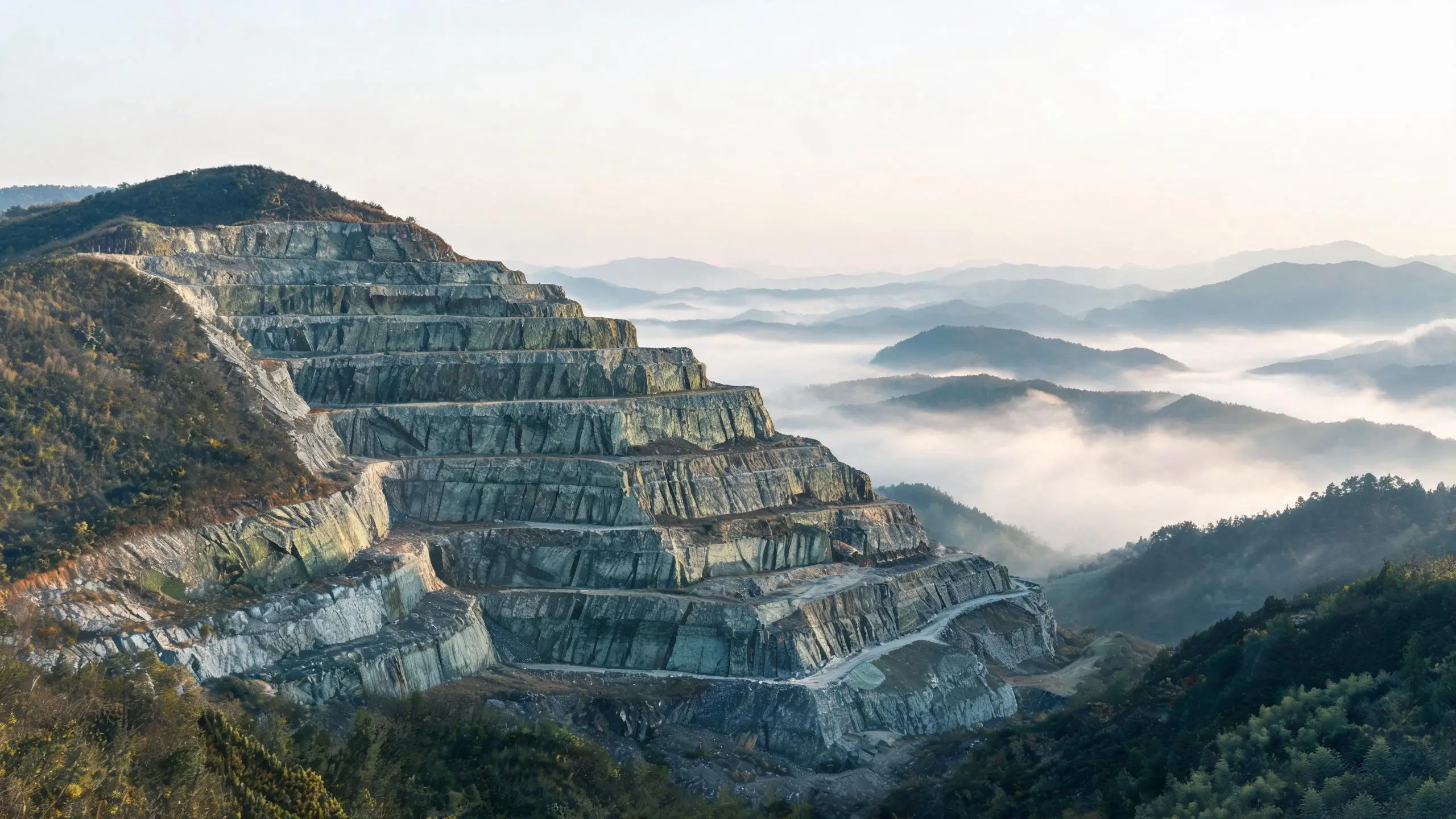
The Problem With the Word "Best"
Before this question can be answered, the word "best" needs to be defined — because it means something completely different to a roofing contractor, a billiard-table manufacturer, an architect and an importer.
A roofer in a cold-climate country cares about:
- Water absorption
- Freeze-thaw survival
- Flexural strength under wind and snow
- Thickness consistency
- Cleft quality
- Colour stability over decades
- Long-term supply at a predictable price
A billiard-table manufacturer has a completely different list:
- Flatness across the full panel
- Dimensional stability under temperature change
- Surface finish after grinding
- Density and internal soundness
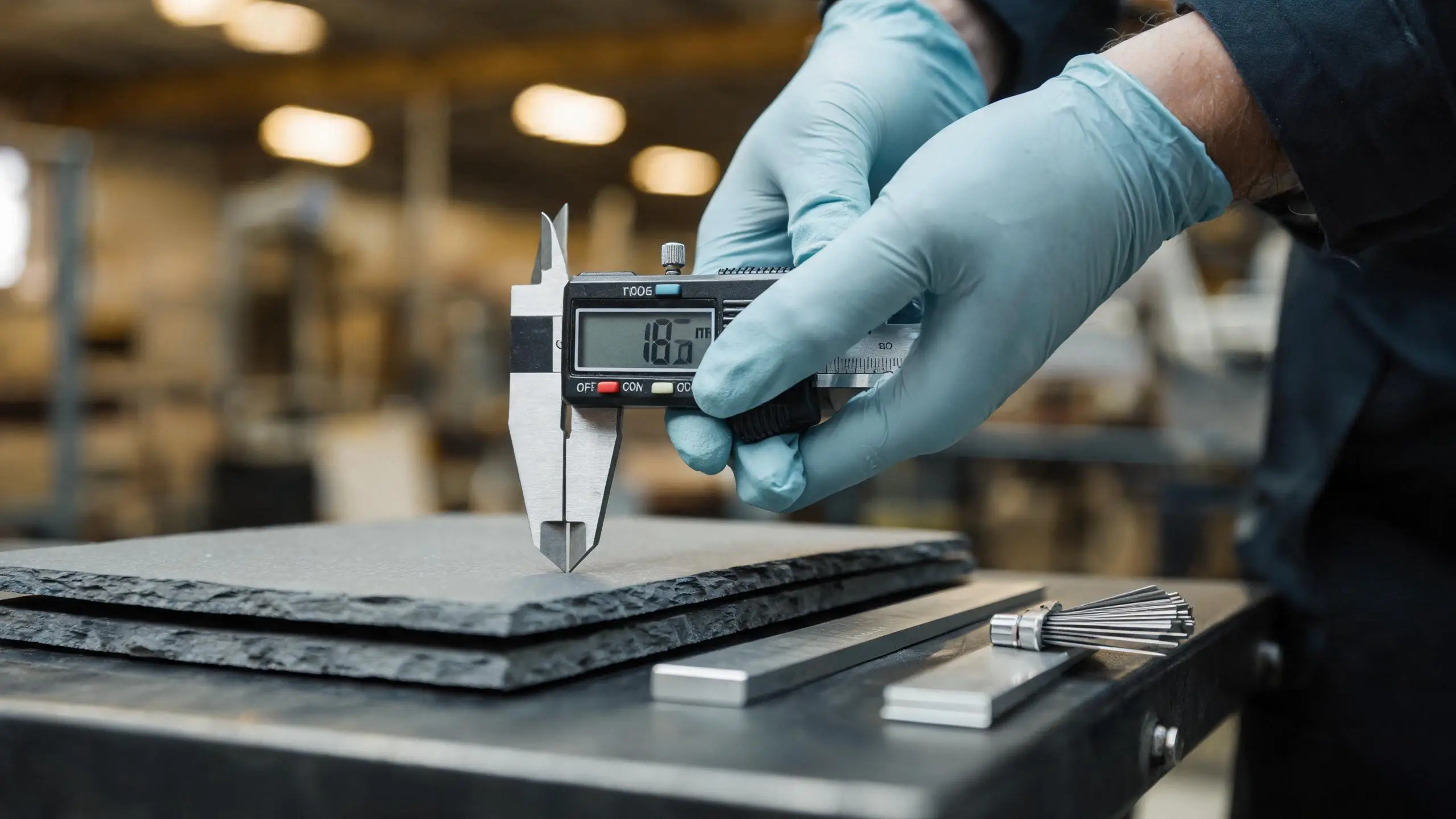
- Machining tolerance — often ±0.1 mm
- Joint geometry for multi-piece beds
- Batch consistency across sets
An architect may rank colour, texture and natural variation above everything else. An importer adds factory capacity, export documentation, packing quality and lead time to the list.
So "best slate" without a project specification is a meaningless phrase. A slate that is excellent on a roof may be entirely wrong for a table. A beautiful architectural stone may fail in a harsh winter. This is why the question is not really "which region is best?" — it is "which material, from which quarry, processed by which factory, meets the requirements of this project?"
What Jiujiang Actually Has
Jiujiang is in Jiangxi Province, eastern China, in the Lushan area. The region has a long history of slate quarrying and has built an industrial ecosystem around natural slate that serves two very different industries: roofing and billiard tables.
That combination matters. It means the region does not simply produce decorative stone. It has developed expertise around slate that must be split, cut, calibrated, ground, machined, inspected, packed and exported — to different standards for different buyers.
For roofing, Jiujiang slate can offer dense stone structure, low water absorption, natural cleft surfaces and a range of natural colours. For billiard tables, the region has developed specialised production experience in surface grinding, CNC machining and multi-piece panel matching — a level of precision that goes well beyond producing a naturally cleft tile.
The test results from the region are public: density around 2.7–2.8 g/cm³, water absorption as low as 0.1%, Mohs hardness 3–4, flexural strength in the range of 60–98 MPa depending on test method and sample. These are strong numbers — but they are numbers from specific quarries and specific test samples, not a guarantee attached to a geographical name.
Why a Region Is Not a Quality Grade
Here is the point that matters most, and the one many buyers miss:
Two pieces of slate sold under the same regional name can perform very differently.
The reason is that the real supply chain looks like this:
Country → Province → Slate region → Quarry → Geological layer → Block selection → Processing → Quality control → Finished product
Every arrow in that chain can change the result. A block from the top layer of a quarry may split differently from a block twenty metres deeper. A factory that invests in CNC grinding will produce a different billiard panel from a factory that only hand-splits. A supplier with 100% piece-by-piece inspection will catch defects that another supplier ships.
In practice, the difference between two suppliers in the same region can be larger than the difference between two regions. The regional name tells you the geology. It does not tell you the manufacturing.
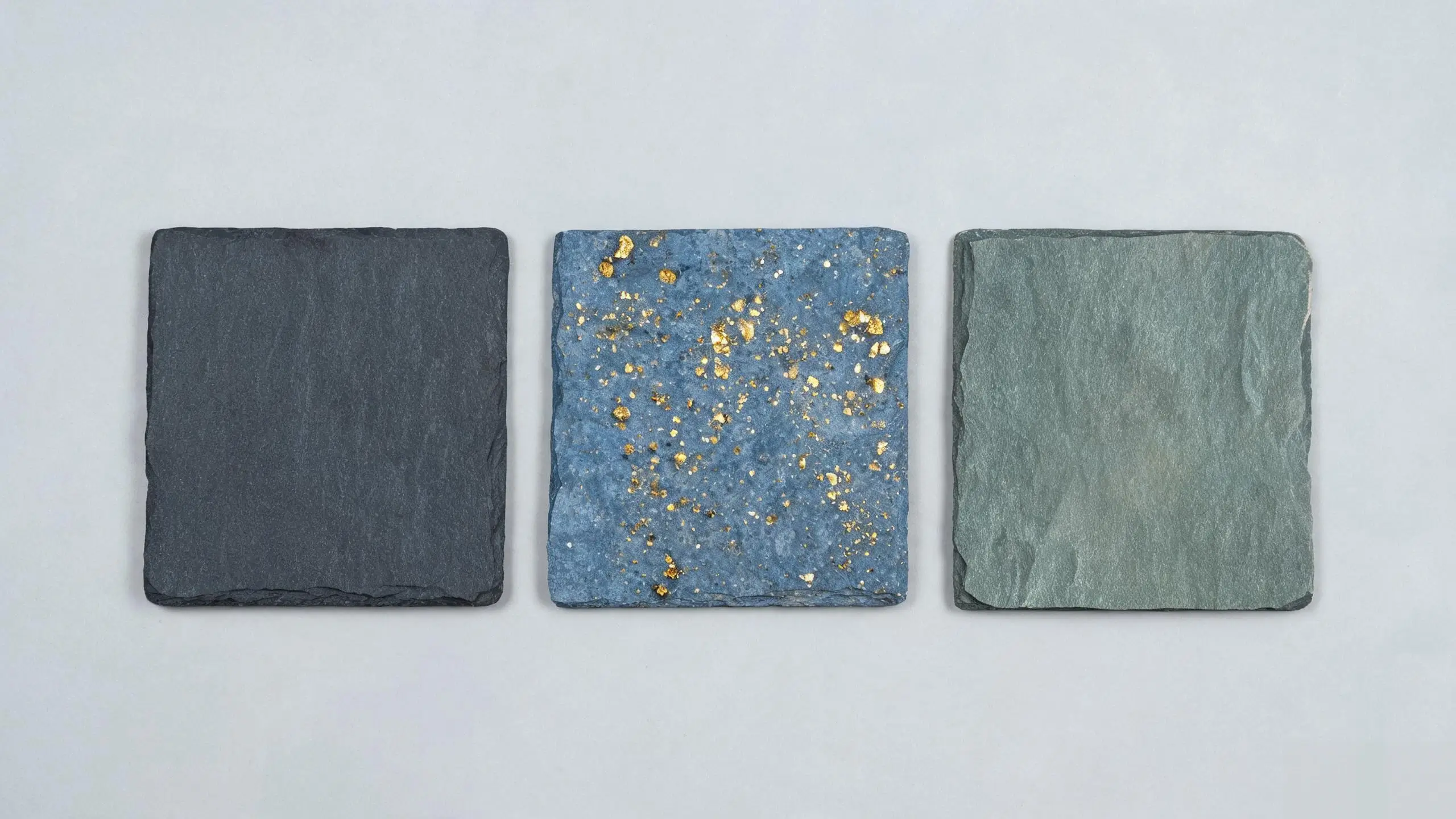
The Five-Point Adjudication Framework
If "best" cannot be awarded to a region, how does a buyer actually make a judgement? The framework that follows is the one experienced importers use — often without calling it a framework. It works for any origin, not just Jiujiang.
1. Geology — Is the rock right for the application?
This is the foundation. A dense, low-absorption metamorphic slate suits cold-climate roofing. A fine-grained, stable slate with good machining characteristics suits billiard tables. If the geology is wrong, no amount of processing will fix it.
Jiujiang's geology — low-grade metamorphic slate with a well-developed cleavage — supports both applications. But "supports" is not the same as "guarantees." The buyer still needs to verify which quarry layer the material comes from.
2. Quarry Selection — Which blocks become which products?
Not every block from a good quarry becomes a good product. Quarries produce blocks of varying quality, and the selection decision — which block becomes roofing tile, which becomes billiard slate, which is rejected — is the first manufacturing step.
A supplier who controls the quarry face and selects blocks by grade will produce more consistent material than a supplier who buys random blocks from the open market. How the quarry is run matters as much as where it sits.
3. Processing — How is the block turned into a finished product?
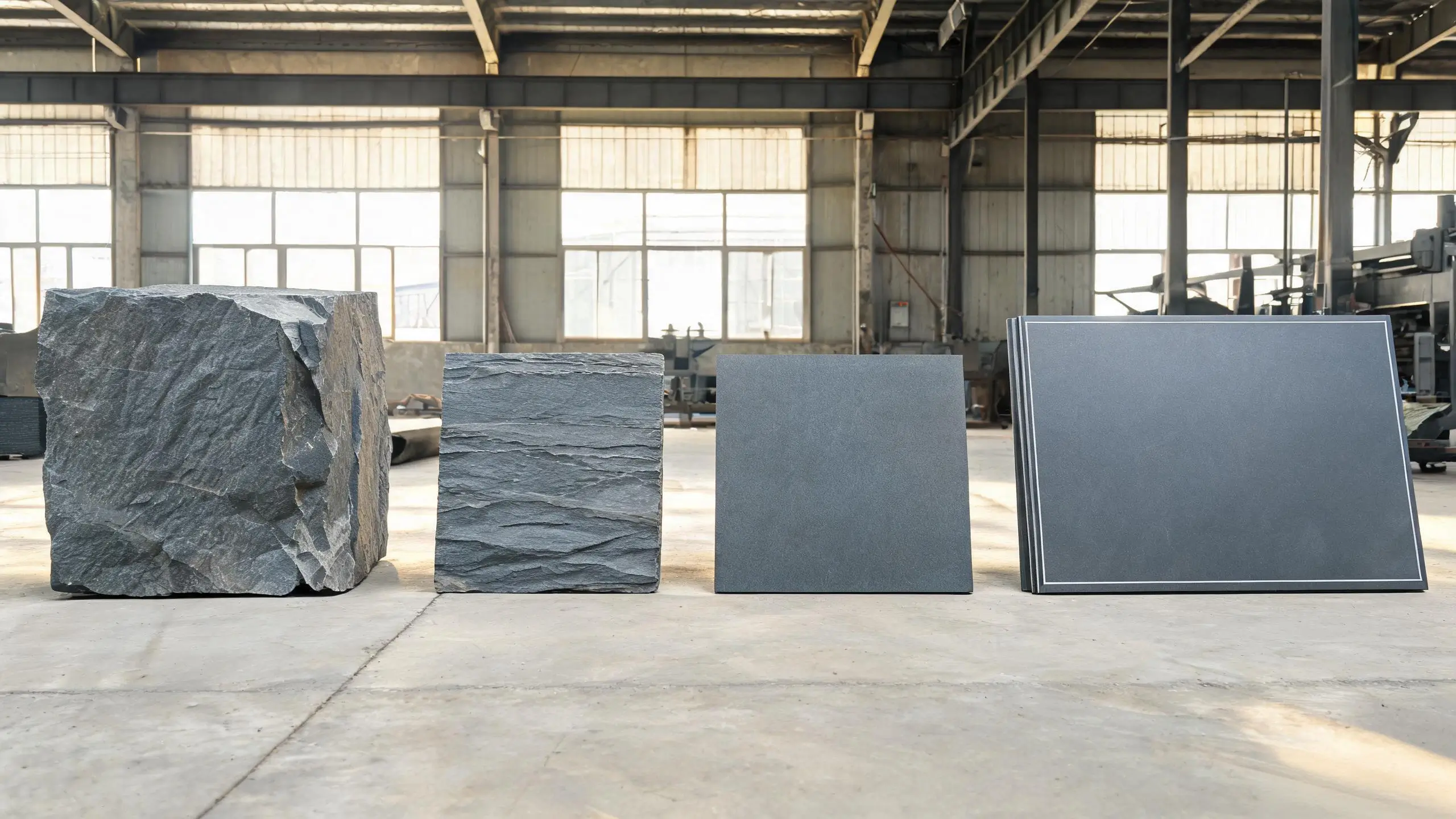
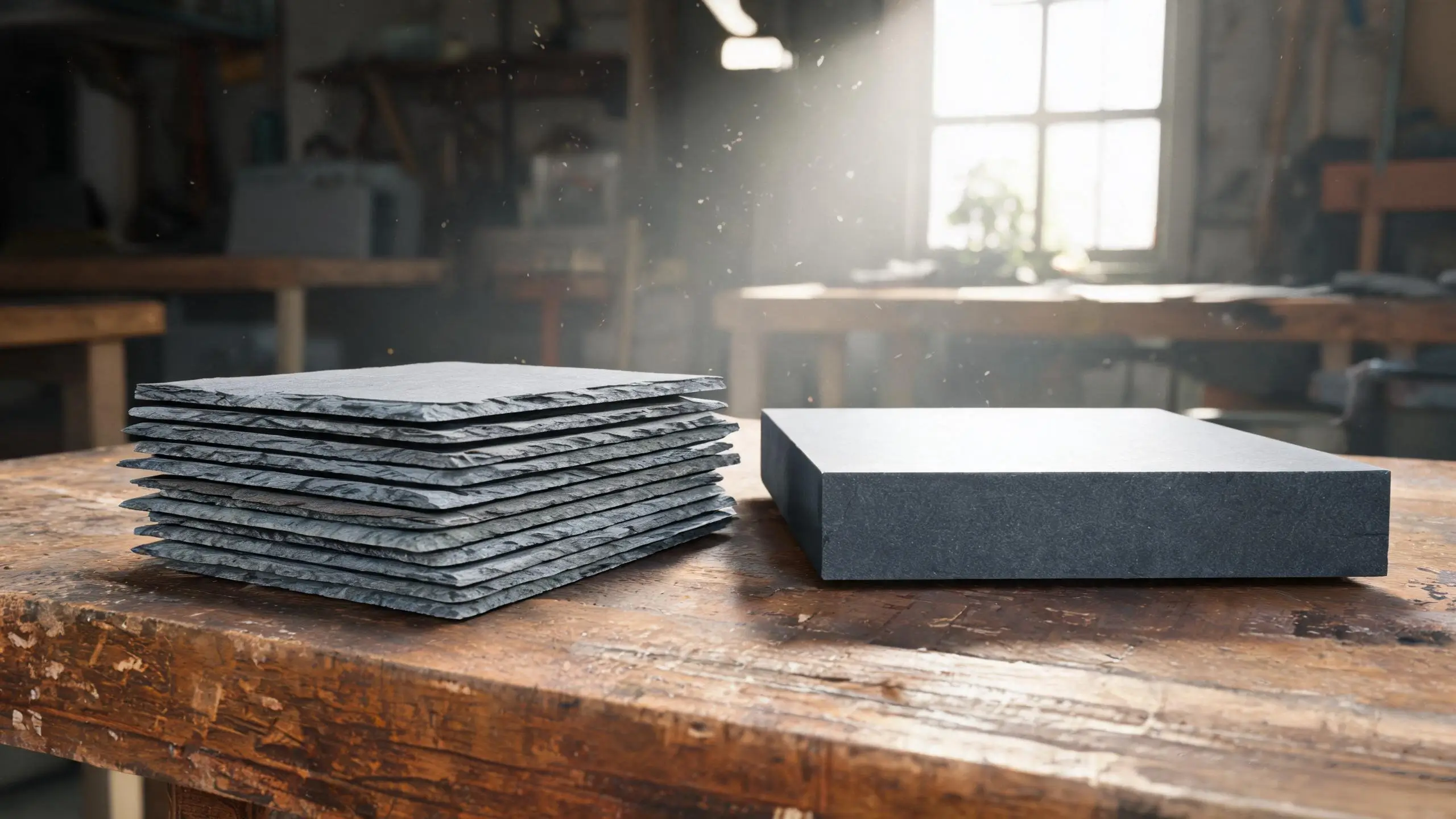
A good quarry block can be ruined by poor processing. Conversely, a mediocre block can be improved by skilled splitting, careful calibration and surface grinding. The processing chain — splitting, dressing, grinding, CNC machining, calibration — is where the manufacturer either adds value or destroys it.
For billiard slate, this is where Jiujiang has a genuine edge: the region has developed CNC machining capability specifically for table slate, with tolerances measured in tenths of a millimetre. Not every slate region has this. But again, "the region has the capability" is not the same as "every supplier in the region uses it."
4. Quality Control — What is checked, and how?
This is the step that separates a good quarry from a good supplier. 100% piece-by-piece inspection — checking flatness, thickness, dimensions and surface on every panel and every tile — is the difference between a batch that arrives ready to install and a batch that arrives with a sorting loss.
Ask any supplier: "What do you check, on how many pieces, and what happens to the rejects?" If the answer is vague, the quality control is vague.
5. Evidence — Can the supplier prove what they claim?
This is the final test, and it overrides everything else. A supplier can claim "best slate in China" on a website. The question is whether they can produce:
- A test report with a batch number that matches the shipment
- Physical samples that match the production run
- Production photographs from the actual factory
- Inspection records from the actual line
- Export references from real buyers
- A consistent product across repeat orders
If the supplier can produce this evidence, the region matters less than you think — because the evidence is the quality. If the supplier cannot produce it, the region matters less than you think — because the name is just a name.
The Jiujiang slate test results are published separately in this guide. They exist so that buyers can evaluate evidence rather than rely on marketing language.
Is Jiujiang Always Better Than Spanish, Welsh or Indian Slate?
No — and anyone who tells you otherwise is selling, not advising.
Spanish, Welsh, Indian and Chinese slate come from different geological environments, with different traditions, colours, specifications and market positions. A buyer should choose according to the project, not the flag.
If historical authenticity is the priority — for a listed building or a conservation area — a specific traditional source may be required by the spec. If a particular colour is essential, the best source is the deposit that produces that colour, regardless of country. If the project requires very large quantities at a consistent grade, supply capacity and repeatability become the decisive factors. If the project is in a severe climate, verified technical performance — water absorption, freeze-thaw, flexural strength — matters more than reputation. If the project is a billiard table, flatness, machining and dimensional precision are the only numbers that count.
The detailed head-to-head comparisons are in the origin comparison section of this guide. The short version: "best slate" is the wrong question if it is asked without a project specification.
The Honest Case for Jiujiang
Given all the caveats above, why does Jiujiang deserve serious consideration from professional buyers? Not because everything from Jiujiang is automatically superior. The case rests on six factors working together:
- Natural resources. The Lushan area has a long-established slate resource with the right geology for both roofing and precision applications.
- Specialised knowledge. The region has developed expertise in quarrying, splitting and processing slate — not just digging it up, but turning it into a specified product.
- Two demanding applications. Jiujiang slate serves both roofing and billiard-table industries, which require very different manufacturing skills. A region that only produces decorative stone does not face the same quality pressure.
- Processing capability. Modern production combines traditional splitting with cutting, grinding, calibration and CNC machining — all under one roof.
- Export experience. The region has supply chains serving international buyers across 30+ countries, with established documentation, packing and shipping practice.
- Technical verification. Professional buyers can evaluate Jiujiang material using published test data rather than relying on geographical reputation.
These factors make Jiujiang a serious sourcing region — one that deserves to be on the shortlist. They do not make every piece of Jiujiang slate automatically the best. That distinction is the whole point of this article.
What a Buyer Should Actually Check Before Ordering
If you are considering Jiujiang slate — or any Chinese slate — for a commercial project, the following checklist is the practical version of the five-point framework above. Print it. Use it. The supplier who cannot answer these questions is not the supplier you want.
| Check | What to ask for |
|---|---|
| Quarry origin | Which quarry? Which layer? Can the supplier trace the material to a specific source? |
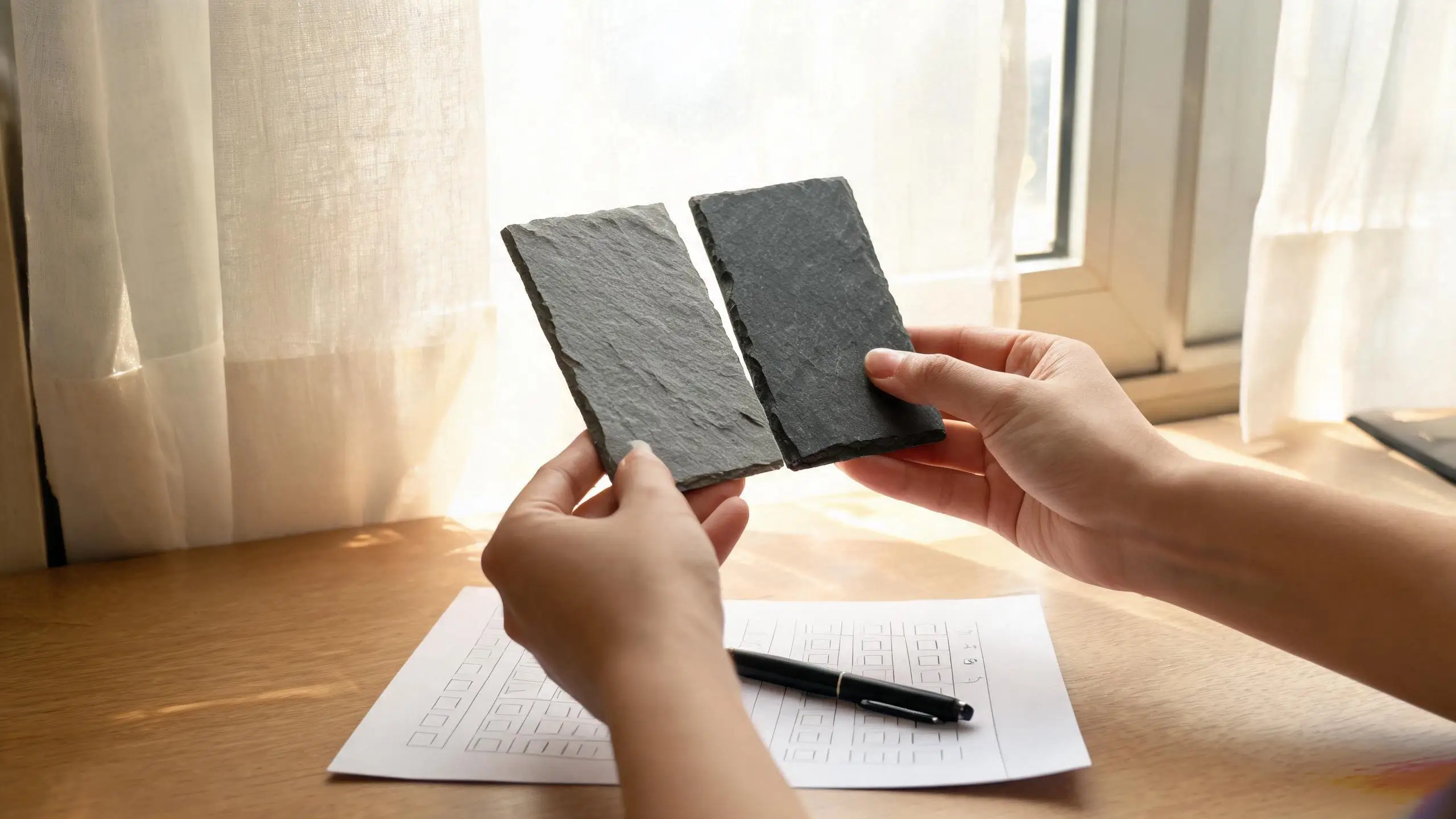
| Physical sample | A representative sample — not a cherry-picked showpiece. For roofing, request a larger sample. |
| Dimensions and tolerance | Length, width, thickness, and the tolerance band. Is it ±0.5 mm? ±1 mm? ±0.1 mm for CNC work? |
| Water absorption | The actual tested value, with the test standard cited (EN 12326 or ASTM C406). |
| Flexural strength | The actual tested value. Not a range from a brochure — the number from the report. |
| Freeze-thaw data | If the project is in a cold climate, this is non-negotiable. Ask for cycles, retention rate and the test method. |
| Colour and batch | What is the natural colour range? How is batch-to-batch variation controlled? Is there a colour grading system? |
| Production photographs | Real photos from the actual factory floor — not stock images. Ask for a same-day video if in doubt. |
| Quality-control procedure | What is checked, on how many pieces, and what happens to rejects? 100% inspection or batch sampling? |
| Packing | Export-grade crates? ISPM 15 stamp? How many pieces per crate? Container loading plan available? |
| Test report with batch number | A report without a batch number is a generic document. The batch number must match the shipment. |
| Repeat-order consistency | Can the supplier maintain the same colour, thickness and dimensions across multiple containers? Ask for evidence. |
| Export references | Which countries has the supplier shipped to? Are there buyers who will re-order — and why? |
A supplier who is comfortable discussing these questions is a supplier worth talking to. A supplier who deflects them is not — regardless of what region they claim to represent.
Frequently Asked Questions
Is Jiujiang slate the best slate in China?
Jiujiang is one of China's most important slate regions, particularly for roofing and billiard slate. But "best" depends on quarry, processing and application — not geography alone. Two suppliers in the same region can produce very different material. Judge the stone and the supplier, not just the name.
How does Jiujiang compare to other Chinese slate regions?
China has several slate-producing provinces, each with different geology, colours and processing traditions. Jiujiang stands out for its combination of roofing and precision billiard-slate production. Other regions may suit different applications — wall cladding, landscaping, decorative use. The comparison should always be made against a project specification, not a regional reputation.
Is Jiujiang slate better than Spanish or Welsh slate?
Not automatically. Spanish, Welsh, Indian and Chinese slate come from different geological environments with different properties. For historical restoration, a specific traditional source may be required. For a cold-climate roof, verified test data matters more than origin. For billiard tables, machining precision is the deciding factor. The honest comparison is always material + processing + evidence, not country versus country.
Does every supplier in Jiujiang produce the same quality?
No. The difference between two suppliers in the same region can be larger than the difference between two regions. Quarry selection, processing investment, quality-control rigour and inspection practice all vary. A supplier with 100% piece-by-piece inspection will produce a different product from one who only batch-samples — even if both buy from the same geological area.
How can I verify a Jiujiang slate supplier before ordering?
Request a physical sample, a test report with a batch number, production photographs from the actual factory, and an explanation of their quality-control procedure. Ask whether they can maintain the same colour and thickness across repeat orders. A reliable supplier will answer these questions openly. If the supplier cannot provide evidence, the regional name is not a substitute.
I am buying Chinese slate for the first time. What should I do first?
Start with a sample. Never place a container order based on a photograph or a website claim. Request a representative physical sample, check it against your project specification, and ask for the test data that supports the supplier's claims. If the sample and the evidence match, place a trial order before committing to a full container. The cost of a sample is trivial; the cost of a wrong container is not.
Related Reading
Judge the stone, not just the name. Send us your project specification and we will provide the sample, the test data and the evidence.