
Environmental Impact of Natural Slate: From Quarry Face to Second Life
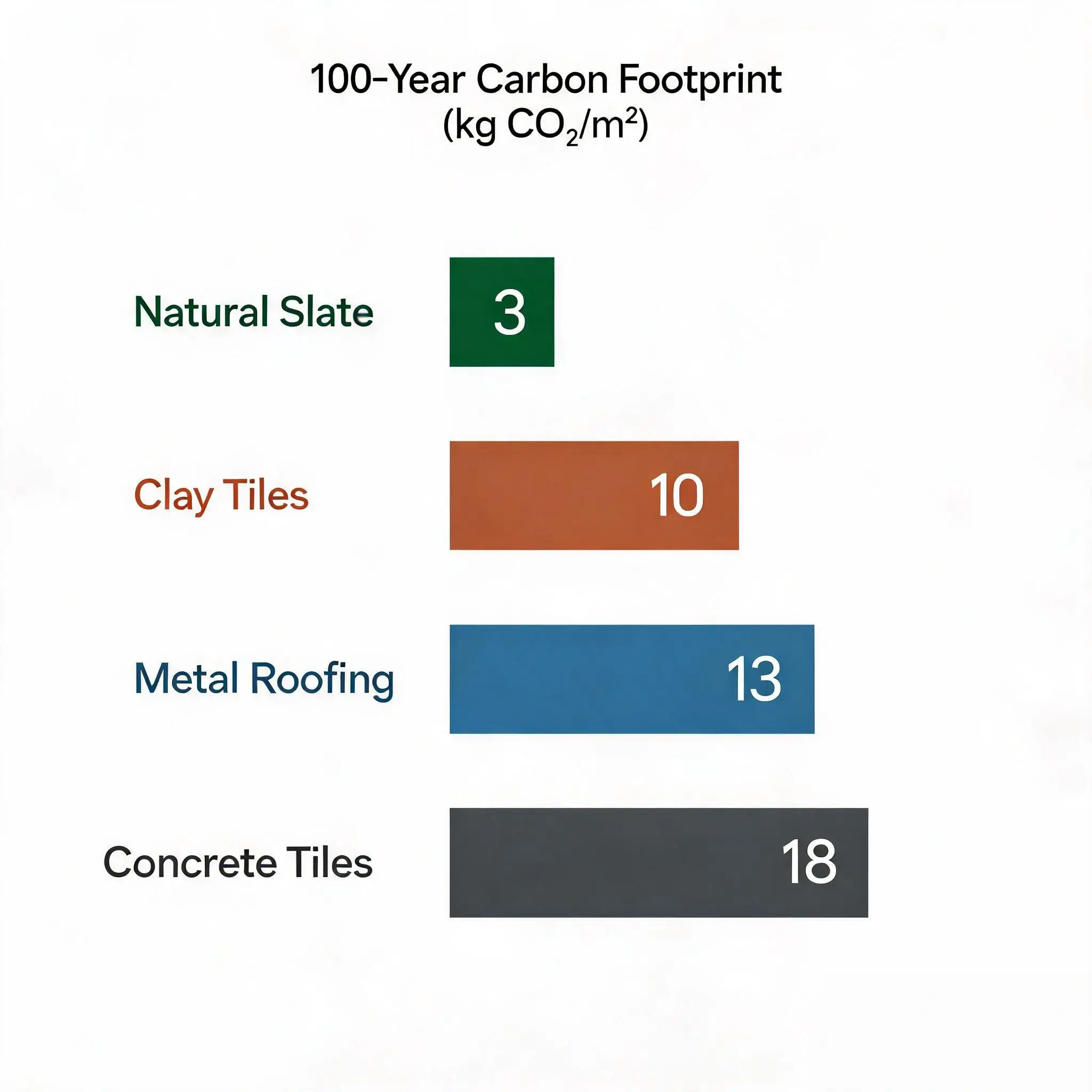
Short answer: Natural slate has one of the lowest lifetime environmental footprints of any roofing material — not because quarrying is clean, but because a slate roof lasts 100-150 years with zero chemical maintenance and 70-80% of its tiles can be reused at the end. The real impact is concentrated at the quarry. Once the slate leaves the mountain, the rest of its life is remarkably quiet.
| Material | Embodied CO₂ (kg/m², 100 yr) | Replacements in 100 yr | Chemical maintenance |
|---|---|---|---|
| Natural slate | ~2-4 | 0 | None |
| Concrete tiles | ~12-20 | 2-3 | Coatings, sealants |
| Clay tiles | ~6-12 | 1-2 | Minimal |
| Metal roofing | ~8-15 | 1-2 | Re-coating |
Figures are indicative ranges from industry EPDs and academic LCA studies. Actual values vary by source, transport distance and installation.
I Spend My Days Measuring What a Quarry Leaves Behind
I have been the environmental compliance officer at a slate quarry in Jiujiang for fourteen years. My job is not to sell slate. My job is to walk the quarry floor every morning, check the water coming out of the settling pond, read the dust monitor near the cutting shed, and write down numbers that the government can ask for at any time.When people ask about the environmental impact of natural slate, they usually expect a simple answer: either "it's stone, so it's natural and green" or "it's a quarry, so it's destructive." Neither is accurate. The truth is that quarrying has a real footprint — dust, water, noise, landscape change — but that footprint is paid once, and the slate then serves for a century or more with almost nothing added.Let me walk you through the actual numbers I record, and what they mean for someone choosing a roofing material.Quarrying: The Largest Footprint, and the Only One That Is Permanent
Slate is split, not manufactured. There is no kiln, no firing, no chemical transformation. A block of metamorphic rock comes off the face, gets split into tiles by hand and machine, and that is the product. This is the fundamental difference between slate and every other roofing material: concrete needs cement (calcined limestone at 1,450°C), clay needs firing (1,000-1,200°C), and even metal needs smelting. Slate needs none of that.The environmental cost of slate is almost entirely at the quarry face. Here is what I measure:Dust. At our cutting stations, we run continuous dust monitors. The readings sit between 0.08 and 0.15 mg/m³ of respirable particulate. The national standard is below 0.5 mg/m³. We stay well under because we use wet cutting — the blade runs through a water curtain, and the dust never becomes airborne. The water is not waste; it goes into the settling pond and comes back. I will get to that.Water. This is the number most people get wrong about quarries. Our cutting operation uses approximately 2,000 litres of water per day, but 85% of that is recycled through a closed-loop settling system. The slurry settles, the clean water returns to the saw, and the settled fines are pressed into cakes and either sold as aggregate or used in quarry floor stabilisation. Net fresh water input is about 300 litres per day — less than a household uses for a single shower.Energy. Each tonne of finished roofing slate requires 2.5-3.5 kWh of electricity. That powers the saws, the splitters, the CNC edges, the forklifts, and the workshop lights. Compare that to fired clay tiles, which need 3-6 kWh per tonne just for the kiln — and that is before cutting, glazing, or transport. Concrete tiles need 1.5-3 kWh per tonne for curing, but the cement itself carries a much larger hidden footprint (about 0.8-0.9 kg CO₂ per kg of cement).Noise. At the property line, 200 metres from the cutting shed, our noise level is 52-58 dB during working hours. The background level without operations is 38-42 dB (birds, wind, river). The difference is noticeable but not extreme — it is comparable to a quiet suburban street. Blasting, when we do it, happens twice a year and lasts about three seconds each time. We notify the nearest village 48 hours in advance.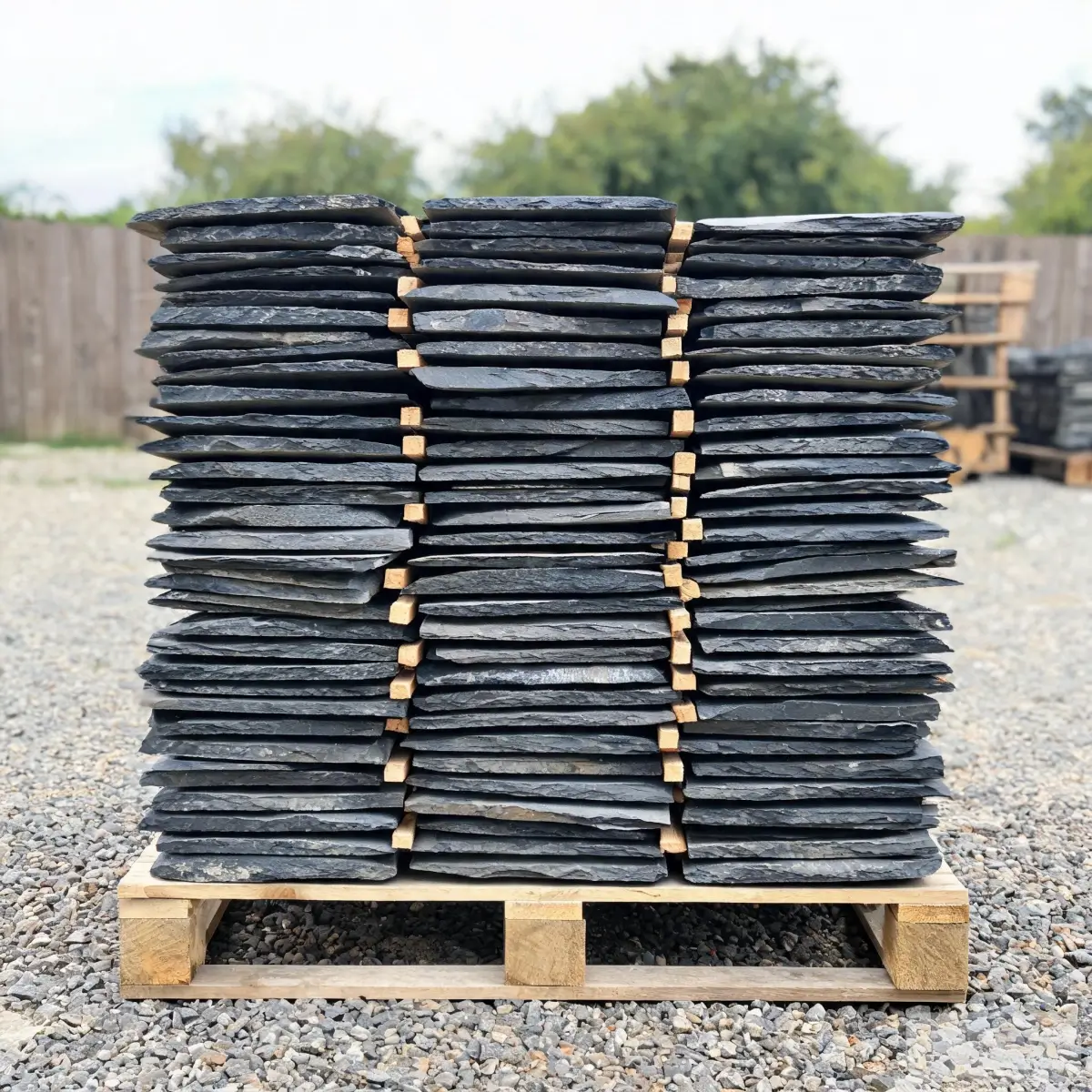
What About the Landscape?
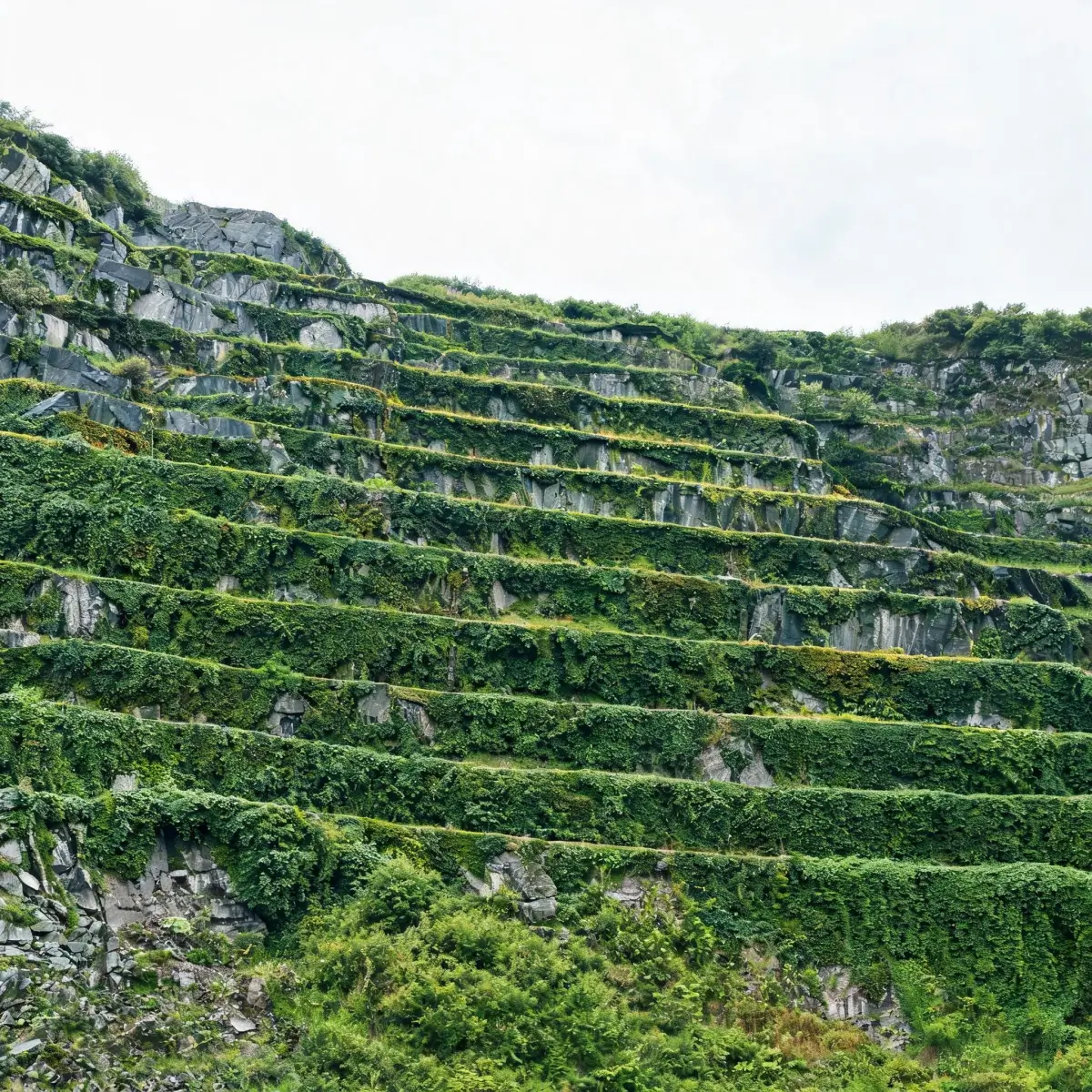
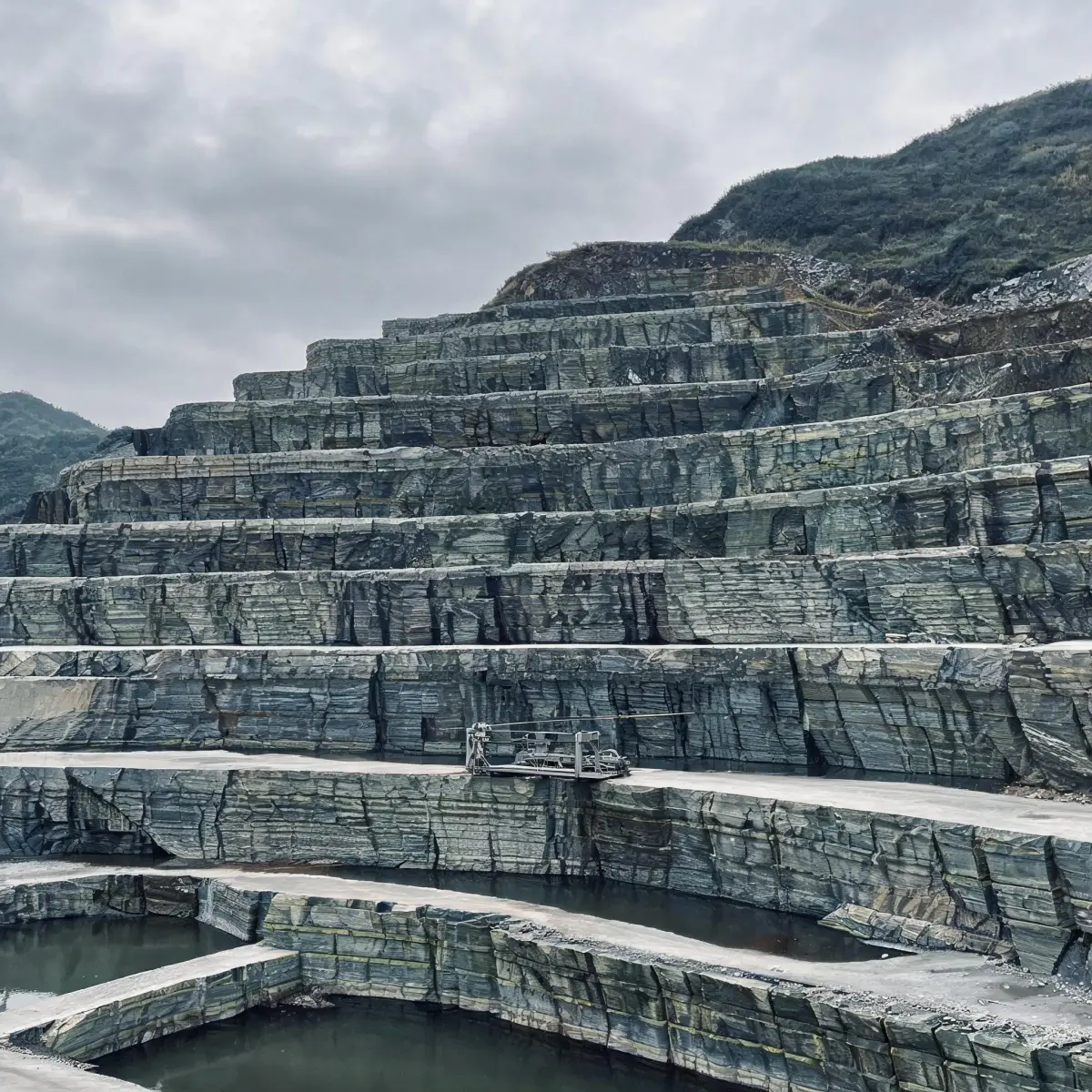
This is the question I take most seriously. A quarry changes the land. There is no way around that. When you remove rock from a mountainside, you leave a face. The question is what you do with that face.At our quarry, we use a method called benched extraction. Instead of taking one vertical cut and leaving a cliff, we work in steps — each bench is 3-5 metres high with a 2-metre wide berm between levels. This does two things: it is safer for the workers (no high wall to collapse), and when extraction finishes on a section, the benches become natural shelves for vegetation. We do not backfill and plant trees on top, because the geology does not support deep-rooted growth on bare rock. What we do is leave the terraced ledges, and within two to three seasons, native vines and moss colonise the faces naturally. I have sections that were finished eight years ago that you would now have to look at twice to realise they were ever a working quarry.This is not perfect restoration. I will not pretend it is. But it is honest stewardship: the landscape changes, it does not recover to its original form, and it does become a stable, vegetated surface that supports local ecology. The alternative — not quarrying at all — means using concrete or clay, both of which require raw material extraction (limestone for cement, clay for tiles) plus kiln firing. The landscape impact is simply moved elsewhere and amplified by the energy input.Transport: A Small but Real Number
Slate is heavy. A 20ft container of 7-9mm roofing slate weighs about 27 tonnes. Shipping that from Jiujiang to Rotterdam by sea adds roughly 0.03 kg CO₂ per square metre of roof — a tiny fraction of the total embodied carbon, but not zero. For comparison, driving the same container 300 km by truck from a European quarry to a UK site adds about 0.01 kg CO₂/m². The lesson here is simple: transport matters, but it is never the dominant factor for slate. The dominant factor is always how many times you have to replace the roof.The real environmental advantage of slate is that you ship it once. A concrete tile roof shipped 50 km will still need replacing 2-3 times over 100 years. Each replacement means more raw materials, more kiln energy, more transport, more landfill. Slate is shipped once and stays.The Service Life: 100 Years of Nothing
End of Life: Not the End
When a slate roof is finally removed — usually because the building is demolished, not because the slate has failed — the tiles do not go to landfill. In my experience, 70-80% of the slates from a removed roof are recoverable. We have written about this in detail in our guide to reusing existing roofing slate, but the environmental point is this: the material has a second life.Reclaimed slate goes back onto another roof. It needs no processing beyond sorting, checking for soundness, and re-punching nail holes. No energy input, no chemical treatment, no transport to a recycling facility. The slate simply moves from one roof to another. I have seen slates that were installed in 1904 taken off a building in Wales and sold for reinstallation on a new roof. A material that can be reused after 120 years is not a waste product — it is an asset.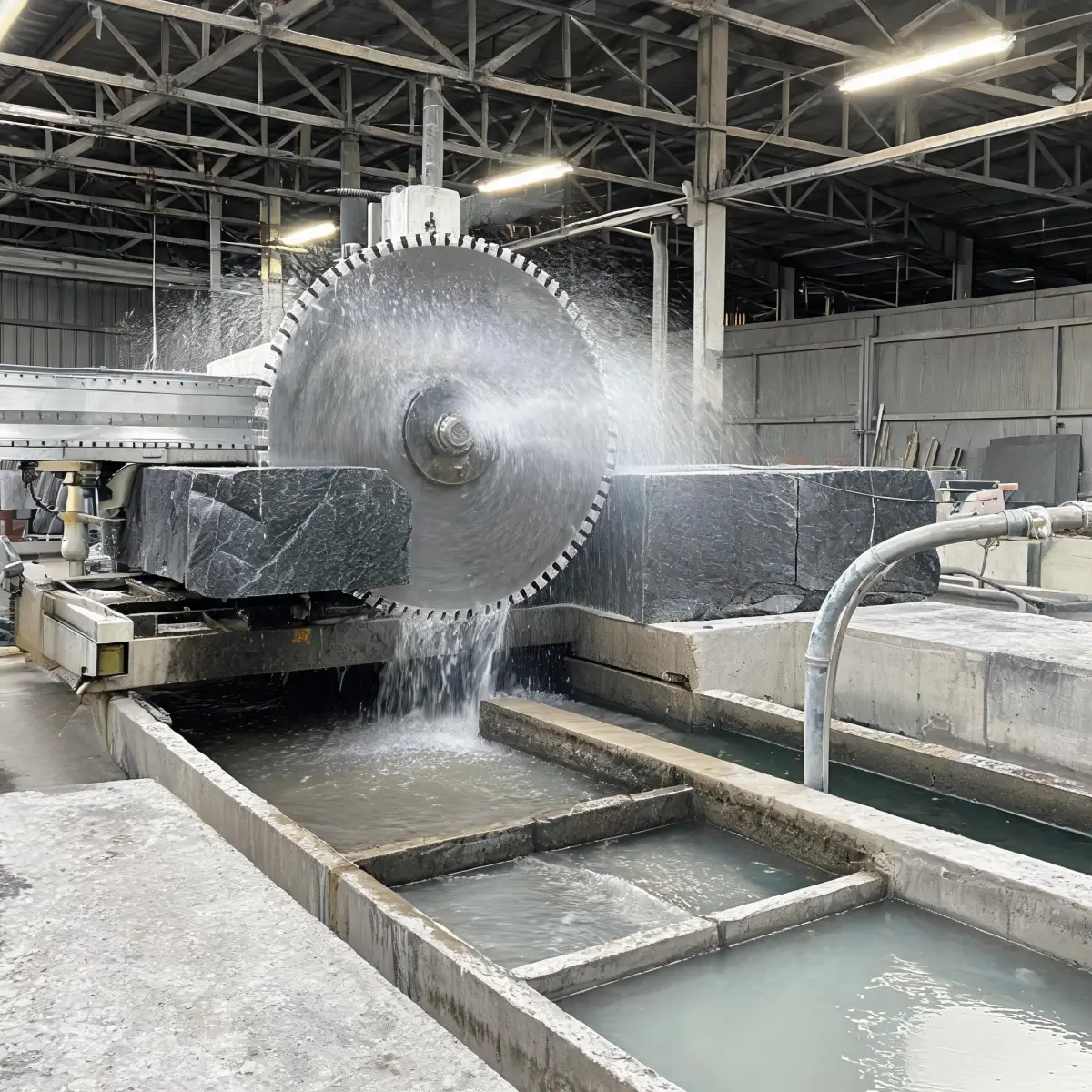
Quarry Restoration: What Happens When the Stone Runs Out
Slate vs Other Roofing Materials: The Full Picture
Questions About the Environmental Impact of Slate
How much carbon dioxide does a slate roof produce compared to concrete tiles?
Over a 100-year period, a natural slate roof has an embodied carbon of roughly 2-4 kg CO₂ per square metre, including quarrying, processing, and sea transport from China to Europe. A concrete tile roof over the same period produces approximately 12-20 kg CO₂ per square metre, because it needs to be replaced 2-3 times and each replacement involves cement production (which is one of the world's largest industrial CO₂ sources). Slate's advantage comes from its service life, not from its production being zero-impact.
Does slate quarrying use a lot of water?
At our quarry, cutting operations use about 2,000 litres per day, but 85% is recycled through a closed-loop settling system. Net fresh water input is approximately 300 litres per day. The settled slurry is pressed into cakes and reused as aggregate or floor stabilisation. This is far less water than a typical household uses daily, and it is not discharged into local waterways.
What about dust and air quality near a slate quarry?
We run continuous dust monitors at the cutting stations. Readings are 0.08-0.15 mg/m³ of respirable particulate, well below the national standard of 0.5 mg/m³. Wet cutting — running the blade through a water curtain — prevents dust from becoming airborne. Blasting, which happens twice a year for about three seconds each time, is the only significant dust event, and we notify nearby villages 48 hours in advance.
Can a slate quarry be restored after the stone is exhausted?
Yes, but restoration means stabilising and revegetating, not returning to the original landscape. We use benched extraction, leaving 3-5 metre steps with 2-metre berms. When a section is finished, we stabilise the face, install drainage, and let natural succession colonise the ledges with native vines and moss. Within 5-10 years, the face is fully green. It is not the original forested slope, but it is a stable, ecologically functional surface — and it is a legal requirement filed with the county environmental bureau.
Is natural slate more environmentally friendly than synthetic slate?
In whole-life terms, yes. Natural slate requires no kiln firing and no chemical additives — it is split and cut, not manufactured. Synthetic slate is typically made from polymer composites or fibre cement, both of which require industrial processing and have shorter service lives (30-50 years vs 100-150 years for natural slate). Synthetic materials also cannot be reclaimed for reuse on another roof — they go to landfill at end of life.
What happens to old slate roofs when they are removed?
Approximately 70-80% of the slates from a removed roof are recoverable and reusable. Reclaimed slate needs no processing beyond sorting and re-punching nail holes. It moves directly from one roof to another, with no energy input and no landfill. We have seen slates installed in 1904 taken off a building and successfully reinstalled on a new roof — a material that is still functional after 120 years is an environmental asset, not a waste stream.
Related Reading
Want to know the environmental specifics of your slate source? Ask for the quarry restoration plan, the water recycling data, and the EN 12326 test report with a batch number. If you are sourcing from China, we can provide all three.
Request samples and environmental documentation →
Or browse our roofing slate products