
How to Import Billiard Slate from China
China is the world’s leading producer and exporter of billiard slate, supplying premium slate for snooker tables, pool tables, and carom tables to customers worldwide. Thanks to its abundant natural slate resources, advanced manufacturing technology, skilled workmanship, and competitive production costs, China has become the preferred sourcing destination for billiard table manufacturers, distributors, wholesalers, and importers.
Importing billiard slate from China is more than simply choosing a supplier. Buyers need to evaluate manufacturing capabilities, confirm slate specifications, inspect product quality, select suitable packaging, arrange international shipping, and prepare the necessary import documentation. Understanding each stage of the process helps reduce risks, avoid costly mistakes, and ensure that every shipment arrives safely and meets your quality expectations.
Whether you are importing your first container or looking for a long-term manufacturing partner, this guide will walk you through every step of the import process—from selecting a reliable supplier and confirming technical specifications to quality inspection, container loading, customs clearance, and final delivery. By following these practical recommendations, you can source high-quality billiard slate from China with greater confidence, efficiency, and cost control.
Table of Contents
Why Natural Slate Is Used for Billiard Tables
Over the past two decades, China has become one of the world’s leading manufacturing and export hubs for billiard slate. Today, many billiard table manufacturers, distributors, wholesalers, and retailers across North America, Europe, Australia, and Southeast Asia source their slate from China because of its outstanding balance of quality, production capability, and cost efficiency.
Compared with many other sourcing regions, Chinese manufacturers offer not only competitive pricing but also advanced CNC machining, strict quality control, flexible customization, and extensive export experience. These advantages help buyers reduce procurement costs while maintaining consistent product quality and reliable delivery schedules.
China vs. Other Sourcing Countries
| Feature | China | Other Countries |
|---|---|---|
| Manufacturing Cost | ✅ More Competitive | Higher Production Cost |
| Production Capacity | ✅ Large-Scale Manufacturing | Limited Capacity |
| OEM & Custom Machining | ✅ Fully Supported | Limited Options |
| Export Experience | ✅ Extensive Global Experience | Less Export Experience |
| CNC Precision Machining | ✅ Advanced Equipment | Varies by Supplier |
| Lead Time | ✅ Faster Production | Often Longer |
| International Packaging | ✅ Export-Standard Packing | Varies |
| Product Availability | ✅ Stable Supply | May Be Limited |
Key Advantages of Importing Billiard Slate from China
Stable Product Quality
Leading Chinese billiard slate manufacturers use carefully selected natural slate combined with modern CNC machining and strict quality inspection procedures. Every slate is processed to meet demanding flatness, dimensional accuracy, and surface finish requirements, ensuring consistent playing performance for professional and commercial billiard tables.
Competitive Pricing Without Compromising Quality
China benefits from abundant natural slate resources, mature manufacturing infrastructure, and highly efficient production processes. These advantages allow manufacturers to offer high-quality billiard slate at competitive prices while maintaining reliable quality standards, making China an excellent sourcing destination for both small and large-volume buyers.
Advanced CNC Machining and Custom Manufacturing
Modern CNC processing equipment enables precise machining of:
- Pocket cut-outs
- Bolt holes
- Dowel holes
- Frame recesses
- Custom dimensions
- OEM machining requirements
Whether you require pool table slate, snooker slate, or customized billiard slate for your own table design, experienced manufacturers can produce according to your technical drawings and specifications.
Reliable Export Packaging
Professional suppliers understand the challenges of international transportation. Export-standard packaging typically includes moisture protection, foam cushioning, reinforced plywood crates, corner protection, and secure pallet loading to minimize the risk of damage during long-distance sea freight.
Fast Production and Reliable Delivery
With mature production lines and experienced export teams, most manufacturers can efficiently manage orders from prototype quantities to full container shipments. Stable production scheduling, strict quality control, and established logistics partnerships help ensure on-time delivery for international customers.
Rich International Export Experience
Many Chinese billiard slate manufacturers have been supplying customers worldwide for years, serving billiard table manufacturers, wholesalers, importers, and distributors in more than 50 countries. Their familiarity with international quality standards, export documentation, container loading, and customs requirements helps simplify the importing process and reduce potential risks.
Why Global Buyers Choose China
Importing billiard slate from China is no longer simply about finding the lowest price—it’s about partnering with an experienced manufacturer that can consistently deliver precision-machined slate, reliable quality, professional export packaging, and dependable international service. By choosing the right supplier, buyers can reduce procurement costs, improve supply chain efficiency, and receive products that meet the expectations of both commercial and professional billiard markets.
Looking for a reliable billiard slate manufacturer in China?
We supply premium natural billiard slate with precision CNC machining, strict quality inspection, export-standard packaging, and worldwide shipping. Contact us today to discuss your project or request a quotation.
Step 1 – Find a Reliable Billiard Slate Supplier
Choosing the right supplier is the most important step when importing billiard slate from China. A reliable manufacturer not only provides high-quality products but also helps reduce purchasing risks, avoid costly delays, and ensure smooth communication throughout the entire project.
Instead of comparing suppliers based on price alone, buyers should evaluate their manufacturing capability, quality control system, export experience, and customer service. An experienced billiard slate manufacturer will be able to provide technical support, consistent product quality, and professional export services from production to final delivery.
Below are the key factors every buyer should consider before placing an order.
1. Manufacturer or Trading Company?
Whenever possible, work directly with a billiard slate manufacturer rather than a trading company.
A genuine manufacturer usually offers:
- Lower factory-direct pricing
- Better production control
- Faster technical communication
- Flexible OEM and custom machining
- More stable product quality
- Shorter production lead times
Trading companies can be helpful in some situations, but they often have limited control over production schedules and quality inspection.
Tip: Ask for factory photos, production videos, CNC workshop images, or arrange a video factory tour to verify the supplier’s manufacturing capability.
2. Export Experience Matters
Manufacturing high-quality slate is only part of the job. International buyers also need a supplier who understands export procedures and overseas customer requirements.
Choose a supplier with proven experience in exporting to markets such as:
- USA
- Canada
- United Kingdom
- Europe
- Australia
- Southeast Asia
An experienced exporter will already understand:
- International packing standards
- Shipping documentation
- Container loading
- Customs requirements
- International quality expectations
This reduces delays and minimizes the risk of shipping or documentation problems.
3. Advanced CNC Machining Capability
Modern billiard slate requires much more than simple cutting.
Professional manufacturers should be equipped with CNC machining centers capable of producing:
- Precision pocket cut-outs
- Accurate bolt holes
- Dowel holes
- Frame recesses
- Customized machining
- OEM drawings
High-precision CNC processing ensures that every slate section fits together accurately during installation and provides a perfectly level playing surface.
4. Flatness Inspection and Quality Control
Flatness is one of the most important quality indicators of billiard slate.
A reliable supplier should inspect every slate before shipment using professional measuring equipment and established inspection procedures.
Quality inspection should include:
- Surface flatness
- Thickness tolerance
- Length and width accuracy
- Pocket dimensions
- Hole positioning
- Edge finish
- Surface appearance
Ask the supplier whether they can provide flatness inspection reports or quality inspection records before shipment.
Related Guide: Quality Inspection & Flatness Control
5. Quality Management System
A professional manufacturer should follow a documented quality management process throughout production.
Look for suppliers that have:
- ISO quality management certification
- Standard inspection procedures
- Production records
- Final quality inspection before packing
- Traceable manufacturing processes
Although certification alone does not guarantee product quality, it demonstrates that the supplier operates with standardized manufacturing and inspection procedures.
6. Export Packaging Capability
Billiard slate is heavy, fragile, and transported over long distances.
Poor packaging can lead to cracked slate, damaged edges, or expensive claims.
Ask whether the supplier provides:
- Export-grade plywood crates
- Moisture-proof protection
- Foam cushioning
- Corner protection
- Reinforced pallet base
- Safe container loading
Professional packaging significantly reduces the risk of damage during sea transportation.
Related Guide: Billiard Slate Packing & Shipping Guide
7. Professional English Communication
Good communication is often overlooked but is essential for a successful import project.
Choose a supplier that responds promptly, understands technical drawings, and communicates clearly in English.
A professional sales team should be able to:
- Answer technical questions accurately
- Confirm drawings and specifications
- Provide production updates
- Send inspection photos and videos
- Prepare complete export documents
- Respond quickly after shipment
Clear communication helps prevent misunderstandings and saves both time and money.
Supplier Evaluation Checklist
Before placing your order, use the following checklist to evaluate potential suppliers.
| Evaluation Item | Check |
|---|---|
| Is the supplier a manufacturer rather than only a trading company? | ☐ |
| Do they have extensive export experience? | ☐ |
| Can they provide factory photos or videos? | ☐ |
| Do they use advanced CNC machining equipment? | ☐ |
| Do they perform flatness and dimensional inspections? | ☐ |
| Do they have a documented quality control system (e.g., ISO)? | ☐ |
| Can they provide export-standard packaging? | ☐ |
| Can they produce according to OEM drawings or custom specifications? | ☐ |
| Is their communication professional and responsive? | ☐ |
| Can they provide inspection reports, production photos, and shipping updates? | ☐ |
Pro Tip
Don’t choose a supplier based solely on the lowest price. A slightly higher quotation from an experienced manufacturer often results in better machining accuracy, more reliable quality, stronger export packaging, fewer delays, and lower overall procurement costs. For international buyers, a dependable supplier is a long-term partner—not just the lowest bidder.
Step 2 – Confirm Your Billiard Slate Specifications
Before production begins, make sure all technical specifications are confirmed with your supplier. A complete specification sheet helps prevent production errors, avoids unnecessary delays, and ensures the finished slate matches your billiard table design perfectly.
Even a small difference in slate size, thickness, machining details, or hole positions can lead to installation problems or additional modification costs after delivery.
Below are the key specifications every buyer should confirm before placing an order.
1. Table Size
The first step is to determine the table size for which the slate is designed.
The most common sizes include:
| Table Type | Common Size |
|---|---|
| Pool Table | 7 ft |
| Pool Table | 8 ft |
| Pool Table | 9 ft |
| Snooker Table | 10 ft |
| Tournament Snooker Table | 12 ft |
Always specify the exact table size instead of simply saying “pool slate” or “snooker slate,” as dimensions vary between different table models and manufacturers.
Related Guide: Pool Slate Size Guide
2. Slate Configuration
Choose the most suitable slate configuration according to your table design and market requirements.
One-Piece Slate
- Easier installation
- Excellent rigidity
- Common for coin-operated and home-use tables
- More difficult and expensive to transport
Three-Piece Slate
- Easier handling and shipping
- Simplified installation in confined spaces
- Preferred for commercial and professional tables
- Widely used for 8 ft, 9 ft, and 12 ft tables
Most international buyers choose three-piece billiard slate because it offers the best balance between transportation, installation, and playing performance.
3. Slate Thickness
Selecting the correct slate thickness is essential for table stability and playing performance.
Common thicknesses include:
| Thickness | Typical Application |
|---|---|
| 19 mm (3/4″) | Home Pool Tables |
| 25 mm (1″) | Commercial Pool Tables |
| 30 mm | Heavy-Duty Pool Tables |
| 45 mm | Professional Snooker Tables |
| 50 mm | Tournament Snooker Tables |
If you are unsure which thickness is appropriate, discuss your table design and target market with your supplier before production.
Related Guides:
4. Pocket Cut Design
Pocket openings must match your table design precisely.
Confirm:
- Pocket shape
- Pocket dimensions
- Pocket angle
- Corner pocket design
- Side pocket design
Incorrect pocket machining may require costly rework or prevent proper table assembly.
5. Bolt Hole Layout
Bolt holes are one of the most frequently overlooked specifications.
Before production, confirm:
- Hole quantity
- Hole diameter
- Hole position
- Counterbore requirements
- Drawing dimensions
Always provide your table drawing whenever possible to ensure perfect compatibility.
6. CNC Machining Requirements
Most modern billiard slate is produced using CNC machining for maximum precision.
Typical CNC operations include:
- Pocket machining
- Bolt holes
- Dowel holes
- Frame recesses
- Alignment grooves
- Custom machining
- OEM designs
Providing CAD drawings or technical files greatly reduces the risk of production errors.
7. Wax Groove (Seam Groove)
If using three-piece slate, confirm whether wax grooves are required.
Wax grooves help:
- Fill the joints between slate sections
- Create a smooth playing surface
- Improve installation quality
- Simplify leveling after assembly
Different markets and table brands may use different groove designs, so confirm the required specifications before machining.
8. Private Label or Product Identification
Many distributors and billiard table manufacturers require customized identification.
Available options may include:
- Company logo
- Private label
- Laser engraving
- Product code
- Serial number
- Packaging label
- OEM branding
Custom labeling helps strengthen your brand identity and simplifies inventory management.
Specification Confirmation Checklist
Before production starts, make sure the following items have been confirmed with your supplier.
| Item | Confirmed |
|---|---|
| Table size (7 ft, 8 ft, 9 ft, 10 ft, 12 ft) | ☐ |
| One-piece or three-piece slate | ☐ |
| Slate thickness | ☐ |
| Pocket cut dimensions | ☐ |
| Bolt hole layout | ☐ |
| CNC machining details | ☐ |
| Wax groove design | ☐ |
| Technical drawings approved | ☐ |
| OEM logo or private label | ☐ |
| Final production drawing confirmed | ☐ |
Pro Tip
Always request and approve the final machining drawing before production begins. Even experienced manufacturers rely on approved technical drawings to verify pocket cuts, bolt hole locations, CNC machining details, and other critical dimensions. Spending a little extra time on drawing confirmation can prevent costly production errors, shipping delays, and installation problems.
Step 3 – Review Drawings and Request Samples
Before mass production begins, buyers should carefully review all technical drawings and request samples if necessary. This step helps ensure that both the customer and the manufacturer have a clear understanding of the product specifications, machining details, and quality requirements before production starts.
For billiard slate, an approved drawing is often more important than a physical sample because it defines every critical machining dimension. Taking time to verify the drawings can prevent costly production errors, shipping delays, and installation issues later.
1. Review CAD Drawings
Professional billiard slate manufacturers normally prepare CAD drawings for customer approval before production.
These drawings typically include:
- Slate dimensions
- Overall layout
- Pocket locations
- Hole positions
- Thickness
- Section configuration
- Reference dimensions
Reviewing the CAD drawing ensures that the slate matches your table design before any machining begins.
Never approve production without first checking the final drawing.
2. Confirm Machining Drawings
Besides the general CAD drawing, suppliers may also provide detailed machining drawings showing every CNC operation.
Typical machining details include:
- Pocket cut dimensions
- Bolt hole locations
- Dowel holes
- Frame recesses
- Wax groove design
- Chamfers
- Edge machining
If your table uses a custom frame or proprietary design, provide your technical drawings so the supplier can prepare matching CNC machining drawings for approval.
3. Verify All Dimensions
Even experienced manufacturers rely on customer confirmation before production.
Before approving the drawings, carefully verify:
| Item | Confirm |
|---|---|
| Overall slate dimensions | ✓ |
| Slate thickness | ✓ |
| Pocket positions | ✓ |
| Pocket sizes | ✓ |
| Bolt hole locations | ✓ |
| CNC machining details | ✓ |
| Wax groove dimensions | ✓ |
| One-piece or three-piece configuration | ✓ |
A few minutes spent reviewing the drawings can prevent weeks of production delays or expensive rework.
4. Request Slate Samples (If Required)
Although full-size slate samples are impractical due to their weight, many manufacturers can provide small slate samples upon request.
These samples allow buyers to evaluate:
- Natural slate material
- Surface texture
- Color consistency
- Material density
- Edge finish
Small samples are particularly useful for new customers who want to verify the raw material before placing a bulk order.
5. Request Surface Finish Samples
If surface appearance is important for your project, ask the supplier to provide a surface finish sample.
This helps confirm:
- Grinding quality
- Surface smoothness
- Color variation
- Natural stone texture
- Edge finishing
It also provides a reference standard for mass production.
6. Request Packaging Samples
International transportation places heavy demands on packaging.
Before placing a large order, you may ask the supplier to provide:
- Packaging photos
- Packing drawings
- Plywood crate details
- Foam protection examples
- Corner protection design
- Wooden crate specifications
Some manufacturers can also prepare a packaging sample for evaluation, especially for OEM projects or long-term cooperation.
Why Drawing Approval Is More Important Than Samples
Unlike many manufactured products, billiard slate is custom-machined according to the customer’s table design. In most cases, the accuracy of the machining drawings has a greater impact on the final product than a physical sample.
A fully approved CAD drawing ensures that:
- Every pocket is correctly positioned.
- All bolt holes align with the table frame.
- CNC machining matches your specifications.
- The slate fits perfectly during installation.
- Production can proceed without unnecessary revisions.
For this reason, experienced international buyers usually prioritize drawing approval before requesting physical samples.
Buyer Checklist
Before approving production, confirm that you have received and reviewed the following:
| Item | Checked |
|---|---|
| CAD drawing | ☐ |
| CNC machining drawing | ☐ |
| Overall dimensions confirmed | ☐ |
| Pocket cut dimensions approved | ☐ |
| Bolt hole layout confirmed | ☐ |
| Wax groove details confirmed | ☐ |
| Surface finish requirements confirmed | ☐ |
| Packaging details reviewed | ☐ |
| Small slate sample received (if required) | ☐ |
Pro Tip
Treat the approved drawing as the production contract. Once the CAD and machining drawings are confirmed by both parties, they become the reference for manufacturing, inspection, and final acceptance. If any dimensions or machining details are unclear, request revisions before production starts—not after the slate has been machined.
.
Step 4 – Request a Detailed Quotation
Once your product specifications have been confirmed, the next step is to request a detailed quotation from your supplier. A professional quotation should provide much more than just the product price—it should clearly explain what is included, the applicable trade terms, production schedule, payment conditions, and other important commercial details.
A complete quotation helps buyers compare suppliers fairly, estimate total import costs, and avoid unexpected charges later in the purchasing process.
When requesting a quotation, always ask the supplier to include the following information.
What Should Be Included in a Professional Quotation?
| Item | Description |
|---|---|
| Product Specification | Table size, slate thickness, one-piece or three-piece configuration, machining requirements |
| Unit Price | Price per set or per piece |
| Packaging | Export-standard plywood crate, pallet, foam protection, etc. |
| Trade Terms | EXW, FOB, CIF, DDP, or other agreed Incoterms |
| Production Lead Time | Estimated manufacturing time after deposit |
| Minimum Order Quantity (MOQ) | Minimum order requirement |
| Payment Terms | Deposit, balance payment, payment method |
| Shipping Port | Departure port (e.g., Shanghai, Ningbo, Xiamen) |
| Quotation Validity | Period during which the quotation remains valid |
Understand Different Trade Terms
International quotations are usually based on Incoterms, which define the responsibilities of the buyer and supplier.
EXW (Ex Works)
The buyer arranges transportation from the supplier’s factory and is responsible for all export and import costs.
Best for: Buyers with their own freight forwarder in China.
FOB (Free On Board)
The supplier delivers the goods to the designated port and completes export customs clearance. The buyer pays the ocean freight and import costs.
Best for: Most international importers.
CIF (Cost, Insurance and Freight)
The supplier arranges ocean freight and marine insurance to the destination port. The buyer is responsible for customs clearance and local charges after arrival.
Best for: Buyers who prefer the supplier to arrange international shipping.
DDP (Delivered Duty Paid)
The supplier manages transportation, customs clearance, import duties, and delivery to the buyer’s specified address.
Best for: Buyers seeking a simplified door-to-door purchasing experience.
Ask About Production Lead Time
Production time depends on factors such as order quantity, machining complexity, and current factory workload.
Typical lead times may include:
| Order Type | Estimated Lead Time |
|---|---|
| Sample Order | 7–15 days |
| Small Batch | 15–25 days |
| Full Container Order | 25–40 days |
Always confirm whether the quoted lead time begins after the deposit is received and the production drawings have been approved.
Understand MOQ (Minimum Order Quantity)
MOQ varies among manufacturers.
Some suppliers can produce one complete set for sample evaluation, while others may require larger quantities for customized machining or OEM orders.
If your order is for product testing or market development, discuss your expected order volume with the supplier in advance. Many manufacturers are willing to offer flexible solutions for long-term business partnerships.
Confirm Payment Terms
Payment terms should be agreed before production begins.
Common payment methods include:
- T/T (Telegraphic Transfer)
- L/C (Letter of Credit) for qualified orders
A typical payment arrangement is:
- 30% deposit before production
- 70% balance before shipment or against agreed shipping documents
Always clarify:
- Deposit percentage
- Balance payment timing
- Accepted currencies
- Bank charges
- Payment deadlines
Example Quotation
The following example illustrates what a professional quotation may include.
| Item | Example |
|---|---|
| Product | 9 ft Three-Piece Pool Table Slate |
| Thickness | 25 mm |
| Material | Natural Billiard Slate |
| Machining | CNC Pocket Cuts & Bolt Holes |
| Quantity | 50 Sets |
| Packaging | Export Plywood Crates |
| Trade Term | FOB Shanghai |
| Production Lead Time | 30 Days |
| MOQ | 10 Sets |
| Payment | 30% T/T Deposit, 70% Before Shipment |
| Quotation Validity | 30 Days |
Note: This quotation is provided as an example only. Actual prices, lead times, and commercial terms vary depending on product specifications, order quantity, machining requirements, packaging, destination, and current market conditions.
Questions to Ask Before Accepting a Quotation
Before placing your order, make sure you have answers to the following questions:
✔ Does the quotation include export packaging?
✔ Which Incoterm is being used (EXW, FOB, CIF, or DDP)?
✔ Is ocean freight included?
✔ What is the production lead time?
✔ Is the quotation based on the approved drawings?
✔ Are CNC machining costs included?
✔ Does the price include inspection before shipment?
✔ What are the payment terms?
✔ How long is the quotation valid?
✔ Are there any additional charges not listed?
Pro Tip
Don’t compare quotations based on price alone. A lower price may exclude CNC machining, export packaging, quality inspection, or shipping services that another supplier has already included. Compare quotations item by item to understand the true total cost and avoid unexpected expenses after placing your order.
Step 5 – Understand the Manufacturing Process
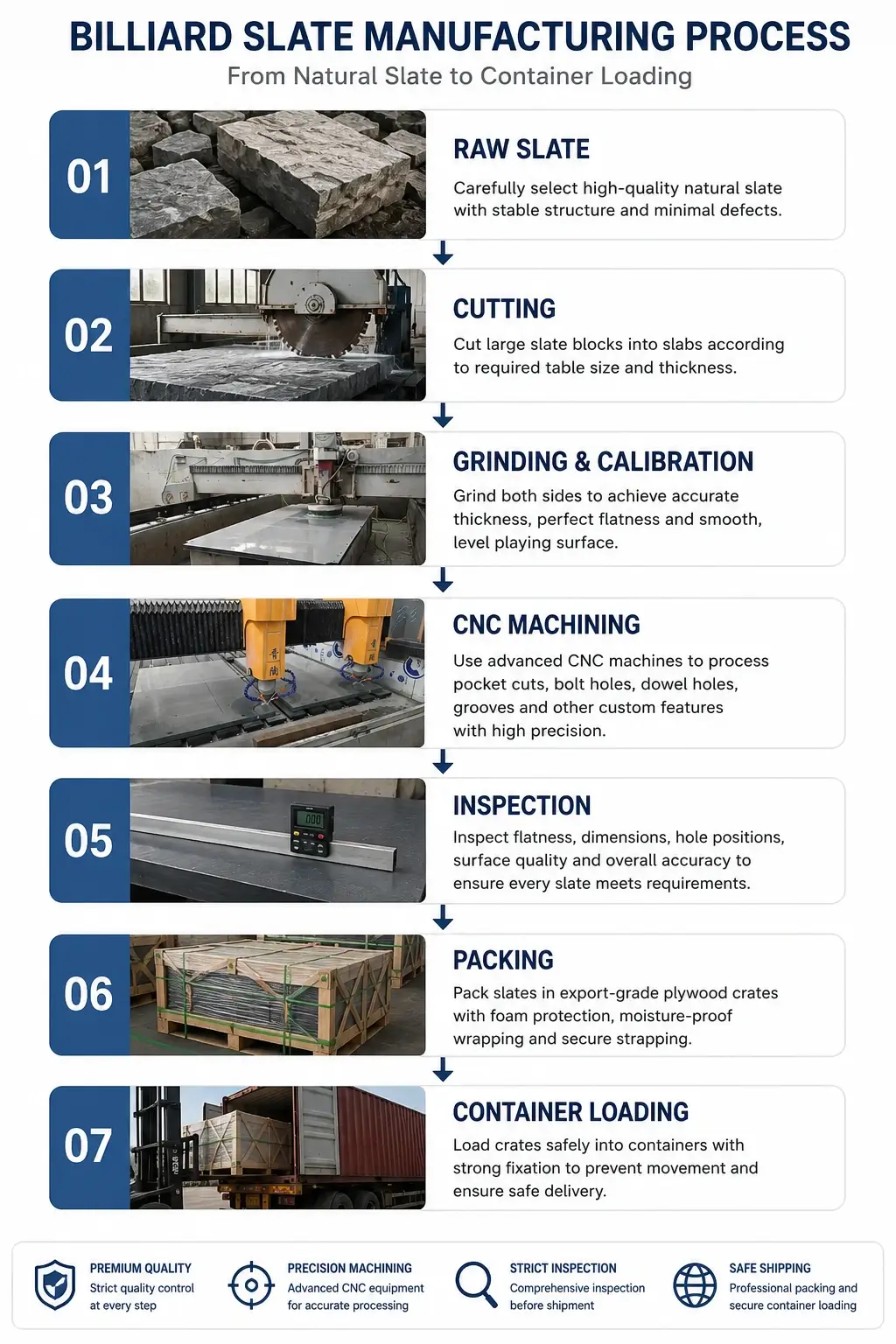
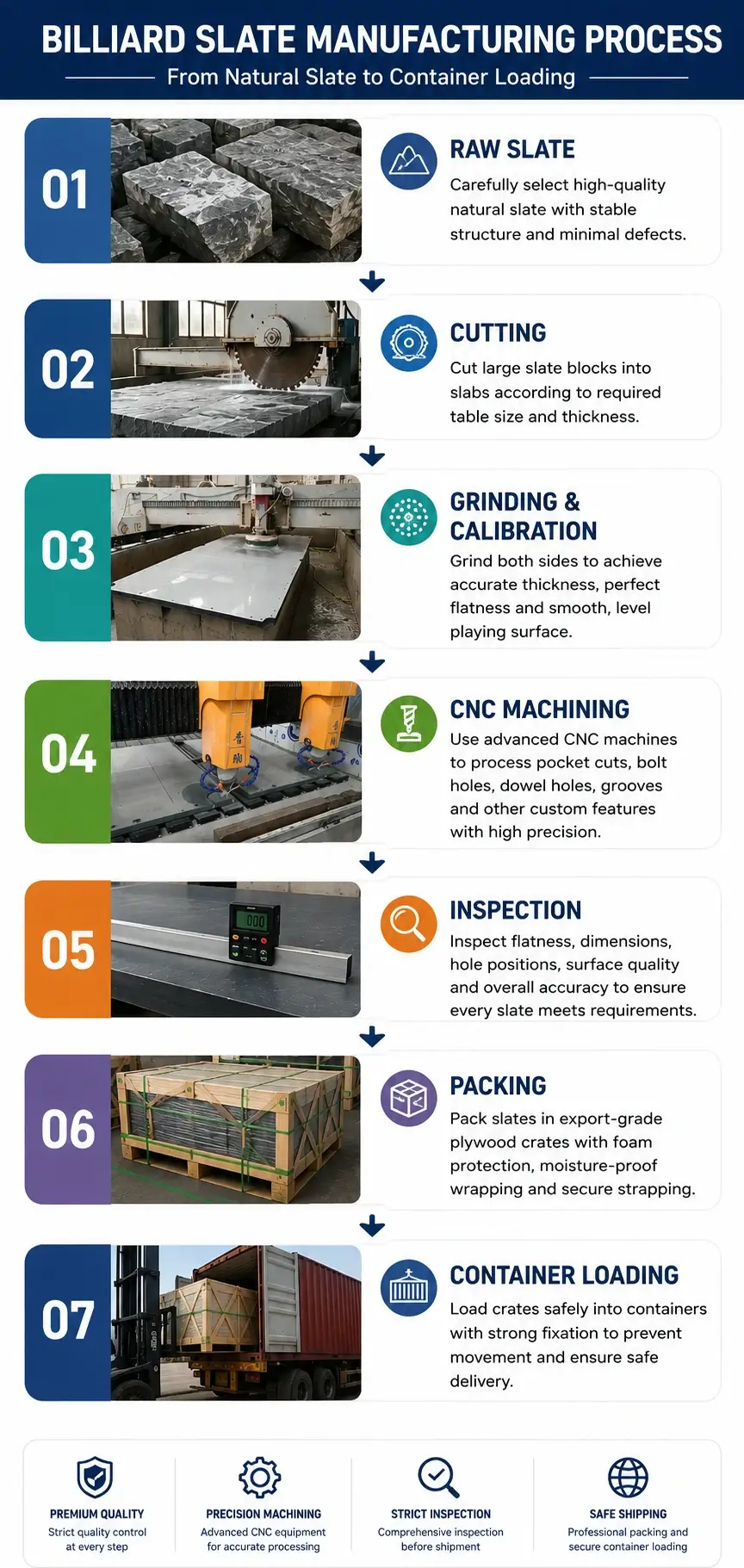
Understanding how billiard slate is manufactured helps buyers evaluate product quality, production capability, and supplier reliability. Although the manufacturing process may vary slightly between factories, professional billiard slate manufacturers generally follow a standardized production workflow to ensure consistent quality and machining accuracy.
From selecting premium natural slate to precision CNC machining and final quality inspection, every production stage plays an important role in creating a durable, flat, and high-performance billiard slate.
The typical manufacturing process is outlined below.
Typical Billiard Slate Manufacturing Process
Raw Slate
      ↓
Block Cutting
      ↓
Surface Grinding
      ↓
CNC Machining
      ↓
Quality Inspection
      ↓
Export Packing
      ↓
Container Loading
1. Raw Slate Selection
The manufacturing process begins with carefully selected natural slate blocks.
High-quality raw slate should have:
- Uniform density
- Stable structure
- Minimal natural defects
- Excellent dimensional stability
Selecting premium raw materials provides the foundation for producing durable billiard slate with long-term playing performance.
2. Block Cutting
Large slate blocks are cut into slabs according to the required table size and thickness.
During this stage, manufacturers control:
- Overall dimensions
- Thickness allowance
- Material utilization
- Surface integrity
Accurate cutting helps reduce waste and prepares the slate for precision machining.
3. Surface Grinding
After cutting, each slate undergoes multiple grinding operations to achieve a smooth and level playing surface.
Professional grinding improves:
- Surface flatness
- Thickness consistency
- Surface smoothness
- Installation accuracy
Flatness is one of the most critical quality factors for professional billiard tables.
4. CNC Precision Machining
Modern billiard slate is manufactured using advanced CNC machining equipment to ensure excellent dimensional accuracy.
Typical CNC operations include:
- Pocket cut-outs
- Bolt holes
- Dowel holes
- Frame recesses
- Wax grooves
- Edge profiling
- Custom OEM machining
Computer-controlled machining significantly improves consistency and repeatability compared with manual processing.
5. Quality Inspection
Before packing, every finished slate should undergo comprehensive quality inspection.
Typical inspection items include:
- Surface flatness
- Thickness tolerance
- Overall dimensions
- Pocket accuracy
- Hole positioning
- Surface appearance
- Edge quality
Professional inspection ensures that every slate meets the customer’s approved specifications before shipment.
6. Export Packaging
After inspection, the slate is carefully packed for international transportation.
Export-standard packaging generally includes:
- Fumigation-free plywood crates
- Foam protection
- Moisture-resistant wrapping
- Corner protection
- Reinforced pallets
- Secure strapping
Proper packaging minimizes the risk of damage during long-distance sea freight.
7. Container Loading
Finally, the packaged slate is loaded into shipping containers using safe loading procedures.
Professional loading practices help:
- Maximize container utilization
- Prevent movement during transportation
- Reduce the risk of impact damage
- Ensure safe arrival at the destination
Careful container loading is the final step before international shipment.
Why the Manufacturing Process Matters
Many buyers focus only on the final price, but the manufacturing process has a direct impact on the quality, durability, and installation performance of billiard slate.
A manufacturer with modern equipment, standardized production procedures, and strict quality control is more likely to deliver:
- Better flatness
- Higher machining accuracy
- Consistent product quality
- Faster production
- Lower defect rates
- More reliable delivery
Understanding the production process also helps buyers compare suppliers based on manufacturing capability rather than price alone.
Learn More About Our Manufacturing Process
This page provides a simplified overview of the production workflow.
If you would like to learn more about each manufacturing stage—including raw material selection, grinding, CNC machining, flatness inspection, and quality control—please read our detailed guide:
Pro Tip
Ask your supplier to share production photos or videos during manufacturing. Many professional manufacturers regularly provide updates showing raw materials, CNC machining, quality inspections, and packaging. This improves transparency, confirms production progress, and gives buyers greater confidence before shipment.
Step 6 – Inspect Product Quality Before Shipment
Before your billiard slate is packed and shipped, a thorough quality inspection is essential. Even the highest-quality raw materials and advanced CNC machining cannot guarantee a perfect product without a final inspection.
For international buyers, identifying any issues before shipment is far easier and less expensive than resolving problems after the goods arrive. A professional pre-shipment inspection helps ensure that every slate meets the agreed specifications, minimizes the risk of damage or installation issues, and provides confidence that the products are ready for export.
Below are the key quality items that should be inspected before shipment.
1. Flatness Inspection
Flatness is the most important quality requirement for billiard slate. Even slight surface deviations can affect ball roll, playing accuracy, and overall table performance.
Professional manufacturers use precision measuring equipment to verify that the playing surface meets specified flatness tolerances before shipment.
A proper flatness inspection should confirm:
- Surface levelness
- Overall flatness
- Consistency across all slate sections
- Smooth joints between adjoining pieces
Always ask your supplier whether flatness inspection records or measurement reports are available.
2. Thickness Tolerance
Consistent thickness is equally important for accurate installation and long-term table stability.
During inspection, verify:
- Overall slate thickness
- Thickness consistency
- Compliance with customer specifications
- Uniform machining across all pieces
Uneven thickness may create installation difficulties and require additional leveling during assembly.
3. Edge Finishing
The edges of the slate should be clean, straight, and free from damage.
Inspect for:
- Smooth edge grinding
- Clean chamfers (if specified)
- No chips or cracks
- Accurate edge dimensions
Proper edge finishing not only improves appearance but also reduces the risk of damage during handling and installation.
4. Pocket Cut Accuracy
Pocket openings must be machined according to the approved drawings.
Inspect:
- Pocket dimensions
- Pocket positions
- Pocket radius
- Machining quality
- Surface finish around the pockets
Accurate pocket machining ensures proper rail installation and consistent playing performance.
5. Bolt Hole Position
Bolt holes should precisely match the customer’s table frame.
Check:
- Hole quantity
- Hole diameter
- Hole position
- Hole spacing
- Counterbore quality (if required)
Incorrect bolt hole locations can make installation difficult or even prevent assembly.
6. Surface Appearance
Before shipment, every slate should be visually inspected for surface quality.
Look for:
- Scratches
- Chips
- Cracks
- Surface contamination
- Grinding marks
- Edge damage
Minor natural color variations are normal for natural slate, but structural defects should not be accepted.
7. Color Consistency
Natural billiard slate is a natural stone product, so slight color variations may occur.
However, the slate supplied for one table should have a generally consistent appearance.
Inspect for:
- Uniform color tone
- Natural surface texture
- Similar appearance across all slate sections
Consistent color gives the finished table a more professional appearance while confirming that the pieces originate from the same production batch.
Recommended Pre-Shipment Inspection Checklist
Before approving shipment, confirm the following inspection items:
| Inspection Item | Checked |
|---|---|
| Surface flatness | ☐ |
| Thickness tolerance | ☐ |
| Overall dimensions | ☐ |
| Pocket cut accuracy | ☐ |
| Bolt hole positions | ☐ |
| Edge finishing | ☐ |
| Surface appearance | ☐ |
| Color consistency | ☐ |
| CNC machining quality | ☐ |
| Packaging inspection | ☐ |
Why Pre-Shipment Inspection Matters
A comprehensive inspection before shipment helps protect both the buyer and the supplier.
It can:
- Reduce quality disputes
- Prevent costly returns or replacements
- Ensure smooth installation
- Verify compliance with approved drawings
- Improve customer satisfaction
- Minimize project delays
For international shipments, correcting a problem before loading is significantly easier and more economical than addressing it after the goods have arrived.
Learn More About Quality Inspection
This section provides a general overview of the inspection process.
For detailed information about flatness testing methods, inspection equipment, dimensional tolerances, and quality control procedures, please read our dedicated guide:
Pro Tip
Request inspection photos, measurement records, or videos before the container is loaded. Many experienced manufacturers can provide visual evidence of flatness checks, dimensional measurements, CNC machining, and final packaging. Reviewing these records before shipment gives buyers greater confidence and helps avoid misunderstandings after delivery.
Step 7 – Export Packing and Protection
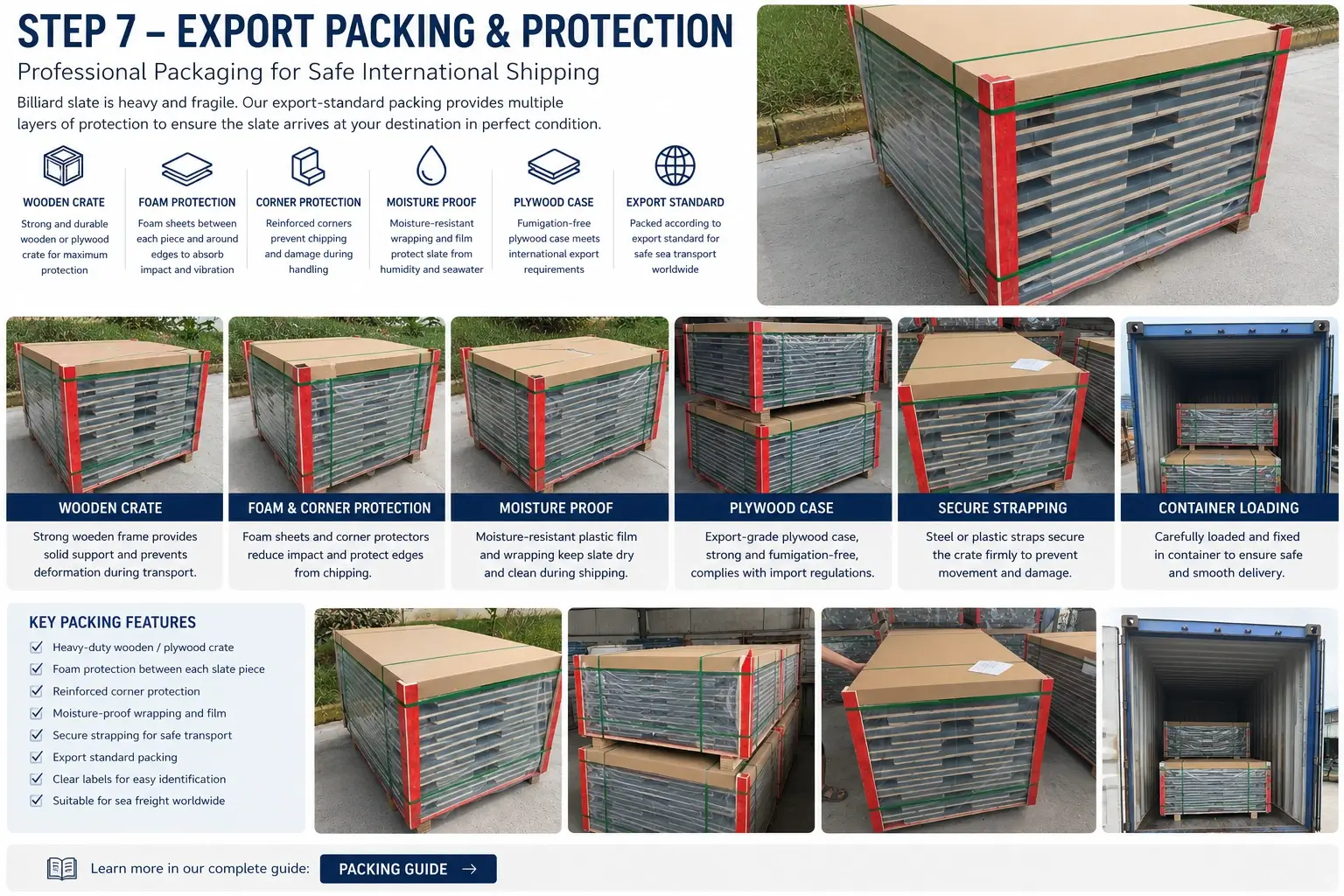
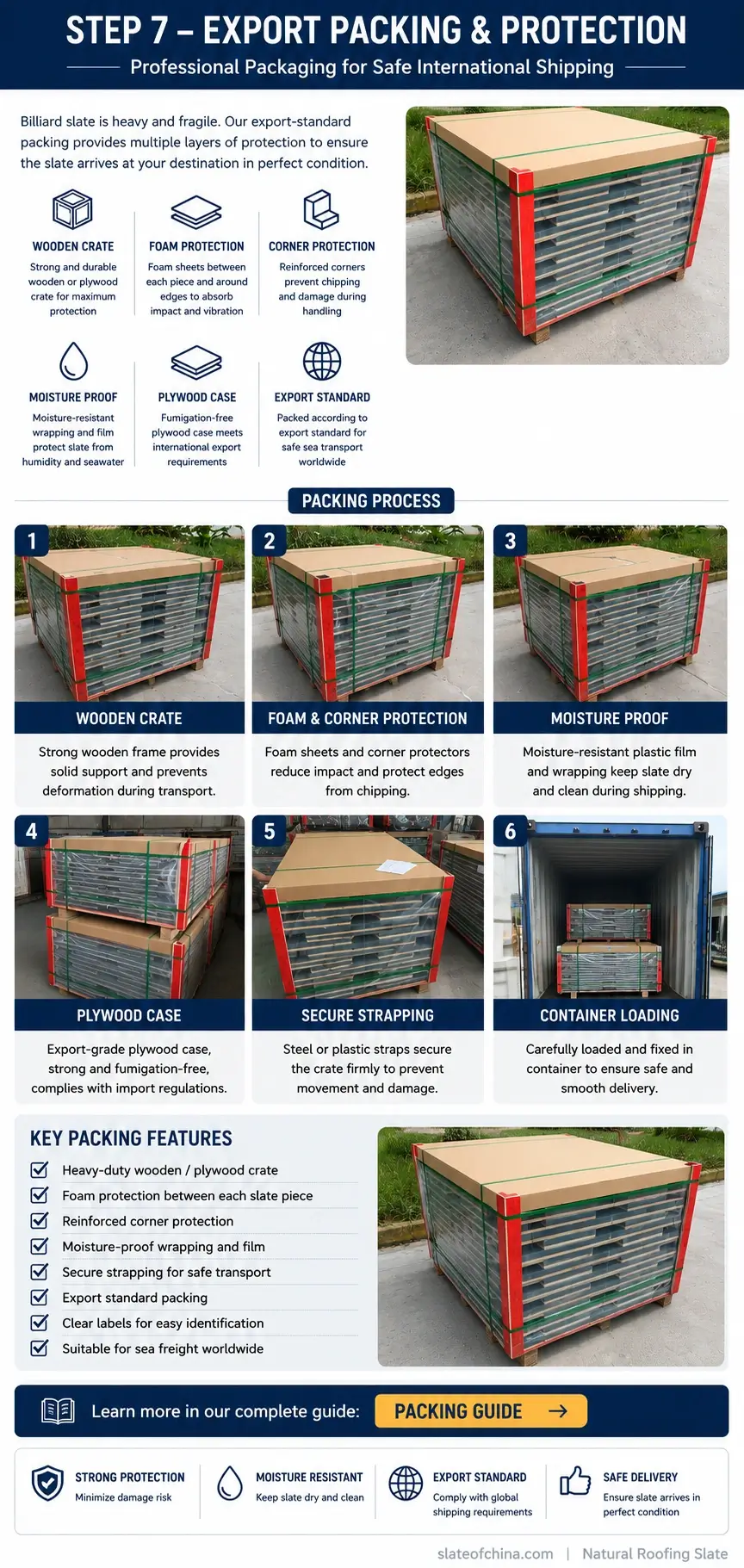
Billiard slate is a heavy, precision-machined natural stone product that requires professional packaging for international transportation. Even a perfectly manufactured slate can be damaged if it is not properly protected during handling, container loading, or long-distance sea freight.
A reliable manufacturer should use export-standard packaging designed to protect the slate from impact, vibration, moisture, and improper handling throughout the shipping process.
Below are the key elements of professional billiard slate export packaging.
1. Wooden Crates
High-quality billiard slate is typically packed in strong wooden crates designed specifically for heavy stone products.
A well-designed crate should:
- Support the weight of the slate securely
- Prevent movement during transportation
- Withstand repeated loading and unloading
- Allow safe forklift handling
Robust wooden crates significantly reduce the risk of cracking or edge damage during international shipping.
2. Foam Protection
Foam padding is used between slate pieces and around vulnerable areas to absorb shock and minimize vibration.
Proper foam protection helps:
- Prevent surface scratches
- Reduce impact damage
- Protect machined edges
- Keep individual slate pieces separated during transit
This extra cushioning is especially important for long-distance ocean transportation.
3. Corner Protection
The corners of billiard slate are the most vulnerable parts during handling.
Professional packaging includes reinforced corner protectors to help prevent:
- Chipped corners
- Edge impacts
- Damage caused by lifting or stacking
- Accidental contact during loading and unloading
Good corner protection reduces the likelihood of costly replacements.
4. Moisture Protection
Sea freight often exposes cargo to humidity and condensation inside shipping containers.
To reduce moisture-related risks, professional suppliers may use:
- Moisture-resistant wrapping
- Protective plastic film
- Waterproof liners
- Desiccant bags (when required)
These measures help keep the slate clean and dry throughout the journey.
5. Export-Grade Plywood Cases
Many international buyers prefer fumigation-free plywood cases because they comply with the import regulations of most countries.
Compared with ordinary wooden packaging, plywood cases offer several advantages:
- Comply with international export standards
- Eliminate the need for fumigation in many markets
- Provide excellent structural strength
- Suitable for repeated handling during transportation
Always confirm the packaging requirements for your destination country before shipment.
6. Export-Standard Packaging
Professional manufacturers follow established export packing procedures to ensure every shipment is ready for international transport.
Typical export packaging includes:
- Precision-packed slate sections
- Foam cushioning
- Corner protection
- Moisture-proof wrapping
- Reinforced plywood crates
- Secure steel or plastic strapping
- Clear product identification labels
Proper packaging not only protects the slate but also improves handling efficiency at warehouses, ports, and distribution centers.
Recommended Packing Checklist
Before shipment, verify that the packaging meets the following requirements:
| Packing Item | Checked |
|---|---|
| Export wooden or plywood crate | ☐ |
| Foam protection between slate pieces | ☐ |
| Corner protection installed | ☐ |
| Moisture-proof wrapping applied | ☐ |
| Secure strapping completed | ☐ |
| Product labels attached | ☐ |
| Forklift handling space provided | ☐ |
| Crate inspected before loading | ☐ |
Why Professional Packaging Matters
International transportation involves multiple handling stages, including factory loading, trucking, port operations, container stuffing, sea freight, customs inspections, and final delivery. Every transfer increases the risk of impact or vibration.
Professional export packaging helps:
- Protect precision-machined surfaces
- Prevent cracks and edge damage
- Reduce transportation claims
- Improve unloading efficiency
- Ensure the slate arrives in excellent condition
For heavy products such as billiard slate, investing in high-quality packaging is one of the most effective ways to minimize shipping risks.
Recommended Reading
This section provides a general overview of export packaging.
For detailed information about crate construction, packing materials, container loading methods, and international shipping protection, please read our complete guide:
Pro Tip
Request packing photos before the container is sealed. Professional suppliers can usually provide photos or videos showing foam protection, corner guards, moisture-proof wrapping, crate construction, and finished container loading. Reviewing these images before shipment gives buyers additional confidence that the slate has been packed to export standards.
Step 8 – Arrange Shipping and Prepare Shipping Documents
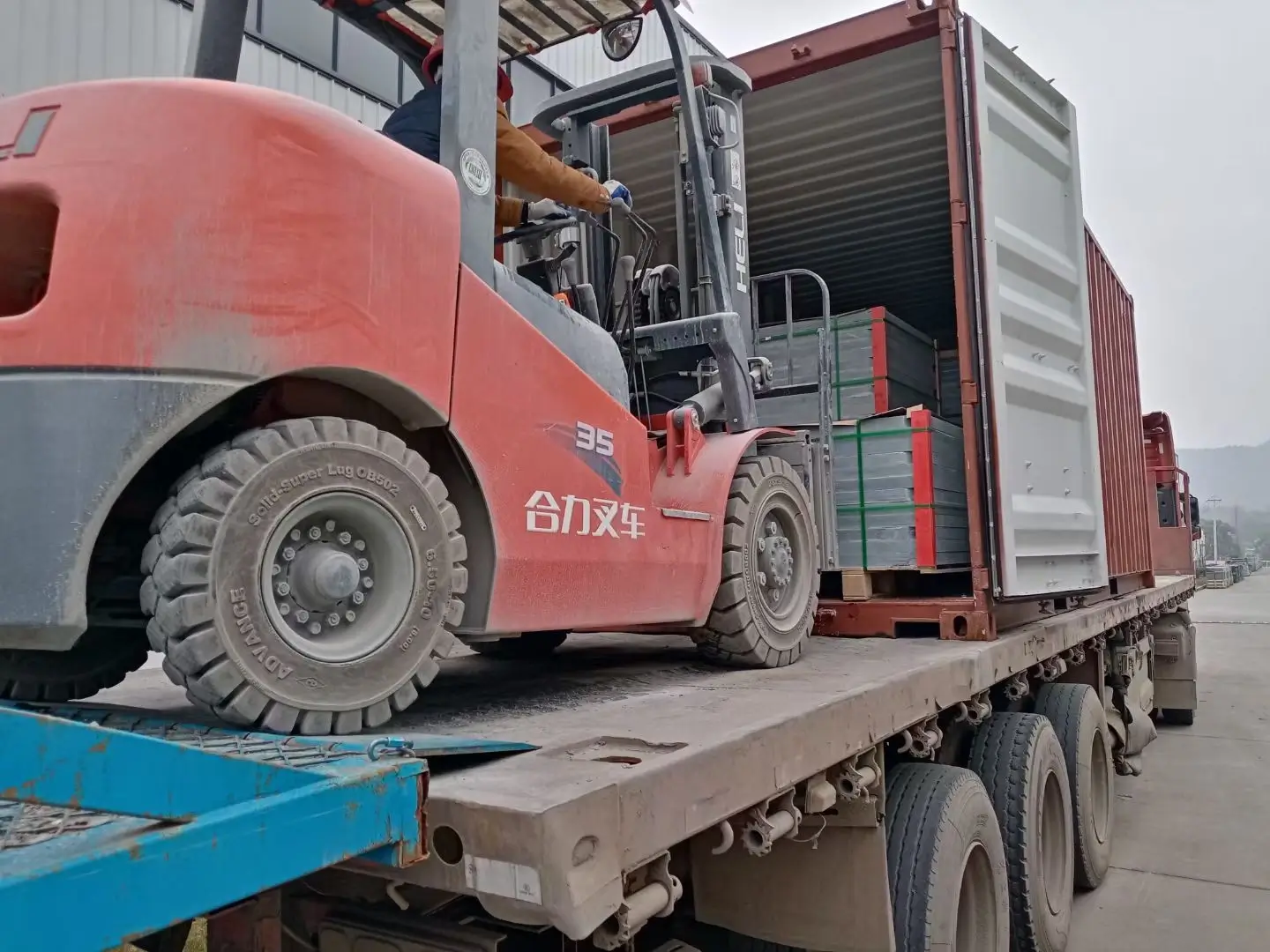
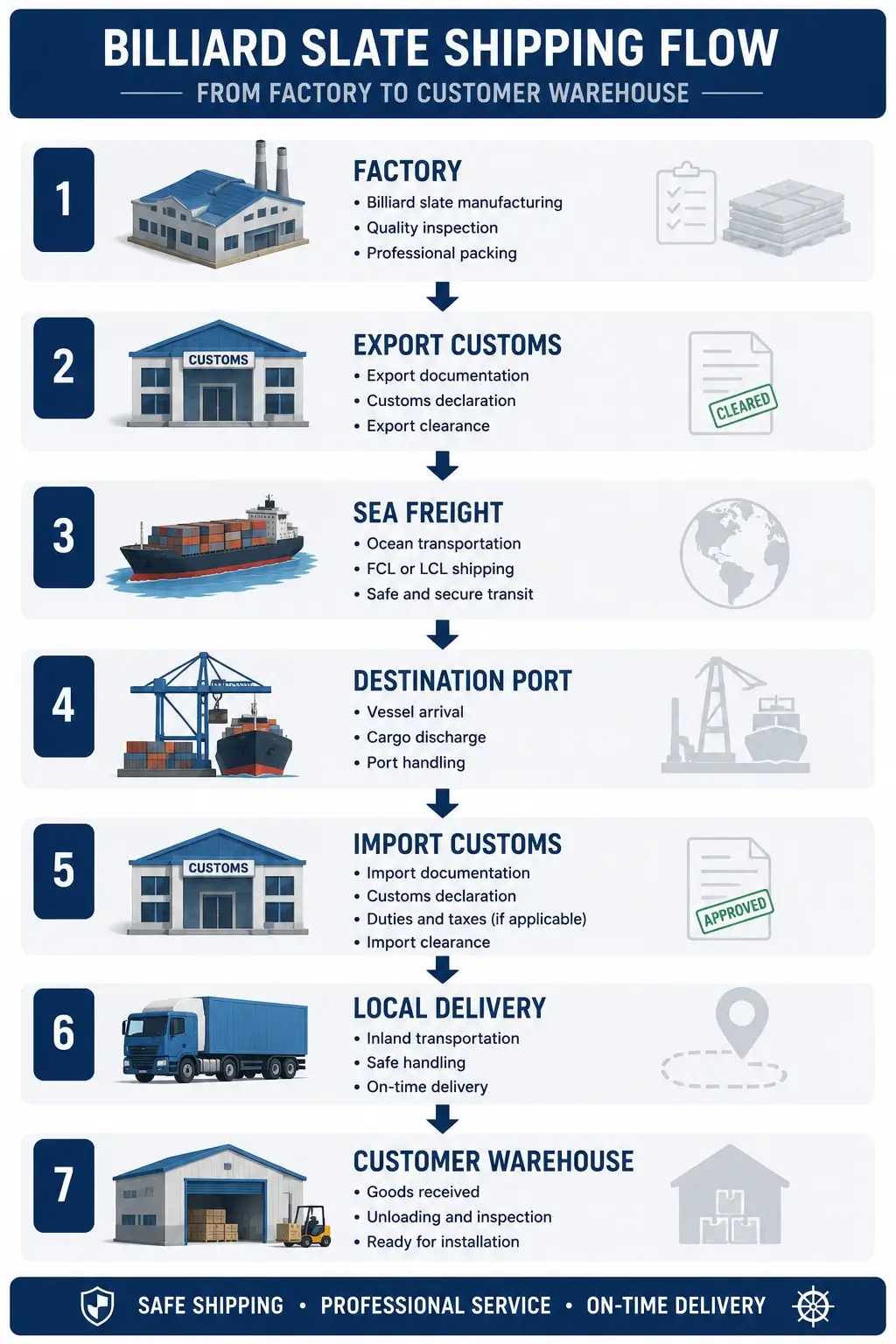
After production, quality inspection, and packaging have been completed, the final step is arranging international shipment. Choosing the right shipping method and ensuring that all shipping documents are prepared correctly will help your billiard slate arrive safely and clear customs without unnecessary delays.
Most billiard slate is transported by sea freight because of its heavy weight and large volume. Buyers should also understand the different Incoterms, shipping options, and required export documents before placing an order.
International shipments are usually arranged under one of the following Incoterms.
| Trade Term | Supplier Responsibility | Buyer Responsibility | Best For |
|---|---|---|---|
| FOB (Free On Board) | Export customs clearance and delivery to the departure port | Ocean freight, insurance, import customs, and local delivery | Experienced importers |
| CIF (Cost, Insurance & Freight) | Export clearance, ocean freight, and marine insurance to the destination port | Customs clearance, import duties, and inland transportation | Most international buyers |
| DAP (Delivered at Place) | Delivery to the agreed destination (excluding import duties and taxes) | Import customs clearance and duties | Buyers wanting convenient delivery |
| DDP (Delivered Duty Paid) | Door-to-door delivery including customs clearance and import duties | Receive the goods | Buyers seeking the simplest import process |
If you are importing billiard slate for the first time, discuss the most suitable shipping term with your supplier or freight forwarder before confirming the order.
Sea Freight Options
Because billiard slate is extremely heavy, sea freight is the most economical transportation method.
The two most common shipping options are:
LCL (Less than Container Load)
LCL combines cargo from multiple customers into one shipping container.
Suitable for:
- Sample orders
- Small trial orders
- Low-volume purchases
Advantages:
- Lower shipping cost for small quantities
- No need to book an entire container
Considerations:
- Longer handling time
- More loading and unloading points
- Higher risk of minor packaging damage compared with FCL
FCL (Full Container Load)
FCL means one customer uses the entire shipping container.
Suitable for:
- Regular importers
- Large orders
- Wholesale distributors
- Manufacturers
Advantages:
- Faster transportation
- Better cargo protection
- Lower cost per set for large orders
- Less handling during transit
For heavy products such as billiard slate, FCL is usually the preferred option whenever order volume allows.
Typical Shipping Lead Time
Shipping time depends on the destination, shipping schedule, and customs procedures.
Typical transit times are shown below.
| Destination | Estimated Transit Time |
|---|---|
| Southeast Asia | 7–15 days |
| Australia | 15–25 days |
| Europe | 30–40 days |
| North America | 25–40 days |
| South America | 35–50 days |
| Middle East | 20–35 days |
These estimates refer to ocean transit only and do not include production time, customs clearance, or local delivery.
Required Shipping Documents
Professional suppliers should prepare all necessary export documents before shipment.
The most common documents include:
| Document | Purpose |
|---|---|
| Commercial Invoice | Used for customs valuation and payment records |
| Packing List | Details the quantity, weight, dimensions, and packaging information |
| Bill of Lading (B/L) | Official transport document issued by the shipping line and proof of shipment |
| Certificate of Origin (CO) | Certifies the country where the goods were manufactured and may help qualify for preferential tariffs |
Depending on your country’s import regulations, additional documents such as a fumigation certificate, insurance certificate, or customs declaration may also be required.
Always confirm documentation requirements with your customs broker before shipment.
Buyer Shipping Checklist
Before the container leaves the factory, confirm the following:
| Checklist | Verified |
|---|---|
| Trade term confirmed (FOB / CIF / DAP / DDP) | ☐ |
| Shipping method selected (LCL or FCL) | ☐ |
| Estimated shipping schedule confirmed | ☐ |
| Commercial Invoice received | ☐ |
| Packing List received | ☐ |
| Bill of Lading prepared | ☐ |
| Certificate of Origin available (if required) | ☐ |
| Container loading photos provided | ☐ |
| Final balance payment completed (if applicable) | ☐ |
Tips for First-Time Importers
If this is your first time importing billiard slate from China, consider these recommendations:
- Choose CIF or DDP if you are unfamiliar with international shipping procedures.
- Work with an experienced freight forwarder to handle customs clearance and local delivery.
- Confirm all shipping documents before the vessel departs.
- Request container loading photos to verify that the cargo has been packed securely.
- Purchase marine cargo insurance for valuable shipments to reduce financial risk.
A reliable supplier will help coordinate these steps and communicate with your freight forwarder to ensure a smooth shipping process.
Recommended Reading
Shipping is only one part of protecting your order.
To learn more about export-standard packaging, crate construction, moisture protection, and container loading, please read our complete guide:
Pro Tip
Don’t choose a shipping method based on freight cost alone. For heavy products like billiard slate, the total landed cost—including packaging, handling, customs clearance, insurance, and inland delivery—is often more important than the ocean freight itself. Comparing the complete logistics solution helps avoid unexpected expenses and ensures your shipment arrives safely and on schedule.
Step 9 – Complete Customs Clearance
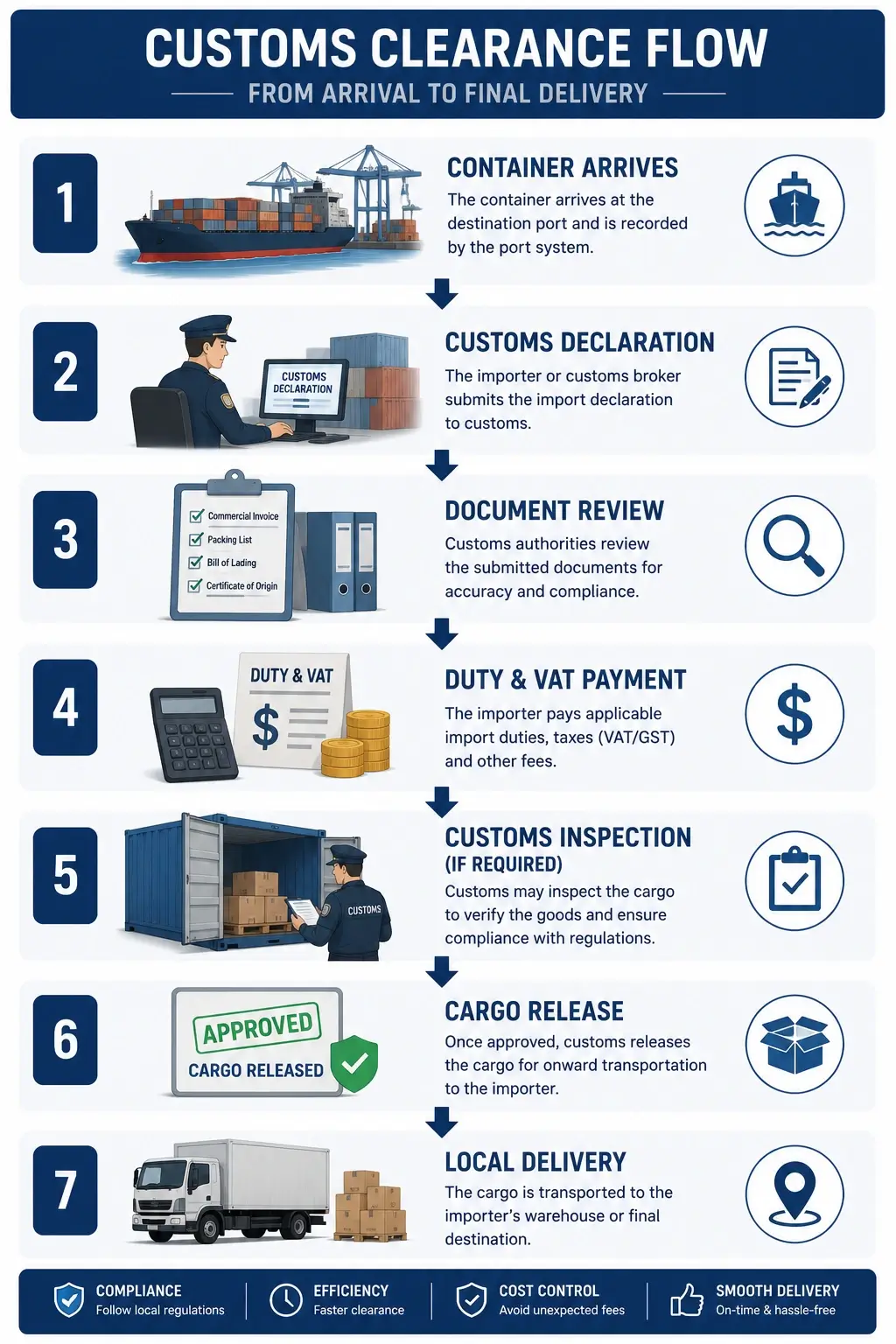
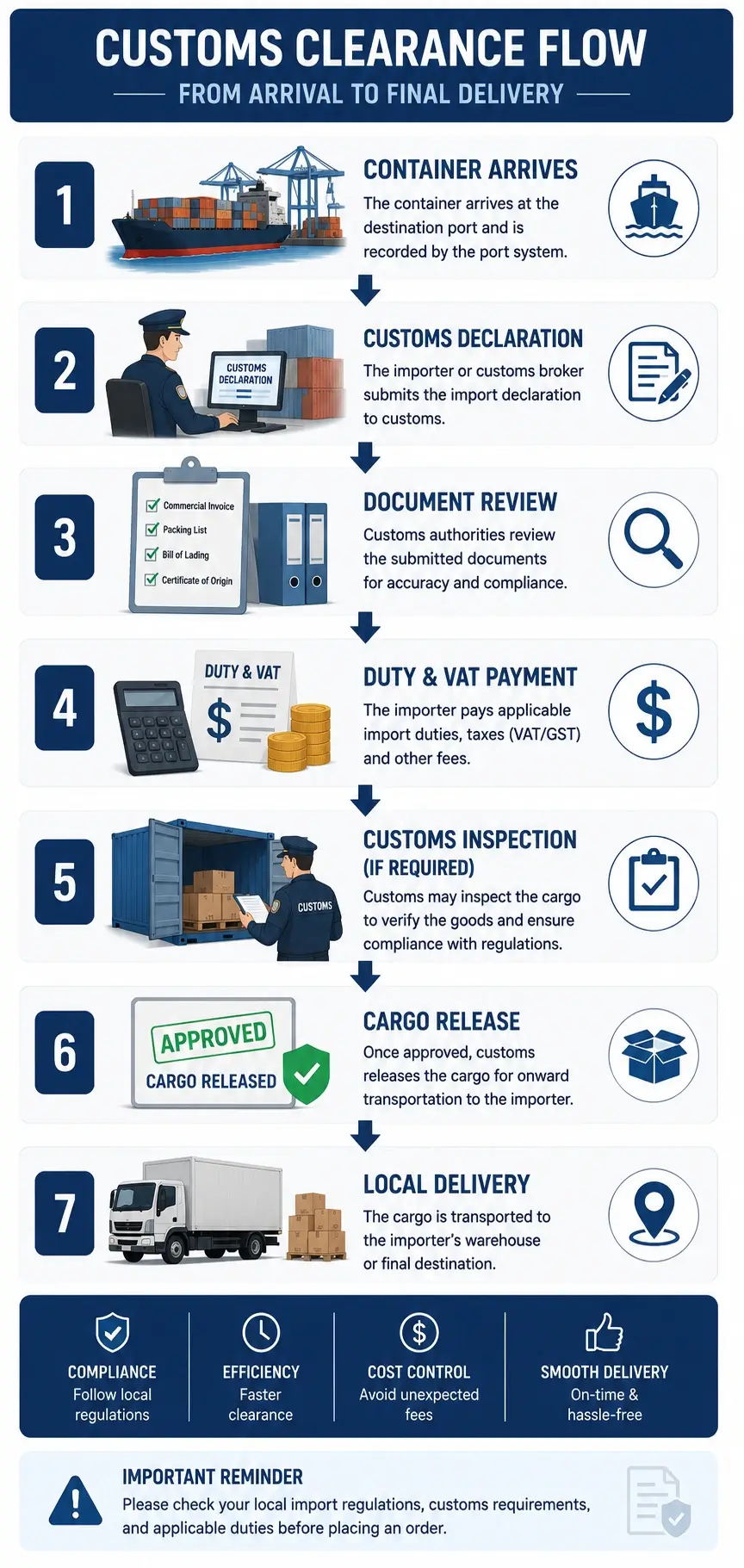
Once your billiard slate arrives at the destination port, it must go through customs clearance before it can be released for local delivery. Although your supplier will provide the necessary export documents, the importer is generally responsible for complying with local import regulations and completing customs procedures.
Understanding the basic customs process before placing an order can help avoid unexpected costs, shipment delays, and clearance issues.
What the Importer Should Prepare
Before your shipment arrives, make sure you have confirmed the following information with your customs broker or local customs authority.
1. HS Code (Harmonized System Code)
The HS Code is an internationally recognized product classification used by customs authorities to determine import duties and applicable regulations.
The correct HS Code helps customs authorities:
- Classify the product accurately
- Calculate import duties and taxes
- Apply local import regulations
- Process customs declarations efficiently
Your supplier can usually suggest an appropriate HS Code, but the final classification should always be confirmed with your local customs broker or customs authority.
2. Import Duty
Most countries charge import duty on imported goods.
The duty rate depends on factors such as:
- Product classification (HS Code)
- Country of origin
- Applicable trade agreements
- Local customs regulations
Understanding the expected duty before ordering helps you estimate the total landed cost more accurately.
3. VAT or GST
In addition to import duty, many countries also collect Value Added Tax (VAT), Goods and Services Tax (GST), or similar consumption taxes during customs clearance.
These taxes are normally calculated based on:
- Product value
- Shipping cost
- Insurance (if applicable)
- Import duty
Check your local tax regulations to understand the total amount payable before the goods are released.
4. Local Customs Clearance
Each country has its own customs procedures and documentation requirements.
Depending on your location, customs authorities may request:
- Commercial Invoice
- Packing List
- Bill of Lading
- Certificate of Origin
- Import declaration
- Additional supporting documents
Preparing these documents in advance helps speed up the clearance process.
5. Customs Broker
Many importers choose to work with a professional customs broker.
A customs broker can assist with:
- Customs declarations
- Duty and tax calculations
- Document preparation
- Communication with customs authorities
- Cargo release
- Local delivery coordination
For first-time importers, using an experienced customs broker can simplify the process and reduce the risk of delays.
Customs Clearance Checklist
Before your shipment arrives, confirm the following:
| Item | Checked |
|---|---|
| HS Code confirmed | ☐ |
| Estimated import duty calculated | ☐ |
| VAT / GST requirements understood | ☐ |
| Customs broker arranged (if needed) | ☐ |
| Commercial Invoice received | ☐ |
| Packing List received | ☐ |
| Bill of Lading received | ☐ |
| Certificate of Origin prepared (if required) | ☐ |
| Import permit confirmed (if applicable) | ☐ |
Common Mistakes to Avoid
Many first-time buyers experience delays because of simple oversights. Avoid these common mistakes:
- Using an incorrect HS Code
- Underestimating import duties or taxes
- Waiting until the shipment arrives to arrange a customs broker
- Missing or incomplete shipping documents
- Failing to check country-specific import requirements
Planning ahead can save both time and money during the customs clearance process.
Why Customs Preparation Matters
Proper customs preparation helps ensure that your shipment moves smoothly from the destination port to your warehouse.
A well-prepared importer can:
- Reduce customs delays
- Avoid unnecessary storage charges
- Prevent document-related issues
- Estimate total landed costs more accurately
- Receive goods more quickly
While your supplier is responsible for preparing export documentation, successful customs clearance ultimately depends on meeting the import requirements of your destination country.
Important Reminder
Please check your local import regulations, customs requirements, and applicable duties before placing an order. Customs rules vary from country to country, and confirming these requirements in advance helps ensure a smooth import process.
Pro Tip
Discuss customs requirements with your supplier before production begins. If you require specific documents—such as a Certificate of Origin, legalized paperwork, or country-specific declarations—inform your supplier early. Preparing these documents before shipment is much easier than requesting revisions after the container has departed.
Step 10 – Receive, Inspect, and Install Your Billiard Slate
Congratulations! Your billiard slate has arrived.
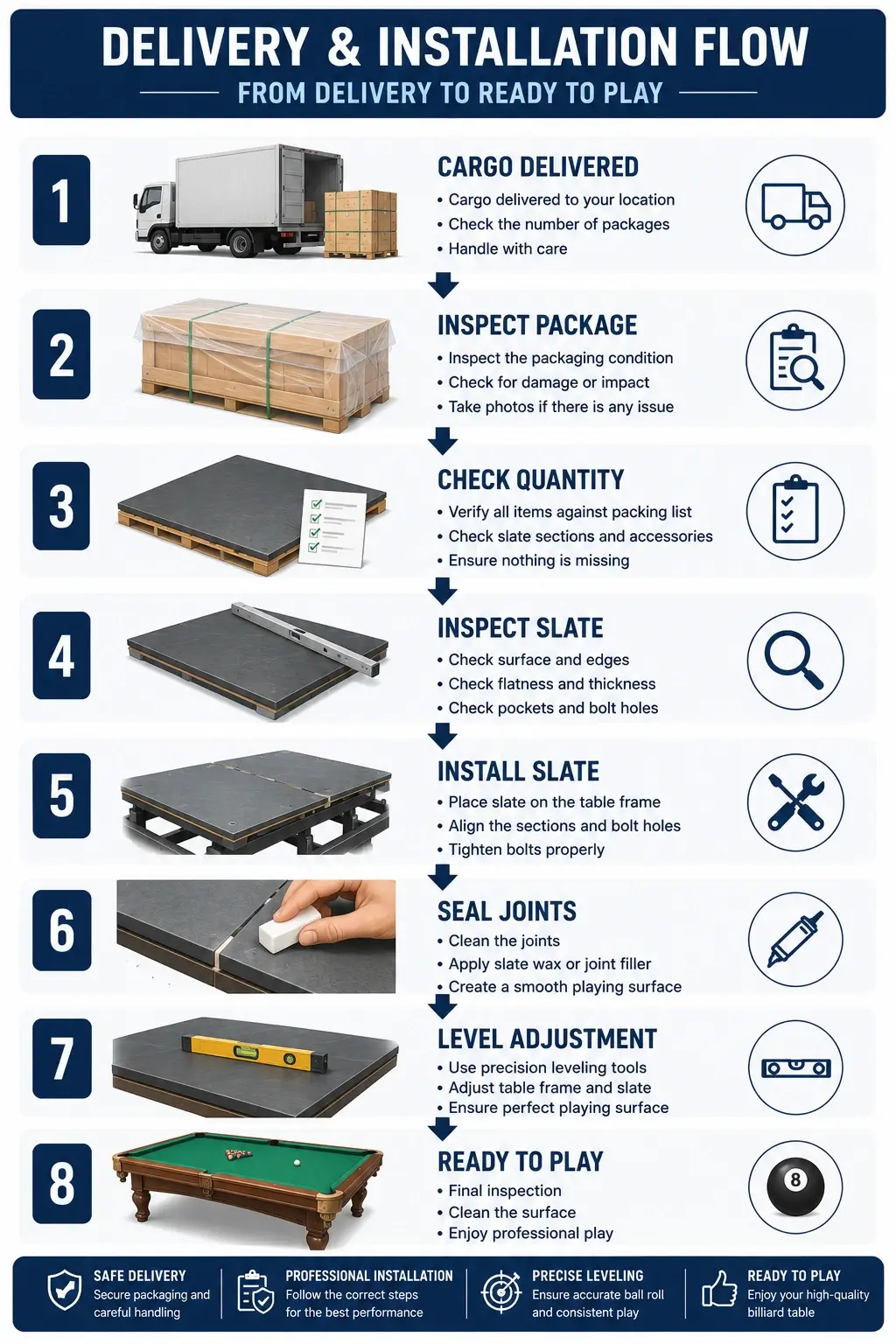
Before installing the slate, it is important to inspect the shipment carefully and verify that all components are complete and undamaged. A systematic inspection helps identify any transportation issues early and ensures a smooth installation process.
Once the inspection is complete, the slate can be installed, leveled, and prepared for final table assembly.
The following steps are recommended for every shipment.
1. Inspect the Packaging
Before opening the crate, carefully examine the external packaging for signs of damage during transportation.
Check for:
- Broken or damaged wooden crates
- Torn moisture-proof wrapping
- Loose or broken straps
- Crushed corners
- Evidence of impact or mishandling
If significant damage is found, take photographs immediately and notify the carrier before unpacking the shipment.
2. Check the Quantity
After opening the package, verify that all ordered items have been received.
Typical items include:
- Slate sections (one-piece or three-piece)
- Mounting hardware (if supplied)
- Labels or identification marks
- Installation accessories (if ordered)
Compare the shipment with the Packing List to ensure nothing is missing.
3. Inspect the Slate Surface and Flatness
Before installation, inspect each slate section carefully.
Verify:
- Surface flatness
- Thickness consistency
- Pocket machining
- Bolt hole positions
- Edge condition
- Surface appearance
Also check for any transportation damage such as:
- Cracks
- Chipped edges
- Deep scratches
- Impact marks
Any issues should be documented before installation begins.
4. Install the Slate
Place each slate section onto the table frame according to the manufacturer’s installation instructions.
During installation, ensure:
- Correct slate orientation
- Accurate alignment between sections
- Proper bolt tightening
- Stable support from the table frame
Avoid overtightening bolts, as excessive force may damage the natural slate.
5. Seal the Slate Joints
For three-piece billiard slate, the joints between sections should be properly sealed after alignment.
Common joint-filling materials include:
- Beeswax
- Slate wax
- Professional joint fillers
A properly sealed joint creates a smooth, continuous playing surface and prevents movement between slate sections.
6. Perform Final Level Adjustment
Leveling is one of the most important steps in the installation process.
Use a precision spirit level or professional leveling tools to adjust:
- Overall table level
- Crosswise level
- Lengthwise level
- Joint alignment
Accurate leveling ensures consistent ball roll and professional playing performance.
Installation Checklist
Before the table is ready for use, confirm the following:
| Installation Item | Checked |
|---|---|
| Packaging inspected | ☐ |
| Quantity verified | ☐ |
| Surface condition checked | ☐ |
| Flatness confirmed | ☐ |
| Slate sections aligned | ☐ |
| Bolt holes fitted correctly | ☐ |
| Joints sealed | ☐ |
| Table fully leveled | ☐ |
| Final inspection completed | ☐ |
Common Installation Mistakes to Avoid
Even high-quality billiard slate can perform poorly if installed incorrectly.
Avoid these common mistakes:
- Installing the slate on an uneven table frame
- Skipping the flatness inspection before installation
- Misaligning slate joints
- Using excessive force when tightening bolts
- Failing to seal joints properly
- Neglecting final leveling adjustments
Careful installation protects your investment and ensures long-term playing performance.
Why Proper Installation Matters
Professional installation directly affects the performance and lifespan of a billiard table.
Correct installation helps:
- Achieve a perfectly level playing surface
- Ensure accurate ball roll
- Prevent joint movement over time
- Reduce future maintenance
- Maximize the durability of the slate
Even the highest-quality billiard slate cannot perform at its best without proper installation.
Recommended Reading
This section provides a general overview of the installation process.
For detailed instructions on slate positioning, leveling techniques, joint sealing, bolt tightening, and professional installation methods, please read our complete guide:
Pro Tip
Allow the slate to acclimate to the installation environment before final leveling. After long-distance transportation, let the slate rest for several hours (or overnight, if possible) before completing the final level adjustment. This helps the slate and table frame stabilize under local temperature and humidity conditions, resulting in a more accurate playing surface.
Common Mistakes to Avoid When Importing Billiard Slate from China
Importing billiard slate from China can be straightforward when you work with an experienced supplier and follow a structured purchasing process. However, many buyers—especially first-time importers—make avoidable mistakes that lead to delays, additional costs, product issues, or installation problems.
Below are the ten most common mistakes and practical tips to help you avoid them.
1. Choosing a Supplier Based on Price Alone
The lowest quotation is not always the best value.
Some suppliers reduce costs by using lower-grade slate, outdated equipment, or insufficient quality control. While the initial price may appear attractive, poor machining accuracy or inconsistent flatness can result in expensive installation problems later.
What to do instead:
- Compare quality before price.
- Review factory capabilities and export experience.
- Ask for inspection reports and customer references.
2. Ignoring Flatness Inspection Reports
Flatness is one of the most important quality indicators for billiard slate.
Without a verified flatness inspection report, there is no objective way to confirm that the playing surface meets professional standards.
Ask your supplier to provide:
- Flatness inspection records
- Thickness tolerance report
- Surface quality inspection
- Final QC photos
3. Failing to Confirm Slate Specifications
Many purchasing mistakes occur because buyers assume the supplier understands their requirements.
Always confirm:
- Table size
- Slate thickness
- One-piece or three-piece slate
- Pocket cut style
- Bolt hole positions
- Wax grooves
- CNC machining details
A signed drawing eliminates misunderstandings before production begins.
4. Skipping CAD and Machining Drawing Approval
Production should never begin before you approve the technical drawings.
Professional suppliers normally provide:
- CAD drawings
- CNC machining drawings
- Hole layouts
- Pocket dimensions
- Overall dimensions
Reviewing these drawings helps prevent costly production errors.
5. Not Requesting Production Updates
Production photos allow buyers to verify that manufacturing is progressing according to plan.
Ask your supplier to provide photos or videos during key stages:
- Raw slate preparation
- CNC machining
- Quality inspection
- Packing
- Container loading
Regular updates improve transparency and reduce uncertainty.
6. Overlooking Export Packing Quality
Billiard slate is heavy and fragile.
Poor packaging can cause edge damage, broken corners, or moisture problems during international transportation.
Confirm that the supplier uses:
- Export-standard wooden crates
- Foam protection
- Corner protectors
- Moisture-proof plastic wrapping
- Strong plywood reinforcement
- Secure pallet bases
Good packaging protects your investment throughout the shipping process.
7. Ignoring the Final Quality Control Report
Some buyers arrange shipment without reviewing the final inspection results.
Before making the balance payment, request:
- Final QC report
- Flatness measurements
- Thickness inspection
- Product photos
- Packing photos
- Container loading photos
A complete inspection package provides confidence before shipment.
8. Choosing the Wrong Shipping Method
Selecting the wrong logistics solution may increase transportation costs or delivery time.
For example:
- Small orders often suit LCL (Less than Container Load).
- Larger orders are usually more economical with FCL (Full Container Load).
Discuss shipping options with both your supplier and freight forwarder before production is completed.
9. Forgetting to Prepare for Customs Clearance
Many first-time importers focus on production and shipping but overlook customs requirements.
Before the shipment arrives, confirm:
- HS Code
- Import duty
- VAT or GST
- Required import documents
- Customs broker arrangements
Preparing these items in advance helps avoid clearance delays and unexpected costs.
10. Rushing the Installation Process
Even premium billiard slate can perform poorly if installed incorrectly.
Common installation mistakes include:
- Installing on an uneven table frame
- Incorrect slate alignment
- Poor joint sealing
- Inaccurate leveling
- Overtightening bolts
Professional installation ensures optimal ball roll, table stability, and long-term performance.
Quick Buyer Checklist
Before placing your order, review this checklist:
| Checklist Item | Status |
|---|---|
| Supplier verified | ☐ |
| Factory capability confirmed | ☐ |
| Specifications finalized | ☐ |
| CAD drawings approved | ☐ |
| Flatness report requested | ☐ |
| QC report requested | ☐ |
| Export packing confirmed | ☐ |
| Shipping terms agreed | ☐ |
| Customs requirements checked | ☐ |
| Installation plan prepared | ☐ |
Final Advice for Importers
Successful importing is not about finding the lowest price—it is about selecting a reliable supplier, confirming every technical detail before production, and maintaining clear communication throughout manufacturing, inspection, shipping, and installation.
By avoiding these common mistakes, you can reduce risk, control costs, and receive high-quality billiard slate that meets your expectations.
Whether you are purchasing pool table slate, snooker slate, or carom billiard slate, careful planning at every stage will help ensure a smooth and successful import experience.
Recommended Reading
To learn more about each stage of the purchasing process, explore these guides:
Frequently Asked Questions About Importing Billiard Slate from China
Below are answers to some of the most common questions buyers ask when importing billiard slate from China. If you have additional questions, feel free to contact us for professional assistance.
Still Have Questions?
If you need help selecting the right slate specifications, calculating shipping costs, or importing billiard slate into your country, our team is happy to assist. Contact us for professional advice, technical support, and a customized quotation.
Start Importing Billiard Slate from China with Confidence
Importing billiard slate from China can provide an excellent balance of product quality, manufacturing flexibility, and cost efficiency—provided that you work with an experienced and reliable manufacturer.
Whether you are a billiard table manufacturer, distributor, wholesaler, brand owner, or importer, a professional Chinese billiard slate supplier can support your project with carefully selected natural slate, precision CNC machining, strict flatness inspection, customized specifications, export-standard packaging, and international shipping assistance.
A successful import project begins with clear technical requirements and careful supplier selection. Before production, confirm the table size, slate thickness, machining drawings, pocket cuts, bolt hole positions, quality standards, packing method, shipping terms, and required import documents. These steps help reduce purchasing risks, prevent installation problems, and ensure that the finished slate meets your market and table design requirements.
By following the step-by-step process in this guide—from supplier evaluation and drawing approval to production, inspection, packing, shipping, customs clearance, and installation—you can source high-quality billiard slate from China with greater confidence and better control over your total landed cost.
Why Work with an Experienced Billiard Slate Manufacturer?
Choosing the right manufacturing partner gives you more than a competitive price. It provides greater control over quality, delivery, and long-term supply.
A professional billiard slate manufacturer should be able to offer:
- Premium natural billiard slate
- 7 ft, 8 ft, 9 ft, 10 ft, and 12 ft slate options
- One-piece and multi-piece slate configurations
- 19 mm, 25 mm, 30 mm, 45 mm, and 50 mm thicknesses
- Precision CNC pocket cutting and drilling
- OEM and custom machining based on approved drawings
- Flatness and dimensional quality inspection
- Export-standard plywood crate packaging
- FOB, CIF, DAP, or DDP shipping support
- Responsive technical and after-sales communication
These capabilities are especially important for billiard table factories, international distributors, project buyers, and companies developing their own private-label table ranges.
Ready to Discuss Your Billiard Slate Project?
Tell us what you need, including:
- Table type and size
- Slate thickness
- One-piece or multi-piece configuration
- Required quantity
- CAD or machining drawings
- Pocket and bolt hole specifications
- Destination port or delivery address
- Preferred trade term
Our team can review your requirements and provide suitable product recommendations, packaging options, shipping solutions, and a customized quotation.
Looking for a Reliable Billiard Slate Manufacturer in China?
We manufacture and export precision-machined billiard slate for pool tables, snooker tables, and customized table projects. From technical drawing confirmation and CNC machining to flatness inspection, export packing, and worldwide shipping, our team supports every stage of your order.
Share your specifications with us today and receive professional recommendations and a customized quotation for your market.