
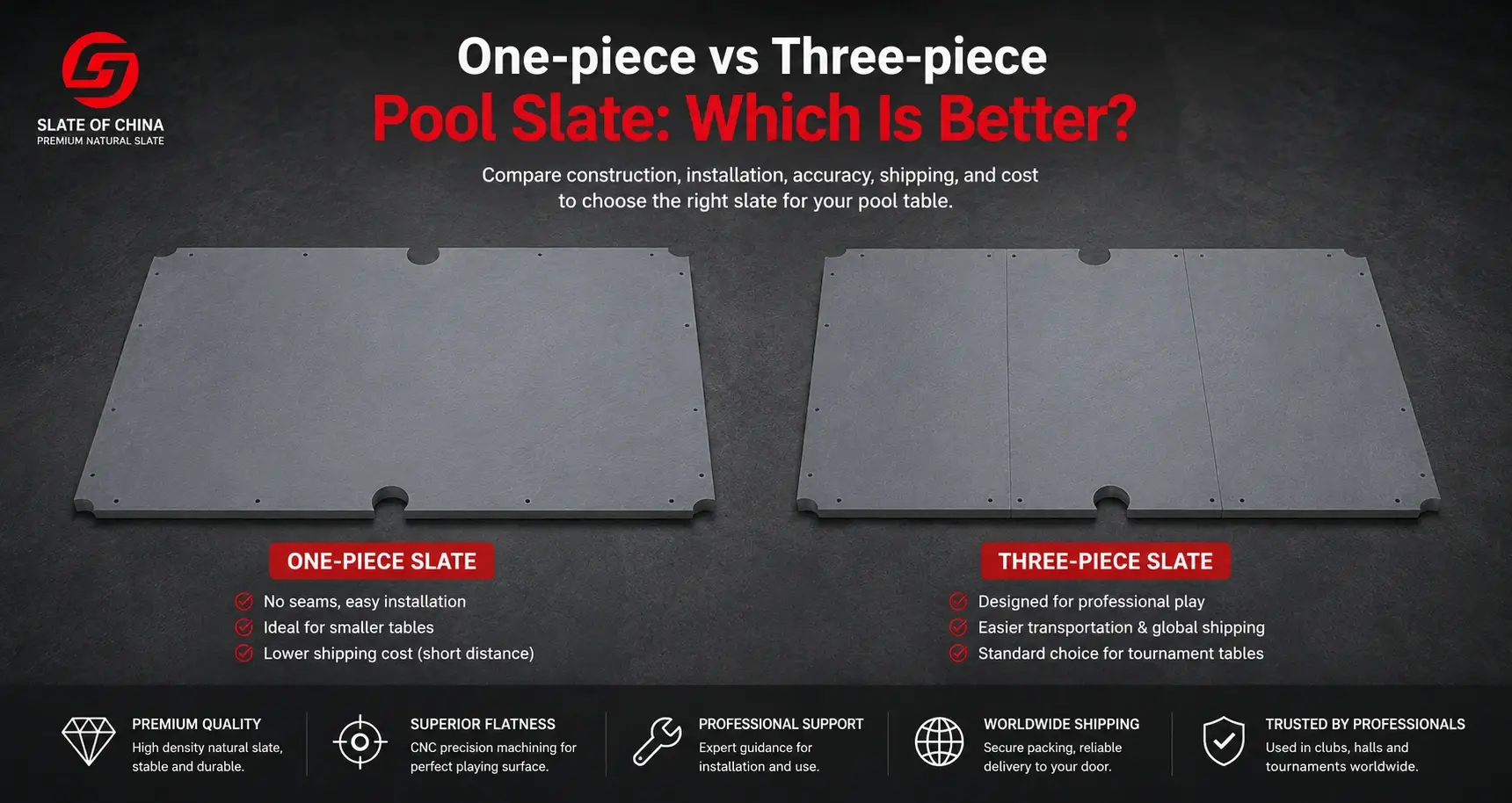
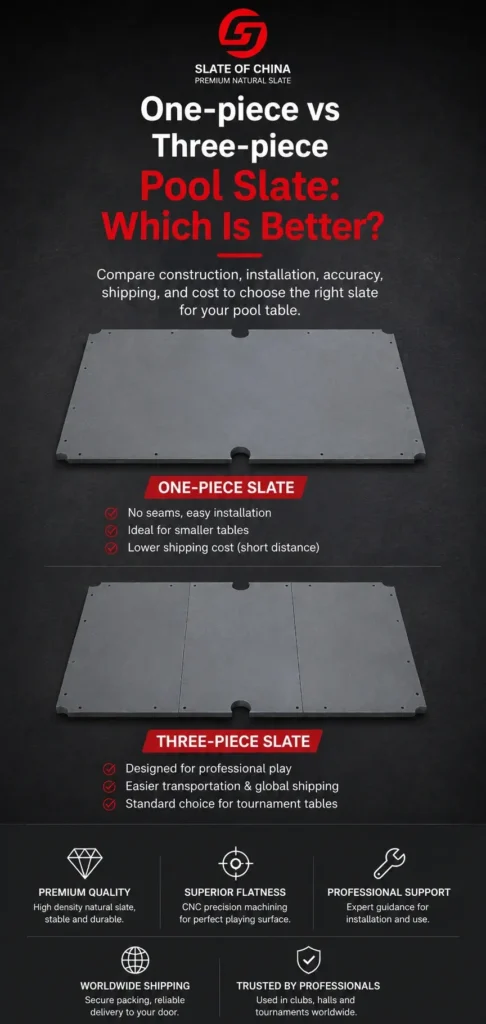
One-piece vs Three-piece Pool Slate: Which Is Better?
Choosing the right pool slate is one of the most important decisions when building, buying, or manufacturing a pool table. One of the first questions buyers ask is: Should you choose a one-piece pool slate or a three-piece pool slate?
The answer depends on several factors, including table size, installation access, transportation, playing performance, long-term maintenance, and budget. While one-piece slate is commonly used for smaller home pool tables, three-piece slate is the preferred choice for most commercial and tournament-quality tables due to its easier handling, precise leveling, and worldwide shipping advantages.
In this complete buying guide, we’ll compare one-piece vs three-piece pool slate in terms of construction, installation, accuracy, shipping, cost, and best applications. Whether you’re a pool table manufacturer, distributor, importer, or homeowner, this guide will help you choose the right billiard slate with confidence.
In This Guide, You’ll Learn
✔ What is the difference between one-piece and three-piece pool slate?
✔ Which option offers better playing performance?
✔ Which slate is easier to transport and install?
✔ Which is more cost-effective for your project?
✔ Which slate do professional pool table manufacturers use?
✔ Which option is right for home, commercial, or tournament tables?
Table of Contents
What Is One-piece Pool Slate?
A one-piece pool slate is a single, solid slab of natural slate that forms the entire playing surface of a pool table. Unlike a three-piece slate, which consists of three precision-machined sections joined during installation, a one-piece slate is manufactured from one continuous piece of stone with no seams or joints across the playing area.
Because the playing surface is made from a single slab, there is no need for seam filling or section alignment during installation. This simple construction makes one-piece slate popular for home pool tables, coin-operated tables, bar tables, and compact recreational tables where transportation and installation are relatively straightforward.
However, as table sizes increase, a single slab becomes significantly heavier and more difficult to move. For this reason, one-piece slate is most commonly used on 6ft and 7ft pool tables, while larger professional tables generally use three-piece slate for easier handling and more flexible installation.
Typical Sizes
One-piece pool slate is typically available for smaller pool tables where the overall weight remains manageable.
Typical sizes include:
- 6ft Pool Table Slate
- 7ft Pool Table Slate
- Selected 8ft Home Pool Tables (depending on manufacturer)
For 8ft commercial tables, 9ft tournament tables, and larger billiard tables, three-piece slate is generally the preferred solution because it is easier to transport, carry through doorways, and level during installation.
Typical Thickness
Most one-piece pool slates are manufactured in thicknesses ranging from:
- 18 mm (3/4″)
- 20 mm
- 25 mm (1″)
The appropriate thickness depends on the table design, frame construction, and intended level of play. Thicker slate generally provides greater rigidity and long-term stability, especially for commercial or frequently used tables.
Related Guide: Pool Slate Thickness Guide (Internal Link)
Typical Applications
One-piece slate is commonly used in situations where simple installation, lower cost, and compact table size are the primary considerations.
Typical applications include:
- Home game rooms
- Residential entertainment tables
- Coin-operated pool tables
- Bar pool tables
- Entry-level recreational tables
- Locations with easy ground-floor access
Advantages of One-piece Pool Slate
A one-piece slate offers several practical benefits:
- Seamless playing surface with no joints across the table.
- Simpler installation since no section alignment or seam filling is required.
- Lower manufacturing cost compared with precision-matched three-piece slate.
- Good structural rigidity because the slate is one continuous piece.
- Ideal for small and medium-sized pool tables used in homes and recreational environments.
Limitations of One-piece Pool Slate
Despite its simplicity, one-piece slate also has several limitations that buyers should consider before making a purchasing decision.
The biggest challenge is weight. As table size increases, a single slab becomes extremely heavy, making transportation, lifting, and installation much more difficult.
Other limitations include:
- Difficult to move through narrow doors or staircases.
- Requires more manpower or lifting equipment.
- Higher risk of damage during long-distance transportation.
- More expensive shipping due to larger crate dimensions.
- Not commonly used for tournament or professional-size pool tables.
For these reasons, most manufacturers choose three-piece slate for larger tables, especially in export markets.
Comparison Table
| Feature | One-piece Pool Slate |
|---|---|
| Construction | One solid natural slate slab |
| Joints | No joints or seams |
| Installation | Quick and simple |
| Weight | Heavy as one complete piece |
| Transportation | More difficult for large tables |
| Typical Sizes | 6ft, 7ft, selected 8ft tables |
| Suitable Applications | Home, bar, coin-operated and recreational pool tables |
| Professional Tournament Use | Rare |
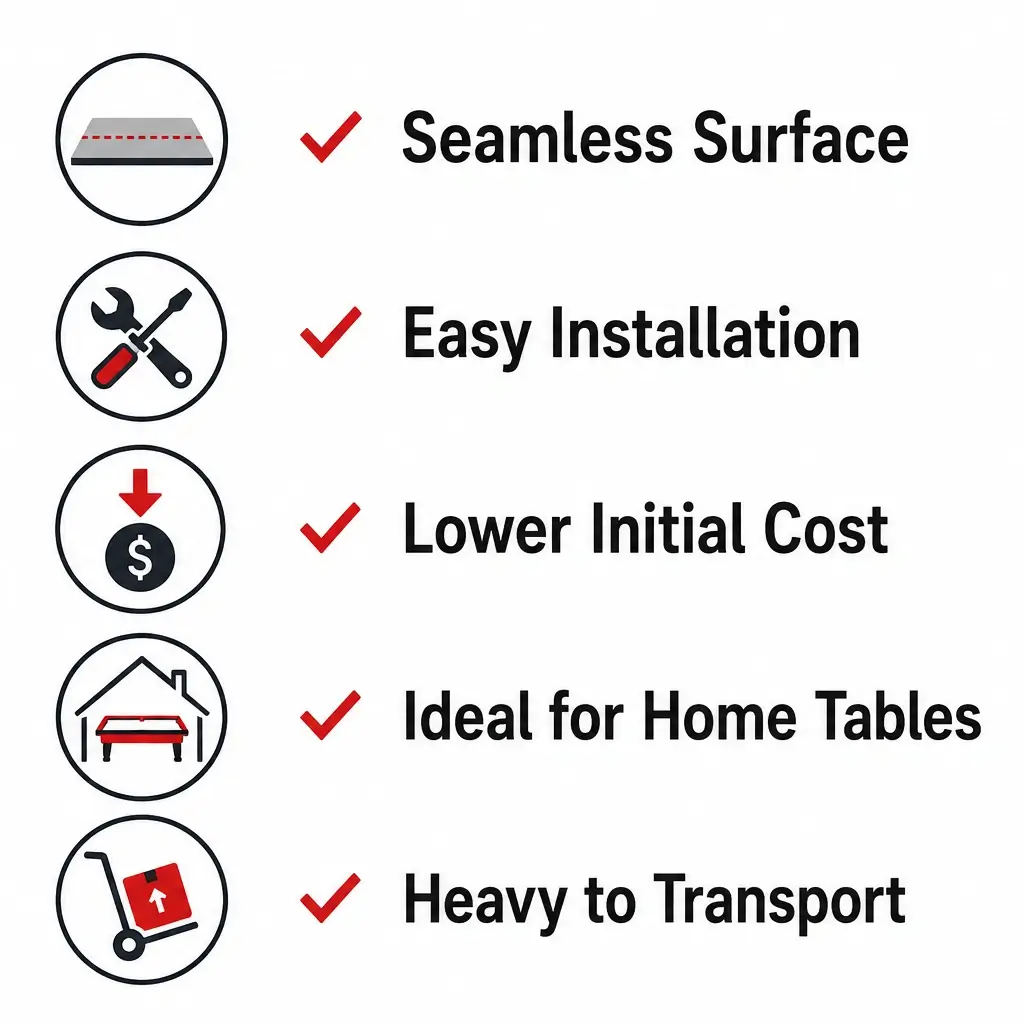
- ✔ Seamless Surface
- ✔ Easy Installation
- ✔ Lower Initial Cost
- ✔ Ideal for Home Tables
- ✔ Heavy to Transport
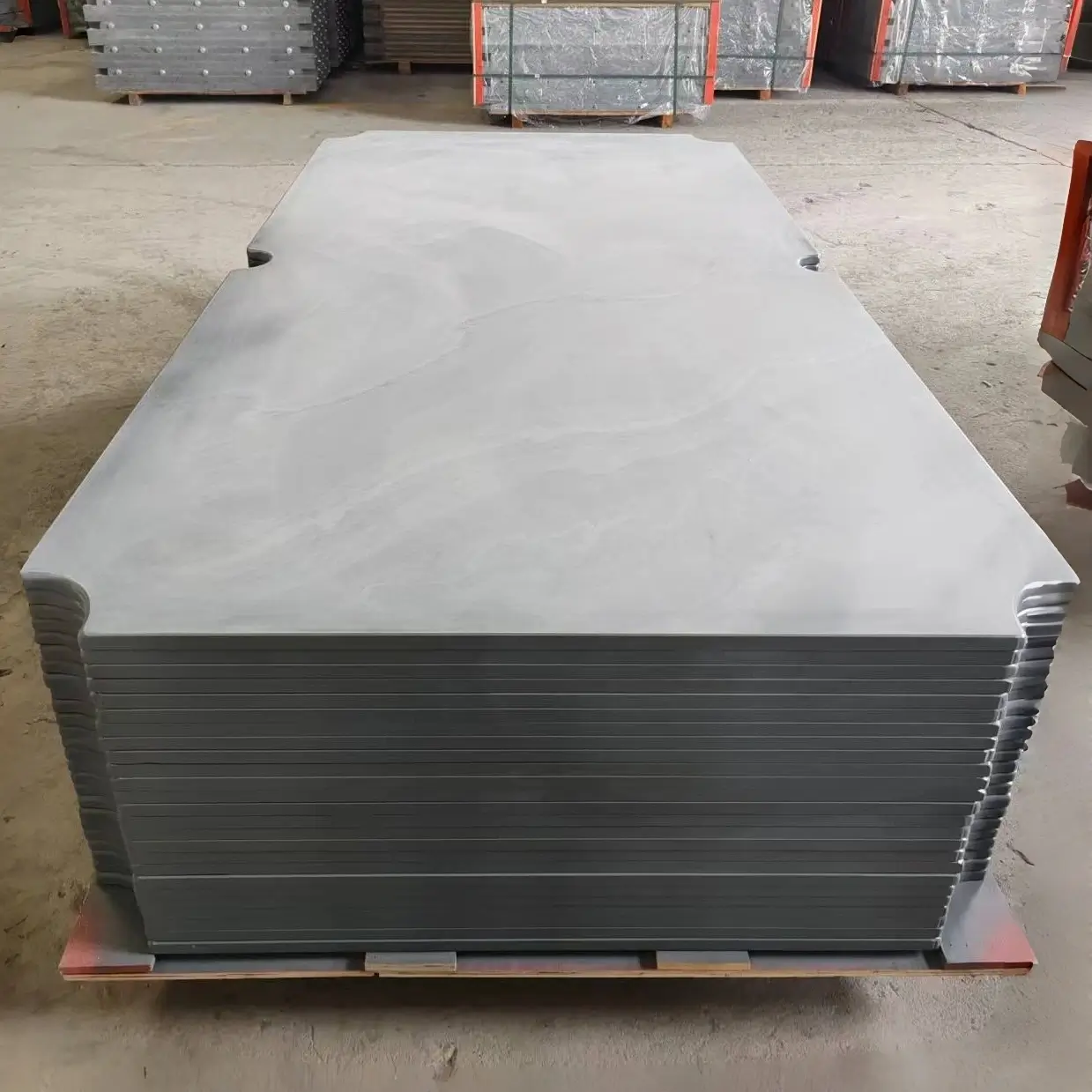
What Is Three-piece Pool Slate?
A three-piece pool slate consists of three precision-machined natural slate sections that are carefully matched to form a single, perfectly level playing surface after installation. Unlike a one-piece slate, each section is manufactured to extremely tight tolerances, allowing professional installers to assemble and level the slate with exceptional accuracy.
Today, three-piece slate is the industry standard for most 8ft, 9ft, and tournament-size pool tables. It is widely used by professional table manufacturers because the smaller individual sections are easier to transport, carry through doorways, and install without compromising playing performance.
When properly installed, the seams between the three sections are filled, leveled, and completely covered by the billiard cloth, creating a smooth and consistent playing surface that is virtually indistinguishable from a single-piece slate.
Three Precision-Matched Slate Sections
Each three-piece pool slate is manufactured as a matched set rather than three random pieces of stone.
During production, the three sections are cut from the same slate block whenever possible and precision-machined together to ensure:
- Uniform thickness
- Consistent density
- Matching surface flatness
- Accurate overall dimensions
- Perfect edge alignment
This manufacturing process allows the three sections to perform as one continuous playing surface after installation.
Precision-Machined for Perfect Alignment
Modern three-piece slate is CNC machined to extremely tight tolerances.
Each section features:
- Precision-ground surfaces
- Straight machined edges
- Accurate pocket cut-outs
- Uniform thickness across all sections
After assembly, installers use precision leveling techniques to eliminate any height differences between the slate sections, ensuring excellent ball roll across the entire table.
Dowel Holes for Accurate Positioning
Many premium three-piece pool slates include precision dowel holes or alignment pins.
These locating features help installers:
- Position each slate section correctly
- Maintain accurate seam alignment
- Speed up installation
- Improve long-term stability
Although not every table design requires dowel pins, they are commonly found on high-end commercial and tournament pool tables.
Machined Seams
The edges where the three slate sections meet are precision machined to create tight, uniform seams.
During installation, the joints are:
- Carefully aligned
- Leveled with the table frame
- Filled with beeswax or professional seam filler
- Scraped perfectly smooth
Once covered with billiard cloth, the seams become virtually invisible and do not affect ball movement when installed correctly.
Professional Installation
Unlike one-piece slate, three-piece slate requires careful assembly and leveling.
Professional installation typically includes:
- Frame leveling
- Individual slate adjustment
- Seam filling
- Surface inspection
- Final precision leveling
Although installation takes slightly longer, it provides greater flexibility and allows installers to achieve excellent playing accuracy, even on large tournament tables.
Suitable for Tournament Tables
Because of its excellent transportability and precise leveling capability, three-piece slate has become the preferred choice for professional pool tables worldwide.
It is commonly used for:
- Professional tournament pool tables
- Commercial billiard clubs
- Competition tables
- Pool table manufacturers
- Exported billiard tables
- High-end residential installations
- International shipping projects
For 9ft tournament tables, a three-piece slate is considered the industry standard.
Advantages of Three-piece Pool Slate
Compared with one-piece slate, a three-piece design offers several important advantages:
- Easier transportation and handling
- Fits through standard doors and stairways
- Lower risk of shipping damage
- Simpler replacement of individual sections
- Excellent leveling precision
- Ideal for export and international shipping
- Preferred by professional pool table manufacturers
- Standard choice for commercial and tournament tables
Small Comparison Table
| Feature | Three-piece Pool Slate |
|---|---|
| Construction | Three precision-matched slate sections |
| Joints | Two precision-machined seams |
| Alignment | Dowel holes or locating pins (optional) |
| Installation | Professional leveling recommended |
| Transportation | Easier to move and ship |
| Weight | Divided into manageable sections |
| Typical Sizes | 8ft, 9ft and tournament tables |
| Suitable Applications | Commercial, tournament and export pool tables |
- ✔ Precision-Matched Sections
- ✔ Easy Transportation
- ✔ Professional Installation
- ✔ Tournament Standard
- ✔ Superior Leveling Accuracy

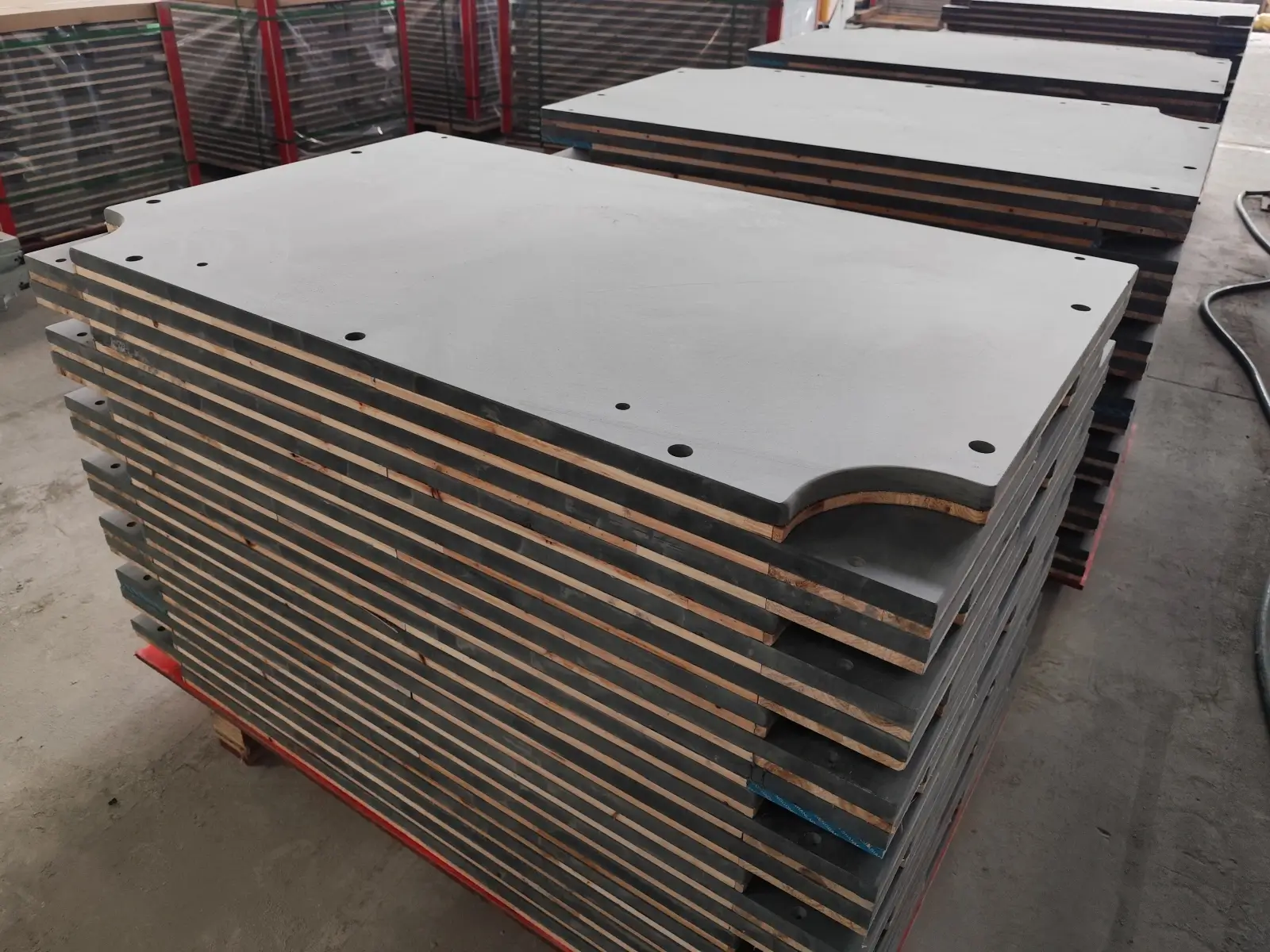
One-piece vs Three-piece Pool Slate Comparison
Both one-piece pool slate and three-piece pool slate provide an excellent playing surface when manufactured from high-quality natural slate. However, they differ significantly in installation, transportation, handling, maintenance, and ideal applications.
If you’re choosing between the two, the best option depends on your table size, installation environment, budget, and intended use. The comparison below highlights the key differences to help you select the right pool table slate for your project.
Comparison Table
| Feature | One-piece Pool Slate | Three-piece Pool Slate |
|---|---|---|
| Construction | One solid slate slab | Three precision-matched slate sections |
| Playing Surface | Seamless | Precision-machined seams (virtually invisible after installation) |
| Installation | ⭐⭐⭐⭐⭐ Easy | ⭐⭐⭐ Professional leveling required |
| Transportation | Difficult for large tables | Easy to transport and handle |
| Weight Handling | Entire weight in one piece | Weight divided into three sections |
| Precision Leveling | Good | Excellent |
| Seam Leveling | Not required | Required during installation |
| Moving Upstairs | Difficult | Much easier |
| Replacement | Entire slate must be replaced | Individual section can often be replaced |
| Shipping Cost | Higher for large tables | Lower and more efficient |
| Risk of Shipping Damage | Higher | Lower |
| Suitable Table Sizes | 6ft–7ft (selected 8ft) | 8ft, 9ft & tournament tables |
| Commercial Use | Limited | Widely used |
| Tournament Standard | Rare | ✔ Industry Standard |
| Overall Recommendation | Home & recreational use | Professional & commercial use |
Installation Comparison
One-piece slate is easier to install because it arrives as a single slab and does not require seam alignment or joint filling. Once the table frame has been leveled, the slate can usually be positioned directly onto the cabinet.
In contrast, three-piece pool slate requires professional installation. Each section must be carefully aligned, leveled, and joined using beeswax or professional seam filler. Although installation takes more time, it allows installers to achieve outstanding flatness and playing accuracy, particularly on larger tables.
Winner: ✅ One-piece Slate (simplicity)
Transportation and Handling
Transportation is one of the biggest differences between the two designs.
A one-piece slate becomes extremely heavy as table size increases. Moving it through narrow hallways, staircases, elevators, or apartment buildings can be difficult and may require several people or lifting equipment.
Three-piece slate divides the total weight into three manageable sections, making loading, unloading, carrying, and international shipping much safer and more efficient.
For exported pool tables, this is one of the main reasons why manufacturers overwhelmingly choose three-piece slate.
Winner: ✅ Three-piece Slate
Playing Accuracy
Many buyers assume a one-piece slate provides a smoother playing surface because it has no seams.
In reality, a professionally installed three-piece slate delivers virtually identical playing performance. The seams are precision-machined, carefully leveled, and filled before the billiard cloth is installed, making them almost impossible to detect during play.
For this reason, almost all professional tournament pool tables use three-piece slate without compromising ball roll or accuracy.
Winner: ✅ Equal (when properly installed)
Maintenance and Replacement
If a one-piece slate is damaged, the entire slab usually needs to be replaced, which can be costly and difficult due to its size and weight.
With a three-piece slate, replacing one damaged section may be possible, depending on the table design and the availability of matching slate. In addition, individual sections are easier to inspect, transport, and service.
Winner: ✅ Three-piece Slate
Cost Comparison
One-piece slate generally has a lower purchase price because it requires less machining and no precision matching.
However, transportation costs often increase significantly for larger one-piece slates due to oversized packaging, higher freight charges, and additional handling requirements.
Three-piece slate typically costs more to manufacture but often reduces overall logistics costs, especially for exported tables and commercial installations.
For many buyers, the total project cost—not just the product price—should be considered.
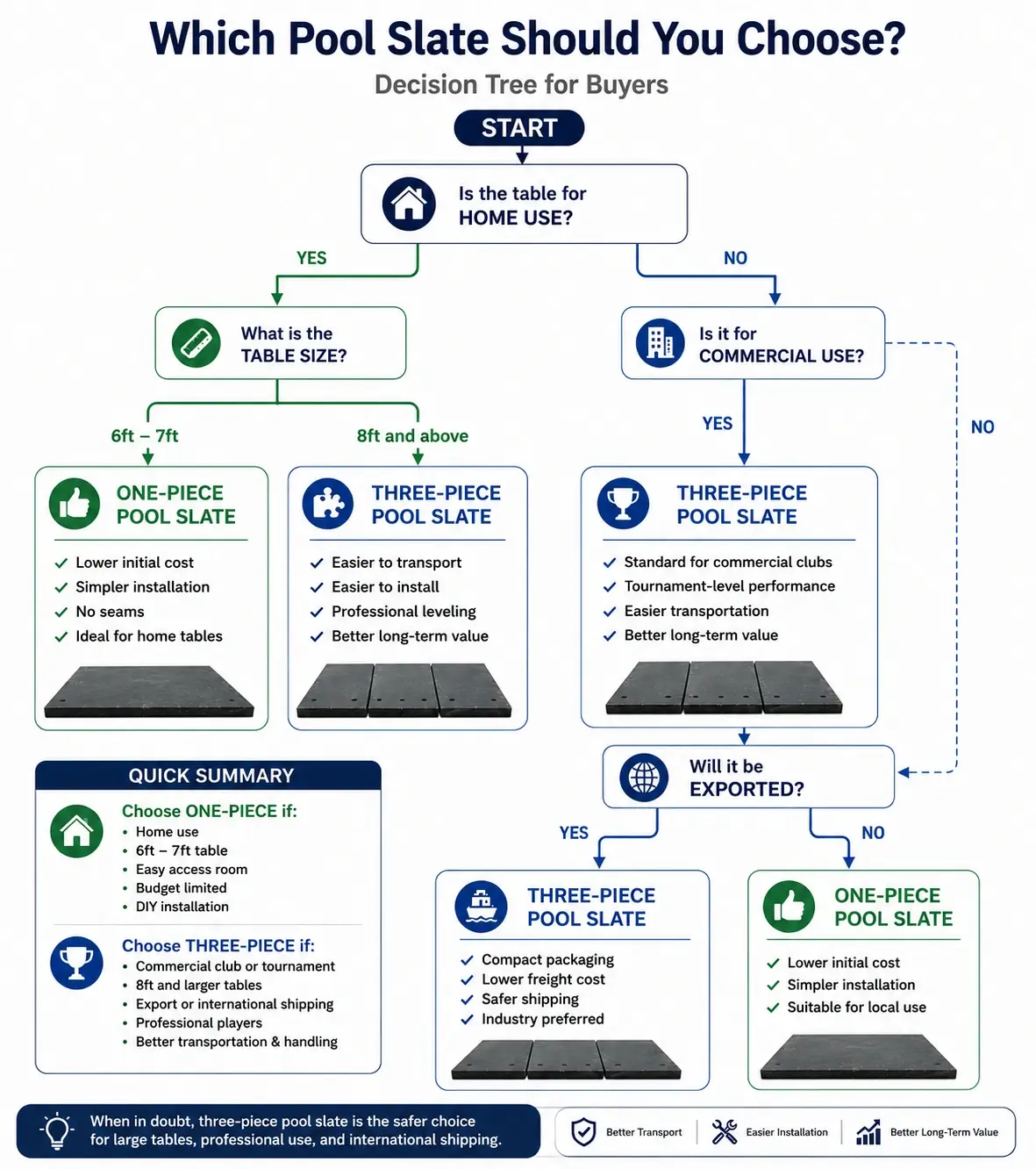
Which One Should You Choose?
Choose One-piece Pool Slate if you:
✔ Need a slate for a 6ft or 7ft home pool table
✔ Want quick and simple installation
✔ Have easy ground-floor access
✔ Prefer a lower initial purchase cost
✔ Use the table mainly for recreational play
Choose Three-piece Pool Slate if you:
✔ Need an 8ft or 9ft pool table
✔ Manufacture or import pool tables
✔ Require international shipping
✔ Install tables upstairs or in confined spaces
✔ Want tournament-level accuracy
✔ Need long-term flexibility and easier handling
Professional Recommendation
For most commercial, export, and professional pool tables, we recommend a three-piece pool slate because it offers the best balance of transportation efficiency, installation flexibility, and long-term playing performance. One-piece slate remains an excellent choice for smaller home tables where simple installation and lower initial cost are the primary priorities.
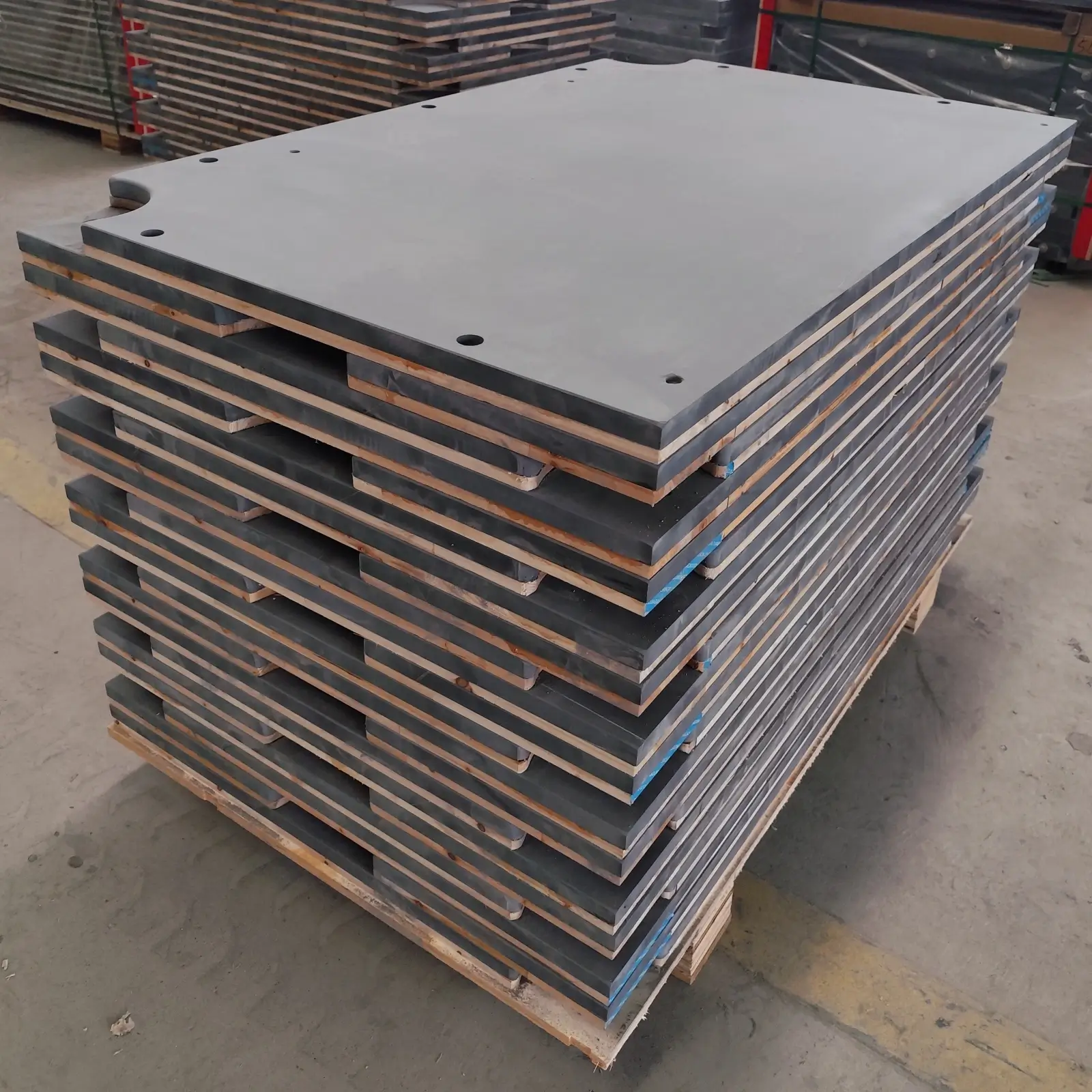
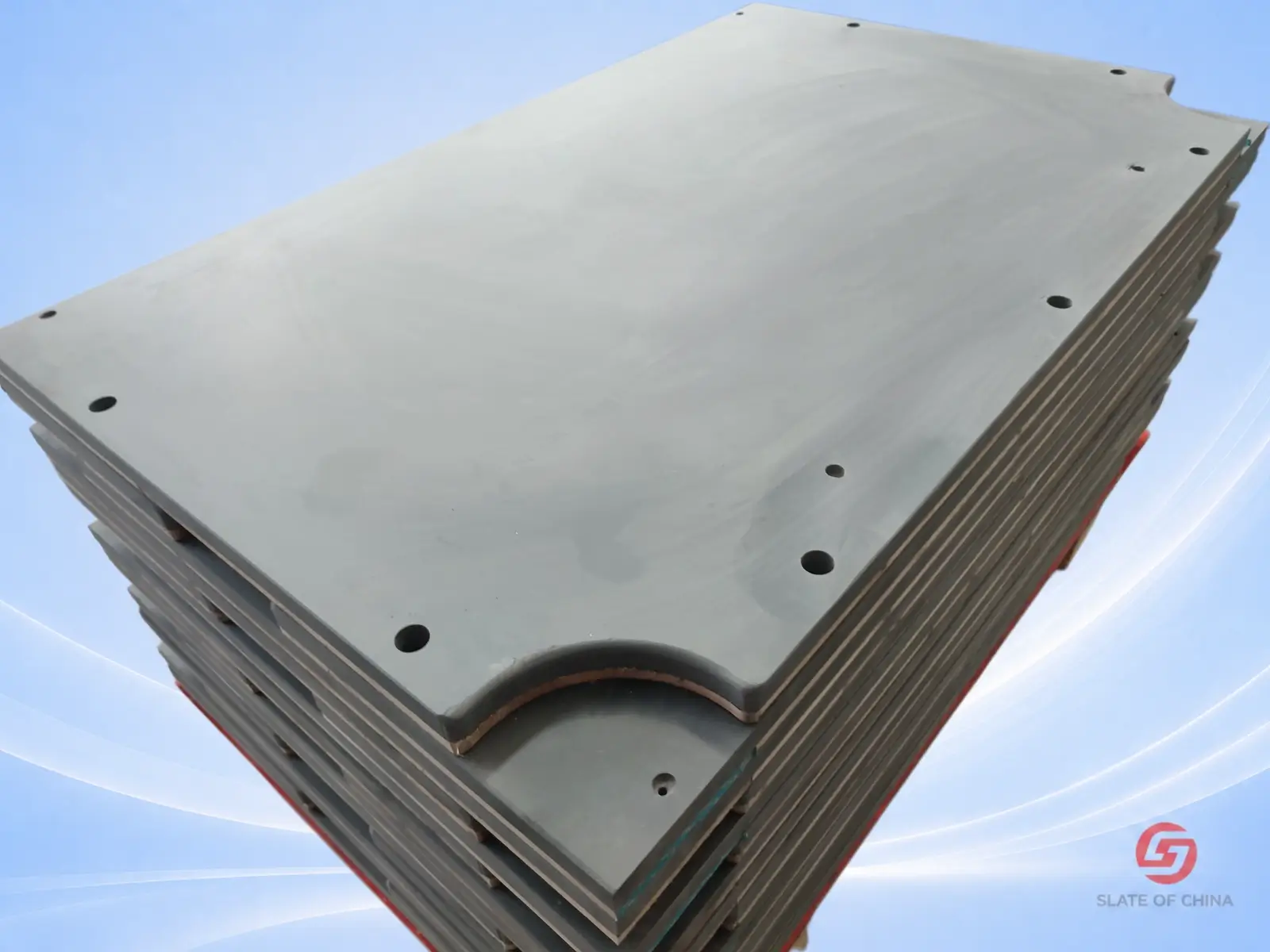


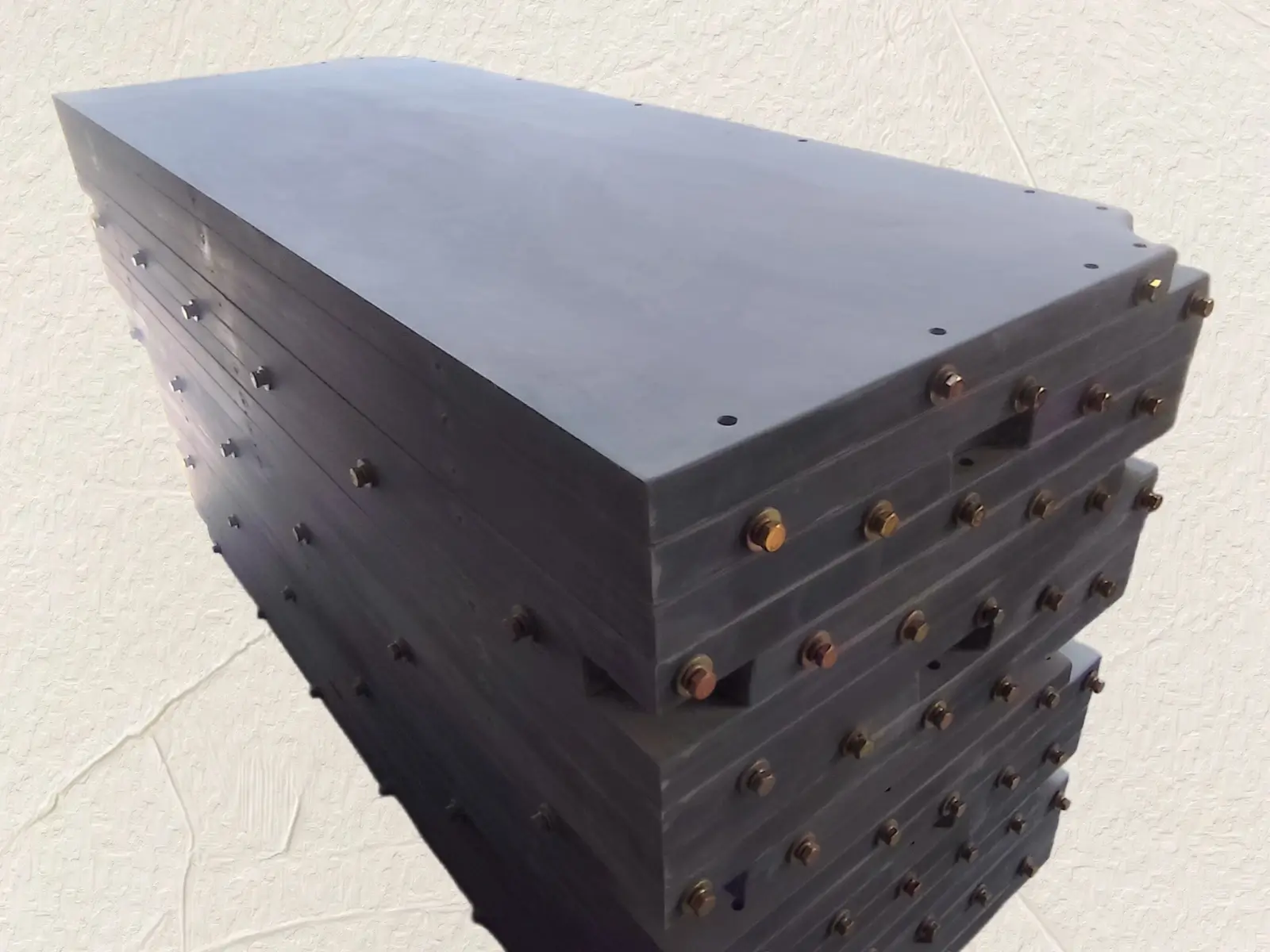
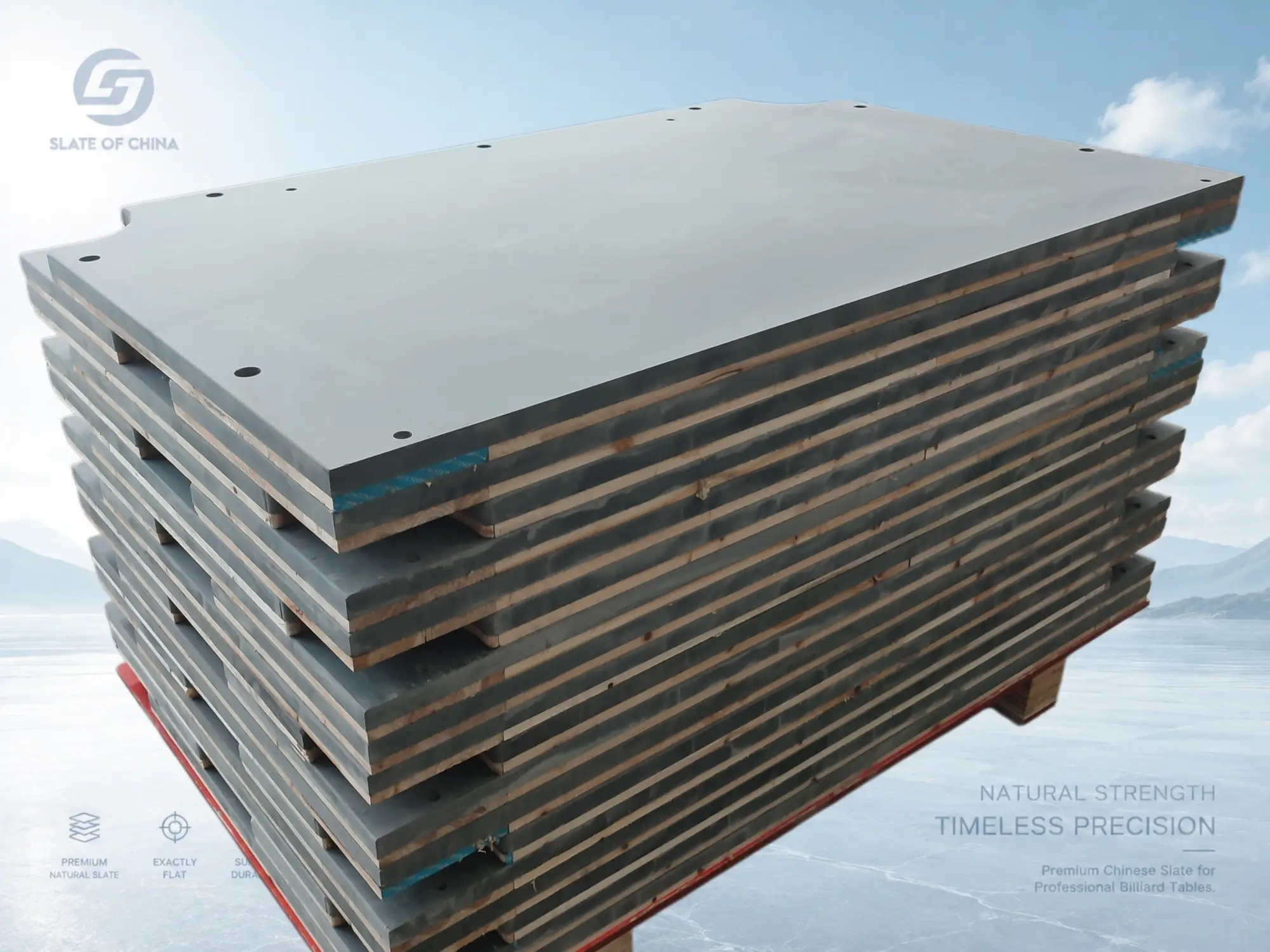
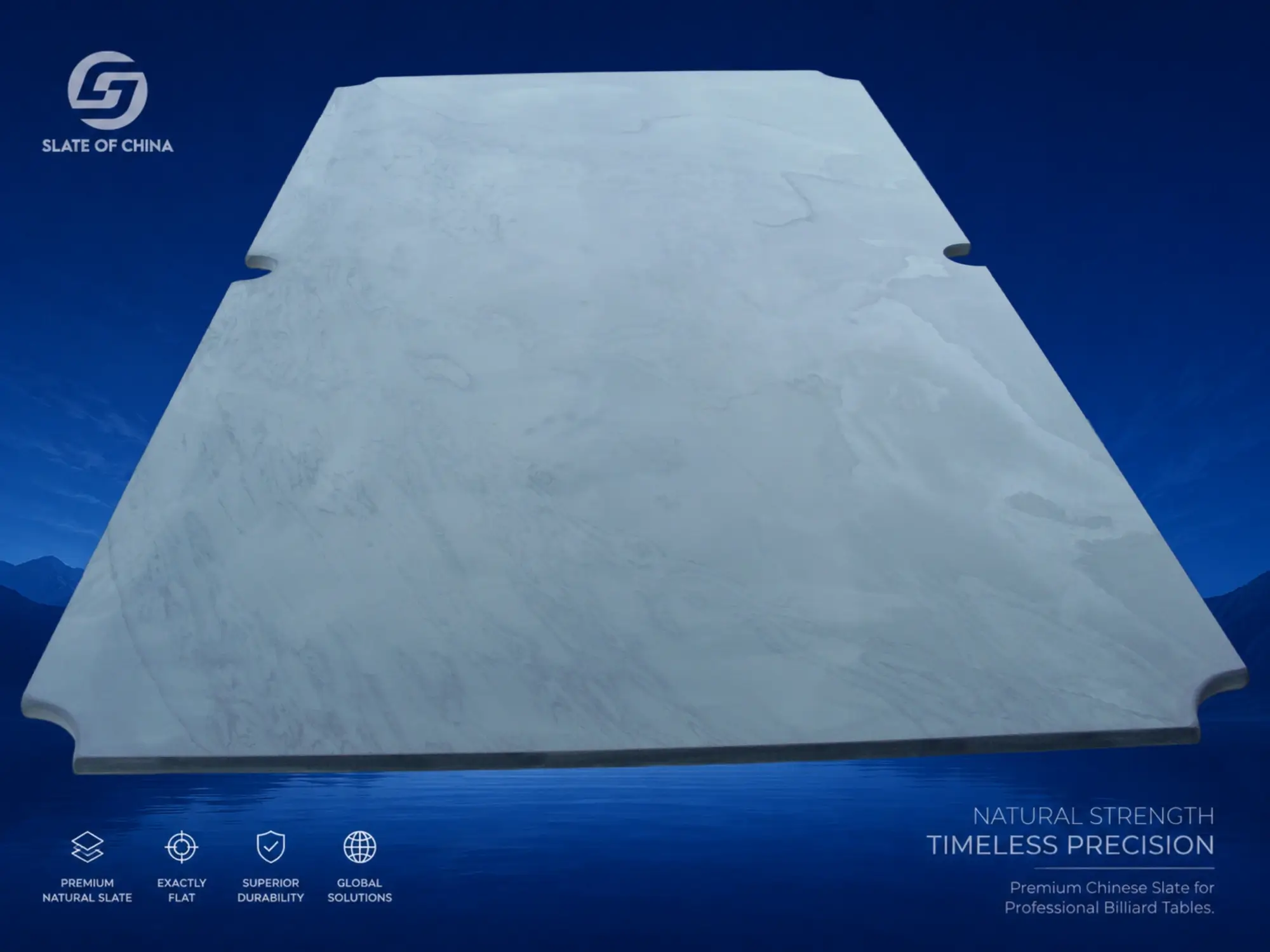
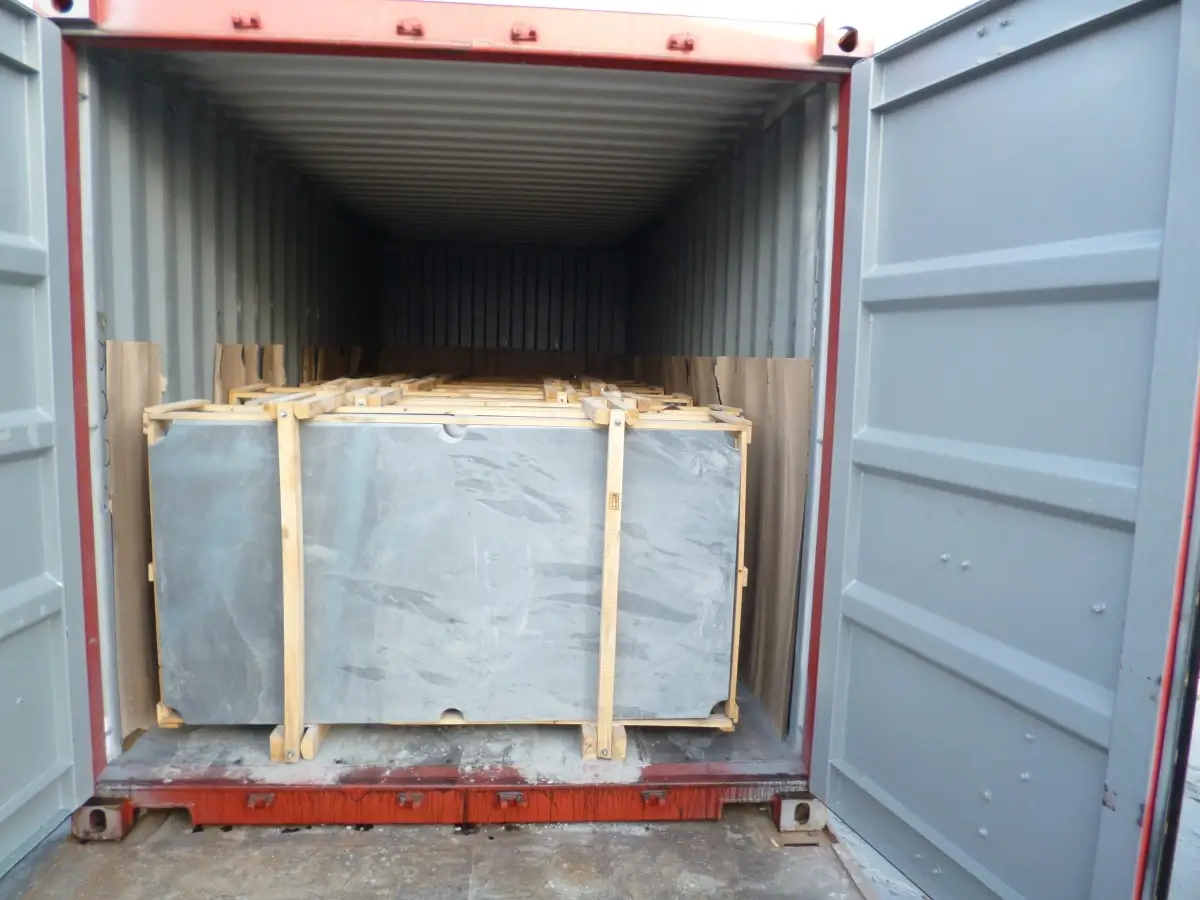
Accuracy and Playing Performance
When choosing between a one-piece pool slate and a three-piece pool slate, many buyers assume that a one-piece slate must provide better playing performance because it has no seams.
In reality, playing accuracy depends far more on slate quality, machining precision, and professional installation than on the number of slate sections. A high-quality three-piece slate that is correctly installed can deliver virtually the same ball roll, speed consistency, and playing accuracy as a one-piece slate.
This is exactly why almost all professional pool table manufacturers and tournament tables use three-piece pool slate despite its segmented construction.
Flatness Is the Most Important Factor
A perfectly flat playing surface is essential for accurate billiard play.
Whether the slate consists of one piece or three pieces, the surface must be:
- Precision machined
- Uniform in thickness
- Properly supported by the table frame
- Carefully leveled during installation
A poorly leveled one-piece slate will perform worse than a professionally installed three-piece slate.
For this reason, flatness—not the number of slate sections—is the key factor affecting playing quality.
Ball Roll Performance
One of the biggest concerns among buyers is whether balls will bounce or change direction when crossing the joints of a three-piece slate.
The answer is No—provided the slate is professionally installed.
During installation:
- Each slate section is carefully aligned.
- The seams are leveled to eliminate height differences.
- The joints are filled with beeswax or professional seam filler.
- The entire surface is covered with billiard cloth.
After installation, the ball rolls smoothly across the seams without noticeable interruption, making the playing experience virtually identical to a one-piece slate.
Speed Consistency Across the Table
Consistent ball speed is another critical requirement for both recreational and professional play.
Modern precision-machined pool slate is manufactured with tight thickness tolerances and excellent surface flatness. Once correctly leveled, both one-piece and three-piece slate provide consistent cue ball speed across the entire playing surface.
This is why professional players can practice and compete on three-piece slate tables with complete confidence.
Professional Leveling Makes the Difference
Professional installation is the key to achieving tournament-level performance.
Installers typically:
- Level the cabinet frame.
- Position each slate section.
- Adjust each section individually.
- Fill and smooth the seams.
- Perform final precision leveling.
These steps ensure the finished playing surface behaves as one continuous slab of natural slate.
Joint Filling and Seam Treatment
The seams between three-piece slate sections are not left exposed.
Instead, installers fill the joints using beeswax or professional seam filler, creating a smooth transition between sections. After the filler hardens, the surface is scraped perfectly flat before the billiard cloth is stretched over the slate.
Once completed, the seams become virtually invisible and cannot normally be detected during play.
✔ Professional Recommendation
After proper installation, a three-piece pool slate performs virtually the same as a one-piece slate in terms of flatness, ball roll, and playing accuracy—while offering much greater flexibility for transportation, installation, and international shipping.
For this reason, three-piece slate has become the industry standard for commercial and tournament pool tables worldwide.
Quick Comparison
| Playing Performance | One-piece Slate | Three-piece Slate |
|---|---|---|
| Surface Flatness | Excellent | Excellent (after leveling) |
| Ball Roll | Excellent | Excellent |
| Ball Speed Consistency | Excellent | Excellent |
| Seam Visibility | None | Virtually Invisible |
| Playing Accuracy | Excellent | Excellent |
| Professional Competition | Limited | Industry Standard |
What Matters Most?
If you’re looking for the best playing performance, focus on these four factors rather than simply choosing between one-piece and three-piece slate:
✔ Premium natural slate quality
✔ Precision CNC machining
✔ Accurate flatness inspection
✔ Professional installation and leveling
When these requirements are met, both slate designs provide an outstanding playing experience.
Installation Comparison
Installation is one of the biggest differences between one-piece pool slate and three-piece pool slate. While both can provide an excellent playing surface, the installation process, labor requirements, and handling difficulty vary significantly.
A one-piece slate is quicker to position because there are no seams to align. However, its large size and heavy weight often make transportation and handling much more challenging. In contrast, a three-piece slate requires additional assembly and leveling, but each section is easier to carry, transport, and install—especially for larger tables or difficult installation environments.
For most commercial and tournament pool tables, the benefits of easier handling outweigh the extra installation time.
Installing a One-piece Pool Slate
A one-piece pool slate is installed as a single solid slab.
Since there are no joints between slate sections, installers do not need to perform seam alignment or joint filling. Once the cabinet frame has been leveled, the slate can be positioned directly onto the table and secured in place.
However, the biggest challenge is handling the slate itself. A one-piece slate can weigh hundreds of kilograms depending on the table size, making it difficult to move safely.
Typical Challenges
✔ Requires more manpower for lifting
✔ Difficult to carry through narrow doors
✔ May not fit stairways or elevators
✔ Requires larger installation space
✔ Greater risk of accidental damage during handling
For this reason, one-piece slate is generally recommended for smaller home pool tables with easy access.
Installing a Three-piece Pool Slate
A three-piece pool slate is installed one section at a time.
Each slate section is individually positioned on the cabinet frame before being carefully aligned and leveled. The seams between sections are then filled with beeswax or professional seam filler to create a continuous playing surface.
Although installation requires more time and technical skill, dividing the slate into three sections greatly simplifies transportation and handling.
Typical Installation Steps
✔ Position each slate section
✔ Align the machined seams
✔ Adjust frame support
✔ Perform precision leveling
✔ Fill joints with beeswax
✔ Smooth the seams
✔ Install billiard cloth
This process creates a flat, seamless playing surface suitable for professional competition.
Which Installation Is Easier?
The answer depends on what “easy” means.
If the installation site is on the ground floor with wide access, a one-piece slate can be installed relatively quickly because there are no seams to adjust.
However, in real-world projects—especially apartments, commercial buildings, clubs, hotels, or export installations—a three-piece slate is usually much easier to transport, carry, and position.
Although it requires professional leveling, the reduced handling difficulty often makes the overall installation process more practical.
Quick Comparison Table
| Installation Factor | One-piece Slate | Three-piece Slate |
|---|---|---|
| Number of Sections | 1 | 3 |
| Handling Weight | Very Heavy | Divided into Smaller Sections |
| Carrying Upstairs | Difficult | Easy |
| Doorway Access | Limited | Excellent |
| Seam Alignment | Not Required | Required |
| Joint Filling | Not Required | Beeswax or Seam Filler |
| Precision Leveling | Basic | Professional |
| Installation Time | Shorter | Longer |
| Professional Installation | Recommended | Highly Recommended |
| Best Application | Home Tables | Commercial & Tournament Tables |
✔Professional Tip
Although a three-piece pool slate requires more installation work, it is the preferred choice for most professional pool tables because the smaller sections are much easier to transport, carry, level, and install without sacrificing playing performance.
Want to learn the complete installation procedure? Read our Billiard Slate Installation Guide for detailed instructions on frame preparation, precision leveling, seam filling, cloth installation, and final inspection.
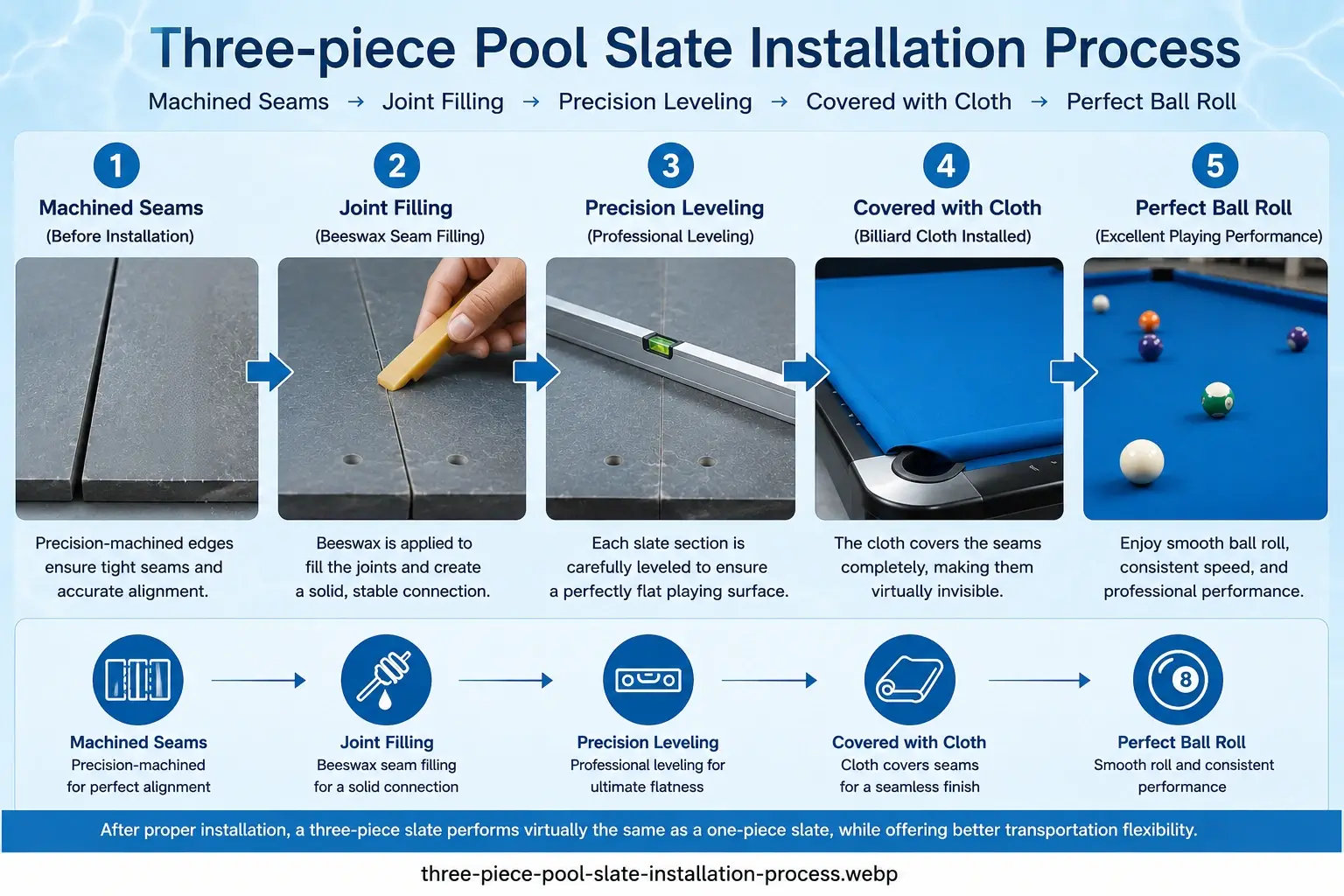
Professional installation ensures that a three-piece pool slate delivers a perfectly flat playing surface with smooth ball roll and tournament-level performance.
Which Installation Option Is Right for You?
Choose One-piece Slate if you:
- Install a 6ft or 7ft home pool table
- Have easy ground-floor access
- Prefer the simplest installation process
Choose Three-piece Slate if you:
- Install an 8ft or 9ft table
- Need to move the slate through doors or stairs
- Require commercial or tournament-quality performance
- Plan to ship tables internationally
Transportation and Shipping
For overseas buyers, transportation and shipping are often just as important as playing performance. The way a pool slate is packed, handled, and shipped directly affects freight costs, delivery safety, installation efficiency, and the overall success of your project.
Although both one-piece and three-piece pool slate can be shipped worldwide, their transportation requirements differ significantly. Understanding these differences helps buyers choose the most practical solution for domestic delivery, international export, and commercial projects.
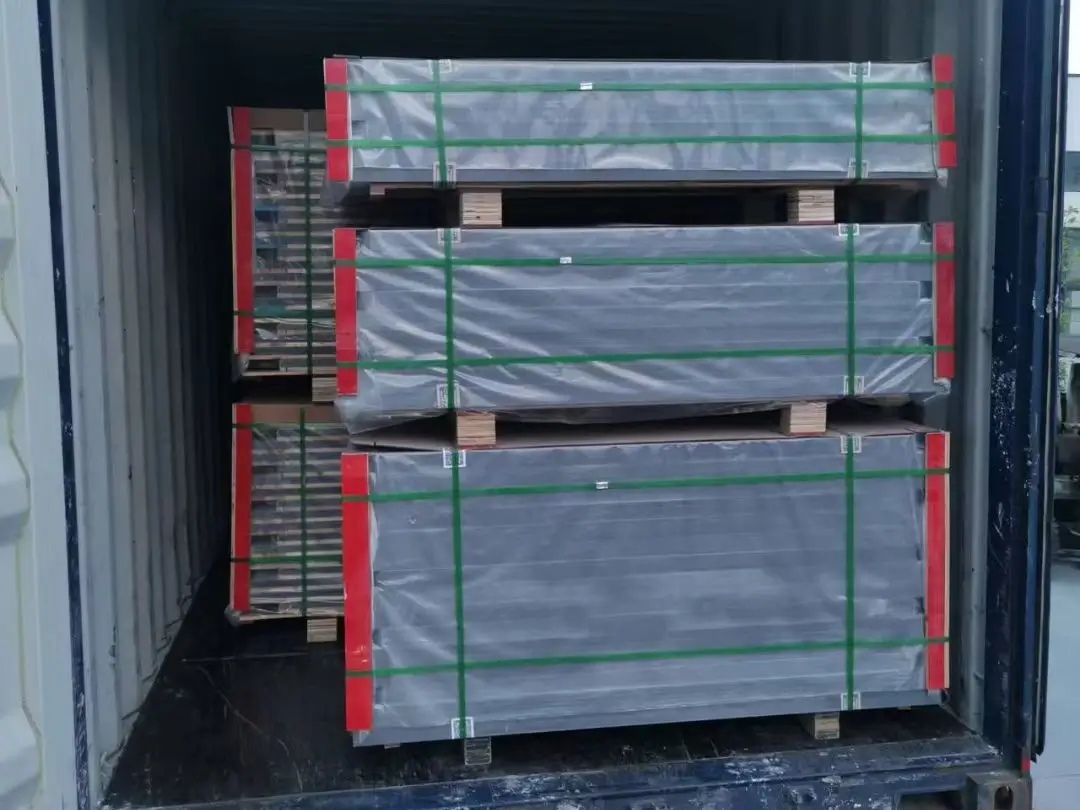
Container Loading Efficiency
A one-piece pool slate occupies more space because the entire slab must be packed in a single oversized crate. This reduces loading flexibility and may limit the number of tables that can be loaded into a shipping container.
A three-piece pool slate is divided into three smaller sections, allowing more compact packaging and better use of container space. The smaller crates are easier to arrange, improving loading efficiency for both 20GP and 40HQ containers.
For manufacturers exporting large quantities of pool tables, this translates into lower logistics costs per shipment.
Packaging and Crating
Proper packaging is essential to protect natural slate during transportation.
A one-piece slate usually requires:
- Larger export crate
- More internal reinforcement
- Heavier timber structure
- Greater lifting capacity
A three-piece slate can be packed in compact wooden crates, with each section individually protected using foam, corner guards, and separators. This design minimizes stress during transportation and simplifies unloading at the destination.
Related Guide: Pool Slate Packing & Shipping Guide (Internal Link)
Risk of Shipping Damage
Natural slate is strong under compression but can crack if subjected to improper handling or excessive impact.
Because a one-piece slate is transported as one large slab, it is more difficult to lift, turn, and position safely. The larger dimensions also increase the risk of accidental impact during loading or unloading.
A three-piece slate reduces these risks by dividing the weight into smaller, easier-to-handle sections. If handled correctly and packed in export-grade crates, the likelihood of shipping damage is significantly reduced.
Forklift Handling
Forklift handling is another important consideration for warehouses, distributors, and container terminals.
A one-piece slate typically requires:
- Larger forklift capacity
- Wider forks
- More careful balance during lifting
Three-piece slate is easier to handle because each section weighs considerably less. Individual crates are more stable during lifting and can be moved safely using standard warehouse equipment.
This also speeds up loading and unloading operations.
Ocean Shipping
For international buyers, ocean freight is the most common shipping method.
Three-piece slate offers several advantages during sea transportation:
- More efficient container utilization
- Easier customs inspection
- Lower handling risk
- Simpler unloading at destination
- Better protection during long-distance shipping
These advantages explain why three-piece pool slate has become the preferred option for exported pool tables worldwide.
Shipping Cost Comparison
Although a one-piece slate may have a lower manufacturing cost, transportation expenses often increase due to oversized packaging and additional handling requirements.
A three-piece slate usually provides better overall logistics efficiency, particularly for export shipments.
| Shipping Factor | One-piece Pool Slate | Three-piece Pool Slate |
|---|---|---|
| Crate Size | Large | Compact |
| Container Loading | Less Efficient | More Efficient |
| Forklift Handling | More Difficult | Easier |
| Ocean Shipping | Higher Risk | Safer |
| Shipping Damage Risk | Higher | Lower |
| Freight Cost | Higher (Large Tables) | Lower Overall |
| Export Suitability | Good | Excellent |
| International Shipping | Limited for Large Tables | Industry Preferred |
✔ Professional Recommendation
For international shipping, commercial projects, and OEM pool table manufacturing, a three-piece pool slate is generally the most practical solution. It offers safer handling, more efficient container loading, lower shipping risk, and reduced overall logistics costs without compromising playing performance.
Which Option Is Better for Shipping?
Choose One-piece Pool Slate if you:
- Transport locally over short distances
- Install small home pool tables
- Have easy access to the installation site
- Prioritize lower product cost over shipping efficiency
Choose Three-piece Pool Slate if you:
- Export pool tables internationally
- Ship by sea in containers
- Supply distributors or commercial projects
- Need safer handling and lower logistics risk
- Want easier loading, unloading, and installation
For detailed information about export packaging, wooden crates, container loading, and worldwide delivery, please read our Pool Slate Packing & Shipping Guide.
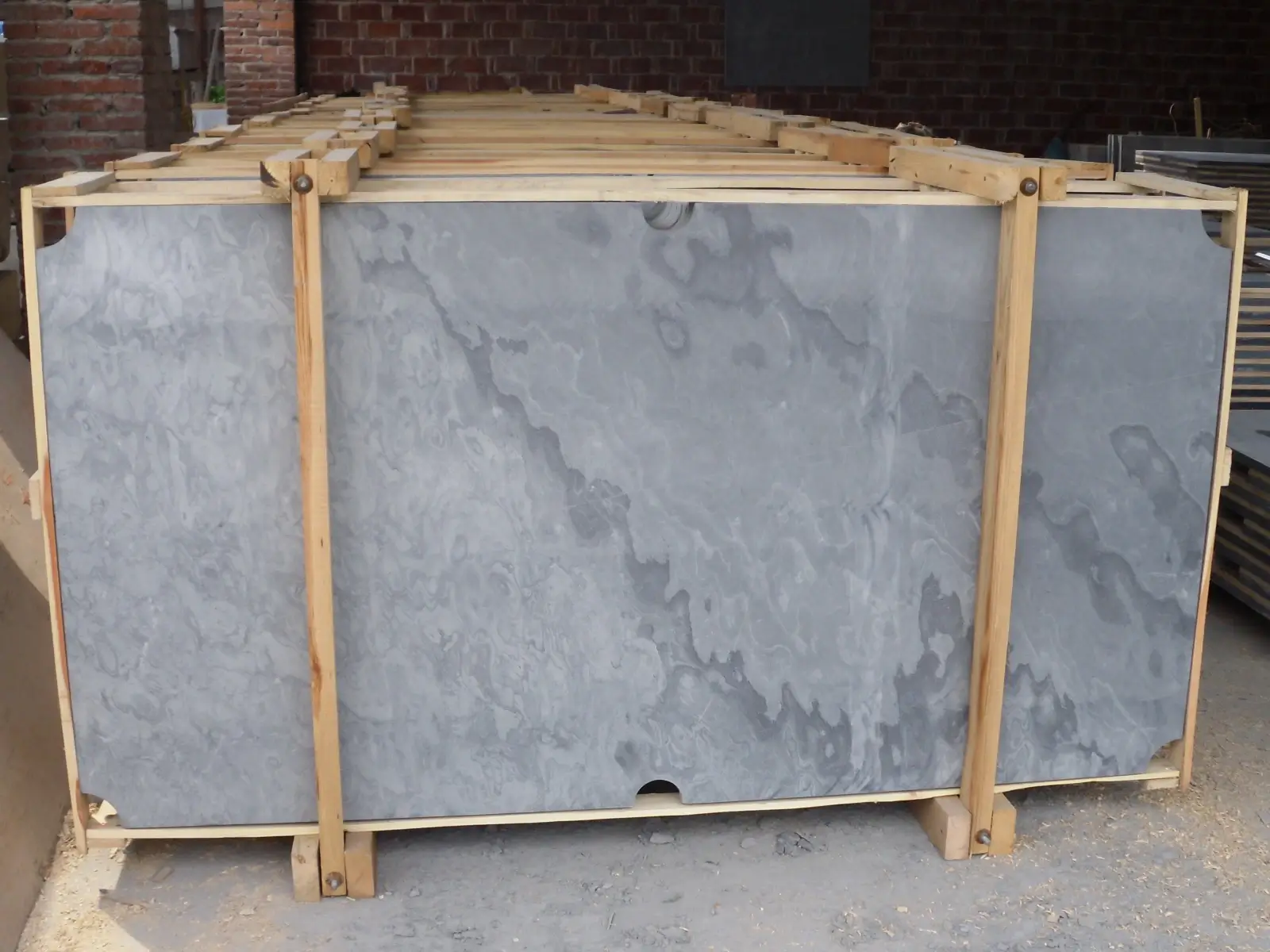
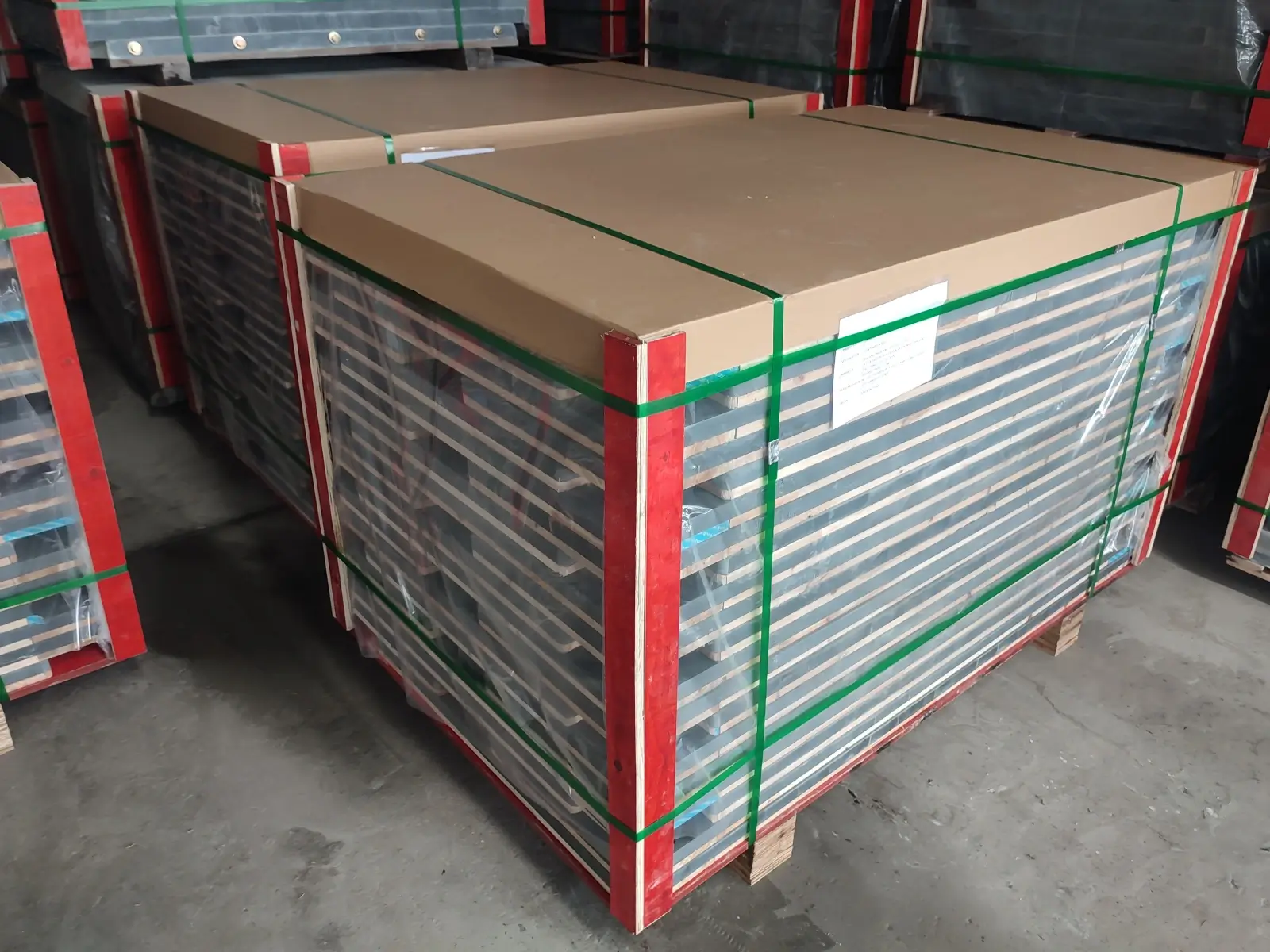
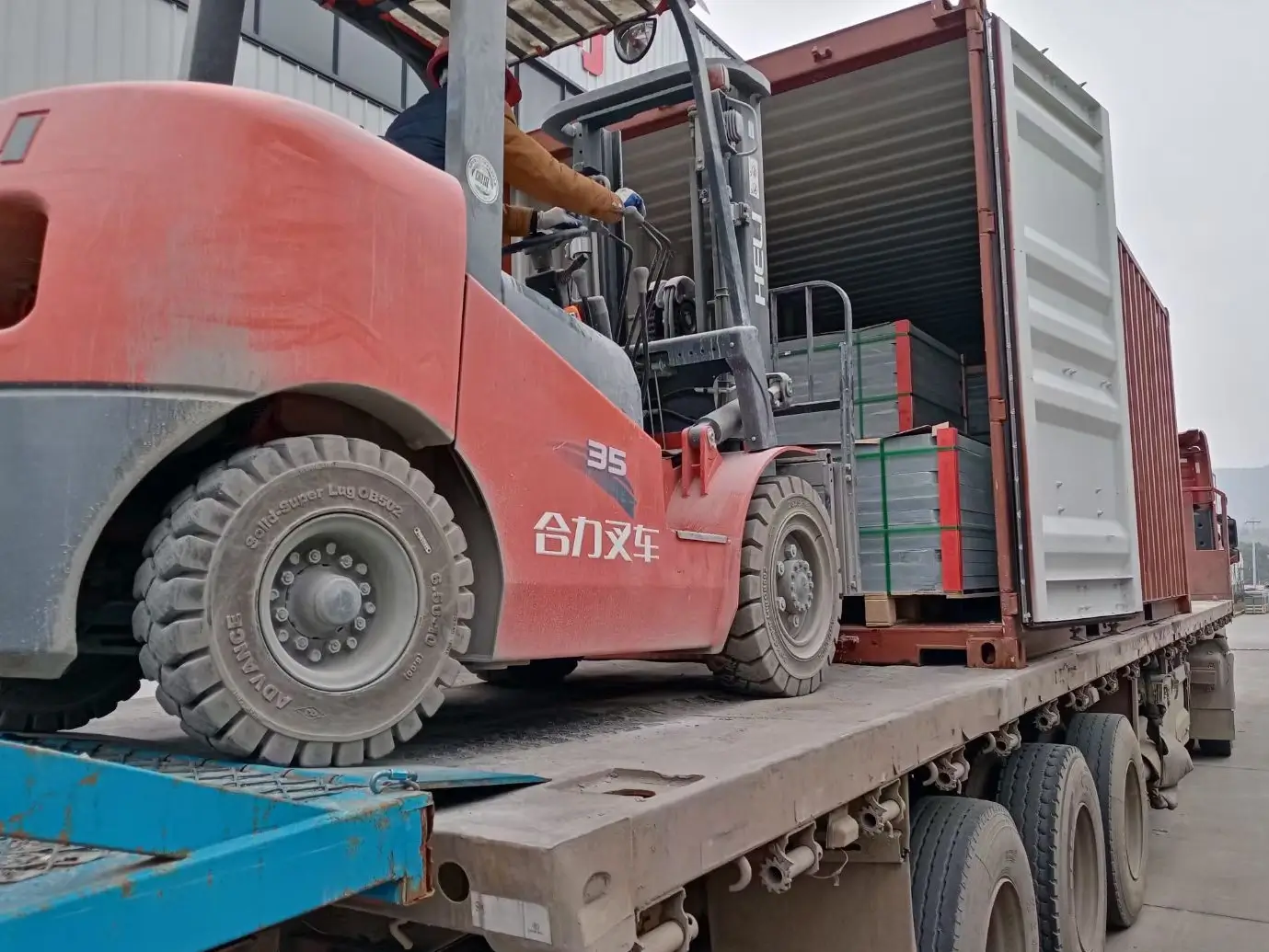

Compact packing and safer handling make three-piece pool slate the preferred choice for international shipping.
Cost Comparison
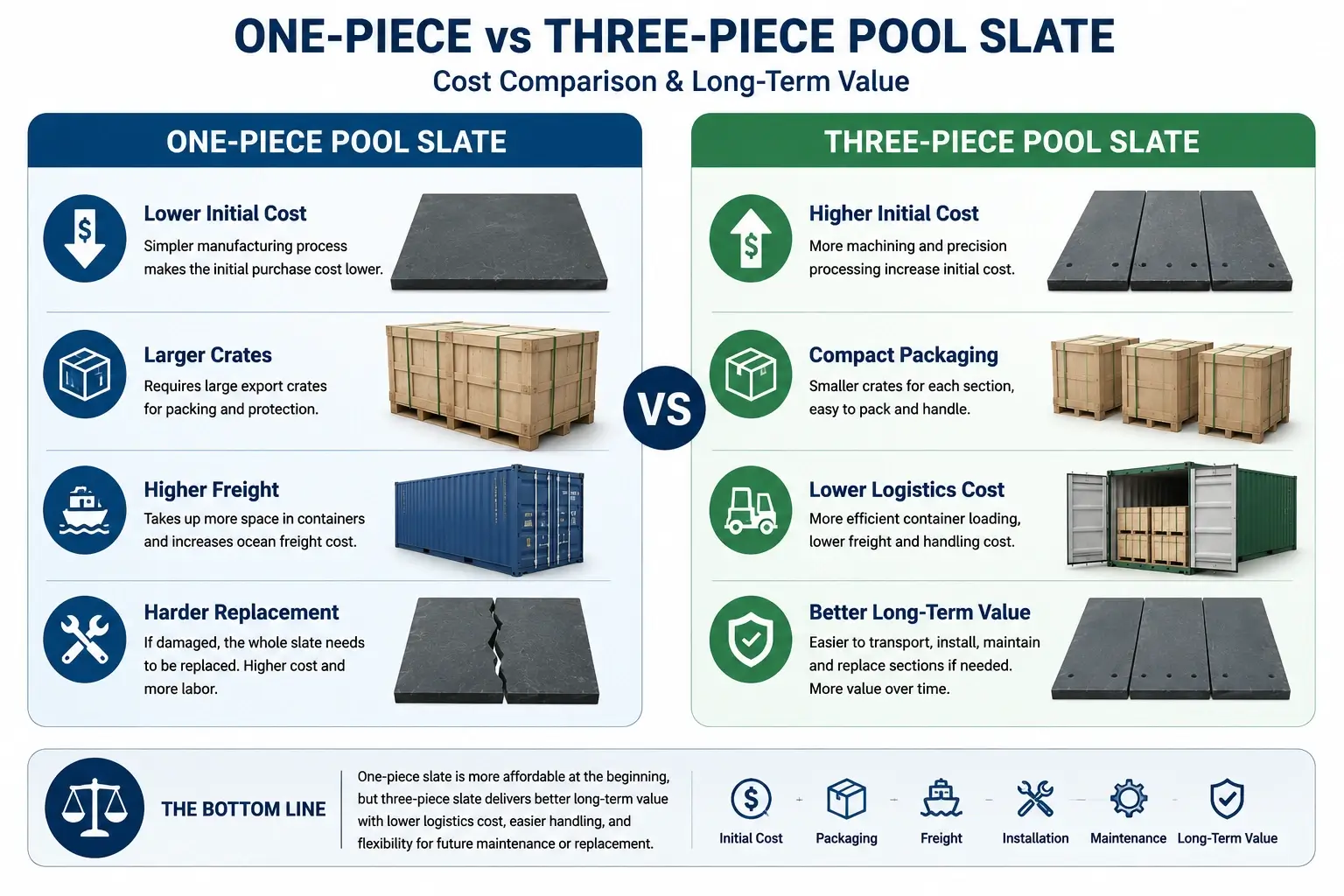
When comparing one-piece pool slate and three-piece pool slate, many buyers focus only on the purchase price. However, the total project cost includes much more than the cost of the slate itself.
Factors such as machining, transportation, packaging, installation, replacement, and long-term maintenance all affect the overall investment. Depending on your project, a slate with a higher initial price may actually provide better long-term value.
Initial Material Cost
A one-piece pool slate generally has a lower manufacturing cost because it consists of a single slab and requires less precision matching during production.
A three-piece pool slate requires additional cutting, matching, edge machining, and quality inspection to ensure that all three sections fit together perfectly. As a result, its initial production cost is typically higher.
Winner: ✅ One-piece Pool Slate
Machining Cost
Three-piece slate undergoes more manufacturing processes than one-piece slate.
These may include:
- Precision CNC machining
- Edge matching
- Pocket alignment
- Dowel hole drilling (if required)
- Individual section inspection
These additional processes improve installation accuracy but also increase manufacturing costs.
Winner: ✅ One-piece Pool Slate
Freight and Logistics Cost
Transportation costs often have a significant impact on the total project budget.
Although a one-piece slate may cost less to purchase, it usually requires:
- Larger export crates
- More warehouse space
- Higher lifting capacity
- Less efficient container loading
A three-piece slate is easier to pack, load, and ship, making it more economical for international transportation and commercial distribution.
For export projects, the savings in logistics can partially or even completely offset the higher manufacturing cost.
Winner: ✅ Three-piece Pool Slate
Installation Cost
A one-piece slate is quicker to install because there are no seams to align or fill.
However, the heavy weight of a single slab often requires additional labor or lifting equipment.
Three-piece slate requires more installation time due to leveling and seam treatment, but its smaller sections are much easier to handle.
Depending on labor rates and installation conditions, the overall installation cost may be similar.
Result: ⚖ Depends on the project
Replacement Cost
If a one-piece slate is damaged, replacing it usually means replacing the entire slab.
With a three-piece slate, it may be possible to replace only the damaged section, reducing repair costs and minimizing downtime.
This can be particularly valuable for commercial pool clubs and tournament venues.
Winner: ✅ Three-piece Pool Slate
Long-Term Maintenance
Both slate types require very little maintenance because natural slate is durable and dimensionally stable.
However, if future servicing or relocation is required, a three-piece slate is generally easier to disassemble, transport, and reinstall.
For commercial operators who expect tables to be moved or serviced over time, this provides additional long-term value.
Winner: ✅ Three-piece Pool Slate
Cost Comparison Table
| Cost Factor | One-piece Pool Slate | Three-piece Pool Slate |
|---|---|---|
| Material Cost | Lower | Higher |
| Machining Cost | Lower | Higher |
| Packaging Cost | Higher (Large Crates) | Lower (Compact Crates) |
| Freight Cost | Higher for Large Tables | Lower Overall |
| Installation Cost | Lower Labor, Higher Handling | More Labor, Easier Handling |
| Replacement Cost | Replace Entire Slate | Possible Section Replacement |
| Maintenance | Low | Low |
| Long-Term Value | Good | Excellent |
| Best for Export | Limited | ✔ Preferred |
Cost Insight
A one-piece pool slate is usually less expensive to purchase initially. However, a three-piece pool slate often provides better long-term value by reducing transportation costs, improving handling efficiency, simplifying future replacement, and supporting professional installations.
Buyer Recommendation
Which Option Offers Better Value?
Choose One-piece Pool Slate if you:
- Prioritize the lowest initial purchase cost.
- Install a small home pool table.
- Have easy access for delivery and installation.
- Do not expect to move the table in the future.
Choose Three-piece Pool Slate if you:
- Export pool tables internationally.
- Manufacture or distribute pool tables.
- Install commercial or tournament tables.
- Want lower logistics costs and greater long-term flexibility.
- Value easier handling, servicing, and replacement.
To learn more about packaging, freight protection, and international shipping costs, see our billiard Slate Packing & Shipping Guide. For installation considerations that may affect labor costs, visit our Pool Slate Installation Guide.
Which Table Sizes Usually Use One-piece Slate?
The choice between one-piece and three-piece pool slate depends largely on table size. As the playing surface becomes larger, the slate becomes significantly heavier and more difficult to transport, carry, and install.
For this reason, smaller home pool tables often use one-piece slate, while larger commercial, professional, and tournament tables almost always use three-piece slate. The table below summarizes the most common industry practices.
Recommended Slate by Table Size
| Pool Table Size | Recommended Slate | Typical Applications |
|---|---|---|
| 6ft Pool Table | ✅ One-piece | Home tables, children’s tables, recreational use |
| 7ft Pool Table | ✅ One-piece or Three-piece | Home game rooms, bars, coin-operated tables |
| 8ft Pool Table | ⭐ Three-piece Preferred | Home premium tables, clubs, commercial venues |
| 9ft Pool Table | ✅ Three-piece | Professional pool tables, tournaments, clubs |
| 10ft Pool Table | ✅ Three-piece | Commercial billiard tables, training facilities |
| 12ft Snooker Table | ✅ Three-piece Only | Professional snooker clubs and tournaments |
Note: Actual specifications may vary depending on the table manufacturer and regional market. The recommendations above reflect common industry practice.
Why Smaller Tables Often Use One-piece Slate
For 6ft and many 7ft pool tables, the overall slate size and weight remain manageable. A single-piece slate is easier to manufacture and provides a seamless playing surface without requiring seam alignment.
It is commonly chosen for:
- Home pool tables
- Bar tables
- Coin-operated tables
- Recreational billiard tables
Where access is straightforward and transportation distances are short, a one-piece slate offers a practical and economical solution.
Why Larger Tables Use Three-piece Slate
As table size increases, the weight of a single slate grows rapidly. Transporting a one-piece slate for an 8ft, 9ft, or larger table can be challenging, especially through stairways, elevators, or narrow entrances.
A three-piece pool slate divides the weight into three manageable sections, making transportation, installation, and future maintenance much easier.
This is why three-piece slate has become the standard choice for:
- Professional pool tables
- Tournament tables
- Commercial billiard clubs
- Exported pool tables
- OEM pool table manufacturers
Why 12ft Snooker Tables Always Use Three-piece Slate
A 12ft snooker table requires an exceptionally large and heavy playing surface. Manufacturing the slate as a single piece would make transportation and installation impractical in almost every situation.
Therefore, professional snooker tables use three precision-matched slate sections that are carefully leveled during installation to create a perfectly flat playing surface.
This design combines tournament-level accuracy with safe transportation and efficient installation.
Quick Buyer Guide
| If Your Table Is… | Recommended Choice |
|---|---|
| 6ft Home Pool Table | ✅ One-piece Slate |
| 7ft Bar or Home Table | ✅ One-piece or Three-piece |
| 8ft Premium Pool Table | ⭐ Three-piece Preferred |
| 9ft Tournament Pool Table | ✅ Three-piece Slate |
| 12ft Snooker Table | ✅ Three-piece Slate Only |
Professional Recommendation
As a general rule, the larger the table, the greater the advantages of using a three-piece pool slate. While one-piece slate remains an excellent choice for many 6ft and 7ft tables, three-piece slate is the preferred solution for most 8ft, 9ft, and 12ft professional tables due to its superior transportation, installation, and long-term serviceability.
🟢 6ft → One-piece
🟢 7ft → One-piece / Three-piece
🟡 8ft → Three-piece Preferred
🔵 9ft → Three-piece
🔵 10ft → Three-piece
🔵 12ft Snooker → Three-piece Only
- Need to choose the correct table dimensions? See our Pool Slate Size Guide.
- Want to compare slate thickness for different table sizes? Read our Pool Slate Thickness Guide.
- Looking for professional snooker slate? Explore our 12ft Snooker Slate and Tournament Snooker Slate product pages.
Which One Should You Choose?
There is no single “best” choice for every project. The right pool slate depends on how and where your table will be used.
If your priority is simple installation, lower initial cost, and a home recreational table, a one-piece pool slate is often the ideal solution.
If you are purchasing for a commercial venue, tournament table, export project, or professional installation, a three-piece pool slate offers greater flexibility, easier transportation, and better long-term value.
Use the buyer guide below to determine which option best fits your needs.
✅ Choose One-piece Pool Slate If…
A one-piece pool slate is the right choice if your project focuses on simplicity and affordability.
✔ You are buying a home pool table.
✔ The installation room has easy ground-floor access.
✔ You need a 6ft or 7ft pool table.
✔ Your budget is limited and you want a lower initial purchase cost.
✔ You prefer a simpler installation process with no seam alignment.
✔ You plan to install the table yourself or with basic assistance.
✔ The table will remain in one location for many years.
Best for:
- Home game rooms
- Family recreation
- Bar tables
- Coin-operated tables
- Entry-level pool tables
✅ Choose Three-piece Pool Slate If…
A three-piece pool slate is the better choice when transportation, installation flexibility, and professional performance are priorities.
✔ You are furnishing a commercial billiard club.
✔ The table will be used for professional or tournament play.
✔ You manufacture or export pool tables internationally.
✔ The installation site includes stairs, elevators, or narrow doorways.
✔ You require an 8ft, 9ft, 10ft, or 12ft table.
✔ You want easier transportation and safer handling.
✔ You value long-term maintenance and possible section replacement.
Best for:
- Commercial clubs
- Tournament venues
- Professional players
- Hotels and entertainment centers
- Pool table manufacturers
- International distributors
- Export projects
Quick Decision Table
| Your Situation | Recommended Slate |
|---|---|
| Home recreation | ✅ One-piece Pool Slate |
| DIY installation | ✅ One-piece Pool Slate |
| Limited budget | ✅ One-piece Pool Slate |
| Small pool table (6ft–7ft) | ✅ One-piece Pool Slate |
| Commercial club | ✅ Three-piece Pool Slate |
| Professional tournament | ✅ Three-piece Pool Slate |
| International shipping | ✅ Three-piece Pool Slate |
| Large pool table (8ft+) | ✅ Three-piece Pool Slate |
| Easier transportation | ✅ Three-piece Pool Slate |
| Long-term commercial use | ✅ Three-piece Pool Slate |
Our Recommendation
For most residential 6ft and 7ft pool tables, a one-piece pool slate offers an economical and practical solution. For commercial installations, professional pool tables, tournament venues, and international export projects, we recommend a three-piece pool slate because it provides greater transportation flexibility, easier installation, and excellent long-term performance.
Final Buyer Checklist
Before Making Your Decision, Ask Yourself:
- What size pool table am I buying?
- Can the slate pass through doors, stairways, or elevators?
- Will the table be shipped internationally?
- Is professional installation available?
- Do I need tournament-level performance?
- What matters more—lower initial cost or lower long-term ownership cost?
If you can answer these questions, choosing the right slate becomes much easier.
- Need help choosing the correct size? Read our Pool Slate Size Guide.
- Not sure which thickness is suitable? Visit our Pool Slate Thickness Guide.
- Want to understand installation requirements? Explore our Billiard Slate Installation Guide.
- Planning international shipping? See our Billiard Slate Packing & Shipping Guide.
Need Expert Advice?
Choosing the right pool slate doesn’t have to be complicated.
Whether you need one-piece pool slate, three-piece pool slate, or a custom solution for your project, our experienced team can recommend the best option based on your table size, installation conditions, and shipping requirements.
Contact us today for expert advice, custom manufacturing, and worldwide delivery.
Frequently Asked Questions (FAQ)
Still Not Sure Which Pool Slate Is Right for You?
Every project is different. Factors such as table size, installation conditions, shipping destination, and budget all influence the best choice.
Contact Slate of China for expert advice on selecting the right one-piece or three-piece pool slate for your home, commercial, or export project.
Still Have Questions?
📞 Expert Advice
🏭 Factory Direct Supply
🌍 Worldwide Shipping
📦 Custom Sizes Available
Why Choose Our Pool Slate?
Choosing the right pool slate manufacturer is just as important as choosing between a one-piece or three-piece slate. High-quality natural slate, precision machining, strict quality control, and reliable export packaging all contribute to a superior playing surface and a successful installation.
At Slate of China, we combine decades of manufacturing experience with advanced CNC machining and rigorous inspection standards to supply premium pool slate and snooker slate to table manufacturers, distributors, and commercial projects worldwide.
Our Advantages
🪨 Premium Natural Slate
We manufacture our pool slate from carefully selected premium natural slate known for its high density, excellent dimensional stability, and long-lasting durability. Every slate provides a smooth and consistent playing surface designed for professional billiard tables.
⚙ Precision CNC Machining
Every slate is processed using advanced CNC machining to achieve:
- Accurate dimensions
- Precision pocket cut-outs
- Smooth machined edges
- Excellent surface finish
- Consistent quality across every production batch
This ensures easier installation and outstanding playing performance.
🎯 Strict Flatness & Thickness Control
Playing accuracy begins with precision.
Each slate undergoes comprehensive quality inspection, including:
- Flatness inspection
- Thickness tolerance verification
- Surface quality inspection
- Dimensional measurement
- Edge and pocket accuracy checks
Our strict quality control helps ensure consistent ball roll and tournament-level performance.
📏 Tight Thickness Tolerance
Uniform thickness is essential for stable installation and professional leveling.
Using precision grinding and inspection equipment, we maintain tight manufacturing tolerances that help installers achieve a perfectly level playing surface.
🌍 Extensive Export Experience
We have supplied pool slate and snooker slate to customers in North America, Europe, Australia, the Middle East, and Southeast Asia.
Whether you are a pool table manufacturer, distributor, importer, or OEM customer, we understand international quality requirements, logistics, and export documentation.
📦 ISPM 15 Export Packaging
All export shipments are packed in strong ISPM 15-compliant wooden crates designed for international transportation.
Our packaging minimizes movement during transit and provides excellent protection against impact, moisture, and long-distance shipping conditions.
🚢 Worldwide Shipping
We offer reliable worldwide delivery by sea, land, or multimodal transportation.
Our experienced export team supports:
- Secure container loading
- Professional export packing
- Ocean freight coordination
- Documentation assistance
- Timely worldwide delivery
Why Customers Choose Slate of China
| Advantage | Benefit to You |
|---|---|
| ✔ Premium Natural Slate | Stable, durable, professional playing surface |
| ✔ CNC Precision Machining | Accurate dimensions and easy installation |
| ✔ Strict Flatness Inspection | Smooth ball roll and consistent performance |
| ✔ Tight Thickness Tolerance | Easier leveling and improved accuracy |
| ✔ Rich Export Experience | Reliable support for international buyers |
| ✔ ISPM 15 Export Crating | Safe transportation and customs compliance |
| ✔ Worldwide Shipping | Fast, secure delivery to global markets |
Our Commitment
We are committed to supplying premium one-piece and three-piece pool slate that meets the demanding requirements of professional pool table manufacturers, commercial billiard clubs, and international distributors. Every slate is precision-machined, carefully inspected, securely packed, and delivered with the quality and reliability our customers expect.
Ready to Source Premium Pool Slate?
Whether you need one-piece pool slate, three-piece pool slate, or custom slate for pool or snooker tables, our team is ready to help.
✔ Factory Direct Supply
✔ Custom Sizes Available
✔ OEM & Bulk Orders Welcome
✔ Worldwide Shipping
- 🪨 Premium Natural Slate
- ⚙ Precision CNC Machining
- 🎯 Precision Flatness Control
- 📏 Tight Thickness Tolerance
- 🌍 Rich Export Experience
- 📦 ISPM 15 Export Packing
- 🚢 Worldwide Shipping
Learn how we manufacture precision slate → Pool Slate Manufacturing Process
See our quality inspection standards → Quality Inspection & Flatness Control
Explore our export packaging solutions → Pool Slate Packing & Shipping Guide
View our installation recommendations → Pool Slate Installation Guide
Written by
Slate of China Technical Team
30+ Years of Natural Slate Manufacturing Experience
Updated:
2026