
Sample Approval: How Physical Samples Work
Quick answer. Ask for a range set, not one handsome piece. Review it clean and dry under agreed light, add a full-size dry lay when scale changes the call, and keep a matched pair — one set with you, one with the factory — so the same reference follows the order from approval to dispatch. Then write the acceptance limits into the purchase order.
Set A. Review, set the limits, sign the record.
Set B. Check production samples against it before dispatch, following the agreed inspection plan.
A courier box arrives with one beautiful piece of dark slate. You photograph it, approve it, and the order moves to production. A month later the first crate is opened and the stone contains blue-grey pieces, heavier cleft and occasional mineral lines. The supplier calls it the same stone. The buyer calls it different. Both may be right — and neither holds a strong position, because the order never recorded which differences were acceptable.
That single piece answered one question: does it look good. It never answered the one the order actually needs: what range of colour, texture and marking will I accept? A handsome sample is a good starting point, but it becomes a reference only when it is a set that shows the typical material and its limits, and when that set lives in two places.

What a physical slate sample can and cannot tell you
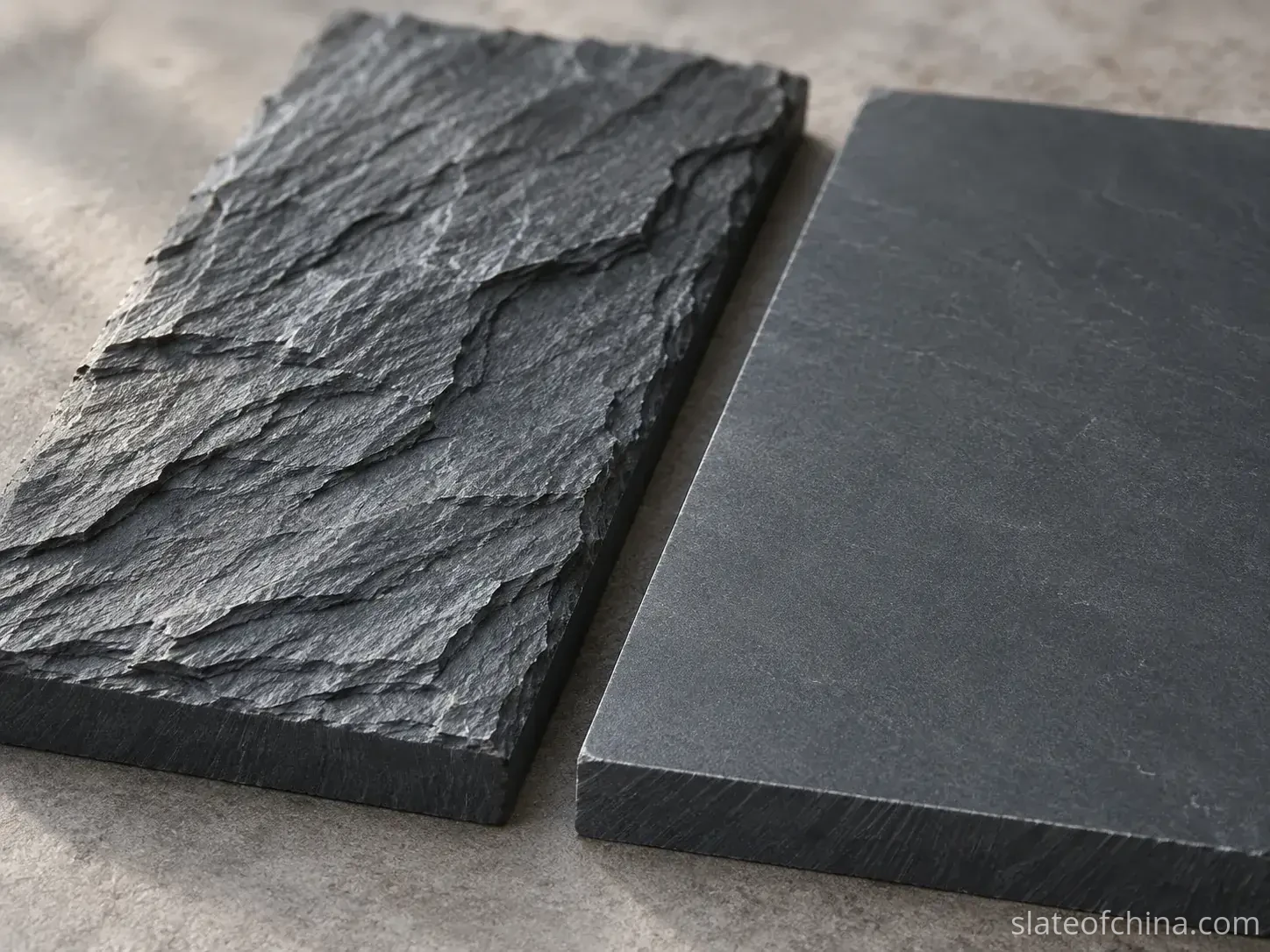
Pick up a real piece and you learn things a photograph cannot: how the colour sits in your own light, how pronounced the cleft texture is, how the edge and the back are actually made. A full-size piece can also show how the finish reads across the chosen format and let you check the geometry of that one piece.
| Question | Best evidence to request |
|---|---|
| What does the slate look and feel like? | A physical sample in the specified finish, then a range set for approval. |
| How much colour, cleft texture and marking can vary? | A range set with typical pieces and examples near the limits you will accept. |
| How does the blend look across a patio or wall? | A full-size dry lay or installed mock-up of agreed extent. |
| Are thickness, edge profile and fabrication details correct? | A full-size production piece checked against the drawing and tolerances. |
| Will the material meet performance requirements? | Relevant test documentation and, where needed, project-specific evaluation. |
| Is the shipment consistent with the approved appearance? | Inspection of pieces chosen across the agreed production lots and crates. |
A small piece can hide a broad mineral band, make a textured face look quieter, or leave out a long exposed edge entirely. One coupon also establishes only its own thickness. Match the evidence to the decision. For outdoor paving, check how the stone looks when wetted and allowed to dry again; slip resistance and freeze–thaw are separate questions that a small slab cannot answer.
How to Review a Slate Range Sample Set
Start with one piece that represents the usual appearance. Then ask for pieces near the light and dark limits you are prepared to accept, and a few that show the coarsest cleft and the strongest marking you can live with. A dark sample can carry a smooth cleft while a mid-tone sample carries the roughest relief, so label each limit separately rather than by colour alone.
Ask where the set came from. A set cut from stock reserved for your order gives the factory a production reference; a showroom piece helps you shortlist a finish but may not match the quarry you will buy from. If the lot is not yet allocated, agree when the supplier will submit a production sample or reconfirm the range.
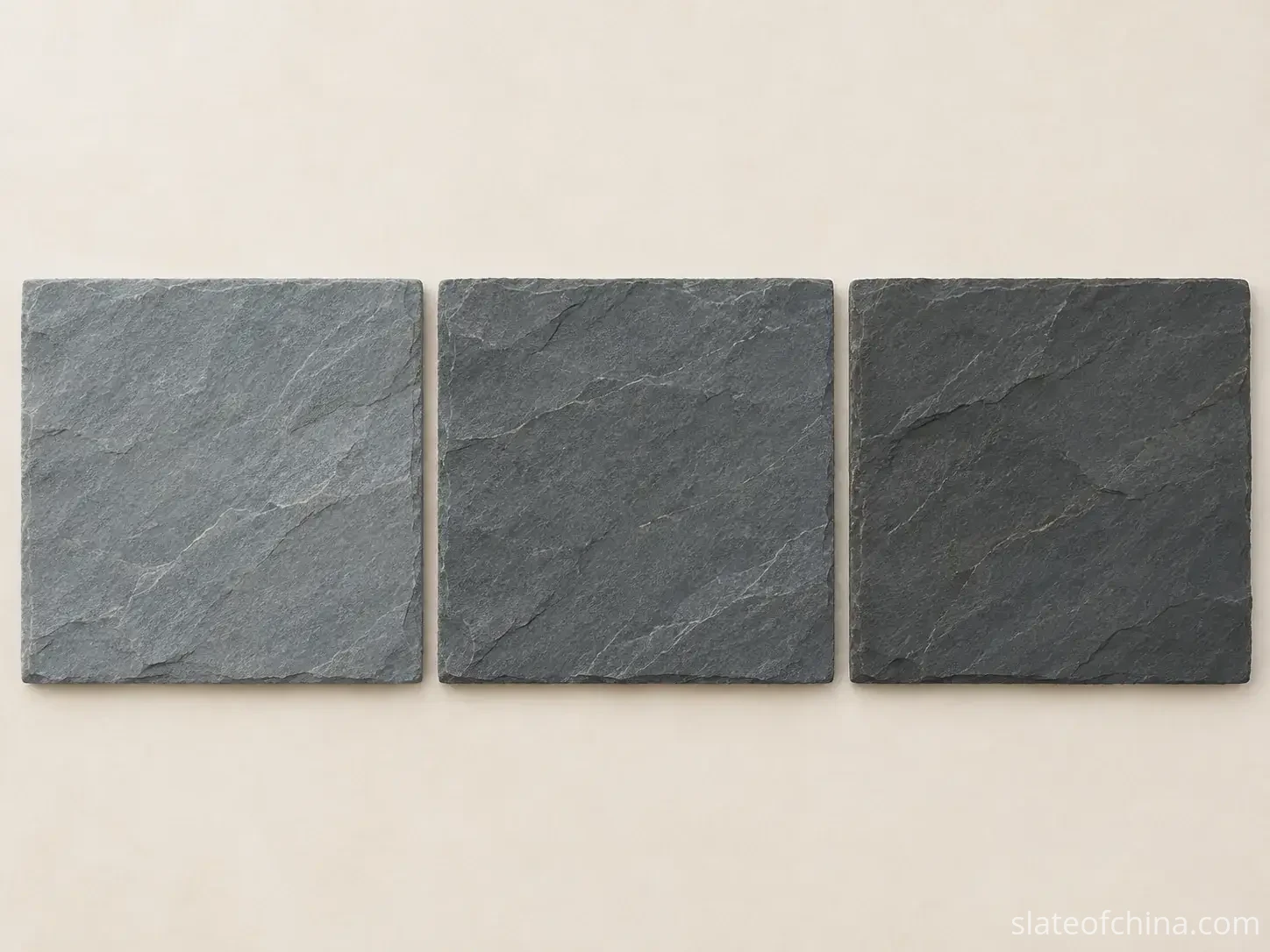
Review the pieces clean and dry, side by side, under agreed lighting. Where relevant, repeat with uniformly wetted pieces and allow them to dry again. For cladding, stand the samples upright and view them in light similar to the installation. Look at the texture close up, then step back to judge the whole blend. Record the viewing conditions and keep any photos with the sample IDs.
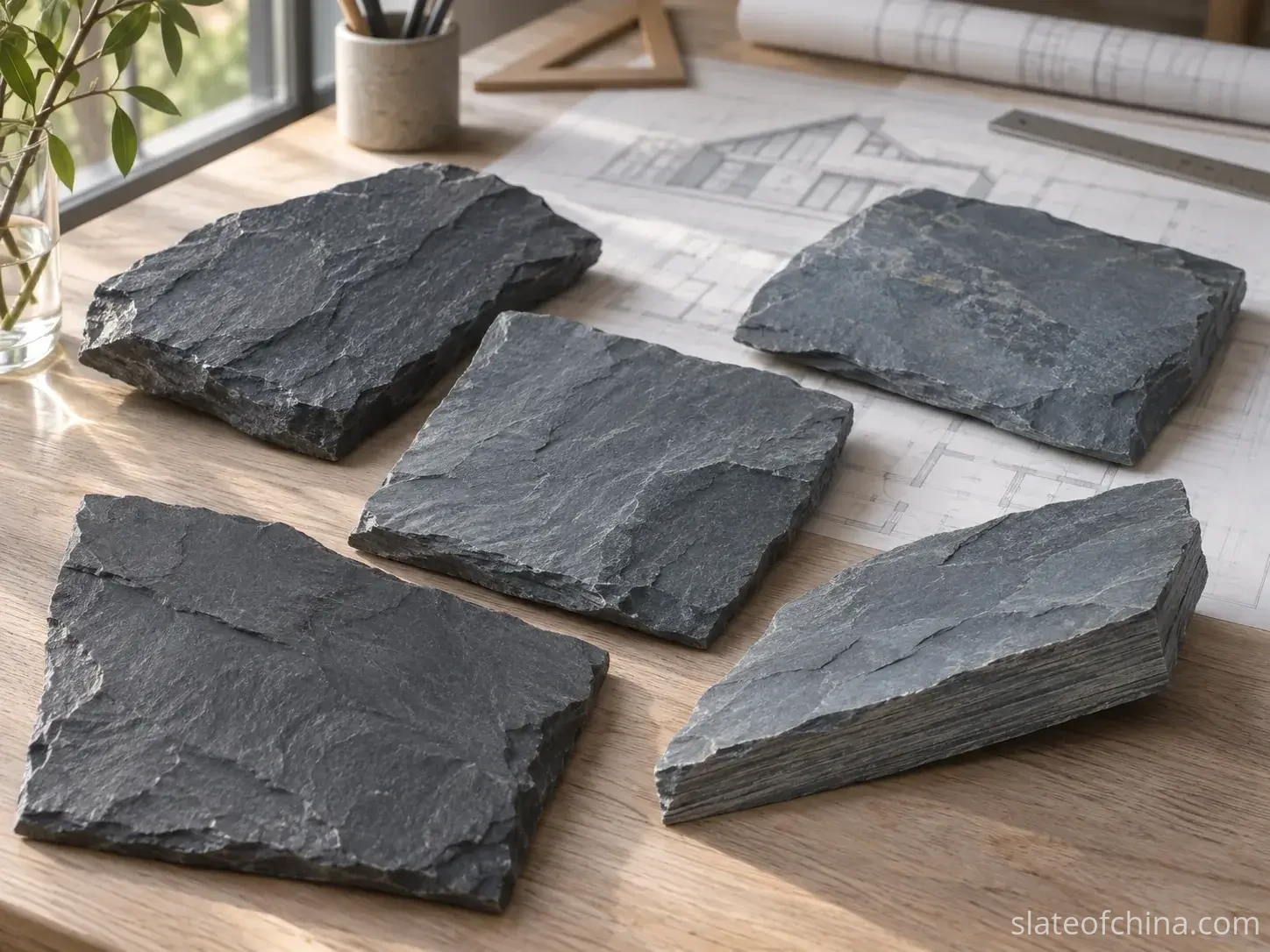
Example. For charcoal slate paving, a buyer may accept occasional fine pale lines, exclude broad orange-brown surface patches, and ask for light and dark pieces distributed across the finished courtyard. The range record captures those tone and marking limits; a dry lay gives the installer a separate reference for how to blend. If orange-brown staining develops after exposure, its cause and relevance become a separate question.
When scale changes the call: dry lay and mock-up
A range set answers what does the stone look like. A dry lay answers what does this project look like. It places full-size pieces next to one another before installation, which is the honest way to judge tone distribution, orientation and the relationship between pieces. For a feature wall or a numbered cut-to-size job, photograph the approved layout and carry the piece numbers through packing and installation.
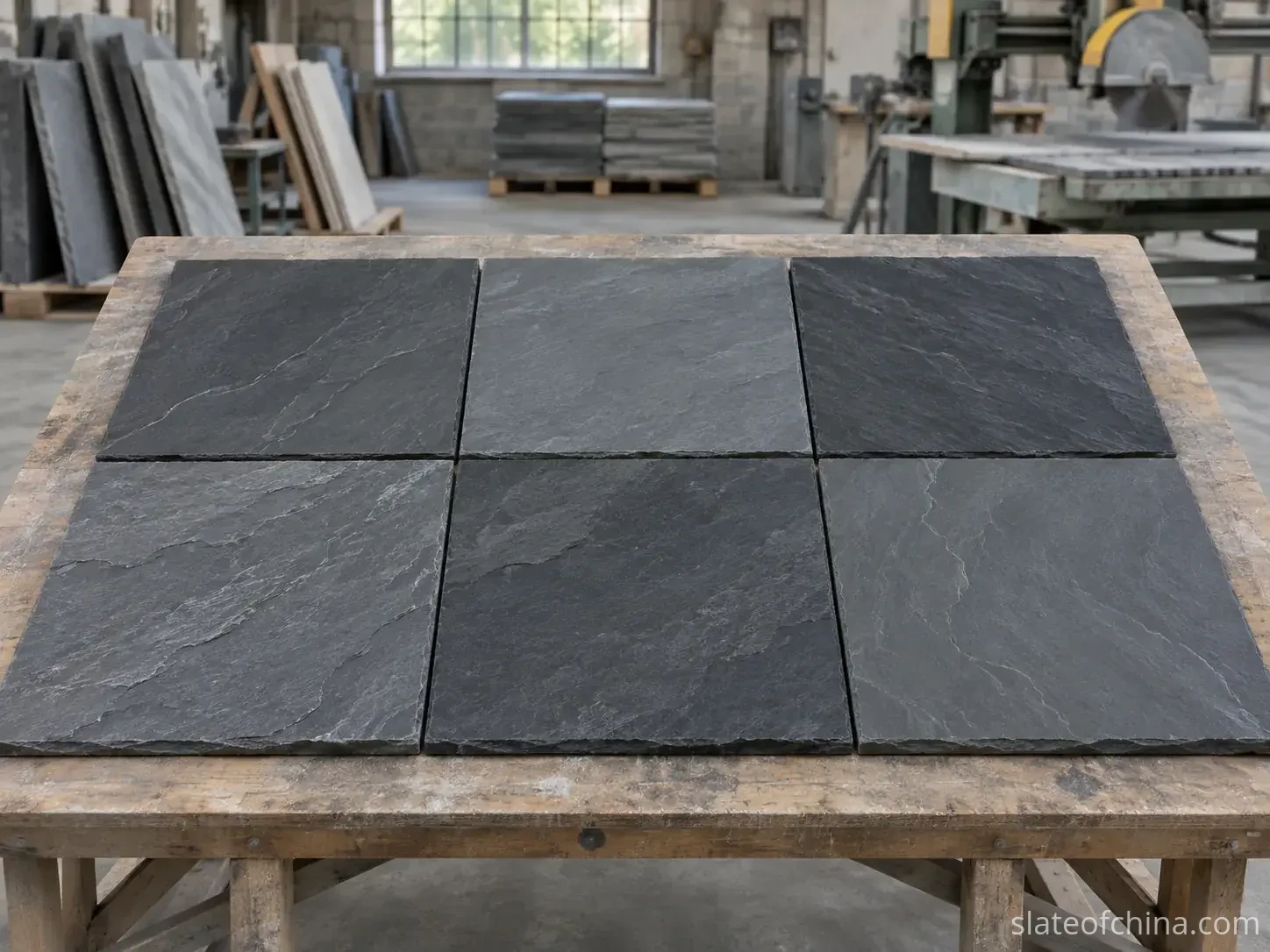
An installed mock-up answers further questions. Include a representative corner, joint or transition when that detail matters, and use the proposed grout or joint finish. A cladding mock-up with one return can show how a sawn edge reads next to the textured face under side lighting. Agree in advance what the mock-up is meant to approve and whether it will be kept for later comparison.
Keep a matched reference on two desks
A range set describes the appearance limits. A matched set puts equivalent physical references in two places: one with the buyer, one with the factory. For every piece, match tone, relief and markings as closely as practical. Where an adjacent cut from the same parent piece is available, compare both pieces before labelling them, because markings can change even across one slab.
Give the two sets linked IDs, such as R01-A and R01-B, and photograph both sets together before dispatch. Mark the backs or the packaging so the viewing faces stay clean. Record the approval date, the sample-set revision, the finish and the source or lot reference. If a third-party inspector will use the factory set, say who will make it available.
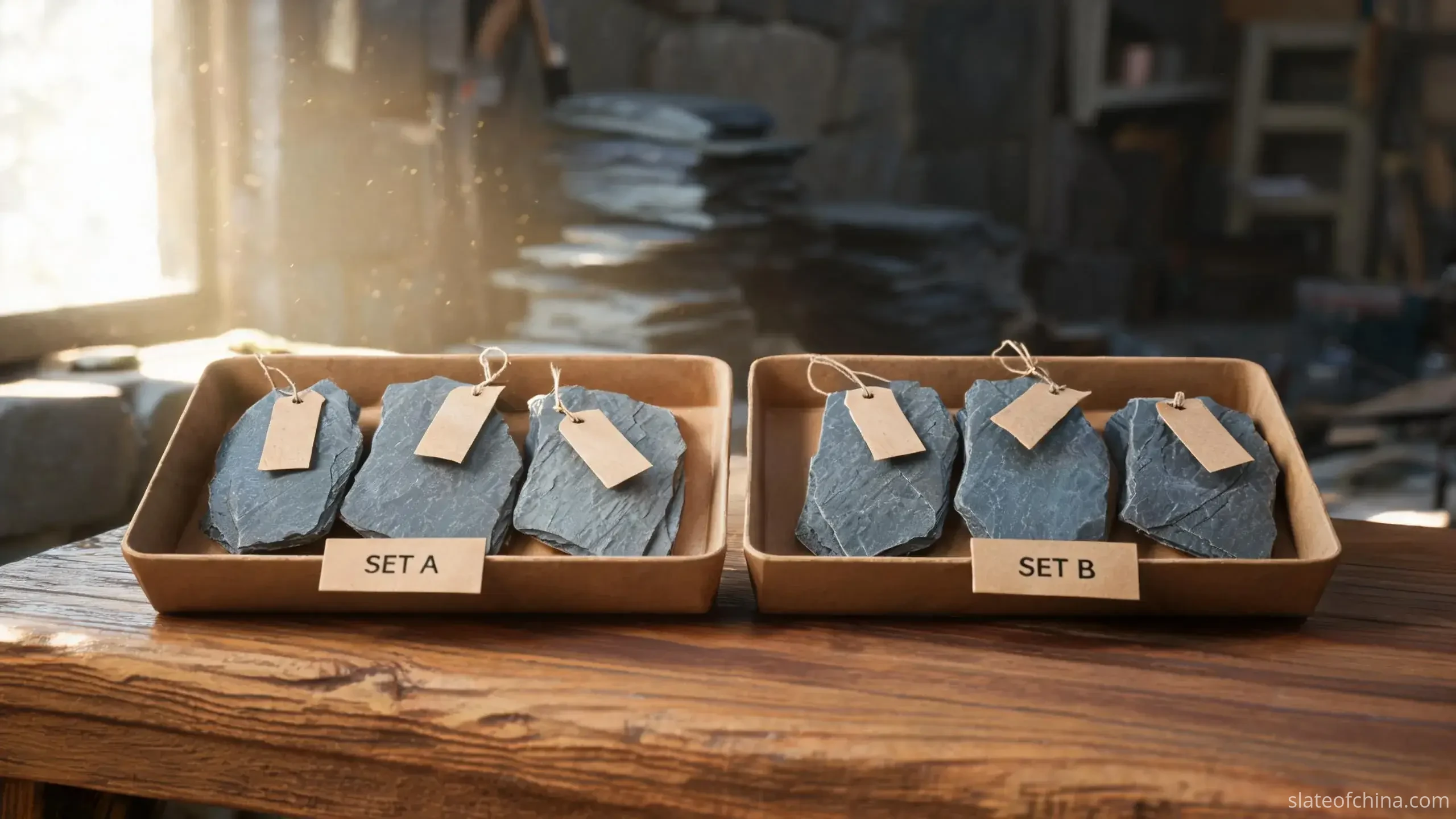
This solves a common handover problem. The buyer approves a sample in the office; the factory inspector works from a photo on a phone. Photos help identify the piece and record the decision, but only physical references let both sides read the same surface under agreed conditions. An approved sample that lives in one place only is, in practice, a photograph.
Write the approval into the order
The discipline behind a slate sample approval is simple: say who may approve the set, which release depends on that approval, and what to do when production falls outside the agreed range. Keep the measurable requirements separate from appearance: the drawings, the tolerances and the tests remain in the specification.
| Sample approval record | What to record |
|---|---|
| Project, order line and application | [Project / PO line / paving, flooring or cladding] |
| Product and source | [Stone code / identified source / allocated lot or pending] |
| Finish and fabrication | [Face / back / edge / format / drawing revision] |
| Physical references | [Set and revision / typical and limit pieces / A and B IDs] |
| Appearance limits | [Colour / texture / markings / exclusions / blend] |
| Review conditions | [Lighting / orientation / distance / dry or wet / photo or mock-up IDs] |
| Approval and release | [Named approver / date / decision / production or dispatch release] |
| Inspection and change control | [Lots and crates to sample / selection method / segregation] |

Sample Approval Clause for a Purchase Order
For PO line [X], use approved physical slate range set [ID and revision], including the appearance limits and exclusions recorded in [approval record]. The buyer retains set A and the supplier retains corresponding set B. Compare production pieces with the approved range under [agreed viewing conditions]. Fabrication, tolerances and performance requirements remain as specified in [drawing and specification revisions].
Obtain written approval from [named role] before releasing [bulk fabrication]. Select inspection pieces across [agreed lots and crates] using [inspection plan]. Segregate material outside the approved limits and obtain a written disposition before dispatch. Submit a new reference for written review before a change in source or finish, or a lot that cannot be shown to fit the approved range.
The wording is a starting point for a project order. Fill in the inspection method before fabrication: which pieces are selected, how visual and dimensional findings are recorded, and who can release a held lot. If the order runs over several shipments, keep the crate and lot references with each inspection report so a later query can be traced to the right delivery.
Frequently asked questions
How many slate samples should I request?
For a first review, three pieces showing a light, typical and dark tone can start the conversation. Add pieces if those three fail to show the important texture or marking limits. Use full-size pieces when scale or an edge detail drives the decision. The objective is to cover the relevant range, not to reach a fixed piece count.
Can I approve natural slate from photos alone?
Photos are useful for shortlisting and for documenting a labelled physical set, but a camera, the light and a screen can all change how dark slate appears. If appearance matters to the order, review physical references and record the viewing conditions. Where a physical review is impractical, agree the scope and limits of any remote approval in writing.
Does an approved sample cover later shipments or replacement pieces?
Check the order record. For a reorder or a new production lot, compare a fresh production selection with the retained set before release if visual continuity matters. Where replacements will sit beside existing stone, record the existing installed appearance as well, since exposure and cleaning may have changed it.
What should I send when requesting architectural slate samples?
Send the application, approximate quantity, proposed format and finish, and photos or drawings of any visible edges or details. Ask for a typical piece, the expected range, and confirmation of the source or stock the sample represents. For an order nearing production, request a matching retained set and name the person who will approve it.
Related reading
Send your format and finish, and we’ll quote the right range.
Send us your application, format and finish. We’ll confirm what range samples are available and whether a matching factory set can be retained for your order.