
Roofing Slate Size, Headlap & Coverage Table
In one line: for a 500×250 mm slate at 75 mm headlap, the gauge (exposure) is 212.5 mm and coverage is 18.8 slates per m² (budget on 19) — or about 175 slates per square. Change the headlap to 100 mm and the same slate covers 20.0/m².
Roofing slate is sold by dimension, fixed by headlap, and ordered by coverage. This page is the reference that ties all three together — the table is the table, the two formulas are the only maths, and the worked examples show how to read any row in both metric and imperial.
Every figure below uses the same method that a slater works with on site. Gauge equals (slate length − headlap) ÷ 2; slates per m² equals 1,000,000 ÷ (gauge × width). The rest is reading a row.
The Coverage Table at a Glance
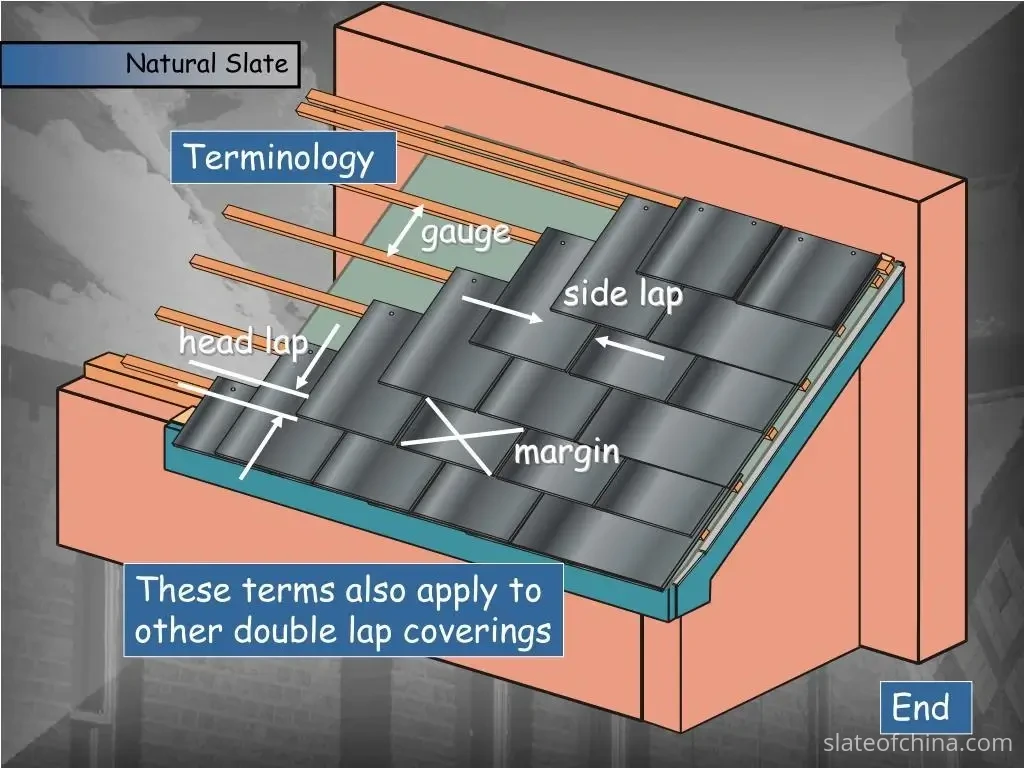
Gauge is the exposed length of each slate, the distance from the bottom edge of one course to the bottom edge of the course above. Headlap is the overlap a slate makes over the slate two courses below. Both are millimetres, both are set before the first batten goes up.
| Slate size (mm) | Headlap (mm) | Gauge / exposure (mm) | Slates per m² | Per square (approx) |
|---|---|---|---|---|
| 500×300 | 100 | 200.0 | 16.7 | 155 |
| 600×300 | 75 | 262.5 | 12.7 | 118 |
| 500×250 | 75 | 212.5 | 18.8 | 175 |
| 500×250 | 100 | 200.0 | 20.0 | 186 |
| 450×250 | 75 | 187.5 | 21.3 | 198 |
| 400×250 | 75 | 162.5 | 24.6 | 229 |
| 400×200 | 75 | 162.5 | 30.8 | 286 |
| 300×200 | 75 | 112.5 | 44.4 | 413 |
| 300×150 | 75 | 112.5 | 59.3 | 551 |
All figures are at 75 mm or 100 mm headlap, two common fixing specs. These headlap values are illustrative calculation inputs, not universal installation specifications — the required headlap is set by roof pitch, site exposure, slate dimensions, local standards and the roofing system specification. The "per square" column uses the trade square of 100 ft² (≈ 9.29 m²), rounded to the nearest whole slate.
Coverage figures represent theoretical quantities for standard rectangular slates installed in a conventional double-lap pattern. Allow separately for cutting waste, roof details (hips, valleys, verges, openings) and project-specific installation requirements.
Why Headlap Is the First Thing to Set
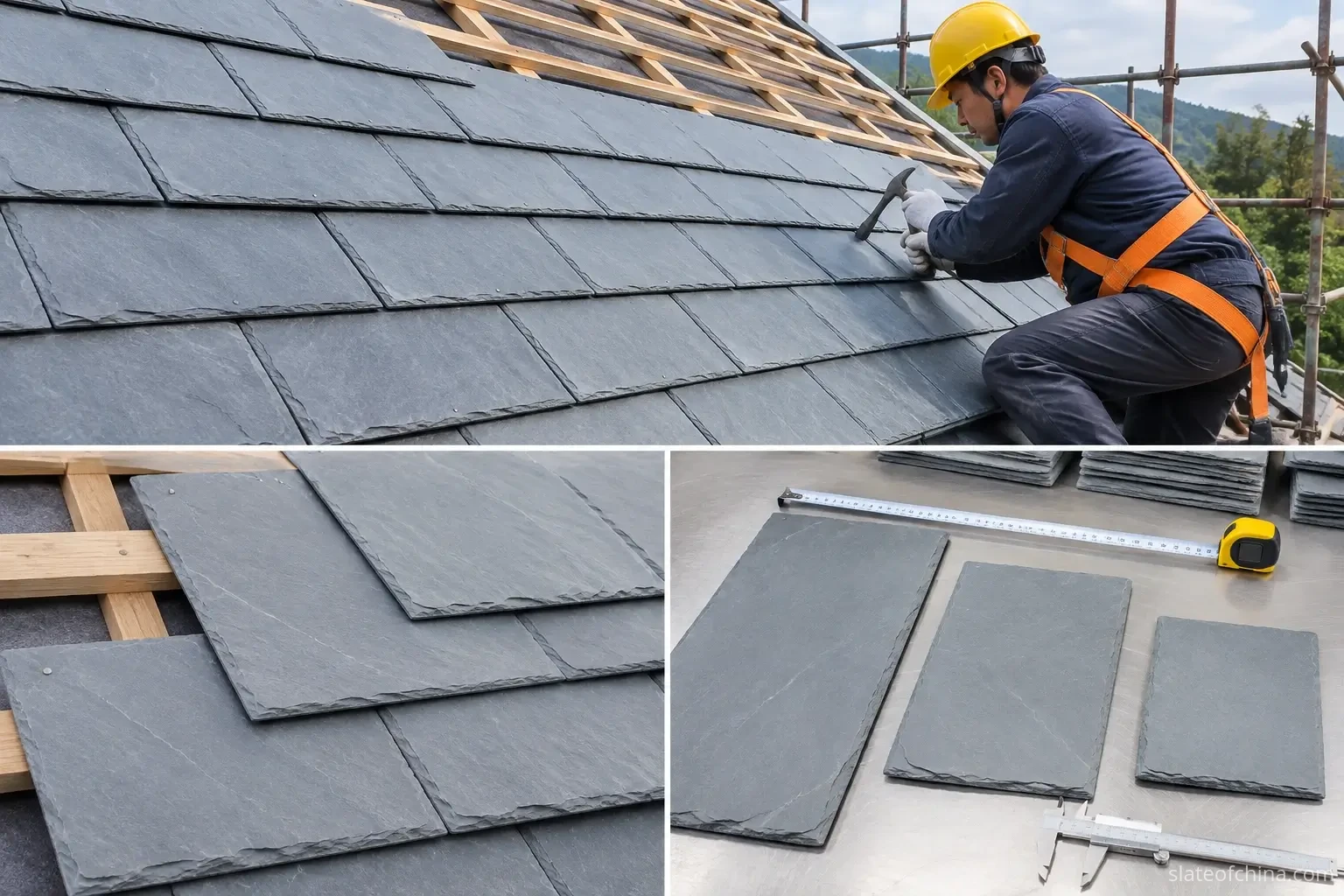
Headlap is not a style choice — it is the overlap that keeps wind-driven rain, snow and debris out of the roof void. Too little headlap and the roof leaks under a driving storm; too much and the exposed gauge shrinks, so every m² needs more slates. The number is set by the roof pitch, the site exposure and the slate length, and usually fixed by the roofer or the local building requirements before a single batten is cut.

The two rules that drive the table:
- Gauge = (slate length − headlap) ÷ 2. The slate is long enough to cover two courses, so the visible part is half of what is left after the overlap.
- Slates per m² = 1,000,000 ÷ (gauge × width). The gauge and width multiply to the area one slate covers, and a square metre is 1,000,000 mm².
That is the whole calculation. Every figure in the table above comes from these two lines, and every supplier quote should agree with them — if a quote shows a different gauge or a different slates-per-m² for the same size and headlap, the quote is wrong or the headlap is different.
How to Read a Row: Two Worked Examples
Example 1 — 500×250 mm at 75 mm headlap
Gauge: (500 − 75) ÷ 2 = 212.5 mm. Each course shows 212.5 mm of slate.
Coverage: 1,000,000 ÷ (212.5 × 250) = 18.82 → 18.8 per m². Round to 19 for ordering.
Per square: 18.8 × 9.29 ≈ 175 slates per 100 ft².
Example 2 — 600×300 mm at 75 mm headlap
Gauge: (600 − 75) ÷ 2 = 262.5 mm.
Coverage: 1,000,000 ÷ (262.5 × 300) = 12.70 per m² — 12.7. Budget on 13.
Per square: ≈ 118.
UK & European Sizes at 100 mm Headlap
100 mm is common for exposed and low-pitch sites in some UK and European specifications — confirm it against the project's pitch, exposure and building requirements rather than taking it as a universal figure. The same size covers less, so the numbers change — worth bookmarking because it changes the whole order quantity:
| Slate size (mm) | Headlap (mm) | Gauge (mm) | Slates per m² | Per square |
|---|---|---|---|---|
| 500×300 | 100 | 200.0 | 16.7 | 155 |
| 500×250 | 100 | 200.0 | 20.0 | 186 |
| 400×250 | 100 | 150.0 | 26.7 | 248 |
| 450×225 | 100 | 175.0 | 25.4 | 236 |
| 300×200 | 100 | 100.0 | 50.0 | 464 |
Note how a jump from 75 to 100 mm headlap moves 500×250 from 18.8 to 20.0 per m² — over a square metre on a large roof. Confirming the headlap with the roofer before ordering is the single cheapest check in the whole process.
Coverage in a Real Order
Take a 79.2 m² slope in 400×250 mm at 75 mm headlap. From the table: gauge 162.5 mm, 24.6 per m² (unrounded: 24.62).
Base count: 79.2 × 24.62 = 1,949.9 ≈ 1,950 slates. Add 10% waste (cutting, hips, inspection rejects, transport): 1,950 × 1.10 ≈ 2,145 slates.
For 500×250 at 75 mm the same 79.2 m² takes about 1,491 before waste, about 1,640 after 10%. Use the unrounded coverage for the base count and round the total once at the end. Every row in the table feeds the same contract arithmetic — the size and headlap determine the count, and the count determines the crates, the container and the freight.
Weight That Comes with Coverage
Coverage sets the count, and the count sets the weight — the structural check that most importers forget until the roof is designed. For 500×250 at 75 mm headlap (18.8–20.0 slates per m²), the installed weight depends on thickness and density:
- 4–5 mm slate: roughly 26 kg/m²
- 6 mm slate: roughly 38 kg/m²
Both figures assume a typical natural slate density of about 2.7–2.8 g/cm³ at the coverage above, and come before battens, underlayment and fixings. Density varies by quarry and batch, so confirm the specific weight with your supplier for a structural calculation. It is the same reason a container of slate usually maxes out by weight before volume — the crate is full, but the box is under-loaded. Always run the total against the roof structure and the transport weight limit, and let the packing list show the m² per pallet before you book.
Reading a Row Without a Calculator
On site, no one carries the table. Two rules of thumb that survive in the pocket:
- The 212 rule. A 500×250 at 75 head gives a 212.5 gauge. But length alone never decides coverage — the width and the headlap must be fixed too, so always read all three figures together.
- The size rule. Halve the length, subtract the head, use the table once — on the next roof the same slates will behave the same way.
For the full list of standard dimensions and how size drives cost, the roofing slate sizes page covers the whole range from 300×200 up to 600×400. For the per-size coverage in one glance, the slates per square metre reference is the quick sheet our sales team quotes from.
Information to Include in Your Roofing Slate Enquiry
To get an accurate gauge, coverage and count back, include these four lines in your enquiry:
- Required slate dimensions and thickness
- Roof area or estimated quantity
- Required headlap or roof pitch
- Destination country and delivery port
With those four points our team can match the size, confirm the headlap and lock the count before the quote. Send them through our contact page.
Frequently Asked Questions
What does headlap mean in roofing slate?
Headlap is the overlap between the top of a slate and the tail of the slate two courses below. It is the distance the slate sits over the slate below, typically 75 mm in some UK specifications, and it is what keeps wind-driven rain and snow out of the roof. A bigger headlap reduces the gauge (visible exposure) and increases the number of slates per m².
What is the exposure or gauge of slate?
Gauge, also called exposure, is the visible length of each slate: (slate length − headlap) ÷ 2. A 500×250 slate at 75 mm head shows 212.5 mm of slate per course. It is the number that decides how many slates per m² and how the battens are spaced.
How many slates do I need per m² for 500×250 slate?
At 75 mm headlap, about 18.8 per m² (round up to 19). At 100 mm headlap, 20.0 per m². For 400×250 at 75 mm, it is 24.6; for 300×200, 44.4. Always confirm the headlap before ordering.
What is a square in slate roofing?
A square is a roofing unit of 100 ft², about 9.29 m². A 500×250 slate at 75 mm head covers about 175 slates per square. It is still the unit used in some US quoting and on some UK contracts.
Does a bigger slate cost less per m²?
In material terms yes — bigger slates mean fewer pieces and fewer overlaps, so a lower coverage count. But larger slates weigh more individually, and the installed weight per square metre depends on slate thickness, density, size and headlap. The coverage table tells you the count; the quote tells you the cost.
Want coverage numbers to line up before you order?
We calculate gauge, exposure and slates per m² on every quote — then verify against the batch. Browse our roofing slate products or send your roof measurements and get the count back.