
Marble, Travertine, Sandstone and Limestone: Which Stone Fits Where
A pale limestone terrace, a tumbled travertine courtyard and a buff sandstone path can look remarkably similar in a mood board. Leave them wet overnight, expose them to frost, or send a few hundred people across them every morning, and the specification starts to matter more than the colour. Marble brings a separate decision: the veining that makes a lobby wall distinctive comes on a surface that often needs a different care routine from the floor below it.
The mood board shows the stone. The field sheet shows what the stone has to survive. This guide is a buyer's orientation to those four families — what each one is for, and where each does not belong outdoors — so you can narrow a shortlist by application first, then check the exact stone, finish and installation before you order.
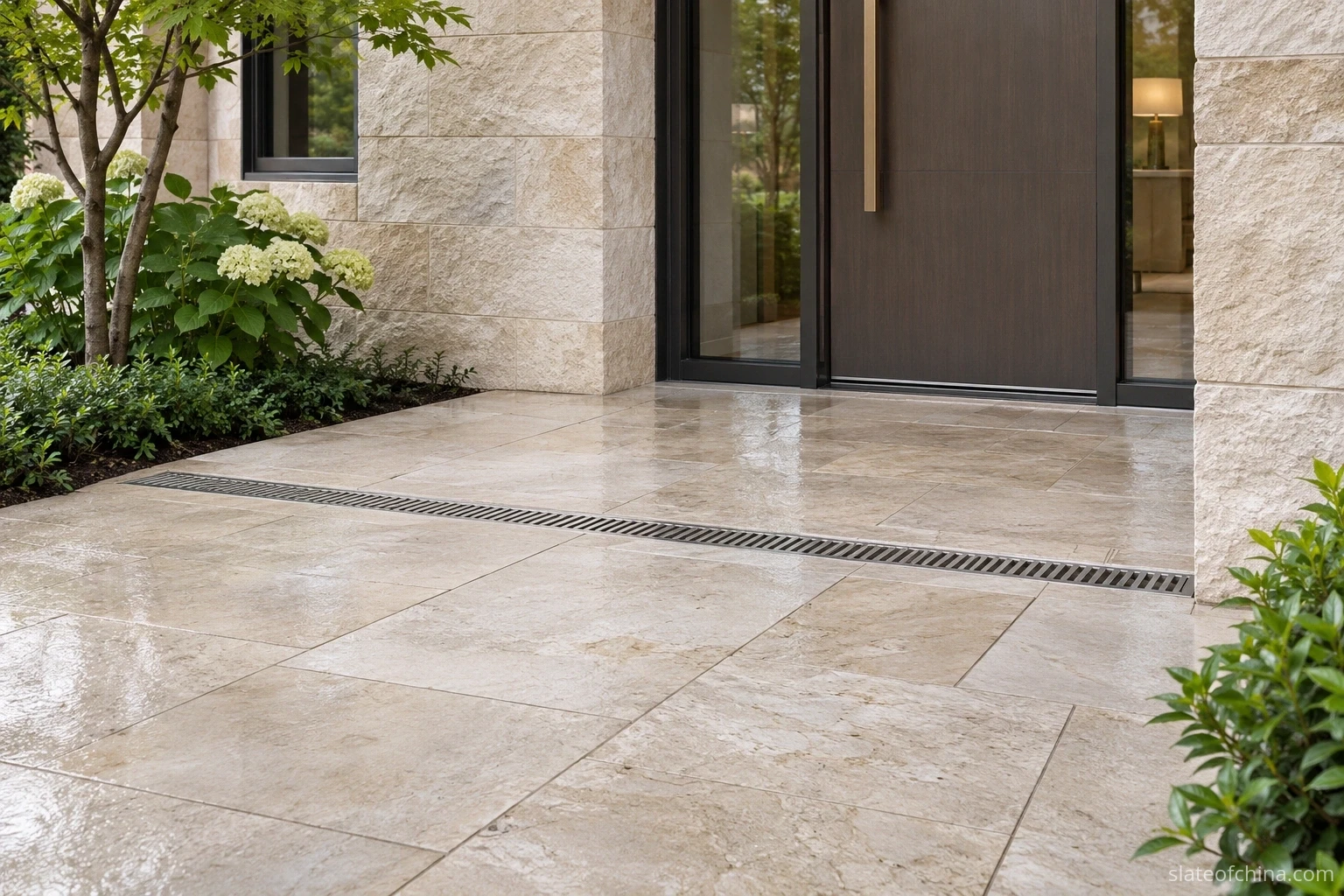
Short answer: marble is a close-up surface for interior walls and carefully specified cladding; travertine suits sheltered courtyards and pool surrounds when wet-slip and frost evidence is in hand; sandstone works for garden paths and patios; limestone fits quiet interior floors and cut-to-size façades. For a rain-exposed entrance, shortlist stones with wet-slip and wear data for the proposed finish, then check frost exposure, drainage and support. Compare suitable slate and granite alongside the other candidates.

Four Natural Stone Types at a Glance
Each stone earns a place where its surface can be seen or touched under conditions it tolerates. The table starts you in the right direction; the sections below tell you what to verify before you commit.
| Stone | What you are likely to notice | Good places to start | Where to slow down |
|---|---|---|---|
| Marble | Crystalline surface and veining in many varieties | Interior feature walls, reception areas and carefully specified interior floors | Polished surfaces on exposed wet steps, façades without stone-specific durability and fixing evidence |
| Travertine | Natural voids, warm tones and banded cuts | Interior wall finishes, sheltered courtyards and selected exterior pavers | Pool surrounds without wet-barefoot evidence, freeze-prone sites with persistent moisture, unspecified fillers |
| Sandstone | Grain, earthy colours and sometimes visible bedding | Garden paths, patios and selected walling stone | Vehicle routes without a designed build-up, weak or friable material in exposed paving, frost-prone paving without suitable test evidence |
| Limestone | Quiet colour variation, sometimes with fossils or shell fragments | Interior floors, cut-to-size façade panels and proven patio grades | Persistently wet or salted entrances, heavily trafficked paving without wear data, exposed cladding without a fixing design |
Marble: A Close-up Surface for Walls and Selected Exteriors
Marble earns its place where the surface can be seen close up. A honed marble feature wall behind a reception desk shows the movement in the stone without the strong reflections of a polish. On a large wall, ask for full-slab photographs and a panel layout; a small swatch can hide the direction and spacing of veins that will dominate the finished elevation.
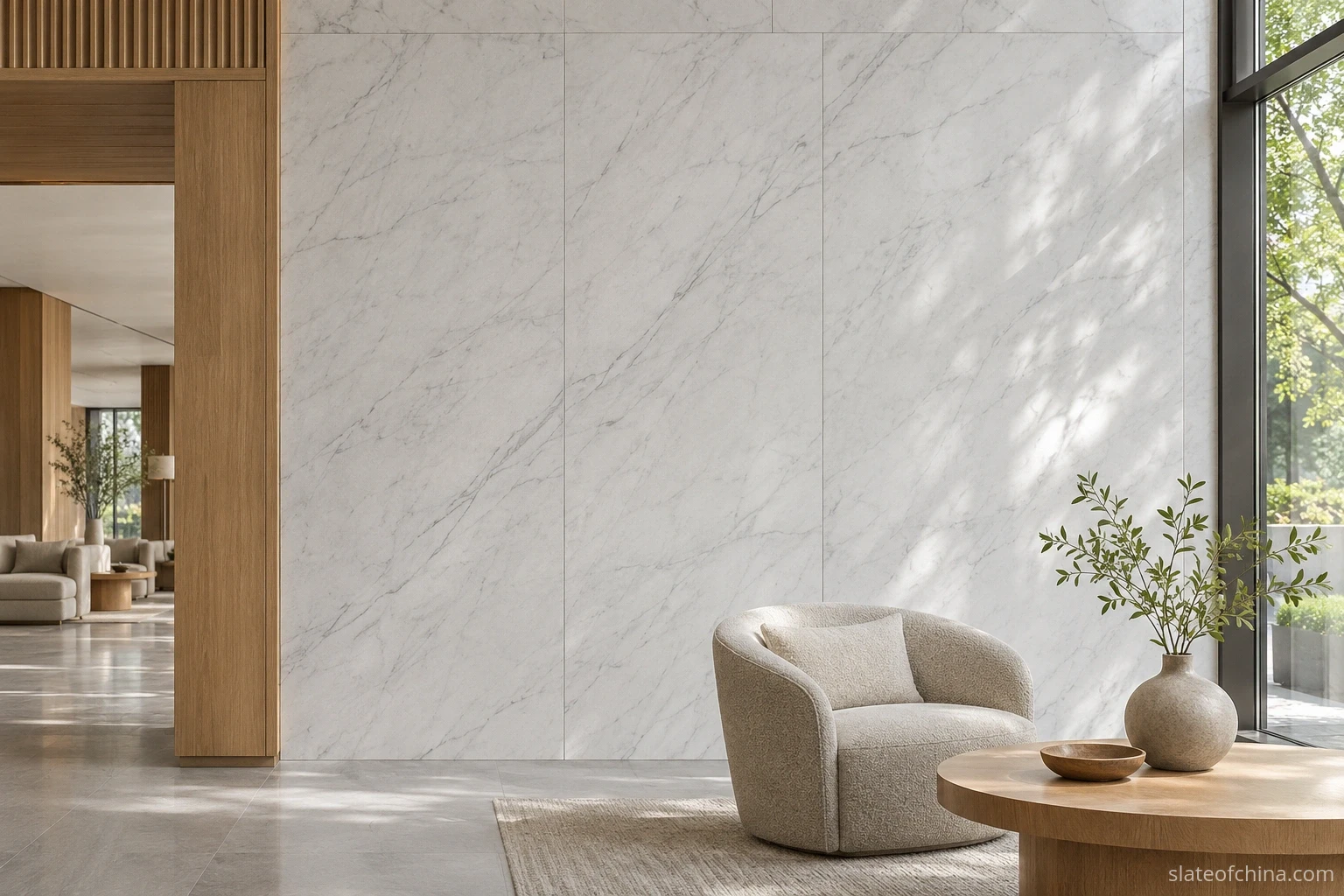
Selected marble can also serve exterior cladding, provided the variety and the panel system are assessed for the exposure. For thin panels, ask about any known susceptibility to bowing or loss of strength under repeated temperature and moisture cycles, together with the panel and anchorage design. On exposed steps and rain-wet walkways, keep polished marble off the initial shortlist unless project-specific evidence supports that surface and use.
Ask for: full-slab images, the proposed joint and vein layout, care guidance for the exact finish, and relevant durability and anchorage evidence for any exterior panel.
Travertine: Check What Is Filling the Voids
Travertine is a carbonate stone whose natural cavities are part of its appearance. In a sheltered courtyard, small scattered pores and softened edges sit naturally with warm plaster, timber and planting. Larger open voids change how the surface feels underfoot and how much dirt it collects. A filled tile and an unfilled tumbled paver are different surfaces even when both come from the same quarry, so ask whether the material is filled, what the filler is, and whether it is documented for the planned exterior exposure.
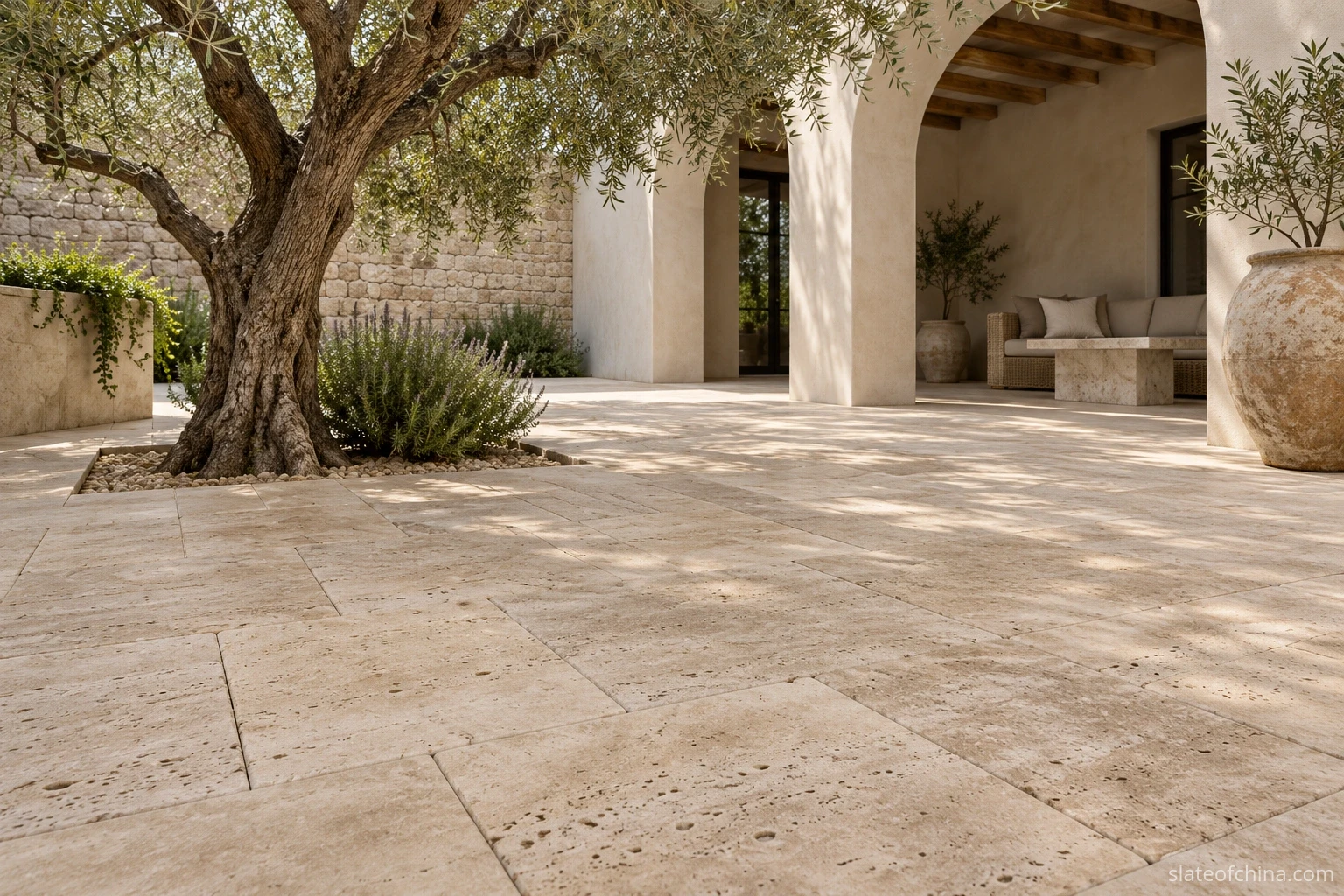
Around a pool, ask for slip resistance suited to wet barefoot use, look at the surface around exposed pores and edges, and confirm compatibility with the cleaning regime and splash-water chemistry. In a freezing climate, request applicable frost evidence and a drainage detail: a courtyard that dries in the afternoon tells you little about a paver that stays wet through winter.
Ask for: face and edge samples, agreed limits for visible voids, filler information for exterior use, and wet-slip evidence for the finish actually supplied.
Sandstone: Read the Grain, Not Just the Colour
Sandstone is often the natural starting point when a landscape calls for buff, grey or earthy paving with visible grain. Behaviour varies with how the grains are bound and how the stone is bedded, so two similarly coloured slabs can perform differently under foot traffic or repeated wetting.
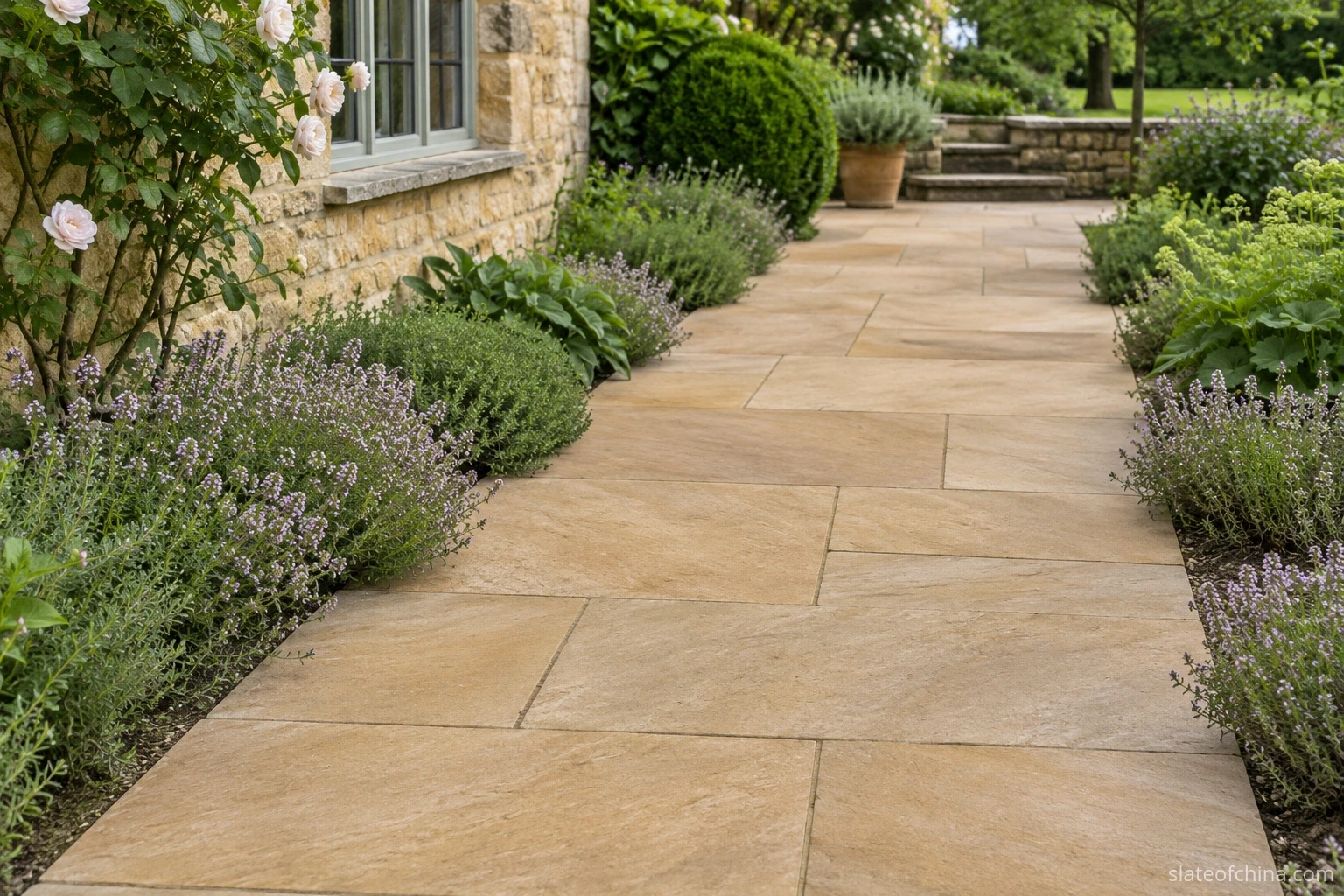
Lay a few samples dry in daylight, wet part of them, and look for friable edges or weak layers. Ask for the finish, thickness tolerance and the strength and frost results that apply to the format. For naturally split paving, check whether surface relief and thickness variation fit the bedding system and joint layout you intend. If delivery vehicles cross the paving, tell the designer and the supplier before quoting — vehicle loading influences slab format, thickness, bedding and base together.
Ask for: a representative range sample, thickness tolerance, flexural or breaking-load evidence relevant to the format, and a clear note of any visible bedding or colour features.
Limestone: A Quiet Background That Needs a Named Source
Limestone is a natural choice when a design wants a soft, consistent background rather than pronounced veins. Fine-grained and fossil-bearing varieties both work on elevations. On an exterior façade, agree how the stone will be cut and how fossils or seams will fall across panels, then coordinate panel size, thickness, joints, runoff and fixings with the façade designer.
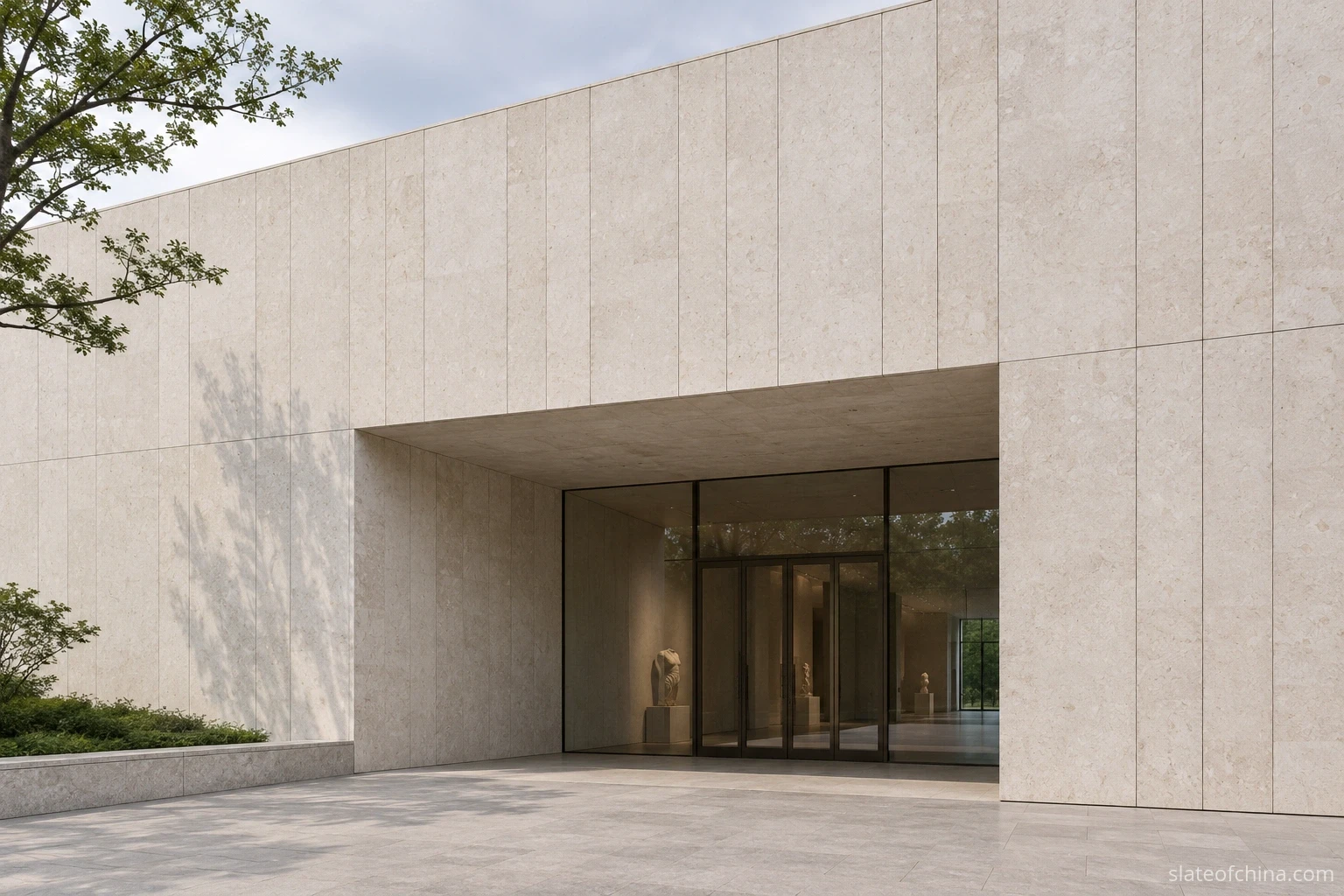
For a limestone patio, buy a named variety with evidence relevant to the site. A stone that works as a façade may have little record as a wet walking surface, so exposed steps and commercial entrances need separate checks for wet slip, wear and, where relevant, frost and de-icing salts. Runoff at wall bases or beneath sills deserves attention too, because repeated wetting can alter appearance.
Ask for: a named source, finish samples, comparable installed references, and the test data relevant to either the paving or the cladding package.
Choosing Natural Stone for Outdoor Paving and Cladding
The same four stones take different decisions once they are outdoors. Use this table to turn the application into a short list of what to check, then confirm each point with the supplier.
| Project condition | What to check before approval |
|---|---|
| Wet steps or a rain-exposed entrance | Test method, result and test condition for the exact finish proposed. Ask how the surface will be cleaned and maintained as it wears. |
| Pool surrounds | A test method and acceptance criteria suited to wet barefoot use, plus surface comfort, edge details and cleaning compatibility. |
| Repeated freezing while wet | Frost results for the named stone and applicable test method. Review drainage, falls and the bedding detail, and ask separately about de-icing salts if used. |
| Public circulation or vehicle access | Load cases, slab dimensions, support system and appropriate strength evidence. For heavy pedestrian use, check abrasion and the intended maintenance plan. |
| Exterior façade | Stone identity, durability evidence, panel geometry, anchorage, jointing and runoff detailing, reviewed with the project designer. |

For a European specification, EN 1341 covers natural stone slabs for external paving, EN 1469 covers natural stone slabs for cladding, and EN 12371 is a method for determining frost resistance. For thin marble panels, EN 16306 addresses resistance to thermal and moisture cycling. Confirm which standard and edition apply to the product and market, then ask for the test report and verify the named stone, the test method, the specimen orientation where relevant and the condition tested. For slip resistance, ask the project team which test method and acceptance criteria apply before comparing suppliers — a wet sample helps you judge colour and texture, but wet slip performance needs testing. To read the slip methods behind that comparison, see How Slip Resistance Is Measured, and for how falls and joints keep water moving across a slab, see Falls, Drainage and Joint Design in Slate Paving.
When Slate or Granite Carries the Job Instead
The field sheet can change your shortlist faster than any catalogue. When a project calls for a darker palette or stronger surface relief, compare a suitable slate alongside these four stones. When the same shortlist includes an exposed entrance or a high-traffic paved area, compare an appropriately finished granite too, and run the same checks for wet slip, frost, loading and support across every candidate. The question is not which stone is “better”, but which one carries the evidence for this particular site.
For the full picture of the families that do well outdoors, see the Architectural Slate Guide, and for how frost tests actually work — and why drainage can outrank the certificate — see Freeze–Thaw Resistance for Outdoor Slate.
What to Put in a Natural Stone RFQ
Send suppliers the following so their quotations describe comparable products, not just a colour family.
- Application and exposure. Wall or paving, sheltered or exposed, climate, drainage, expected users and traffic, and whether the site sees de-icing salts or pool splash.
- Material and finish. Trade name, source, finish, face and edge treatment, and whether travertine voids are filled.
- Format and support. Sizes, thickness and tolerances, joint layout, quantities, and the planned bedding or fixing system.
- Evidence and approval. Relevant test reports, a range sample or dry lay, and a mock-up for critical junctions or larger areas. Agree how the approved colour, texture and void ranges will be recorded before production.
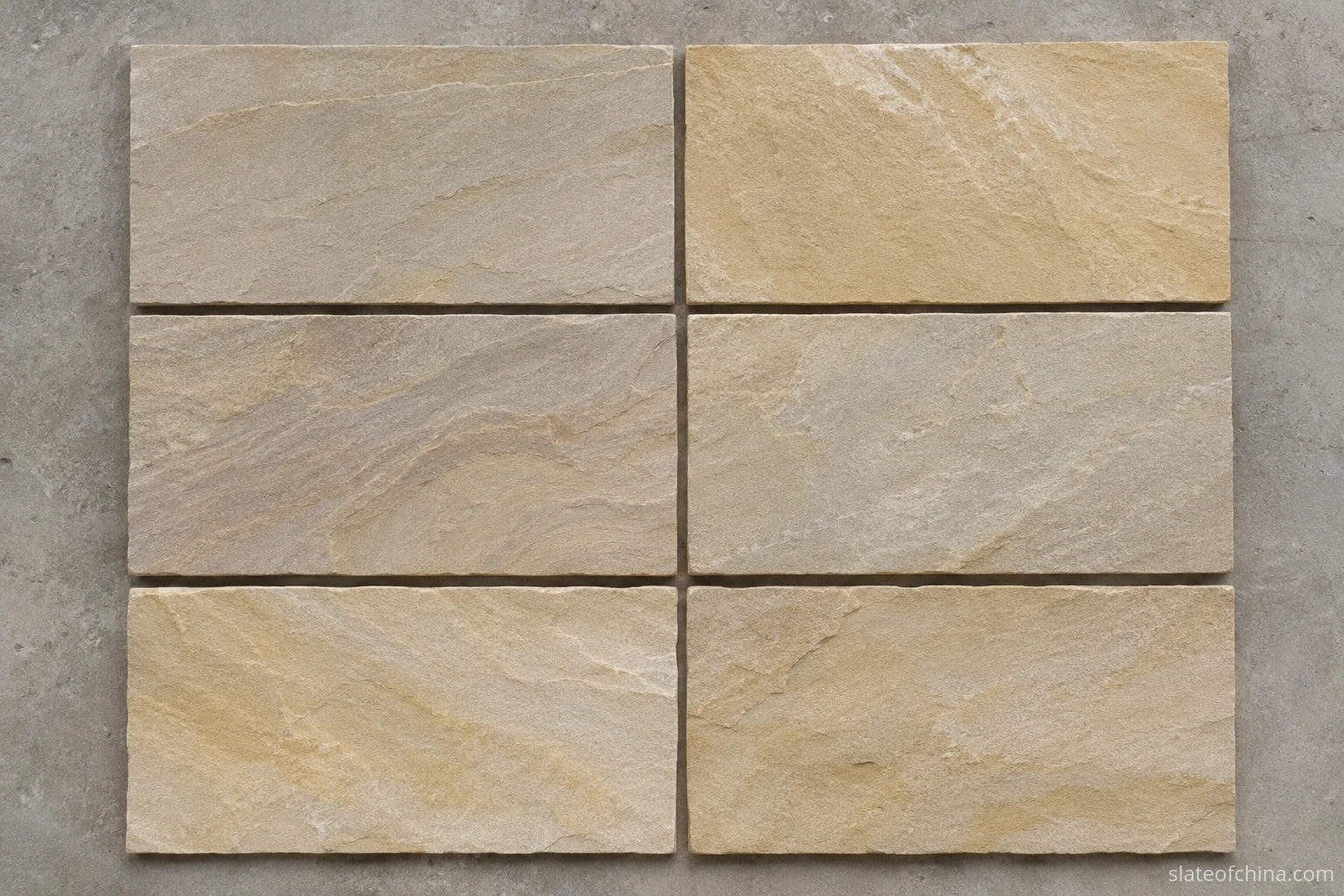
A concise inquiry might read:
Quote 80 m² of warm buff sandstone paving for a rain-exposed pedestrian courtyard. We are considering 600 × 400 mm slabs. Please confirm the source, proposed thickness and tolerance, face and edge finishes, and available wet-slip, strength and freeze–thaw reports for the proposed stone. Include daylight photographs showing the colour range and a sample set from representative material.
Frequently Asked Questions
Is sandstone or limestone better for a patio?
Start with sandstone if you want visible grain and a broader mix of tones in the samples you're considering; start with limestone if you want a quieter, fine-grained appearance. When both fit the design, compare the named varieties on wet-slip evidence, frost suitability, thickness tolerance and how easily the proposed finish can be maintained.
Can travertine pavers be used in a freezing climate?
Some exterior travertines may suit a freezing site. Ask for frost evidence for the named material, clarify any filler used, and check how the pavement drains. If the supplier cannot provide relevant evidence, keep looking before committing to an exposed location.
Can marble be used outdoors?
Selected marble varieties can work on exterior walls and in carefully specified outdoor applications. For a thin façade panel, review durability and fixing design with the designer. For an exposed walking surface, require wet-slip evidence for the specific finish and assess how it will wear.
Does sealing stop etching on marble, travertine or limestone?
A compatible penetrating sealer can help reduce some staining, but acids still attack carbonate stone and can leave dull marks. Use stone-compatible, non-acidic cleaners and follow the care guidance for the exact finish.
What is the best natural stone for a wet outdoor entrance?
Begin with surfaces for which you can obtain relevant wet-slip and wear evidence. Add frost and de-icing salt checks where they apply, then assess the threshold, drainage and support together. Shortlist by finish and documented performance once you know those conditions.
Technical References
EN 1341 (external paving slabs), EN 1469 (cladding slabs), EN 12371 (frost-resistance method) and EN 16306 (thermal and moisture cycling of marble) are referenced by their numbers only; confirm the applicable edition with the specifier. For maintenance and cleaning guidance on these stones, the Natural Stone Institute’s care pages are a reliable starting point, and the HSE guide to assessing slip resistance is a clear reference when a wet walkway is on the list.
Related Reading
Not sure which stone carries the exposure?
Send the application, exposure, preferred finish and quantities. If you are choosing between these four stones — or between them and slate — tell us what the surface will see in service: wet foot traffic, frost, pool splash or a courtyard that stays dry.