
Jiujiang Slate for Roofing vs Other Origins
Most roofing slate comparisons start with the wrong question.
“Which country makes the best slate?” sounds reasonable. It is also the fastest way to end up with the wrong material — because a country does not go on your roof. A specific slate, from a specific quarry, in a specific grade, cut to a specific thickness, goes on your roof.
We have shipped roofing slate from Jiujiang to more than thirty countries. Along the way we have seen a buyer specify Spanish slate for a heritage Welsh cottage, reject a Chinese slate because “Chinese slate always fades” (the tested material did not), and pay a premium for provenance on a project that needed performance, not a pedigree.
The useful question is not “Jiujiang or Spain?” It is: which tested slate, from which quarry, suits this particular roof, climate, appearance and budget?
This guide is the roofing-focused version of that answer. It pulls the individual origin comparisons — Spanish, Welsh, Indian and other Chinese regions — into one decision framework, and adds the origin those articles do not cover in depth: Brazilian slate.
Quick Answer: Choosing a roofing slate origin works in five layers, each one narrowing the field:
- Your roof — building type, pitch, design intent, exposure
- Your requirements — standards, thickness, colour, format, budget
- Matching origins — which producing regions can meet those requirements
- Specific quarries — which producers within those regions
- Tested grades — the actual material that arrives in your container
Layer 5 goes on the roof. Layers 1–4 only get you there. Spain suits some roofs, Wales suits others, and Jiujiang suits a third group — the roof decides, not the flag.
Start With the Roof, Not the Country
A natural slate roof in coastal Norway faces different demands from a heritage restoration in Wales, a new-build housing estate in the Midlands, or a commercial development in a mild Mediterranean climate. Frost cycles, wind exposure, salt air, aesthetic traditions, labour availability and budget structures all shift with the project.
Before comparing origins, five questions should be answered:
- What climate will the roof experience?
- What colour and surface appearance does the design require?
- What slate thickness and format does the roof design use?
- Which technical standards must the slate meet?
- How important are long-term supply and landed cost?
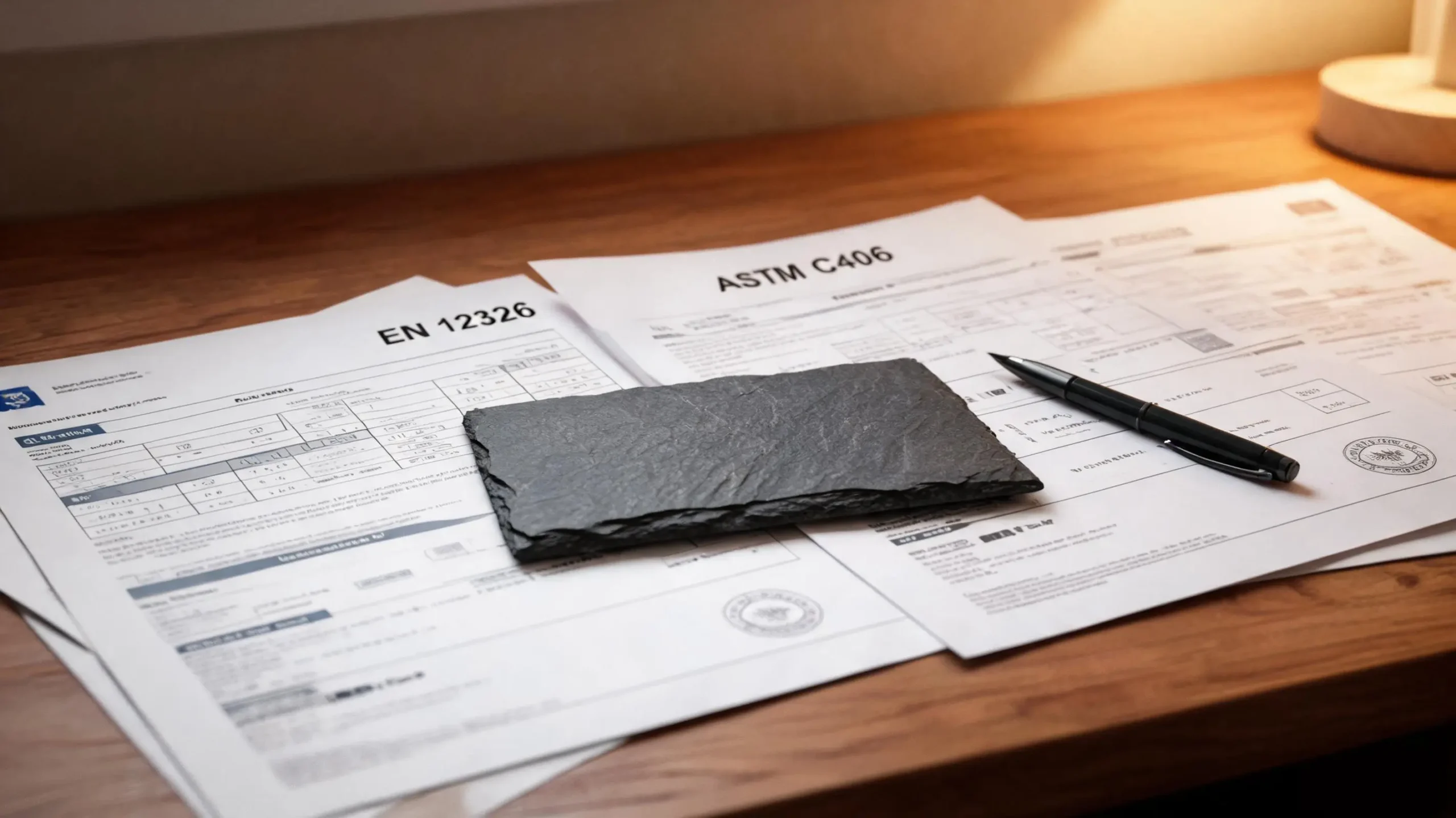
European roofing slate is commonly assessed under EN 12326; North American projects usually reference ASTM C406. Producing countries also maintain national standards — China’s GB/T 18600 and India’s IS 6250 among them. The standard matters less than the numbers underneath it: a water absorption result of 0.1% says more about frost performance than the word “Spanish” or “Chinese” ever will.
The test result of the actual slate matters more than the reputation of the country it came from.
Where the Major Origins Fit
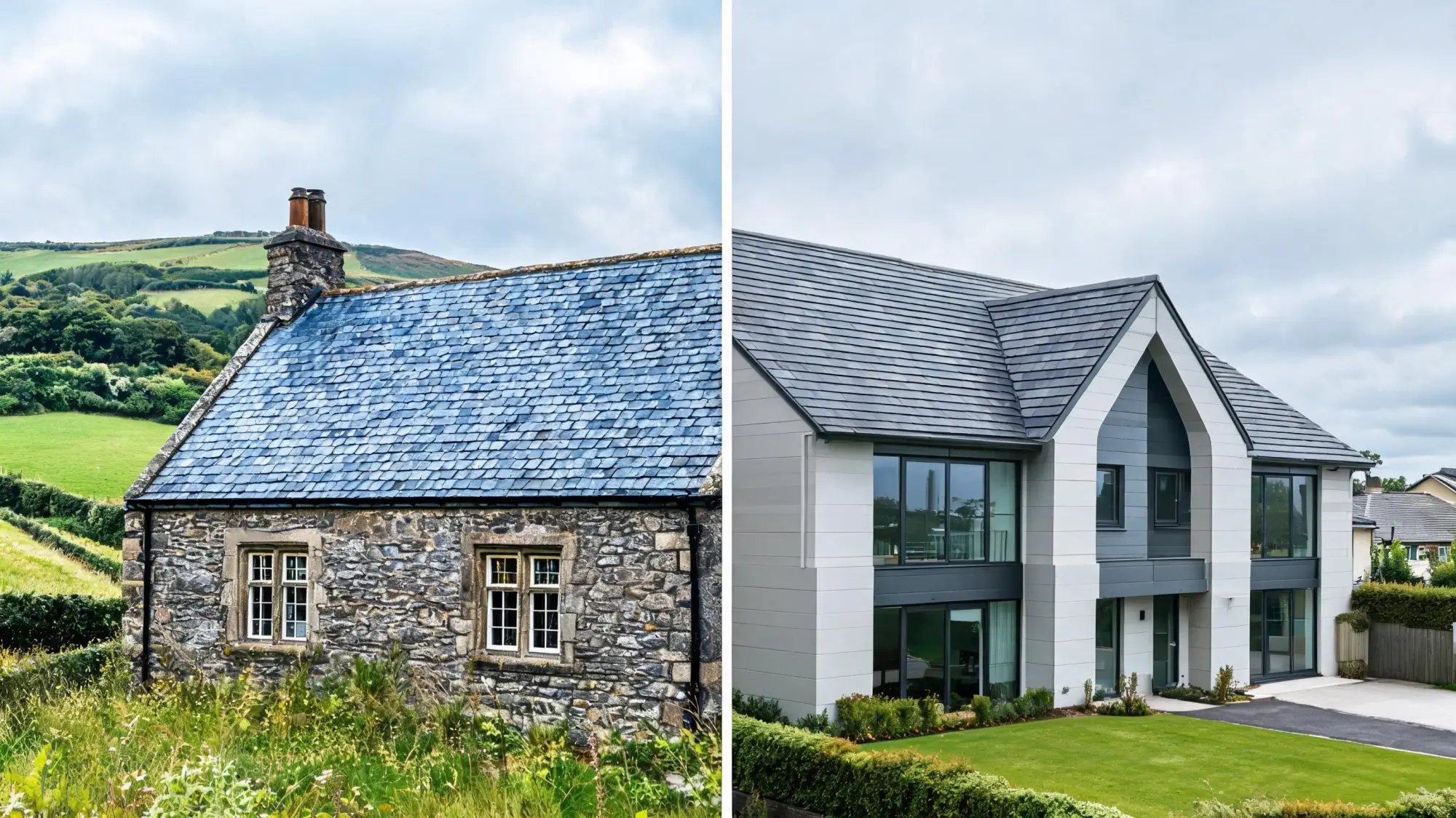
Spain is the world’s largest roofing slate producer, with modern specialist production concentrated in the north-west. Wales carries one of the strongest heritage identities in the industry. India supplies cost-sensitive markets across a wide range of materials. Brazil is a major producer, particularly of coloured and economical slate. China — including the Jiujiang/Lushan region of Jiangxi Province — has grown into a significant source for container-scale roofing supply.
None of these countries produces “one” slate. Within each, different quarries produce material with noticeably different colour, density, absorption and weathering behaviour. Spanish producers range from premium, extensively documented operations to budget lines; Indian slate covers everything from dense, well-sorted material to thin, loosely graded product. The same is true within China — which is why Jiujiang slate should be verified against other Chinese regions rather than assumed to be interchangeable with them.
For a quick side-by-side of the four most compared origins — colour, testing, supply and best-fit projects — see Jiujiang Slate vs Spanish, Welsh and Indian Slate. The sections below focus on where each origin fits a roofing project, not on ranking them.
Jiujiang vs Spanish Slate — Where Each Fits
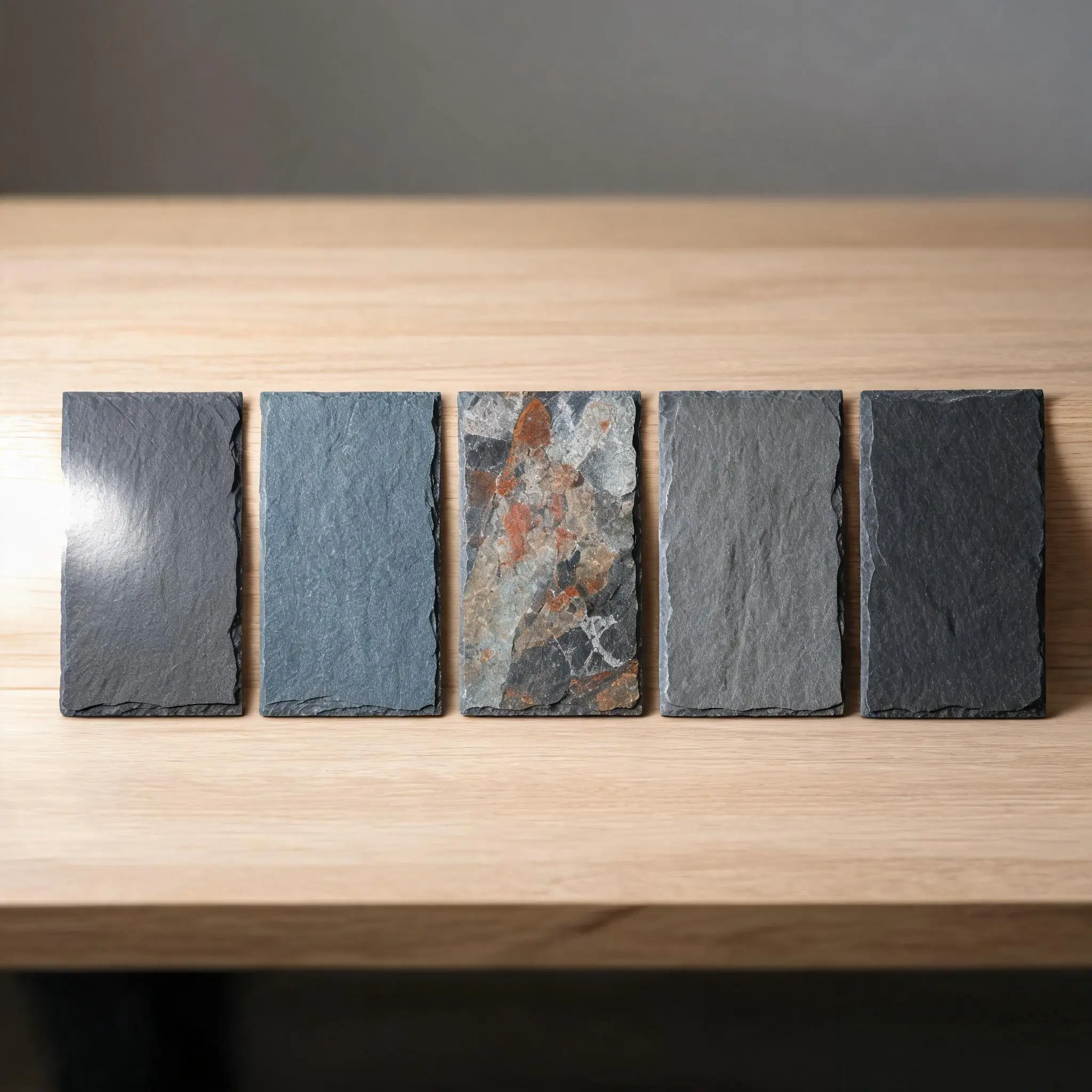
Spanish slate’s strength is breadth: established specialist quarries, extensive EN 12326 documentation, strong European distribution, and a market perception that favours it in specification-driven projects. When a project already carries a Spanish-slate specification, when a particular Spanish colour is part of the design intent, or when local distribution and established supply matter more than factory-direct pricing, Spanish material is often the practical choice.
Jiujiang slate becomes competitive when the buyer wants direct factory sourcing and container pricing, when the project requires thin roofing formats or colour ranges available from Jiangxi producers, or when production control and direct communication with the factory matter. It earns its place on the specification when an independently tested Chinese slate — not a general claim about the country — meets the project’s technical requirements.
The comparison that matters is between specific grades and test reports, not between “China” and “Spain” as abstract categories. For the full head-to-head on manufacturing flexibility, test data and European supply, see Jiujiang Slate vs Spanish Slate.
Jiujiang vs Welsh Slate — Heritage or Performance
North Wales has one of the world’s best-known historic roofing slate industries. Welsh slate has been used on heritage and landmark buildings for well over a century, and modern Welsh producers publish extensive technical documentation. For a heritage restoration — particularly a historic Welsh or British building where the material’s origin is part of the building’s character — the specification may call for Welsh slate regardless of what other origins can demonstrate on paper.
Here is the distinction that keeps professional buyers out of trouble: heritage authenticity and technical performance are different purchasing criteria. A slate can perform perfectly well without being historically appropriate for a listed building, and a historically appropriate slate can be technically excellent yet irrelevant to a new-build project.
Jiujiang slate enters the conversation on new construction — where colour, format, tested performance and delivered cost matter more than historical provenance. Its published test data for the Lushan/Xingzi producing area includes water absorption of 0.1–0.2%, EN 12326 A1 classification and freeze-thaw retention above 92% after 120 cycles. For the full head-to-head, see Jiujiang Slate vs Welsh Slate.
Jiujiang vs Indian Slate — Grade Against Grade
Indian roofing slate is widely used where price is a major factor, and for some projects that is the correct priority. But “Indian slate” covers material from different regions, quarries and grading systems — exactly as “Chinese slate” does. Assuming that all Indian roofing slate shares the same properties is the same mistake as assuming all Chinese slate shares the same properties.
The questions worth asking of any slate, from either country, are the same:
- Which quarry does it come from?
- What grade is being supplied?
- How consistent is the thickness across the batch?
- What is the water absorption?
- How does it perform in freeze-thaw testing?
- What percentage of material is rejected during production?
Jiujiang’s position in this comparison rests on measurable properties: density of 2,719–2,819 kg/m³, very low water absorption, and documented freeze-thaw performance — properties that matter in frost climates and for long-term weathering behaviour. Container-scale pricing remains competitive after testing and selection are taken into account. For the full head-to-head, see Jiujiang Slate vs Indian Slate.
Jiujiang vs Brazilian Slate — A Geological Distinction
Brazil is a major slate producer with a broad colour range and competitive pricing, and for many projects Brazilian material is a practical, well-documented choice.
There is, however, a technical distinction roofing buyers should understand. Some Brazilian roofing slate — particularly material from Minas Gerais — is technically a sedimentary mudstone rather than a true metamorphic slate. UK heritage research has noted that such material can behave differently on site: greater brittleness, different cutting and holing requirements, and different responses to working. The same research also notes that Brazilian material is available with BS EN 12326 certification.
That combination — a geologically different rock, yet certifiable under the same standard — illustrates the principle running through this entire guide: rock classification alone does not determine whether a roofing material is suitable for your roof. Performance testing and site behaviour determine that. For a buyer comparing a Brazilian mudstone “slate” against a dense, low-absorption metamorphic slate from Jiujiang, the useful comparison is the flexural strength, the absorption and the freeze-thaw data of the actual products — not the words on the geological map.
Which Origin for Which Roof
The table below is a starting point, not a ranking. A roof specification should determine the shortlist; the shortlist should not be determined by habit.
| Buyer priority | Origins worth investigating |
|---|---|
| European mainstream supply | Spain |
| Heritage Welsh architecture | Wales |
| Cost-sensitive roofing | India, Brazil, China |
| Broad modern export supply | Spain, China, Brazil |
| Direct Chinese factory sourcing | Jiujiang / Jiangxi |
| Very low absorption requirement | Compare tested grades from all origins |
| Severe frost climate | Compare actual freeze-thaw data |
| Coastal environment | Compare tested durability and fixing system |
| Large container project | Compare quarry capacity, grade and delivered cost |
| Custom colour or format | Compare individual quarry capabilities |
Reading the table by project type makes the logic clearer:
- Heritage restoration — start with the historically appropriate origin. A Welsh building may need Welsh slate because the origin and appearance are part of the building’s character, not because other slates cannot perform.
- Premium new-build — compare established premium grades from Spain, Wales and other origins by technical and aesthetic requirements; a tested Chinese slate belongs in the comparison when the specification allows it.
- Large residential development — consistency, availability, installation efficiency and delivered cost move to the top of the priority list.
- Cold-climate project — start with absorption and freeze-thaw evidence for the proposed material, not with the climate of the country it came from.
- Coastal project — look beyond colour to weathering behaviour, mineral stability and the complete fixing system. For a full treatment of frost, wind and salt stress, see Jiujiang Roofing Slate in Cold and Coastal Climates.
- Budget-sensitive project — compare finished roof cost, not quarry price per tonne.
Climate and Colour Change the Answer
A slate that performs well in one market should not be assumed suitable everywhere — and a slate that suits one project on the same street may not suit the one next door.
In cold and frost-prone climates — Norway, northern Europe, Canada — water absorption and freeze-thaw resistance lead the technical discussion. The physics is straightforward: less water entering the stone means less water available to freeze inside it. Low absorption does not guarantee frost performance on its own, but high absorption almost always undermines it. Our published test data for Jiujiang roofing slate reports water absorption of 0.1–0.2% and no visible damage after 120 freeze-thaw cycles, with flexural strength retention of 92.7%. Those numbers — not the latitude of the quarry — are what a cold-climate specification should be built on.
In coastal climates, the discussion widens beyond the stone: salt-laden air, wind exposure, fastener compatibility and long-term colour behaviour all interact. A good roofing slate should be evaluated with the entire roofing system in mind — the nails or hooks matter as much as the tiles.
In mild climates, frost resistance may be less demanding, and appearance, price, availability and installation tradition become the deciding factors. A slate that is “over-specified” for a mild project is not automatically the better economic choice.
Colour follows the same logic. “Spanish slate is black” and “Chinese slate is grey” are both wrong as universal statements. Colour is influenced by geology, mineral composition, weathering behaviour, quarry location and processing — and different quarries within the same country can produce visibly different colours. Jiujiang slate itself occurs in several natural colour families: dark grey, black, green-grey and other regional tones.
The correct procedure for an architect or developer is simple: define the required colour, request current quarry samples, compare dry and wet appearance, check the natural variation, ask how the colour is expected to behave after weathering, and approve a physical sample before mass production. Never approve a roofing slate from a catalogue photograph alone. For how Jiujiang colours behave over decades — which stay stable, which soften — see Jiujiang Roofing Slate: Colour and Weathering.
What the Price Tag Does Not Show
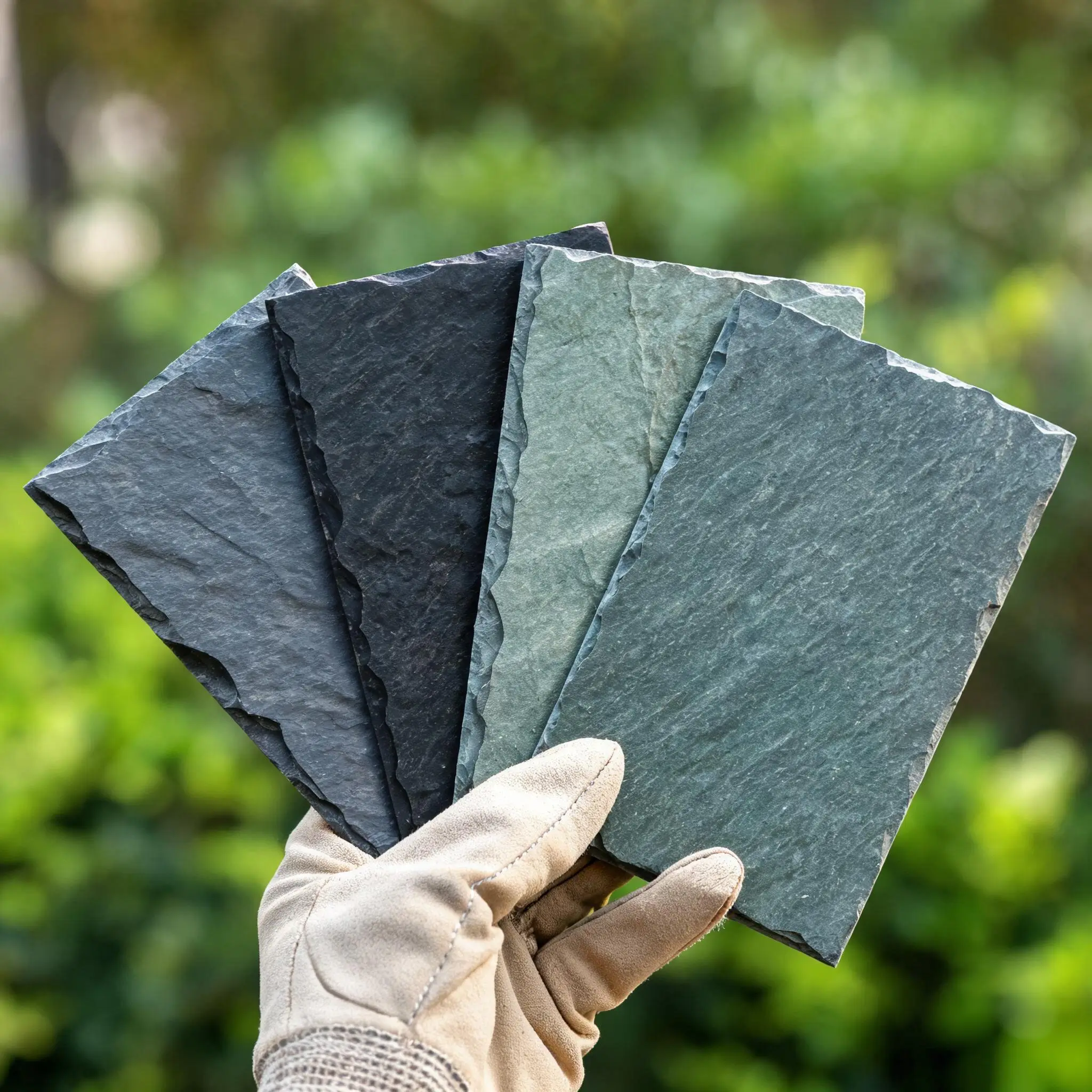
Two slates can carry similar laboratory results and still produce very different experiences on site. Roofers notice thickness variation, dimensional accuracy, cleft quality, breakage during handling, hole-punching behaviour, edge quality, sorting and packaging — none of which appear on a test certificate.
This is where factory production control becomes a real part of the origin comparison. In our own production, tiles are machined to a dimensional tolerance of ±0.1 mm, every tile passes individual inspection before packing, and batches are colour-sorted under an A/B/C grading system. On a large roof, that consistency translates directly into faster installation, lower waste and fewer replacement callbacks — savings that never show up in a per-square-metre quotation.
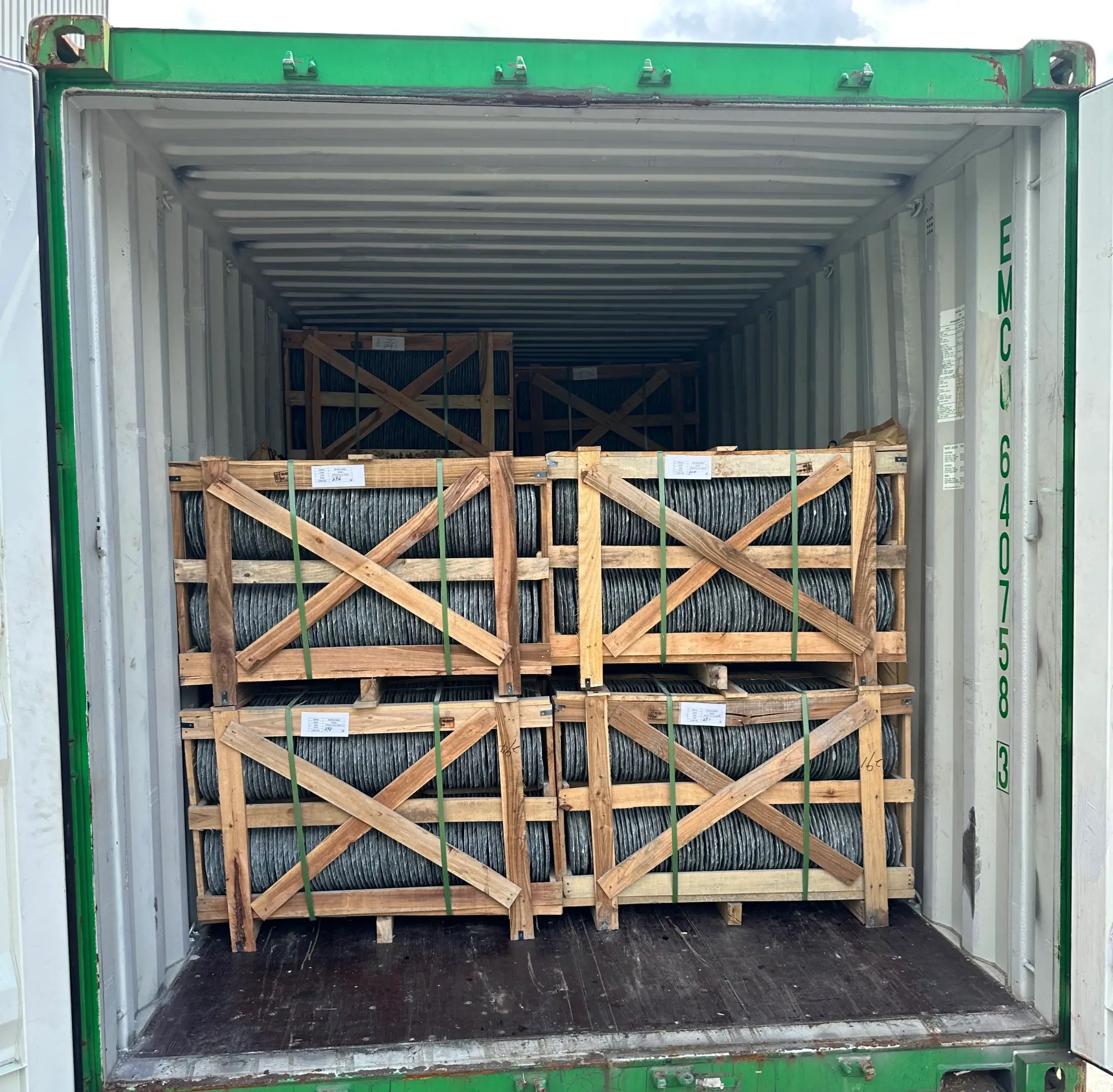
The quarry price is only the first line of the real cost. Processing, sorting, packing, inland transport, port charges, ocean freight, import costs, site wastage and installation labour all sit between “FOB quarry” and “finished roof.” A slate with a lower factory price is not automatically cheaper on the finished roof, and a higher-priced European slate is not automatically the better economic choice for every new-build project.
The useful metric is closer to: delivered cost + installation cost + expected waste + required maintenance. For a structured approach to pricing comparisons — same Incoterm, same currency, same units, same quantity — see How to Compare Roofing Slate Quotations.
Testing Over Reputation
Natural slate has a long history, but modern buyers should ask for evidence rather than tradition. EN 12326 is the principal European assessment framework; ASTM C406 governs grades in the United States and Canada; national standards such as GB/T 18600 and IS 6250 apply in producing countries. Depending on the market and project, the useful documentation may include water absorption, flexural strength, freeze-thaw resistance, thermal cycling, sulphur dioxide exposure, carbonate content, dimensional tolerances and petrographic description.
One warning belongs in every specification conversation: a test report belongs to a tested material, a tested sample and a production context. A certificate from one quarry should never be presented as proof that every slate from the same country performs identically. If a supplier quotes a test result without a batch number, ask for the original documentation — and check that the supplied grade corresponds to the tested product. Our approach is to publish the test data for the material we actually ship, on our roofing slate test results page, so that buyers can verify rather than trust.
For how to read the six lines of a slate test report — and how to spot the four ways numbers can be presented misleadingly — see How to Read a Roofing Slate Test Report.
Country, Quarry, Grade: The Three Levels That Matter
Every roofing slate purchase involves three distinct levels, and keeping them separate prevents most origin-comparison mistakes:
- Level 1 — Country. China, Spain, Wales, India, Brazil. The level most comparisons stop at — and the level that tells you the least.
- Level 2 — Region and quarry. Jiujiang/Lushan/Xingzi, Galicia, North Wales, Minas Gerais, the Indian producing districts. This is where colour character, density and working behaviour start to differentiate.
- Level 3 — The actual commercial grade. The specific material, from a specific batch, that will arrive in your container and go onto your roof.
Level 3 is the only level that touches your roof. That is why two slates from the same country can perform differently, and two slates from different countries can both satisfy the same roofing specification. A buyer who compares at Level 3 — grade against grade, report against report — is comparing products. A buyer who compares at Level 1 is comparing flags.
A Better Way to Compare Origins
When requesting quotations from several origins, send every supplier the same specification. For example:
| Required slate — example specification | |
|---|---|
| Application | Pitched roofing |
| Climate | Cold / temperate / coastal |
| Colour | Dark grey / black / green-grey |
| Thickness | 5–7 mm (or 7–9 mm) |
| Format | 200 × 300 mm (or as required) |
| Required standard | EN 12326 / ASTM C406 |
| Required testing | Absorption + flexural strength + freeze-thaw |
| Quantity | ___ m² |
| Sample | Yes, sealed reference |
| Documentation | Original laboratory reports with batch numbers |
Then ask every supplier for the same eleven items: quarry origin, geological description, available grades, current test report, production photos, a physical sample, packing method, container loading quantity, quotation, and references or previous export markets. For the complete question set — and the answers that separate factories from traders — see Questions to Ask a Roofing Slate Supplier.
Now the comparison becomes meaningful. You are no longer comparing China against Spain. You are comparing Product A against Product B under the same roof specification — which is the only comparison an architect, contractor or client will accept.
When Does Jiujiang Make Sense?
After all the layers of the decision, Jiujiang roofing slate is particularly worth considering when a project combines several of the following requirements:
- natural slate rather than synthetic roofing
- competitive container-scale supply
- direct factory sourcing and communication
- multiple natural colour options
- thin roofing formats (5–7 mm)
- very low water absorption (0.1–0.2% tested)
- documented frost resistance (120 cycles, 92.7% retention)
- consistent processing (±0.1 mm dimensional tolerance, 100% single-tile inspection)
- large-volume supply with container economics
- a new-build or replacement roof where historical origin is not mandatory
That is a stronger purchasing argument than “Chinese slate is cheaper” — and it is one that survives contact with an architect’s review.
There is no single roofing slate origin that is automatically right for every roof. Spanish slate offers extensive modern production and international supply. Welsh slate carries a heritage identity that no other origin can replicate — and should not have to. Indian and Brazilian slate serve cost-sensitive and colour-driven projects in suitable grades. Chinese slate, including the Jiujiang/Lushan region, offers another major supply base with documented testing and factory-direct economics.
For a new roofing project, the most useful question is not “which country has the best slate?” It is: which tested slate, from which quarry, meets the requirements of this roof at an acceptable total cost?
Origin starts the comparison. Testing, quarry selection and project requirements finish it.
Frequently Asked Questions
Is Chinese roofing slate as good as Spanish or Welsh slate?
Some Chinese roofing slates are as good as some Spanish or Welsh slates — and some are not. The same is true in reverse. Spain, Wales and China all produce premium grades and budget grades, and quality varies between quarries within each country. The comparison that matters is between specific tested grades: water absorption, flexural strength, freeze-thaw performance and dimensional consistency of the actual material being supplied. Jiujiang roofing slate from the Lushan/Xingzi area has published test data of 0.1–0.2% water absorption, EN 12326 A1 classification and 92.7% flexural retention after 120 freeze-thaw cycles — numbers that can be compared directly against any Spanish or Welsh test report.
How do I compare roofing slate from different countries?
Send every supplier the same written specification — application, climate, colour, thickness, format, required standard, required testing, quantity and delivery — then request the same eleven items from each: quarry origin, geological description, available grades, current test report, production photos, sample, packing method, container loading quantity, quotation and references. With identical inputs, the comparison becomes Product A vs Product B rather than Country A vs Country B. Never compare quarry prices without also comparing landed cost, installation cost and expected waste.
Which slate origin is best for a cold climate?
No origin is automatically best for cold climates — the quarry and the grade matter more than the country. What a cold-climate specification needs is very low water absorption (under 0.3% is a strong start), documented freeze-thaw resistance, and adequate flexural strength after cycling. A slate from a mild-climate country with excellent test numbers will outperform a slate from a cold-climate country with poor test numbers. Ask for the actual freeze-thaw data of the proposed material, not for generalisations about where the stone was quarried.
Does the country of origin matter more than the quarry?
The quarry matters more than the country. Two slates from the same country — even from neighbouring quarries — can differ in colour, density, absorption and weathering behaviour, while two slates from different countries can both satisfy the same roofing specification. The country tells you something about supply structure, heritage perception and logistics; the quarry tells you what the stone actually is. A professional comparison works at three levels: country, then region and quarry, then the actual commercial grade that arrives in your container.
How do I know if a test report applies to the slate I will receive?
Check three things: the batch number on the report should match the batch number on the quotation and the packing list; the tested thickness should match the thickness you are buying; and the report date should be recent enough to reflect current production. A test report belongs to a tested material, sample and production context — it is evidence for that grade, not a guarantee for everything a country or region produces. If a supplier quotes results without offering the original documentation, treat the numbers as marketing until the paperwork appears.
Can I mix slate from different origins on the same roof?
It is technically possible but rarely advisable. Different origins often differ in thickness, cleft character and colour — differences that become visible within a few courses and amplify as the roof weathers. If a project must be completed in stages with different sources, the safer approach is to keep each roof slope or each building in a single batch, rather than blending two origins on one continuous plane. Where mixing is unavoidable, approve physical samples of both materials side by side, in dry and wet states, before committing.
Related Reading
Compare test reports, not flags
Whatever origins make your shortlist, ask every supplier for the same specification, the same documentation and the same sealed sample. The roof — not the country — decides which slate is right.