
Understanding Breakage Allowance
The short version: when a container of roofing slate opens, a small amount of broken tile is normal. Breakage allowances are not a fixed industry standard — they vary by supplier, packing method, shipment conditions, and the contract itself. A figure such as 1–3% of the tiles by count is a commonly quoted commercial reference, and a well-packed 20ft container often lands below 2%, but those numbers only mean something once the contract defines what is counted, on what basis, and who holds the risk.
When roofing slate arrives with visible damage, the outcome of a claim often depends on how the shipment is inspected, documented, and assessed against the agreed contract terms. The first five minutes after a container opens usually decide the whole story — not the invoice, not the test report, but the way the tiles are counted, photographed, and read. Most of what people assume about breakage allowances is half true, and the half that is wrong is what costs them the claim.
This guide walks the receiving process the way a claims desk would: a stack of assumptions, each one examined in turn. It is written from the shared position of buyer and supplier — neither side benefits from a shipment that turns into a dispute over a percentage that was never defined clearly.
The Number: A Reference, Not a Standard
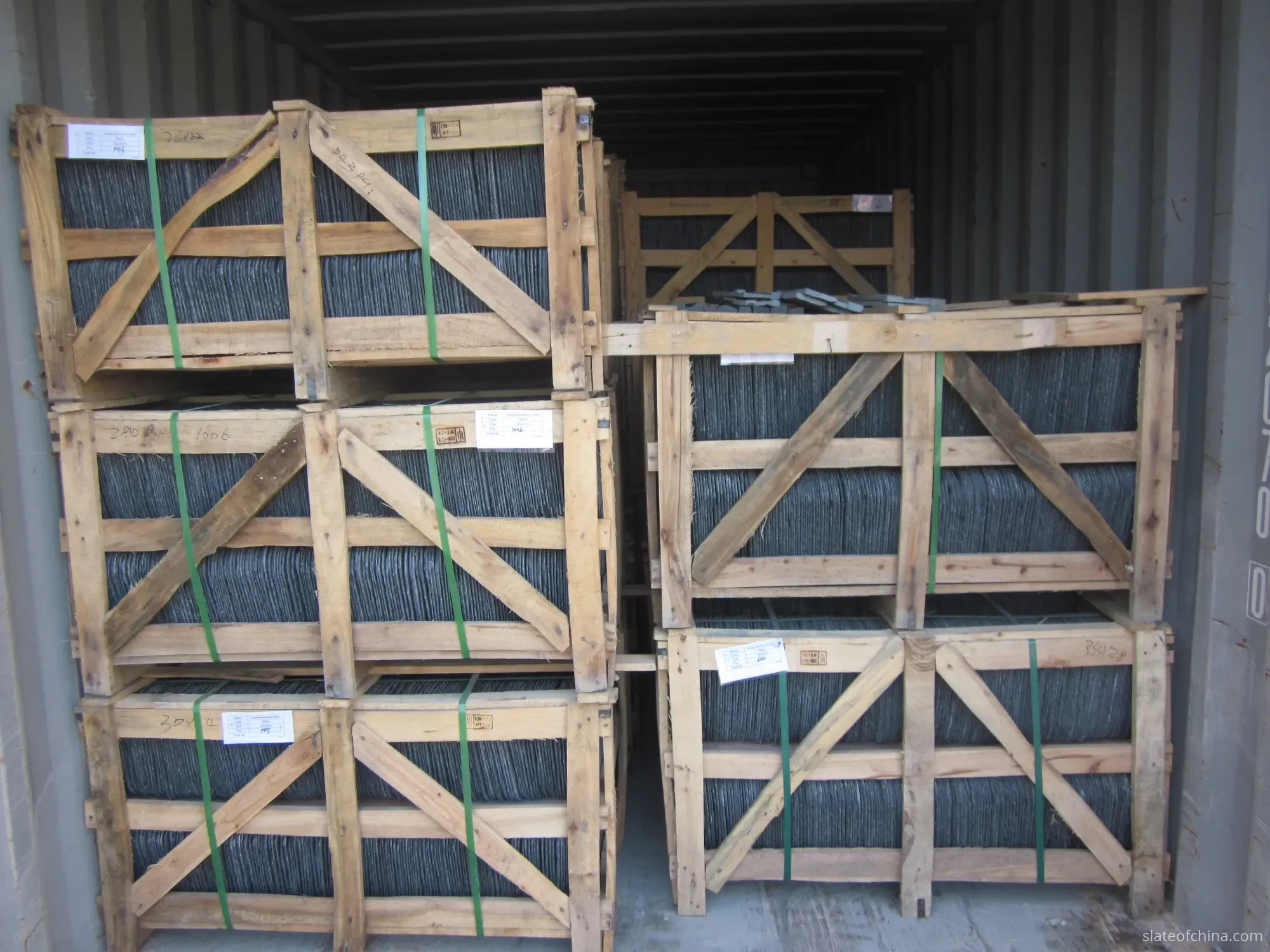
The first thing everyone wants is the number, so here it is: on a properly packed container, 1–3% of the tiles by count is a commonly quoted commercial reference for breakage, chipping, or unsound pieces. It is not a universal industry standard. The real figure depends on the supplier's packing plan, the shipment conditions, and the contract — which is why a well-run 20ft box often lands under 2% while a poorly packed one can run higher.
The band counts pieces, not square metres, because slate is counted in pieces on a roof and the piece is what the roofer runs short of. The honest way to calculate a breakage rate is off the packing list. A shipment of 10,000 pieces that yields 180 tiles meeting the contract's definition of breakage has a breakage rate of 1.8% — a number buyer and supplier can check against the same document, with no room for an area-based dispute.
Where most buyers read it sideways is treating the band as a number to add to the order "just in case." It is better read as a threshold for the claim: the point below which the transit is considered acceptable, and above which someone owes tiles. When a supplier quotes "2% breakage allowance," they are not calling 2% a good number — they are saying: up to this line, the sea is part of the deal; past this line, we owe you tiles. That is the whole meaning of the word allowance.
Two related numbers live in the same family but should not be confused with the transit allowance: cutting waste (5–10% extra on the roof, because hips, verges and valleys eat slates that are not broken) and LCL breakage. A shared (LCL) load is handled more than an FCL load, so its breakage risk runs higher — commonly 4–5% in the trade — but again this is a commercial reference, not a legal default. The exact figure for a given shipment is set by the contract and the packing plan, not by an industry standard.
Myth One — "Breakage Means the Container Was Dropped"
There is a picture people keep: a crane drops the whole box, and the container is a story of broken glass. That almost never happens with slate. A dropped container is a whole-shipment event that makes the news; what buyers usually see is corner chips and edge nicks, a tile or three per crate, small enough that the receiving crew throws them on the reject pile without thinking.
But corner chips are where the argument actually lives. A corner chip smaller than a fingernail does not go on a roof — the slate will flake at the corner and the fixer will not accept it — yet it is also the kind of damage a crate is designed to absorb. The same container, the same sea, the same crane can produce between 0.5% and 4% damage depending on how the crate was built and how it was loaded. That spread is not luck; it is the packing plan. When 8% arrives at the door, the first question is not "was the ship rough?" — it is "was the crate strapped, interleaved, and stacked the way the spec says?"
Which brings the practical rule: the tighter the crate and the stack, the less breakage arrives. A container that leaves with crates double-stacked, braced against the walls, and the door row blocked is a container that arrives as it left. That packing spec is laid out in crate standards — the line between a 1% shipment and a 3% shipment is often a loading detail nobody photographed.
Myth Two: "We Count Broken Tiles and Send the Photo"
This one costs the most, because it sounds right. When the container opens, everyone counts the broken tiles, takes a photo, and sends it to the supplier. And the supplier replies, slowly, with a single question the buyer did not prepare for: on what basis?
Three bases settle different things:
- Per crate vs per container. If the allowance is "2% of the container," a single bad crate with 10% broken sits inside a container still under 2%. If it is "2% per crate," the same crate is a claim. Most supplier allowances are written on the container; most buyer expectations are on the crate. The first page of any dispute is agreeing which one both sides are on.
- Pieces vs square metres. The band counts pieces. A claim counted in m² while the order is in pieces drifts by the tile's area and the thickness of the argument.
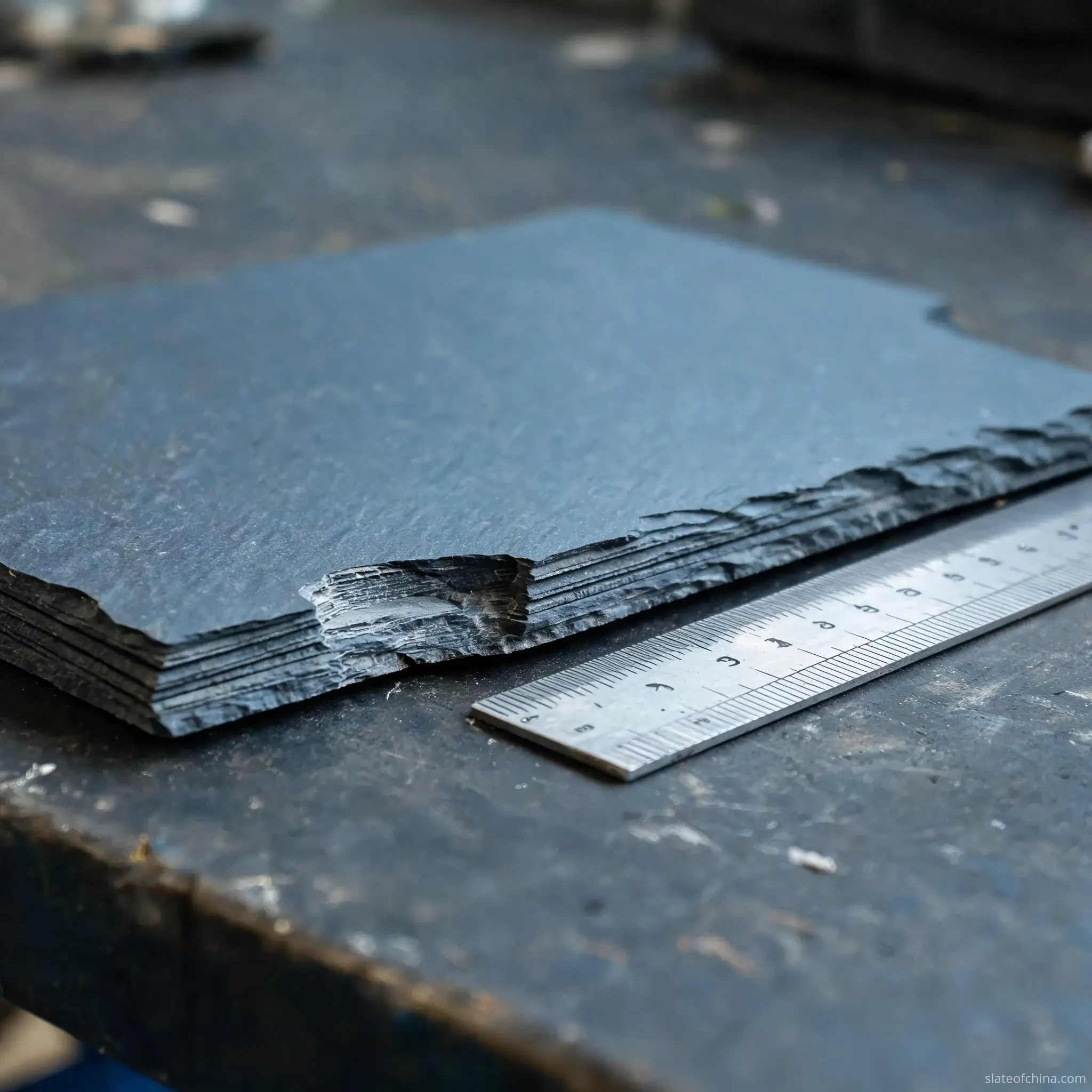
- Broken vs damaged. The honest rule: a chipped corner that cannot be nailed is broken; a tile with a hairline crack you could install but should not is damaged; a tile that is merely dirty is not a claim. The allowance usually counts "broken" and "damaged" together — but only because the contract says so.
So before photographing anything, ask: on what basis are we counting? The answer should already be in the contract. If it is not, the other side gets to choose, and they are not the one holding the broken tiles.
Myth Three — "The Supplier Pays Because I Paid for It"
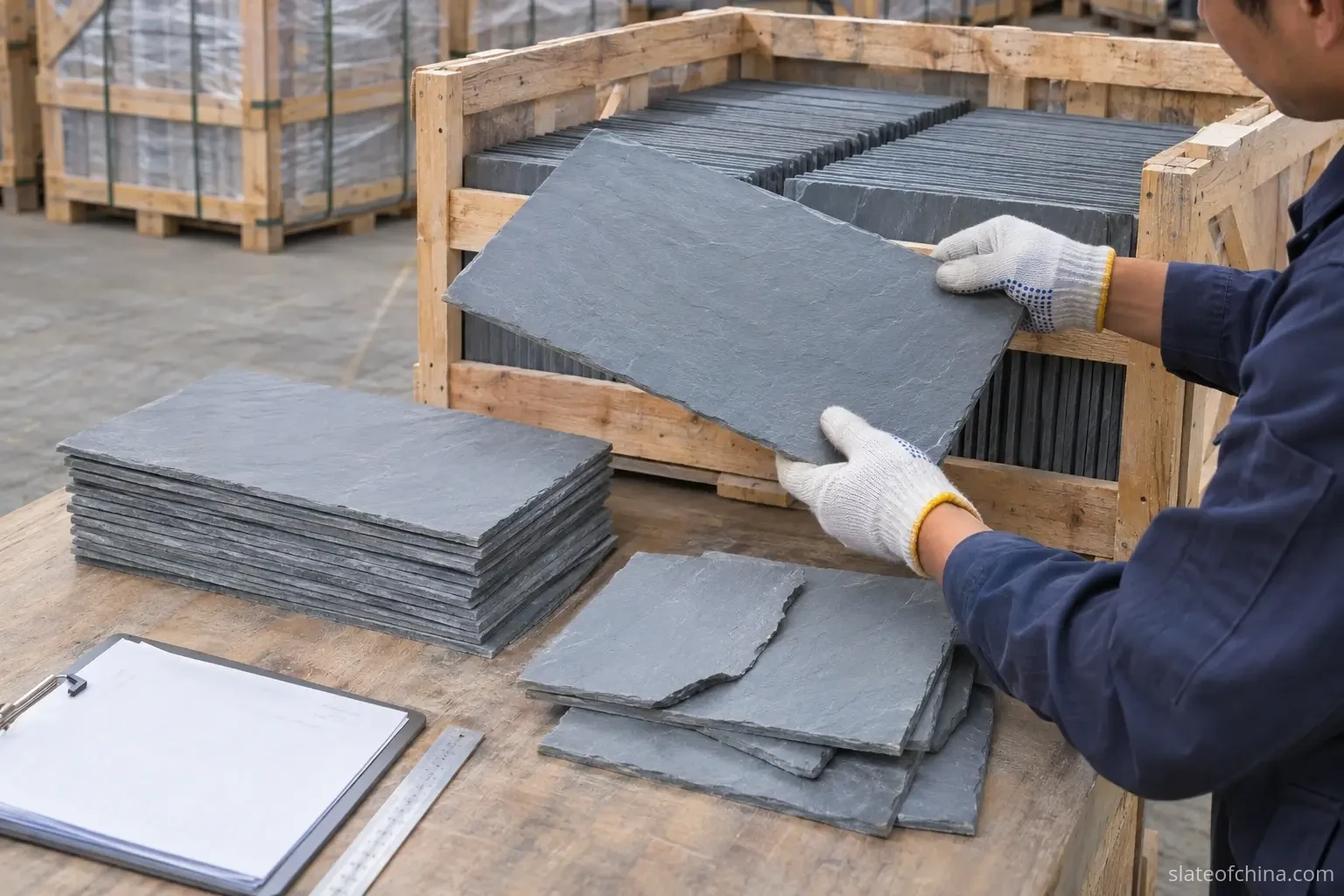
This one is closer to true than the others, but the word is not "pay" — it is risk. Under Incoterms 2020, an FOB shipment transfers risk to the buyer when the goods are loaded on board the vessel at the named port of shipment. From that point the buyer owns the transit, and it is usually the buyer's cargo insurance that covers the sea leg — not the supplier's. The quotation guide explains the FOB/CIF difference in detail; the claims-side version is simpler: the owner of the risk owns the claim.
That transfer of risk does not mean the supplier is never liable. A supplier still owes for damage that happened on their side — a crack in a crate that shipped a damaged tile, a snapped strap, a stacking that crushed a corner. That is not transit risk; it is a packing or conformance failure, and it is the supplier's responsibility. Nor should a buyer assume that exceeding any number automatically obliges the supplier to pay: only a contract that explicitly states a remedy — for example "over 3% in the container and we replace the excess" — creates that obligation. Some suppliers offer such a breakage guarantee; others say "damage happens." The difference is worth asking for before signing.
Myth Four — "If It's Over 3%, We Send It Back"
Slate is not sent back, it is settled. Shipping a container across the ocean and back for a few hundred broken tiles costs more than the tiles, and no sensible supplier proposes it. A claim typically runs one of these paths:
| Path | What happens | When it applies |
|---|---|---|
| Replace on next order | Broken tiles credited, replacement tiles added to the next shipment at no cost | The normal supplier remedy; keeps the project moving |
| Credit against the invoice | Dollar credit for the broken tiles, net of the allowance itself | When the buyer does not need more slate and prefers the money |
| Freight claim | Carrier's liability for cargo damage during the sea leg, paid by the cargo insurance | Only if the damage is provably from handling, and inside the claim window |
| Retainage/return | Whole crate rejected and returned or inspected on-site | Only for a single crate at 10%+ damage, or a bad batch — rare, and freight-heavy |
The three realistic paths all end in replacement or credit. "Sending it back" is the path nobody takes unless the damage is concentrated and extreme. So the allowance is really a promise about who owes you tiles later, not a promise about a refund today.
The Part Nobody Writes Down: The Claim Window
Here is the part that decides more claims than the percentage: time. The claim window for ocean damage is short — for the carrier it is written in the bill of lading, often 3–7 days from delivery; for the supplier it is whatever the contract says, and many say "within days of receipt." After that, the container has been sitting at the yard for a week, the broken tiles have been mixed with the good ones, and the answer to "was it like this when it arrived?" is "we don't remember." That sentence is the end of a claim.
The rule that pays: the day the container opens is the day the count starts, not the day you decide to count. One crate opened on the spot, broken pieces separated and photographed against the crate, the count written down, and the rest held. The receiving sequence is laid out in the inspection checklist; the part that belongs here is the number — the percentage only means something inside the claim window, measured from the seal, not from a later visit to the site.
The Three Contract Lines That Matter More Than the Percentage
Every buyer spends the whole negotiation on the price per m² and the last hour on breakage. Flip it. The allowance is not a clause; it is three clauses, and they decide 90% of what a "1–3%" actually means. Here is a template to paste into the order, in words that settle claims:
1. Count. "Breakage allowance: 2% of pieces per container, counted as broken or unserviceable tiles (corner chips, cracks, and delamination) at the buyer's warehouse within 7 days of receipt."
2. Threshold. "Breakage above 2% is replaced or credited by the supplier at the contract price; breakage below 2% is accepted as normal transit loss."
3. Proof. "Both parties agree that photos of the affected tiles, taken against a reference ruler and packing list, are the record of the damage."
Three lines. That is the entire contract for the thing that makes people angriest about slate. They fix the count basis (pieces, not m²; warehouse, not dock), they fix the threshold and the remedy (replacement or credit, not return), and they fix the evidence (photos with a ruler and the packing slip, against the clock). The percentage number — 1.5%, 2%, 3% — is then just a figure both parties pick, and the figure matters less than the defined basis.
How to Calculate the Rate (with an Example)
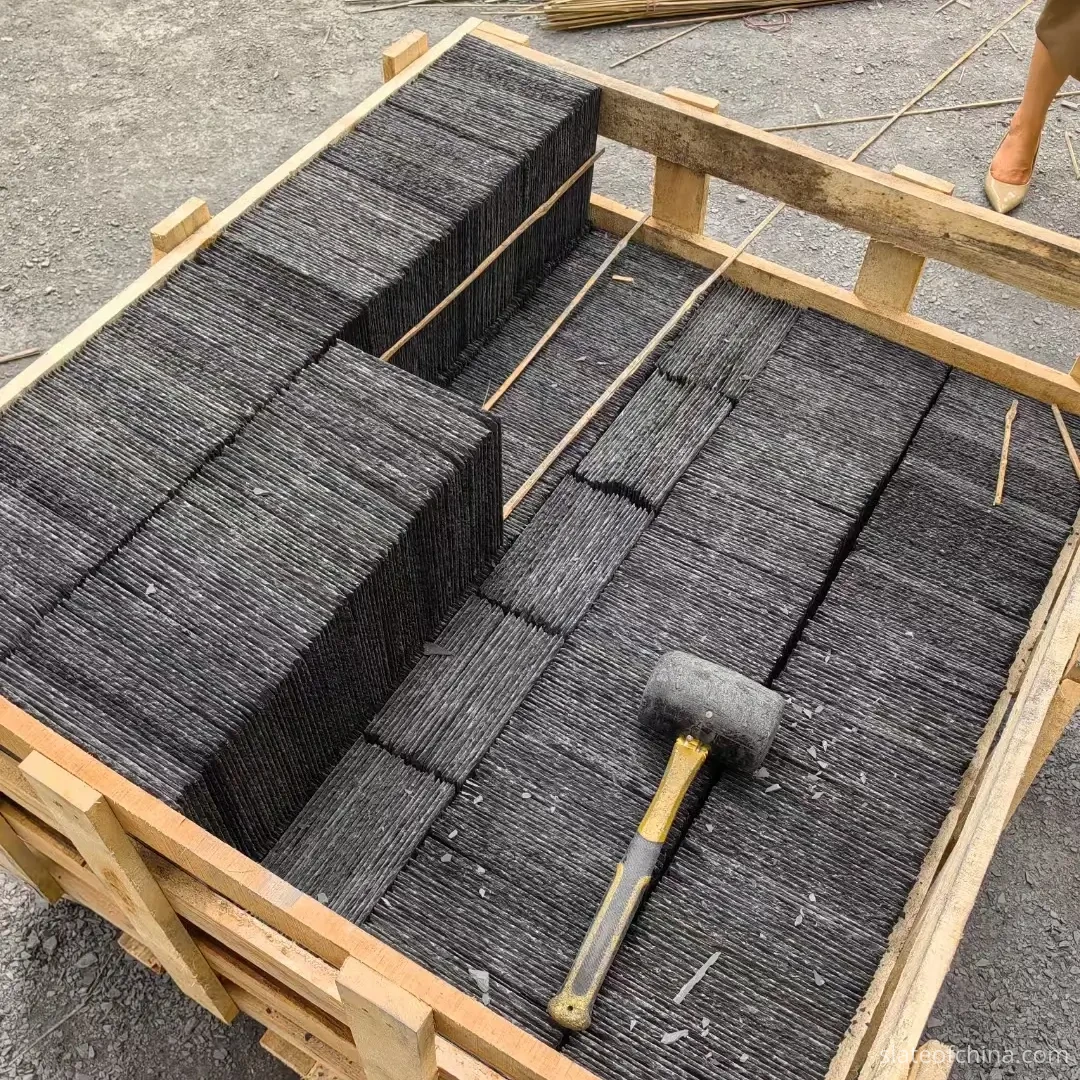
A breakage rate is easy to check when the basis is clear. Take a shipment of 10,000 pieces in which 250 tiles meet the contract's definition of breakage. The actual breakage rate is 2.5%. If the contract allowance is 2.0%, then only the part above the allowance is in scope — 50 tiles, not 250.
| Item | Example |
|---|---|
| Total slates delivered | 10,000 pcs |
| Broken or unusable slates | 250 pcs |
| Actual breakage rate | 2.5% |
| Contractual allowance | 2.0% |
| Excess breakage | 50 pcs |
So if the contract says the supplier compensates for the part above 2%, the claim may involve 50 tiles, not 250. The final amount still depends on how the contract sets the count base and the compensation — but keeping the calculation on the packing list avoids the ambiguity that turns a simple figure into a dispute.
When the Damage Isn't "Breakage" at All
Here is the one that turns a "damage claim" into a roof failure a year later. Most of what a novice calls breakage — a cracked tile at the fixing hole, a delaminated face, a tile that crumbles at the edge — is not an impact crack. It is a moisture or material defect that was invisible at the dock and surfaced at the first frost.
A tile that is inherently weak, or one that carries hidden internal cracking, can split long after delivery. When tiles fail a year in, the answer is usually not a single cause. Investigating the fracture line, the tile's test performance, the installation, and the local climate is more reliable than assuming one factor. Whether the stone is strong enough for the project is a separate question from the transit — one that a test report answers before you pay, and one that the transit allowance does not cover.
Which is the whole point of this article in one line: the allowance covers the trip, not the tile. It is the number that separates what the container is allowed to do from what the stone was supposed to be. Keep those two separate, and the breakage conversation turns from an argument into a check — the check that fits on a page, the way it is spelled above.
FAQ
What is the normal breakage allowance for roofing slate?
1–3% of the tiles by count is a commonly quoted commercial reference, and a well-packed 20ft container often lands under 2%. The number counts pieces, not square metres, and it is a threshold for a claim: below it the transit is usual, above it someone owes you tiles. Cutting waste (5–10%) is a separate on-site figure, and LCL shipments run higher, often 4–5%.
Who pays for broken roofing slate in transit?
Under FOB Incoterms 2020, risk transfers when the goods are loaded on the vessel at the named port, so the buyer's cargo insurance usually covers the sea leg — not the supplier. The supplier owes for damage caused on their side: packing failures, wrong tiles, or conformance defects. A supplier who guarantees "over 2% and we replace" is offering more than the contract minimum; one who says "damage is always the freight line's fault" is telling you the risk is your problem.
How do I claim for broken slate from a supplier?
Count and photograph the broken tiles inside the claim window (usually 3–7 days for the carrier, whatever the contract says for the supplier), keep the packing slip and a ruler in the photos, separate the broken tiles from the good ones, and compare the count to the contract allowance. The remedy is usually a credit or replacement on the next order — not a return, which nobody ships back. The inspection checklist lays out the sequence.
What percentage of slate breaks during shipping?
For a properly packed crate, 1–3% by piece count is a common reference; most well-run shipments land at or under 2%. The spread comes from packing, stacking, and handling — not the sea. LCL freight, handled more often, may run 4–5%; above that is usually a packing failure worth an inspection, not a shrug. No figure is a universal standard; the contract sets the applicable allowance.
Is a chipped corner on a slate "broken"?
A corner chip that cannot be fixed is broken for the purpose of a roof, because the roofer will refuse the tile. But a hairline crack you could use is damage, and a tile that is present and sound is not damaged at all. The contract should define "broken," "damaged," and the count basis (pieces vs m²) before the argument — a claim that counts corners as fine is a claim that loses.
Should I order extra slate for breakage?
Yes, but from the right column. Add 5–10% for cutting waste on the roof (hips, verges, valleys), and consider a small transit allowance on top if you want to be safe. Do not use one number for both, and do not count the allowance as if it were extra pieces — it is the threshold before someone owes you tiles, not a separate shipment.
Related Reading
Before You Sign, Ask for the Allowance in Writing
The breakage allowance is a contract line, not a hope. Every quote we send carries the count basis, the threshold, and the remedy in three lines — and a packing plan that keeps the percentage where it should be. Ask for our standard terms · see the roofing slate range · view our test results