
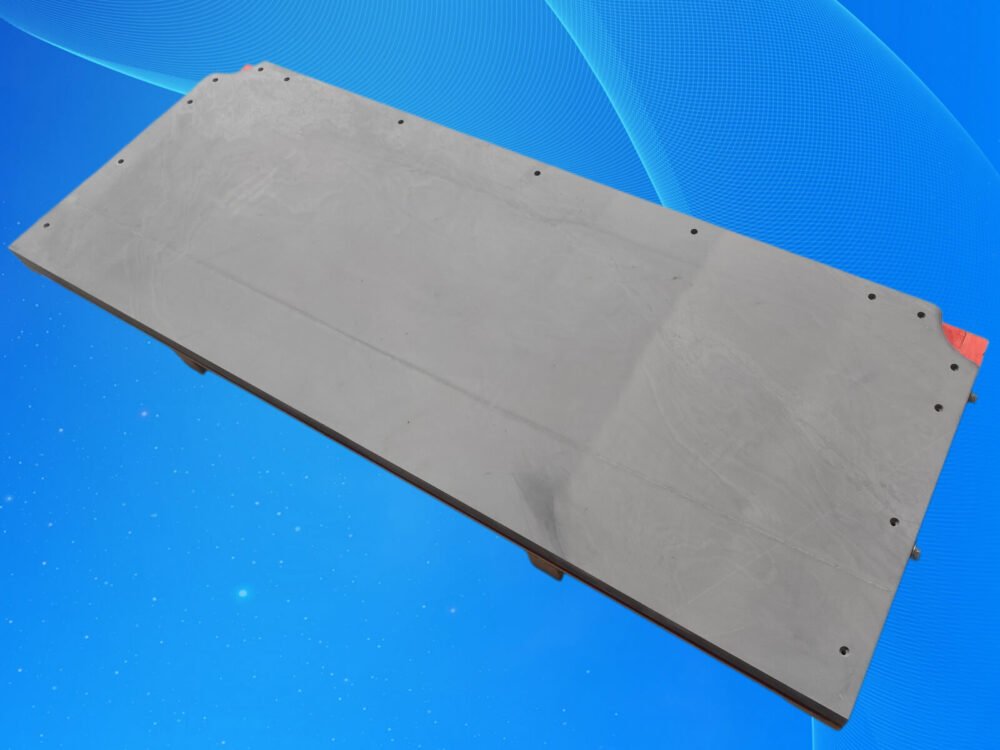
When manufacturing or sourcing slate for professional snooker tables, one specification separates tournament-grade equipment from standard commercial tables:
Slate thickness.
While some tables use 38mm or 40mm slate, professional tournament tables typically require 45mm snooker slate.
But why does thickness matter so much?
In this article, we explain the structural, performance, and long-term stability reasons behind choosing 45mm slate for 12ft professional snooker tables.
The Structural Role of Slate in a 12ft Snooker Table
A 12ft snooker table spans nearly 3.6 meters and supports:
Heavy steel or hardwood frame structures
Cushion systems
Cloth tension
Continuous impact from gameplay
The slate functions as the primary structural platform.
If thickness is insufficient:
Deflection increases
Frame stress becomes uneven
Seam stability weakens
Long-term accuracy declines
Thickness directly affects structural rigidity.
1️⃣ Load-Bearing Capacity and Deflection Control
Deflection refers to the slight bending of slate under load.
In thinner slate (38–40mm):
Structural rigidity decreases
Weight distribution becomes more sensitive
Frame alignment becomes more critical
With 45mm snooker slate:
✔ Increased mass improves stability
✔ Higher bending resistance reduces deflection
✔ Load is distributed more evenly across frame support
For tournament tables where precision is critical, minimizing deflection protects performance consistency.
2️⃣ Seam Stability in Five-Piece Slate Systems
Most 12ft snooker tables use a five-piece slate configuration.
Thicker slate improves:
Joint stability
Bolt pressure distribution
Resistance to seam movement over time
In thinner slate:
Bolt tightening may create localized stress
Seam height differences become more likely
Long-term joint shift risk increases
45mm thickness reduces stress concentration at seams, especially in high-use environments such as clubs and tournaments.
3️⃣ Ball Roll Accuracy and Surface Stability
Professional snooker requires:
Extremely consistent ball roll
Predictable rebound behavior
Minimal surface deviation
While flatness tolerance is critical, thickness also contributes to performance.
Thicker slate:
✔ Absorbs vibration more effectively
✔ Reduces micro-movement under dynamic load
✔ Maintains surface integrity over long-term use
In competitive environments, even subtle movement affects precision.
45mm slate enhances stability during high-level play.
4️⃣ Long-Term Durability Under Intensive Use
Tournament tables experience:
High daily usage
Frequent cloth replacement
Repeated bolt tightening
Transport and reinstallation
Thicker slate offers:
✔ Greater structural endurance
✔ Reduced crack risk under stress
✔ Better resistance to long-term deformation
For professional snooker table brands, durability directly impacts reputation.
5️⃣ Installation Tolerance and Adjustment Margin
During installation:
Frame leveling
Bolt tightening
Seam filling
Cloth stretching
All introduce mechanical stress.
With thinner slate, installation precision becomes extremely sensitive.
45mm slate provides:
✔ Greater tolerance margin
✔ Improved resistance to over-tightening
✔ More stable seam behavior
Installers often prefer thicker slate for high-end tables due to reduced risk during assembly.
Comparison: 38mm vs 40mm vs 45mm Snooker Slate
| Feature | 38mm Slate | 40mm Slate | 45mm Slate |
|---|---|---|---|
| Structural Rigidity | Moderate | Good | Excellent |
| Deflection Resistance | Lower | Medium | High |
| Seam Stability | Moderate | Good | Superior |
| Tournament Suitability | Limited | Semi-professional | Professional / Tournament |
| Long-Term Durability | Moderate | Good | Excellent |
For serious tournament-grade tables, 45mm remains the preferred standard.
Why Professional Tournaments Use 45mm Slate
Professional events demand:
Maximum performance consistency
Structural reliability under high usage
Stable seams
Long-term dimensional integrity
45mm thickness provides the engineering margin required for professional competition.
This is why high-end snooker table manufacturers prioritize 45mm snooker slate manufacturing standards.
Manufacturing Requirements for 45mm Slate
Producing 45mm slate requires:
Larger quarry blocks
More advanced cutting control
Precision grinding capability
Higher packaging strength for export
Not all suppliers can consistently produce thick slate at stable tolerance levels.
When evaluating suppliers, buyers should confirm:
✔ Flatness tolerance control
✔ Thickness calibration method
✔ Five-piece matching process
✔ Export packaging strength
Thicker slate requires stricter manufacturing discipline.
When Is 40mm Acceptable?
40mm slate may be suitable for:
Mid-range club tables
Recreational installations
Budget-sensitive projects
However, for:
Tournament tables
Professional brands
Premium market positioning
45mm provides superior long-term value and performance stability.
Final Thoughts
Slate thickness is not just a number — it defines structural integrity, seam stability, and long-term performance.
For 12ft professional snooker tables, 45mm thickness:
Reduces deflection
Improves seam alignment
Enhances durability
Supports tournament-grade precision
For manufacturers building high-end brands, choosing 45mm snooker slate protects product reputation and long-term performance.
Request Technical Specifications for 45mm Snooker Slate
We can provide:
Thickness tolerance details
Structural explanation
Flatness inspection data
Five-piece matching standards
Export packaging information
Contact us for full technical documentation or send your project requirements for evaluation.