
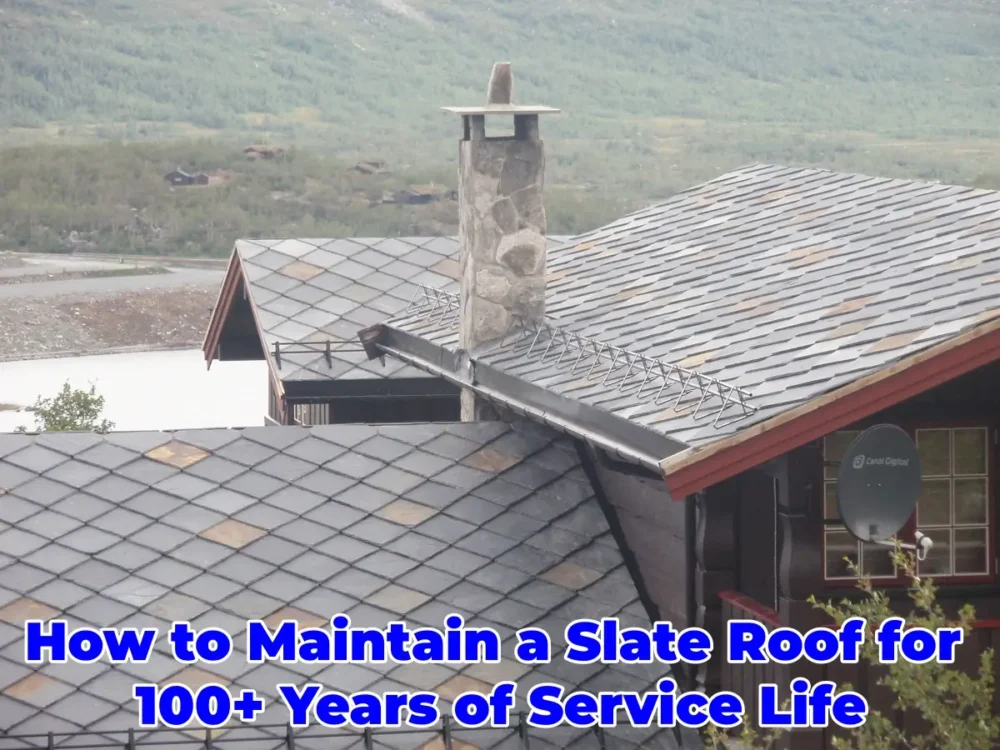
A natural slate roof is one of the most durable investments you can make for a building. Properly maintained, a slate roof can easily last 75 to 125 years, and many historic slate roofs have exceeded 200 years of service. Unlike asphalt shingles that require replacement every 20–30 years, slate offers a genuine “fit and forget” solution—but only if it receives the right care.
This guide covers everything you need to know about slate roof maintenance, from annual inspection checklists to common repairs, cleaning methods, and the key factors that determine slate roof lifespan. Whether you own a historic home, manage a commercial property, or are a homeowner considering a slate roof, following these best practices will ensure your roof reaches—and surpasses—its centennial.
How Long Does a Slate Roof Really Last?
The slate roof lifespan varies depending on the quality of the slate, the skill of the installation, and the maintenance it receives. Here are realistic expectations:
| Slate Quality | Installation Quality | Maintenance | Expected Lifespan |
|---|---|---|---|
| Premium (ASTM C406 S1 / EN 12326 T1‑S1‑W1) | Professional, BS 5534 compliant | Regular annual inspections, prompt repairs | 100–125+ years |
| Standard (ASTM C406 S2 / EN 12326 S2‑W2) | Professional | Occasional maintenance | 75–100 years |
| Economy grade | Variable | Neglected | 30–50 years |
The world’s oldest slate roofs—such as those on medieval castles and cathedrals in Europe—have lasted over 600 years. In North America, many 19th‑century slate roofs remain in service today. Achieving a slate roof lifespan of 100+ years is not a myth; it is a realistic goal when quality materials meet proper how to maintain slate roof practices.
Why Slate Roof Maintenance Matters
Slate is incredibly durable, but it is not indestructible. The most common causes of slate roof failure are not the slate itself, but:
Broken or cracked slates caused by foot traffic, falling branches, or severe hail
Corroded or missing nails (copper nails can last 100+ years; steel nails fail much sooner)
Damaged flashings (valleys, hips, ridges, penetrations)
Neglected gutters leading to ice dams or water backup
Moss, lichen, and algae growth, which can lift slates and hold moisture
Regular slate roof maintenance identifies these issues early, when repairs are simple and inexpensive. Neglecting maintenance turns minor problems into major leaks that damage the roof deck, insulation, and interior.
Annual Inspection: The Most Important Maintenance Task
The single most effective way to extend slate roof lifespan is a thorough annual inspection. The best time is late summer or early autumn—after the heat of summer but before winter snow and ice.
What to Inspect from the Ground
Start with binoculars from ground level or a ladder:
Look for missing, slipped, or broken slates (dark spots or uneven patches)
Check for sagging roof planes (indicates deck or rafter issues)
Inspect flashing at valleys, chimneys, dormers, and skylights for rust or separation
Examine gutters and downspouts for slate granules or pieces (signs of deteriorating slates)
What to Inspect from the Roof (Safety First!)
Never walk on a slate roof unless you have proper training and equipment. Use a roof ladder or crawling boards distributed across battens to spread weight. If you must step on slates, stand directly over a batten and keep your weight centered.
From a safe position, inspect:
Individual slates: Tap each slate gently with a wooden dowel or the handle of a slate hammer. A solid, “ringing” sound indicates a sound slate. A hollow, “drummy” sound means the slate is cracked or delaminated and should be replaced.
Nails: Look for nail heads that have rusted away or are pulling through the slate. In older roofs, corroded nails are a leading cause of slipped slates.
Flashings: Check that step flashings are tight against walls, valley flashings are clear of debris, and ridge flashings are securely fastened.
Moss and lichen: Note areas of heavy growth, especially on north‑facing slopes.
Document Your Findings
Take photos and make a written list of:
Locations of damaged or missing slates (use a grid or count courses from a reference point)
Areas where flashings need resealing or replacement
Any signs of interior leaks (water stains on ceilings, damp insulation)
Common Slate Roof Repairs
Most slate roof maintenance involves replacing a small number of damaged slates and resealing flashings. With the right tools and techniques, these repairs are straightforward.
Replacing a Broken or Slipped Slate
Tools needed: Slate ripper, slate hammer, slate cutter or shears, copper nails (or stainless steel), nail punch.
Steps:
Remove the damaged slate: Insert the slate ripper (a flat hook‑shaped tool) under the damaged slate, hook it over the nails, and pull down sharply to cut the nails.
Slide out the damaged slate. If it is intact but slipped, you may be able to reposition it by prying up the slate above and inserting a new nail.
Prepare the replacement slate: Cut it to the same dimensions (using slate shears or a saw). If the slate is thicker than the original, you may need to “back‑butter” it with a thin layer of mortar or use longer nails.
Install the new slate: Slide it into position. Pre‑drill two nail holes about 25 mm (1 inch) from the top edge, positioned so the nails will hit the batten. Drive copper nails flush—not over‑driven. If the nail heads would be visible, use a nail punch to set them just below the surface of the slate above.
For slates that will be covered by the course above, you can use a “hook” method: bend a copper strap over the batten and hook it into a pre‑drilled slot on the slate.
Important: Never use a nail gun for slate repairs. Hand‑nailing gives you precise control to avoid cracking the slate.
Replacing Corroded Nails
If nail corrosion is widespread, individual slate replacement may not be enough. A specialized technique called “re‑nailing” or “re‑hanging” involves:
Sliding a long strip of copper (or a slate hook) under the slate to engage a new nail hole above the original.
This is advanced work best left to experienced slate roofers.
Flashing Repairs
Valley flashings: Clean out leaves and debris. If the metal is rusted through, replace the valley flashing entirely. Use copper or stainless steel, never galvanized steel.
Step flashings: Where sidewalls meet the roof, step flashings can loosen over time. Remove the adjacent slates, resecure the flashing with new nails, and replace the slates.
Ridge and hip flashings: If mortar is cracking or falling out, consider replacing with a dry‑fix ridge system (mechanical fixings) as recommended by BS 5534.
Cleaning: Moss, Algae, and Debris Removal
Moss and lichen are not just cosmetic issues. They hold moisture against the slate, promote freeze‑thaw damage, and their root‑like structures can lift slates, breaking seals and allowing water ingress.
Safe Cleaning Methods
Gentle scraping: Use a plastic scraper or a stiff (but not wire) brush to remove moss manually. Never use a metal blade—it will scratch and damage the slate surface.
Low‑pressure washing: Pressure washers are dangerous for slate roofs. The high pressure can drive water under slates and blow out the sand/cement pointing in ridges. Use a garden hose with a spray nozzle on a gentle setting.
Zinc or copper strips: Install strips of zinc or copper along the ridge. Rainwater carries microscopic particles of these metals down the roof, naturally inhibiting moss and algae growth. This is the most effective long‑term prevention.
What NOT to Do
Do not use bleach or harsh chemicals – they can stain the slate and damage surrounding materials.
Do not power wash – even at low pressure, the risk of driving water under slates is high.
Do not walk directly on mossy slates – moss makes the surface extremely slippery, and you can easily crack slates underneath.
Gutter and Drainage Maintenance
Clogged gutters are a major threat to slate roof lifespan. When gutters fill with leaves, twigs, and slate granules, water backs up under the slates, causing rot in the deck and battens.
Gutter maintenance checklist:
Clean gutters at least twice a year (spring and autumn). More often if your property has overhanging trees.
Install gutter guards (mesh screens) to reduce debris accumulation while allowing water flow.
Check downspouts for blockages; ensure water drains away from the foundation.
Inspect eaves flashings: Water should drip cleanly into the gutter, not behind it.
Snow and Ice Management
In cold climates, snow and ice pose special challenges. A slate roof can easily support the weight of snow, but ice dams—ridges of ice that form at the eaves—can force water back up under the slates.
Winter maintenance tips:
Ensure adequate attic insulation and ventilation. A cold attic prevents snow from melting and refreezing at the eaves, the primary cause of ice dams.
Use a roof rake (with a long handle, standing on the ground) to remove snow from the lower 1–2 metres of the roof after heavy storms. Never climb onto a snow‑covered slate roof.
Do not use salt or chemical de‑icers – they can corrode flashings and damage the stone.
Install electric heat cables along the eaves and in valleys as a preventive measure in problem areas.
When to Call a Professional Slate Roofer
While some how to maintain slate roof tasks can be done by a careful homeowner, many repairs require specialised skills. Call a professional slate roofer if:
You need to replace more than 5–10 slates
You suspect widespread nail corrosion
Flashing needs replacement (valleys, chimneys, skylights)
There is evidence of structural damage (sagging rafters, rotted decking)
The roof has a steep pitch (over 6:12) or is more than two stories high
You are uncomfortable working at heights
How to find a qualified slate roofer:
Look for members of the National Slate Association (NSA) in North America or the National Federation of Roofing Contractors (NFRC) in the UK.
Ask for references from previous slate repair projects.
Ensure they have experience with the specific type of slate on your roof (e.g., Chinese, Welsh, Spanish).
Extending Slate Roof Lifespan: Proactive Measures
Beyond annual maintenance, these proactive steps can add decades to your slate roof lifespan:
1. Install Copper or Zinc Strips
As mentioned, metal strips along the ridge prevent moss and algae for 15–20 years. This simple upgrade pays for itself in reduced cleaning and repair costs.
2. Upgrade to Copper Nails During Repairs
If your roof was originally installed with steel nails, each repair is an opportunity to replace them with copper nails. Over time, you will systematically upgrade the entire roof’s fastener system.
3. Improve Attic Ventilation
Proper ridge and soffit vents keep the roof deck dry and cool, reducing thermal stress on slates and preventing ice dams.
4. Trim Overhanging Branches
Tree limbs that overhang the roof drop leaves, provide shade for moss growth, and can break slates during storms. Keep branches at least 2 metres away from the roof.
5. Keep Records
Document every inspection, repair, and cleaning. A maintenance log increases property value and helps future owners understand the roof’s history.
The Role of Slate Quality in Maintenance Frequency
Not all slates require the same level of maintenance. High‑quality slate from a reputable supplier—like Jiujiang Slateofchina Stone Co., Ltd.—has superior physical properties that reduce maintenance demands:
| Property | Low‑Quality Slate | High‑Quality Slate (EN 12326 T1‑S1‑W1) |
|---|---|---|
| Water absorption | >0.5% | <0.3% |
| Freeze‑thaw resistance | May fail <25 cycles | >50 cycles, no damage |
| Color stability (T‑rating) | T2 or T3 | T1 (no oxidation) |
| Nail‑holding capacity | Prone to cracking | Consistent, predictable |
Slates with very low water absorption (under 0.3%) are inherently more resistant to freeze‑thaw damage, meaning fewer cracked slates over time. Slates with T1 thermal cycle rating will not develop rust stains or fading, reducing the need for aesthetic repairs.
When sourcing Chinese slate, always request third‑party test reports confirming these parameters. Jiujiang Slateofchina Stone Co., Ltd. provides full documentation for every batch.
Slate Roof Lifespan: Myths vs. Facts
| Myth | Fact |
|---|---|
| “Slate roofs never need maintenance.” | Slate roofs need annual inspection and occasional repairs—just less often than other roofing materials. |
| “Walking on a slate roof is fine if you‘re careful.” | Walking on slate almost always cracks some slates. Use roof ladders or crawling boards. |
| “All Chinese slate fades within 20 years.” | False. Premium Chinese slate with EN 12326 T1 rating has proven color stability for 75+ years. |
| “Moss on a slate roof is harmless.” | Moss holds moisture, lifts slates, and accelerates decay. Remove it properly. |
| “You can power wash a slate roof.” | Never power wash slate. It drives water under slates and can blow out mortar. |
Conclusion: 100+ Years Is Achievable with the Right Care
A natural slate roof is a generational asset. With a modest investment in slate roof maintenance each year—a thorough inspection, prompt repairs, gutters cleaned, moss managed—you can expect slate roof lifespan of 100 years or more. Many slate roofs installed in the 1800s are still performing admirably today.
The keys to longevity are:
Start with high‑quality slate (ASTM C406 S1 / EN 12326 T1‑S1‑W1)
Ensure professional installation (BS 5534 or NSA guidelines)
Perform annual inspections and address issues immediately
Use correct repair techniques (copper nails, slate ripper, no power washing)
Keep records of all maintenance
Whether you are a homeowner with a historic slate roof or a property manager overseeing a commercial building, following this how to maintain slate roof guide will protect your investment for generations.
Partner with Jiujiang Slateofchina Stone Co., Ltd.
At Jiujiang Slateofchina Stone Co., Ltd., we don’t just supply slate—we support its long‑term performance. Our natural roofing slate from Jiangxi Province meets EN 12326 standards and can be supplied to ASTM C406 specifications. We provide:
Third‑party test reports (water absorption, bending strength, thermal cycle T1)
CE marking for European projects
Full traceability from quarry to finished product
Technical support and installation guidance
Contact us today to learn more about our slate products and request samples, test reports, or a quote for your next project.
👉 Request Maintenance Guide or Slate Samples — We respond within 24 hours.
Jiujiang Slateofchina Stone Co., Ltd. – Slate that lasts centuries, backed by maintenance expertise.