
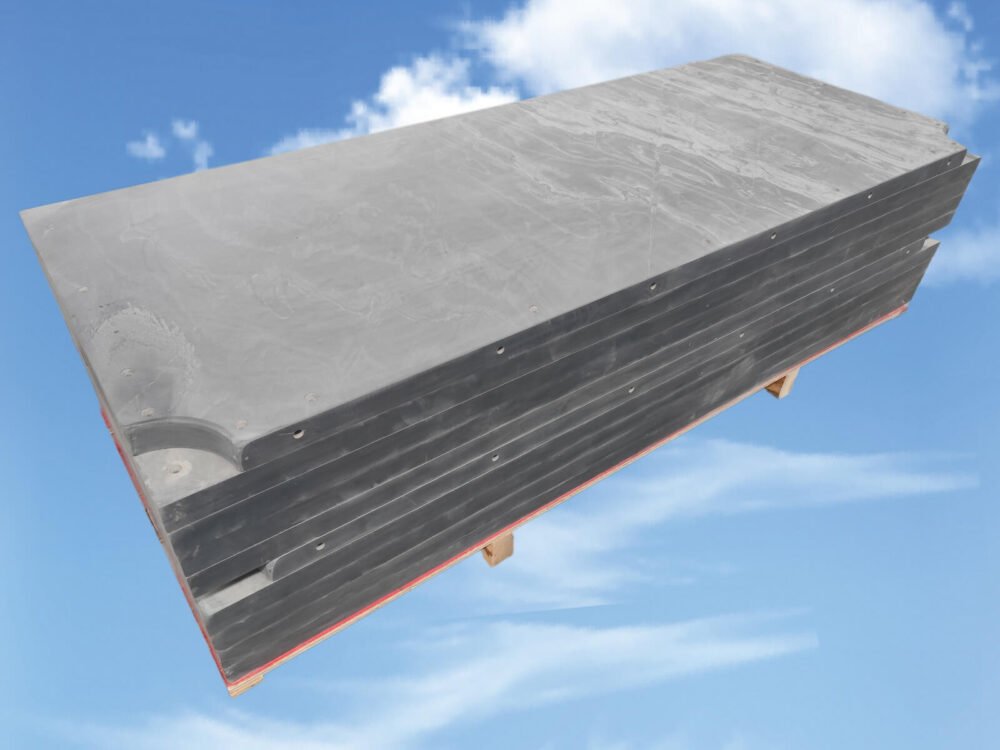
When selecting the playing surface for a snooker table, one critical decision must be made:
Should you choose natural slate or artificial (engineered) slate?
Both materials are used in the billiards industry, but they differ significantly in structure, durability, performance, and long-term stability.
In this guide, we compare natural slate vs artificial slate to help table manufacturers, distributors, and commercial project buyers make an informed decision.
1️⃣ What Is Natural Slate?
Natural slate is a metamorphic stone formed under high pressure over millions of years.
For professional snooker tables, natural slate is:
Quarry-extracted
Cut into slabs
Precision-ground
CNC-machined
Configured into 3-piece or 5-piece systems
High-grade natural slate for snooker tables is known for:
✔ High density
✔ Fine grain structure
✔ Structural rigidity
✔ Long-term dimensional stability
It has been the traditional material used in professional tournament tables for decades.
2️⃣ What Is Artificial Slate?
Artificial slate (also called engineered slate or composite board) is a manufactured material.
It may be composed of:
Stone powder
Resin
Cement-based composites
Fiber-reinforced materials
Artificial slate is typically:
Molded or cast
Lighter in weight
Lower in cost
Easier to transport
It is commonly used in:
Entry-level tables
Home-use tables
Compact or foldable designs
3️⃣ Structural Strength & Density
One of the most important differences is internal structure.
Natural Slate
Dense crystalline formation
Uniform internal composition (premium grade)
Excellent rigidity in 40mm and 45mm thickness
Strong resistance to long-term deformation
Artificial Slate
Composite structure
Density depends on formula
May contain air pockets or resin variability
More sensitive to temperature changes
For 12ft professional snooker tables, structural rigidity is critical to ensure flatness and consistent ball roll.
4️⃣ Flatness & Machining Precision
Professional snooker performance requires:
Extremely tight flatness tolerance
Accurate seam alignment
Stable bolt positioning
Natural slate can be:
Precision-ground
Multi-stage calibrated
CNC-drilled with high accuracy
Artificial slate may:
Be pre-molded flat
Require less grinding
Have limited machining flexibility
For tournament-level tables, natural slate offers greater control over fine tolerance adjustments.
5️⃣ Durability & Long-Term Performance
Natural Slate
Stable over decades when installed properly
Resistant to sagging under heavy weight
Maintains level alignment
Artificial Slate
May expand or contract under humidity
Potential long-term bending risk in large formats
Typically shorter lifespan in commercial environments
For high-traffic clubs and professional venues, durability is a major consideration.
6️⃣ Weight Comparison
Artificial slate is usually lighter than natural slate.
Advantages of lighter weight:
✔ Easier transportation
✔ Lower shipping cost
✔ Simpler installation
However, heavier natural slate provides:
✔ Greater vibration resistance
✔ More stable playing surface
✔ Reduced movement over time
In 12ft snooker tables, stability generally outweighs weight savings.
7️⃣ Cost Comparison
Artificial slate is generally:
Lower in cost
Suitable for budget models
Used in mass-market tables
Natural slate:
Higher material cost
More processing steps
Designed for mid-to-high-end market
For entry-level home tables, artificial slate may be sufficient.
For professional or tournament tables, natural slate remains the industry standard.
8️⃣ Installation & Maintenance
Natural slate:
Requires careful leveling
Heavy handling precautions
Proper seam filling
Artificial slate:
Easier handling
Lighter lifting
Faster setup
However, improper installation can cause performance issues in both materials.
Correct frame support and leveling are critical regardless of material type.
9️⃣ Which One Is Better?
The answer depends on application.
Choose Natural Slate if:
✔ You manufacture professional or tournament tables
✔ You require 40mm or 45mm thickness
✔ You need long-term durability
✔ You prioritize performance consistency
✔ Your market demands premium quality
Choose Artificial Slate if:
✔ You produce entry-level tables
✔ Weight reduction is a priority
✔ Budget-sensitive customers are your target
✔ Table size is smaller than 12ft
For professional 12ft snooker tables, natural slate remains the preferred material worldwide.
10️⃣ Why 45mm Natural Slate Is Preferred for Professional Tables
High-end snooker tables often use:
45mm thick natural slate
Five-piece configuration
Precision flatness calibration
This combination offers:
✔ Maximum rigidity
✔ Reduced vibration
✔ Seam stability
✔ Long-term structural reliability
Thickness and material together determine performance level.
Frequently Asked Questions
Is artificial slate bad quality?
Not necessarily. It serves a different market segment. It is suitable for light-duty or home-use tables.
Can artificial slate be used for 12ft tournament tables?
It is uncommon in professional tournament environments due to structural limitations.
Does natural slate crack easily?
Cracking is usually caused by:
Improper installation
Uneven frame support
Over-tightening bolts
High-density, properly processed slate is structurally stable when installed correctly.
Final Thoughts
When comparing natural slate vs artificial slate, the key differences lie in:
Density
Structural rigidity
Long-term stability
Application suitability
Artificial slate is practical for budget and entry-level markets.
Natural slate remains the professional standard for serious snooker table manufacturing.
Material selection should align with your target market and performance expectations.
Looking for Professional-Grade Natural Slate?
If you are sourcing high-density 40mm or 45mm natural slate for 12ft snooker tables, we provide:
Precision grinding
Strict flatness control
Five-piece matching
CNC machining
Export-grade packaging
Stable batch consistency
Contact us to discuss your production requirements.