
When sourcing slate for professional snooker tables, buyers often ask:
Why does slate crack during installation?
Why is flatness inconsistent between pieces?
Why do some suppliers struggle with 45mm thickness?
What actually determines slate quality?
To answer these questions, you must understand how snooker slate is manufactured.
This guide explains the complete snooker slate manufacturing process, from quarry extraction to precision grinding — and reveals what separates professional-grade slate from low-cost alternatives.
1. Quarry Selection: The Foundation of Slate Quality
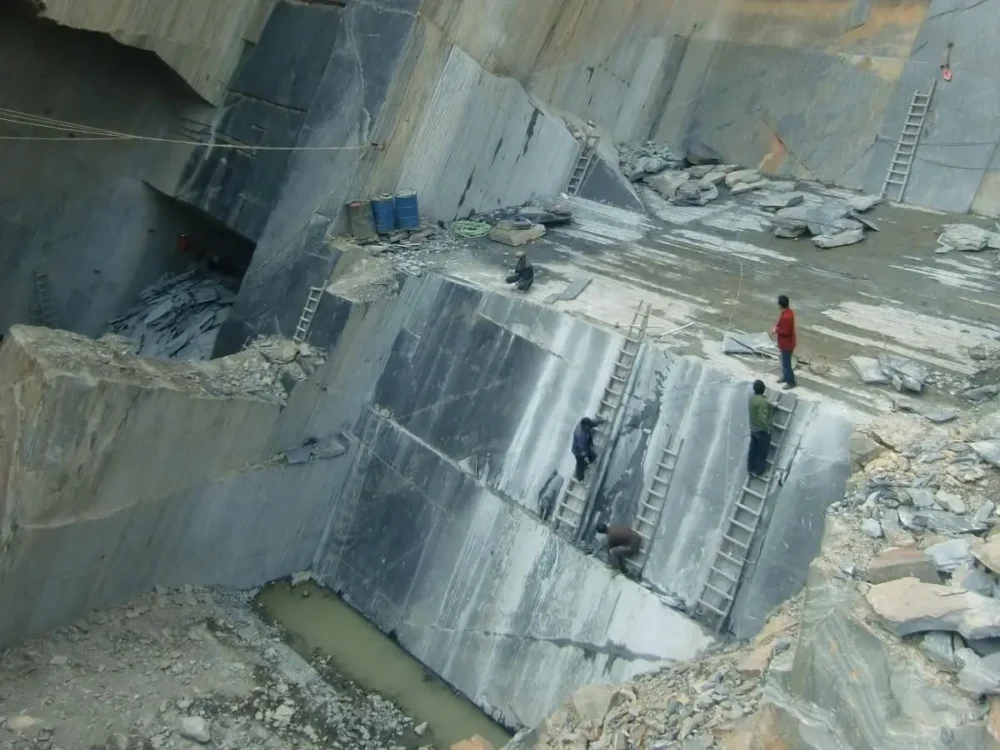
Every high-performance snooker slate begins in the quarry.
Not all slate is suitable for billiard tables.
Professional snooker slate requires:
Fine-grain structure
Uniform mineral composition
Minimal internal fissures
High density (approx. 2.7–2.8 g/cm³)
Strong compressive strength
Large raw blocks are essential for producing 45mm snooker slate without structural weakness.
Low-quality quarry material leads to:
Hidden cracks
Surface instability
Long-term sagging
Installation failure
The manufacturing process starts with strict block selection.
2. Block Cutting: Preparing for Thickness Precision
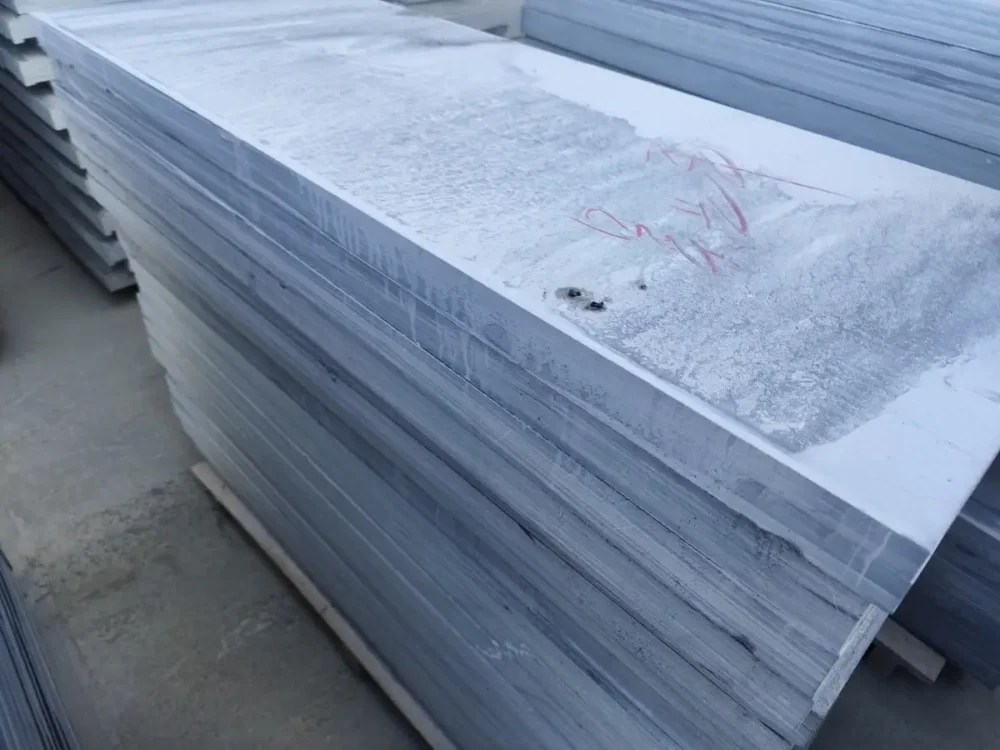
After extraction, large slate blocks are transported to the factory.
The next step in the snooker slate production process is:
Primary Block Cutting
Diamond wire saws or gang saws are used
Blocks are sliced into slabs slightly thicker than final specification
Extra material allows precision grinding later
For 45mm snooker slate, initial slabs are usually cut at 47–48mm.
Thickness allowance is critical for final flatness control.
3. Precision Grinding: Achieving Tournament Flatness
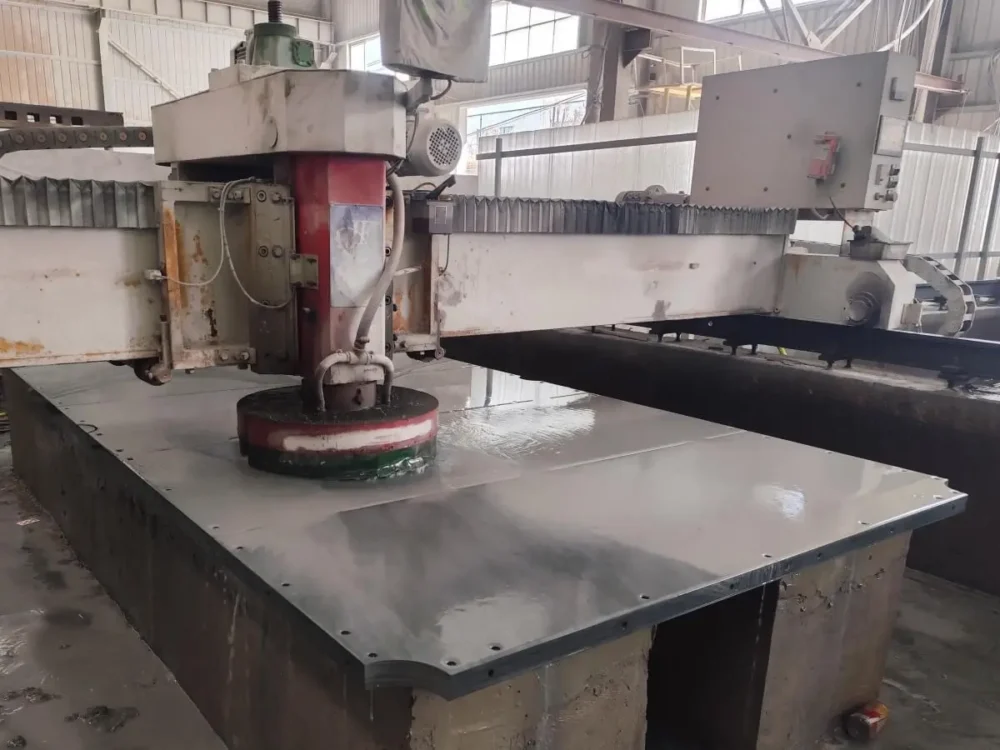
Grinding is the most critical stage in snooker slate manufacturing.
Professional-grade slate must meet strict flatness tolerance:
±0.1mm across entire surface
Uniform thickness tolerance ±0.2mm
Large-format surface grinding machines are used to:
Calibrate thickness
Remove high spots
Ensure cross-direction consistency
This stage determines ball roll accuracy.
Insufficient grinding results in:
Uneven seams
Ball drift
Installation difficulties
Customer complaints
Flatness control separates professional manufacturers from ordinary stone factories.
4. CNC Machining: Pocket and Bolt Hole Accuracy
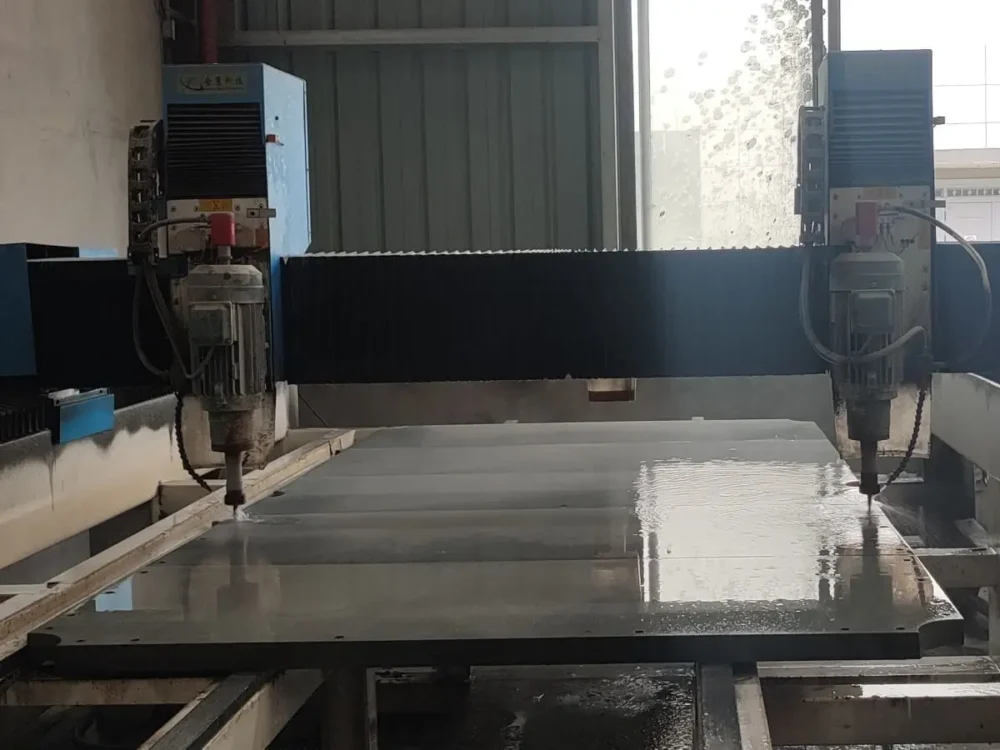
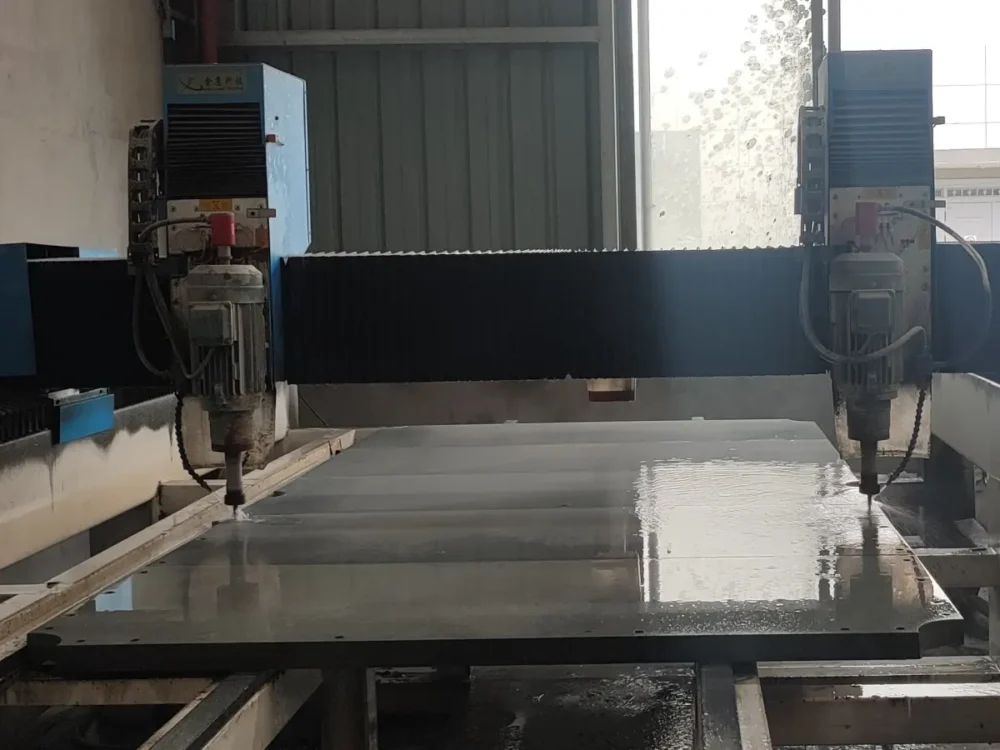
After surface calibration, the slate moves to CNC machining.
This stage includes:
Pocket opening cutting
Rail bolt hole drilling
Alignment slot machining
For 12ft snooker tables, most manufacturers produce a 5-piece slate set.
Each piece must match precisely at seams.
CNC tolerance errors cause:
Visible seam lines
Cloth unevenness
Frame stress points
Modern billiard slate factories use automated CNC systems to maintain repeatable accuracy.
5. Thickness Equalization and Final Inspection
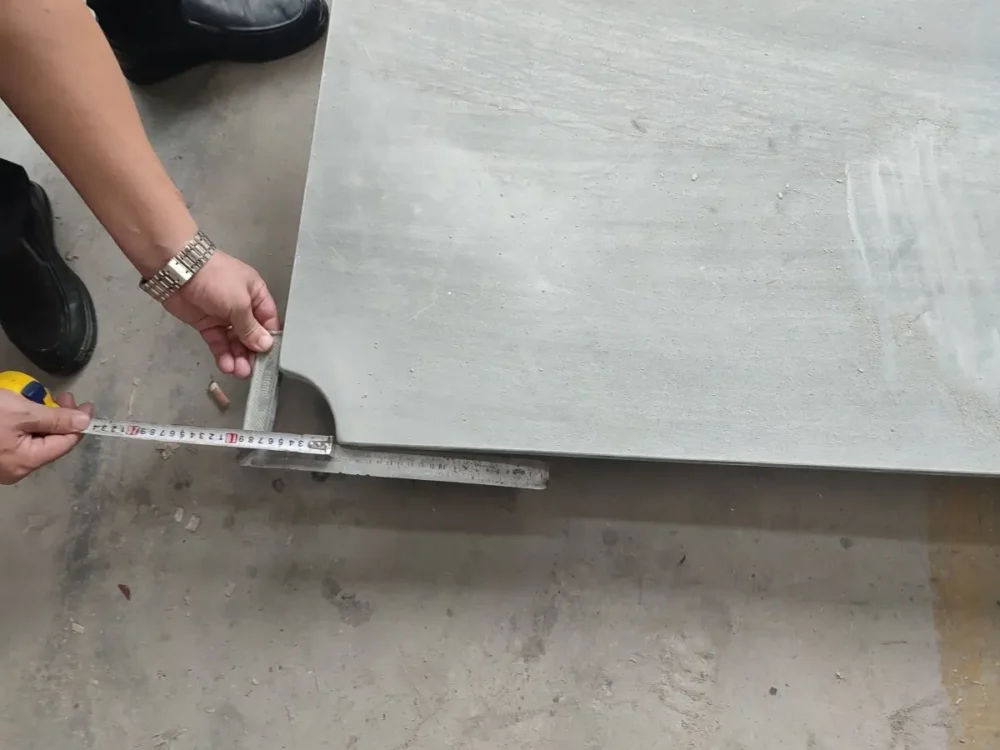
Before packaging, each slate piece undergoes:
Thickness measurement
Straight-edge flatness inspection
Surface defect checking
Edge integrity inspection
For professional snooker slate suppliers, every piece must pass inspection before export.
Inconsistent thickness between pieces is one of the biggest buyer complaints in global trade.
Strict inspection prevents installation problems on-site.
6. Protective Packaging for Export
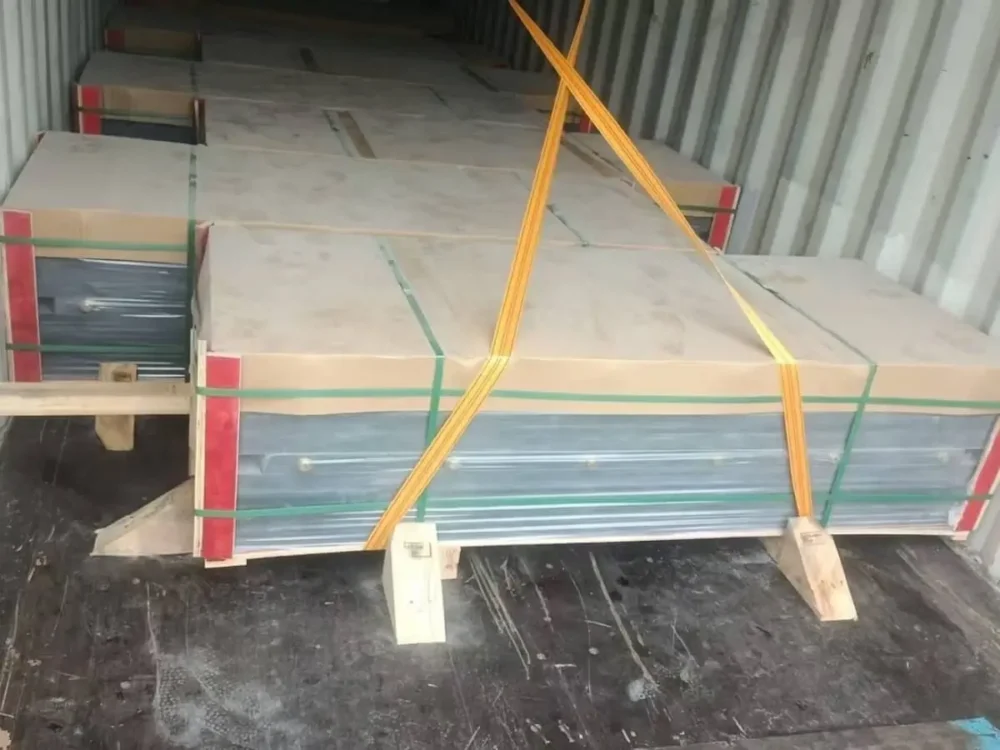
Snooker slate is heavy and fragile.
A full 12ft 45mm slate set weighs around 1000 kg.
Professional export packaging includes:
Reinforced wooden crates
Internal shock absorption
Edge protection
Moisture-resistant wrapping
Improper packaging is one of the main causes of slate cracking during shipping.
Reliable manufacturers treat packaging as part of quality control.
7. Common Problems in Low-Quality Snooker Slate Manufacturing
To better understand why professional-grade slate is essential, let’s compare common issues with low-quality slate.
Here’s a customer pain point comparison:
| Issue | Low-Quality Slate | High-Quality Slate | Impact |
|---|---|---|---|
| Flatness | High variation, not within ±0.2mm tolerance | Precision grinding ensures flatness within ±0.1mm | Uneven seams, poor ball roll |
| Internal Cracks | Micro-cracks often invisible to the eye | Smooth, crack-free slate | Risk of cracking during transport or installation |
| Thickness Consistency | Inconsistent thickness between pieces | Consistent thickness, measured and calibrated | Difficult to align pieces, creates uneven surface |
| Surface Smoothness | Rough, uneven surface requiring more filler | Smooth surface, perfect for cloth adherence | Poor cloth installation, seam visibility |
| Durability | Prone to warping and cracking over time | Long-term stability and performance | Frequent repairs, lower customer satisfaction |
| Packaging | Poor packing methods, prone to damage | Reinforced packaging with protective foam and crates | Slate damage during shipping, increasing cost |
As you can see, low-quality slate introduces significant risks, while high-quality slate ensures consistent performance, long-term durability, and happy customers.
8. What Defines a Professional Snooker Slate Supplier?
When choosing a supplier, verify:
Quarry Resource Stability
Consistent geological supply ensures long-term quality consistency.
Block Size Capability
Can they extract large blocks suitable for 45mm cutting?
Grinding Equipment Scale
Do they use large-format surface grinders?
CNC Precision
Are pocket openings and bolt holes precisely machined?
Quality Inspection Process
Do they test flatness piece by piece?
Export Packing
Is the slate packed with reinforced wooden crates and shock protection?
For 45mm slate, supplier capability matters more than price.
Final Summary
The snooker slate manufacturing process includes:
Quarry block selection
Primary slab cutting
Precision surface grinding
CNC machining
Flatness inspection
Piece matching
Export packaging
Each stage directly affects the final table performance.
Professional 45mm snooker slate production requires:
Geological consistency
Engineering precision
Strict quality control
For serious table manufacturers, slate is not a commodity — it is the foundation of performance.